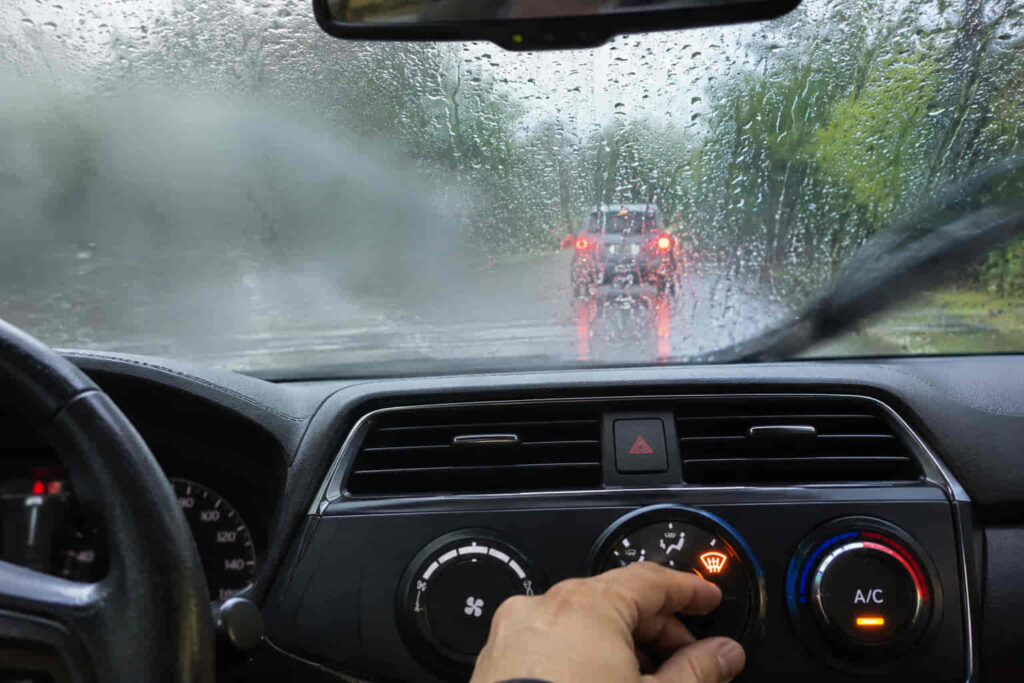
To defog a windshield when raining, turn on the front windshield defroster, activate the air conditioning (AC), switch to fresh air mode, and direct warm airflow toward the glass. The AC removes moisture from cabin air, while warm airflow helps clear condensation from the windshield. Increasing the fan speed accelerates the process by circulating drier air across the glass. Many vehicles automatically adjust these settings when the maximum defrost function is activated.
Windshield fogging occurs when humid air contacts glass that is cool enough for water vapor to condense into tiny droplets. Rainy weather increases this problem because wet clothing, damp floor mats, and passengers’ breathing introduce moisture into the vehicle’s cabin. Temperature differences between the windshield and surrounding air also determine where condensation forms. Interior fog requires ventilation and dehumidification, while exterior condensation may require windshield wipers and adjustments to the cabin temperature.
Removing windshield fog is essential for maintaining visibility in rainy conditions. This guide explains how to identify interior and exterior condensation, adjust AC and heater settings, clear fog without air conditioning, and prevent moisture from accumulating inside your vehicle. If fogging significantly obstructs your view while driving, pull over safely before continuing.
How Do You Defog a Windshield When It Rains?
To defog a windshield when it rains, activate the front windshield defroster, turn on the air conditioning (AC), select fresh air mode, and increase the fan speed while directing warm air toward the glass. This combination removes excess moisture from the cabin air and helps evaporate condensation on the windshield’s interior surface. The effectiveness of these settings depends on the windshield temperature, cabin humidity, and the vehicle’s climate control system.
Start by activating the front windshield defroster, typically identified by a curved windshield symbol with three upward-pointing arrows. This setting redirects airflow from the dashboard vents toward the windshield and, in many vehicles, the front side windows. Concentrating airflow on the glass accelerates moisture removal by replacing humid air near the windshield with conditioned air. Vehicles equipped with automatic climate control may also activate the AC compressor, increase fan speed, and adjust the air intake automatically when the maximum defrost function is selected.
Turn on the air conditioning to reduce the amount of water vapor circulating inside the vehicle. The AC system removes moisture as humid air passes over the cold evaporator coil, where water vapor condenses into liquid and drains away. The dehumidified air can then be reheated before reaching the windshield, allowing the system to deliver warm, relatively dry airflow. This explains why using AC and heat together is effective for clearing interior windshield condensation. However, the AC compressor may not operate at very low outdoor temperatures, depending on the vehicle’s design.
Switch the ventilation system from recirculation mode to fresh air mode to prevent moisture from repeatedly accumulating inside the cabin. Recirculation reuses interior air, which absorbs additional water vapor from passengers’ breathing, wet clothing, and damp floor mats. Outside-air mode replaces this humid cabin air with incoming air that can be conditioned by the HVAC system. Toyota’s windshield defogging instructions recommend switching to outside-air mode and increasing both airflow and temperature to clear fogged windows more quickly.
Increase the fan speed and select a warm temperature to accelerate interior defogging. Stronger airflow moves more conditioned air across the windshield, while heating raises the glass temperature and helps prevent water vapor from condensing on its surface. Use the maximum defrost setting when visibility is severely restricted, following the vehicle manufacturer’s instructions. Avoid directing excessively cold air at the windshield in very humid weather because it can cool the glass enough to create condensation on the outside.
Keep the windshield defroster operating until the glass is completely clear, then gradually reduce the fan speed while maintaining sufficient ventilation. If the windshield begins fogging again, increase airflow and check whether recirculation has been reactivated. Never continue driving when condensation obstructs your view of the road. Pull over safely and restore clear visibility before resuming your journey.
Read more: how to reduce road noise in car
What Should You Do If Your Windshield Suddenly Fogs Up While Driving in the Rain?
If your windshield suddenly fogs up while driving in the rain, reduce your speed safely, activate the front windshield defroster, and pull over in a safe location if condensation prevents you from seeing the road clearly. Sudden windshield fogging restricts visibility by scattering light through tiny water droplets on the glass. This becomes particularly dangerous during heavy rain or nighttime driving, when headlights, streetlights, and reflections make obstacles harder to distinguish.
Activate the maximum defrost setting to direct strong airflow toward the windshield. Most automatic climate control systems increase the fan speed, engage air conditioning when operating conditions permit, and adjust the ventilation mode to remove moisture from the glass. If your vehicle has manual climate controls, select windshield airflow, enable AC, switch to outside air, and use a warm temperature. These settings help reduce interior condensation without requiring you to wipe the glass manually while driving.
Stop driving if the windshield remains too foggy to maintain a clear view of traffic, road markings, and pedestrians. Choose a safe place away from moving traffic rather than stopping abruptly in a travel lane. Avoid wiping the inside windshield with your hand because skin oils leave residue that can create glare and streaks. Resume driving only when the windshield is clear enough to maintain safe visibility.
How Can You Tell Whether the Windshield Is Fogging Up on the Inside or Outside?
You can determine whether windshield fog is inside or outside by observing how the glass responds to the windshield wipers and climate control system. Interior fog forms on the cabin-facing surface when humid interior air contacts cooler glass. Exterior fog forms when humid outdoor air condenses on a windshield that is colder than the surrounding air. Identifying the location of condensation is essential because the two conditions require different defogging methods.
Interior windshield fog usually appears as a cloudy film that does not disappear when the windshield wipers operate. It commonly develops during rainy weather when moisture from passengers’ breathing, wet clothing, and damp floor mats increases cabin humidity. The windshield defroster removes this condensation by directing conditioned air across the interior glass. Activating AC dehumidification and outside-air ventilation helps lower the moisture content of the cabin air, while warm airflow raises the windshield temperature and reduces further condensation.
Exterior windshield fog can develop when the air conditioning cools the windshield below the dew point of humid outdoor air. This is particularly noticeable during warm, rainy weather when strong cooling is directed toward the glass. Unlike interior fog, exterior condensation can be temporarily cleared by operating the windshield wipers. However, the moisture may return if the windshield remains significantly colder than the surrounding air. Reducing excessive cooling directed at the glass and adjusting the cabin temperature can help prevent repeated exterior condensation.
For example, a windshield that remains cloudy after several wiper passes but clears when the front defroster operates is likely affected by interior condensation. Conversely, moisture that disappears immediately when the wipers sweep across the glass is located on the exterior surface. Correctly identifying the affected side allows drivers to select an appropriate response without repeatedly changing ineffective climate control settings.
Why Does a Windshield Fog Up When It Rains?
A windshield fogs up when it rains because humid air comes into contact with glass that is cold enough to cause water vapor to condense into tiny liquid droplets. This process occurs when the windshield’s surface temperature falls below the dew point of the surrounding air. The accumulated droplets scatter light and create a cloudy layer that reduces visibility through the glass. Depending on the temperature and humidity inside and outside the vehicle, condensation can develop on either windshield surface.
Rainy weather contributes to windshield fogging by increasing the moisture entering the vehicle’s cabin. Wet clothing, damp shoes, soaked floor mats, and passengers’ breathing release water vapor into the enclosed space. When the outside temperature drops during rainfall, the windshield can cool faster than the interior air. Warm, moisture-rich cabin air then contacts the cooler glass, producing condensation on its interior surface. A vehicle carrying several passengers with wet clothing can experience faster humidity buildup, particularly when ventilation is restricted.
Air circulation also determines how quickly windshield condensation develops. Recirculation mode repeatedly moves cabin air through the HVAC system without continuously replacing it with outside air. Although this improves cooling efficiency in certain conditions, prolonged recirculation can allow moisture from passengers and wet interior materials to accumulate. Using the windshield defroster with air conditioning and appropriate ventilation helps remove this moisture before it condenses on the glass.
Windshield fogging can also occur on warm, rainy days when strong air conditioning cools the glass below the dew point of humid outdoor air. In this situation, condensation forms on the exterior surface rather than inside the cabin. Understanding the relationship between humidity, dew point, and windshield temperature explains why effective defogging requires different climate control adjustments depending on where the moisture develops.
What AC and Heater Settings Work Best for Defogging a Windshield in the Rain?
The most effective AC and heater settings for removing interior windshield fog during rain are windshield-directed airflow, active air conditioning, outside-air ventilation, and a warm temperature setting with increased fan speed. These controls work together to lower the moisture content of the supplied air, warm the windshield, and remove condensation from its interior surface. The front defroster is the primary airflow setting because it directs conditioned air toward the glass rather than the passenger compartment.
Air conditioning plays an essential role in windshield defogging by removing water vapor from the air passing through the HVAC system. As humid air moves across the cold evaporator coil, moisture condenses on the coil and drains out of the vehicle. The resulting dehumidified air can pass through the heater before reaching the windshield. This allows the system to deliver warm, relatively dry air that supports evaporation and reduces further condensation. Toyota’s climate control guidance confirms that activating the AC dehumidification function helps clear fogged windows, while switching it off can make fogging more likely.
Warm airflow is generally more effective than cold airflow for removing condensation from the inside windshield. Heating raises the glass temperature, reducing the likelihood that humid cabin air will reach its dew point upon contact. Increasing fan speed accelerates this process by delivering more conditioned air across the windshield. However, extremely hot air is not necessary for every situation. Drivers should select the vehicle’s recommended defrost temperature or maximum defrost function rather than relying on a single temperature setting for all weather conditions.
Fresh air mode further supports interior windshield defogging by replacing moisture-laden cabin air with incoming air that the HVAC system can condition. Prolonged recirculation can trap water vapor released by passengers, especially when several people occupy the vehicle during heavy rain. Ford’s maximum defrost systems, for example, prevent recirculation from being selected while the function is active. Outside air is not necessarily drier than cabin air during rain, but ventilation combined with effective dehumidification helps control moisture accumulation inside the vehicle.
The correct settings also depend on whether condensation is forming inside or outside the windshield. During warm, humid weather, excessively cold airflow directed at the glass can lower its temperature enough to produce exterior condensation. Toyota warns against using cold windshield-directed airflow in extremely humid conditions for this reason. Drivers should adjust cooling intensity and windshield airflow when exterior fog appears, while prioritizing warm, dehumidified air for interior fog. Maintaining these settings until visibility is restored helps prevent condensation from immediately returning.
How Do You Remove Fog From the Outside of a Windshield When It Rains?
To remove fog from the outside of a windshield when it rains, activate the windshield wipers and adjust the climate control settings to prevent the glass from becoming excessively cold. Exterior windshield fog develops when humid outdoor air contacts a glass surface whose temperature is below the surrounding air’s dew point. This condition commonly occurs during warm, rainy weather when strong air conditioning cools the windshield faster than the outside air.
Windshield wipers provide the fastest way to remove condensation from the exterior glass because they physically sweep away accumulated moisture. However, wipers only address the visible water droplets, not the temperature difference responsible for their formation. If the windshield remains colder than the dew point of the surrounding air, condensation can reappear shortly after each wiper cycle. This explains why exterior fog may persist even when the windshield wipers operate continuously during humid weather.
Adjusting the air conditioning helps prevent exterior condensation from returning. Reduce excessively cold airflow directed toward the windshield and select a moderate cabin temperature to allow the glass to warm gradually. Toyota’s climate control guidance specifically warns that directing cold air toward the windshield in extremely humid weather can cause exterior fogging because of the temperature difference between the glass and outdoor air. Avoid using maximum cooling through the windshield vents when this condition occurs.
Exterior fog should also be distinguished from ordinary rainwater and road spray. Rainwater accumulates directly on the windshield during precipitation, while exterior condensation develops when water vapor in the surrounding air changes into liquid droplets on the glass. Both conditions can reduce visibility, but condensation requires temperature management in addition to windshield wiping. If moisture continues to obstruct the driver’s view despite these adjustments, stop in a safe location until visibility improves.
How Can You Defog a Windshield When the AC Is Not Working?
To defog a windshield without working air conditioning, activate the front windshield defroster, select outside-air ventilation, increase the fan speed, and direct warm air toward the glass. This method helps remove interior condensation by raising the windshield temperature and replacing humid cabin air with incoming air. Although the heater does not actively remove water vapor like an operating AC system, warm airflow supports evaporation, while ventilation carries moisture out of the passenger compartment.
Start by selecting the windshield defrost setting and adjusting the heater to produce warm airflow. The vehicle’s blower motor pushes air through the HVAC system and directs it across the interior windshield surface. As the glass warms, its temperature rises above the dew point of the surrounding cabin air, reducing further condensation. Increasing the fan speed also improves air circulation and helps remove the humid boundary layer that forms near the windshield. These functions can remain available even when the AC compressor is not operating, provided the blower, heating system, and airflow controls are functional.
Fresh-air ventilation is particularly important when defogging without AC because the system cannot rely on evaporator-based dehumidification. Switching off recirculation allows moisture-laden cabin air to be gradually replaced by outside air. Opening a side window slightly can provide additional ventilation when road conditions and rainfall permit. However, allowing rainwater into the cabin can increase moisture accumulation, so windows should remain closed during heavy rain or when opening them creates a safety concern.
Defogging without AC may take longer when outside humidity is high or the vehicle contains wet carpets, clothing, and other moisture sources. Remove excess moisture from the cabin when practical and maintain windshield-directed airflow until condensation disappears. If the windshield remains fogged despite adequate heating and ventilation, inspect the cabin air filter, blower operation, and defroster airflow controls for possible restrictions or malfunctions. A vehicle with insufficient windshield visibility should not be driven until the problem has been resolved.
How Do You Keep Your Windshield From Fogging Up Again While Driving in the Rain?
To keep your windshield from fogging up again while driving in the rain, maintain sufficient airflow across the glass, keep the air conditioning’s dehumidification function active, and use outside-air ventilation when interior humidity is high. These settings prevent water vapor from accumulating near the windshield and reduce the likelihood of condensation returning. Once the glass is clear, lower the fan speed gradually rather than turning off the climate control system completely.
Maintaining stable cabin humidity is essential for preventing repeated windshield fogging. Passengers continuously release water vapor through breathing, while wet clothing, shoes, and floor mats add moisture to the enclosed cabin. When ventilation is insufficient, humidity rises until the air near the cooler windshield reaches its dew point. Ford’s climate control guidance advises against prolonged recirculation and operating the vehicle with the ventilation system switched off because these conditions contribute to interior moisture buildup.
Automatic climate control can help maintain consistent windshield visibility by adjusting airflow, temperature, and dehumidification according to cabin conditions. In vehicles with manual controls, drivers should maintain moderate windshield-directed airflow and adjust the fan speed when condensation begins to reappear. Avoid abruptly switching to maximum recirculation after clearing the glass, particularly when several passengers or wet interior materials are increasing cabin humidity.
Reducing moisture accumulation during the journey also helps prevent repeated fogging. Keep wet umbrellas away from the seats when practical, avoid blocking ventilation outlets, and prevent rainwater from entering through partially open windows. For example, a vehicle carrying four passengers wearing rain-soaked clothing requires sustained ventilation because moisture continues entering the cabin even after the windshield initially clears. Consistent dehumidification and adequate airflow help maintain clear visibility throughout the drive.
Why Does My Windshield Keep Fogging Up Even With the Defroster On?
A windshield keeps fogging up even with the defroster on because of four main problems: incorrect climate control settings, restricted airflow, excessive cabin moisture, or malfunctioning HVAC components. These conditions prevent the defroster from maintaining sufficiently dry airflow and an appropriate windshield temperature. Persistent condensation indicates that moisture is accumulating faster than the ventilation system can remove it or that the windshield is not receiving adequate conditioned air.
A clogged cabin air filter is a common cause of poor windshield defogging performance. The filter traps dust, pollen, and airborne debris before air enters the passenger compartment. As these contaminants accumulate, airflow resistance increases, reducing the amount of air reaching the windshield vents. Even at high fan speeds, restricted airflow slows moisture removal and allows condensation to persist. According to AAA, reduced ventilation airflow and windows that are difficult to defrost are symptoms of a restricted cabin air filter. Inspecting the filter and replacing it according to the manufacturer’s maintenance schedule helps restore proper ventilation.
Excessive moisture inside the vehicle can also overwhelm the defroster. Wet floor mats, damp carpeting, leaking door seals, and blocked drainage channels introduce water that gradually evaporates into the cabin. When humid interior air contacts the cooler windshield, condensation continues forming despite active defogging. For example, water trapped beneath the front passenger carpet can maintain elevated cabin humidity long after rainfall stops. Inspecting the footwells, drying damp materials, and repairing water intrusion prevents this recurring source of windshield fog.
HVAC malfunctions create additional defogging problems by interfering with airflow, heating, or dehumidification. A failing blower motor reduces air circulation, while a faulty airflow control door may prevent conditioned air from reaching the windshield vents. An ineffective AC system can also leave excessive moisture in the supplied air. A leaking heater core requires particular attention because escaping coolant may produce a persistent windshield film, a sweet odor, and damp carpeting. These symptoms warrant professional inspection rather than repeated climate control adjustments.
Persistent windshield fogging should be investigated when normal defroster operation fails to restore visibility. Identifying whether the problem involves weak airflow, excess moisture, or defective HVAC components helps determine the appropriate repair. Do not continue driving when windshield condensation prevents a clear view of the road.
How Can You Prevent Your Windshield From Fogging Up Before Driving in Rainy Weather?
To prevent your windshield from fogging up before driving in rainy weather, clean the interior glass, eliminate excess cabin moisture, inspect the ventilation system, and verify that the windshield defroster operates correctly. These preventive measures reduce the conditions that cause condensation and help the HVAC system maintain clear visibility. Preparing the vehicle before rainfall is particularly important when wet weather combines with high humidity and significant temperature differences between the cabin and windshield.
Cleaning the inside of the windshield removes accumulated dust, oils, and residue that can make condensation more noticeable and scatter light. Use an automotive glass cleaner and a clean microfiber cloth to remove contaminants without leaving streaks. Pay particular attention to the lower windshield area, where dashboard residue and airborne particles can accumulate. AAA recommends keeping vehicle windows clean to maintain visibility during poor weather. An automotive anti-fog treatment designed for interior glass can provide additional protection when applied according to the manufacturer’s instructions.
Reducing moisture inside the passenger compartment limits the amount of water vapor available for condensation. Inspect floor mats, carpeting, door seals, and window seals for trapped water or signs of leakage. Damp materials continuously release moisture into cabin air, especially when the vehicle warms up after being parked. Remove wet items, dry affected surfaces, and repair water intrusion before it becomes a recurring problem. For example, a saturated floor mat left inside a closed vehicle overnight can increase interior humidity and contribute to windshield fogging during the next rainy drive.
Maintaining the ventilation system also improves fog prevention. Inspect the cabin air filter according to the vehicle’s maintenance schedule and remove leaves or debris blocking the exterior air intake near the windshield. Restricted airflow reduces the volume of conditioned air reaching the glass, making it harder for the defroster to control condensation. Toyota’s owner guidance emphasizes keeping windshield air intake grilles unobstructed and using AC dehumidification to reduce window fogging. Before departing in rainy weather, verify that the front defroster directs adequate airflow toward the windshield and that the ventilation controls respond correctly.