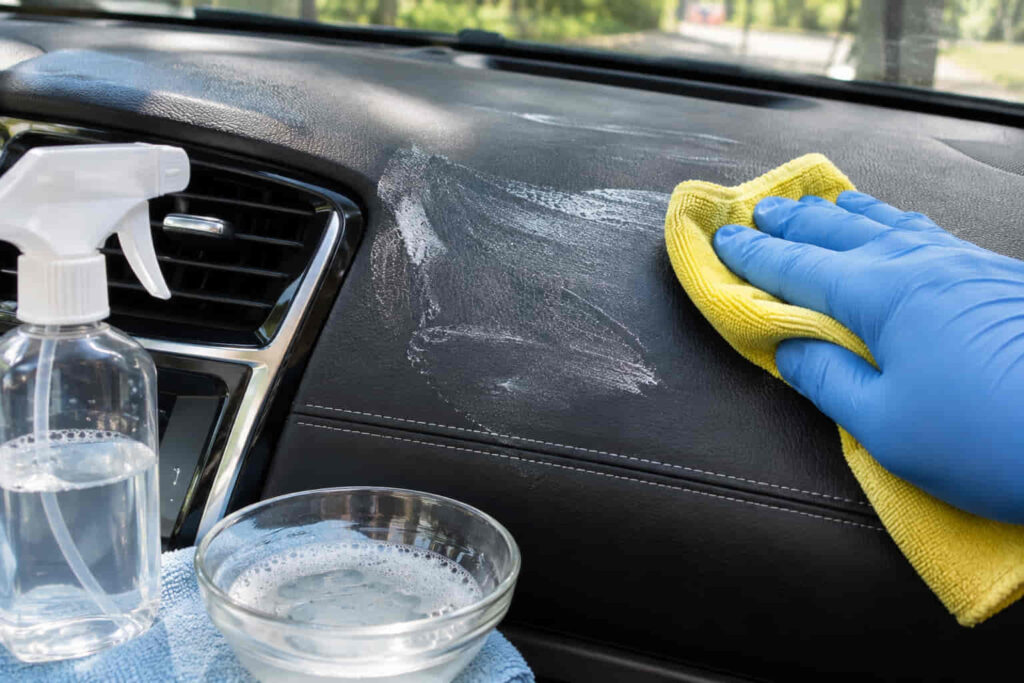
To remove sunscreen from a car interior, gently lift excess sunscreen with a clean microfiber cloth, apply a cleaning product suitable for the affected material, and wipe away the residue without aggressive scrubbing. Leather, vinyl, plastic, and fabric require different cleaning methods because their surface coatings and moisture absorption properties affect how sunscreen stains respond to cleaning.
Sunscreen can leave white marks, greasy residue, or persistent discoloration on car seats, dashboards, door panels, and other interior surfaces. Mineral sunscreens containing zinc oxide or titanium dioxide can deposit visible white particles, while oils and other ingredients may leave a film that attracts dirt. When sunscreen remains on a surface for an extended period, its ingredients may become more difficult to remove, particularly from textured plastic or absorbent upholstery.
The safest approach is to identify the interior material, test an appropriate cleaner on a hidden area, and remove the stain using controlled moisture and gentle wiping. Automotive leather cleaners are suitable for compatible leather finishes, while fabric upholstery requires products designed to lift stains without saturating the seat padding. Harsh solvents, abrasive tools, and excessive water can damage interior coatings or spread the contamination.
This guide explains how to remove fresh and dried sunscreen stains from different car interior materials, recognize possible surface damage, and prevent sunscreen residue from returning.
What Do You Need to Remove Sunscreen From a Car Interior?
To remove sunscreen from a car interior safely, you need clean microfiber cloths, a cleaning product compatible with the affected material, and a method for removing loosened residue without spreading it. The appropriate cleaner depends on whether the sunscreen is on leather, synthetic leather, vinyl, plastic, or fabric upholstery. A dedicated automotive interior cleaner may be suitable for certain hard surfaces, while leather and fabric generally require products specifically approved for those materials.
Microfiber cloths are the primary cleaning tool because they can lift sunscreen residue with less surface abrasion than rough towels or stiff brushes. Use a clean, soft cloth to remove loose sunscreen and a separate cloth to wipe away the cleaning product. This separation prevents residue collected during the first pass from being transferred back onto the surface. For example, wiping a sunscreen-covered black door panel repeatedly with the same contaminated cloth can spread the white residue into surrounding textured areas instead of removing it.
A material-compatible cleaner is necessary when sunscreen leaves an oily film that cannot be removed through dry wiping. Automotive interior cleaners contain cleaning agents designed to loosen certain types of surface contamination, but their suitability depends on the formulation and the surface manufacturer’s recommendations. On coated leather, a dedicated automotive leather cleaner is generally preferable to an unverified household degreaser. On vinyl or plastic, an approved interior cleaner can help release oily residue from the surface grain. The product should be used at its specified dilution and contact time rather than applied at a higher concentration to accelerate cleaning.
Fabric upholstery requires a different cleaning product because sunscreen oils can move beneath the visible surface. A fabric-safe automotive upholstery cleaner is designed to treat contamination within textile fibers, whereas a cleaner intended for hard plastic may leave unwanted residue in absorbent materials. A clean absorbent towel is useful for blotting loosened sunscreen and moisture. For stains that extend deeper into suitable fabric upholstery, an upholstery extraction machine may assist with rinsing and recovering cleaning solution, provided the vehicle and material manufacturer permit that method. Excessive wetting should be avoided because moisture can remain in the seat padding.
A soft detailing brush may be useful for textured plastic when the cleaner’s instructions allow gentle agitation. The brush should have soft, clean bristles and should not be used aggressively on delicate coatings, leather finishes, or specialty upholstery. Its purpose is to help release residue trapped in shallow surface patterns rather than scrape the stain away. For example, sunscreen lodged in the grain of a textured center console may respond to light agitation with a compatible cleaner, followed by removal with a microfiber cloth.
The cleaning supplies should also include a way to control moisture and inspect the result. A lightly dampened cloth may be appropriate for removing remaining cleaner from certain surfaces when permitted by the product instructions, while a dry microfiber cloth helps absorb residual moisture. Good lighting makes it easier to identify white deposits that remain in seams or surface texture. Avoid substituting acetone, bleach, strong household degreasers, or abrasive pads for appropriate interior cleaning products, because these can damage protective coatings and change the appearance of the material.
The most effective cleaning setup is not the one with the strongest chemicals or the greatest number of tools. It is the combination of a compatible cleaner, clean cloths, controlled application, and sufficient residue removal. This approach addresses sunscreen contamination while limiting unnecessary contact with the car interior’s finishes.
How Do You Remove Fresh Sunscreen From a Car Interior?
Fresh sunscreen should be removed by lifting the excess product first, cleaning the remaining film with a material-safe cleaner, and drying the affected area. Acting before the sunscreen spreads or settles into surface texture makes the cleaning process more manageable. The objective is to remove the contamination from the material rather than redistribute it across a larger area. This is particularly important on dark upholstery, where a thin layer of mineral sunscreen can leave a visible white streak.
Begin by removing any excess sunscreen with a clean, dry microfiber cloth. If a substantial amount of cream is present, gently lift it from the surface without pressing it into the material. Use controlled movements from the outer edge of the affected area toward the center to limit spreading. On smooth plastic or coated leather, light wiping may remove much of the product. On fabric upholstery, blotting is preferable because rubbing can work sunscreen oils and particles deeper into the fibers.
After removing the excess, apply a cleaner that is approved for the affected interior material. Follow the product’s instructions for application and dwell time, and avoid spraying directly into seams, switches, or electronic controls. For many hard interior surfaces, applying the cleaner to a microfiber cloth provides better control over the amount of liquid used. Gently wipe the contaminated area, allowing the cleaning agents to loosen the remaining sunscreen film. For example, a fresh sunscreen mark on a vinyl door panel may require a light cleaning pass to remove both the visible white deposit and the oily layer beneath it.
The wiping method should reflect the surface construction. Smooth vinyl and compatible coated leather can generally be cleaned with gentle, controlled movements, while textured plastic may require attention to residue trapped in its grain. Fabric seats should be treated by blotting with an approved upholstery cleaner rather than saturating the fabric. If sunscreen has transferred onto a seat seam, avoid forcing liquid into the stitching or padding. Controlled cleaning reduces the likelihood of creating a larger stain or leaving moisture beneath the surface.
Removing loosened residue is as important as applying the cleaning product. A cleaner can release sunscreen oils and mineral particles, but those contaminants must be transferred onto a clean cloth or otherwise removed using the method specified for the material. Switch to an uncontaminated section of the microfiber cloth as the residue is collected. Where permitted, use a lightly dampened cloth to remove remaining cleaning solution, then dry the area with another clean cloth. Leaving a mixture of cleaner and sunscreen on the surface can produce streaks or a dull-looking film after drying.
Allow the cleaned area to dry completely before evaluating the result. A surface that appears clean while damp may reveal white residue or uneven sheen once dry. Inspect the original stain location and surrounding material under good lighting. If a small amount of residue remains, repeat the approved cleaning method gently rather than immediately switching to a stronger chemical. On fabric, confirm that the upholstery is drying properly and avoid repeated applications that leave the seat excessively wet.
Fresh sunscreen removal is successful when the visible residue and oily film are gone without changing the material’s color, texture, or finish. If a mark remains despite careful cleaning, it may require a material-specific approach rather than additional pressure. Early treatment reduces the opportunity for sunscreen to accumulate in textured surfaces or penetrate absorbent upholstery, but protecting the interior finish remains more important than removing every trace in a single cleaning attempt.
Read more: how to remove car window adhesive
How Do You Remove Sunscreen From Leather Car Seats?
To remove sunscreen from leather car seats, use a cleaner approved for the leather finish, gently work it over the affected area with a soft microfiber cloth, and remove the loosened residue before drying the surface. Most modern automotive leather upholstery has a protective surface coating, so the cleaning process should focus on removing sunscreen from that coating without wearing it away. Uncoated, aniline, and other specialty leather finishes require different care and should only be treated with products specifically approved for them.
Sunscreen residue on leather seats typically appears as white streaks, greasy patches, or a combination of both. Mineral sunscreen can leave zinc oxide or titanium dioxide particles in the leather’s surface grain, while oils and emollients can produce an uneven sheen. These deposits are particularly visible on black or dark-colored seats. For example, sunscreen transferred from a passenger’s legs onto a dark leather seat may leave a pale mark along the seat bolster, where repeated contact can spread the product across the textured finish.
A compatible automotive leather cleaner is preferable to a strong household degreaser because the leather’s protective finish must remain intact during cleaning. Apply the product according to its instructions, using a clean microfiber cloth or another applicator approved for the specific leather. Work gently across the stained area without applying excessive pressure. The cleaning agents help loosen the sunscreen film so it can be transferred to the cloth. Aggressive scrubbing is unnecessary and can gradually abrade the finish, especially on high-contact areas such as seat bolsters and armrests.
Pay particular attention to the leather’s grain and stitching. Sunscreen particles can remain in shallow surface texture even after the surrounding area appears clean. A soft applicator may help release residue from compatible coated leather, but stiff brushes should be avoided unless explicitly approved by the leather care product and vehicle manufacturer. Do not saturate perforated leather or allow cleaning liquid to collect in seams, because moisture can reach the materials beneath the upholstery. On ventilated seats, applying cleaner to the cloth rather than directly onto the seat helps control liquid around the perforations.
After cleaning, remove the loosened sunscreen and any remaining cleaning product using the method specified by the leather cleaner manufacturer. A clean, dry microfiber cloth is suitable for collecting residue from many coated leather surfaces, while certain products may require a lightly dampened cloth for final removal. Allow the leather to dry naturally and inspect the affected area under consistent lighting. If the seat has an uneven sheen while damp, wait until it is completely dry before deciding whether another cleaning pass is necessary.
A persistent white mark does not always indicate remaining sunscreen. If the surface appears lighter after the residue has been removed, the leather’s color coating or finish may have been affected. Repeated cleaning with stronger chemicals will not restore missing pigment or repair a damaged coating. For example, a pale area on a black seat that remains unchanged after appropriate cleaning may require professional leather refinishing rather than further stain removal.
Successful sunscreen removal should leave the leather clean without altering its color, texture, or original finish. Leather conditioners or protective treatments should only be applied when suitable for the specific upholstery and recommended by the manufacturer. They are not substitutes for removing sunscreen residue, and applying them over contamination can leave an additional film. When the correct cleaning method fails to improve the stain, professional assessment is safer than escalating to abrasive tools or unapproved solvents.
How Do You Remove Sunscreen From Vinyl and Synthetic Leather Car Seats?
Sunscreen can be removed from vinyl and synthetic leather car seats by using a cleaner approved for the upholstery, gently wiping the contaminated surface, and removing the remaining product without excessive moisture. These materials generally have a manufactured surface layer designed to provide a consistent appearance and resistance to everyday wear. However, their protective coatings and chemical resistance vary by manufacturer, so a product labeled as safe for one type of vinyl or synthetic leather should not automatically be considered suitable for every seat covering.
Vinyl and synthetic leather can develop white sunscreen marks because mineral particles settle into the surface grain, while oils and other formulation ingredients create a greasy film. The residue may be concentrated on seat cushions, side bolsters, headrests, and armrests where sunscreen-covered skin makes direct contact. On light-colored upholstery, oily contamination may be more noticeable than white mineral deposits. On dark synthetic leather, even a small amount of sunscreen can create a visible pale streak across the textured surface.
The cleaning process should begin with an approved automotive upholstery or interior cleaner that explicitly supports the seat material. Apply the cleaner according to its instructions, preferably using a clean microfiber cloth when controlled application is appropriate. Wipe the affected area gently to loosen the sunscreen residue. Unlike absorbent fabric, intact vinyl and many synthetic leather finishes hold much of the contamination near the surface, making controlled wiping effective for fresh deposits. However, seams, perforations, and damaged coatings can allow moisture or contamination to reach underlying layers.
Textured vinyl requires careful attention because sunscreen particles can remain in the molded grain after the oily film has been removed. If the cleaner and material manufacturer permit it, a soft detailing brush can help release residue from shallow texture using minimal pressure. The brush should move gently across the affected area rather than scrape against it. For example, sunscreen embedded in the grain of a vinyl seat bolster may require light agitation followed by wiping with a clean microfiber cloth. Increasing pressure to remove a stubborn mark can create unwanted shine or surface abrasion.
Removing the cleaning solution completely is important because leftover product can make vinyl or synthetic leather appear streaky or uneven. Use a clean cloth and follow the cleaner’s instructions for any required final wipe. Avoid leaving concentrated cleaner on the upholstery or allowing liquid to accumulate around stitching and seat controls. Once the surface has dried, compare its appearance with an unaffected section of the seat. A uniform finish indicates that the contamination has been removed without visibly changing the material.
Some sunscreen ingredients can interact with surface finishes during prolonged contact, particularly when heat and repeated transfer are involved. If a mark remains after suitable cleaning, determine whether it is still residue or an alteration of the upholstery coating. A persistent glossy patch, faded area, or change in surface texture may indicate damage that cleaning cannot reverse. Applying stronger solvents in response can worsen the condition, especially on polyurethane-coated synthetic leather.
The safest method for cleaning sunscreen from vinyl and synthetic leather is to remove the residue while preserving the original surface coating. Material compatibility, controlled wiping, and complete residue removal are more important than aggressive cleaning. If the finish has already changed or the seat material is peeling, professional evaluation is appropriate before attempting further treatment.
How Do You Remove Sunscreen From Car Dashboards and Plastic Trim?
To remove sunscreen from car dashboards and plastic trim, use a plastic-safe automotive interior cleaner and a soft microfiber cloth to lift the residue without damaging the surface finish. Apply the cleaner according to its instructions, gently wipe the affected area, and remove the loosened sunscreen with a clean section of the cloth. Dashboard panels, door trim, center consoles, and interior handles often have textured or coated surfaces, so the cleaning method must preserve their original appearance while removing both white deposits and oily contamination.
Sunscreen is particularly noticeable on dark plastic because mineral UV filters can leave pale streaks that contrast with the surrounding material. Zinc oxide and titanium dioxide particles may settle into molded grain patterns, while oils and emollients can leave a greasy film across the surface. For example, sunscreen transferred from a driver’s forearm onto a black door panel may produce a white mark that remains visible after a quick dry wipe. This happens because the cloth removes loose material from the raised texture but may not reach residue trapped in its shallow recesses.
Textured plastic should be cleaned with gentle agitation only when the surface and cleaning product permit it. Apply a compatible cleaner to the microfiber cloth or another approved applicator, then work across the affected area using light pressure. If residue remains inside the grain, a soft detailing brush may help release it without scraping the plastic. The brush should be used carefully, and the loosened contamination must be collected with a clean cloth. Excessive scrubbing can alter the sheen of matte or textured trim, creating a polished-looking patch that remains visible after the sunscreen has been removed.
Dashboards require additional care because their finishes may differ from those used on door panels or lower interior trim. Some dashboard surfaces have soft-touch coatings or other decorative finishes that are sensitive to unsuitable chemicals and abrasion. A cleaner approved for general automotive plastic is not automatically suitable for every coated dashboard. Test the product on an inconspicuous area and follow the vehicle manufacturer’s care instructions. If a surface becomes tacky, loses color, or changes texture during cleaning, stop immediately rather than increasing the cleaning pressure.
Cleaning liquid should never be allowed to enter dashboard switches, infotainment controls, instrument clusters, or electrical openings. Apply the product to a cloth instead of spraying directly toward sensitive components. Screens and glossy display surfaces may have specialized coatings and should be cleaned only with products and methods approved for those displays. For example, a sunscreen fingerprint on a touchscreen should not be treated with the same brush and interior cleaner used on textured door plastic. Using an incompatible chemical can damage an anti-reflective or fingerprint-resistant coating.
After cleaning, remove any remaining product according to the cleaner’s instructions and allow the surface to dry. Inspect the area from different angles because sunscreen residue can be difficult to see while the plastic is damp. If a white mark remains inside the grain, another gentle cleaning pass may be appropriate. However, a persistent pale patch accompanied by a change in texture or sheen may indicate surface damage rather than removable contamination.
The correct result is a clean dashboard or plastic panel that retains its original color, texture, and finish. Avoid using glossy dressings to conceal sunscreen marks before the contamination has been removed. These products can temporarily change the appearance of the surface without addressing the underlying residue. Material-safe cleaning and complete removal of loosened sunscreen provide a more reliable result.
How Do You Remove Sunscreen From Fabric Car Seats?
To remove sunscreen from fabric car seats, lift any excess product, treat the stain with a fabric-safe automotive upholstery cleaner, and blot or extract the loosened contamination without saturating the seat. Fabric requires a different approach from plastic or coated upholstery because sunscreen ingredients can penetrate between textile fibers. The objective is to remove the visible residue and oily components while preventing the stain from spreading into surrounding fabric or deeper seat padding.
Sunscreen stains on fabric can contain both mineral particles and oily ingredients. White residue may remain near the surface, while oils can create darker patches that extend beyond the original contact area. The structure of woven upholstery allows liquid ingredients to move between fibers, making aggressive rubbing counterproductive. For example, sunscreen transferred from a passenger’s leg onto a cloth seat cushion may leave a pale deposit surrounded by a darker oily area. Removing only the white particles will not necessarily eliminate the entire stain.
Begin by gently lifting any remaining sunscreen from the fabric without pushing it deeper into the upholstery. If the product is still fresh, blot the affected area with a clean, absorbent cloth. Avoid spreading the cream across the seat or grinding it into the weave. Once the excess has been removed, apply an upholstery cleaner approved for the fabric and follow the manufacturer’s directions for application and contact time. Test the cleaner on a hidden area first, particularly when the seat has colored fabric, decorative stitching, or an unfamiliar finish.
The cleaning product must loosen the oily components so they can be removed from the textile fibers. Depending on the approved cleaner, this may involve controlled application followed by blotting with an absorbent cloth or gentle agitation using a suitable upholstery tool. Work carefully around the stain boundary to avoid spreading contamination into clean fabric. If the cleaner produces foam or releases visible residue, remove it using the method specified by the product manufacturer rather than leaving it to dry inside the upholstery.
Moisture control is essential because excessive liquid can carry sunscreen residue into the seat padding and create additional drying problems. Apply only the amount of cleaner needed for the treatment. If the seat fabric and vehicle manufacturer permit extraction, a suitable upholstery extractor can help recover loosened contamination and cleaning solution. Extraction should be performed with controlled moisture rather than repeated saturation. Overwetting may leave the cushion damp for an extended period and can contribute to water marks, odors, or residue returning to the surface as the seat dries.
After treatment, blot away remaining moisture with a clean towel and allow the seat to dry completely in a well-ventilated environment. Inspect the fabric only after drying because damp upholstery can temporarily appear darker than the surrounding material. If a stain reappears, residual sunscreen or cleaning solution may still be present in the fibers. Another controlled treatment may help, but repeated soaking should be avoided. Persistent discoloration or staining that extends deep into the upholstery may require professional detailing equipment and assessment.
Successful sunscreen removal from fabric car seats requires eliminating the residue without spreading the stain, leaving excess cleaning solution, or saturating the cushion. Unlike smooth interior surfaces, fabric must be cleaned with attention to absorption and drying. A properly matched upholstery cleaner, gentle stain treatment, and effective moisture removal provide the safest approach for restoring the seat’s appearance.
How Do You Remove Sunscreen From Alcantara and Suede-Like Car Interiors?
To remove sunscreen from Alcantara and suede-like car interiors, gently lift the surface residue and use a cleaning method specifically approved for the upholstery material. These finishes require careful handling because excessive moisture, unsuitable chemicals, and aggressive rubbing can alter their appearance or texture. Alcantara is a branded synthetic microfiber material, while other suede-like automotive surfaces may have different fiber constructions and backing materials. Their cleaning requirements should not be assumed to be identical.
Sunscreen can leave two distinct forms of contamination on these surfaces. Mineral ingredients such as zinc oxide and titanium dioxide may create visible white deposits among the fine fibers, while oils and emollients can cause localized darkening or matting. The raised fiber surface, often described as the nap, contributes to the material’s soft appearance but also creates spaces where residue can collect. For example, sunscreen transferred from a passenger’s arm onto an Alcantara door insert may leave a pale streak accompanied by a flattened area where the fibers have been pressed together.
The safest initial treatment is to remove loose sunscreen without grinding it into the microfiber surface. If a small amount of cream remains, carefully lift it with a clean, soft cloth using minimal pressure. Avoid spreading the product across the surrounding upholstery. Once the excess has been removed, consult the vehicle manufacturer’s care instructions and the material supplier’s cleaning guidance. Use only a cleaner and application method approved for that specific surface, and test the treatment in an inconspicuous area before addressing the visible stain.
Controlled moisture is especially important when treating Alcantara or similar upholstery. Some approved cleaning methods use a lightly dampened cloth, while others require a dedicated fabric or microfiber upholstery product. The appropriate method depends on the material and its finish. Apply the recommended amount of cleaning solution without saturating the surface, then gently lift the loosened contamination. Heavy rubbing can flatten the nap or spread oily ingredients through the fibers, leaving an uneven appearance even after the visible sunscreen residue has been removed.
The surface must be allowed to dry completely before its texture and color can be evaluated accurately. Moist fibers may appear darker or lie in a different direction from the surrounding upholstery. Once the material has dried, follow the manufacturer’s guidance for restoring the nap, if needed. A suitable soft brush may be recommended for certain microfiber finishes, but brushing should not be used automatically on every suede-like material. Natural suede, in particular, requires different care from synthetic Alcantara and should not be treated as interchangeable.
Persistent stains require careful assessment because the remaining mark may involve oil retained within the fibers rather than loose sunscreen on the surface. Repeated wet cleaning can spread contamination or affect the backing material, especially when the upholstery is bonded to a door panel or another interior component. If an approved treatment does not improve the stain, further cleaning should be stopped until the material and contamination have been evaluated.
Professional detailing is preferable when sunscreen has penetrated delicate upholstery, caused extensive matting, or produced a persistent color difference. A specialist familiar with the exact material can determine whether additional stain removal is appropriate or whether the appearance has been altered beyond what routine cleaning can correct. Preserving the fiber structure is more important than attempting to remove a stubborn mark through repeated scrubbing.
How Do You Remove Dried or Stubborn Sunscreen Stains From a Car Interior?
Dried sunscreen stains should be treated by loosening the residue with a cleaner compatible with the interior material, removing the released contamination, and repeating the process only when the surface remains unaffected. Dried sunscreen is more difficult to remove because oils, waxes, mineral particles, and other ingredients may form a concentrated deposit after prolonged contact. The correct treatment depends on whether the residue is sitting on a nonporous finish or has entered an absorbent material.
On plastic, vinyl, and compatible coated leather, dried sunscreen may accumulate in surface grain, seams, or areas exposed to repeated skin contact. A suitable interior cleaner can help loosen the oily components holding the residue in place. Apply the product according to its instructions and allow only the recommended contact time. Gentle wiping or approved light agitation can then release the contamination. For example, a dried white sunscreen mark on a textured black door panel may require more than one controlled cleaning pass because mineral particles remain in the molded grain after the initial oily film is removed.
A stubborn sunscreen stain should not be treated by increasing chemical strength or scrubbing pressure without considering the surface finish. Strong solvents can damage protective coatings, while abrasive cleaning can permanently change the sheen of plastic or upholstery. If the first treatment removes part of the stain, repeat the same approved method after checking the surface for color transfer, softening, or texture changes. A gradual reduction in visible residue indicates that the cleaning process is working. A mark that remains unchanged after appropriate treatment may require a different assessment rather than more aggressive cleaning.
Fabric upholstery presents a different challenge because sunscreen oils can penetrate between fibers and remain below the visible surface. Dried residue may need a fabric-safe upholstery cleaner with sufficient contact time to loosen the contamination, followed by controlled blotting or an approved extraction process. The cleaner should be used according to its label, and the seat should not be saturated. For example, a dried sunscreen stain on a cloth seat may appear lighter after surface cleaning but become visible again as moisture evaporates and remaining contamination migrates toward the fabric surface.
Repeated stain treatment should be separated by adequate drying and inspection. A damp surface can temporarily conceal residue or make a fabric stain appear larger than it actually is. Allowing the material to dry helps distinguish remaining contamination from changes caused by moisture. If the stain improves after each safe treatment, additional careful cleaning may be reasonable. If the surface begins to fade, become glossy, feel rough, or show signs of coating deterioration, stop immediately because continued treatment can produce damage that is more difficult to correct than the original sunscreen mark.
Older sunscreen marks may also involve changes to the material itself. Prolonged contact with sunscreen ingredients, heat, and repeated friction can contribute to staining or finish alteration, depending on the sunscreen formulation and interior material. In these cases, the visible mark may no longer consist entirely of removable residue. A cleaner cannot restore pigment that has been lost or reverse chemical damage to a protective coating. Distinguishing these conditions prevents unnecessary use of stronger cleaning products.
The appropriate stopping point is reached when the remaining mark no longer improves with a compatible cleaning method or when the material shows signs of deterioration. At that stage, professional detailing or surface restoration assessment is more appropriate than continued DIY treatment. Successful removal of dried sunscreen depends on controlled cleaning, careful residue recovery, and protecting the original interior finish throughout the process.
How Can You Tell Whether a Sunscreen Mark Is Residue or Surface Damage?
You can distinguish sunscreen residue from surface damage by examining the mark’s appearance, checking the material’s texture, and observing whether the discoloration improves after gentle cleaning with an approved product. Sunscreen residue consists of material deposited on or within the interior surface, while surface damage involves a change to the upholstery or trim itself. This distinction matters because cleaning can remove contamination, but it cannot restore a damaged protective coating, missing pigment, or permanently altered surface texture.
White sunscreen residue generally appears as a powdery deposit, streak, or uneven film on the affected area. Mineral ingredients such as zinc oxide and titanium dioxide can remain visible on dark plastic, leather, and vinyl after the sunscreen’s other ingredients have spread or dried. When the mark is removable contamination, an appropriate cleaning treatment should transfer at least some residue onto the cleaning cloth or visibly reduce the deposit. For example, a pale streak on a black plastic door panel that gradually disappears after gentle cleaning is consistent with sunscreen residue rather than permanent discoloration.
Surface damage is more likely when the affected area shows a persistent change in color, gloss, or texture after the removable contamination has been cleared. On coated leather, damage may appear as a lighter patch, uneven sheen, or deterioration of the protective finish. On plastic trim, a damaged area may look unusually glossy, faded, or rough compared with the surrounding surface. These changes can result from several causes, including chemical exposure, friction, aging, or previous cleaning attempts. Their presence does not establish sunscreen as the cause, but it indicates that further stain removal may not solve the problem.
Oily sunscreen contamination requires a separate assessment because it can change the appearance of a surface without immediately causing permanent damage. A greasy film may make vinyl or synthetic leather look darker or shinier than adjacent areas. If an approved cleaner removes the film and the original finish returns after drying, the problem was primarily surface contamination. If the area remains darker or discolored despite appropriate cleaning, the material may have absorbed ingredients or undergone a change that routine cleaning cannot reverse.
The cleaned surface should be evaluated only after it has dried completely. Moisture can temporarily darken fabric, change the appearance of leather grain, or conceal white deposits on textured plastic. Inspect the affected area under consistent lighting and compare it with an unaffected section of the same material. For example, a fabric seat may appear evenly colored immediately after cleaning but reveal a remaining stain once the moisture evaporates. This does not automatically indicate permanent damage; residual contamination may still be present within the fibers.
A controlled cleaning test provides useful evidence, but it should not be repeated indefinitely. If a compatible cleaner produces visible improvement without affecting the material, another gentle treatment may be appropriate. If the mark remains unchanged or the surface begins to lose color, develop unusual shine, or feel different, stop cleaning. Continuing to apply chemicals or pressure can turn a manageable stain into permanent surface damage.
The key diagnostic question is whether the mark is removable material or an alteration of the interior finish. Residue generally responds to suitable cleaning, while damaged coatings, faded pigment, and altered textures require a different form of treatment. When the cause remains uncertain, professional inspection is preferable to experimenting with stronger products.
What Should You Avoid When Removing Sunscreen From Car Interiors?
When removing sunscreen from car interiors, avoid harsh solvents, abrasive cleaning tools, excessive moisture, and cleaning products that are not approved for the affected material. These methods can damage leather coatings, discolor plastic, weaken upholstery finishes, or spread sunscreen contamination. The safest cleaning process uses the least aggressive method capable of removing the residue while preserving the surface’s original condition.
Strong chemicals are a major concern because automotive interior materials contain coatings, dyes, adhesives, and synthetic compounds with different chemical resistance. Acetone, paint thinner, bleach, and concentrated household degreasers should not be used as general-purpose sunscreen removers. These products can affect surface coatings or cause discoloration, depending on the material. Alcohol-based products also require caution because some automotive finishes are sensitive to them, even though certain manufacturer-approved cleaning procedures may permit specific formulations. Chemical compatibility must be established before use rather than assumed from a product’s ability to dissolve oils.
Abrasive cleaning methods should be avoided because physical damage can remain visible after the sunscreen stain disappears. Stiff brushes, scouring pads, and abrasive cleaning sponges can scratch plastic trim, wear coated leather, or create shiny patches on matte surfaces. Melamine foam sponges, sometimes marketed as magic erasers, are particularly unsuitable as a routine solution for delicate interior finishes because their abrasive action can remove or alter surface coatings. For example, aggressive scrubbing may eliminate a white sunscreen streak from a textured dashboard while leaving a smooth, glossy area that no longer matches the surrounding panel.
Excessive water and cleaning solution create a different set of risks. Fabric seats can absorb liquid into their underlying padding, while perforated leather, upholstery seams, and trim openings can allow moisture to reach concealed materials. Water left inside seat cushions may cause prolonged dampness, odors, or additional staining. Liquid entering electrical switches, seat controls, or infotainment components can create more serious problems. Apply cleaning products in controlled amounts and avoid spraying directly into openings or onto sensitive electronics.
Unverified household cleaning mixtures should not replace products approved for automotive interiors. Vinegar, baking soda pastes, dishwashing detergents, and homemade degreasers are sometimes recommended for general stain removal, but their suitability depends on concentration, formulation, and surface compatibility. A mixture that removes oily residue from one household material may leave deposits or affect the finish of an automotive seat. Combining cleaning chemicals also introduces unnecessary risks, particularly when their ingredients and reactions are not understood.
Heat should not be used to accelerate sunscreen removal. Hair dryers, steam cleaners, and direct high-temperature treatment can affect sensitive upholstery, adhesives, and surface coatings if the equipment or method is unsuitable. Steam cleaning may be appropriate for certain materials under controlled professional procedures, but it is not universally safe for leather, synthetic upholstery, or bonded interior panels. Allowing a cleaned area to dry with suitable ventilation is generally safer than exposing it to concentrated heat.
Avoid applying interior dressings or protective products over sunscreen residue to hide the stain. A dressing may temporarily change the surface’s sheen, making a white mark less noticeable without removing the underlying contamination. Additional product layers can also make later cleaning more difficult. Sunscreen should be removed first, and any protective treatment should be selected according to the material manufacturer’s instructions.
The most important mistake to avoid is continuing to scrub when a stain no longer responds to appropriate cleaning. A persistent mark may indicate embedded contamination, chemical staining, or damage to the surface finish. Increasing chemical strength or pressure without identifying the problem can worsen the result. Preserving the interior material should take priority over forcing a stain to disappear in a single cleaning session.
When Should You Hire a Professional Detailer for Sunscreen Stains?
You should hire a professional detailer when sunscreen stains remain after appropriate cleaning, cover a large area, affect delicate upholstery, or appear to have damaged the interior finish. Professional assessment is especially useful when the remaining mark cannot be identified as removable residue or permanent discoloration. Continuing to apply stronger chemicals without understanding the condition of the material can increase repair costs and make restoration more difficult.
Persistent sunscreen stains on fabric upholstery are one reason to seek professional cleaning. Oils and other sunscreen ingredients can penetrate textile fibers and become difficult to remove through surface blotting. If a stain returns after the seat dries, contamination may remain beneath the visible fabric. A professional detailer can assess whether controlled extraction or another upholstery-safe cleaning method is appropriate. For example, a sunscreen stain that repeatedly reappears on a cloth seat cushion may require more thorough residue removal than a household cleaning cloth can provide. However, extraction is not suitable for every upholstery construction, and excessive moisture must still be avoided.
Delicate interior materials require professional attention when the correct cleaning procedure is uncertain or initial treatment produces no improvement. Alcantara, natural suede, specialty leather, and certain coated interior panels can react differently to moisture, cleaning agents, and mechanical agitation. A detailer experienced with the specific material can evaluate the stain and select a suitable treatment. This is particularly important when the upholstery has a raised fiber surface or a finish that may become permanently altered through aggressive rubbing.
A professional inspection is also appropriate when sunscreen residue appears to have caused discoloration or damage to a protective coating. Cleaning removes contamination, but it cannot replace missing pigment, restore an abraded finish, or reverse every chemical interaction. For example, a pale patch on a dark leather seat that remains unchanged after the residue has been removed may indicate a coating or color problem rather than a remaining sunscreen stain. A qualified leather repair specialist may be more appropriate than a general interior cleaner if refinishing is required.
The condition of the interior should determine whether the next step is cleaning or restoration. A professional detailer may be able to remove embedded residue, but damaged coatings, peeling synthetic leather, and permanently altered plastic finishes can require specialized repair or component replacement. Before authorizing additional treatment, explain which cleaning products have already been used and whether the mark changed afterward. This information helps the specialist assess the material without unnecessarily repeating unsuccessful procedures.
When selecting a detailing service, confirm that the provider has experience with the affected upholstery and uses products appropriate for automotive interiors. Ask whether the service involves stain removal, surface restoration, or both, because these procedures address different problems. A reliable assessment should also acknowledge that complete stain removal cannot be guaranteed when sunscreen ingredients have affected the material itself.
Professional detailing is most valuable when it reduces the risk of further damage while determining whether the stain is still removable. If a suitable DIY cleaning method has stopped producing improvement, additional scrubbing is unlikely to be the safest next step. An experienced specialist can help establish realistic cleaning or restoration options before the interior condition deteriorates.
How Do You Prevent Sunscreen Stains on Car Seats and Interior Surfaces?
You can prevent sunscreen stains on car interiors by reducing direct contact between sunscreen-covered skin and upholstery, removing transferred product promptly, and maintaining a material-appropriate interior cleaning routine. Sunscreen transfer occurs when treated skin or clothing touches seats, armrests, door panels, or other surfaces. Limiting this contact reduces the amount of mineral residue and oily contamination that accumulates inside the vehicle.
Freshly applied sunscreen can transfer to interior surfaces before the product has settled on the skin. Allow sunscreen to dry or absorb according to its label instructions before entering the vehicle, while continuing to follow the product’s directions for effective sun protection. This precaution can reduce visible transfer, although it does not eliminate it. For example, a passenger wearing sunscreen on their legs may leave white marks on a dark seat cushion during a long drive, particularly when repeated movement creates friction between the skin and upholstery.
Physical barriers can reduce sunscreen contact with seats when they are suitable for the vehicle and do not interfere with safety equipment. A clean, removable seat protector designed for the specific seating position may help prevent direct transfer during activities involving frequent sunscreen use. However, seat covers must not obstruct seat-mounted airbags, seat belts, child restraint installation, or other safety features. Vehicle manufacturer instructions should determine whether a particular cover or protector is acceptable. An ordinary towel should not be assumed safe for every seating position, especially where it could interfere with restraint systems.
Routine interior cleaning helps prevent sunscreen residue from accumulating in textured plastic and frequently touched upholstery. Door armrests, center consoles, seat bolsters, and interior handles are common contact areas because passengers regularly rest sunscreen-covered arms or hands against them. Removing visible residue promptly with a compatible cleaner prevents repeated contact from spreading contamination across a larger area. For example, a small white mark on a vinyl door panel is easier to address before additional sunscreen and dust collect in its surface grain.
Interior protection products should be selected according to the material manufacturer’s recommendations rather than applied as a universal barrier against sunscreen. Some automotive surface protectants are designed for particular plastics, vinyl finishes, or leather coatings, but their compatibility and protective properties vary. A product suitable for dashboard trim may not be appropriate for seat upholstery. Protective treatments should not create slippery surfaces on steering wheels, pedals, or other vehicle controls. They also do not eliminate the need to remove sunscreen residue when contact occurs.
Preventing stains on fabric seats requires particular attention because oils can enter the fibers before a visible mark becomes obvious. If sunscreen transfers onto cloth upholstery, prompt blotting with a clean absorbent material can limit spreading. Any subsequent cleaning should follow the fabric manufacturer’s care instructions. Avoid leaving damp towels or cleaning materials against the upholstery, because prolonged moisture exposure can create additional staining or drying problems.
The most effective prevention strategy combines reduced sunscreen transfer, prompt residue removal, and regular cleaning with products approved for each interior material. These practices help preserve the original appearance of leather, vinyl, plastic, and fabric without relying on harsh stain-removal treatments. Sunscreen remains important for protecting exposed skin from ultraviolet radiation, so the objective is to manage contact with vehicle surfaces rather than discourage its proper use.