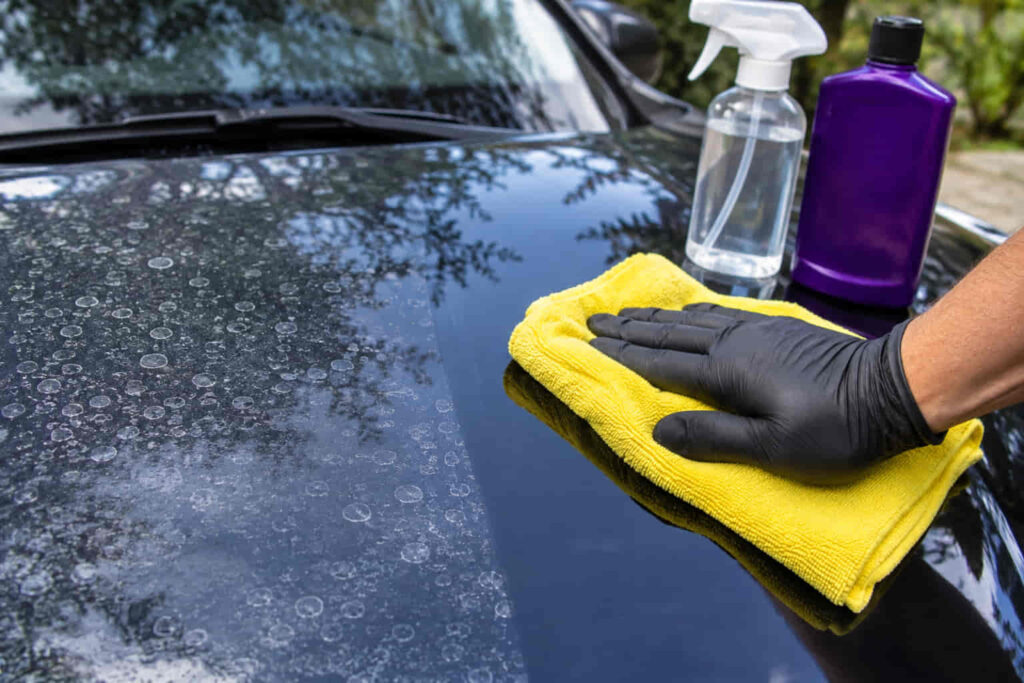
Water marks on a car can be removed by washing the affected surface with automotive shampoo, drying it with a clean microfiber towel, and applying a paint-safe water spot remover to dissolve any remaining mineral deposits. The safest method depends on whether the marks are surface-level mineral residue or etched water spots that have affected the clear coat. Fresh water spots are generally easier to remove, while stubborn stains may require specialized chemical treatment or professional paint correction.
Water marks form when water evaporates and leaves behind dissolved minerals, including calcium and magnesium. Hard water from sprinklers, car washes, and household hoses is a common source of these deposits. When mineral residue remains on automotive paint, especially under direct sunlight or high temperatures, it can become increasingly difficult to remove. If the deposits contribute to surface etching, ordinary washing will not restore the original finish.
Removing water spots without damaging car paint requires using the least aggressive effective cleaning method. Automotive water spot removers can dissolve mineral contamination, while polishing is reserved for defects that remain after the deposits have been removed. Household acids, abrasive materials, and aggressive scrubbing can damage protective coatings or introduce scratches when used incorrectly.
This guide explains how to remove water marks from car paint and glass, treat stubborn hard water spots, recognize clear coat damage, and prevent mineral deposits from returning.
How Do You Remove Water Marks From a Car Without Damaging the Paint?
The safest way to remove water marks from car paint is to wash the surface, dissolve remaining mineral deposits with a compatible automotive water spot remover, and dry the area using a clean microfiber towel. This approach removes contamination without unnecessarily abrading the clear coat. The cleaning process should begin with the least aggressive method because water marks vary from loose surface residue to stubborn mineral deposits and permanent-looking etching.
Begin by parking the vehicle in a shaded area and allowing the paint to cool. Rinse the affected panels thoroughly to remove loose dirt, dust, and abrasive particles before making contact with the surface. Wash the vehicle using a pH-neutral automotive shampoo, clean water, and a soft microfiber wash mitt. The shampoo removes road film and general contamination that could interfere with mineral removal. After rinsing, dry the panel with a clean microfiber drying towel. If the marks disappear completely, additional chemical treatment is unnecessary.
Water spots that remain visible after washing generally require a product designed to remove mineral deposits from automotive surfaces. Apply a paint-compatible water spot remover according to the manufacturer’s instructions, paying attention to the recommended application method, contact time, and rinsing requirements. These products use chemical ingredients that help break down or dissolve mineral residue, allowing it to be removed with less mechanical friction. For example, circular white deposits left by sprinkler water may remain after shampoo washing but disappear after treatment with an appropriate mineral-removing solution. Always test the product on a small, inconspicuous area before treating a larger section.
The cleaning method must also account for existing paint protection. Car wax, synthetic sealants, and ceramic coatings differ in their resistance to cleaning chemicals, and some water spot removers can weaken or remove certain protective layers. A product labeled safe for uncoated automotive paint is not automatically suitable for every ceramic coating or protective film. Check the cleaner’s compatibility with the vehicle’s finish, and avoid applying acidic solutions to damaged paint, exposed metal, or sensitive trim unless the manufacturer specifically approves that use. Chemical products should never be allowed to dry on the surface.
After removing the deposits, rinse or wipe the treated area as directed by the product manufacturer and dry it thoroughly. Inspect the paint under good lighting to determine whether the original smooth, glossy appearance has returned. If a visible outline remains even though the mineral residue has been removed, the clear coat may have developed etching that requires a different correction method. Repeatedly scrubbing the same area or extending chemical contact time beyond the instructions can increase the risk of surface damage without improving the result.
Successful water mark removal depends on matching the treatment to the type of contamination rather than using stronger chemicals or more pressure. Surface mineral deposits can often be removed through washing and chemical cleaning, while defects within the clear coat require evaluation before polishing. Once the paint is clean, restoring a compatible wax, sealant, or other protective layer can help reduce future contamination and make routine maintenance easier.
What Causes Water Marks on Car Paint?
Water marks form on car paint when water droplets evaporate and leave dissolved minerals, salts, or other contaminants concentrated on the surface. Calcium and magnesium compounds commonly found in hard water are major contributors to visible white rings and cloudy deposits. As the liquid portion of each droplet evaporates, the remaining material collects where the water was sitting. The resulting residue can adhere to the clear coat and become more difficult to remove as it remains exposed to heat and environmental contamination.
Hard water is a common cause because it contains dissolved mineral compounds acquired as water passes through soil and rock. Household hoses, automatic car washes, and lawn sprinklers may deliver water with enough mineral content to leave visible residue after drying. For example, a vehicle parked near an irrigation sprinkler can develop repeated circular spots across its doors and windows as droplets dry in place. The mineral concentration, amount of water, and frequency of exposure influence how much residue accumulates. Water with higher dissolved mineral content generally leaves more deposits when the same volume evaporates.
Sunlight and surface temperature affect how quickly water marks develop. When a vehicle is parked in direct sunlight, the painted panels absorb heat and cause water droplets to evaporate more rapidly. Fast evaporation leaves less time to rinse or dry the surface before dissolved substances become concentrated. Dark-colored vehicles may make the resulting pale mineral rings easier to notice, although the deposits can form on any paint color. Repeated exposure to heat, mineral residue, and environmental contamination can also contribute to surface deterioration, particularly when deposits remain untreated.
Rainwater can leave marks as well, but the mechanism is not identical to hard-water spotting. Rain may collect airborne dust, pollution, and contaminants already present on the vehicle before evaporating. These materials can remain as visible residue after the water dries. Water dripping from trees, building surfaces, or other structures may also carry dissolved substances that leave deposits. Consequently, the appearance of water marks does not automatically establish that hard water was the source.
The condition of the vehicle’s finish influences how noticeable the marks become and how easily they can be removed. Wax, paint sealants, and ceramic coatings change how water interacts with the surface, but they do not make the paint immune to mineral deposits. Water droplets can still remain on protected panels, and dissolved minerals can accumulate as those droplets evaporate. A neglected finish with existing contamination may also retain residue more stubbornly than a clean, well-maintained surface. Protective coatings can simplify cleaning, but proper washing and drying remain necessary.
The main cause of car water marks is the residue left behind after contaminated water evaporates, while heat, exposure time, and surface condition influence the severity of the problem. Identifying whether the marks come from sprinkler water, washing, rainfall, or repeated environmental exposure helps determine how to prevent them. Removing fresh deposits promptly is preferable to allowing mineral residue to accumulate and potentially contribute to lasting surface defects.
Read more: why is my car making a rattling noise
How Do You Remove Hard Water Spots From Car Paint?
The most effective way to remove hard water spots from car paint is to use an automotive water spot remover designed to dissolve calcium and magnesium deposits without unnecessarily abrading the clear coat. Hard water spots develop when mineral-rich water evaporates and leaves residue bonded to the painted surface. Unlike ordinary dirt, these deposits may remain visible after washing with car shampoo because mineral compounds require a different cleaning mechanism. A compatible chemical remover targets the deposits directly, reducing the need for aggressive rubbing that could introduce scratches or swirl marks.
Before applying a water spot remover, wash the affected panel with automotive shampoo and rinse away loose contamination. The paint should be cool, and the vehicle should remain out of direct sunlight throughout the treatment. Cleaning the surface first prevents dust, sand, and road debris from being dragged across the clear coat during application. After washing, inspect the spots under adequate lighting. Fresh mineral deposits may appear as faint white rings, while heavier accumulation can create cloudy patches or rough-feeling residue. These differences help determine whether a standard water spot remover is likely to be sufficient.
Automotive water spot removers commonly use acidic ingredients or other mineral-dissolving agents to break down deposits that ordinary shampoo cannot remove. The appropriate product depends on the paint finish, existing protective coating, and manufacturer’s compatibility instructions. Apply the cleaner using the recommended applicator or microfiber towel, following the specified amount and contact time. For example, mineral rings left by lawn sprinklers may gradually dissolve when treated with a suitable remover, allowing the residue to be wiped away without substantial pressure. The product should never be left on the surface longer than directed or allowed to dry on the paint.
Stubborn deposits may require another controlled application, but repeated treatment should not continue indefinitely. After each application, remove the product according to its instructions, dry the panel, and inspect the result. If the visible deposits become lighter, additional treatment may be appropriate when the product manufacturer permits it. If the marks remain unchanged despite correct application, they may not consist entirely of removable mineral residue. Surface etching, embedded contamination, or damage to an existing coating can create marks that resemble ordinary hard water spots. Increasing chemical strength or scrubbing pressure without confirming the cause may damage the finish.
The vehicle’s protective layer also influences the cleaning method. Traditional waxes and some paint sealants can lose durability when exposed to aggressive cleaning chemicals, while ceramic coatings have product-specific chemical resistance limits. A cleaner suitable for bare automotive clear coat is not necessarily compatible with every ceramic coating, paint protection film, or aftermarket finish. For a coated vehicle, use a water spot remover approved by the coating manufacturer whenever possible. If the coating has already developed visible damage or persistent mineral staining, professional evaluation may be necessary before attempting stronger chemical treatment.
Hard water spot removal is successful when mineral deposits disappear without creating new defects in the paint. Once the treated area is clean, inspect the finish for remaining outlines, dullness, or changes in surface texture. A smooth surface with persistent visible rings may indicate etching rather than contamination that can be dissolved chemically. After treatment, restore any protective layer affected by cleaning and maintain a consistent drying routine to prevent new mineral deposits from forming.
Can You Use Vinegar to Remove Water Spots From a Car?
White vinegar can dissolve certain mineral deposits responsible for water spots, but it is not the safest universal treatment for automotive paint. Vinegar contains acetic acid, which reacts with some calcium-based deposits and can help loosen residue left by hard water. However, household vinegar is not formulated specifically for automotive clear coats, waxes, sealants, ceramic coatings, or sensitive exterior trim. Its effectiveness and compatibility depend on the type of deposit, the condition of the surface, and the concentration and duration of exposure.
The cleaning action of vinegar comes from its acidity. Calcium carbonate, a common component of hard water scale, reacts with acids and becomes easier to remove. This chemical reaction explains why vinegar can remove certain white mineral deposits from household surfaces and why it may reduce some water spots on automotive glass or paint. However, not every visible water mark consists of calcium carbonate. Deposits containing different minerals, environmental contaminants, or etched surface defects may respond poorly to vinegar. A stain that remains after acidic cleaning does not necessarily require stronger acid; it may indicate a different type of surface damage.
Using vinegar on automotive paint introduces compatibility concerns because the protective finish contains multiple materials with different chemical resistance properties. Acetic acid exposure may weaken some waxes or sealants, affect certain aftermarket coatings, or damage sensitive surfaces when used improperly. The risk increases when vinegar is applied to hot paint, allowed to dry, or left in contact with the surface for an extended period. Although diluted vinegar is less concentrated than undiluted vinegar, dilution alone does not establish that the solution is safe for every vehicle finish. The manufacturer’s recommendations for the paint protection system should determine whether acidic cleaning is appropriate.
A purpose-made automotive water spot remover is generally preferable because it provides application instructions and identifies the surfaces for which the formula is intended. If a vehicle owner still considers using vinegar, they should first verify compatibility with the paint and any existing coating rather than relying on a universal dilution ratio. A small, inconspicuous test area can help reveal immediate adverse effects, but it cannot guarantee that repeated exposure will be harmless. Vinegar should not be mixed with bleach or other household cleaners, and it should not be used on exposed metal, damaged finishes, or sensitive trim without explicit compatibility guidance.
Vinegar also cannot reverse clear coat etching. When mineral residue has already contributed to a defect within the painted surface, dissolving the remaining deposits does not restore the original smoothness or optical clarity. For example, a circular mark that remains visible after the surface has been thoroughly cleaned may result from microscopic changes in the clear coat rather than material sitting on top of it. Continued vinegar applications will not correct that physical defect and may unnecessarily expose the surrounding finish to acid.
Vinegar is a possible mineral-cleaning agent, not a complete or universally paint-safe solution for car water spots. Its ability to dissolve certain deposits does not make it appropriate for every clear coat, protective coating, or exterior material. For predictable results, use an automotive water spot remover that is explicitly compatible with the treated surface. If the marks remain after proper chemical cleaning, evaluate the possibility of embedded contamination or clear coat etching before attempting additional treatment.
How Do You Remove Stubborn Water Spots That Won’t Wash Off?
Stubborn water spots that do not disappear after washing require treatment based on whether the remaining marks are mineral deposits, bonded surface contamination, or clear coat etching. Automotive shampoo removes loose dirt and road film, but it cannot reliably dissolve hardened mineral residue or repair damage within the paint’s protective layer. A compatible automotive water spot remover is the appropriate next treatment for mineral deposits, while embedded contamination may require mechanical decontamination and etched clear coat may require polishing. Identifying the type of defect prevents unnecessary abrasion and repeated chemical exposure.
Hard water deposits become difficult to remove when dissolved minerals accumulate through repeated wetting and evaporation. Calcium and magnesium compounds can form visible white rings or cloudy patches that remain attached to the surface after ordinary washing. When these deposits are still sitting on top of the clear coat, a specialized mineral remover can break them down chemically. For example, a vehicle repeatedly exposed to lawn sprinklers may develop overlapping water spots across its doors and hood. After washing removes surface dirt, an automotive water spot remover may dissolve the mineral buildup without requiring abrasive correction. The product must be compatible with the paint and any existing protective coating, and its contact time must follow the manufacturer’s instructions.
Some persistent marks involve bonded contamination rather than mineral deposits alone. Environmental fallout, road residue, and other particles can adhere to the painted surface and create a rough texture that ordinary washing does not eliminate. A detailing clay bar or synthetic clay mitt can remove certain bonded contaminants through controlled mechanical contact with the surface. However, clay does not chemically dissolve hard water minerals and is not a reliable treatment for clear coat etching. Using clay on mineral deposits without proper lubrication can introduce fine scratches or marring, particularly on softer paint finishes. Mechanical decontamination should therefore be reserved for confirmed bonded contamination rather than used automatically whenever water spots remain visible.
Clear coat etching presents a different problem because the visible defect is no longer limited to material resting on the paint. Prolonged contact with mineral deposits, environmental contaminants, and heat can contribute to localized surface changes that remain after the residue has been removed. These defects may appear as circular outlines, cloudy rings, or shallow depressions under directional lighting. Unlike surface deposits, etched marks cannot be dissolved by applying more water spot remover. Light etching may respond to controlled polishing, while deeper defects may require professional paint correction or remain beyond the limits of safe clear coat removal.
The distinction between remaining contamination and surface damage becomes clearer after a careful cleaning test. If a compatible mineral remover reduces the visibility of the marks, deposits are likely contributing to the problem. If the surface feels rough, bonded contamination may also be present, although touch alone cannot identify its composition. If the panel feels smooth but circular marks remain visible under strong lighting, clear coat etching becomes a stronger possibility. These observations guide the next treatment, but they do not replace a professional assessment when the finish is valuable, damaged, or protected by a specialized coating.
The safest approach to stubborn water spots is to stop repeating a treatment once it no longer produces improvement. Stronger acids, abrasive household cleaners, and aggressive scrubbing can damage the clear coat without correcting the underlying defect. When chemical removal fails, the next step is to determine whether the paint requires decontamination, polishing, or professional evaluation. This method preserves as much of the original finish as possible while addressing the actual source of the visible marks.
How Do You Remove Water Spots From Car Windows and Windshields?
Water spots on car windows and windshields can be removed by cleaning the glass, applying an automotive glass-safe mineral remover, and wiping away the dissolved deposits with a clean microfiber towel. Mineral residue forms on automotive glass through the same evaporation process that creates water marks on painted panels. However, glass and automotive clear coat have different surface properties, so a product designed for paint is not automatically appropriate for glass, and a glass polishing compound should not be used on painted surfaces. The correct method also depends on whether the glass has a water-repellent coating, tint film, or another surface treatment.
Begin by washing the exterior glass with a suitable automotive glass cleaner to remove dirt, traffic film, and loose contamination. Work on cool glass in a shaded area to prevent cleaning products from drying before they can be removed. Use a clean microfiber towel dedicated to glass cleaning, since towels contaminated with polishing residue or abrasive particles can introduce scratches. After cleaning, inspect the window from different angles. Mineral deposits often appear as pale circular outlines that become especially noticeable when sunlight strikes the glass or when the windshield wipers move across the affected area.
For spots that remain after normal cleaning, use a mineral remover specifically approved for automotive glass. These products are formulated to address deposits that ordinary glass cleaners may leave behind. Apply the product according to its instructions, keeping it away from incompatible trim, painted edges, and sensitive coatings. For example, sprinkler water can leave dense mineral rings on side windows that remain visible after repeated glass cleaning. A compatible glass water spot remover may dissolve the deposits, allowing them to be removed without excessive pressure. Thoroughly remove the cleaning product as directed and inspect the glass before repeating treatment.
Windshields require additional care because cleaning defects can interfere with visibility. Automotive windshields are laminated glass, and their exterior surfaces may carry water-repellent treatments or other specialized coatings. Side and rear windows may have aftermarket tint film on the interior surface, which can be damaged by unsuitable chemicals or abrasive materials. Although exterior water spots generally occur on the outside of the glass, care is still necessary around window seals, painted trim, and coating boundaries. A product should not be applied to tinted film or specialty-treated glass unless its manufacturer confirms compatibility.
Severe water spotting may require a glass-specific polishing process when mineral removal fails. Certain automotive glass polishing products use fine abrasives to address surface contamination or minor defects, but their effectiveness depends on the condition of the glass and the nature of the remaining marks. Glass polishing is not equivalent to paint polishing, and aggressive abrasion can create optical distortion, haze, or additional scratches. This risk is particularly important on windshields, where changes in optical clarity can affect driving visibility. Deeply damaged glass may not be suitable for correction and should be evaluated by an automotive glass specialist.
Water-repellent coatings can help water move off automotive glass, but they do not prevent every mineral deposit. Droplets can remain on windows after washing, rainfall, or sprinkler exposure, especially when the vehicle is parked. As those droplets evaporate, dissolved minerals may still accumulate. Drying the glass promptly with a clean microfiber towel and using suitable water for the final rinse reduces the amount of residue left behind. If a chemical treatment removes or weakens an existing glass coating, the coating may need to be reapplied according to its manufacturer’s instructions.
Successful glass water spot removal restores clear visibility without scratching the surface or damaging its protective treatments. Fresh deposits may disappear with normal cleaning, while hardened mineral residue requires a compatible glass-safe remover. Marks that remain after chemical cleaning should be evaluated before abrasive correction, particularly on windshields. Maintaining clean, dry glass and removing mineral deposits promptly helps preserve visibility and reduces the need for intensive detailing.
Can Water Spots Permanently Damage Car Paint?
Water spots can permanently damage car paint when mineral deposits and environmental contaminants contribute to etching or deterioration of the clear coat. Fresh water spots generally consist of residue sitting on the surface and can often be removed with appropriate cleaning products. However, marks that remain after the deposits have been dissolved may indicate physical or chemical changes in the clear coat. The severity of the damage depends on the contaminants involved, exposure conditions, the condition of the finish, and how long the deposits remain untreated.
Automotive paint typically consists of several layers, including primer, a color-producing base coat, and a transparent clear coat that provides gloss and environmental protection. When water evaporates on the vehicle, dissolved minerals such as calcium and magnesium can accumulate on the outermost surface. These deposits may create visible rings, cloudy patches, or rough residue. Mineral buildup does not automatically mean the paint has been permanently damaged, but prolonged contamination can make cleaning more difficult and may contribute to deterioration under unfavorable environmental conditions.
Heat and environmental exposure influence the development of more persistent defects. Direct sunlight raises the temperature of painted panels and accelerates water evaporation, concentrating dissolved substances within individual droplets. Depending on the chemical composition of the residue, contaminants may interact with the clear coat or contribute to localized surface changes. For example, a vehicle repeatedly exposed to sprinkler water may develop overlapping mineral rings on its hood. If the deposits are removed promptly, the original finish may remain intact. If visible outlines persist after proper cleaning, the clear coat may have developed etching that cannot be corrected by washing alone.
Surface mineral deposits and clear coat etching differ in both their location and treatment requirements. Mineral deposits remain on top of the finish, while etching involves a change in the clear coat itself. A compatible water spot remover can dissolve certain mineral compounds, but it cannot rebuild or level damaged paint. Light etching may appear as faint circular shadows under direct lighting, while more severe defects can create noticeable changes in gloss or surface texture. The appearance of a remaining ring does not establish the depth of the damage, so additional inspection is necessary before selecting an abrasive correction method.
Protective products can reduce contamination and simplify maintenance, but they do not eliminate the possibility of water spotting. Wax, synthetic paint sealants, and ceramic coatings change how water interacts with the surface and can provide varying levels of chemical resistance. Nevertheless, water droplets can remain on protected panels, and mineral deposits can form as those droplets evaporate. In some cases, the visible defect may affect the protective coating rather than the underlying clear coat. This distinction matters because correcting a damaged coating may require a different process from polishing exposed automotive paint.
Water spot damage becomes difficult or impossible to remove completely when the defect extends beyond the amount of clear coat that can be safely corrected. Minor surface etching may respond to professional polishing, but deeper defects can remain visible even after reasonable correction attempts. Excessive polishing can reduce clear coat thickness and compromise long-term paint protection. If the damage is severe, localized refinishing or repainting may be necessary. Removing fresh mineral deposits promptly and preventing repeated water evaporation on the finish are the most reliable ways to reduce the risk of lasting damage.
When Should You Polish Car Paint to Remove Water Spots?
Car paint should be polished to remove water spots only when appropriate washing and chemical mineral removal have failed and the remaining marks are confirmed to be defects in the clear coat. Polishing uses controlled abrasion to refine the outer paint surface, making it suitable for certain types of light water spot etching. It is not the preferred first treatment for ordinary mineral deposits because chemical cleaning can often remove those deposits without sacrificing clear coat material. Choosing polishing too early introduces unnecessary wear and may leave additional surface defects if the process is performed incorrectly.
The difference between chemical removal and polishing is the way each method affects the surface. Automotive water spot removers use chemical action to dissolve or loosen mineral contamination, while polishing compounds contain abrasives that remove or refine a small amount of the paint’s outer layer. If a circular mark remains after all removable residue has been eliminated, controlled polishing may reduce the visibility of the defect by leveling the surrounding clear coat. For example, faint water spot outlines on a glossy hood may become less noticeable after a suitable finishing polish, provided the etching is shallow enough to correct safely.
Before polishing, the surface should be washed, chemically decontaminated where necessary, and inspected under appropriate lighting. Remaining mineral particles or bonded contaminants can interfere with the polishing process and increase the risk of scratching. The condition of the paint also matters. A vehicle with thin, previously corrected, or deteriorated clear coat may have less material available for safe correction than a vehicle with a healthy original finish. Paint thickness measurements can help professionals assess the overall coating system, although conventional gauges generally cannot determine the exact remaining clear coat thickness on their own.
The polishing method should match the severity of the defect and the characteristics of the paint. A fine finishing polish and an appropriate polishing pad may improve shallow water spot etching with relatively limited material removal. More aggressive compounds and pads remove material faster but increase the risk of unnecessary clear coat loss, haze, or other correction defects. Automotive paint systems vary in hardness and response to abrasives, so a small test area is important before treating an entire panel. The objective is to achieve an acceptable visual improvement using the least aggressive effective combination rather than attempting to eliminate every mark regardless of paint thickness.
Existing protective coatings require special consideration before polishing. Abrasive correction can remove or compromise wax, paint sealants, and ceramic coatings, depending on the polishing method and coating characteristics. Paint protection film also has different material properties from automotive clear coat and should not automatically receive the same correction process. If water spots remain on a ceramic-coated vehicle, a coating-compatible mineral remover or manufacturer-approved maintenance procedure should be considered before abrasion. When polishing is necessary, the affected protective layer may need to be restored afterward.
Professional paint correction becomes the safer choice when water spots cover large areas, the finish has undergone previous polishing, or the depth of the defects is uncertain. An experienced detailer can evaluate the paint’s condition, perform a controlled test spot, and determine whether the expected improvement justifies removing additional material. Deep etching may not be fully correctable through polishing, and repeated aggressive correction can weaken the finish. In such cases, accepting a minor remaining defect may be preferable to compromising the clear coat.
Polishing is appropriate for correctable water spot etching, not for mineral deposits that can still be removed chemically. The safest process begins with cleaning and decontamination, followed by careful assessment of the remaining defect and a minimally aggressive correction method. Once polishing is complete, the surface should be cleaned as required and protected with a compatible wax, sealant, or coating. This approach improves the appearance of affected paint while preserving as much of the original clear coat as possible.
How Do You Prevent Water Spots on a Car After Washing?
The most effective way to prevent water spots on a car after washing is to keep the paint cool, prevent rinse water from drying on the surface, and remove remaining moisture with a clean microfiber drying towel or filtered air. Water spots form when droplets evaporate and leave dissolved minerals or contaminants behind. Controlling water quality, drying time, and surface temperature reduces the amount of residue that can accumulate on automotive paint. Protective products such as wax, paint sealants, and ceramic coatings can simplify maintenance, but they do not replace proper washing and drying.
Washing a car in the shade or during cooler parts of the day helps prevent premature water evaporation. Direct sunlight heats the hood, roof, and other painted panels, causing rinse water to dry before the cleaning process is complete. When mineral-rich water evaporates, dissolved calcium, magnesium, and other substances remain on the clear coat as visible deposits. For example, washing a dark-colored vehicle under strong afternoon sunlight may leave circular white marks across the hood before the remaining panels have been rinsed. Working on cool surfaces and following the shampoo manufacturer’s instructions helps maintain enough time to rinse and dry the vehicle without leaving concentrated mineral residue.
Water quality plays a significant role in preventing hard water spots. Household tap water contains varying amounts of dissolved minerals depending on its source and treatment. When water with a high mineral concentration evaporates, it generally leaves more visible residue than water containing fewer dissolved solids. A water filtration system designed to reduce mineral content can help, although ordinary sediment or carbon filters do not necessarily remove dissolved calcium and magnesium. Deionized water systems remove charged dissolved minerals and can substantially reduce spotting during the final rinse when the system is functioning correctly. However, deionized water does not eliminate dirt, shampoo residue, or environmental contamination, so thorough washing and rinsing remain essential.
Drying the vehicle immediately after the final rinse is another important preventive measure. A clean, absorbent microfiber drying towel removes droplets before their mineral content becomes concentrated on the paint. The towel should be free of trapped grit, and excessive pressure should be avoided because dragging abrasive contamination across the surface can create scratches. Filtered air from an automotive detailing blower can help remove water trapped around mirrors, door handles, trim, and panel gaps. These areas deserve attention because retained water can drip onto freshly dried paint and create new spots as it evaporates. Using clean drying equipment also prevents transferring old mineral residue back onto the finish.
Paint protection products influence how water behaves on the vehicle’s surface. Car wax and synthetic sealants create protective layers that can reduce contamination adhesion and make routine cleaning easier. Ceramic coatings form more durable surface treatments that often provide strong water repellency and chemical resistance, depending on the specific product. Nevertheless, water beading does not guarantee that droplets will leave the surface before evaporating. In fact, stationary droplets can still dry into concentrated mineral rings on a highly hydrophobic coating. Regular drying and coating-compatible maintenance remain necessary even when the vehicle has recently received professional paint protection.
The surrounding environment also affects how frequently water spots return. Vehicles parked near lawn sprinklers may receive repeated exposure to hard water, while outdoor parking can expose the finish to rain, airborne particles, and runoff from nearby structures. Adjusting sprinkler direction, choosing covered parking when practical, and removing fresh contamination promptly can reduce recurring deposits. If water marks repeatedly appear after washing despite careful drying, checking the rinse water’s mineral content may help identify the source. A total dissolved solids meter can indicate the concentration of dissolved substances, although it does not identify which minerals are present.
Preventing water spots requires limiting mineral exposure and removing water before it evaporates on the vehicle. Washing cool panels, using suitable rinse water, drying thoroughly, and maintaining compatible paint protection provide a more reliable defense than relying on water-repellent coatings alone. These practices also reduce the need for aggressive chemical cleaning or repeated polishing, helping preserve the clear coat over time.
When Should You Use a Professional Detailer for Water Spot Removal?
You should use a professional detailer for water spot removal when mineral deposits remain after appropriate cleaning, visible etching affects the clear coat, or correcting the marks may require abrasive polishing. Professional evaluation is particularly valuable when water spots cover large painted areas, the vehicle has an expensive or specialized finish, or previous cleaning attempts have failed. A qualified detailer can distinguish removable contamination from surface damage and select a treatment that balances visual improvement with preservation of the original paint.
Persistent circular marks that remain after washing and chemical mineral removal may indicate clear coat etching rather than ordinary surface deposits. These defects require a different approach because the visible damage exists within the outer paint layer instead of sitting entirely on top of it. A professional detailer can inspect the surface under controlled lighting, assess its texture, and perform a small test treatment to determine whether additional chemical cleaning or polishing is appropriate. For example, a vehicle with water spot outlines across the hood may require only a compatible mineral remover if deposits remain, while a similar-looking vehicle with etched clear coat may need controlled paint correction.
Professional paint correction is especially important when water spots affect a large area or the clear coat’s condition is uncertain. Polishing removes or refines a small amount of the outer paint surface, and excessive correction can reduce the protective material available for future maintenance. A detailer may use paint thickness measurements, inspection lighting, and controlled test spots to evaluate the finish before selecting a polishing compound and pad. Conventional paint thickness gauges generally measure the combined coating layers rather than isolating the exact clear coat thickness, so their readings must be interpreted alongside the vehicle’s repair history and paint condition. The objective is to improve the finish without removing more material than necessary.
Vehicles with ceramic coatings, paint protection film, or other specialized surface treatments may also benefit from professional assessment. Mineral deposits can accumulate on protective coatings, but the cleaning chemicals and polishing methods suitable for conventional clear coat are not automatically compatible with every coating or film. Aggressive treatment may weaken the protective layer, change its appearance, or compromise its performance. A detailer familiar with the installed protection system can determine whether a coating-safe water spot remover, specialized maintenance treatment, or partial coating restoration is appropriate. When the product or coating history is known, the manufacturer’s maintenance requirements should guide the treatment.
Severe water spot damage may extend beyond what detailing can safely correct. Deep etching, deteriorated clear coat, and defects associated with previous paint damage may not respond adequately to polishing. Attempting to eliminate these marks through repeated abrasive correction can create more serious problems, including excessive clear coat removal or visible changes in gloss. In these situations, a reputable detailer should explain the limitations of correction and identify when consultation with an automotive refinishing specialist is more appropriate. Repainting is generally reserved for damage that cannot be addressed safely through cleaning or paint correction.
Before authorizing professional water spot removal, the vehicle owner should request an assessment of the affected surfaces and the proposed treatment. The service description should clarify whether the work involves chemical decontamination, machine polishing, protective coating maintenance, or a combination of methods. A test spot can help demonstrate the expected improvement before the entire vehicle is treated. The final estimate should reflect the size of the affected area, severity of contamination, condition of the finish, and amount of correction required. Because the necessary work varies considerably, an inspection-based estimate is more reliable than assuming every water spot problem requires a complete paint correction service.
Professional detailing is the appropriate choice when safe chemical cleaning cannot remove the marks or when further treatment could compromise the paint’s protective layers. A qualified specialist can determine whether the remaining defects are removable deposits, correctable clear coat etching, or damage that exceeds the limits of safe polishing. Addressing the problem with the least aggressive effective method protects the vehicle’s finish, avoids unnecessary material removal, and establishes a suitable maintenance approach to reduce future water spotting.