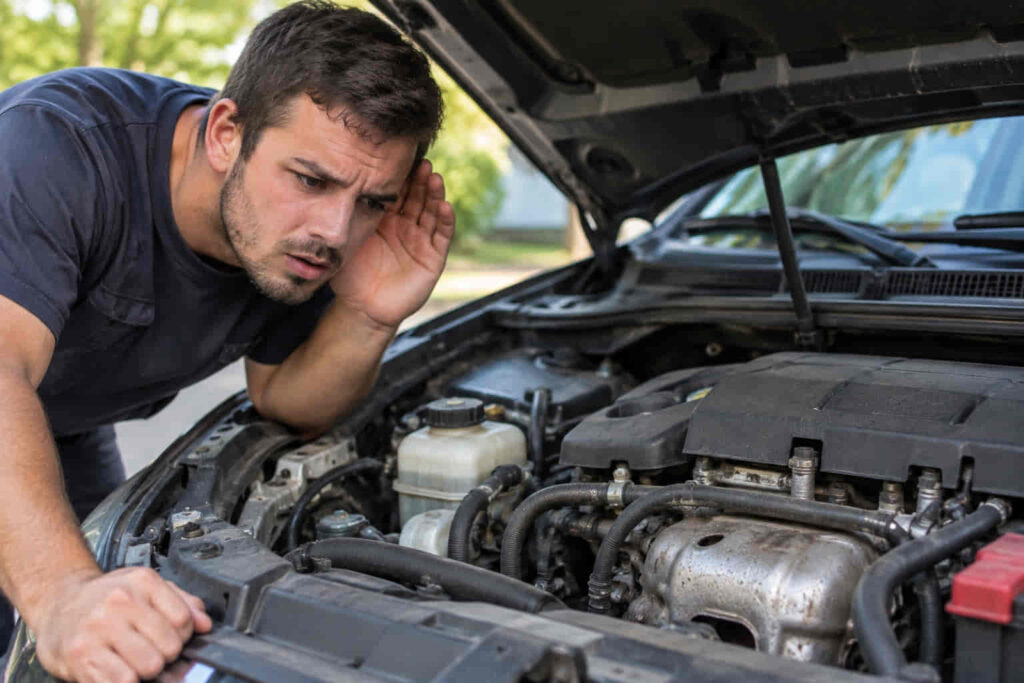
Why is my car making a rattling noise? A car typically makes a rattling noise because of loose exhaust components, worn suspension parts, damaged engine mounts, failing engine components, or unsecured interior panels. The exact cause depends on where the noise originates and when it occurs. A metallic rattle during acceleration may indicate a loose exhaust heat shield or an engine-related problem, while rattling over bumps often points to worn suspension components or loose underbody parts.
The conditions under which the noise appears provide important diagnostic clues. Rattling at idle may result from engine vibration, loose pulleys, or timing chain problems. A noise that increases with vehicle speed may involve wheel-related components or parts exposed to road vibration. If the sound occurs primarily during braking or turning, brake hardware, steering components, and suspension joints require closer inspection.
Not every rattling noise indicates a serious mechanical failure. A loose heat shield or dashboard panel may produce an irritating sound without immediately affecting vehicle operation. However, loud metallic knocking, an oil pressure warning, overheating, or changes in steering and braking performance can indicate a dangerous condition requiring immediate attention.
This guide explains the common causes of car rattling noises, how to identify them based on driving conditions, when continued driving is unsafe, and what repairs may cost.
Why Is My Car Making a Rattling Noise?
A car makes a rattling noise when loose, worn, or damaged components vibrate or strike surrounding parts while the engine runs or the vehicle moves. The most common sources include loose exhaust heat shields, deteriorated exhaust hangers, worn suspension components, damaged engine mounts, and unsecured interior trim. More serious causes include timing chain problems, failing accessory pulleys, and internal engine damage. Identifying the source requires examining when the sound occurs, whether it changes with engine speed, and whether it comes from the engine compartment, underneath the vehicle, or inside the cabin.
Loose exhaust components are a common cause of metallic rattling because the exhaust system experiences constant vibration and repeated heating and cooling. Thin metal heat shields protect nearby components from exhaust temperatures, but their mounting points can corrode or loosen over time. When a heat shield separates from its original mounting position, engine vibration causes it to contact the exhaust pipe or surrounding metal. This often produces a high-pitched metallic rattle at idle or during acceleration. A deteriorated muffler hanger can create a similar sound by allowing the exhaust assembly to move excessively.
Worn suspension components produce rattling or clunking noises when the vehicle travels over uneven surfaces. Sway bar links, control arm bushings, strut mounts, and ball joints help control wheel movement and maintain suspension alignment. As these components wear, excessive clearance allows metal parts to shift or strike one another under changing loads. For example, a vehicle with a worn sway bar link may produce repeated rattling sounds when crossing small bumps, even though the engine operates normally. Because some suspension failures affect steering and vehicle stability, persistent noises from the wheel or suspension area require professional inspection.
Engine-related rattling occurs when components inside or around the engine vibrate abnormally. Worn engine mounts can allow excessive engine movement, while loose accessory pulleys or failing bearings may create rattling sounds that change with engine RPM. A worn timing chain tensioner can also allow excessive chain movement, producing a metallic rattle, particularly during startup or under certain operating conditions. Internal engine problems, including abnormal combustion or inadequate lubrication, may produce knocking or rattling sounds that become more pronounced under load. These conditions require prompt diagnosis because continued operation can result in expensive mechanical damage.
Interior rattles generally result from unsecured trim panels, dashboard components, door hardware, or objects stored inside the cabin. Unlike engine or suspension problems, these sounds frequently change when the vehicle crosses rough pavement or when pressure is applied to the affected panel. For example, a loose dashboard clip may produce a repetitive plastic rattle that disappears when the driver gently holds the trim in place. Although interior rattles are usually less urgent than mechanical noises, identifying their exact source prevents unnecessary repairs to unrelated vehicle systems.
The most useful distinction is whether the rattling follows engine RPM, vehicle movement, or road impacts. A sound that changes while the vehicle is stationary suggests an engine-related or vibration-sensitive component, while a noise triggered by bumps points toward the suspension, underbody, or interior. A rattle accompanied by severe knocking, warning lights, abnormal handling, or braking problems requires immediate attention rather than continued driving.
Why Is My Car Making a Rattling Noise When Accelerating?
A rattling noise during acceleration commonly results from a loose exhaust heat shield, deteriorated engine mounts, damaged exhaust components, or abnormal engine combustion. Acceleration increases engine load, vibration, and exhaust flow, which can make existing mechanical problems more noticeable. The sound may appear only when the accelerator is pressed, become louder as engine RPM rises, or disappear when the driver releases the throttle. These differences help identify whether the problem originates from an external component or the engine itself.
A loose exhaust heat shield often produces a metallic buzzing or rattling sound during acceleration because the engine and exhaust system vibrate more intensely under load. The shield may contact the exhaust pipe, catalytic converter housing, or another nearby component when its mounting points become loose. For example, a driver may hear a brief metallic rattle while accelerating from a stop, followed by quieter operation at a steady cruising speed. The sound can resemble a serious engine problem even when the underlying cause is a relatively simple exhaust mounting defect.
Worn engine mounts can also cause rattling when accelerating because the engine shifts as torque increases. Engine mounts secure the powertrain to the vehicle while absorbing vibration. When their rubber isolators deteriorate or their internal components fail, excessive movement may allow the engine or connected exhaust components to contact surrounding structures. This can produce rattling, clunking, or vibration when accelerating from a stop or changing gears. A driver may also notice increased vibration through the steering wheel, floor, or cabin.
A damaged catalytic converter can create a different type of metallic rattle when its internal ceramic substrate breaks apart. The loose material may move inside the converter housing as exhaust pressure and vehicle vibration change. This noise can become noticeable during acceleration and may occur alongside reduced engine performance or an illuminated check engine light. However, a rattling sound near the catalytic converter does not automatically mean the converter itself has failed. A loose external heat shield can produce a similar noise, so the source must be confirmed before replacing an expensive exhaust component.
Engine knocking is a more concerning possibility when rattling occurs primarily under acceleration. Abnormal combustion can create a metallic pinging sound when the air-fuel mixture ignites in an uncontrolled manner. Possible contributing factors include unsuitable fuel octane for the engine’s requirements, excessive combustion chamber deposits, or faults affecting ignition timing and fuel delivery. Mechanical problems involving internal engine components can also produce knocking sounds under load. A persistent, loud metallic knock requires prompt professional diagnosis, particularly when accompanied by reduced power, overheating, or an oil pressure warning.
The relationship between the rattling noise and engine load is essential for identifying the cause. A light metallic buzz during acceleration may indicate a loose heat shield, while a heavy clunk accompanied by excessive engine movement suggests a mounting problem. A sharp pinging sound under load may indicate abnormal combustion, whereas a deep mechanical knock can signal more serious damage. If the noise is severe or occurs with warning lights, loss of power, or abnormal engine operation, the driver should stop in a safe location and arrange an inspection rather than continue accelerating.
Read more: how much to repair a car dent
Why Is My Car Rattling When Idle?
A car that rattles while idling may have a loose exhaust heat shield, worn engine mounts, a failing accessory pulley, or a problem with its timing chain system. These components can produce metallic rattling or vibration-related noises even when the vehicle is stationary because the engine continues running and transmitting vibrations through the powertrain and exhaust system. The source becomes easier to identify by observing whether the noise changes with engine RPM, engine temperature, or the operation of accessories such as the air conditioning system.
A loose exhaust heat shield is a frequent cause of rattling at idle because thin metal shielding can vibrate against the exhaust system at certain engine speeds. Heat shields are installed around exhaust pipes, catalytic converters, and other high-temperature components to protect nearby parts from excessive heat. Corrosion, damaged fasteners, or repeated thermal expansion can loosen their mounting points. For example, a driver may hear a metallic buzzing sound while waiting at a traffic light, only for the noise to disappear when engine speed increases slightly. This happens when the change in vibration frequency prevents the loose shield from contacting surrounding components in the same way.
Worn engine mounts can create rattling and excessive vibration when the engine runs at low RPM. Engine mounts support the engine and transmission while isolating normal powertrain movement from the vehicle’s body. As their rubber or hydraulic components deteriorate, more vibration reaches the chassis and interior. In some cases, excessive movement also causes nearby brackets or exhaust components to make contact. A driver may notice stronger vibration when the transmission is placed in Drive with the brake applied, compared with Park or Neutral. This difference can indicate a mounting problem, although a rough-running engine can produce similar symptoms.
Accessory drive components are another potential source of idle rattling. The serpentine belt drives equipment such as the alternator, air conditioning compressor, and other accessories, depending on the vehicle’s design. Worn pulley bearings, a failing belt tensioner, or damaged accessory components can produce rattling, clicking, or grinding sounds that change with engine speed. For example, a noise that becomes more noticeable when the air conditioning compressor engages may indicate a problem with the compressor clutch, pulley, belt tensioner, or another component affected by the additional load. Identifying the exact source requires inspection because several accessories operate in the same area.
Timing chain problems can also produce metallic rattling, particularly during engine startup or at low engine speeds. The timing chain synchronizes crankshaft and camshaft rotation, while tensioners and guides maintain proper chain control. If a tensioner loses effectiveness or a guide becomes damaged, excessive chain movement may cause contact with surrounding components. Some engines are more susceptible to these problems than others, and a brief startup rattle does not automatically confirm timing chain failure. However, persistent rattling accompanied by rough running, timing-related fault codes, or reduced performance warrants prompt professional diagnosis because incorrect valve timing can cause serious engine damage.
The most useful diagnostic clue is whether the rattling occurs only at idle or continues as engine RPM increases. A vibration-sensitive heat shield may become quieter at higher RPM, while a worn pulley bearing or timing component may produce a noise that changes in frequency with engine speed. Drivers can observe these patterns without touching moving engine parts. If the rattling becomes loud, develops into heavy knocking, or appears with an oil pressure warning or overheating, the engine should be shut off as soon as it is safe to do so and inspected before further operation.
Why Does My Car Rattle When Driving Over Bumps?
A car that rattles when driving over bumps commonly has worn sway bar links, deteriorated suspension bushings, loose strut mounts, or damaged suspension joints. These components experience rapid changes in force as the wheels move over uneven pavement. When their connections become loose or their cushioning materials deteriorate, the resulting movement can produce rattling, clunking, or knocking sounds. Loose underbody panels and unsecured items inside the vehicle can create similar noises, making the location and character of the sound important diagnostic clues.
Worn sway bar links are a common source of rattling over small, repeated bumps. The sway bar connects suspension movement across the vehicle and helps limit excessive body roll during cornering. Its end links typically use ball joints or bushings that allow controlled movement as the suspension travels. When these connections wear, additional clearance develops and the link can move abruptly under changing loads. For example, a vehicle may produce a rapid metallic rattle while crossing cracked pavement or a series of shallow potholes, even when the noise is less noticeable on smooth roads. The sound often originates near one of the front or rear wheels, depending on the affected link.
Control arm bushings and ball joints can also produce rattling or clunking noises when suspension loads change. Control arms help maintain wheel position relative to the vehicle’s body, while bushings absorb vibration and allow limited movement. Ball joints provide controlled articulation as the suspension and steering systems operate. Deteriorated bushings can permit excessive movement, and worn ball joints may develop looseness that produces noise when a wheel encounters a bump. Because severely worn ball joints can compromise steering control or wheel retention, suspected joint problems require prompt inspection rather than continued driving until the noise becomes louder.
Strut mounts and related suspension hardware may create rattling when the vehicle travels over uneven surfaces. Strut mounts connect the upper portion of a strut assembly to the vehicle’s body and help isolate suspension movement. A deteriorated mount or loose mounting hardware can allow abnormal movement that produces a knocking sound during suspension compression and rebound. Some vehicles may also develop noise from damaged shock absorber mounts or internal shock absorber components. For example, a dull clunk from the front suspension when crossing a speed bump may indicate a worn strut mount, although control arm bushings and other nearby components must also be evaluated.
Not every rattle over bumps originates from the suspension. Loose splash shields, underbody covers, exhaust hangers, and wheel well liners can vibrate when road impacts shake the vehicle. Interior objects and trim panels may also produce noises that appear to come from the chassis. A loose spare tire, jack, or cargo compartment panel can create a repetitive rattle over rough pavement without indicating a suspension failure. Checking whether the sound comes from the cabin, wheel area, or underside of the vehicle helps narrow the possible causes before a professional inspection.
A rattling noise that occurs primarily over bumps should be evaluated based on its location, frequency, and accompanying handling symptoms. Repeated light rattling may indicate loose hardware or worn sway bar links, while heavy clunking accompanied by unstable steering, uneven tire wear, or changes in braking behavior can indicate a more serious suspension problem. A qualified technician can inspect the vehicle on a lift, check joints and bushings for excessive movement, and identify components that require replacement. If the vehicle feels unstable or steering control is affected, it should not be driven until the problem has been assessed.
Why Is My Car Making a Rattling Noise Underneath?
A rattling noise underneath a car is commonly caused by a loose exhaust heat shield, damaged exhaust hanger, deteriorated catalytic converter, or unsecured underbody panel. These components are exposed to engine vibration, road impacts, moisture, and temperature changes that can gradually weaken their mounting points. When a component becomes loose, it may vibrate against the exhaust system, vehicle frame, or surrounding hardware. The sound often becomes more noticeable during acceleration, while driving over uneven pavement, or when the engine operates at a particular RPM.
Exhaust heat shields are among the most common sources of metallic rattling beneath a vehicle. These thin metal barriers protect the floor, fuel system, and nearby components from high exhaust temperatures. Repeated heating and cooling, combined with road salt and moisture, can corrode their fasteners or weaken the metal around mounting holes. Once a shield becomes partially detached, exhaust vibration causes it to strike nearby surfaces. For example, a driver may hear a rapid metallic buzzing sound beneath the center of the vehicle while accelerating through a specific RPM range. The noise may disappear at higher speeds because the vibration frequency changes, even though the mounting problem remains.
Damaged exhaust hangers can produce a deeper rattling or clunking sound because they allow the exhaust assembly to move beyond its intended position. Exhaust systems are supported by rubber isolators and metal brackets that accommodate engine movement and thermal expansion. When a rubber hanger tears or a bracket breaks, the exhaust pipe or muffler may contact the vehicle’s underbody, suspension components, or protective shielding. This contact can become more pronounced when accelerating, braking, or crossing bumps. A loose exhaust system may also develop leaks if excessive movement stresses its joints, making timely inspection important.
A failing catalytic converter can generate an internal metallic rattle when its ceramic substrate cracks or separates from its supporting structure. The catalytic converter contains a honeycomb-like material that helps convert harmful exhaust pollutants into less harmful substances. If the internal material breaks apart, loose fragments can shift inside the converter housing as exhaust flow and vehicle vibration change. The resulting noise may resemble small metal pieces shaking inside a container. Reduced acceleration performance, unusual exhaust behavior, or a check engine light may accompany converter damage, although these symptoms are not present in every case. A technician must distinguish internal converter failure from a loose external heat shield before recommending replacement.
Loose underbody covers, splash shields, and protective panels are another source of rattling beneath a moving vehicle. These components are secured with clips, screws, or plastic fasteners that can become damaged after road impacts or previous maintenance. When mounting points fail, airflow and road vibration cause the panel to flutter or strike nearby surfaces. A loose engine splash shield, for example, may create a plastic rattling sound at highway speeds or scrape the pavement after hitting a pothole. Unlike a failing suspension joint, the noise may change significantly with vehicle speed because airflow contributes to panel movement.
The location and material of the sound help distinguish an exhaust rattle from other underbody problems. A thin metallic buzz near the exhaust system suggests a loose heat shield, while a heavier clunk may indicate a damaged exhaust hanger or mounting bracket. A scraping or flapping sound that increases with road speed can indicate a loose protective panel. Drivers should not crawl beneath a vehicle supported only by a jack or touch exhaust components that may still be hot. If an exhaust component is dragging, exhaust fumes enter the cabin, or the vehicle develops unusual heat or performance problems, driving should stop until the issue is safely evaluated.
Why Does My Car Make a Rattling Noise When Braking or Turning?
A car that rattles when braking or turning may have loose brake hardware, worn suspension joints, damaged steering components, or excessive movement in a wheel-related assembly. Braking transfers vehicle weight toward the front wheels, while turning creates lateral forces that change the load on suspension and steering components. These forces can expose looseness that remains difficult to detect during straight-line driving. The exact cause depends on whether the noise occurs when the brake pedal is pressed, when the steering wheel turns, or when both actions happen together.
Loose brake pads or damaged brake hardware can create rattling noises when the brakes are applied or released. Disc brake assemblies use calipers, mounting brackets, pad retaining clips, and other hardware to keep components properly positioned. If retaining hardware becomes damaged, incorrectly installed, or excessively worn, brake pads may shift within their brackets as braking forces change. This movement can produce metallic clicking or rattling, particularly at low speeds. A driver may notice the sound when transitioning between acceleration and braking or when crossing small bumps with the brake pedal released. Because brake components directly affect stopping performance, unusual noises accompanied by reduced braking effectiveness, pulling, or grinding require immediate professional attention.
Worn suspension joints can produce rattling during turns because cornering places additional loads on the control arms, ball joints, sway bar links, and bushings. These components maintain wheel alignment and control suspension movement as the vehicle changes direction. When a joint develops excessive clearance or a bushing deteriorates, lateral forces can cause the affected component to shift abruptly. For example, a worn sway bar link may rattle more noticeably while turning across uneven pavement because the suspension is simultaneously experiencing cornering forces and vertical wheel movement. A damaged control arm bushing may produce a heavier clunk when braking or changing direction as the wheel assembly moves relative to the vehicle’s body.
Constant velocity joints can also generate noises during turning, particularly in vehicles with front-wheel drive or independent drive axles. CV joints transfer engine torque to the wheels while accommodating steering angles and suspension movement. When a joint wears or loses lubrication because its protective boot is damaged, internal components can develop excessive play. An outer CV joint commonly produces repeated clicking or popping during tight turns under acceleration rather than a continuous metallic rattle. This distinction matters because a rhythmic clicking sound that becomes more noticeable during a sharp turn suggests a different mechanical problem from loose brake hardware or a vibrating heat shield.
Steering system components, including tie rod ends and certain steering rack mounting points, may also produce knocking or rattling when their connections become worn. Tie rod ends transmit steering input to the wheels and must maintain controlled movement without excessive looseness. A deteriorated joint can produce noise as steering direction changes, sometimes accompanied by vague steering response or uneven tire wear. Wheel bearing problems may create additional noise during cornering, although their characteristic sound is generally a humming, growling, or grinding noise that changes with speed and load rather than a distinct rattle. These sound differences help narrow the diagnosis but cannot confirm a specific failure without inspection.
A rattling noise during braking or turning should be assessed alongside changes in stopping distance, steering response, and vehicle stability. Light clicking without performance changes may indicate loose hardware, but persistent metallic grinding, a soft brake pedal, steering looseness, or abnormal wheel movement can signal a serious safety problem. Drivers should avoid attempting to diagnose brake or steering faults by repeatedly performing aggressive braking or sharp turns. A qualified technician can inspect brake hardware, suspension joints, steering connections, and wheel assemblies to identify the defective component and determine whether the vehicle is safe to operate.
Is It Safe to Drive a Car That Makes a Rattling Noise?
Driving a car that makes a rattling noise is not always dangerous, but its safety depends on the source of the sound and whether the vehicle shows additional mechanical symptoms. A loose interior panel or exhaust heat shield may produce noise without immediately affecting vehicle control. However, rattling caused by damaged suspension joints, loose brake components, or internal engine problems can indicate a condition that makes continued driving unsafe. Because different mechanical failures produce similar sounds, the absence of an obvious performance problem does not guarantee that the vehicle is safe.
A light metallic rattle from an exhaust heat shield generally presents a different level of risk than a heavy knocking sound from the engine. Heat shields protect surrounding components from high exhaust temperatures, and a loose shield may vibrate against an exhaust pipe without affecting engine operation. Nevertheless, a detached shield can expose nearby components to excessive heat or fall onto the road. Similarly, a loose underbody cover may initially cause only a flapping sound but can become hazardous if it detaches or contacts a moving component. These problems should be inspected promptly even when the vehicle appears to operate normally.
Rattling associated with steering, braking, or suspension movement requires greater caution because these systems directly influence vehicle control. Worn ball joints, damaged tie rod ends, loose brake hardware, and severely deteriorated suspension components can produce rattling or clunking when the vehicle turns, stops, or crosses uneven pavement. If the noise occurs alongside steering looseness, pulling during braking, unstable handling, or unusual wheel movement, the vehicle should not be driven until the problem has been evaluated. A severe suspension or steering failure can cause a sudden loss of directional control, while damaged brake components can reduce stopping performance.
Engine-related rattling can also indicate a condition requiring immediate attention. A persistent metallic knock that becomes louder under acceleration may result from abnormal combustion or mechanical wear, while rattling associated with timing chain problems can indicate inadequate chain tension or damaged timing components. More importantly, an illuminated oil pressure warning light, overheating warning, or sudden loss of engine power can signal a problem capable of causing rapid engine damage. If these symptoms occur, the driver should pull over as soon as it is safe, shut off the engine, and arrange professional assistance rather than attempt to reach a repair shop by continuing to drive.
The intensity and progression of the noise provide additional information about urgency. A faint rattle that has remained unchanged may indicate a loose component, whereas a sound that suddenly becomes louder, develops into grinding, or appears with strong vibration suggests a worsening mechanical problem. However, sound intensity alone cannot establish safety. A worn steering joint may produce only a modest clunk before becoming dangerous, while a harmless interior trim panel can create a surprisingly loud noise. For this reason, the decision to continue driving must consider vehicle behavior and warning indicators rather than the sound alone.
If the rattling is accompanied by abnormal braking, unstable steering, an oil pressure warning, overheating, severe engine knocking, or a dragging component, stop driving and arrange towing or roadside assistance. If the vehicle operates normally and the noise appears to come from a minor loose component, a cautious trip to a nearby repair facility may be reasonable after considering the symptoms. When the source is unknown, a professional inspection is the safest way to determine whether continued operation presents a mechanical or road safety risk.
How Do You Diagnose a Rattling Noise in a Car?
Diagnosing a rattling noise in a car begins with identifying when the sound occurs, where it originates, and whether it changes with engine RPM, vehicle speed, or road conditions. These observations help separate engine-related noises from exhaust, suspension, brake, and interior problems. An effective diagnosis follows the relationship between the sound and the operating condition that produces it rather than replacing components based on the noise alone.
The first diagnostic distinction is whether the rattling occurs while the vehicle is stationary or only when it moves. A sound present at idle indicates that the engine, exhaust system, accessory drive, or another component affected by engine vibration may be responsible. If the noise changes when engine RPM increases while the vehicle remains stationary, the source is more likely associated with engine speed or vibration than wheel rotation. For example, a loose heat shield may rattle at a particular idle speed, while a worn accessory pulley bearing may produce a noise whose frequency changes as the pulley rotates faster. These patterns are useful clues but do not confirm the defective component.
Rattling that occurs only while driving requires a different diagnostic approach. A noise triggered by potholes or uneven pavement suggests suspension joints, loose underbody hardware, or unsecured interior components. A sound that becomes more frequent as road speed increases may involve a rotating wheel-related component or a panel affected by airflow. If the noise appears when braking, attention shifts toward brake hardware and components that move under braking forces. A clicking or popping sound during tight turns may indicate a worn CV joint, particularly when it becomes more pronounced under acceleration. The goal is to associate the noise with a repeatable operating condition without performing unsafe driving maneuvers.
Locating the sound provides another important diagnostic clue. A metallic rattle near the front of the vehicle may originate from engine accessories, exhaust shielding, or suspension components. A noise beneath the center of the vehicle can indicate exhaust pipes, catalytic converter shielding, or underbody panels. Rattling near a wheel may involve suspension or brake hardware, while a sound from the dashboard or cargo area may come from loose trim or unsecured equipment. Sound can travel through the vehicle’s body, however, so the apparent location inside the cabin may differ from the actual source.
Drivers can perform limited visual and observational checks without disassembling mechanical systems. With the vehicle parked safely and the engine turned off, they can check for loose objects in the glove compartment, door pockets, trunk, and spare tire storage area. Visible underbody panels or exterior trim can be examined from a safe standing position for missing fasteners or obvious damage. A driver can also record when the noise occurs, whether the engine is cold or warm, and whether warning lights appear. Hot exhaust parts, moving belts, fans, and unsupported vehicles present serious injury risks, so these areas should not be touched or accessed without appropriate equipment and training.
Professional diagnosis may involve a controlled road test, inspection on a vehicle lift, examination of suspension joints, and evaluation of exhaust mounting hardware. A technician may use a mechanic’s stethoscope or electronic listening equipment to isolate sounds from accessible components while following appropriate safety procedures. If engine performance problems or warning lights accompany the rattle, an OBD-II scan can provide diagnostic trouble codes and operating data. However, a trouble code identifies a detected system fault rather than proving that a particular component causes the noise. Mechanical inspection remains necessary to establish the connection between the symptom and the actual failure.
The most reliable diagnosis combines the sound’s timing, location, operating conditions, and physical inspection findings. For example, a metallic buzz that appears at a narrow RPM range and originates near the exhaust system supports inspection of heat shields and exhaust mounts. A repeated clunk over bumps accompanied by steering looseness points toward suspension and steering components. Recording these details before visiting a mechanic can reduce unnecessary diagnostic work and help the technician reproduce the problem. If the noise occurs with severe knocking, braking difficulties, or unstable handling, the vehicle should be transported for inspection rather than driven for further testing.
How Much Does It Cost to Fix a Rattling Noise in a Car?
Fixing a rattling noise in a car can cost approximately $50 to more than $3,000, depending on the damaged component, labor requirements, and vehicle model. Minor problems, such as a loose exhaust heat shield or missing underbody fastener, may require a relatively inexpensive repair. Replacing worn suspension components, engine mounts, or a catalytic converter costs considerably more, while timing chain repairs and internal engine damage can require extensive labor. Because rattling is a symptom rather than a specific mechanical failure, an accurate repair estimate depends on identifying the actual source of the noise.
Repairing a loose exhaust heat shield is generally among the least expensive solutions. A mechanic may be able to secure an existing shield with replacement fasteners or suitable mounting hardware for approximately $50 to $150. If the shield is severely corroded or damaged, replacement may cost around $100 to $300, depending on accessibility and whether the part is available separately. A damaged exhaust hanger may cost approximately $75 to $250 to repair or replace. These estimates assume that the surrounding exhaust components remain serviceable. If corrosion has damaged the exhaust pipe, muffler, or mounting points, additional repairs can increase the total cost.
Suspension-related rattling noises typically require replacing worn joints, links, mounts, or bushings. Replacing a sway bar end link may cost approximately $100 to $300 per side, including parts and labor. Control arm replacement can range from $250 to $800 per side, depending on suspension design and whether the ball joint or bushings are integrated into the assembly. Strut mount repairs may cost approximately $200 to $600 per side, although the total can be higher when the strut assembly must also be replaced. Some suspension repairs require a wheel alignment afterward, adding to the final invoice. Because suspension components affect wheel positioning and vehicle control, the repair should address the actual worn part rather than simply suppressing the noise.
Engine mount replacement generally costs more than securing a loose exterior component because access can be difficult and the powertrain may need to be supported during the repair. A typical engine mount replacement may cost approximately $200 to $800, with higher costs possible for vehicles using hydraulic or electronically controlled mounts. If the rattling originates from an accessory belt tensioner or pulley, repair costs may fall between $150 and $500, depending on the component and labor involved. Replacing a failed alternator, air conditioning compressor, or another driven accessory can cost substantially more than replacing an individual pulley.
A rattling catalytic converter may require an expensive repair if its internal substrate has failed. Catalytic converter replacement can cost approximately $500 to more than $2,500, depending on the vehicle, emissions equipment design, and whether an original-equipment or compliant aftermarket replacement is used. However, a metallic rattle near the converter does not necessarily justify replacing it. A loose external heat shield or damaged exhaust bracket can produce a similar sound at a fraction of the cost. Confirming internal converter damage before authorizing replacement helps prevent unnecessary spending.
Timing chain problems and internal engine damage are among the most expensive potential causes of rattling. Replacing a timing chain, guides, and tensioner may cost approximately $1,000 to $3,000 or more because technicians often must remove multiple engine components to access the timing system. Repairs involving damaged bearings or other internal engine components can exceed several thousand dollars, particularly when engine removal or replacement becomes necessary. These problems should not be treated as routine noise complaints because continued operation may turn a repairable mechanical issue into a complete engine failure.
Diagnostic charges also affect the total expense. A general noise inspection may cost approximately $75 to $200, while complex intermittent noises or extensive engine diagnostics can require additional labor. Some repair facilities apply part of the diagnostic charge toward an approved repair, but this depends on shop policy. Labor rates, regional pricing, vehicle age, parts availability, and the amount of disassembly required all influence the final bill. The price ranges above are general U.S. estimates rather than fixed quotes, and a written estimate should identify the diagnosed failure, replacement parts, labor charges, and any additional required services.
The most cost-effective repair is the one that eliminates the confirmed mechanical cause rather than replacing parts based on sound alone. A loose heat shield and a damaged catalytic converter can create similar rattling noises but have dramatically different repair costs. Likewise, a worn sway bar link may sound similar to a more expensive suspension problem. A proper inspection allows the repair shop to distinguish these conditions, explain the recommended work, and provide an estimate based on the vehicle’s actual condition.
When Should You Take Your Car to a Mechanic for a Rattling Noise?
You should take your car to a mechanic when a rattling noise persists, becomes louder, occurs repeatedly under specific driving conditions, or appears with changes in vehicle performance. A professional inspection is especially important when the sound comes from the engine, brakes, steering system, or suspension. Although some rattles result from loose trim or minor exhaust hardware, others indicate deteriorating components that can cause additional damage or compromise driving safety if left unrepaired.
A rattling noise that increases with engine RPM or becomes more pronounced during acceleration deserves prompt attention because it may involve the accessory drive, engine mounts, timing components, or internal engine operation. A loose heat shield can produce a similar sound, but identifying that possibility does not rule out a more serious fault. For example, a metallic rattle that begins during cold starts and gradually becomes more persistent may warrant inspection of the timing chain tensioner and related components on an engine equipped with a timing chain. A technician can evaluate the noise alongside engine operating data, maintenance history, and manufacturer-specific diagnostic information.
Rattling from the suspension, steering, or braking system should also be inspected without unnecessary delay. A worn sway bar link may initially create a light noise over bumps, while deteriorated ball joints, tie rod ends, or brake hardware can affect essential vehicle functions. If the sound is accompanied by uneven tire wear, steering looseness, vibration during braking, or a change in vehicle stability, the problem requires urgent evaluation. The driver should avoid continued operation when braking or steering performance is impaired, since the underlying fault may worsen without warning.
An immediate stop is necessary when rattling occurs alongside symptoms indicating a potentially dangerous mechanical condition. An oil pressure warning, engine overheating, severe metallic knocking, smoke, loss of braking effectiveness, or unstable steering can signal a failure that makes continued driving unsafe. The driver should move to a safe location when possible, shut off the engine if an engine-related warning or severe knocking is present, and arrange towing or roadside assistance. Continuing to drive with inadequate engine lubrication or a serious steering or braking defect can cause extensive damage or increase the risk of a collision.
Even when the vehicle operates normally, a new rattling noise that continues for several trips should not be ignored. Repeated vibration can loosen mounting hardware further, and worn mechanical components may deteriorate as driving loads continue. An exhaust hanger that initially produces occasional contact noise, for example, may eventually allow the exhaust assembly to strike other components or place stress on its connections. Early inspection can identify the problem before additional parts become damaged, although the urgency depends on the suspected system and accompanying symptoms.
Providing detailed information about the noise helps the mechanic reproduce and diagnose it efficiently. The driver should explain whether the sound occurs at idle, during acceleration, while braking, when turning, or over bumps. The approximate location, whether the engine is cold or warm, and whether the noise changes with vehicle speed or RPM are also useful. A short audio or video recording captured safely by a passenger or while the vehicle is stationary may help document an intermittent sound. Maintenance records and recent repair history can provide additional context, particularly when the noise began shortly after work on the exhaust, brakes, or suspension.
A rattling noise should be professionally diagnosed before it develops into a more expensive repair or a safety problem. Minor exhaust or interior noises may require only a simple adjustment, while persistent engine knocking, suspension looseness, and brake-related rattling can demand immediate mechanical attention. Identifying the source early allows the technician to recommend the appropriate repair, confirm whether the vehicle is safe to drive, and prevent unnecessary component replacement.