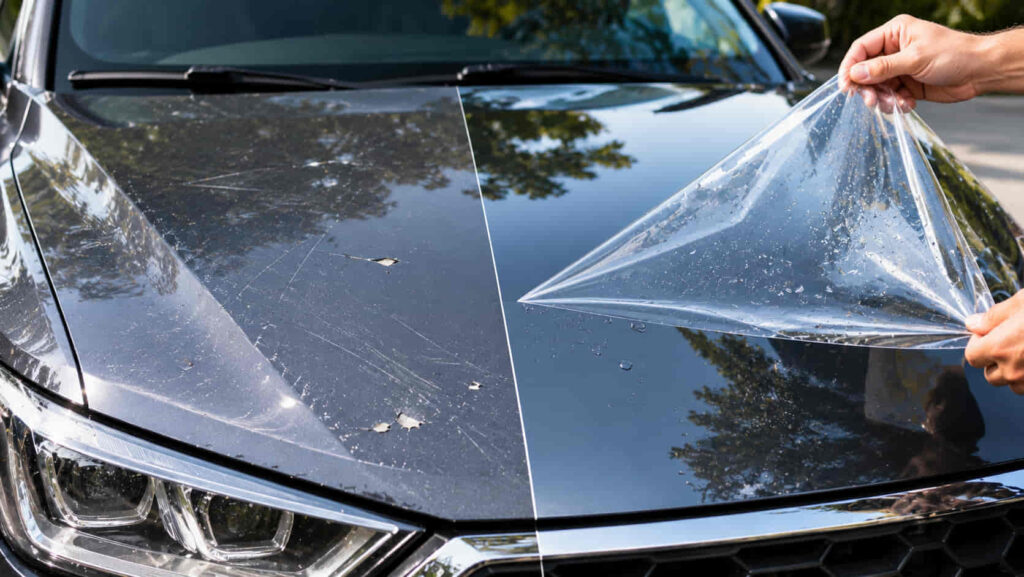
Paint protection film (PPF) is worth it for car owners who want to protect their vehicle’s factory paint from rock chips, minor scratches, and everyday road debris, particularly when they own a new or high-value car. However, PPF is not a worthwhile investment for every vehicle. Its value depends on installation cost, driving conditions, paint condition, ownership duration, and the level of protection required.
PPF is a transparent protective film, commonly made from thermoplastic polyurethane (TPU), that creates a physical barrier over painted vehicle surfaces. Unlike ceramic coatings, which primarily improve water repellency and make cleaning easier, PPF helps absorb minor impacts that could otherwise damage the clear coat or underlying paint. This makes it particularly useful for front bumpers, hoods, fenders, and other areas exposed to road debris during highway driving.
The main disadvantage is cost. Professional PPF installation requires specialized materials, careful surface preparation, and skilled labor. Although quality film can provide years of protection, it eventually requires maintenance or replacement, and it cannot prevent every type of paint damage.
Whether PPF is worth the money ultimately depends on how much protection your vehicle needs and how long you plan to keep it. This guide examines PPF benefits, disadvantages, installation costs, durability, coverage options, and alternatives to help you determine whether the investment makes financial and practical sense.
Is Paint Protection Film Worth the Money?
Paint protection film is worth the money when the cost of protecting a vehicle’s paint is justified by its exposure to road damage, the owner’s appearance standards, and the expected ownership period. PPF provides a physical barrier against rock chips, minor scratches, and surface abrasion, making it particularly valuable for vehicles driven frequently on highways or roads with loose debris. However, its financial value is not determined solely by how effectively it protects the paint.
The primary benefit of PPF is preventing certain types of damage before they occur. When small stones or road debris strike a painted panel, they can chip the clear coat and expose the underlying paint or primer. A properly installed protective film absorbs and distributes some of the impact energy, reducing the likelihood of damage to the original finish. This protection is especially relevant to front bumpers, hoods, front fenders, and mirror caps, which receive direct exposure to airborne debris during normal driving.
Whether this protection justifies the installation cost depends on the vehicle and how it is used. A new luxury car driven regularly on highways may benefit more from PPF than an older commuter vehicle with existing paint damage and limited remaining ownership time. Owners who intend to keep their vehicles for several years also have more time to benefit from the film’s protective properties. However, avoiding paint damage does not automatically mean the owner will recover the installation cost when selling the vehicle.
PPF should be evaluated as a long-term paint preservation expense rather than a guaranteed financial investment. Its value comes from reducing the risk of cosmetic damage, preserving the appearance of factory paint, and potentially avoiding certain paint repair expenses. For drivers who prioritize these benefits, targeted PPF coverage can provide a reasonable balance between protection and cost.
What Are the Main Benefits of Paint Protection Film?
The main benefits of paint protection film are resistance to rock chips, protection against minor scratches, preservation of the underlying paint, and reduced exposure to certain environmental contaminants. These benefits come from the film’s flexible polyurethane construction and protective surface layer, which create a sacrificial barrier between the vehicle’s paint and external hazards. The level of protection depends on film thickness, material quality, installation, and the severity of the damage.
Rock chip resistance is one of the most practical advantages of PPF. During highway driving, tires can propel small stones and other debris toward nearby vehicles. When these particles strike an unprotected painted surface, they may damage the clear coat or remove small sections of paint. PPF helps absorb some of this impact, reducing the likelihood of visible chips on vulnerable panels. However, sharp debris or sufficiently forceful impacts can still penetrate the film and damage the paint underneath.
Many modern PPF products also feature a self-healing topcoat designed to reduce the appearance of light surface scratches and swirl marks. This property generally relies on the topcoat’s ability to recover from minor deformation, sometimes with the assistance of warmth. For example, shallow marks caused by gentle contact or routine washing may become less noticeable as the surface recovers. Self-healing does not repair deep cuts, punctures, or damage that extends through the film into the vehicle’s paint.
PPF also helps preserve the original finish by separating painted surfaces from direct contact with certain contaminants, including insect residue, bird droppings, and road grime. Some films offer additional resistance to staining and ultraviolet exposure, although these properties vary by manufacturer and product. Contaminants should still be removed promptly because prolonged exposure can stain or damage the film itself.
Another benefit is maintaining a consistent exterior appearance over time. By reducing everyday cosmetic damage, PPF can help painted panels retain a cleaner finish, particularly in high-impact areas. This is valuable for owners who prefer preserving factory paint instead of relying on repeated touch-up work or repainting. Nevertheless, the film requires proper washing and maintenance, and its protective performance should not be confused with complete resistance to physical or chemical damage.
Read more: how to keep the car cool in summer
What Are the Disadvantages of Paint Protection Film?
The main disadvantages of paint protection film are its high installation cost, limited resistance to severe damage, potential appearance defects, and eventual replacement requirements. Although PPF provides a protective barrier over automotive paint, it is not a permanent or damage-proof solution. Its long-term performance depends on film quality, surface preparation, installation techniques, and environmental exposure.
Installation quality is one of the most important factors affecting the appearance and durability of PPF. Applying film to complex body panels requires precise positioning, stretching, and edge finishing. Poor installation can leave visible seams, trapped contamination, air pockets, or lifting edges. These defects may become more noticeable as dirt accumulates around exposed adhesive or the film begins separating from the painted surface. Even professionally installed PPF can have visible boundaries on panels where the film does not wrap completely around the edges.
PPF also has physical limitations. While polyurethane film helps absorb minor impacts and resist superficial scratches, sharp objects, deep abrasions, and high-energy stone strikes can penetrate the material. The self-healing properties found in certain films apply primarily to light marks in the topcoat, not tears or cuts extending through the film. A damaged section may require replacement rather than repair, particularly when the film has been punctured or its adhesive layer has been compromised.
Appearance changes represent another potential drawback. Lower-quality films or products exposed to prolonged environmental stress may develop yellowing, staining, haziness, or surface deterioration. Modern premium films are designed to resist these problems, but their performance varies by product and maintenance conditions. Bird droppings, insect residue, harsh cleaning chemicals, and prolonged contamination can still affect the film’s finish. Regular washing and appropriate cleaning products are therefore necessary to maintain its appearance.
PPF removal and replacement can create additional ownership costs. Removing aged or damaged film requires controlled techniques to reduce the risk of adhesive residue or paint damage. Factory paint in sound condition generally provides a more reliable surface for removal than poorly repaired or deteriorating paint. Vehicles with aftermarket paint, failing clear coat, or previous body repairs may face a greater risk of finish damage during removal. These limitations make professional installation, proper maintenance, and realistic expectations essential when evaluating whether PPF is worth the investment.
How Much Does Paint Protection Film Cost?
Professional paint protection film installation generally costs several hundred dollars for limited coverage and can reach several thousand dollars for full-body protection. The final price depends on the vehicle’s size, body-panel complexity, film quality, coverage area, and labor required. Because installation packages differ between providers, comparing prices without checking exactly which panels are included can lead to misleading conclusions.
In the United States, a limited front-end PPF package may cost approximately $500–$1,200, while full-front coverage commonly falls around $1,500–$2,500 or more. Full-body PPF installations can cost approximately $4,000–$8,000 or higher, particularly for large vehicles, complex body designs, or premium film products. These figures are broad planning estimates rather than verified national averages. Actual quotes vary by region, installer, vehicle condition, and package specifications.
Coverage area is a major factor in determining installation cost. A partial-front package may protect selected sections of the hood, front bumper, or other exposed panels, depending on the installer. Full-front packages generally extend protection across the entire hood, front fenders, front bumper, and mirror caps, although coverage definitions vary. Full-body installations require substantially more material and labor because nearly every painted exterior panel must be prepared, measured, and covered. Complex curves, recessed surfaces, and difficult edges increase installation time and material waste.
Paint preparation can also affect the total expense. Before applying PPF, the installer must clean and decontaminate the surface to prevent dirt and bonded particles from becoming trapped beneath the film. Vehicles with swirl marks, scratches, or other cosmetic defects may benefit from paint correction before installation because the film does not eliminate existing damage. Extensive correction, removal of old film, or additional disassembly may increase the quoted price.
The lowest installation quote does not necessarily provide the best long-term value. Film quality, installer experience, coverage accuracy, workmanship guarantees, and manufacturer warranty terms all influence the ownership experience. A less expensive installation that develops lifting edges or requires premature replacement may cost more over time than a properly installed product with reliable support. Before choosing a provider, car owners should request a written quote identifying the film brand, specific panels covered, preparation work, warranty conditions, and any additional charges.
How Long Does Paint Protection Film Last?
High-quality paint protection film typically lasts 5–10 years, although its actual lifespan depends on film construction, installation quality, environmental exposure, and maintenance. Premium polyurethane films are designed to withstand everyday driving conditions while maintaining flexibility, adhesion, and surface clarity. However, a manufacturer’s warranty period does not guarantee that the film will remain in perfect condition throughout its entire service life.
Sun exposure is a major factor affecting PPF durability. Vehicles parked outdoors for extended periods experience repeated ultraviolet exposure and temperature changes, which can gradually affect the film’s topcoat, adhesive, and appearance. Modern premium films incorporate protective technologies intended to resist yellowing and environmental degradation, but resistance varies between products. For example, a vehicle stored in a covered garage and washed regularly may retain its film’s appearance longer than an otherwise similar vehicle exposed to intense sunlight, road salt, and industrial contamination.
Maintenance also influences how long PPF remains effective. Regular washing removes dirt, insect residue, bird droppings, and other contaminants before they become difficult to clean or cause staining. Using pH-neutral automotive shampoo, clean microfiber towels, and manufacturer-approved maintenance products helps reduce unnecessary abrasion and chemical exposure. Aggressive polishing, abrasive compounds, and improper pressure-washing techniques can damage the protective topcoat or loosen film edges, particularly when the film is already aging.
Many established PPF manufacturers offer limited warranties covering specified defects, such as yellowing, cracking, bubbling, or delamination, subject to product-specific conditions. These warranties may extend for several years, with some premium products carrying coverage of up to 10 or 12 years. However, warranty terms differ by manufacturer, product line, installation requirements, and exclusions. Coverage for manufacturing defects should not be confused with protection against rock impacts, accidental damage, or normal wear.
PPF should be inspected periodically and replaced when its protective or cosmetic condition deteriorates. Persistent discoloration, significant edge lifting, cracking, or damaged adhesive can indicate that the film is approaching the end of its useful life. Replacing deteriorated film before removal becomes difficult helps protect the underlying finish and maintain the vehicle’s appearance. For owners planning to keep their cars for several years, choosing a reputable film and following its maintenance requirements can improve the long-term value of the installation.
Is PPF Worth It on a New Car?
PPF is often worth it on a new car because it protects the factory paint before rock chips, scratches, and other cosmetic damage accumulate. Applying protective film early allows the original finish to remain covered during the period when the vehicle is exposed to everyday driving hazards. This is especially valuable for owners who want to maintain a nearly new appearance or plan to keep the vehicle for several years.
Factory paint is an important consideration because repairing damaged panels can involve touch-up paint, refinishing, or repainting. Although professional paint repairs can restore appearance, matching the original color, texture, and finish may be challenging in certain circumstances. PPF reduces the risk of some surface damage by placing a sacrificial polyurethane layer between the paint and road debris. For example, a new vehicle driven regularly on highways faces repeated exposure to stones thrown by surrounding traffic, making the front bumper, hood, and mirror caps practical areas for early protection.
The value of PPF on a new car also depends on its purchase price, driving environment, and expected ownership duration. Owners of premium vehicles or cars with specialized paint finishes may place greater value on preserving the original exterior condition because certain repairs can be expensive or difficult to match. However, PPF can also make sense for an ordinary daily driver that accumulates substantial highway mileage. The deciding factor is the owner’s exposure to paint damage and willingness to pay for prevention, not simply whether the vehicle is classified as a luxury model.
New vehicles still require paint inspection and preparation before PPF installation. Factory-fresh paint does not necessarily mean the surface is free from transportation contamination, dealership washing marks, or minor cosmetic defects. An installer should inspect the finish, remove bonded contaminants, and determine whether paint correction is necessary before applying the film. Covering existing defects without addressing them can leave imperfections visible beneath the protective layer.
For most new-car owners considering PPF, protecting high-impact front-end panels offers a more economical starting point than covering the entire vehicle. Full-body protection may be justified when maintaining an exceptionally consistent exterior finish is a priority, but its higher cost does not automatically produce proportionally greater practical value. Choosing coverage based on driving conditions, ownership plans, and budget provides a more reliable basis for deciding whether PPF is worth installing on a new car.
Is PPF Worth It on an Older Car?
Paint protection film can be worth it on an older car if the existing paint is in good condition and the owner intends to keep the vehicle for several more years. However, PPF does not repair existing paint damage, and its installation cost may be difficult to justify when the vehicle already has extensive scratches, rock chips, oxidation, or deteriorating clear coat. The decision depends more on the condition of the painted surfaces and future driving exposure than on the vehicle’s age alone.
PPF creates a protective barrier over the paint that is already present. If a vehicle has accumulated minor swirl marks, surface scratches, or paint chips, those imperfections can remain visible after the film is installed. Paint correction may reduce certain clear-coat defects before application, but it cannot restore missing paint or repair failing clear coat. For example, an older vehicle with well-maintained factory paint may be a suitable candidate for PPF, while a car with peeling clear coat or poorly repaired panels may require substantial refinishing before protective film can be considered.
Preparation and removal risks also influence whether PPF is appropriate for a used vehicle. A professional installer must assess the condition of the clear coat, previous paint repairs, and panel surfaces before applying the film. Repainted panels or weakened finishes may present greater adhesion and removal risks than sound factory paint. If extensive paint correction, refinishing, or other preparation is necessary, the combined expense can reduce the practical value of the installation.
Targeted PPF coverage is generally more economical than full-body protection for older daily drivers. Protecting the front bumper, hood, or other areas exposed to road debris can help limit additional cosmetic damage without requiring a large investment across every painted panel. For an older car with significant existing paint deterioration or a short remaining ownership period, regular washing and appropriate paint maintenance may be a more reasonable use of the owner’s budget.
Is Full-Body PPF Worth It?
Full-body PPF is worth considering for owners who want comprehensive protection across nearly all painted exterior panels and are willing to pay substantially more than they would for front-end coverage. It extends the protective benefits of polyurethane film beyond the vehicle’s most exposed surfaces, helping reduce minor scratches, abrasions, and certain environmental damage on doors, rear quarter panels, and other painted areas. However, the additional coverage does not automatically make full-body installation the most cost-effective option.
The primary advantage of full-body PPF is the consistency of protection across the vehicle. While front-end film concentrates on areas exposed to airborne stones and highway debris, full-body coverage also protects panels that experience incidental contact during everyday use. For example, door panels may encounter light abrasion from clothing, bags, or contact during cleaning, while lower body sections can be exposed to road grime and debris. A protective film can reduce some of this surface damage, although it cannot prevent dents, deep scratches, or damage caused by forceful impacts.
Full-body installation also creates a more uniform appearance when the same film is applied across the exterior. Depending on the product, owners can choose finishes designed to preserve the original gloss or create a satin or matte appearance. This may appeal to owners of premium vehicles, specialty cars, or vehicles with paint finishes that are expensive to repair. Nevertheless, appearance preferences should be considered separately from measurable financial benefits because covering more panels does not guarantee a corresponding increase in resale value.
The main disadvantage is the substantially higher installation and eventual replacement cost. Full-body PPF requires more film, more surface preparation, and additional labor to cover complex body panels and edges. A vehicle with intricate curves, vents, or difficult-to-access areas may require particularly time-consuming installation. If the film later develops damage or deterioration, replacing multiple sections can add to long-term ownership expenses. These costs are important because many everyday rock-chip hazards are concentrated around the vehicle’s front-facing surfaces.
For drivers primarily concerned about highway rock chips, full-front PPF usually provides a more practical balance between cost and protection. Full-body PPF becomes more attractive when the owner places a high value on maintaining a consistent exterior finish, regularly encounters conditions that expose multiple panels to abrasion, or plans to retain the vehicle for an extended period. Its value is therefore determined by the owner’s protection priorities rather than by the assumption that maximum coverage is always the best investment.
Is Front-End PPF Worth It?
Front-end PPF is worth it for drivers who want to protect the most vulnerable painted areas of their vehicles without paying for full-body coverage. The front bumper, hood, front fenders, and side mirrors receive direct exposure to airborne stones, road debris, and other hazards during normal driving. Protecting these surfaces addresses a major source of cosmetic paint damage while keeping installation costs substantially lower than covering the entire vehicle.
The effectiveness of front-end PPF comes from protecting panels that face the direction of travel. As vehicles move at highway speeds, small stones and loose debris can be thrown into the air by surrounding traffic. When these particles strike an unprotected bumper or hood, they may chip the clear coat or underlying paint. A properly installed polyurethane film absorbs some of the impact energy, reducing the likelihood of visible damage. This protection is particularly relevant for drivers who frequently travel on highways, follow commercial vehicles, or encounter roads with loose gravel.
Coverage selection directly affects the value of the installation. A partial-front package may protect the front bumper and selected portions of the hood or fenders, while a full-front package generally covers the entire hood, front bumper, front fenders, and mirror caps. Exact package contents vary by installer. Full-front coverage eliminates exposed paint boundaries across the middle of major front panels, which can improve appearance and provide more consistent protection. Partial-front coverage costs less but leaves additional painted surfaces exposed to road debris.
For most drivers considering PPF primarily to prevent rock chips, full-front coverage offers a stronger cost-to-protection balance than full-body installation. It concentrates the investment on areas with substantial exposure to impact damage rather than distributing the cost across panels that face different risks. However, owners who mainly drive short distances in low-debris environments may receive less practical benefit. The decision should reflect actual driving conditions, the vehicle’s paint condition, and the owner’s willingness to pay for preventive protection.
When Is Paint Protection Film Not Worth It?
Paint protection film is generally not worth the cost when a vehicle has limited exposure to paint damage, requires extensive paint restoration, or will be sold before the owner receives meaningful value from the protection. Although PPF can reduce certain types of cosmetic damage, the installation expense must be considered alongside the vehicle’s condition, expected usage, and ownership priorities. A protective product is not automatically a worthwhile purchase simply because it performs its intended function.
Short ownership periods can make PPF difficult to justify financially. Owners who plan to sell or trade in their vehicles within a year or two may have limited time to benefit from the film’s protective properties. Because PPF does not guarantee a higher resale price, recovering the installation cost through a future sale is uncertain. For example, spending several thousand dollars on full-body protection shortly before selling an ordinary commuter vehicle may provide less financial value than maintaining its existing finish through proper washing and prompt treatment of paint damage.
Existing paint deterioration is another important limitation. PPF does not restore missing clear coat, remove deep scratches, or repair paint that has already begun peeling. Applying film over a damaged finish may preserve visible defects rather than eliminate them, while extensive preparation or refinishing can significantly increase the total cost. Vehicles with failing clear coat or poorly repaired panels may also present additional installation and removal risks. In these circumstances, addressing the underlying paint condition should take priority over adding a protective film.
Driving conditions and budget also affect the decision. A vehicle used primarily for occasional local trips, stored indoors, and exposed to relatively little road debris may not require the same level of protection as a daily highway commuter. Similarly, owners with limited maintenance budgets may benefit more from regular washing, prompt contaminant removal, and appropriate paint care than from an expensive full-body installation. These alternatives do not provide equivalent rock-chip resistance, but they can support paint preservation at a lower upfront cost.
PPF is least worthwhile when its cost exceeds the value the owner places on preventing future cosmetic damage. This does not mean inexpensive or older vehicles should never receive protective film. A well-maintained daily driver with substantial highway exposure may justify targeted front-end coverage regardless of its market value. The more useful distinction is whether the vehicle’s condition, driving environment, ownership duration, and protection goals support the expense. When those factors do not align, skipping PPF or choosing a smaller coverage package is a reasonable decision.
Is PPF Better Than Ceramic Coating?
Paint protection film is better than ceramic coating for preventing rock chips and minor physical damage, while ceramic coating is better suited to improving water repellency and simplifying exterior cleaning. These products serve different purposes, so choosing between them depends on whether the owner prioritizes impact protection, surface maintenance, or a combination of both. Neither product provides complete protection against every form of paint damage.
The main difference is how each product protects the painted surface. PPF is a flexible polyurethane film that creates a physical barrier over the vehicle’s clear coat. When small stones or road debris strike the film, its thickness and elasticity help absorb and distribute some of the impact energy before it reaches the underlying paint. Ceramic coating, by contrast, forms a comparatively thin protective layer that modifies the surface’s properties. It can improve resistance to certain chemical contaminants and make water and dirt easier to remove, but it does not provide the same physical cushioning against rock impacts.
Ceramic coating also offers practical maintenance advantages. Its hydrophobic surface encourages water to bead and roll away, which can reduce the amount of dirt that remains attached after rinsing. This makes routine washing more convenient, particularly for vehicles exposed to rain, road grime, and environmental contamination. However, ceramic coatings do not make paint scratch-proof, eliminate the need for washing, or prevent damage from sharp debris. Similarly, PPF requires regular cleaning despite providing stronger resistance to certain physical impacts.
Installation cost is another important distinction. Professional PPF installation generally costs more because it requires substantial film material, careful positioning, and labor-intensive application across individual body panels. Ceramic coating involves surface preparation and controlled product application, but its material and installation requirements differ. The final cost of either service depends on vehicle size, paint condition, product selection, and installer experience. Comparing their prices is therefore most useful when the owner first identifies the type of protection needed.
PPF and ceramic coating can also be used together because their functions are complementary rather than interchangeable. For example, an owner may apply PPF to the front bumper, hood, and fenders for impact protection while using a compatible ceramic coating on other painted surfaces to improve cleaning and water repellency. Some ceramic coatings can also be applied over compatible PPF products when permitted by the film manufacturer. For drivers concerned primarily about rock chips, PPF is the more relevant investment. For owners focused on easier maintenance and surface appearance, ceramic coating may provide better value at a lower upfront cost.
Does Paint Protection Film Increase Car Resale Value?
Paint protection film may help preserve a car’s resale value by reducing visible paint damage, but it does not guarantee a higher selling price or repayment of the installation cost. Buyers generally evaluate a used vehicle based on its overall condition, age, mileage, maintenance history, accident history, and market demand. PPF can contribute to exterior condition by protecting painted surfaces from certain scratches and rock chips, but it is only one factor in the vehicle’s eventual market value.
The connection between PPF and resale value comes primarily from preserving the original paint finish. Rock chips, scratches, and poorly matched paint repairs can affect how a vehicle looks during inspection. By reducing some of this damage, protective film can help maintain a more consistent exterior appearance over time. For example, a highway-driven vehicle with PPF on its front bumper and hood may accumulate fewer visible paint chips than a similar unprotected vehicle exposed to comparable conditions. The difference in paint condition may influence buyer perceptions, although it does not establish a specific increase in resale price.
Preserving existing value is different from generating a financial return. A vehicle that sells for more because its paint remains in better condition has not necessarily recovered the amount spent on PPF. If an owner pays several thousand dollars for full-body protection, the eventual resale price would need to increase by a comparable amount for the installation to pay for itself through resale alone. There is no universal resale premium that applies to every PPF-protected vehicle, and buyers may place different values on the presence of protective film.
The film’s condition at the time of sale also matters. Clear, properly maintained PPF can help demonstrate that the owner took steps to protect the exterior. However, visibly yellowed, stained, peeling, or damaged film may raise questions about maintenance and create concerns about removal costs or the paint underneath. Providing installation records, product information, and warranty documentation can help prospective buyers understand what was applied to the vehicle, but these records do not guarantee a higher offer.
PPF is most defensible as a paint preservation expense rather than a strategy for increasing resale value. Its primary financial benefit is the possibility of avoiding certain cosmetic repairs while maintaining the appearance of factory paint. Any resale advantage should be treated as a potential secondary benefit, not the main reason to purchase the film. Owners deciding whether PPF is worth it should prioritize the protection they expect to receive during ownership rather than assuming the installation will produce a positive return when the vehicle is sold.
How Do You Decide Whether PPF Is Worth It for Your Car?
PPF is worth it when your vehicle’s exposure to paint damage, expected ownership duration, and protection priorities justify the installation cost. The most practical way to make this decision is to evaluate how you drive, the condition of your vehicle’s paint, how long you intend to keep the car, and which exterior panels need protection. These factors determine whether PPF provides meaningful value or adds an unnecessary ownership expense.
Driving conditions should be the first consideration because they directly influence the risk of paint damage. Vehicles that regularly travel on highways, construction routes, or roads with loose gravel face greater exposure to airborne debris than cars used mainly for short urban trips. If your vehicle frequently encounters these conditions, protecting the front bumper, hood, front fenders, and mirror caps can reduce the likelihood of rock chips and minor surface damage. For drivers with limited exposure to these hazards, the benefits may not justify the same level of investment.
Vehicle condition and ownership duration also affect the decision. Applying PPF to well-maintained factory paint helps preserve an existing finish, while installing it over damaged or deteriorating paint may require additional preparation without eliminating visible defects. Owners who plan to keep their vehicles for several years have more opportunities to benefit from the film’s protection. In contrast, drivers expecting to sell their cars soon should not assume that a higher resale price will offset the installation expense.
The appropriate coverage area depends on the type of damage you want to prevent. Full-front PPF is generally the most practical choice for drivers primarily concerned about highway rock chips, because it protects high-impact surfaces without the expense of covering every painted panel. Full-body PPF is more suitable for owners who prioritize consistent exterior protection and are comfortable with the higher initial and eventual replacement costs. If your main concern is easier cleaning rather than physical impact protection, ceramic coating or conventional paint maintenance may better match your needs.
Ultimately, PPF is worth buying for the protection it provides during ownership, not because it guarantees a financial return. Choose a reputable installer, confirm the film and warranty specifications, and request a quote that identifies the exact panels being covered. When the expected protection aligns with your driving habits, vehicle condition, and budget, PPF can be a worthwhile way to preserve your car’s appearance. When those conditions do not justify the cost, a smaller protection package or consistent paint maintenance is the more sensible choice.