WD-40 Multi-Use Product can help remove light surface rust from metal, but it cannot effectively remove heavy rust or repair metal damaged by corrosion. Its penetrating and lubricating properties loosen rust deposits, making them easier to remove with a wire brush, abrasive pad, or cloth. Unlike dedicated chemical rust removers, standard WD-40 does not dissolve iron oxide.
For automotive maintenance, WD-40 is useful for loosening rusted bolts, nuts, and other exposed metal components. It also displaces moisture and leaves a protective film that helps reduce further corrosion. However, its effectiveness depends on the severity of the rust, the type of metal surface, and the cleaning method used. Deep corrosion, extensive pitting, and structural rust require more specialized treatment or replacement of the affected component.
Using WD-40 correctly also means understanding where it should not be applied. Brake friction surfaces, for example, must remain free of lubricants to maintain safe braking performance.
This guide explains how WD-40 works on rust, how to use it on automotive parts, which types of corrosion it can address, and when a dedicated rust remover is the better option.
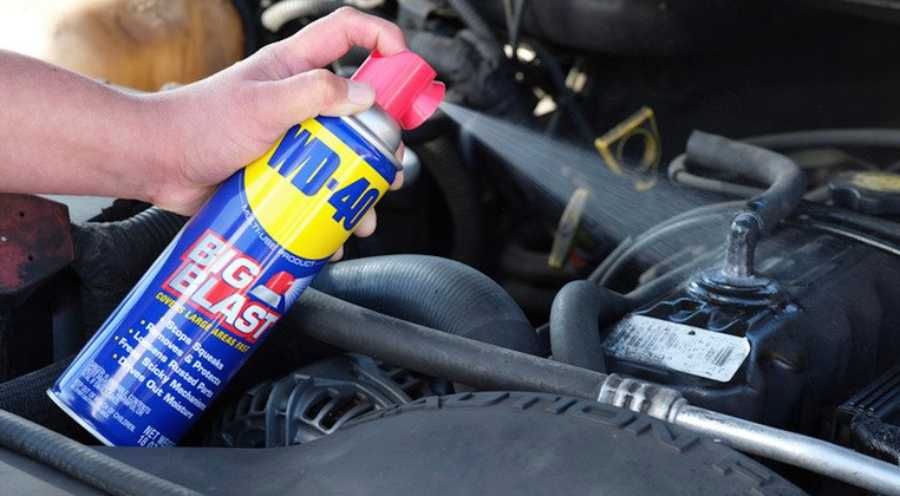
Does WD-40 Actually Remove Rust?
WD-40 Multi-Use Product removes light surface rust when combined with brushing or wiping, but it is not designed to eliminate thick rust deposits or deep metal corrosion. Its penetrating and lubricating properties help loosen corrosion particles from metal surfaces, allowing mechanical cleaning to remove them. The results depend on rust thickness, surface condition, and the extent of metal deterioration.
WD-40 is particularly useful for automotive maintenance tasks involving exposed steel components, rusty fasteners, and minor surface oxidation. However, removing visible rust does not restore metal that has already been weakened by corrosion.
Does WD-40 Remove Surface Rust?
WD-40 can help remove light surface rust from iron and steel components without requiring a dedicated chemical rust remover. Surface rust forms when exposed metal reacts with oxygen and moisture, creating a thin layer of iron oxide. WD-40 penetrates around these deposits and lubricates the surface, making loose rust easier to dislodge through brushing or wiping.
For example, a steel bracket with a thin layer of orange rust can be sprayed with WD-40 and cleaned using a suitable brush or abrasive pad. The treatment can remove loose corrosion deposits, although stubborn areas may require repeated cleaning. The exposed metal should then receive appropriate corrosion protection to prevent rust from returning.
Can WD-40 Remove Heavy Rust?
WD-40 cannot reliably remove heavy rust, deep pitting, or corrosion that has penetrated significantly into the metal. Thick rust layers contain accumulated iron oxides that adhere strongly to the underlying surface. WD-40 may penetrate gaps within these deposits, but it does not chemically dissolve them like a dedicated rust-removal treatment.
Heavily rusted automotive components often require mechanical abrasion, chemical rust removal, or replacement. For example, a corroded suspension bracket with deep pitting cannot be restored to its original strength simply by applying WD-40. Structural components with significant metal loss require professional inspection because removing visible corrosion does not reverse the underlying damage.
How Does WD-40 Work on Rust?
WD-40 works on rust by penetrating corroded surfaces, reducing friction between metal components, and displacing moisture that contributes to oxidation. These properties help loosen rust deposits and free seized metal parts, but they do not chemically convert or dissolve iron oxide. WD-40 Multi-Use Product primarily acts as a lubricant, penetrant, and moisture-displacing agent rather than a chemical rust remover.
Rust consists mainly of hydrated iron oxides that form when iron or steel reacts with oxygen and water. As corrosion develops, rust deposits accumulate on exposed surfaces and inside narrow spaces, such as the threads of automotive bolts and nuts. WD-40 penetrates accessible gaps around these deposits and provides lubrication that reduces resistance when the affected components are moved or cleaned. For example, spraying WD-40 onto a lightly rusted bolt can help loosen the fastener by reducing friction between its threaded surfaces.
WD-40 does not dissolve rust through a chemical reaction that removes iron oxide from the metal. Dedicated rust removers use different chemical mechanisms, including acidic dissolution or chelation, to separate corrosion products from metal surfaces. Standard WD-40 instead assists physical rust removal by making loose deposits easier to brush or wipe away. Consequently, its effectiveness decreases as rust becomes thicker, more strongly attached, or embedded in pitted metal.
WD-40 also helps limit further corrosion by displacing surface moisture and leaving a thin protective film on treated metal. This barrier reduces direct contact between the surface and environmental moisture, although its protection is temporary and depends on exposure conditions. On automotive components exposed to rain, road salt, or frequent washing, long-term corrosion prevention requires a more durable protective coating.
How Do You Remove Rust Using WD-40?
To remove light surface rust using WD-40, clean the affected metal, apply WD-40 Multi-Use Product, allow it to penetrate, scrub away loosened corrosion, and wipe the surface clean. This method works best on accessible iron and steel components with superficial oxidation, such as metal brackets, bolts, and nuts. Thick rust deposits require more aggressive mechanical cleaning or a dedicated rust remover.
The process requires WD-40 Multi-Use Product, a clean microfiber cloth, a nylon brush or suitable wire brush, protective gloves, and safety glasses. Choose the brush according to the surface material because aggressive abrasives can scratch chrome plating, painted components, and other protective finishes.
Follow these 6 steps to remove surface rust with WD-40:
- Clean the affected surface. Remove loose dirt, grease, and debris using a clean cloth or suitable automotive cleaner. Allow the surface to dry before applying WD-40 so the product can reach the corroded metal.
- Apply WD-40 directly to the rust. Spray a light, even coating over the affected area. For rusty bolts and nuts, direct the spray toward the threaded connections and accessible gaps where corrosion has accumulated.
- Allow the product to penetrate. Leave WD-40 on the surface for several minutes before cleaning. The required contact time varies with rust severity and component condition. Heavily seized fasteners may need additional applications or a dedicated penetrating oil.
- Scrub the loosened rust. Use a nylon brush, suitable wire brush, or abrasive pad to remove surface corrosion. Apply controlled pressure to avoid damaging the underlying metal or protective finish. WD-40 assists this mechanical cleaning process rather than dissolving the rust itself.
- Wipe and inspect the metal. Remove loosened rust particles and excess WD-40 with a clean cloth. Check for remaining oxidation, surface pitting, or damaged protective coatings. Repeat the cleaning process for minor residual rust when appropriate.
- Protect the cleaned surface. Apply a suitable corrosion-resistant coating if the metal will remain exposed to moisture. Components requiring painting or refinishing must be thoroughly degreased before applying primer or paint because WD-40 residue can interfere with coating adhesion.
For example, a lightly rusted steel mounting bracket can often be cleaned using WD-40 and a brush without removing the component from the vehicle. However, corrosion that has caused deep pitting, cracking, or significant metal loss requires further assessment rather than repeated spraying.
Never apply WD-40 to brake pads, brake rotors, tire tread, or other friction-dependent surfaces. Lubricant contamination can reduce friction and compromise vehicle safety. Work in a well-ventilated area, keep the aerosol away from ignition sources, and follow the product label’s safety instructions.
Which Car Parts Can You Remove Rust From With WD-40?
WD-40 can help remove light surface rust from automotive bolts, nuts, steel brackets, chrome trim, and other accessible metal components. Its effectiveness depends on the material, corrosion severity, and whether the treated surface can safely retain a lubricating residue. WD-40 is most useful for non-critical metal components with superficial oxidation rather than parts affected by structural corrosion.
Steel brackets, exposed fasteners, and certain metal fittings are suitable applications when their surfaces remain structurally sound. However, WD-40 should not be used as a rust treatment on brake friction surfaces, tire contact surfaces, or components where lubrication could interfere with safe operation. Painted body panels also require a different approach when corrosion has developed beneath the paint.
Can WD-40 Remove Rust From Car Bolts and Nuts?
WD-40 helps loosen rusted car bolts and nuts by penetrating accessible threaded connections and reducing friction between metal surfaces. Corrosion develops when moisture and oxygen reach exposed steel fasteners, producing iron oxide deposits that increase resistance between the threads. WD-40 lubricates these contact points, making some lightly seized fasteners easier to turn.
For example, a rusted license plate bolt or non-critical mounting fastener may loosen after WD-40 is applied around its threads and allowed to penetrate. A suitable wrench can then be used to turn the fastener with controlled force. Severely seized bolts may require a dedicated penetrating oil, specialized removal tools, or professional assistance. WD-40 does not restore threads that have been weakened or damaged by corrosion.
Can WD-40 Remove Rust From Chrome Car Parts?
WD-40 can assist in removing light rust deposits from chrome-plated automotive components, provided the plating remains intact. Chrome plating forms a protective surface over the underlying metal, but scratches, chips, and damaged areas can expose steel to moisture and oxidation. Rust may then appear around these defects or spread beneath the plating.
For example, minor rust staining on a chrome bumper or decorative trim piece can be treated with a small amount of WD-40 and gently cleaned using a soft cloth. A non-abrasive cleaning method is preferable because steel wire brushes and aggressive polishing pads can scratch or remove chrome plating. Test the product on an inconspicuous area before treating visible surfaces.
WD-40 cannot repair peeling chrome, restore damaged plating, or reverse corrosion beneath the finish. Chrome components with extensive flaking, deep pitting, or exposed base metal may require professional refinishing or replacement.
For painted car body panels, WD-40 may help remove superficial rust-colored contamination, but it does not repair corrosion originating beneath the paint. Bubbling paint, spreading rust spots, and perforated sheet metal require proper rust removal, surface preparation, and refinishing to prevent further deterioration.
Is WD-40 Better Than a Dedicated Rust Remover?
WD-40 Multi-Use Product is better suited for loosening lightly rusted components, while dedicated rust removers are more effective at removing substantial corrosion deposits. The main difference lies in how these products interact with rust. Standard WD-40 penetrates corroded areas, provides lubrication, and displaces moisture, whereas chemical rust removers use formulations designed to dissolve or separate iron oxide from metal surfaces.
WD-40 Specialist Rust Remover Soak, for example, is formulated to remove rust from metal parts through immersion. Unlike WD-40 Multi-Use Product, which generally requires brushing or wiping to remove corrosion deposits, the Specialist Rust Remover Soak uses chemical action to break down rust. This makes it more suitable for heavily corroded removable components, including steel nuts, bolts, and metal brackets.
The following table compares WD-40 Multi-Use Product with dedicated rust removers for automotive maintenance.
| Feature | WD-40 Multi-Use Product | Dedicated Rust Remover |
|---|---|---|
| Primary function | Lubrication and moisture displacement | Chemical rust removal |
| Light surface rust | Effective with brushing | Effective when used as directed |
| Heavy rust | Limited effectiveness | Better suited to substantial deposits |
| Rusted bolts and nuts | Helps loosen seized threads | Removes corrosion from accessible surfaces |
| Chemical rust dissolution | Not designed for this purpose | Depends on the formulation |
| Application method | Spray and mechanical cleaning | Soaking, spraying, or brushing |
| Corrosion protection | Leaves a temporary protective film | Often requires separate protection afterward |
Choose WD-40 Multi-Use Product when the main objective is to loosen a rusty fastener or clean minor surface oxidation. Its lubricating properties are particularly useful when working with threaded connections that have become difficult to move. However, severely seized fasteners may respond better to a dedicated penetrating oil specifically formulated for freeing corroded connections.
Choose a dedicated rust remover when the objective is to eliminate thick corrosion from a removable metal component. For example, a heavily rusted steel bracket can be treated with a compatible rust-removal solution after being removed from the vehicle. The cleaned component should then be inspected for pitting or metal loss and protected with an appropriate coating before reinstallation.
Chemical rust removers also have limitations. Acid-based formulations can affect certain metals, coatings, and surrounding materials, while immersion products may be impractical for large or permanently installed automotive components. Always follow the manufacturer’s instructions for material compatibility, treatment time, rinsing, and disposal.
Neither WD-40 nor a chemical rust remover can restore metal that has already been lost through corrosion. Components with deep pitting, perforation, or compromised structural integrity require repair or replacement rather than surface cleaning alone.
Does WD-40 Prevent Rust From Coming Back?
WD-40 Multi-Use Product helps prevent rust from returning by displacing moisture and leaving a thin protective film on metal surfaces. This film reduces direct exposure to water, which is necessary for the electrochemical reactions that cause iron and steel to corrode. However, WD-40 provides temporary corrosion protection rather than a permanent barrier against rust.
The protective effect depends on environmental conditions, surface preparation, and exposure to moisture. For example, a steel bracket stored in a dry garage may retain protection longer than an exposed undercarriage component subjected to rain, road salt, and pressure washing. Water, dirt, and mechanical abrasion can gradually remove the protective film, leaving the metal vulnerable to oxidation again.
WD-40 does not replace automotive primer, paint, underbody coatings, or dedicated corrosion inhibitors for long-term rust prevention. These products create more durable barriers against moisture and environmental contaminants. For exposed automotive steel, effective protection generally involves removing existing corrosion, cleaning and drying the surface, applying a compatible rust-inhibiting primer, and finishing with an appropriate protective coating.
WD-40 is therefore useful for short-term protection of suitable metal components, particularly during routine maintenance or storage. Regular inspections remain necessary because corrosion can develop beneath damaged coatings or in areas where moisture accumulates. Components exposed to harsh road conditions require protection specifically designed for sustained automotive use.
What Causes Rust on Car Parts?
Rust forms on car parts when iron or steel reacts with oxygen and moisture, producing iron oxides that gradually deteriorate the metal surface. This electrochemical process accelerates when vehicles are exposed to road salt, high humidity, standing water, or damaged protective coatings. Steel components without adequate corrosion protection are particularly vulnerable because moisture can reach the underlying metal directly.
Three major factors accelerate automotive rust: prolonged moisture exposure, road salt contamination, and damage to protective coatings. Moisture supports the electrochemical reactions responsible for corrosion, while dissolved road salts increase the conductivity of water and accelerate metal deterioration. Scratches, stone chips, and deteriorated paint expose bare steel, allowing rust to develop beneath surrounding coatings.
Common corrosion-prone areas include wheel arches, rocker panels, undercarriage brackets, suspension mounting points, and exposed fasteners. For example, road salt can accumulate around steel bolts and underbody seams during winter driving. When moisture remains trapped in these areas, corrosion continues even after the visible surface dries.
WD-40 can help displace moisture from accessible metal surfaces, but it cannot stop corrosion permanently when the underlying metal remains exposed. Preventing recurring rust requires removing corrosion deposits, addressing trapped moisture, and restoring damaged protective coatings.
Read more: How to Start a Car in Cold Weather: Step-by-Step Guide
Can WD-40 Damage Automotive Surfaces?
WD-40 Multi-Use Product is compatible with many automotive surfaces when used correctly, but inappropriate application can leave unwanted residue, interfere with coatings, or reduce friction on safety-critical components. Its lubricating properties make it useful for certain metal parts but unsuitable for surfaces that depend on friction or require a clean, oil-free finish.
WD-40 should not be applied to brake pads, brake rotors, tire tread, or drive belts. Lubricant contamination can interfere with the intended operation of these components. Rubber seals, plastic trim, and specialty coatings also require material-specific compatibility checks because automotive components use different formulations and finishes.
Is WD-40 Safe for Car Paint?
WD-40 Multi-Use Product is generally compatible with fully cured automotive paint when used as directed, but it should not be treated as a substitute for automotive paint cleaners or protective coatings. Its oily formulation can leave residue that attracts dirt or interferes with subsequent surface preparation.
For example, a small amount of WD-40 may help loosen rust-colored surface contamination on a painted panel. Apply it to a cloth, test an inconspicuous area, and wipe away the residue using a suitable automotive cleaning product. Avoid aggressive scrubbing because abrasive particles trapped between the cloth and paint can scratch the clear coat.
WD-40 should also be removed completely before painting, priming, or applying adhesive products. Residual oils can interfere with adhesion and contribute to coating defects. Damaged, freshly painted, or specialty-finished surfaces should be treated according to the vehicle or coating manufacturer’s instructions.
WD-40 must never be sprayed onto brake friction surfaces as a rust-removal treatment. Brake rotors may develop superficial oxidation after exposure to rain or washing, but applying lubricant introduces a contamination risk rather than providing an appropriate solution. If brake components are heavily corroded or their performance is affected, they require inspection and servicing using approved automotive procedures.
When Should Rusted Car Parts Be Repaired or Replaced?
Rusted car parts should be repaired or replaced when corrosion causes significant metal loss, deep pitting, perforation, or reduced structural strength. Light surface rust can often be removed through cleaning and protective treatment, but advanced corrosion permanently damages the underlying metal. WD-40 and chemical rust removers can remove or loosen corrosion deposits, but neither restores the original thickness or strength of deteriorated steel.
Three warning signs indicate that a rusted automotive component needs further inspection: deep corrosion pits, visible holes or cracks, and substantial material loss around mounting points or fasteners. These conditions are particularly concerning on suspension components, structural body sections, brake lines, and load-bearing brackets. For example, a suspension mounting point with extensive corrosion may no longer withstand the forces generated during braking, cornering, or driving over uneven roads.
Minor cosmetic rust can be treated when the underlying metal remains structurally sound. A lightly oxidized steel bracket may only require rust removal and a suitable protective coating. However, components with weakened mounting surfaces, damaged threads, or extensive corrosion require professional assessment to determine whether repair or replacement is appropriate.
Rust affecting safety-critical components should never be evaluated solely by appearance. Corrosion can extend beneath paint, protective coatings, and overlapping metal panels, making the actual damage more severe than the visible rust suggests. A qualified automotive technician should inspect suspected structural corrosion before the vehicle continues operating.