KSP upper control arms are budget-friendly aftermarket suspension components designed for truck and SUV owners who need replacement control arms or improved suspension geometry after installing a lift kit. They offer an alternative to higher-priced suspension upgrades, but their overall value depends on build quality, ball joint reliability, vehicle compatibility, and driving conditions.
KSP Performance offers upper control arms for various trucks and SUVs, including selected Ford F-150, Toyota Tacoma, and Chevrolet Silverado models. Depending on the application, these control arms feature tubular steel construction, aftermarket ball joints, and designs intended to accommodate modified suspension geometry. However, specifications and lift compatibility vary between vehicle-specific kits.
The main concern with budget upper control arms is long-term reliability. Ball joint wear, bushing deterioration, corrosion resistance, and alignment performance directly affect suspension safety and maintenance costs. A lower purchase price does not automatically make a control arm a better investment, especially when installation and future replacement expenses are considered.
This KSP upper control arms review examines construction quality, suspension performance, installation requirements, durability considerations, and overall value. It also compares KSP with competing aftermarket brands to help determine whether these control arms are a practical choice for daily driving, lifted trucks, and occasional off-road use.
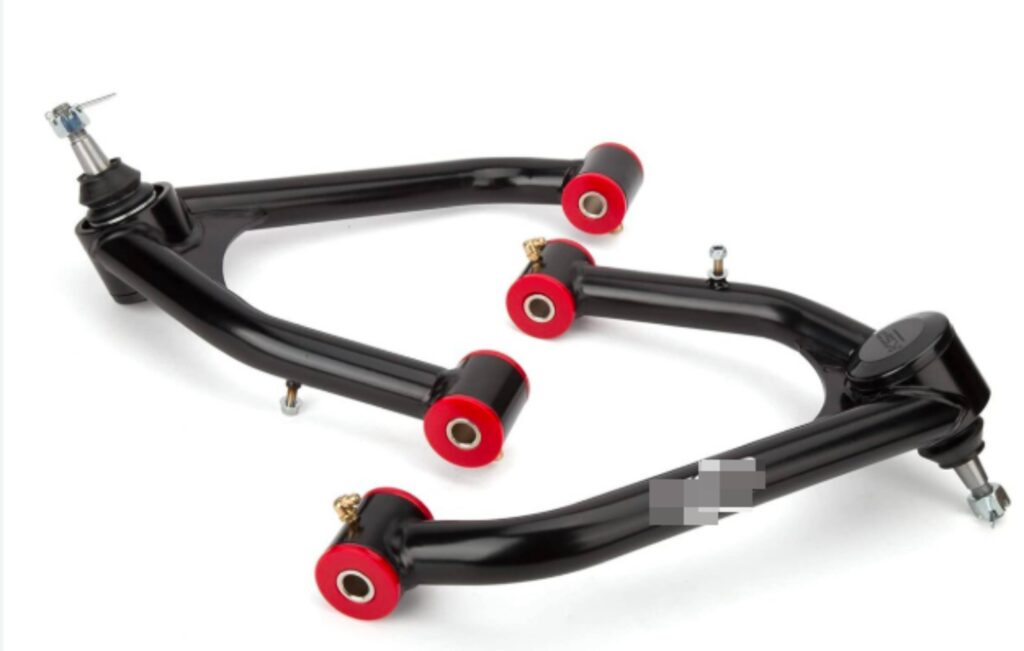
Are KSP Upper Control Arms Any Good?
KSP upper control arms are a reasonable budget aftermarket option for truck owners who need replacement suspension components or control arms designed for lifted vehicles. Their main advantages are application-specific designs, tubular steel construction on selected models, and a lower-cost market position than many premium suspension brands. However, their suitability depends on vehicle fitment, lift height, ball joint quality, and installation accuracy.
KSP Performance offers upper control arms for selected Toyota Tacoma, Toyota 4Runner, Ford F-150, Chevrolet Silverado, and GMC Sierra applications. These products are intended to replace factory upper control arms while accommodating the suspension configurations specified for each kit. Certain lifted applications use revised control arm geometry to improve ball joint operating angles and provide additional alignment adjustment capability. These benefits depend on the specific design rather than the KSP brand name alone.
For daily driving, properly installed KSP upper control arms should be evaluated based on steering stability, alignment retention, joint condition, and noise. Upper control arms locate the steering knuckle and help control wheel movement throughout suspension travel. Excessive ball joint clearance or deteriorated bushings can affect handling, produce clunking noises, and contribute to uneven tire wear. These mechanical concerns apply to aftermarket upper control arms generally and are not evidence of a defect specific to KSP.
KSP upper control arms are most worth considering when their specifications match the vehicle’s suspension setup and the buyer prioritizes affordability. Drivers who frequently encounter severe off-road impacts or require extensively documented long-term durability may prefer products with more independently verified performance data.
How Good Is the Build Quality of KSP Upper Control Arms?
KSP upper control arms use application-dependent construction designed to provide structural support and maintain suspension geometry. Selected models feature tubular steel arms, welded mounting structures, protective surface finishes, and replaceable suspension components. These features provide a basis for evaluating construction quality, but material specifications alone cannot establish long-term reliability.
Three components deserve particular attention: the control arm body, ball joint assembly, and mounting bushings. The arm body transfers suspension loads between the chassis and steering knuckle. The ball joint permits angular movement during steering and suspension travel, while the bushings accommodate controlled movement at the frame mounting points. Their combined condition determines whether the assembly can maintain proper suspension operation.
What Materials Are KSP Upper Control Arms Made Of?
Selected KSP upper control arms are manufactured from tubular steel, including DOM (Drawn Over Mandrel) steel tubing on certain applications. DOM tubing provides controlled dimensional tolerances and a consistent tube profile, making it suitable for fabricated suspension components. However, tubing strength also depends on steel grade, wall thickness, arm geometry, and weld quality.
For example, KSP has specified 1.25-inch-diameter DOM tubing with a 0.120-inch wall thickness for certain Ford F-150 upper control arm applications. These dimensions describe the tubing used in that particular design and should not be applied to every KSP kit. A thicker tube does not automatically produce a stronger complete assembly because weld placement, mounting geometry, and load distribution also influence structural performance.
Protective coatings are another important construction feature. Powder-coated or otherwise treated steel surfaces help limit direct exposure to moisture, road salt, and debris. However, scratches, damaged coatings, and exposed weld areas can become corrosion points. Owners operating in snowy regions or coastal environments should inspect these areas during routine suspension maintenance.
How Reliable Are KSP Ball Joints and Bushings?
The reliability of KSP ball joints and bushings depends on their specific design, installation, lubrication requirements, and operating conditions. These components experience repeated movement and loading whenever the vehicle steers, brakes, or travels over uneven surfaces. Their service life cannot be determined from the control arm’s steel construction alone.
Ball joints connect the upper control arm to the steering knuckle and allow movement through changing steering and suspension angles. On lifted trucks, increased operating angles can place additional demands on the joint, particularly when the suspension approaches full droop. A properly matched aftermarket control arm can help accommodate the intended lift configuration, but it cannot eliminate wear caused by contamination, damaged boots, or excessive mechanical loading.
Bushings connect the control arm to its chassis mounting points while controlling vibration and movement. Rubber bushings generally provide vibration isolation, while polyurethane bushings can offer different stiffness and deflection characteristics depending on their formulation. The exact bushing material and service requirements must be checked for the selected KSP part number. Incorrect installation or tightening bonded bushings outside the specified suspension position can introduce unwanted stress and accelerate deterioration.
KSP has advertised an 18-month warranty for ball joints and bushings on certain upper control arm products, with separate coverage for the control arm body. Warranty terms are product-specific and should be verified before purchase. A warranty provides information about manufacturer support, but it does not establish how long a component will last under real-world driving conditions.
For buyers evaluating KSP build quality, the most important checks are confirmed material specifications, sound weld construction, intact ball joint boots, correct bushing installation, and compatibility with the vehicle’s lift height. These factors provide a more useful assessment than judging the control arms by appearance or price alone.
How Do KSP Upper Control Arms Perform on Lifted Trucks?
KSP upper control arms are designed to support suspension operation on compatible lifted trucks by accommodating changes in control arm geometry and ball joint angles. Their performance depends on lift height, suspension configuration, wheel alignment, and the specific control arm design. Properly matched aftermarket upper control arms can address geometry limitations introduced by a lift, but they do not automatically increase suspension travel or improve ride comfort.
Lifting a truck changes the resting position of its suspension components. On independent front suspension systems, raising the vehicle’s ride height alters the angles between the upper control arms, steering knuckles, and chassis mounting points. These changes can reduce available alignment adjustment and place ball joints closer to their operating limits. Aftermarket upper control arms with application-specific geometry are intended to address these concerns.
For example, selected KSP upper control arms are marketed for trucks with approximately 2–4 inches of suspension lift. This range is not universal across KSP products. Vehicle owners must verify the manufacturer’s specified lift range, drivetrain compatibility, and suspension requirements before installation.
Do KSP Upper Control Arms Improve Suspension Geometry?
KSP upper control arms can improve suspension geometry on compatible lifted trucks when their design provides appropriate ball joint positioning and alignment correction. The main areas affected are caster angle, camber angle, and ball joint articulation. The amount of correction depends on the vehicle and control arm configuration.
Caster describes the forward or backward inclination of the steering axis when viewed from the side. Proper caster contributes to straight-line stability and steering return. Camber describes the inward or outward tilt of the wheel when viewed from the front. Incorrect camber can contribute to uneven tire wear and reduced tire contact during certain driving conditions.
A suspension lift changes the control arms’ operating positions and can make factory alignment specifications harder to achieve. Aftermarket upper control arms with revised geometry may provide additional positive caster or reposition the ball joint to accommodate the lifted suspension. However, the actual alignment result must be measured rather than assumed.
Ball joint articulation is equally important. A joint operating near its angular limit can experience excessive loading or binding as the suspension moves. Properly designed lifted-truck upper control arms provide clearance for the intended suspension movement. They must still be checked for interference at full steering lock, compression, and droop.
How Do KSP Upper Control Arms Affect Ride Quality?
KSP upper control arms primarily affect suspension geometry and wheel positioning rather than directly controlling ride softness. Shocks, springs, tires, and suspension bushings have a more direct influence on how a truck absorbs road irregularities. Replacing upper control arms alone should not be expected to produce a major improvement in ride comfort.
Steering behavior can change when aftermarket control arms allow a lifted truck to achieve more suitable alignment settings. Correct caster and camber help maintain directional stability and predictable steering response. However, improvements attributed to new upper control arms may also result from the wheel alignment performed during installation.
Bushing construction also influences how suspension forces reach the chassis. Stiffer bushings generally permit less deflection but can transmit more vibration than softer alternatives. The actual difference depends on bushing material, geometry, and condition. Buyers should confirm the bushing specifications of their selected KSP kit rather than assuming all versions provide identical ride characteristics.
For occasional off-road driving, compatible KSP upper control arms may accommodate the suspension movement required for moderate trail conditions. However, suitability for aggressive rock crawling, repeated high-speed impacts, or extreme suspension articulation requires more specific evidence about joint capacity, structural strength, and available clearance. Without independent testing, these applications should not be treated as proven strengths of the product.
How Easy Is It to Install KSP Upper Control Arms?
Installing KSP upper control arms is a moderately complex suspension repair that requires mechanical experience, appropriate tools, and a professional wheel alignment afterward. The procedure involves removing the factory upper control arms, disconnecting their ball joints from the steering knuckles, and securing the replacement assemblies to the chassis. Installation difficulty varies with vehicle design, fastener accessibility, and suspension modifications.
Common tools include a torque wrench, socket and wrench sets, a suitable ball joint separator, a hydraulic jack, and properly rated jack stands. Some vehicles require additional access procedures or special tools. The suspension must be supported according to the vehicle manufacturer’s service instructions because uncontrolled movement of suspension components can cause injury.
The installation process begins with confirming the replacement part number and inspecting the new components. The vehicle must then be safely supported before the factory upper control arm is disconnected and removed. The replacement arm is installed using the specified mounting hardware, torque values, and component orientation. Ball joint boots, brake hoses, ABS wiring, and surrounding suspension components must remain clear throughout steering and suspension movement.
Bushing fasteners require particular attention. For designs using bonded rubber bushings, final tightening generally must occur at the manufacturer-specified suspension position to avoid introducing excessive torsional preload. Other bushing designs may have different installation requirements. The instructions supplied with the specific KSP kit and the vehicle service manual take precedence over generic installation procedures.
A wheel alignment is necessary after replacing upper control arms because the new components can change caster and camber settings. A technician should measure caster, camber, and toe and adjust them to the applicable specifications. Incorrect alignment can cause steering pull, poor straight-line stability, and accelerated tire wear even when the control arms are installed correctly.
Installation should also include checking ball joint clearance, suspension movement, and hardware security. Owners of lifted trucks need to confirm that the upper control arms do not contact coil springs, shock assemblies, or other nearby components throughout the required operating range. Any interference must be corrected before the vehicle returns to service.
Professional installation is the safer choice for owners without suspension repair experience or access to the required equipment. DIY installation is appropriate only when the installer can follow vehicle-specific procedures, use correct torque specifications, and arrange a proper alignment. The purchase price of KSP upper control arms should therefore be considered alongside installation labor and alignment costs when evaluating their overall value.
How Long Do KSP Upper Control Arms Last?
KSP upper control arms do not have a verified universal service life because durability depends on driving conditions, suspension geometry, component maintenance, and the specific product design. The steel control arm body and its moving components also have different wear characteristics. While the arm structure is designed to withstand suspension loads, ball joints and bushings are wear components that require periodic inspection and eventual replacement.
Daily driving on paved roads generally places different demands on suspension components than frequent off-road use. Potholes, washboard roads, mud, water, and repeated suspension impacts increase mechanical loading and expose moving joints to contamination. Lifted trucks also require particular attention because incorrect ball joint angles and suspension interference can increase component stress. Proper installation and alignment help prevent avoidable loading, but they do not eliminate normal wear.
Corrosion resistance affects the long-term condition of steel upper control arms. Protective coatings help isolate metal surfaces from moisture and road salt, while exposed steel around scratches, damaged coating areas, and welds remains vulnerable to corrosion. Trucks operated in regions where roads are treated with deicing chemicals require closer inspection of these surfaces. Surface rust does not necessarily indicate structural failure, but significant corrosion around load-bearing areas requires professional evaluation.
KSP’s warranty coverage provides additional information about ownership support, although it should not be interpreted as a durability guarantee. Certain KSP upper control arm products have been advertised with lifetime coverage for the control arm body and 18-month coverage for ball joints and bushings. These terms vary by product and must be confirmed against the applicable warranty documentation. Published, independently verified mileage-based durability data is insufficient to establish a reliable replacement interval for the KSP product range.
What Causes KSP Ball Joints and Bushings to Wear Out?
KSP ball joints and bushings are subject to four principal wear factors: mechanical loading, contamination, lubrication condition, and installation geometry. These factors affect the moving connections between the control arm, chassis, and steering knuckle. Their combined effects determine how quickly clearance, friction, or material deterioration develops.
Mechanical loading increases when suspension components encounter repeated impacts or operate outside their intended angular range. On lifted trucks, a ball joint positioned near its articulation limit can experience additional stress during suspension droop. Incorrect lift compatibility or interference between suspension components can further increase loading. Selecting control arms designed for the vehicle’s actual suspension configuration is essential for avoiding these conditions.
Contamination is another major cause of ball joint deterioration. Protective boots help prevent water, dust, and abrasive particles from entering the joint assembly. Once a boot tears, contaminants can reach the bearing surfaces and accelerate wear. Greaseable joints require lubrication according to the manufacturer’s instructions, while sealed joints must be maintained according to their specific design. Adding grease to an assembly not designed for servicing can damage its seals.
Bushing deterioration develops through repeated deformation, environmental exposure, and incorrect installation. Rubber bushings can crack or separate as they age, while other bushing materials have different wear and lubrication characteristics. Excessive preload from incorrectly tightened mounting fasteners can accelerate deterioration in bonded rubber designs.
Worn upper control arm components may produce clunking noises, excessive steering movement, inconsistent alignment, or abnormal tire wear. These symptoms are not exclusive to KSP control arms and can originate from tie rods, wheel bearings, lower ball joints, or other suspension components. A proper inspection must identify the source before replacement.
Owners should inspect ball joint boots, mounting bushings, fasteners, protective coatings, and joint movement during routine suspension servicing. Any excessive joint play, damaged load-bearing component, or evidence of suspension binding requires immediate professional assessment. This approach is more reliable than replacing control arms at an unsupported fixed mileage.
What Are the Pros and Cons of KSP Upper Control Arms?
KSP upper control arms offer practical advantages for budget-conscious truck owners, particularly when a compatible aftermarket replacement is needed for a lifted suspension. Their strongest selling points are their budget-oriented positioning, application-specific designs, and tubular steel construction on selected models. Their principal limitations involve variation between products, maintenance requirements, and the limited availability of independently verified long-term durability evidence.
Advantages of KSP Upper Control Arms
1. Budget-oriented aftermarket option. KSP targets buyers seeking an alternative to premium suspension components. The actual savings depend on the vehicle application, retailer pricing, and installation costs. A lower initial price is beneficial when the selected kit meets the vehicle’s suspension requirements without creating additional maintenance expenses.
2. Application-specific lift compatibility. Selected KSP upper control arms are designed for lifted trucks and accommodate suspension configurations specified by the manufacturer. Appropriate control arm geometry can help address ball joint positioning and alignment limitations associated with increased ride height. Buyers must verify the supported lift range rather than assuming compatibility with every leveling or suspension lift kit.
3. Tubular steel construction. Certain KSP models use DOM steel tubing and welded arm structures. Tubular construction allows the manufacturer to design the arm around mounting locations, load paths, and suspension clearance requirements. Structural reliability nevertheless depends on material grade, wall thickness, weld integrity, and overall engineering.
4. Availability for multiple truck platforms. KSP offers upper control arm products for selected popular truck and SUV applications. This gives owners additional replacement choices when modifying or servicing their suspension systems. Compatibility remains dependent on model year, drivetrain, suspension configuration, and part number.
5. Product-specific warranty coverage. Certain KSP upper control arm kits include separate warranty terms for the control arm body and moving components. This provides a defined avenue for manufacturer support, subject to warranty conditions. Buyers should verify coverage, exclusions, and replacement procedures before purchasing.
Disadvantages of KSP Upper Control Arms
1. Limited independently verified durability data. Publicly established long-term testing does not provide a dependable mileage-based service life across the KSP upper control arm range. Buyers therefore cannot assume that the components will match the lifespan of premium alternatives or factory parts under identical conditions.
2. Ball joints and bushings remain maintenance concerns. Moving suspension components are exposed to wear from road impacts, contamination, and repeated articulation. Depending on the product design, owners may need periodic lubrication, component servicing, or eventual replacement. The specific maintenance requirements must be confirmed for each kit.
3. Fitment restrictions can complicate selection. KSP upper control arms are not universally compatible with all lifted trucks. Differences in model year, drivetrain, lift height, and suspension design can affect installation and operation. Choosing an incorrect application can introduce alignment problems or suspension interference.
4. Additional installation expenses. Replacing upper control arms requires suitable tools, correct assembly procedures, and a wheel alignment. Professional labor increases the total cost of ownership, particularly when the buyer cannot complete the mechanical work independently. These expenses should be included when comparing KSP with OEM and competing aftermarket options.
5. Unverified performance in demanding off-road conditions. Tubular steel construction and lift compatibility do not independently establish suitability for extreme articulation, high-speed desert driving, or repeated heavy impacts. Drivers using their trucks in demanding off-road environments should prioritize documented component specifications and evidence of testing for the intended application.
Overall, KSP upper control arms present a budget-focused alternative for compatible trucks, but their value depends on proper application selection and realistic expectations. The available product characteristics support evaluating them for everyday driving and compatible lifted suspension setups. They do not establish superior durability or off-road performance compared with more expensive brands.
Are KSP Upper Control Arms Worth the Money?
KSP upper control arms are worth considering for budget-conscious truck owners who need compatible aftermarket suspension components without paying premium-brand prices. Their value depends on four factors: purchase price, construction quality, installation expenses, and long-term maintenance requirements. A lower initial cost represents a genuine saving only when the control arms provide suitable fitment and dependable operation for the intended driving conditions.
KSP Performance positions its upper control arms within the affordable aftermarket suspension segment. Selected models feature tubular steel construction and application-specific designs for lifted trucks. These characteristics make KSP an alternative to more expensive products from brands such as SPC Performance and JBA Offroad. However, comparing purchase prices alone overlooks differences in ball joint design, serviceability, warranty coverage, and suspension geometry.
The total ownership cost includes more than the control arms themselves. Professional installation, wheel alignment, replacement ball joints, and future maintenance all contribute to the final expense. For example, a less expensive control arm kit that requires additional servicing may offer lower long-term value than a more expensive assembly with better-documented component durability. This comparison requires product-specific maintenance and replacement data rather than assumptions based on brand positioning.
KSP upper control arms offer the strongest potential value for drivers whose vehicles match the specified applications and who primarily use their trucks for daily transportation or moderate recreational driving. Owners who prioritize extensive off-road capability, specialized alignment adjustment, or independently documented durability should compare KSP with higher-end alternatives before purchasing.
Which Vehicles Are Compatible With KSP Upper Control Arms?
KSP upper control arms are available for selected Toyota, Ford, Chevrolet, and GMC trucks and SUVs. Compatibility depends on the vehicle’s model year, drivetrain configuration, suspension design, and installed lift height. KSP does not offer one universal upper control arm that fits every truck within these brands.
Toyota Tacoma and Toyota 4Runner owners should verify the exact generation and suspension configuration before selecting a KSP kit. Although these vehicles share certain suspension design characteristics across specific generations, their control arms are not universally interchangeable. Differences in mounting points, steering knuckle geometry, and lift requirements determine whether a particular replacement assembly fits correctly.
Ford F-150 applications also require model-year verification. For example, KSP has marketed upper control arms for selected 2004–2020 F-150 configurations with specified suspension lift ranges. These product listings should not be interpreted as confirmation that every F-150 manufactured during those years uses the same control arm assembly. Buyers must check the applicable part number, drivetrain, and suspension modifications.
Chevrolet Silverado and GMC Sierra applications present similar fitment considerations. Their suspension designs vary by generation, vehicle specification, and drivetrain. A control arm designed for one Silverado or Sierra configuration may not fit another, even when the vehicles appear mechanically similar. Lift kit compatibility must also be checked because different suspension modifications can change the required control arm geometry.
The following table summarizes the main compatibility considerations.
| Vehicle platform | Fitment requirements |
|---|---|
| Toyota Tacoma | Model year, generation, drivetrain, lift height |
| Toyota 4Runner | Model year, suspension configuration, lift height |
| Ford F-150 | Model year, drivetrain, suspension design, lift height |
| Chevrolet Silverado | Model year, vehicle configuration, suspension geometry |
| GMC Sierra | Model year, drivetrain, suspension configuration |
These are vehicle platforms to check against KSP’s application-specific catalog, not a guarantee that a kit is available for every version.
Lift height is particularly important when selecting aftermarket upper control arms. A kit designed for a 2–4-inch suspension lift should not automatically be used on a stock-height truck or a vehicle with a taller lift. Incorrect operating angles can reduce ball joint articulation clearance, complicate wheel alignment, or cause suspension interference.
Vehicle owners should also distinguish between suspension lifts and body lifts. A body lift raises the truck’s body relative to the frame without changing the basic front suspension geometry in the same way as a suspension lift. Therefore, body lift height alone does not establish the need for aftermarket upper control arms.
Before purchasing KSP upper control arms, confirm the vehicle’s exact model year, drivetrain, suspension configuration, and installed lift kit specifications. Match these details against the manufacturer’s current fitment documentation and part number. After installation, a professional alignment and suspension clearance inspection are necessary to verify proper operation.
Read more: KSP Wheel Spacers Review: Are They Worth Buying?
How Do KSP Upper Control Arms Compare With Other Brands?
KSP upper control arms compete with aftermarket suspension products from Rough Country, Freedom Off-Road, SPC Performance, and JBA Offroad. The main differences between these brands involve control arm construction, ball joint design, alignment correction, maintenance requirements, and product pricing. KSP is positioned as a budget-oriented option, while certain competing products offer specialized suspension geometry or component designs for more demanding applications.
Comparing upper control arms requires matching products designed for the same vehicle and lift height. A control arm intended for a 3-inch suspension lift should not be compared directly with an OEM replacement or a specialized long-travel suspension component. Their geometry, operating limits, and intended applications differ, making a simple comparison based on price or appearance misleading.
SPC Performance offers adjustable upper control arm designs for selected applications, allowing technicians to modify alignment geometry through dedicated adjustment mechanisms. JBA Offroad focuses on upper control arms for lifted vehicles, including designs with serviceable ball joints. These features may appeal to drivers who require additional alignment flexibility or specific maintenance capabilities. However, their advantages must be evaluated against the specifications of the corresponding KSP product.
Freedom Off-Road and Rough Country also offer aftermarket upper control arms for selected lifted trucks and SUVs. Their products vary in construction, ball joint configuration, and supported lift ranges. Buyers should compare the actual components included in each kit, replacement part availability, and warranty conditions rather than assuming that every product from one brand shares the same characteristics.
Are KSP Upper Control Arms Better Than Rough Country?
KSP upper control arms are not universally better than Rough Country upper control arms because both brands offer vehicle-specific products with different designs and operating requirements. KSP is worth considering when affordability is the primary purchasing factor, while Rough Country provides alternative suspension components that should be evaluated according to their specific construction, fitment, and warranty terms.
Both brands offer upper control arm products intended for selected lifted truck applications. Depending on the model, these assemblies may use tubular steel structures, revised ball joint positioning, and designs intended to accommodate changes in suspension geometry. These similarities do not establish equivalent structural strength, ball joint durability, or alignment performance.
Ball joint construction is one of the most important comparison points. Buyers should determine whether the selected assembly uses a sealed or serviceable joint, whether replacement components are available, and what maintenance the manufacturer requires. Joint articulation limits and clearance are particularly relevant on lifted vehicles because the suspension operates at different angles from its factory configuration.
Installation requirements also influence the comparison. Both KSP and Rough Country upper control arms require correct vehicle fitment, proper hardware installation, and post-installation wheel alignment. Neither brand should be expected to correct every suspension geometry issue caused by an incompatible or improperly installed lift kit.
The following table outlines the main purchasing considerations.
| Comparison factor | KSP | Rough Country |
|---|---|---|
| Market positioning | Budget-oriented aftermarket | Broad aftermarket suspension range |
| Construction | Tubular steel on selected models | Varies by product |
| Lift compatibility | Application-specific | Application-specific |
| Ball joint design | Varies by kit | Varies by kit |
| Alignment correction | Depends on control arm geometry | Depends on control arm geometry |
| Maintenance | Product-specific | Product-specific |
| Warranty | Verify applicable product terms | Verify applicable product terms |
| Best purchasing approach | Evaluate price and required specifications | Evaluate specifications and total ownership cost |
The deciding factor is the specific control arm kit rather than the brand alone. KSP is a reasonable candidate for buyers prioritizing purchase cost, provided its fitment and technical specifications meet their requirements. Rough Country deserves consideration when its corresponding product offers a more suitable design, serviceability arrangement, or ownership package.
Neither brand can be declared more durable without comparable testing under controlled driving conditions. Manufacturer specifications, verified fitment information, and documented component performance provide a stronger basis for selection than unsupported claims about brand reliability.
Who Should Buy KSP Upper Control Arms?
KSP upper control arms are best suited to budget-conscious truck and SUV owners who need compatible aftermarket suspension components for daily driving or moderate recreational use. They are particularly relevant to owners of lifted vehicles whose factory upper control arm geometry no longer provides the desired ball joint positioning or alignment capability. However, the selected kit must match the vehicle’s suspension configuration and intended lift height.
Daily drivers with compatible suspension lifts represent a practical target audience. These owners generally prioritize predictable steering, correct wheel alignment, reasonable maintenance requirements, and affordable replacement components. KSP upper control arms may meet these needs when properly specified and installed. Their contribution to driving performance comes primarily from maintaining appropriate suspension geometry rather than independently improving shock absorption.
Owners who occasionally drive on unpaved roads or moderate trails may also consider KSP upper control arms. Suspension components experience additional articulation and impact loading on uneven terrain, making ball joint clearance and structural condition important. KSP should only be selected for these applications when the manufacturer confirms compatibility with the vehicle’s suspension setup. Extreme off-road performance should not be assumed without appropriate testing and component specifications.
Budget-focused truck owners have another reason to evaluate KSP. An affordable aftermarket control arm can reduce initial replacement expenses compared with higher-priced alternatives. However, installation labor, wheel alignment, maintenance, and potential component replacement must be included in the ownership calculation. A lower purchase price is beneficial only when the assembly provides appropriate performance and serviceability.
KSP upper control arms are less suitable for drivers who require independently documented endurance testing, specialized alignment adjustment, or components specifically engineered for demanding off-road competition. These buyers should investigate higher-end products from manufacturers such as SPC Performance or JBA Offroad, selecting components according to their verified technical capabilities rather than brand reputation alone.
Owners of stock-height trucks should also confirm whether aftermarket upper control arms are necessary. Factory control arms are designed around the vehicle’s original suspension geometry, and replacing them with lift-specific components may provide no practical advantage. Incompatible geometry can introduce alignment or clearance problems instead of resolving them.
Final verdict: KSP upper control arms are a budget-oriented option worth considering for compatible trucks, particularly when affordability and lift-specific fitment are the main priorities. Their tubular steel construction on selected models and application-specific designs provide reasons to evaluate them, but these features do not establish superior durability or performance. Buyers should confirm fitment, ball joint specifications, warranty coverage, and installation requirements before purchasing. For demanding off-road use or applications requiring specialized alignment correction, a more extensively documented suspension product is the stronger choice.