The Hyundai Palisade P0455 code indicates that the vehicle’s EVAP system has detected a large fuel vapor leak. The EVAP system controls fuel vapors from escaping into the atmosphere by storing and routing them back into the engine for combustion. When the Engine Control Module (ECM) detects that the system cannot maintain the expected pressure level, it triggers the P0455 diagnostic trouble code and activates the Check Engine Light.
A P0455 code does not always mean that a major component has failed. The problem can come from a simple issue such as a loose gas cap, or it can result from damaged EVAP hoses, faulty valves, or leaks in other fuel vapor control components. Identifying the exact cause requires a proper diagnostic process because replacing parts without testing may not solve the problem.
This guide explains what the Hyundai Palisade P0455 code means, why it occurs, the symptoms drivers may notice, how technicians diagnose the EVAP leak, and the repair options available. Understanding how the EVAP system works helps Hyundai Palisade owners make better decisions when the Check Engine Light appears.
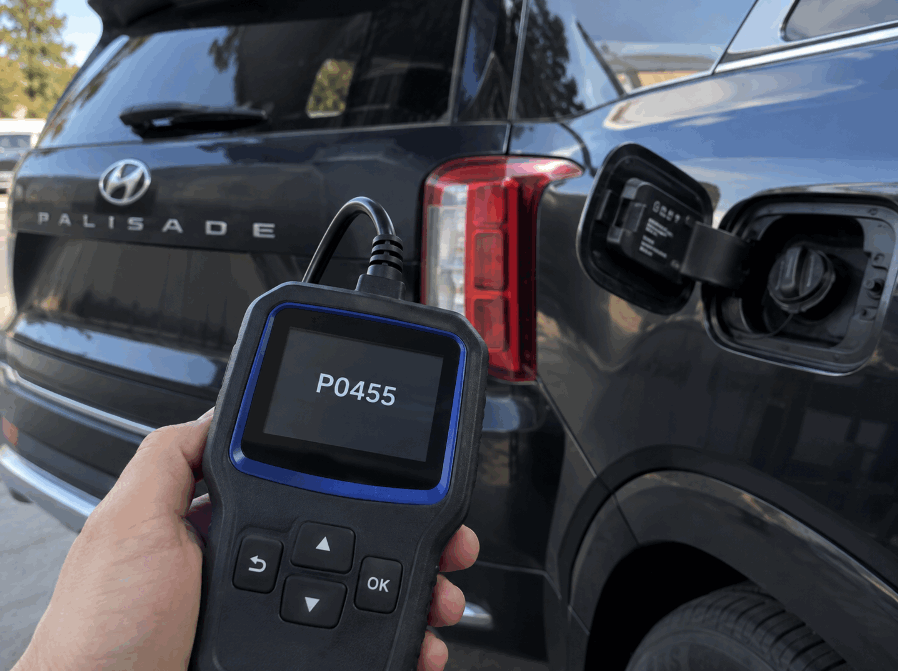
What Does the Hyundai Palisade P0455 Code Mean?
The Hyundai Palisade P0455 code means that the EVAP system has detected a large fuel vapor leak. P0455 is an OBD II diagnostic trouble code that shows the EVAP system cannot hold the expected pressure. The ECM detects this problem during an EVAP leak test and stores the code when fuel vapors escape from the system.
The EVAP system controls fuel vapors from the fuel tank. It prevents these vapors from entering the atmosphere. The system stores fuel vapor inside the charcoal canister and later sends it into the engine for combustion. When the system loses pressure, the ECM identifies the leak and turns on the Check Engine Light.
A P0455 code does not always indicate a major engine problem. The code mainly affects the vehicle’s emission control system. Many Hyundai Palisade vehicles continue to drive normally because the engine can still control fuel and air delivery. However, the problem should not be ignored because it can cause emission test failures and may indicate a damaged EVAP component.
The most common areas connected to Hyundai Palisade P0455 include the gas cap, EVAP hoses, purge valve, vent valve, charcoal canister, and fuel vapor connections. Each component helps maintain a sealed EVAP system. A technician must inspect these parts to locate the actual leak before replacing any component.
How Does the EVAP System Work on a Hyundai Palisade?
The EVAP system on a Hyundai Palisade controls fuel vapors and prevents them from escaping into the atmosphere. The system captures gasoline vapors from the fuel tank and sends them back into the engine for combustion. This process reduces emissions and helps the vehicle meet environmental standards.
The EVAP system uses several components that work together to control vapor flow. The fuel tank stores gasoline and produces fuel vapor during normal operation. The charcoal canister collects these vapors and holds them until the engine can burn them. The purge valve controls when the stored vapor enters the engine, while the vent valve manages airflow into the EVAP system.
The ECM monitors the EVAP system through pressure tests and sensor readings. It checks whether the system can maintain the required vacuum level. When the ECM detects an unexpected pressure loss, it identifies a possible leak and stores an EVAP related trouble code such as P0455.
A healthy EVAP system requires a sealed connection between all components. Even a small failure in the fuel vapor pathway can affect system performance. For a Hyundai Palisade P0455 code, technicians usually inspect the gas cap, vapor hoses, valves, and charcoal canister because these parts commonly cause large EVAP leaks.
Understanding the EVAP system helps explain why P0455 appears. The code does not point to one specific failed part. Instead, it tells technicians that the system has lost its ability to control fuel vapor pressure correctly.
What Causes a Hyundai Palisade P0455 Code?
The Hyundai Palisade P0455 code appears when the EVAP system detects a large fuel vapor leak. There are 5 common causes of this code: a loose gas cap, damaged EVAP hoses, faulty valves, a damaged charcoal canister, and fuel vapor connection problems. Each cause affects the EVAP system’s ability to maintain proper pressure.
A correct diagnosis requires checking each possible leak source. The P0455 code does not identify the exact failed component. It only confirms that the EVAP system has lost its sealed condition. Technicians must inspect the system and test individual components to find the leak location.
A loose or damaged gas cap is one of the simplest causes of Hyundai Palisade P0455. The gas cap creates a seal that keeps fuel vapors inside the fuel system. When the cap does not tighten correctly or the sealing ring becomes damaged, the EVAP system loses pressure. The ECM detects this pressure loss and stores the P0455 code.
Damaged EVAP hoses can also create a large leak. These hoses carry fuel vapor between the fuel tank, charcoal canister, purge valve, and other EVAP components. Cracks, disconnected lines, or damaged connections allow vapor to escape before it reaches the engine.
Faulty EVAP valves can trigger the P0455 code because they control vapor movement through the system. A purge valve that remains open or a vent valve that fails to close can prevent the system from completing its pressure test. This failure creates conditions that the ECM recognizes as an EVAP leak.
A damaged charcoal canister can also cause a large EVAP leak. The canister stores fuel vapors before the engine burns them. Physical damage, internal failure, or blocked vapor pathways can reduce the system’s ability to control fuel vapor flow.
Fuel vapor connection problems can create similar symptoms. Loose fittings, damaged seals, or leaks near the fuel tank can prevent the EVAP system from maintaining pressure. Because several components can create the same code, technicians usually perform a smoke test to locate the exact leak.
What Are the Symptoms of Hyundai Palisade P0455?
The Hyundai Palisade P0455 code can create several warning signs related to the EVAP system. The most common symptoms include an illuminated Check Engine Light, fuel vapor smell, failed emissions testing, and possible changes in fuel system performance. The severity of these symptoms depends on the location and size of the EVAP leak.
The Check Engine Light is the most common symptom of P0455. The ECM activates this warning when it detects that the EVAP system cannot maintain the expected pressure. In many cases, the vehicle still drives normally because the issue affects the emission control system rather than basic engine operation.
A fuel smell around the Hyundai Palisade can indicate that fuel vapors are escaping from the EVAP system. The EVAP system normally stores these vapors inside the charcoal canister. When a leak occurs, gasoline fumes may escape near the fuel tank, fuel filler area, or damaged EVAP components.
A failed emissions test can also result from a P0455 code. The EVAP system helps control harmful fuel vapor emissions. When the system develops a large leak, the vehicle may not meet emission requirements during inspection.
Some drivers may notice changes in fuel economy, although this symptom is less common. A faulty EVAP component can affect how the engine receives stored fuel vapors. However, most P0455 cases do not cause a major decrease in engine performance.
A Hyundai Palisade with P0455 may not show obvious driving problems. This makes the code easy to ignore after the Check Engine Light appears. However, early diagnosis helps prevent small EVAP issues from developing into larger fuel vapor system problems.
How Do You Diagnose Hyundai Palisade P0455 Code?
The Hyundai Palisade P0455 code requires a systematic diagnostic process because the code only shows that the EVAP system has a large leak. Technicians must identify the exact leak source before replacing any parts. A proper diagnosis prevents unnecessary repairs and ensures the EVAP system returns to normal operation.
The first step is checking the stored trouble codes with an OBD II scanner. The scanner provides information from the ECM, including the detected fault and related codes. Technicians also review freeze frame data to understand the conditions when the ECM detected the EVAP leak.
The next step involves inspecting simple causes before performing advanced tests. Technicians check the gas cap, fuel filler area, EVAP hoses, and visible connections. A damaged gas cap seal or disconnected hose can create a large vapor leak and trigger the P0455 code.
A smoke test is one of the most effective methods for finding EVAP leaks. During this test, technicians introduce smoke into the sealed EVAP system and observe where the smoke escapes. The leak location helps identify damaged hoses, faulty connections, or failed components.
Technicians also test EVAP valves because these components control vapor movement. The purge valve and vent valve must open and close at the correct time. A valve that does not operate correctly can prevent the EVAP system from completing its self test.
After repairing the identified problem, technicians clear the diagnostic code and perform a verification test. The vehicle must complete an EVAP monitoring cycle to confirm that the repair solved the issue. This final step prevents the same P0455 code from returning after the repair.
How Do You Fix Hyundai Palisade P0455 Code?
Fixing the Hyundai Palisade P0455 code requires repairing the source of the EVAP system leak. The correct repair depends on the failed component that prevents the system from maintaining proper fuel vapor pressure. Replacing parts without confirming the leak location may not solve the problem.
A damaged or loose gas cap is one of the easiest P0455 repairs. The gas cap creates a seal between the fuel tank and the outside environment. If the cap does not seal correctly, replacing it can restore the EVAP system pressure and remove the leak condition.
Damaged EVAP hoses require inspection and replacement when they cannot maintain a sealed vapor pathway. Technicians replace cracked hoses, broken connectors, and damaged seals to restore proper vapor flow between EVAP components.
A faulty purge valve or vent valve may require replacement if testing shows that the valve does not operate correctly. The purge valve controls fuel vapor movement into the engine, while the vent valve controls airflow during EVAP system tests. A failed valve can prevent the ECM from completing the required pressure checks.
A damaged charcoal canister may also need replacement. The charcoal canister stores fuel vapors before they return to the engine. Physical damage or internal failure can reduce its ability to control vapor flow and may continue triggering the P0455 code.
After completing repairs, technicians clear the stored trouble code and verify the repair through an EVAP system test. The Hyundai Palisade must complete its monitoring cycle without detecting another leak. This step confirms that the repair fixed the actual cause of the P0455 code.
How Much Does It Cost to Fix Hyundai Palisade P0455?
The cost to fix a Hyundai Palisade P0455 code depends on the location of the EVAP leak and the component that requires repair. A simple gas cap replacement may cost much less than replacing major EVAP components such as a purge valve, vent valve, or charcoal canister. Diagnostic time also affects the total repair cost because technicians must locate the exact leak source.
A basic diagnosis usually costs less than major EVAP repairs because technicians only need to identify the problem before replacing parts. An OBD II scan may reveal the P0455 code, but many vehicles require additional testing such as a smoke test to locate the leak. The final repair price increases when technicians need more time to inspect hidden EVAP components.
Replacing a damaged gas cap is usually the lowest cost repair because the component is simple to access and replace. If the problem comes from a cracked EVAP hose, the cost depends on the hose location and the amount of labor required. Some hoses are easy to access, while others require more inspection time.
Replacing EVAP valves can cost more because technicians need to test the components and access their mounting locations. A failed purge valve or vent valve requires a replacement part and labor to install it correctly. A damaged charcoal canister usually creates a higher repair cost because the component is more expensive and may require additional labor.
The best approach is to diagnose the leak before estimating repair costs. A Hyundai Palisade P0455 code does not identify one specific failed part. A professional inspection helps avoid unnecessary replacements and ensures that the repair addresses the actual EVAP system problem.
Can You Drive a Hyundai Palisade With a P0455 Code?
You can usually drive a Hyundai Palisade with a P0455 code for a short period because the issue mainly affects the EVAP system rather than the basic engine operation. However, driving with the code for a long time is not recommended because the vehicle may continue releasing fuel vapors and may develop additional problems.
A P0455 code does not normally cause immediate engine failure. The vehicle can often maintain normal acceleration, starting performance, and daily driving ability. Many drivers notice only the Check Engine Light because the EVAP system works separately from the main fuel and ignition systems.
The situation requires faster attention if the Hyundai Palisade shows additional warning signs. A strong fuel smell may indicate that gasoline vapors are escaping from a larger leak. Poor engine performance, multiple warning lights, or visible fuel system damage also require immediate inspection.
Ignoring a P0455 code can create problems during emissions testing. The vehicle may fail an inspection because the EVAP system cannot control fuel vapors correctly. A continued leak can also make it harder to identify whether another EVAP component has started failing.
The safest approach is to schedule a diagnostic inspection after the Check Engine Light appears. A technician can test the EVAP system, locate the leak, and confirm the correct repair. Addressing the issue early usually prevents unnecessary repairs and restores the Hyundai Palisade’s emission control system.
How Can You Prevent Hyundai Palisade EVAP Problems?
Preventing Hyundai Palisade EVAP problems requires regular inspection and proper fuel system maintenance. The best prevention methods include maintaining the gas cap seal, checking EVAP components during service, and addressing Check Engine Light warnings early. These steps help the EVAP system maintain proper fuel vapor control.
A properly installed gas cap is one of the simplest ways to prevent EVAP leaks. The gas cap creates a sealed connection between the fuel tank and the EVAP system. Drivers should make sure the cap clicks securely after refueling and inspect it if the Check Engine Light appears after a fuel stop.
Regular vehicle maintenance also helps identify EVAP issues before they become larger problems. Technicians can inspect fuel vapor hoses, valves, and connections during scheduled maintenance. Early detection of damaged components reduces the risk of larger leaks and unnecessary repair costs.
Drivers should not ignore EVAP related warning signs. A Check Engine Light, fuel smell, or failed emissions test may indicate a developing EVAP problem. Diagnosing the issue early allows technicians to repair the specific failed component instead of replacing multiple parts.
Following the Hyundai Palisade maintenance schedule supports long term EVAP system reliability. Proper maintenance keeps fuel vapor components working correctly and helps the vehicle maintain emission performance throughout its service life.
Conclusion
A Hyundai Palisade P0455 code indicates that the EVAP system has detected a large fuel vapor leak. The code does not identify one specific failed component, so proper diagnosis remains the most important step before making repairs. Common causes include a damaged gas cap, leaking EVAP hoses, faulty valves, or problems with the charcoal canister.
Understanding how the EVAP system works helps Hyundai Palisade owners make better repair decisions. A P0455 code usually does not create immediate driving problems, but ignoring the issue can lead to emissions failures and allow a small leak to become a larger system problem.
The most effective repair approach is to inspect the EVAP system, locate the actual leak, and replace only the failed component. Using an OBD II scanner, performing a smoke test, and verifying the repair after service help ensure the problem does not return.
Regular maintenance and early diagnosis can keep the Hyundai Palisade EVAP system operating correctly. When the Check Engine Light appears with a P0455 code, addressing the issue early protects the vehicle’s emission performance and prevents unnecessary repair costs.