You use Lucas Oil Stabilizer by adding the correct amount to your engine oil. First, check your vehicle’s oil capacity and recommended oil specification. Then determine the amount of stabilizer that fits your specific application. The stabilizer becomes part of the engine’s total oil volume. Do not add it on top of a completely full crankcase.
The correct amount depends on the engine, oil capacity, engine condition, and Lucas Oil product you use. Check the product instructions before you add the stabilizer. Measure the amount first, then add it during the appropriate oil filling process. Afterward, check the oil level to make sure it remains within the engine manufacturer’s specified range.
This guide explains how to use Lucas Oil Stabilizer step by step. You will learn how much stabilizer to add, when to add it, and how to use it during an oil change. You will also learn whether you can use it with synthetic oil and how often to add it. Finally, the guide explains common mistakes that can lead to incorrect application or an overfilled crankcase.
How Do You Use Lucas Oil Stabilizer?
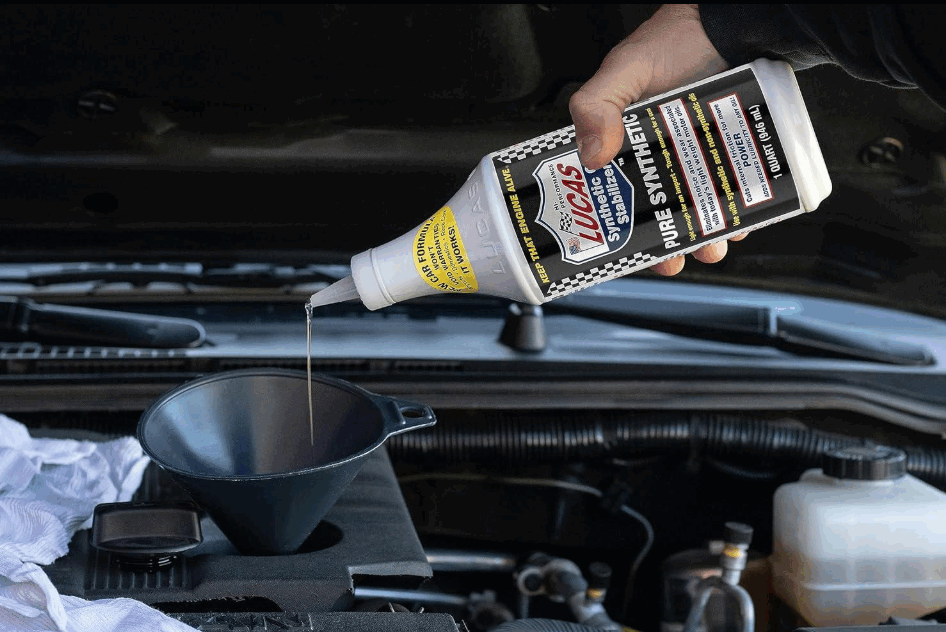
To use Lucas Oil Stabilizer, add the recommended amount to your engine oil and keep the total oil volume within the engine’s specified capacity. Lucas Oil recommends a 10% to 20% ratio for most engines. The company also lists one quart of Heavy Duty Oil Stabilizer per gallon of engine oil as the upper amount for most engines.
Start by checking your vehicle owner’s manual for the engine oil capacity. Next, check the Lucas Oil product label or product data sheet for the correct application. Measure the required amount before you add the stabilizer. If you change the engine oil, remove the old oil and replace the oil filter according to the vehicle manufacturer’s service procedure. Then add the appropriate amount of fresh engine oil and Lucas Oil Stabilizer. Keep the final fluid level within the specified range.
Lucas Oil describes Heavy Duty Oil Stabilizer as a supplement to other lubricants. It does not replace the engine oil specified for your vehicle. The company says the stabilizer can blend with petroleum based and synthetic automotive lubricants.
After filling the engine, check the oil level again. Do not rely on the bottle size to determine the correct amount. Base the amount on the engine’s oil capacity and the product’s recommended ratio. This approach helps you avoid adding too much fluid while keeping the stabilizer concentration within the intended range.
Should You Add Lucas Oil Stabilizer During an Oil Change?
You can add Lucas Oil Stabilizer during an oil change as part of the engine’s total lubricant fill. The key step is to account for the stabilizer when you calculate the final oil volume. Do not fill the crankcase to its full oil capacity and then add the stabilizer on top of that amount. The additional fluid can raise the oil level beyond the recommended range.
Start the oil change according to your vehicle manufacturer’s service procedure. Drain the old engine oil and replace the oil filter when the maintenance schedule calls for a new filter. Next, add the appropriate amount of fresh engine oil. Leave enough capacity for the recommended amount of Lucas Oil Stabilizer. Then add the stabilizer and check the dipstick or electronic oil level indicator.
The order of adding the fluids matters less than the final quantity and proper mixing. Lucas Oil describes its Heavy Duty Oil Stabilizer as a supplement for engine lubricants. It does not replace the engine oil required by your vehicle. The product also works with petroleum based and synthetic automotive lubricants.
Can You Add Lucas Oil Stabilizer Without Changing the Oil?
You can add Lucas Oil Stabilizer between oil changes when the existing engine oil remains suitable for continued use and the crankcase has enough capacity. First check the current oil level. Then calculate the amount of stabilizer that fits the recommended ratio. Avoid adding fluid when the oil level already reaches the maximum mark unless you first create enough capacity.
After adding the stabilizer, run the engine according to the product instructions and check the oil level again. Keep the final level within the range specified for the vehicle. This approach prevents unnecessary overfilling and keeps the procedure focused on the correct total lubricant volume.
Can You Use Lucas Oil Stabilizer With Synthetic Oil?
Yes, you can use Lucas Oil Stabilizer with synthetic motor oil when the specific Lucas Oil product supports that application. Lucas Oil states that its Heavy Duty Oil Stabilizer blends with petroleum based and synthetic automotive lubricants. This makes synthetic oil compatibility different from the question of whether your vehicle actually needs an oil stabilizer. You should still follow the vehicle manufacturer’s oil specification and the Lucas Oil product instructions.
Synthetic oil already provides the lubrication properties required by its formulation and vehicle specification. Adding an oil stabilizer does not change the engine manufacturer’s required oil grade. For example, if your vehicle requires a specific viscosity, you should continue using that viscosity after adding the stabilizer. The stabilizer supplements the lubricant rather than replacing the required engine oil.
The same principle applies to conventional motor oil. Lucas Oil states that Heavy Duty Oil Stabilizer works with petroleum based lubricants as well as synthetic lubricants. High mileage oil requires the same attention to the vehicle’s oil specification and the product instructions. The important factor is the complete lubricant combination in the engine, not simply whether the base oil uses synthetic or conventional technology.
Before adding the stabilizer, check the oil type, viscosity, engine capacity, and product instructions. Then use the appropriate amount without exceeding the engine’s specified oil level. This keeps compatibility and correct application as separate decisions.
How Often Should You Use Lucas Oil Stabilizer?
The available source material does not establish a specific Lucas Oil Stabilizer usage interval. It does not state that you should use the product at every oil change, after a fixed number of miles, or at a fixed time interval. For that reason, you should not treat any single frequency as a universal rule. Instead, check the instructions for the specific Lucas Oil Stabilizer product and follow the oil change and maintenance schedule for your vehicle.
Usage frequency also differs from dosage. Dosage determines how much stabilizer you add at one time. Frequency determines when you add it again. A correct dosage does not mean you should automatically repeat the same amount at every service interval. Your engine oil condition, vehicle maintenance schedule, and product instructions should guide the next application.
You should also avoid using frequency as a reason to exceed the recommended amount. Adding the stabilizer more often does not automatically provide greater protection. The engine still needs the correct oil specification, oil level, and maintenance interval. These requirements remain important whether you use conventional motor oil, synthetic oil, or high mileage oil.
If the product label or manufacturer documentation gives a specific application interval, use that information as the primary reference. If it does not provide a fixed interval, follow the vehicle manufacturer’s maintenance schedule and avoid creating a separate frequency rule without supporting information.
What Does Lucas Oil Stabilizer Do to Engine Oil?
Lucas Oil Stabilizer acts as a supplemental lubricant for engine oil. Lucas Oil describes Heavy Duty Oil Stabilizer as a product that blends with petroleum based and synthetic automotive lubricants. Its role in the engine depends on the lubricant system, the oil already in use, and the application. The stabilizer therefore works as part of the engine oil system rather than as a replacement for the vehicle’s required motor oil.
The product connects most directly with the lubrication system. Engine oil moves through the engine to lubricate components that operate under friction and heat. An oil stabilizer becomes part of that lubricant mixture after you add it to the crankcase. The final mixture must still meet the vehicle’s oil level and lubricant requirements. You should not use the stabilizer as a substitute for the engine oil grade specified by the vehicle manufacturer.
Oil viscosity also matters when you add any supplemental lubricant. Your engine requires a particular oil viscosity because its lubrication system depends on the oil specification selected by the manufacturer. Adding an oil stabilizer does not remove that requirement. You should continue to use the correct engine oil and follow the product instructions for the stabilizer.
Lucas Oil also markets Heavy Duty Oil Stabilizer for applications involving engine lubrication and oil related performance. However, the supplied source material does not provide enough evidence to assign a specific percentage improvement to engine wear, oil pressure, fuel economy, or oil consumption. Those claims should therefore not appear as guaranteed results in this article. The safest approach is to describe the stabilizer according to its documented function and keep the focus on correct application.
What Mistakes Should You Avoid When Using Lucas Oil Stabilizer?
The main mistakes involve using the wrong amount, ignoring the engine’s total oil capacity, and treating Lucas Oil Stabilizer as a replacement for engine oil. Start by checking the vehicle’s specified oil capacity and the Lucas Oil instructions for your specific product. Then calculate the stabilizer amount before you add it. This approach gives you control over the final lubricant volume and helps prevent accidental overfilling.
Do not add an arbitrary amount because you assume more stabilizer will provide better results. Lucas Oil recommends a 10% to 20% ratio for most engines and lists one quart per gallon of engine oil as the maximum amount for most applications. Use the applicable product instructions rather than increasing the concentration on your own.
You should also avoid ignoring the engine manufacturer’s oil specification. Lucas Oil Stabilizer supplements engine oil, but it does not replace the motor oil required by the vehicle. If your engine requires a specific viscosity, continue using that specification. The stabilizer should fit into the lubrication system without replacing the oil grade selected for the engine.
Can You Put Too Much Lucas Oil Stabilizer in an Engine?
Yes, adding too much fluid can create an incorrect final oil level. The risk comes from treating the stabilizer as an extra fluid instead of accounting for it within the total crankcase fill. Check the oil level after adding the product and keep it within the range specified for your vehicle.
The product ratio also matters. Lucas Oil provides a recommended range for most engines, so you should not increase the amount simply because the engine has high mileage or shows oil related symptoms. If your vehicle or specific Lucas Oil product provides different instructions, follow those instructions instead.
Should You Use Lucas Oil Stabilizer in Every Engine?
No. You should not assume that every engine needs Lucas Oil Stabilizer. The correct decision depends on the engine, the oil specification, the engine condition, and the instructions for the specific stabilizer product. Lucas Oil describes Heavy Duty Oil Stabilizer as a supplement for petroleum based and synthetic automotive lubricants, so the product works alongside engine oil rather than replacing the lubricant required by the vehicle.
Start with the vehicle manufacturer’s requirements. Check the recommended oil viscosity, total oil capacity, and maintenance procedure. Then compare those requirements with the instructions for the Lucas Oil Stabilizer product you plan to use. This process helps you determine whether the product fits your particular application.
Engine condition also matters. A high mileage engine, a gasoline engine, and a diesel engine may have different lubrication requirements. However, high mileage or heavy use alone does not justify adding an arbitrary amount of stabilizer. You still need to follow the applicable product instructions and maintain the correct oil level.
You should also consider the purpose of the application. If you use Lucas Oil Stabilizer, treat it as a supplemental lubricant within the engine oil system. Do not use it to replace the required motor oil, correct an unsuitable oil viscosity, or extend an oil change interval beyond the vehicle manufacturer’s recommendation.
The best approach is simple: identify the engine requirements first, check the product instructions second, and calculate the correct total lubricant volume before adding the stabilizer. This keeps product use aligned with the engine’s lubrication requirements.
What Is the Best Way to Use Lucas Oil Stabilizer?
The best way to use Lucas Oil Stabilizer is to follow the product instructions and account for the stabilizer within the engine’s total lubricant volume. Start by checking your vehicle’s oil capacity and recommended oil specification. Then determine the appropriate amount of stabilizer for your application. Add the product without exceeding the engine’s specified oil level.
Use Lucas Oil Stabilizer as a supplement to the required engine oil, not as a replacement for it. Lucas Oil states that Heavy Duty Oil Stabilizer can blend with petroleum based and synthetic automotive lubricants. The product should therefore work within the existing lubrication system while you continue to follow the vehicle manufacturer’s oil requirements.
The same principle applies when you add the stabilizer during an oil change or between oil changes. Check the existing oil level, calculate the appropriate amount, and verify the final level after adding the product. Avoid adding an arbitrary quantity or assuming that more stabilizer will provide better results.
Following these steps keeps the focus on correct dosage, proper oil capacity, suitable lubricant selection, and safe application. When the product instructions and vehicle requirements differ, use the instructions that apply to your specific vehicle and Lucas Oil product.