If you need the Chevy 5.3 oil capacity before an oil change, start with your exact engine and vehicle. Chevrolet has used the 5.3L V8 in different engines and models. Each configuration can have its own oil specification.
Oil capacity is only one part of a proper oil change. You also need the correct oil type and viscosity. The oil filter matters too. After adding oil, you should check the final level with the dipstick.
Do not assume that every Chevy 5.3 uses the same amount of oil. Engine generation, model year, and vehicle application can affect the required capacity. Adding too much oil can also create a separate problem. The listed capacity should guide the initial fill, while the dipstick confirms the final level.
This guide explains Chevy 5.3 oil capacity and the factors that affect it. It also covers common 5.3L applications, including the Chevrolet Silverado, Tahoe, and Suburban. You will learn how oil filters, oil type, oil changes, and final oil checks fit into the process. The goal is simple: find the correct specification for your Chevy 5.3 and fill the engine correctly.
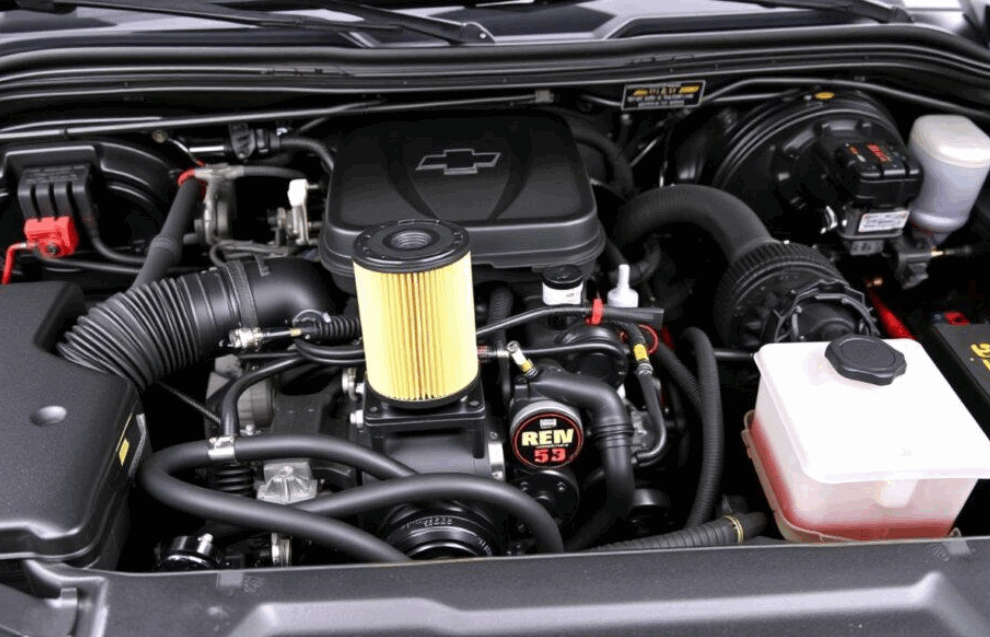
How Much Oil Does a Chevy 5.3 Take?
The Chevy 5.3 oil capacity depends on the specific engine and model year. Older 5.3L V8 engines commonly require 6 quarts with an oil filter change. For example, GM service data for the 2002 Chevrolet Tahoe 5.3L lists 6.0 quarts with a filter and 5.0 quarts without one.
Newer 5.3L engines can require more oil. A 2020 Chevrolet Silverado 1500 with the 5.3L L82 engine lists an 8 quart capacity with the filter. This difference shows why the 5.3L displacement alone does not identify the correct oil capacity.
The oil filter also affects the amount required during an oil change. A service specification may list one capacity with a new filter and another capacity without filter replacement. The 2010 Silverado 5.3L, for example, lists 6.0 quarts with the filter and 5.5 quarts without it.
After adding oil, check the oil level rather than relying only on the stated capacity. Chevrolet directs owners to use the vehicle’s specific Owner’s Manual for maintenance information. The correct manual depends on the vehicle year and model.
For that reason, there is no single oil capacity that applies to every Chevy 5.3. Identify the engine and vehicle first, then use the matching specification. This approach prevents both underfilling and overfilling during an oil change.
Why Does Chevy 5.3 Oil Capacity Vary by Engine and Model Year?
Chevy 5.3 oil capacity varies because Chevrolet has used the 5.3L V8 in different engine configurations and vehicle applications. The engine displacement alone does not identify the exact oil specification. Model year and engine configuration provide more useful information.
Older 5.3L V8 engines and newer 5.3L engines can have different oil capacities. For example, a 2002 Chevrolet Tahoe with the 5.3L engine lists 6 quarts with a filter change. A 2020 Chevrolet Silverado 1500 with the 5.3L L82 engine lists 8 quarts with a filter. These figures show why you should not apply one capacity to every Chevy 5.3.
Vehicle application also matters. Chevrolet has offered the 5.3L V8 in models such as the Silverado, Tahoe, and Suburban. The same engine displacement can therefore appear across different vehicles and model years. Chevrolet’s current support guidance also directs owners to the Owner’s Manual for vehicle specific maintenance information.
Engine generation provides another important distinction. Older Vortec 5.3L engines differ from later EcoTec3 5.3L engines. Chevrolet’s documentation identifies the 5.3L EcoTec3 V8 as an available engine in recent Silverado models.
For these reasons, check the exact model year, vehicle, and engine before adding oil. The correct specification gives you a starting point for the fill. You should still check the final oil level after the service. This approach helps prevent both underfilling and overfilling.
What Is the Chevy 5.3 Oil Capacity by Vehicle Model?
Chevy 5.3 oil capacity can differ by vehicle model and model year. The Chevrolet Silverado, Tahoe, and Suburban have all used 5.3L V8 engines. However, each vehicle can have a different engine configuration and oil specification. Chevrolet recommends using the Owner’s Manual for the exact year and model when checking maintenance specifications.
For example, the 2020 Chevrolet Silverado 1500 with the 5.3L L84 V8 requires 8.0 quarts of engine oil with the filter. The specification equals 7.6 liters. This capacity appears in the Silverado Owner’s Manual under the vehicle’s technical data.
The 2019 Chevrolet Tahoe and Suburban with the 5.3L L83 V8 also list 8.0 quarts with the filter. The owner’s manual gives the capacity as 7.6 liters and identifies the 5.3L V8 as engine code L83. The manual also states that the listed capacities are approximate and instructs owners to recheck the fluid level after filling.
These examples show why vehicle identification matters when you search for Chevy 5.3 oil capacity. A 5.3L engine in one model year may not share the same specification as an older 5.3L engine. Always match the capacity to the vehicle’s model year and engine code. Then check the oil level after filling. This approach gives you a reliable starting point and helps prevent an incorrect oil level.
Does Chevy 5.3 Oil Capacity Include the Oil Filter?
Yes, a Chevy 5.3 oil capacity specification can distinguish between an oil change with a filter and one without a filter. The capacity with a new filter is the more useful figure for a complete oil change. The filter holds some engine oil after installation, so the required amount can differ.
For example, a 2002 Chevrolet Tahoe with the 5.3L V8 lists 6 quarts with the filter. The same specification lists 5 quarts without the filter. A 2010 Chevrolet Silverado with the 5.3L engine also shows a difference. It lists 6 quarts with the filter and 5.5 quarts without it. These examples show why the filter specification matters when you calculate the initial fill.
A new filter also affects the final oil level. After you install the filter and add oil, the engine needs time for the oil to circulate and settle. You should then check the dipstick and compare the level with the recommended range. Do not treat the listed capacity as a reason to skip this final check.
The correct process starts with the capacity for your exact engine and vehicle. Add the specified amount gradually rather than assuming every Chevy 5.3 requires the same volume. Then check the oil level before you consider the oil change complete. This method helps you avoid both underfilling and overfilling.
What Type of Oil Does a Chevy 5.3 Use?
The correct oil type for a Chevy 5.3 depends on the specific engine and vehicle year. Do not choose oil based only on the 5.3L engine size. Chevrolet recommends checking the Owner’s Manual for the correct oil grade for your vehicle.
Oil viscosity is a separate specification from oil capacity. The capacity tells you how much oil the engine needs. The viscosity tells you how the oil flows under different temperature conditions. Chevrolet notes that oil viscosity can affect engine oil pressure, along with engine speed and temperature.
The oil specification can also change between model years and engine configurations. For this reason, avoid assuming that one viscosity works for every Chevy 5.3. Instead, identify the vehicle year, model, and engine. Then check the matching Owner’s Manual for the required grade and specification.
GM also uses the dexos oil specification for many of its vehicles. Chevrolet recommends GM approved oil products and states that owners should follow the oil requirements in their specific Owner’s Manual.
Choosing the correct oil requires more than matching the 5.3L displacement. You need the correct oil grade, the correct viscosity, and the correct capacity. Once you confirm these specifications, you can complete the oil change with greater accuracy and reduce the risk of using the wrong oil.
How Do You Change the Oil in a Chevy 5.3?
Changing the oil in a Chevy 5.3 starts with the correct oil and filter. First, confirm the oil capacity and oil specification for your exact vehicle. Chevrolet recommends using the Owner’s Manual for vehicle specific maintenance information. The manual also provides the correct procedure for checking the oil level.
Next, drain the old engine oil and replace the oil filter. GM Genuine Parts guidance recommends changing the oil filter with every oil change. A new filter also affects the amount of oil required for the initial fill.
After installing the new filter, add the specified engine oil. Do not assume that every Chevy 5.3 requires the same amount. The correct capacity depends on the engine and vehicle configuration. Add the oil in stages when needed. This approach gives you more control over the final oil level.
After filling the engine, check the oil level using the procedure in your Owner’s Manual. Chevrolet advises owners to check the oil level regularly and maintain the proper level. Driving with low engine oil can damage the engine.
The final check matters because the listed oil capacity does not replace the oil level inspection. If the dipstick shows a low level, add the required amount. If the level exceeds the recommended range, correct the excess before normal driving. A proper oil change therefore follows four basic stages: drain the old oil, replace the filter, add the specified oil, and verify the final level.
How Do You Check the Oil Level After Changing Oil in a Chevy 5.3?
Check the oil level after every oil change. The listed Chevy 5.3 oil capacity gives you the starting fill amount. The dipstick gives you the final oil level. These two checks work together to prevent an incorrect fill.
First, park the vehicle on a level surface. Then follow the oil level checking procedure in the Owner’s Manual for your specific Chevy 5.3. Chevrolet provides vehicle specific maintenance information through its Owner’s Manual resources. The exact procedure can vary between models and model years.
If your vehicle uses a dipstick, remove it and wipe it clean. Insert it fully again, then remove it to read the oil level. The oil should reach the recommended area on the dipstick. If the level sits below the required range, add oil in small amounts and check the dipstick again.
Do not add oil simply because you have not reached the listed capacity. The engine may retain some oil after draining. The filter can also retain oil during the service. These factors can affect the amount needed during the final fill.
An oil level above the recommended range also requires attention. Overfilling does not improve engine lubrication. It creates an oil level that differs from the manufacturer’s specification. Chevrolet advises owners to maintain the proper engine oil level and check it regularly.
The safest approach is simple. Use the correct capacity for your exact engine, add the oil gradually, and verify the final level with the recommended procedure. This process helps ensure that the Chevy 5.3 has the correct amount of engine oil after maintenance.
What Happens If You Overfill or Underfill a Chevy 5.3?
A Chevy 5.3 needs the correct oil level for proper engine operation. Too little oil can reduce the oil available for engine lubrication. Chevrolet warns that driving with insufficient engine oil can damage the engine and shorten its service life.
An oil level that falls below the operating range can also contribute to low oil pressure. Chevrolet advises drivers to check the oil level when the vehicle displays an oil pressure warning. If the oil level is low, add oil as required. If the warning remains, stop using the vehicle and seek service.
Too much oil creates a different problem. Chevrolet owner information warns that oil above the recommended operating range can cause engine malfunctions and damage. If the oil level exceeds the proper range, remove the excess oil before normal driving.
The best way to avoid both problems is to use the correct Chevy 5.3 oil capacity for your exact vehicle. Add the oil gradually during the service. Then check the final level using the procedure in the Owner’s Manual. Do not assume that the listed capacity removes the need for a final inspection.
The key distinction is simple. Oil capacity tells you how much oil the engine specification requires. The oil level check confirms whether the engine actually has the correct amount after service. Keeping the level within the recommended range helps protect the engine and supports proper lubrication.
How Often Should You Change the Oil in a Chevy 5.3?
Chevrolet recommends following the oil change interval for your specific vehicle. Most newer Chevrolet vehicles use an Engine Oil Life System to determine when the oil needs service. The system considers vehicle use and operating conditions instead of relying on one fixed mileage interval.
The Oil Life System monitors factors such as engine temperature, vehicle speed, driving habits, and climate conditions. When the system shows a low oil life or displays “Change Engine Oil Soon,” Chevrolet recommends changing the engine oil and filter as soon as possible. Chevrolet states that this service should occur within the next 600 miles after the warning appears.
Driving conditions can affect how quickly engine oil reaches the end of its useful life. Frequent short trips, heavy use, and demanding operating conditions can place different demands on the engine oil. For this reason, a fixed 3,000 mile interval does not apply to most newer Chevrolet vehicles with an Oil Life System. Chevrolet states that advances in engine technology have extended oil change intervals beyond the traditional 3,000 mile schedule.
Time also matters. Chevrolet’s current guidance states that the engine oil and filter should be changed at least once a year, even when the Oil Life System does not activate within that period. After an oil change, reset the Oil Life System so it can calculate the next service interval correctly.
The best approach is to follow your Chevy 5.3 Owner’s Manual and Oil Life System. Check the oil level regularly between services. The oil capacity tells you how much oil the engine needs during service, while the Oil Life System helps determine when the next oil change is due.
Conclusion
The correct Chevy 5.3 oil capacity depends on the specific engine, model year, and vehicle configuration. A 5.3L engine does not always use the same amount of oil. For example, older 5.3L applications can require 6 quarts with a filter, while some newer applications require 8 quarts.
The oil filter also affects the amount needed during an oil change. Start with the capacity listed for your exact vehicle. Then add the oil gradually and check the final level. The dipstick or approved oil level procedure confirms whether the engine has the correct amount.
You should also use the oil grade and viscosity specified for your vehicle. Chevrolet recommends checking the Owner’s Manual for the correct oil requirements and maintenance procedure. The Oil Life System can also help determine when your next oil change is due.
The key point is simple: do not use one oil capacity for every Chevy 5.3. Match the capacity to your engine and vehicle, replace the oil filter during the service, and verify the final oil level before driving. This process helps prevent both underfilling and overfilling while keeping your engine maintenance aligned with Chevrolet’s specifications.