Mopar ZF 8&9 Speed ATF is the factory transmission fluid for selected Chrysler, Dodge, Jeep, Ram, and other Stellantis vehicles equipped with ZF automatic transmissions. It protects internal components, supports smooth gear changes, and maintains stable hydraulic pressure under different driving conditions. Using the correct fluid also helps extend transmission life and reduce unnecessary wear.
Many owners look for Mopar ZF 8&9 Speed ATF equivalents because OEM fluid is not always easy to find. In some markets, aftermarket alternatives also cost less than genuine Mopar products. However, not every automatic transmission fluid meets the same technical requirements. The correct replacement must match the transmission specification, friction characteristics, viscosity, and performance standards. Choosing the wrong fluid may reduce shift quality and increase transmission wear over time.
This guide explains how to identify safe and compatible alternatives to Mopar ZF 8&9 Speed ATF. It covers OEM specifications, compatible transmission models, recommended equivalent fluids, and the differences between OEM and aftermarket products. You will also learn how to choose the right fluid, avoid common compatibility mistakes, and protect your transmission with proper maintenance practices.
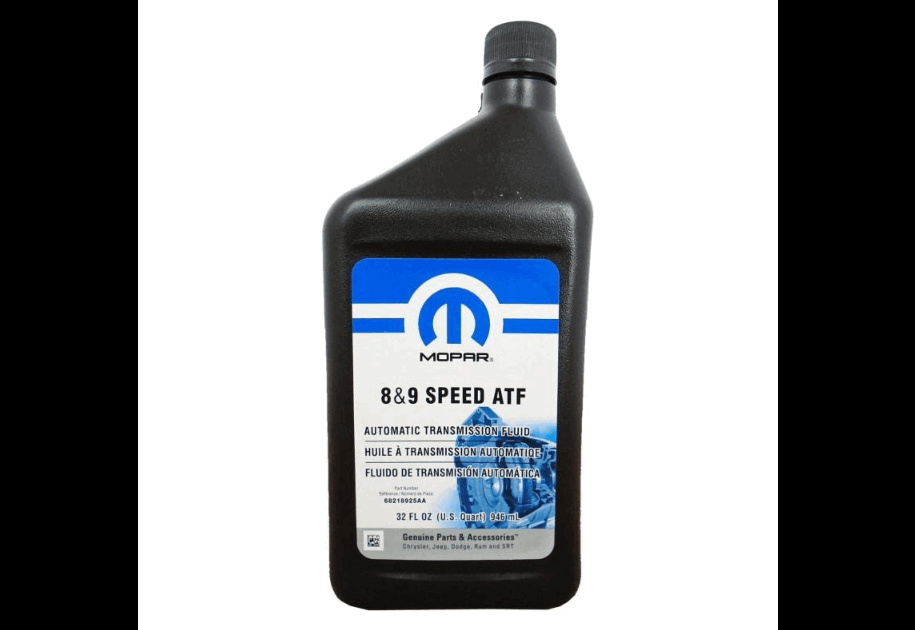
What Is Mopar ZF 8&9 Speed ATF?
Mopar ZF 8&9 Speed ATF is an original equipment automatic transmission fluid developed for selected ZF eight-speed and nine-speed automatic transmissions used in Chrysler, Dodge, Jeep, Ram, and other Stellantis vehicles. The fluid delivers the friction characteristics, viscosity, and thermal stability that these transmissions require for consistent performance. It also supports smooth gear engagement, efficient power transfer, and reliable operation under a wide range of driving conditions.
Unlike conventional automatic transmission fluids, Mopar ZF 8&9 Speed ATF follows transmission-specific engineering requirements. Modern ZF transmissions rely on precise hydraulic pressure to control clutch packs, valve bodies, and torque converters. Even small differences in fluid properties can affect shift quality, transmission temperature, and component wear. For this reason, manufacturers specify a dedicated fluid instead of recommending a universal ATF.
Many drivers assume that every eight-speed or nine-speed automatic transmission uses the same fluid. That assumption is incorrect. ZF has produced multiple transmission families, and each family may require a different fluid specification depending on its design and application. Vehicle manufacturers can also introduce their own service requirements, part numbers, and approval standards for the same transmission platform. Checking the transmission model and the required fluid specification is more reliable than selecting a product based only on the number of gears.
Mopar works closely with Stellantis to supply factory-approved fluids that match the engineering requirements of its vehicles. Several aftermarket manufacturers also produce compatible alternatives. However, those products should clearly state that they meet the required OEM specification instead of simply claiming broad compatibility. Selecting a fluid that satisfies the correct technical standard helps preserve shift performance, reduce internal wear, and maintain the long-term reliability of the transmission.
Which Transmissions and Vehicles Use Mopar ZF 8&9 Speed ATF?
Mopar ZF 8&9 Speed ATF serves several automatic transmissions used across the Stellantis vehicle lineup. The most common applications include ZF 8HP eight-speed transmissions and selected nine-speed units supplied by ZF technology. These transmissions appear in many Chrysler, Dodge, Jeep, and Ram models because they deliver smooth shifting, improved fuel efficiency, and higher torque capacity than previous automatic transmissions.
Several transmission variants share similar designs but do not always require the same service fluid. Popular eight-speed models include the 845RE, 850RE, 8HP45, 8HP50, 8HP70, and 8HP75. Common nine-speed applications include the 948TE and related 9HP transmission variants. Although these transmissions belong to the same product family, manufacturers may specify different fluid approvals, service procedures, or part numbers. Vehicle owners should always verify the exact transmission model before purchasing replacement fluid.
Many well-known Stellantis vehicles use these transmissions. Jeep Grand Cherokee, Jeep Wrangler, Jeep Gladiator, Dodge Charger, Dodge Challenger, Chrysler 300, and Ram 1500 commonly feature ZF-based eight-speed gearboxes. Some Jeep Cherokee and Jeep Renegade models use nine-speed automatic transmissions instead. The transmission installed in a vehicle depends on the model year, engine option, drivetrain configuration, and production market. Two vehicles with the same name may require different transmission fluids if they use different gearbox variants.
The easiest way to identify the correct transmission fluid is to confirm the transmission model rather than relying on the vehicle name alone. Owners can verify this information through the owner’s manual, the vehicle identification number, or the transmission identification label. Matching the fluid specification to the transmission model helps maintain shift quality, protects internal components, and reduces the risk of premature transmission damage.
What Specifications Must Mopar ZF 8&9 Speed ATF Equivalents Meet?
A Mopar ZF 8&9 Speed ATF equivalent must match the original fluid’s technical specifications instead of offering general automatic transmission compatibility. Modern ZF transmissions depend on carefully calibrated fluid properties to control hydraulic pressure, clutch engagement, and shift timing. A replacement fluid should deliver the same level of performance throughout its service life. Products that lack the required specification may reduce transmission efficiency and increase internal wear.
The most important requirement is compliance with the OEM fluid specification assigned to the transmission. Many ZF 8-speed applications reference Shell M-1375.4 or an equivalent approval because this specification defines the friction performance, viscosity profile, and durability needed by the transmission. Some nine-speed applications follow different factory requirements, even though they appear under the same Mopar branding. Vehicle owners should always verify the specification listed in the owner’s manual or service documentation before selecting a replacement fluid.
Friction characteristics play a critical role in transmission performance. The fluid must allow clutch packs to engage smoothly without slipping or creating harsh shifts. It must also maintain stable viscosity across a wide temperature range to support consistent hydraulic pressure during cold starts, daily driving, and heavy towing. High oxidation resistance and thermal stability help prevent fluid degradation, sludge formation, and varnish deposits that can affect valve body operation over time.
A high-quality equivalent should also protect seals, bearings, gears, and other internal components from premature wear. Manufacturers often perform extensive laboratory and field testing before approving a transmission fluid for specific applications. Choosing a product that clearly states compliance with the required OEM specification provides greater confidence than selecting a universal ATF with broad compatibility claims. Matching the correct specification remains the most reliable way to preserve shift quality, transmission durability, and long-term service performance.
Which Fluids Are the Best Mopar ZF 8&9 Speed ATF Equivalents?
Several manufacturers produce transmission fluids that serve as Mopar ZF 8&9 Speed ATF equivalents. However, the best choice depends on the transmission model and the required OEM specification. A quality replacement fluid should clearly state that it meets or is approved for the specification recommended by the vehicle manufacturer. Choosing a product based only on brand recognition or price does not guarantee compatibility with a ZF automatic transmission.
ZF LifeguardFluid remains the closest alternative because ZF develops and supplies fluids for many of its own transmissions. Many vehicle owners also consider Ravenol, Liqui Moly, Pentosin, Motul, Febi Bilstein, Amsoil, and Valvoline when searching for replacement options. These manufacturers offer transmission fluids for selected ZF applications, but product compatibility varies by specification and transmission family. Owners should always confirm that the product data sheet matches the requirements of their specific gearbox before making a purchase.
OEM fluid remains the preferred option for vehicles covered by a factory warranty or for owners who want to maintain the original service recommendation. Aftermarket fluids become a practical alternative when they provide documented compliance with the required specification and come from reputable manufacturers. Many premium aftermarket products deliver comparable protection against oxidation, thermal breakdown, wear, and viscosity loss while offering wider availability or lower ownership costs.
The comparison below highlights several widely available transmission fluids that are commonly considered when replacing Mopar ZF 8&9 Speed ATF. Compatibility should always be verified with the latest product documentation because manufacturers may update approvals, formulations, or recommended applications.
| Product | Typical Application | OEM Specification Support* | Best For |
|---|---|---|---|
| ZF LifeguardFluid | Selected ZF transmissions | OEM reference | Maximum OEM compatibility |
| Ravenol ATF | Selected ZF applications | Product dependent | Daily driving and long service intervals |
| Liqui Moly Top Tec ATF | Selected European transmissions | Product dependent | Premium aftermarket replacement |
| Pentosin ATF | Selected ZF gearboxes | Product dependent | European vehicle applications |
| Motul Multi ATF | Selected automatic transmissions | Product dependent | Performance-oriented driving |
| Febi Bilstein ATF | Selected OEM replacements | Product dependent | Cost-effective maintenance |
| Amsoil Signature Series ATF | Selected compatible applications | Product dependent | Severe operating conditions |
| Valvoline Multi-Vehicle ATF | Selected compatible applications | Product dependent | Broad aftermarket availability |
*Always verify the latest manufacturer approval and your vehicle’s required transmission fluid specification before purchasing any replacement product.
How Do You Choose the Right Equivalent Transmission Fluid?
Choosing the right Mopar ZF 8&9 Speed ATF equivalent starts with identifying the exact transmission installed in your vehicle. Many owners search by vehicle model, but that approach can lead to the wrong fluid selection. The same model may use different transmissions depending on the engine, production year, drivetrain, or market. Confirming the transmission model before buying transmission fluid provides the most accurate starting point.
The next step is to compare the required OEM specification with the product’s technical documentation. A compatible transmission fluid should list the correct specification instead of using broad marketing claims such as “works with most automatic transmissions.” Product data sheets usually provide detailed compatibility information, including approved applications and recommended transmission models. Checking these documents reduces the risk of selecting an incompatible fluid.
Driving conditions also influence the best fluid choice. Vehicles used for towing, hauling heavy loads, or frequent stop-and-go driving place additional stress on the transmission. Under these conditions, many owners prefer premium transmission fluids with strong thermal stability, oxidation resistance, and wear protection. Drivers who use their vehicles mainly for daily commuting can also benefit from these properties because they help maintain consistent shift quality throughout the fluid’s service life.
Warranty status should remain another important consideration. Owners of newer vehicles often choose genuine Mopar transmission fluid to follow factory service recommendations and avoid potential warranty concerns. Owners of vehicles that are no longer under warranty may consider high-quality aftermarket products that clearly meet the required OEM specification. Regardless of the brand, selecting a fluid that matches the transmission’s engineering requirements provides better long-term protection than choosing the lowest-priced alternative.
Can You Mix Mopar ATF with Equivalent Fluids?
You can mix Mopar ATF with an equivalent fluid only when both products meet the same OEM transmission fluid specification. Matching the specification is more important than matching the brand because the transmission depends on consistent friction characteristics and viscosity. Mixing fluids with different formulations may change shift performance and reduce the effectiveness of the additive package. For that reason, manufacturers and transmission specialists recommend confirming compatibility before adding any replacement fluid.
Mixing may become necessary during routine maintenance or when replacing a small amount of lost fluid. For example, a drain-and-fill service usually leaves a portion of the original fluid inside the torque converter and transmission cooler. In this situation, using a high-quality equivalent that meets the required specification is generally a safer approach than introducing a fluid designed for a different transmission family. However, owners should avoid combining products that do not list the same OEM approval or recommended application.
A complete fluid exchange offers the best solution when switching from one compatible brand to another. Replacing nearly all of the old fluid creates a more consistent lubricant throughout the transmission and minimizes the interaction between different additive packages. Many technicians also recommend replacing the transmission filter and oil pan, when applicable, during major service intervals. This approach helps maintain clean hydraulic circuits and supports consistent transmission performance.
Drivers should never assume that all multi-vehicle ATFs can safely mix with Mopar ZF 8&9 Speed ATF. Universal compatibility claims do not replace documented technical approvals. Before adding or replacing transmission fluid, verify the required specification in the owner’s manual and compare it with the latest product data sheet. Following this process reduces the risk of harsh shifting, clutch slip, excessive heat, and premature transmission wear.
What Happens If You Use the Wrong Transmission Fluid?
Using the wrong transmission fluid can reduce performance and shorten the service life of a ZF automatic transmission. Modern eight-speed and nine-speed gearboxes rely on precise hydraulic pressure and carefully calibrated friction characteristics to control every gear change. A fluid that does not meet the required OEM specification can disrupt these operating conditions and prevent the transmission from performing as designed.
One of the first symptoms is poor shift quality. Drivers may notice delayed engagement, harsh upshifts, rough downshifts, or inconsistent gear changes during acceleration. Incorrect friction properties can also cause clutch packs to slip instead of locking correctly. Continued operation under these conditions increases heat and accelerates wear on internal components. Over time, the transmission may lose efficiency and become more expensive to repair.
The wrong fluid can also affect hydraulic performance. Automatic transmissions depend on stable fluid viscosity to maintain consistent pressure throughout the valve body, torque converter, and clutch assemblies. If the fluid becomes too thin or too thick under different operating temperatures, hydraulic pressure may fluctuate. This condition can lead to unpredictable shifting, reduced driving comfort, and additional stress on internal seals and moving parts.
Heat management is another important concern. A transmission fluid with poor thermal stability breaks down more quickly under heavy loads, frequent towing, or stop-and-go traffic. As the fluid degrades, oxidation and deposit formation can restrict hydraulic passages and reduce lubrication. Higher operating temperatures further accelerate fluid deterioration, creating a cycle that increases the risk of premature transmission failure.
Choosing a transmission fluid that meets the correct OEM specification helps prevent these problems. Before performing any transmission service, verify the required fluid specification in the owner’s manual or official service information. Selecting a compatible fluid protects shift quality, maintains hydraulic efficiency, and supports the long-term durability of the transmission.
When Should Mopar ZF Transmission Fluid Be Changed?
The best time to replace Mopar ZF transmission fluid depends on driving conditions, transmission type, and the manufacturer’s service recommendations. Some vehicle manufacturers describe the fluid as “lifetime,” but that term usually reflects normal operating conditions rather than the entire lifespan of the vehicle. Transmission fluid gradually loses its protective properties because heat, oxidation, and mechanical stress break down the additive package over time. Replacing the fluid at appropriate intervals helps maintain smooth shifting and reduces long-term transmission wear.
Vehicles that operate under severe conditions often require more frequent transmission service. Heavy towing, frequent stop-and-go traffic, mountain driving, off-road use, and high ambient temperatures increase transmission load and generate additional heat. These conditions accelerate fluid degradation and reduce its ability to lubricate internal components. Owners who regularly drive under these circumstances should inspect the transmission fluid more frequently and follow the severe-service maintenance schedule recommended by the vehicle manufacturer.
Several warning signs may indicate that transmission fluid needs replacement before the scheduled service interval. Delayed gear engagement, rough shifting, transmission shudder, unexpected gear changes, or higher operating temperatures often suggest that the fluid no longer performs as intended. Dark fluid, a burnt odor, or visible contamination also indicates that the lubricant has deteriorated. Ignoring these symptoms may allow minor performance issues to develop into costly mechanical repairs.
Routine inspections provide an effective way to monitor transmission health. During scheduled maintenance, technicians can evaluate fluid condition, inspect the transmission pan for excessive metal particles, and check for leaks around seals and cooling lines. Addressing small problems early helps prevent larger failures and extends transmission service life. Following the correct maintenance schedule and using a transmission fluid that meets the required OEM specification remain the most effective ways to preserve shift quality, hydraulic performance, and long-term reliability.
How Is Mopar ZF Transmission Fluid Replaced?
Replacing Mopar ZF transmission fluid requires the correct procedure, the correct fluid specification, and the proper service equipment. Unlike older automatic transmissions, many ZF eight-speed and nine-speed units do not use a traditional dipstick. Technicians measure the fluid level at a specific transmission temperature to ensure accurate filling. Following the manufacturer’s service procedure helps maintain proper hydraulic pressure and consistent shift performance after the service.
Most transmission services begin with a drain and refill. This procedure removes fluid from the transmission pan while leaving some fluid inside the torque converter and cooler lines. A drain and refill restores part of the fluid’s protective properties and works well for routine maintenance. However, it does not replace all of the aged fluid. Vehicles with high mileage or heavily contaminated fluid may require a more comprehensive service to restore transmission performance.
A complete fluid exchange replaces a much larger percentage of the old transmission fluid. Many service centers recommend this procedure when changing to another compatible fluid that meets the same OEM specification or when performing major transmission maintenance. During the service, technicians often inspect the transmission pan, replace the filter when it is serviceable, and install a new pan gasket or integrated transmission pan if required by the transmission design. These additional steps help remove accumulated debris and improve long-term reliability.
After refilling the transmission, technicians verify the fluid level at the specified operating temperature and inspect the system for leaks. A short road test confirms normal shift quality and allows the transmission control system to operate under different driving conditions. Using the correct service procedure is just as important as selecting the correct transmission fluid. Even a premium Mopar ZF 8&9 Speed ATF equivalent cannot deliver reliable performance if the transmission is underfilled, overfilled, or serviced incorrectly.
Frequently Asked Questions About Mopar ZF 8&9 Speed ATF Equivalents
Is ZF LifeguardFluid the same as Mopar ZF 8&9 Speed ATF?
ZF LifeguardFluid is the closest alternative for many ZF automatic transmissions because ZF develops both the transmission and its original service fluid. However, compatibility depends on the exact transmission model and OEM specification. Always confirm that the product matches your vehicle’s service requirements before replacing the original fluid.
Can I use Valvoline MaxLife ATF instead of Mopar ZF 8&9 Speed ATF?
Valvoline MaxLife ATF may be suitable for some applications if the latest product documentation lists the required OEM specification. Compatibility varies between transmission models, so owners should never assume that one multi-vehicle ATF works for every ZF transmission.
Can I use a universal ATF?
A universal ATF should only be used when the manufacturer clearly states compatibility with the required OEM specification. A product marketed as a universal transmission fluid does not automatically meet the engineering requirements of every ZF eight-speed or nine-speed transmission.
Which transmission fluid offers the closest OEM performance?
ZF LifeguardFluid generally provides the closest match because it is designed specifically for ZF transmissions. Several premium aftermarket manufacturers also produce high-quality alternatives that meet the same technical requirements and deliver comparable protection.
Will an aftermarket transmission fluid void my warranty?
Warranty coverage depends on the manufacturer’s policies and local regulations. Using a transmission fluid that does not meet the required OEM specification may create warranty concerns. Choosing a product that clearly states compliance with the correct specification helps reduce that risk.
Can I switch from Mopar ATF to another compatible brand?
Yes. Many owners switch to another compatible brand during scheduled maintenance. The replacement fluid should meet the same OEM specification, and a complete fluid exchange is often the preferred method when changing brands.
How much transmission fluid does a ZF transmission require?
Fluid capacity varies by transmission model and service procedure. A drain and refill normally requires less fluid than a complete fluid exchange. Owners should always follow the capacity listed in the official service information for their specific transmission.
How can I confirm the correct transmission fluid?
The most reliable method is to identify the transmission model and compare it with the fluid specification listed in the owner’s manual or official service documentation. This approach provides greater accuracy than selecting a product based only on the vehicle model or production year.
Conclusion
Selecting the right Mopar ZF 8&9 Speed ATF equivalent requires more than choosing a well-known brand. The most important factor is matching the transmission’s required OEM specification. A compatible fluid should provide the correct friction characteristics, viscosity, thermal stability, and wear protection needed for reliable transmission performance.
Before purchasing a replacement fluid, identify the exact transmission model and review the manufacturer’s service recommendations. Comparing technical specifications with the product data sheet helps eliminate unsuitable options and reduces the risk of shifting problems or premature component wear. This step becomes even more important because similar vehicle models may use different transmission variants.
Whether you choose genuine Mopar transmission fluid or a high-quality aftermarket alternative, following the correct service procedure is essential. Replacing the fluid at appropriate intervals and using a product that meets the required specification helps preserve shift quality, improve long-term reliability, and protect one of the most expensive components in your vehicle.