A Honda CR V airbag light turns on when the Supplemental Restraint System detects a fault. The fault may involve an airbag, crash sensor, seat belt pretensioner, occupant sensor, wiring, or SRS control module.
The vehicle can still drive normally when this warning appears. However, the system cannot confirm that all safety components will work correctly during a collision. A faulty SRS component can prevent an airbag or seat belt pretensioner from operating when protection is needed.
The most common causes include a weak battery, loose wiring under the seat, a damaged clock spring, a faulty passenger seat sensor, or a stored collision related fault. The warning can also appear after battery replacement, interior repairs, seat movement, or an accident.
The airbag light alone does not identify the exact problem. The SRS control module stores a diagnostic trouble code that points to the affected circuit or component. A proper diagnosis requires an SRS compatible scan tool, electrical testing, and a visual inspection of related parts.
Resetting the warning light without fixing the cause does not solve the problem. The light usually returns when the system detects the same fault again. This guide explains the causes, symptoms, diagnosis process, repair options, reset methods, and safety considerations for a Honda CR V airbag light.
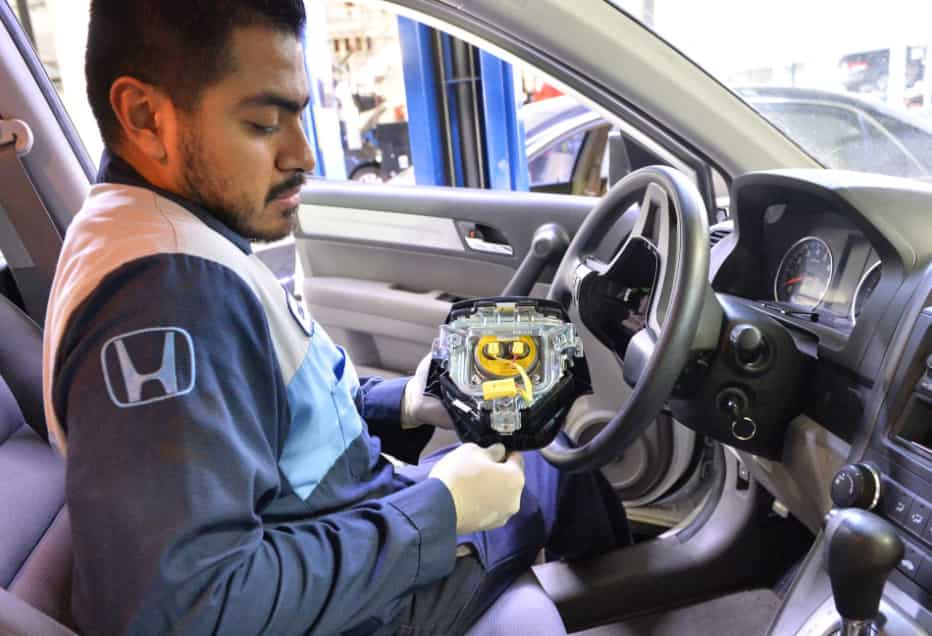
What Does It Mean When the Honda CR-V Airbag Light Is On?
A Honda CR-V airbag light means the Supplemental Restraint System has detected a fault. The SRS controls important safety components, including airbags, seat belt pretensioners, crash sensors, and electrical circuits. When the system finds an abnormal signal, it stores a fault code and turns on the warning light.
The airbag light normally appears for a few seconds after the engine starts. This is part of the SRS self-check process. The light should turn off when the system confirms that all components work correctly. If the light stays on, the SRS module has found a problem that needs further inspection.
The warning light does not identify the exact failed component. It only shows that the system detected an issue. Common causes include low battery voltage, damaged wiring, a faulty seat sensor, a broken clock spring, or an internal SRS control module problem. Each fault creates a different diagnostic code inside the vehicle computer.
A Honda CR-V can still drive when the airbag light remains active. However, the restraint system cannot confirm full protection during a collision. The vehicle may not deploy certain airbags or activate seat belt pretensioners correctly.
Proper diagnosis requires an SRS compatible scan tool. A technician reads the stored fault code, checks the related circuit, and repairs the confirmed problem. Clearing the warning light without fixing the cause only removes the symptom temporarily. The system will turn the light back on when it detects the same fault again.
What Are the Most Common Causes of a Honda CR-V Airbag Light?
There are 8 common causes of a Honda CR-V airbag light, including low battery voltage, loose wiring, faulty seat components, sensor failures, clock spring damage, crash sensor problems, SRS control module faults, and previous collision repairs. Each cause affects a different part of the Supplemental Restraint System and requires a specific diagnostic approach.
A weak battery is one of the simplest causes of an airbag warning light. The SRS module depends on stable electrical power during startup. A sudden voltage drop during engine cranking, battery replacement, or electrical repair can create a stored fault code. The warning light may remain active even after the battery problem is corrected.
Loose wiring under the seats is another common cause. Honda CR-V models use electrical connectors for side airbags, seat belt pretensioners, and occupant sensors. Frequent seat movement can stress these connectors over time. Objects stored under the seat can also damage wires or disconnect terminals.
A faulty clock spring can trigger the airbag light when the connection between the steering wheel and the SRS system fails. The clock spring allows electrical signals to pass while the steering wheel turns. When the internal ribbon cable breaks, the driver airbag circuit may lose communication.
Other causes include failed crash sensors, damaged occupant detection sensors, and SRS control module problems. Previous accidents can also create airbag faults when technicians install incorrect parts, reuse deployed components, or fail to complete required programming.
The correct repair depends on the stored SRS fault code. Replacing parts without diagnosis can waste money and may not restore the safety system correctly.
What Symptoms Can Appear with a Honda CR-V Airbag Light?
A Honda CR-V airbag light can appear with several warning signs that indicate a problem within the Supplemental Restraint System. The most common symptom is a warning light that stays on after the vehicle completes its startup check. Other symptoms include intermittent warning lights, passenger airbag indicator problems, steering wheel control failures, and stored SRS fault codes.
A constant airbag light usually means the SRS control module has detected a fault and saved the information in its memory. The vehicle may not show other obvious problems because the SRS system works separately from the engine, transmission, and braking systems. However, the warning indicates that one or more safety components require inspection.
An intermittent airbag light often points to an electrical connection problem. For example, a loose connector under the seat may trigger the warning when the seat moves forward or backward. A damaged clock spring can create additional symptoms, such as a non working horn or failed steering wheel buttons because these components share the same steering wheel connection.
Passenger airbag problems create another common symptom group. The passenger airbag indicator may display an incorrect status when the occupant sensor, seat wiring, or calibration data has a fault. This issue can appear after seat removal, interior repairs, or liquid damage.
A diagnostic scan provides the most accurate information because different SRS faults create different symptoms. The warning light itself only confirms that the system detected a problem. It does not show which component failed. A complete inspection helps identify the exact cause before replacing any parts.
Is It Safe to Drive a Honda CR-V with the Airbag Light On?
A Honda CR-V with the airbag light on can usually continue moving, but it does not provide confirmed full occupant protection during a collision. The warning means the Supplemental Restraint System has detected a fault that may affect airbags, seat belt pretensioners, or related safety components.
The airbag system works independently from the engine and transmission. Therefore, an SRS fault normally does not prevent the vehicle from starting or driving. The brakes, steering, and acceleration systems can continue working normally. However, the vehicle may not activate certain restraint components when an accident occurs.
The level of risk depends on the cause of the warning. A minor electrical fault, such as a stored low voltage code, may not directly affect every airbag. However, a damaged crash sensor, failed airbag circuit, or faulty seat belt pretensioner can reduce the protection available during an impact.
Drivers should arrange an SRS inspection as soon as possible after the warning appears. Continuing to drive for a short distance to reach a repair facility is usually different from ignoring the problem for months. The warning indicates that the system cannot confirm normal operation.
Some situations require immediate attention. These include a recent accident, visible airbag damage, exposed wiring, water damage, burning smells, or multiple electrical warnings appearing together. These conditions may indicate a more serious restraint system problem.
The safest approach is to diagnose the SRS fault before regular driving continues. A professional scan can identify the affected component and determine whether the vehicle needs a repair, calibration, or replacement part.
How Do You Diagnose a Honda CR-V Airbag Light?
A Honda CR-V airbag light requires an SRS diagnostic scan to identify the exact fault. The warning light only shows that the Supplemental Restraint System found a problem. It does not identify the failed component, so technicians must read the stored fault code and inspect the related system.
The first diagnostic step is checking the warning light behavior. A technician observes whether the light stays on, flashes, or appears after a specific event such as battery replacement, seat movement, or a collision. This information helps narrow down possible causes.
The next step is checking the vehicle battery and electrical connections. Low voltage can create false SRS faults because the airbag control module needs stable power to operate correctly. Technicians inspect the battery condition, terminal connections, and charging system before replacing expensive components.
The SRS control module must then be scanned with a compatible diagnostic tool. Standard OBD II scanners often read engine and transmission codes but cannot access Honda CR-V airbag systems. A Honda compatible scanner or advanced diagnostic tool can retrieve SRS fault codes from the airbag control module.
After retrieving the code, the technician tests the affected circuit. This process may include inspecting connectors, checking wiring continuity, testing sensor signals, and verifying component operation. For example, a clock spring fault requires inspection of the steering wheel circuit, while a passenger sensor fault requires testing the occupant detection system.
The final step involves repairing the confirmed problem, clearing the stored code, and performing a system verification. A proper diagnosis prevents unnecessary part replacement and ensures that the Honda CR-V restraint system operates correctly.
Can a Standard OBD II Scanner Read Honda CR-V Airbag Codes?
A standard OBD II scanner usually cannot read Honda CR-V SRS fault codes. Most basic scanners only access engine related systems, such as emissions, fuel control, and transmission information.
The airbag system uses a separate control module with different communication requirements. Drivers need a scanner that supports SRS diagnostics to identify problems with airbags, seat belt pretensioners, and crash sensors.
Using the correct diagnostic equipment saves time because it shows the exact fault category. It helps determine whether the issue comes from wiring, sensors, electrical voltage, or the control module itself.
How Do You Fix a Honda CR-V Airbag Light?
A Honda CR-V airbag light can only be fixed after identifying the specific SRS fault. The correct repair depends on the component that caused the warning. Replacing parts without diagnosis can increase repair costs and may not restore the safety system correctly.
A weak battery or poor electrical connection is one of the simplest issues to repair. Technicians check battery voltage, clean corroded terminals, and confirm that the charging system provides stable power. If low voltage created a stored SRS fault, the warning light may turn off after the system receives a proper scan and reset.
Wiring and connector problems require careful inspection because the SRS system uses sensitive electrical circuits. Loose connectors under the seat, damaged wires, or poor terminal connections can interrupt communication between components. Technicians repair damaged wiring using approved methods and avoid unsafe modifications, such as installing resistors to bypass airbag circuits.
A faulty clock spring requires replacement because the internal ribbon cable cannot reliably transmit electrical signals after damage. This repair involves removing the steering wheel and following proper safety procedures because the driver airbag connects directly to the steering wheel assembly.
Other repairs may involve replacing a failed crash sensor, passenger occupant sensor, seat belt pretensioner, or SRS control module. Collision related repairs can require replacing deployed airbags and clearing stored crash data.
After completing the repair, the technician clears the SRS fault code and verifies that the warning light remains off. A successful repair restores communication between all restraint system components and confirms that the Honda CR-V safety system operates correctly.
How Do You Reset the Airbag Light on a Honda CR-V?
A Honda CR-V airbag light should only be reset after the SRS fault has been diagnosed and repaired. Resetting the warning without fixing the cause only removes the stored message temporarily. The light will return when the Supplemental Restraint System detects the same problem again.
The correct reset process starts with an SRS diagnostic scan. A compatible scanner reads the stored fault code inside the airbag control module. After the technician repairs the affected component, the scanner can clear the stored code and confirm that the system operates normally.
Disconnecting the battery does not provide a reliable reset method. Some drivers try removing the battery terminal to erase warning lights, but SRS fault data often remains stored inside the control module. The warning may return immediately after the vehicle completes another self check.
Some older Honda CR-V models may support specific SRS reset procedures using a service connector. However, these procedures vary by model year and require accurate instructions. Incorrectly connecting terminals can create additional electrical problems or affect the restraint system.
A proper reset includes three steps: repair the confirmed fault, clear the stored SRS code, and verify that the warning light stays off. The technician should also confirm that airbags, seat belt pretensioners, and occupant sensors communicate correctly with the control module.
The airbag light is a safety warning, not a maintenance reminder. A successful reset only happens when the system no longer detects a fault.
Why Did the Honda CR-V Airbag Light Turn On After Battery Replacement?
A Honda CR-V airbag light can turn on after battery replacement because the SRS control module detected a voltage interruption or electrical problem. The airbag system depends on stable power to monitor sensors, airbags, and seat belt pretensioners. A sudden loss of voltage during battery service can create a stored SRS fault.
One common cause is a temporary voltage drop. When the old battery disconnects or the new battery connects, the SRS module may record abnormal electrical conditions. The system stores this information as a fault code and keeps the warning light active until the issue is diagnosed and cleared.
A loose battery terminal can also trigger the warning. The SRS module needs a stable connection between the battery, ground points, and vehicle electrical system. Poor connections can create inconsistent voltage signals that affect communication between safety components.
Another possibility is that the battery replacement did not cause the original problem. The power cycle may reveal an existing SRS fault that was already present but inactive. For example, a weak battery may hide an intermittent sensor problem until the electrical system resets.
The correct solution is not to replace random parts. The vehicle should receive an SRS scan to identify the stored fault code. A technician should check battery voltage, inspect electrical connections, clear confirmed low voltage faults, and verify that the warning light does not return.
A battery replacement can trigger an airbag warning, but it does not usually damage the airbag system itself. Proper diagnosis determines whether the issue is a simple electrical fault or a deeper SRS problem.
Why Did the Honda CR-V Airbag Light Turn On After an Accident?
A Honda CR-V airbag light can turn on after an accident because the Supplemental Restraint System records impact information and detects possible damage to safety components. The SRS system monitors crash sensors, airbags, seat belt pretensioners, and the control module after a collision.
A collision does not need to deploy an airbag to trigger an SRS warning. The system may store a fault when a crash sensor detects an impact that reaches a specific threshold. For example, a minor collision can damage a sensor, disconnect wiring, or activate a seat belt pretensioner without causing visible airbag deployment.
One common cause after an accident is a deployed seat belt pretensioner. Pretensioners tighten the seat belt during a collision to reduce occupant movement. Once activated, they usually require replacement because they cannot provide the same protection again.
Another cause is damage to the SRS control module. Some Honda CR-V models store crash data inside the module after certain impacts. The module may require reset, reprogramming, or replacement depending on the fault condition.
Collision repairs can also create airbag warning problems when technicians install incorrect parts, leave connectors disconnected, or fail to complete required calibration procedures. A vehicle may look repaired externally while still having an active restraint system fault.
The correct repair process includes scanning the SRS module, checking every affected component, inspecting wiring, and replacing damaged safety parts. Clearing the warning light without repairing collision related damage does not restore the vehicle’s protection system.
Can the Honda CR-V Airbag Light Stay On Without Airbag Deployment?
Yes, the Honda CR-V airbag light can stay on even when no airbag deploys. The SRS system detects more than airbag deployment events. It also monitors sensor signals, electrical circuits, and communication between safety components.
A collision can damage a sensor or create an electrical fault without reaching the deployment level. The SRS module records the problem because it cannot confirm that the safety system will respond correctly in another crash.
How Much Does It Cost to Fix a Honda CR-V Airbag Light?
A Honda CR-V airbag light repair cost depends on the failed component, diagnostic time, replacement parts, and labor rates. There is no single repair price because the warning can come from a simple electrical issue or a major SRS component failure.
The first cost usually involves diagnosis. An SRS scan identifies the stored fault code and shows which circuit requires inspection. This step prevents unnecessary replacements because the same warning light can come from different problems, such as a battery issue, wiring fault, sensor failure, or control module problem.
Simple repairs usually cost less than major component replacements. Battery related issues, loose connectors, or minor wiring repairs often require less labor because technicians can correct the problem without replacing expensive safety parts. These repairs may only involve inspection, electrical testing, and code clearing after the fault is fixed.
More complex repairs involve replacing SRS components. A damaged clock spring, failed occupant sensor, faulty crash sensor, or defective seat belt pretensioner requires additional labor and part replacement. Collision related repairs can cost significantly more because deployed airbags, pretensioners, sensors, and control modules may need replacement at the same time.
The most expensive repairs usually involve multiple safety components or collision damage. Replacing airbags, repairing damaged wiring, or replacing an SRS control module requires specialized procedures and verification.
Honda CR-V owners should focus on accurate diagnosis rather than choosing the cheapest reset service. A low cost reset without repair does not restore the safety system and may allow the warning light to return.
What Are the Most Expensive Honda CR-V Airbag Light Repairs?
The most expensive repairs usually involve collision related damage. Replacing deployed airbags, seat belt pretensioners, and SRS control modules requires specialized parts and additional labor.
A complete inspection is important because one damaged component can affect the operation of other restraint system parts. Repairing only the visible problem may leave hidden faults inside the SRS system.
Does the Honda CR-V Have an Airbag Recall?
A Honda CR-V may have an airbag recall depending on the model year, manufacturing date, market, and vehicle identification number. A recall does not apply to every Honda CR-V because manufacturers release safety campaigns for specific production groups and affected components.
Airbag recalls usually involve safety related defects that can affect normal SRS operation. Common recall related components include airbags, inflators, sensors, seat belt systems, or other restraint system parts. Honda identifies affected vehicles through the VIN because each vehicle has a unique production history.
Honda CR-V owners should check recall information before replacing expensive airbag components. A vehicle with an open recall may receive a free inspection or repair through an authorized Honda dealer. This can prevent unnecessary repair costs and ensure that the correct replacement parts are installed.
The VIN check provides the most accurate recall information because two vehicles from the same model year may have different recall statuses. Production changes, regional regulations, and previous recall repairs can affect whether a specific vehicle remains affected.
An airbag warning light does not always mean the vehicle has a recall issue. Many SRS warnings come from normal component failures, electrical problems, or previous repairs. A diagnostic scan is still necessary to identify the actual cause.
Before repairing a Honda CR-V airbag system, owners should check recall history and confirm the stored SRS fault code. Combining recall information with professional diagnosis provides the most accurate repair decision and helps maintain the vehicle’s safety performance.
When Should a Honda CR-V Airbag Light Be Inspected by a Professional?
A Honda CR-V airbag light should be inspected by a professional whenever the warning remains active after startup or returns after a reset. The SRS warning indicates that the vehicle cannot confirm normal operation of its restraint system. A proper diagnosis helps identify the exact fault before the vehicle faces a safety situation.
Professional inspection is especially important after a collision. An accident can damage crash sensors, activate seat belt pretensioners, disconnect wiring, or store crash data inside the SRS control module. These problems may exist even when the vehicle does not show visible exterior damage.
Drivers should also request an inspection when the airbag light appears with other symptoms. Examples include a non working horn, failed steering wheel controls, incorrect passenger airbag indicators, damaged wiring, or multiple electrical warnings. These signs often point to a deeper electrical or restraint system problem.
A professional diagnosis is also recommended after interior repairs or seat adjustments. Honda CR-V models use connectors and sensors inside seats that communicate with the SRS system. Incorrect installation, loose connectors, or damaged wiring can trigger the warning light.
A technician uses an SRS compatible scanner to read fault codes, test related circuits, and confirm the required repair. This process prevents unnecessary part replacement and ensures the safety system works correctly.
An illuminated Honda CR-V airbag light should not be ignored as a minor dashboard warning. The SRS system protects occupants during a collision, so any fault requires accurate diagnosis and proper repair before normal driving continues.
Conclusion: What Should You Do When Your Honda CR-V Airbag Light Stays On?
A Honda CR-V airbag light means the Supplemental Restraint System has detected a problem that requires attention. The warning may come from simple issues such as low battery voltage or loose wiring, but it can also indicate failures in important safety components, including crash sensors, airbags, seat belt pretensioners, or the SRS control module.
The correct solution starts with diagnosis, not replacement. An SRS compatible scan tool can identify the stored fault code and show which component requires inspection. After repairing the confirmed problem, the system should be reset and tested to ensure the warning does not return.
Drivers should avoid ignoring the airbag light because the vehicle cannot confirm complete restraint system operation while the warning remains active. A working engine and normal driving performance do not guarantee that airbags and pretensioners will respond correctly during a collision.
Regular battery maintenance, careful handling of seat wiring, and proper repair procedures can reduce the risk of future SRS problems. When the Honda CR-V airbag light appears after a battery replacement, accident, or interior repair, accurate diagnosis provides the safest and most cost effective solution.
A properly repaired SRS system restores the vehicle’s safety functions and gives drivers confidence that the Honda CR-V can provide the protection it was designed to deliver.