Seeing the “Service Passive Entry System” warning on your Jeep’s dashboard can be both confusing and frustrating. For many owners, the message appears unexpectedly, even when the vehicle seems to drive normally. Questions quickly arise: Is it safe to keep driving? Is the key fob failing? Could this be an expensive repair?
The Jeep Passive Entry System is an advanced keyless access technology designed to improve convenience and security. By communicating wirelessly with your vehicle’s smart key, the system allows you to unlock the doors and start the engine without removing the key fob from your pocket or bag. When any component within this system malfunctions, your Jeep may display the “Service Passive Entry System” warning to indicate that diagnostic attention is required.
Fortunately, this warning does not always signal a major mechanical problem. In many cases, the issue is caused by something as simple as a depleted key fob battery, a weak vehicle battery, or a temporary software glitch. However, more complex faults involving the RF Hub, Body Control Module (BCM), door handle sensors, or electrical wiring can also trigger the warning.
In this comprehensive guide, you’ll learn exactly what the Jeep Service Passive Entry System warning means, the most common causes behind it, practical troubleshooting steps you can perform yourself, estimated repair costs, and when it’s time to seek professional assistance. Whether you drive a Jeep Wrangler, Grand Cherokee, Compass, Gladiator, or another model equipped with passive entry technology, this guide will help you diagnose the issue and restore your vehicle’s keyless convenience with confidence.
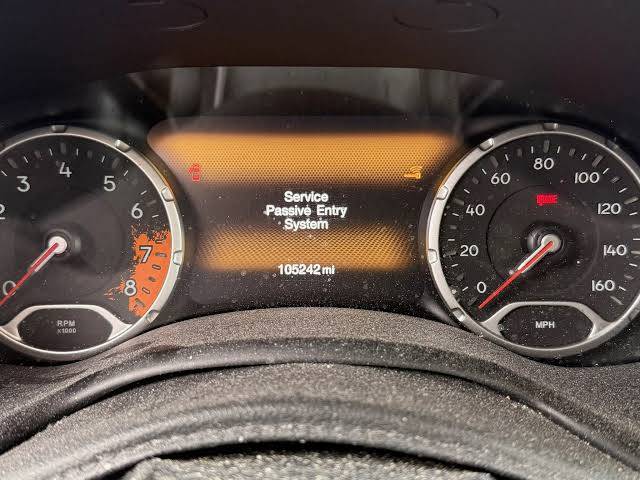
What Does “Service Passive Entry System” Mean?
The “Service Passive Entry System” message means that your Jeep has detected a problem within the keyless entry and vehicle access system. This system allows the driver to unlock the doors, lock the vehicle, open certain exterior access points, and start the engine without manually inserting a key.
Under normal conditions, the vehicle communicates with the key fob through a network of antennas, sensors, receivers, and electronic control modules. When you approach the Jeep and touch the door handle, the system searches for an authorized key fob nearby. If the key is recognized, the door unlocks automatically. The same authentication process occurs when you press the engine start button.
When the warning appears, one or more components may not be communicating correctly. The vehicle may have difficulty detecting the key fob, confirming its security code, or receiving a signal from a door handle sensor. In other cases, low voltage or a temporary software error may interrupt communication even when the hardware is still functional.
The warning does not always mean the entire system has failed. Some owners may only notice that one door no longer unlocks automatically, while the remote buttons and push button start continue to work. Others may experience intermittent key detection, delayed unlocking, or a complete loss of passive entry functions.
Several parts may be involved in the fault, including the key fob, door handle sensors, interior and exterior antennas, electrical wiring, the Radio Frequency Hub, and the Body Control Module. Because these components work together, diagnosing the exact cause often requires checking the system step by step.
In many cases, the vehicle remains drivable. However, ignoring the warning could eventually lead to more inconvenient problems, such as being unable to unlock the vehicle normally or having difficulty starting the engine.
How Does the Jeep Passive Entry System Work?
The Jeep Passive Entry System uses short range wireless communication to identify an authorized key fob near the vehicle. It is designed to provide convenient access while maintaining security through encrypted communication.
When you approach the vehicle, the system does not automatically unlock every door simply because the key is nearby. Instead, the process usually begins when you touch or pull an equipped door handle. A sensor in the handle detects your action and signals the vehicle to search for an authorized key.
Antennas positioned around the Jeep transmit a low frequency request. The key fob receives that request and responds with a coded radio signal. The vehicle then compares the response with the security information stored in its control modules.
If the code is accepted and the key is in the correct location, the door unlocks. This process happens within a fraction of a second, which makes the system feel almost instantaneous.
The same principle applies to push button starting. When you press the brake pedal and the engine start button, the vehicle searches for an authorized key inside the cabin. Interior antennas help determine whether the key is actually inside the Jeep rather than outside near a door or window.
Once the key is authenticated, the vehicle allows the engine to start. If the system cannot detect the key, the dashboard may display a message such as “Key Fob Not Detected,” even if the key is physically inside the vehicle.
Several electronic components support this process. Door handle sensors detect contact, antennas locate the key, the key fob transmits an encrypted response, and control modules verify authorization. The Radio Frequency Hub often plays an important role in receiving and processing wireless signals, while the Body Control Module manages functions such as locking, unlocking, lighting, and other body electronics.
If any part of this communication chain fails, the Jeep may display the Service Passive Entry System warning.
Common Symptoms of a Jeep Passive Entry System Problem
The dashboard warning is often the first sign of a problem, but additional symptoms can help identify which component may be failing.
One common symptom is that the doors no longer unlock when you touch the handle. The remote unlock button may still work, suggesting that the key fob can communicate with the vehicle but the passive entry sensor or antenna near the affected door is not responding correctly.
In some cases, the problem only affects one door. For example, the driver door may stop responding while the passenger door continues to unlock normally. This often points toward a localized issue involving the door handle sensor, wiring, or antenna.
Another common symptom is intermittent key fob detection. The system may work normally one day and fail the next. You may need to move the key closer to the vehicle, remove it from a bag, or try several times before the door unlocks.
The push button start system may also respond slowly or display a “Key Fob Not Detected” message. Some vehicles may still start when the key fob is held directly against or close to the start button. This can indicate that the key fob battery is weak or that the vehicle is having difficulty receiving the normal wireless signal.
Other possible symptoms include:
- The passive entry feature stops working after heavy rain or a car wash.
- The warning appears shortly after the vehicle battery has been discharged, replaced, or disconnected.
- The remote lock and unlock buttons work only at very short range.
- The vehicle locks or unlocks inconsistently.
- The alarm activates unexpectedly.
- The rear liftgate does not recognize the nearby key fob.
- The warning disappears after restarting the vehicle but later returns.
- Multiple electrical warnings appear at the same time.
The exact symptoms may vary depending on the Jeep model, model year, battery condition, and the component causing the fault. Paying attention to when the problem occurs can make diagnosis easier. For example, a failure limited to one door usually suggests a different cause than a system wide loss of key detection.
10 Common Causes of the Jeep Service Passive Entry System Warning
The Service Passive Entry System warning can be triggered by several different components. While some issues are simple enough to fix at home, others require professional diagnosis and repair. Understanding the most common causes can help you identify the problem more quickly and avoid replacing unnecessary parts.
1. Dead or Weak Key Fob Battery
A depleted key fob battery is the most common reason for passive entry problems. As the battery voltage drops, the key fob transmits a weaker signal, making it difficult for the vehicle to recognize its presence.
Typical symptoms include inconsistent door unlocking, reduced remote operating range, and intermittent “Key Fob Not Detected” messages. Replacing the battery is inexpensive and should always be the first troubleshooting step.
2. Damaged Key Fob
Even if the battery is new, the key fob itself may be damaged. Internal circuit boards can fail after repeated drops, exposure to moisture, or physical impact. A damaged transmitter may send an unstable or incomplete signal that prevents proper communication with the vehicle.
If you have a spare key fob, test it with the vehicle. If the spare works normally, the original key fob is likely defective and may need repair or replacement.
3. Weak Vehicle Battery
The passive entry system relies on stable electrical power. A weak or aging vehicle battery may not provide sufficient voltage for multiple electronic modules to operate correctly, especially during engine startup.
Drivers often notice additional symptoms such as slow engine cranking, dim interior lights, or multiple warning messages appearing simultaneously. Checking the battery voltage and charging system should be part of any diagnosis.
4. Faulty Door Handle Sensor
Each equipped door handle contains sensors that detect when someone attempts to open the door. If a sensor fails, that particular door may stop unlocking automatically while the remaining doors continue functioning normally.
This type of failure usually affects only one location and often becomes more noticeable in wet or extremely cold weather.
5. RF Hub Module Failure
The Radio Frequency Hub is responsible for receiving wireless signals from the key fob and coordinating communication with other electronic modules. If the RF Hub develops an internal fault, the vehicle may completely lose passive entry functionality.
Common symptoms include multiple key recognition failures, push button start problems, and diagnostic trouble codes related to wireless communication.
6. Body Control Module Software Issues
The Body Control Module manages numerous electronic functions, including door locks, lighting, security systems, and passive entry features. Software corruption, outdated firmware, or interrupted updates can prevent proper communication between system components.
Many software-related problems can be corrected by installing updated factory software or reprogramming the module using dealer-level diagnostic equipment.
7. Damaged Wiring or Electrical Connections
Electrical wiring is constantly exposed to vibration, moisture, road salt, and temperature changes. Over time, connectors may corrode, wires may break internally, or insulation may become damaged.
A poor electrical connection can interrupt communication between antennas, sensors, and control modules, causing intermittent or persistent warning messages.
8. Water Intrusion
Water entering the door panels, connectors, or electronic modules can cause short circuits or corrosion. This is more likely after flooding, heavy rain, pressure washing, or blocked door drain channels.
Moisture-related failures are often intermittent at first before becoming permanent as corrosion spreads.
9. Antenna Malfunction
The passive entry system depends on several antennas positioned throughout the vehicle to determine the location of the key fob. If one or more antennas stop working, the vehicle may only recognize the key in certain locations or fail to detect it entirely.
Drivers may notice that passive entry works near one door but not another, or that the engine only starts when the key fob is placed directly next to the start button.
10. Failed Electronic Control Module
Although relatively uncommon, failure of a major electronic control module can disable the passive entry system. Internal hardware faults, electrical overloads, or manufacturing defects may require replacement of the affected module followed by programming to match the vehicle’s security system.
Because module replacement is typically the most expensive repair, technicians usually eliminate all other possible causes before recommending this solution.
How to Diagnose a Jeep Service Passive Entry System Problem
Proper diagnosis helps avoid unnecessary repairs and replacement of expensive electronic components. Start with the simplest checks before moving on to more advanced diagnostic procedures.
Begin by replacing the key fob battery with a new battery that matches the manufacturer’s specifications. Even if the existing battery appears functional, a slight voltage drop may be enough to cause communication problems.
Next, test the vehicle using a spare key fob if one is available. If the spare key works correctly, the original key fob is likely damaged or requires reprogramming.
Inspect the condition of the vehicle battery. A healthy battery should maintain adequate voltage both before and during engine startup. Low battery voltage can affect several electronic systems at the same time.
If the warning remains, scan the vehicle using a compatible OBD-II diagnostic scanner capable of reading manufacturer-specific body control and security system codes. Trouble codes can provide valuable information about communication failures, antenna faults, or module errors.
Carefully inspect each door handle to determine whether the issue affects only one location or the entire vehicle. A single malfunctioning door often points toward a faulty sensor or damaged wiring within that door.
Examine visible wiring harnesses and electrical connectors for corrosion, loose connections, or evidence of water intrusion. Pay particular attention to areas inside the doors, near the liftgate, and around electronic modules.
If no obvious fault is found, professional diagnostic equipment may be required to test the RF Hub, Body Control Module, passive entry antennas, and communication network. These components often require specialized tools that are unavailable to most vehicle owners.
Following a logical diagnostic process not only saves time but also reduces repair costs by identifying the actual source of the problem before replacing parts.
How to Fix the Jeep Service Passive Entry System Warning
The appropriate repair depends entirely on the underlying cause of the warning. Fortunately, many issues can be resolved without replacing major components.
If the key fob battery is weak, replace it with a new battery of the correct type. After installation, verify that all remote functions operate normally and confirm whether the dashboard warning disappears.
If the key fob itself has failed, it may need to be reprogrammed or replaced. New key fobs typically require programming so they can communicate securely with the vehicle’s immobilizer and security system.
When the vehicle battery is weak or failing, charging or replacing the battery often restores normal operation. After replacing the battery, some Jeep models may require the system to complete a short relearning process before all functions return to normal.
Software-related issues can often be corrected by updating the Body Control Module or other control units with the latest manufacturer software. Dealers and qualified repair facilities have the equipment necessary to perform these updates safely.
A faulty door handle sensor should be replaced if diagnostic testing confirms that it no longer responds correctly. Because the sensor is integrated into the door handle assembly on many models, the complete assembly may need replacement.
If technicians determine that the RF Hub has failed, the module must be replaced and programmed to match the vehicle’s electronic security system. Proper programming is essential to ensure reliable communication with the key fobs.
Damaged wiring or corroded connectors should be repaired rather than bypassed whenever possible. High-quality electrical repairs help prevent future intermittent faults and maintain long-term system reliability.
After completing any repair, clear the stored diagnostic trouble codes and verify that passive entry, remote locking, and push button start all function correctly. A thorough functional test ensures that the original problem has been fully resolved and that no additional faults remain within the system.
Can You Drive With the Service Passive Entry System Warning?
In most situations, yes, you can continue driving your Jeep after the Service Passive Entry System warning appears. The warning typically affects the vehicle’s convenience and security features rather than its engine, transmission, or braking system. However, whether it is safe to continue driving depends on the underlying cause of the problem.
If the warning is caused by a weak key fob battery, the vehicle will usually continue to operate normally. You may simply lose the ability to unlock the doors by touching the handles, or you may need to hold the key fob closer to the push button start before the engine recognizes it.
A weak vehicle battery can also trigger the warning. While the Jeep may still start and drive, low battery voltage can affect multiple electronic systems simultaneously. If you notice slow engine cranking, flickering lights, or several warning messages appearing together, the battery should be tested as soon as possible.
If the issue is related to the RF Hub, Body Control Module, or another electronic control unit, the vehicle may become increasingly unreliable. Some drivers report intermittent failures in which the warning disappears temporarily before returning without warning. Others experience situations where the doors refuse to unlock automatically or the push button start system fails to detect the key fob.
Although these issues do not always prevent the vehicle from being driven immediately, they can become inconvenient or even leave you stranded if the system eventually fails to recognize the authorized key.
If your Jeep repeatedly displays the warning, requires multiple attempts to start, or no longer detects either key fob, professional diagnosis should not be delayed.
You should stop driving and arrange for professional assistance if you experience any of the following conditions:
- The engine will not start despite using a known working key fob.
- Multiple electrical systems begin malfunctioning at the same time.
- The warning appears together with charging system or battery warnings.
- The vehicle repeatedly loses communication with the key fob while parked.
- Water damage or flooding has recently occurred.
Addressing the problem early often prevents more expensive repairs and reduces the risk of unexpected starting or security issues.
Jeep Service Passive Entry System Repair Costs
Repair costs vary depending on the failed component, labor rates in your area, and whether original equipment or aftermarket replacement parts are used. Fortunately, many passive entry problems are relatively inexpensive to repair.
Replacing a key fob battery is usually the least expensive solution, typically costing between $5 and $15 if you perform the replacement yourself. Even if a repair shop installs the battery, the total cost generally remains minimal.
If the key fob itself is damaged, purchasing and programming a new smart key usually costs between $150 and $400, depending on the Jeep model and whether the replacement is obtained through a dealership or an automotive locksmith.
Vehicle battery replacement generally ranges from $180 to $350, including installation, depending on battery capacity and brand.
Replacing a faulty door handle sensor or complete door handle assembly often costs between $200 and $500 because labor is required to remove the interior door panel and reconnect electronic components.
Repairs involving damaged wiring or corroded electrical connectors can vary significantly. Minor wiring repairs may cost $100 to $300, while extensive electrical troubleshooting may exceed $500 if several circuits require inspection.
Replacing the Radio Frequency Hub is considerably more expensive. Including programming, total repair costs commonly range from $400 to $900.
If the Body Control Module requires replacement, owners should expect repair costs between $600 and $1,300, depending on the vehicle model and programming requirements.
Software updates are generally much less expensive than hardware replacement. Many dealerships charge between $100 and $250 for diagnostic testing and module reprogramming if no physical parts require replacement.
The table below provides a general estimate.
| Repair Item | Estimated Cost |
|---|---|
| Key Fob Battery Replacement | $5 to $15 |
| Smart Key Programming | $80 to $250 |
| New Key Fob | $150 to $400 |
| Vehicle Battery Replacement | $180 to $350 |
| Door Handle Sensor Replacement | $200 to $500 |
| Wiring Repair | $100 to $500+ |
| RF Hub Replacement | $400 to $900 |
| BCM Replacement | $600 to $1,300 |
| Software Update or Reprogramming | $100 to $250 |
These figures are estimates only. Actual repair costs vary depending on your location, dealership labor rates, and the specific Jeep model.
Frequently Asked Questions
Why does my Jeep say “Service Passive Entry System”?
This warning indicates that the vehicle has detected a fault within the passive entry system. The issue may involve the key fob, door handle sensors, RF Hub, Body Control Module, antennas, wiring, or the vehicle’s electrical system.
Can a dead key fob battery cause the warning?
Yes. A weak or depleted key fob battery is one of the most common causes of the warning. Replacing the battery is inexpensive and should always be your first troubleshooting step.
Can I reset the Service Passive Entry System warning?
In some cases, replacing the key fob battery, charging the vehicle battery, or correcting a temporary software issue may cause the warning to disappear automatically. If a hardware fault remains, the warning will usually return after the vehicle performs another system check.
Will disconnecting the battery reset the system?
Disconnecting the vehicle battery may temporarily clear certain electronic faults, but it rarely fixes the underlying problem. If a defective sensor, module, or wiring issue exists, the warning will likely reappear after the system restarts.
Can I start my Jeep if the passive entry system is not working?
In many Jeep models, yes. If the key fob battery is weak, placing the key fob directly against or very close to the push button start may allow the vehicle to recognize the key and start the engine. Consult your owner’s manual for the recommended emergency starting procedure for your specific model.
Can an OBD-II scanner diagnose this problem?
A basic OBD-II scanner may detect some diagnostic trouble codes, but many passive entry system faults require an advanced scanner capable of reading manufacturer-specific body control and security modules. Professional diagnostic equipment provides far more detailed information.
Does the warning affect vehicle security?
It can. Depending on the nature of the fault, some keyless entry functions may become unavailable, while the immobilizer and anti-theft system usually continue to protect the vehicle. However, unresolved communication problems should always be repaired promptly to maintain full system functionality.
Conclusion
The Jeep Service Passive Entry System warning should never be ignored, but it does not automatically indicate a serious mechanical failure. In many cases, the problem can be traced to a simple issue such as a weak key fob battery, a low vehicle battery, or a temporary software glitch. Starting with these basic checks can save both time and money before moving on to more complex diagnostics.
When simple solutions do not resolve the warning, the next step is a systematic inspection of the door handle sensors, antennas, electrical wiring, Radio Frequency Hub, and Body Control Module. Accurate diagnosis is essential because replacing electronic components without confirming the root cause can become expensive and may not solve the problem.
If your Jeep continues to display the warning after basic troubleshooting, or if passive entry and push button start functions become unreliable, seeking professional diagnostic service is the most effective approach. Modern Jeep security systems rely on multiple interconnected electronic modules, and specialized equipment is often required to identify communication faults accurately.
By understanding how the passive entry system works and recognizing the most common warning signs, you can respond quickly when problems occur, minimize repair costs, and restore the convenience and security features that make keyless vehicle access so valuable. Routine battery maintenance, prompt attention to warning messages, and timely software updates will also help keep your Jeep’s passive entry system operating reliably for years to come.