The Honda Accord Supplemental Restraint System Problem warning often surprises drivers because it appears without much explanation. Many people immediately wonder whether the airbags will still work during a crash. Others assume that a low battery or a simple electrical issue caused the warning. While those situations can trigger the message, the warning may also point to a more serious fault inside the vehicle’s safety system.
The Supplemental Restraint System, or SRS, supports the seat belts during an accident. It controls the airbags, crash sensors, seat belt pretensioners, and several electronic components. When the system detects a fault, it turns on the warning light and stores a diagnostic trouble code. The warning tells you that one or more safety components may not operate correctly. As a result, the system might not provide full protection during a collision.
Several different issues can trigger a Honda Accord Supplemental Restraint System Problem. A weak battery, damaged wiring, a faulty seat occupancy sensor, a worn clock spring, or a failed SRS module can all cause the warning to appear. Some repairs are simple, while others require professional diagnosis and replacement parts.
This guide explains what the warning means and why it appears. You will also learn the most common symptoms, leading causes, diagnostic procedures, repair costs, and practical solutions. By the end of this article, you will understand how to identify the problem and restore your Honda Accord’s safety system with confidence.
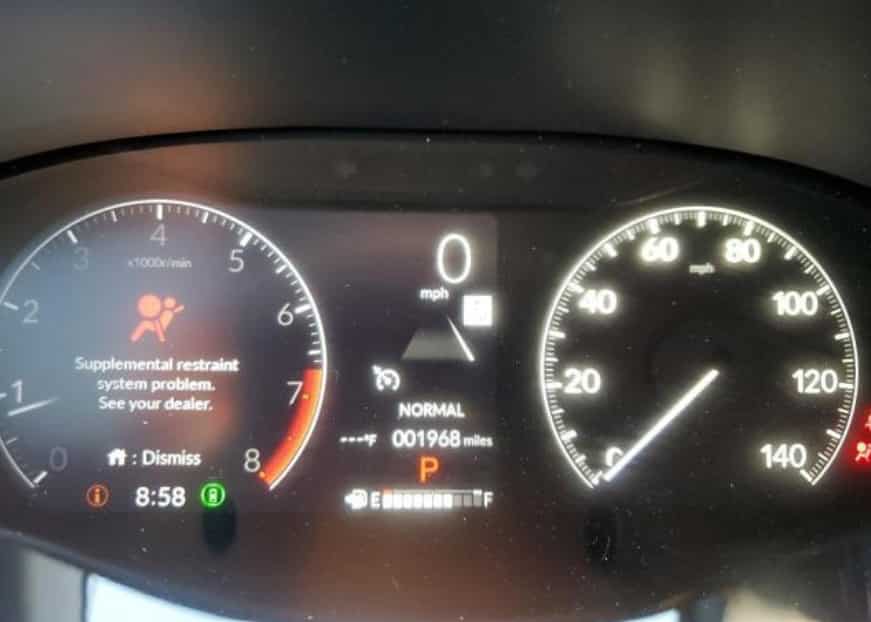
What Does Honda Accord Supplemental Restraint System Problem Mean?
The Honda Accord Supplemental Restraint System Problem means that the vehicle has detected an issue within its SRS safety network. The SRS works with the seat belt system to protect occupants during a collision. It manages important safety components, including airbags, crash sensors, seat belt pretensioners, and the SRS control module.
When you start your Honda Accord, the SRS control module performs a self check. It reviews signals from different sensors and confirms that every safety component works correctly. If the system finds an unusual reading, it saves a diagnostic trouble code and activates the SRS warning light on the dashboard.
A problem with the Supplemental Restraint System does not always mean that the airbags have completely failed. However, the system may disable certain safety functions until you repair the issue. For example, a faulty passenger seat sensor may affect how the vehicle controls the passenger airbag. A damaged clock spring may interrupt communication between the steering wheel and the driver airbag.
The SRS contains many electronic parts, so different problems can create the same warning message. A weak battery, damaged connector, faulty sensor, or previous accident repair can all trigger an SRS warning. Therefore, drivers should not guess the cause based only on the dashboard light.
A proper diagnosis requires an SRS compatible scan tool. This tool reads the stored fault codes and helps technicians identify the affected component. Understanding the meaning behind the warning allows Honda Accord owners to choose the right repair method and avoid unnecessary replacement costs.
Common Symptoms of a Honda Accord Supplemental Restraint System Problem
A Honda Accord Supplemental Restraint System Problem can appear through several warning signs. These symptoms help drivers identify a possible issue before it affects the vehicle’s safety performance. Although some signs seem minor, every SRS warning requires proper attention because the system controls critical protection features.
The most common symptom is the SRS warning light staying on after you start the vehicle. Normally, the light turns on briefly during startup and then disappears after the system completes its self check. If the light remains active, the SRS control module has detected a fault that needs further inspection.
Some drivers may also see a Supplemental Restraint System message appear randomly while driving. This situation often points to an intermittent electrical problem. Loose connectors, damaged wiring, or unstable battery voltage can interrupt communication between SRS components.
Another common sign involves the passenger airbag indicator. If the indicator shows an unusual status or changes without a clear reason, the passenger occupancy sensor may have a problem. This sensor helps the vehicle determine whether the passenger airbag should activate during a crash.
Seat belt related issues can also indicate an SRS fault. The seat belt pretensioner works with the airbag system to secure occupants during an accident. A damaged pretensioner or faulty buckle sensor can trigger the warning light.
Many Honda Accord owners notice the SRS warning after replacing the battery or disconnecting electrical power. Low voltage during battery replacement can create stored fault codes inside the SRS module. In some cases, the system requires a professional scan and reset after the electrical issue has been fixed.
Recognizing these symptoms early helps prevent bigger problems. A quick diagnosis can identify the source of the warning and restore the vehicle’s safety system before a serious situation occurs.
What Causes a Honda Accord Supplemental Restraint System Problem?
A Honda Accord Supplemental Restraint System Problem can develop for many reasons. The SRS connects several electronic components, so a failure in one area can affect the entire safety network. Finding the exact cause requires proper testing because different problems can create the same warning message.
One common cause is a weak or unstable battery. The SRS system needs consistent electrical power to operate correctly. When the battery voltage drops too low, the control module may record a fault code and activate the warning light. This issue often appears after a battery replacement, a jump start, or a vehicle that has remained unused for a long period.
Another frequent cause involves wiring and connectors under the seats. Honda Accord models use electrical connections for seat sensors, seat belt components, and other SRS parts. Moving the seats often can loosen connectors or damage wiring over time. A poor connection can interrupt communication and trigger the warning.
A faulty passenger occupancy sensor can also create an SRS problem. This sensor detects whether someone sits in the passenger seat and helps control airbag operation. If the sensor sends incorrect information, the system may display a warning to protect occupants.
The clock spring inside the steering wheel represents another possible cause. It maintains electrical communication between the rotating steering wheel and the driver airbag. When the clock spring wears out, the vehicle may lose communication with the airbag circuit.
Previous accidents can also lead to SRS problems. A collision may damage crash sensors, deploy airbags, or affect the SRS control module. Even after repairs, incorrect installation or incompatible replacement parts can create new warnings.
Water damage, faulty seat belt pretensioners, and damaged SRS modules can also trigger the warning. Each component plays an important role in occupant protection. Therefore, drivers should diagnose the system carefully instead of replacing parts based only on symptoms.
How to Diagnose a Honda Accord Supplemental Restraint System Problem?
Diagnosing a Honda Accord Supplemental Restraint System Problem requires more than checking the warning light. The SRS connects many safety components, and each component can create similar symptoms when it fails. A proper diagnosis helps identify the real cause and prevents unnecessary repairs.
The first step involves checking the vehicle history and the moment when the warning appeared. Drivers should consider whether the light started after a battery replacement, a collision, seat movement, or electrical work. This information helps technicians narrow down possible causes.
Next, technicians inspect the battery and charging system. The SRS depends on stable voltage to communicate correctly. A weak battery, loose terminal, or charging problem can create false warning signals. Testing the battery condition can eliminate common electrical causes before deeper inspection begins.
The next step involves checking visible wiring and connectors. Technicians often inspect connections under the seats because these areas contain important SRS components. Loose connectors, damaged wires, or corrosion can interrupt communication between sensors and the SRS control module.
An SRS compatible scan tool provides the most important diagnostic information. Standard OBD2 scanners often read engine related problems but cannot access airbag system codes. An SRS scan tool can retrieve specific diagnostic trouble codes and identify the affected circuit.
After reading the codes, technicians perform additional tests to confirm the problem. They may inspect sensor signals, check wiring continuity, test component resistance, or evaluate communication with the SRS module. This process prevents incorrect part replacement.
Once the faulty component has been repaired or replaced, the system requires another scan. The technician must confirm that the warning has disappeared and that all SRS components communicate correctly.
A complete diagnosis protects both your vehicle and your safety. Instead of resetting the warning light without solving the cause, finding the exact fault allows your Honda Accord safety system to work properly when you need it most.
How to Fix a Honda Accord Supplemental Restraint System Problem?
Fixing a Honda Accord Supplemental Restraint System Problem depends on the exact cause behind the warning. The SRS contains many connected safety components, so the correct repair starts with an accurate diagnosis. Replacing random parts can increase costs and may not solve the actual issue.
If the problem comes from a weak battery, the solution may involve charging or replacing the battery. Technicians should also check the battery terminals and charging system. Stable electrical power helps the SRS module communicate with other safety components correctly.
Loose wiring or damaged connectors require careful inspection and repair. Technicians often check the connectors under the seats because these areas experience frequent movement. Cleaning corrosion, securing loose connections, or repairing damaged wires can restore communication between SRS components.
A faulty seat occupancy sensor may require replacement and calibration. This sensor plays an important role in passenger airbag operation. After installation, the system needs proper testing to confirm accurate passenger detection.
A damaged clock spring usually requires replacement. This component connects the steering wheel controls with the driver airbag circuit. Because the repair involves the steering wheel and airbag area, professional service is recommended.
Seat belt pretensioners and crash sensors also need replacement when they fail or activate during a collision. These parts protect occupants by working with the airbags during an accident. Reusing damaged safety components can create serious risks.
In some cases, the SRS control module causes the warning. A module may store crash data after an accident or develop internal communication problems. Depending on the condition, technicians may repair, reset, or replace the module.
After completing any repair, the SRS system requires a final inspection. A technician must clear the stored fault codes and confirm that the warning light stays off. Proper testing ensures that the Honda Accord safety system can provide protection when needed.
The safest repair approach focuses on accuracy rather than quick resets. Understanding the real cause of the warning helps owners save money and maintain the reliability of their vehicle’s safety features.
Honda Accord Supplemental Restraint System Repair Costs
The repair cost for a Honda Accord Supplemental Restraint System Problem depends on the failed component, the vehicle model year, and the amount of diagnostic work required. Some issues need a simple electrical repair, while others require expensive safety component replacement.
The first cost drivers are diagnosis and inspection. An SRS scan usually costs more than a standard engine code check because technicians need specialized equipment to access airbag system information. A professional diagnosis helps prevent unnecessary part replacement and identifies the exact source of the warning.
Battery related SRS problems usually have lower repair costs. Replacing an old battery, cleaning terminals, or correcting voltage issues may solve the problem in many cases. However, the system may still require a scan to remove stored fault codes after the electrical issue has been fixed.
Wiring repairs can vary significantly depending on the damage location. A loose connector under the seat may require only minor labor, while damaged wiring harnesses may take more time to repair. The final cost depends on the accessibility of the affected area.
Replacing SRS components usually costs more. Seat belt pretensioners, occupancy sensors, crash sensors, and clock springs require specific parts and professional installation. The SRS control module can also create higher repair expenses because some modules require programming or reset procedures.
Airbag replacement represents one of the most expensive repairs. A deployed airbag usually requires replacement of related safety components, including sensors or modules in some cases. The total cost depends on the number of damaged parts after a collision.
Owners should avoid choosing repairs based only on price. An inexpensive reset may temporarily remove the warning but will not fix the underlying problem. A complete diagnosis provides a safer and more cost effective solution in the long term.
Repair costs can change depending on location, labor rates, Honda Accord generation, and part availability. The best approach is to identify the exact fault code first and then choose the repair method that restores the SRS system correctly.
Can You Drive With a Honda Accord Supplemental Restraint System Problem?
Many Honda Accord owners ask whether they can continue driving after seeing a Honda Accord Supplemental Restraint System Problem warning. The vehicle may still start, accelerate, and operate normally. However, normal driving performance does not mean the safety system works correctly.
The SRS controls important protection features, including airbags and seat belt pretensioners. When the system detects a fault, it may disable certain components to prevent incorrect operation. As a result, the airbags or other safety features may not respond properly during a collision.
A vehicle with an active SRS warning does not always mean the airbags will fail. The exact risk depends on the cause of the problem. For example, a communication issue from a loose connector may create a warning without damaging the airbag itself. However, a failed crash sensor, control module, or airbag circuit may create a more serious safety concern.
Drivers should avoid ignoring the warning light or waiting for it to disappear. The SRS does not usually repair itself because the system stores fault information when it detects an issue. Continuing to drive without diagnosis may leave occupants with reduced protection during an accident.
You can usually drive the vehicle a short distance to a repair facility if the car operates normally. However, you should schedule an inspection as soon as possible. Avoid unnecessary trips until the system receives proper attention.
The SRS warning should always receive the same priority as other safety related problems. A functioning airbag system can make a significant difference during a crash. Checking the problem early helps restore your Honda Accord’s safety features and provides greater confidence for every journey.
Can You Reset the SRS Warning Light Yourself?
Many Honda Accord owners search for ways to reset the SRS warning light after seeing a Honda Accord Supplemental Restraint System Problem message. Some drivers try disconnecting the battery because they believe it can remove the warning. However, this method usually does not solve the actual problem.
The SRS warning light appears because the control module detects an abnormal condition. The system stores diagnostic information to help identify the faulty component. Disconnecting the battery may remove temporary electrical power, but it does not repair damaged sensors, wiring problems, or failed safety components.
Some vehicles require an SRS capable scan tool to clear stored fault codes. A standard OBD2 scanner often cannot access airbag related information because it mainly reads engine and emissions systems. An SRS scan tool communicates directly with the safety module and provides more accurate data.
Drivers should also avoid testing airbag circuits with unsuitable tools. Airbag components contain sensitive electronic systems that require specific testing procedures. Incorrect handling can create additional problems or safety risks.
A proper reset should happen only after the original fault has been repaired. For example, replacing a weak battery may solve a voltage related issue, but the technician may still need to clear the stored code afterward. The same applies to repaired wiring, replaced sensors, or new SRS components.
Professional diagnosis remains the safest option when dealing with airbag related warnings. A reset can remove the warning temporarily, but only a complete repair can restore the system’s ability to protect occupants during a collision.
If your Honda Accord shows an SRS warning, focus on finding the cause rather than only turning off the light. A correctly repaired safety system provides long term reliability and peace of mind.
How to Prevent Future Supplemental Restraint System Problems?
Preventing a Honda Accord Supplemental Restraint System Problem starts with proper vehicle care and attention to small warning signs. The SRS depends on many electronic components working together, so regular maintenance can help reduce the chance of unexpected failures.
Keeping the battery in good condition is one of the most important steps. The SRS requires stable electrical power to communicate with sensors and control modules. An old battery or weak charging system can create voltage problems that affect safety electronics. Regular battery inspections can help identify issues before they trigger warning lights.
Drivers should also be careful when moving the front seats. Many SRS connectors sit under the seats, and repeated movement can place stress on wiring connections. Avoid storing heavy objects under the seats because they may damage electrical components or interfere with the wiring system.
Water protection is another important factor. Moisture from leaks, flooding, or spills can damage connectors and electronic modules. Repairing water leaks quickly helps protect sensitive SRS components from corrosion and electrical failure.
Vehicle modifications can also affect the safety system. Installing incompatible seats, steering wheels, or electrical accessories may interfere with SRS communication. Always use parts designed for your specific Honda Accord model and allow qualified technicians to handle safety related repairs.
After any collision, drivers should inspect the SRS system even if the warning light does not appear immediately. Some components may experience damage after impact and require professional testing.
Finally, checking for Honda safety recalls can help prevent serious issues. Manufacturers sometimes provide free repairs for specific safety defects. Using the vehicle identification number allows owners to confirm whether their Accord qualifies for any available recall service.
Simple maintenance habits can protect the SRS system and improve long term vehicle safety. A well maintained Honda Accord provides better protection when drivers and passengers need it most.
Frequently Asked Questions About Honda Accord Supplemental Restraint System Problem
Why is my Honda Accord showing a Supplemental Restraint System Problem?
Your Honda Accord shows a Supplemental Restraint System Problem because the SRS control module detected an issue within the safety system. Common causes include low battery voltage, damaged wiring, faulty sensors, seat belt problems, or SRS module faults. A diagnostic scan can identify the exact cause.
Can a weak battery trigger a Honda Accord SRS warning?
Yes. A weak battery can trigger an SRS warning because the safety system depends on stable electrical power. Low voltage during startup or battery replacement may create stored fault codes. After fixing the battery issue, the system may still require a professional scan and reset.
Will the airbags still work when the SRS light is on?
The airbags may not work as expected when the SRS warning light remains active. The system may disable certain safety components after detecting a fault. Because you cannot confirm the exact condition without diagnosis, you should repair the problem as soon as possible.
Can I reset the Honda Accord SRS warning without a scan tool?
Most SRS problems require an SRS compatible scan tool for proper diagnosis and reset. Disconnecting the battery may not remove stored fault codes. It also does not repair the component that caused the warning.
How much does it cost to repair a Honda Accord SRS problem?
Repair costs depend on the failed component. Simple battery or connector repairs usually cost less, while replacing sensors, pretensioners, clock springs, airbags, or SRS modules can cost significantly more. A proper diagnosis helps determine the actual repair cost.
Can an ordinary OBD2 scanner read Honda Accord airbag codes?
Most standard OBD2 scanners cannot read detailed SRS codes. They usually focus on engine and emissions systems. An SRS capable scanner can access airbag related information and provide more accurate diagnostic results.
Can moving the seat cause an SRS warning?
Yes. Moving the front seat can sometimes affect wiring connections under the seat. Loose connectors or damaged wires may interrupt communication between SRS components and trigger the warning light.
Some Honda Accord models may have safety recalls related to airbags or SRS components. However, not every SRS warning comes from a recall. Owners should check their vehicle identification number to confirm available recall information.
Can I repair an airbag connector myself?
Airbag connectors require careful handling because they connect to sensitive safety components. Incorrect repairs may create additional faults or safety risks. Professional inspection is recommended when working with SRS wiring.
How long does an SRS repair usually take?
Repair time depends on the cause of the problem. A simple electrical repair may take a short time, while replacing an SRS module or multiple safety components may require more work and additional testing.
Conclusion
A Honda Accord Supplemental Restraint System Problem is more than a simple dashboard warning. It indicates that the vehicle has detected an issue within a safety system that protects drivers and passengers during a collision. Although some causes involve simple electrical problems, others may involve important components such as airbags, crash sensors, seat belt pretensioners, or the SRS control module.
The most common causes include weak batteries, damaged wiring, faulty sensors, clock spring failures, and previous collision damage. Finding the exact cause requires proper diagnosis with an SRS compatible scan tool. Simply resetting the warning light without repairing the source of the problem may leave the safety system unreliable.
Repair costs can vary depending on the failed component and the required solution. Some repairs may involve minor electrical work, while others require replacement of advanced safety parts. Choosing the correct repair method helps prevent unnecessary expenses and keeps the Honda Accord protection system working properly.
If your vehicle displays a Supplemental Restraint System warning, do not ignore it or assume the problem will disappear. Schedule a proper inspection and confirm that all SRS components operate correctly before returning to normal driving.
Have you experienced a Honda Accord Supplemental Restraint System Problem? Share your Honda Accord model year, warning message, and diagnostic code in the comments. Your experience may help other owners understand similar SRS issues.