The Ford 6R80 and 10R80 are both capable automatic transmissions, but the 10R80 offers more gear ratios and greater flexibility in power delivery, while the 6R80 has a less complex six-speed design. The 6R80 uses six forward gears, whereas the 10R80 uses ten, allowing closer gear spacing and a wider overall ratio spread. These differences affect acceleration, engine RPM, shifting behavior, and fuel efficiency in vehicles such as the Ford F-150 and Mustang.
The 6R80 has established a reputation for durability, although it has documented issues involving components such as the molded lead frame. The 10R80 provides more advanced gear selection and performance potential but has also experienced reported harsh shifting, delayed engagement, and internal transmission problems in certain model years. Neither transmission is universally more reliable, as durability depends on vehicle application, maintenance history, operating conditions, and specific production revisions.
Choosing between the 6R80 and 10R80 requires evaluating more than the number of gears. This comparison examines their technical specifications, gear ratios, reliability, driving performance, fuel economy, towing capabilities, maintenance requirements, and repair costs to determine which Ford transmission better suits different driving needs.
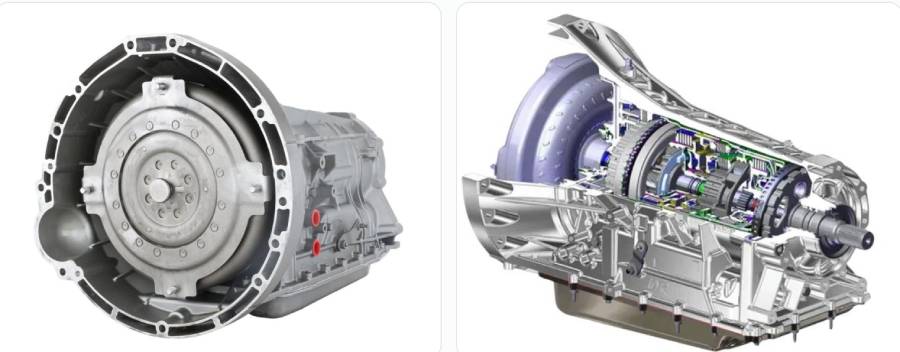
What Are the Main Differences Between the 6R80 and 10R80?
The main difference between the Ford 6R80 and 10R80 is the number of forward gears: the 6R80 has six, while the 10R80 has ten. The 10R80 also features a wider gear ratio spread, closer spacing between gears, and a more complex internal design. These characteristics allow the 10R80 to provide more precise gear selection, while the 6R80 uses fewer gear changes and a comparatively straightforward transmission architecture.
The 6R80 was introduced in Ford vehicles during the late 2000s and became widely used in models such as the F-150 and Mustang. The 10R80 entered Ford’s lineup for the 2017 model year, initially appearing in the F-150 before expanding to other vehicles. Both transmissions use torque converters, planetary gearsets, and electronically controlled shifting, but their internal configurations and control strategies differ.
The following table compares their key technical specifications.
| Specification | Ford 6R80 | Ford 10R80 |
|---|---|---|
| Transmission type | 6-speed automatic | 10-speed automatic |
| Forward gears | 6 | 10 |
| Reverse gears | 1 | 1 |
| First gear ratio | 4.17:1 | 4.70:1 |
| Highest gear ratio | 0.69:1 | 0.64:1 |
| Overall gear ratio spread | Approximately 6.04:1 | Approximately 7.34:1 |
| Torque converter | Yes | Yes |
| Gear selection | Electronic control | Electronic control |
| Transmission fluid | MERCON LV | MERCON ULV |
| Common applications | Ford F-150, Mustang | Ford F-150, Mustang, Expedition |
| Design complexity | Lower | Higher |
The 6R80 uses three planetary gearsets and five shift elements, providing six forward ratios through different combinations of clutches and brakes. Its six-speed configuration reduces the number of available gear selections, which can result in larger RPM changes during acceleration and downshifting. However, fewer gears do not automatically mean lower failure rates or cheaper repairs.
The 10R80 uses four planetary gearsets and six shift elements to produce ten forward ratios. Its wider ratio spread combines a lower first gear for stronger initial torque multiplication with higher overdrive gearing for reduced engine RPM under suitable cruising conditions. Closer intermediate ratios also help the transmission maintain engine speed within a narrower operating range during acceleration.
These design differences influence how each transmission responds to throttle input, vehicle load, and driving conditions. The 10R80 provides more opportunities to select an appropriate ratio, while the 6R80 relies on fewer, more widely spaced gears. Actual acceleration, fuel economy, and shift quality also depend on engine output, axle ratio, transmission calibration, and vehicle configuration.
How Do the Gear Ratios of the 6R80 and 10R80 Compare?
The Ford 10R80 has a wider overall gear ratio spread of approximately 7.34:1, compared with 6.04:1 for the 6R80. Its ten forward gears provide closer spacing between ratios, allowing the engine to operate within a narrower RPM range during acceleration. The 6R80 has six forward gears with larger ratio changes, resulting in more noticeable engine speed differences between certain shifts.
Both transmissions use a combination of lower gears for acceleration and overdrive gears for efficient highway cruising. However, the 10R80 provides three overdrive ratios compared with two in the 6R80, giving its transmission control system more options for balancing engine speed, power delivery, and vehicle load.
The following table compares the gear ratios of both Ford transmissions.
| Gear | Ford 6R80 | Ford 10R80 |
|---|---|---|
| 1st | 4.17:1 | 4.70:1 |
| 2nd | 2.34:1 | 2.99:1 |
| 3rd | 1.52:1 | 2.15:1 |
| 4th | 1.14:1 | 1.77:1 |
| 5th | 0.87:1 | 1.52:1 |
| 6th | 0.69:1 | 1.28:1 |
| 7th | — | 1.00:1 |
| 8th | — | 0.85:1 |
| 9th | — | 0.69:1 |
| 10th | — | 0.64:1 |
| Reverse | 3.40:1 | 4.87:1 |
The 10R80’s 4.70:1 first gear provides approximately 12.7% more initial torque multiplication than the 6R80’s 4.17:1 first gear, assuming identical engine torque and final-drive ratios. This mechanical advantage helps the 10R80 deliver stronger wheel torque during initial acceleration. Actual vehicle acceleration also depends on traction, engine output, torque converter characteristics, and transmission programming.
The difference in gear spacing becomes more apparent during upshifts. For example, shifting from first to second gear in the 6R80 changes the transmission ratio from 4.17 to 2.34, producing an approximate 44% reduction in engine RPM at the same road speed. The equivalent shift in the 10R80, from 4.70 to 2.99, produces an approximate 36% reduction. The smaller RPM drop allows the 10R80 to keep the engine closer to its preferred operating range, particularly during sustained acceleration.
At highway speeds, the 10R80’s 0.64:1 tenth gear is approximately 7.2% taller than the 6R80’s 0.69:1 sixth gear. With identical axle ratios, tire dimensions, and road speeds, this difference would reduce engine RPM by approximately 7.2% when both transmissions operate in their highest gears with their torque converters locked. Lower cruising RPM can reduce engine friction and pumping losses under suitable conditions, although it does not guarantee better fuel economy.
The 10R80 also provides additional intermediate ratios that allow smaller adjustments in engine speed when climbing hills, accelerating to pass, or carrying heavy loads. In contrast, the 6R80 may require a larger RPM increase when downshifting because fewer ratios are available. This difference influences how frequently the transmission changes gears and how the engine responds to changing driving demands.
The 10R80 has the mechanical advantage in gear ratio flexibility, while the 6R80 provides a less complex six-speed arrangement. The wider ratio spread and closer gear spacing of the 10R80 support stronger initial torque multiplication and more flexible engine speed management. However, the real-world benefits depend on the vehicle’s engine, axle gearing, transmission calibration, and operating conditions.
Is the 6R80 More Reliable Than the 10R80?
The Ford 6R80 has a simpler transmission design and a longer service history, but there is insufficient comparable failure-rate data to establish that it is more reliable than the 10R80. Both transmissions have documented mechanical and electronic problems. The 6R80 is associated with molded lead frame failures in certain model years, while the 10R80 has documented shifting problems involving hydraulic pressure loss, valve body operation, and transmission controls.
Reliability also depends on the specific vehicle, production year, operating conditions, and maintenance history. A properly maintained 10R80 with updated components may provide better service than a neglected 6R80. Comparing the two requires examining their known failure mechanisms rather than assuming that fewer gears automatically result in greater durability.
What Are the Common Reliability Problems With the 6R80?
The most significant documented 6R80 reliability concern is molded lead frame failure, which can disrupt communication between transmission sensors and the powertrain control module. The molded lead frame contains electrical connections associated with transmission operation, including signals used to determine vehicle speed and control shifting.
Certain 2011–2013 Ford F-150 models equipped with the 6R80 were subject to safety recalls addressing unintended transmission downshifts. Ford also introduced Customer Satisfaction Program 19N01, extending molded lead frame coverage for specified vehicles. A loss of the output shaft speed signal could cause the transmission to select an inappropriate gear, potentially resulting in sudden deceleration. Ford addressed the safety concern through powertrain control module programming intended to prevent unintended downshifts.
Other 6R80 problems include delayed engagement, harsh shifts, torque converter issues, and internal clutch wear. These symptoms have different possible causes, including hydraulic pressure problems, deteriorated components, and electronic control faults. For example, a worn valve body can affect hydraulic pressure regulation, producing inconsistent clutch engagement and noticeable shifting irregularities.
The 6R80’s established service history and availability of repair knowledge are practical advantages for owners. However, a transmission’s condition should be assessed through diagnostic trouble codes, shift performance, fluid condition, and documented repair history rather than mileage alone.
What Are the Common Reliability Problems With the 10R80?
The most significant documented 10R80 reliability problems include harsh shifting, delayed gear engagement, and hydraulic pressure loss associated with the CDF clutch cylinder in certain production versions. These problems can produce noticeable jolts during gear changes, hesitation when selecting Drive or Reverse, and inconsistent transmission operation.
Ford Technical Service Bulletin 24-2254 identifies axial movement of the CDF clutch cylinder sleeve as a possible cause of hydraulic circuit leakage. The bulletin covers specified Ford and Lincoln vehicles equipped with non-hybrid 10R80 transmissions built on or before August 15, 2022. When the sleeve moves from its intended position, hydraulic pressure can escape from the clutch circuits, interfering with proper clutch application and producing harsh or delayed shifts.
The 10R80 can also experience shifting problems related to transmission control software, solenoid identification strategies, and sticking valves within the main control valve body. Ford’s diagnostic guidance distinguishes these issues because similar symptoms do not necessarily indicate the same mechanical failure. For example, a harsh shift caused by an adaptive control issue requires a different repair approach from a shift caused by internal hydraulic leakage.
These documented concerns do not establish that every 10R80 will experience premature failure. Production revisions, completed repairs, updated components, and correct diagnosis influence long-term reliability. Owners evaluating a used 10R80 should pay particular attention to build dates, shifting behavior at different temperatures, and records of transmission-related service.
Neither transmission has a proven universal advantage in long-term reliability. The 6R80 offers a less complex design with well-documented repair procedures, while the 10R80 provides more advanced gear management but introduces additional mechanical and control-system complexity. For long-term ownership, the condition of the individual transmission and whether known model-specific problems have been addressed are more useful indicators than gear count alone.
Which Transmission Performs Better, the 6R80 or 10R80?
The Ford 10R80 has a technical performance advantage over the 6R80 in gear selection, initial torque multiplication, and engine power-band management. Its ten forward gears provide closer ratio spacing, allowing the engine to remain nearer its optimal operating speed during acceleration. The 6R80 delivers capable performance through six forward gears but produces larger RPM changes between certain shifts, which can affect acceleration consistency and throttle response.
The 10R80’s 4.70:1 first gear provides approximately 12.7% more torque multiplication than the 6R80’s 4.17:1 first gear when engine torque and final-drive ratios are identical. This advantage increases the torque available at the transmission output during initial acceleration. However, greater torque multiplication does not automatically produce a proportional improvement in acceleration because traction, torque converter behavior, vehicle weight, and engine characteristics also influence performance.
The 10R80 also provides greater flexibility in maintaining engine power during successive gear changes. Its closer intermediate ratios reduce the engine speed drop between many shifts, helping keep the engine within a useful portion of its torque and horsepower curves. This is particularly relevant to engines that produce peak power within a relatively narrow RPM range. The 6R80’s wider gear spacing requires larger engine speed adjustments, although its performance remains dependent on transmission calibration and the engine’s available torque.
Shift responsiveness is another important difference. The 10R80 uses electronically controlled shift scheduling to select among ten ratios based on throttle demand, vehicle speed, engine load, and operating conditions. This allows more precise gear selection during acceleration and changing road conditions. However, having more gears does not inherently mean every individual shift occurs faster. Actual shift duration depends on clutch application timing, hydraulic pressure, software calibration, and mechanical condition.
The 6R80 uses fewer gear changes across its operating range, which can produce a more predictable shifting pattern during everyday driving. The 10R80 may perform additional shifts to maintain an efficient or responsive engine speed, particularly when road gradients and throttle demands change. Drivers may perceive these differences as smoother acceleration, increased shift activity, or more immediate power delivery depending on the vehicle’s calibration.
In performance-oriented applications such as the Ford Mustang GT, the 10R80’s closely spaced ratios provide a mechanical advantage for keeping the engine within its higher-output RPM range. In Ford F-150 applications, the same characteristics support flexible power delivery during acceleration and changes in vehicle load. Nevertheless, acceleration results from different model years cannot be attributed solely to the transmission because engine output, axle gearing, tire specifications, and vehicle weight may also differ.
The 10R80 is the stronger choice for gear ratio flexibility and performance potential, while the 6R80 remains a capable transmission for everyday driving and performance applications. A controlled comparison using identical engines, vehicle configurations, and testing conditions would be required to establish the precise acceleration or shift-speed advantage of either transmission.
Does the 10R80 Get Better Fuel Economy Than the 6R80?
The Ford 10R80 has greater fuel-efficiency potential than the 6R80 because its ten forward gears provide more opportunities to match engine speed with driving conditions. Its wider gear ratio spread and closer intermediate ratios help the engine operate at efficient RPM levels during acceleration and cruising. However, the 10R80 does not guarantee better fuel economy in every vehicle because engine design, axle gearing, vehicle weight, and driving conditions also influence fuel consumption.
The 10R80 uses three overdrive gears, compared with two in the 6R80. Its highest gear ratio of 0.64:1 is approximately 7.2% taller than the 6R80’s 0.69:1 sixth gear. With identical final-drive ratios, tire sizes, and road speeds, the 10R80 can operate at approximately 7.2% lower engine RPM in its highest gear when the torque converter is locked. Lower engine speed can reduce frictional losses and improve highway efficiency when the engine produces sufficient torque to maintain the selected gear.
Closer gear spacing also allows the 10R80 to manage engine efficiency more precisely during changing driving conditions. When accelerating or climbing a hill, the transmission can select an intermediate ratio that provides sufficient torque without requiring as large an RPM increase as the 6R80. This flexibility helps maintain engine operation near efficient load and speed combinations. However, additional shifts and transmission friction losses can offset some of the theoretical efficiency benefits.
The 6R80 remains capable of efficient highway operation through its two overdrive ratios. Its actual fuel consumption depends heavily on the engine and vehicle configuration. For example, comparing a 6R80-equipped F-150 with a different-generation 10R80-equipped F-150 would introduce differences in engine technology, vehicle weight, and axle ratios that prevent a reliable transmission-only MPG comparison.
The 10R80 offers a stronger theoretical advantage in fuel economy, but the size of any real-world improvement cannot be determined from gear count alone. EPA fuel economy ratings and controlled tests of comparable vehicle configurations provide more useful evidence than transmission specifications when evaluating actual fuel savings. For drivers choosing between vehicles equipped with these transmissions, the complete powertrain configuration is more important than the number of forward gears.
Is the 6R80 or 10R80 Better for Towing?
The Ford 10R80 offers greater towing performance potential than the 6R80 because of its lower first gear and closer gear ratios. Its ten-speed configuration provides more flexibility when accelerating with a trailer, climbing steep grades, and maintaining engine speed under changing loads. However, actual towing capacity depends on the vehicle’s engine, axle ratio, cooling system, chassis configuration, and manufacturer-rated limits rather than the transmission alone.
The 10R80’s 4.70:1 first gear provides approximately 12.7% more initial torque multiplication than the 6R80’s 4.17:1 first gear under identical engine and final-drive conditions. This mechanical advantage increases available wheel torque when starting from a stop with a heavy trailer. The additional intermediate ratios also allow the 10R80 to select gears that maintain engine power without requiring the larger RPM changes associated with the 6R80.
The 10R80’s closer gear spacing is particularly useful when towing on hills or uneven terrain. As road resistance increases, the transmission can downshift to a ratio that provides additional pulling power while keeping the engine within an effective operating range. The 6R80 has fewer available ratios, so certain downshifts produce larger changes in engine speed. Nevertheless, a properly configured 6R80-equipped truck can deliver strong towing performance within its rated capacity.
Transmission temperature management is equally important for both units. Towing increases the load on the torque converter, clutch packs, and transmission fluid, particularly during repeated acceleration, low-speed maneuvering, and steep climbs. Excessive heat accelerates fluid deterioration and can contribute to internal component wear. Proper cooling, correct transmission fluid, and adherence to the vehicle manufacturer’s towing recommendations are essential for maintaining durability.
The 10R80 is generally the better choice for towing flexibility, but it does not automatically provide a higher towing capacity. A Ford F-150 equipped with either transmission must be evaluated using its specific Gross Combined Weight Rating (GCWR), Gross Vehicle Weight Rating (GVWR), axle configuration, and maximum trailer weight rating. For buyers comparing used trucks, the vehicle’s factory towing specifications, mechanical condition, and maintenance history should take priority over transmission gear count.
Which Is Better for a Ford F-150 or Mustang, the 6R80 or 10R80?
The 10R80 offers greater performance flexibility for both the Ford F-150 and Mustang, while the 6R80 remains a practical option for drivers who prioritize a less complex transmission design. The better choice depends on how each vehicle is used. F-150 owners generally benefit from evaluating towing performance, load management, and daily driving characteristics, while Mustang owners may place greater emphasis on acceleration, shift responsiveness, and performance driving.
Both transmissions have been installed in different generations and configurations of these vehicles. Their performance must therefore be evaluated alongside engine specifications, axle ratios, vehicle weight, and transmission calibration rather than comparing gear counts alone.
Which Transmission Is Better for the Ford F-150?
The 10R80 is generally better suited to F-150 drivers seeking greater gear selection flexibility, particularly during towing, acceleration, and highway driving. Its ten forward gears provide smaller ratio changes and allow the engine to operate within a narrower RPM range under varying loads. The 6R80 remains a capable alternative for everyday driving and towing within the vehicle’s rated limits.
For towing applications, the 10R80’s 4.70:1 first gear provides greater initial torque multiplication than the 6R80’s 4.17:1 first gear when other drivetrain variables are equal. Its additional intermediate gears also help maintain engine output when climbing hills or accelerating with a trailer. These advantages improve gear selection flexibility but do not independently determine maximum towing capacity.
The 6R80 offers a less complex six-speed configuration with an established repair history. For used F-150 buyers, its mechanical condition and service records are particularly important because certain production years experienced molded lead frame problems. Similarly, buyers considering a 10R80-equipped F-150 should evaluate shift quality, transmission service history, and whether applicable technical service procedures have been completed.
For daily commuting and light-duty use, both transmissions provide sufficient gear coverage. The 10R80 offers more opportunities to optimize engine speed, while the 6R80 requires fewer gear changes. The difference in driving experience depends on the engine, transmission programming, and individual vehicle condition.
Which Transmission Is Better for the Ford Mustang?
The 10R80 has the stronger technical advantage for Mustang acceleration and performance driving because its closer gear ratios help maintain engine speed within the power band. This is especially relevant to high-revving engines such as the Mustang GT’s 5.0-liter V8, where maintaining engine speed near peak power can improve acceleration potential.
The 10R80’s additional forward gears allow smaller RPM reductions during successive upshifts. Its lower first gear also provides greater initial torque multiplication, although actual launch performance depends on tire traction, final-drive gearing, engine output, and torque converter characteristics. These features make the 10R80 well suited to performance-oriented driving when paired with appropriate transmission calibration.
The 6R80 remains a capable performance transmission, particularly in modified Mustang applications. Its six-speed design has an established aftermarket support network, including transmission tuning, upgraded internal components, and rebuild options. However, the availability and suitability of these modifications depend on the specific model year, power output, and intended application.
For Mustang owners prioritizing factory acceleration potential and flexible gear selection, the 10R80 offers meaningful engineering advantages. Drivers considering a used or modified Mustang should also evaluate transmission condition, shift consistency, tuning history, and the quality of previous modifications.
The following table summarizes which transmission better suits common Ford F-150 and Mustang driving requirements.
| Driving Requirement | Preferred Transmission | Main Reason |
|---|---|---|
| F-150 towing flexibility | 10R80 | Lower first gear and closer ratios |
| F-150 daily driving | Either | Both provide suitable gear coverage |
| Highway gear selection | 10R80 | Additional overdrive and intermediate ratios |
| Mustang acceleration potential | 10R80 | Closer gear spacing |
| Mustang performance modifications | Depends on build | Both have aftermarket support |
| Simpler transmission architecture | 6R80 | Fewer gears and shift elements |
| Used-vehicle reliability | Depends on condition | Model year, maintenance, and repairs matter |
The 10R80 is the stronger choice for drivers prioritizing transmission performance flexibility, while the 6R80 remains competitive for conventional driving and established modification applications. Neither transmission should be selected solely on gear count. The best Ford F-150 or Mustang purchase depends on the complete powertrain, intended use, transmission condition, and documented maintenance history.
What Are the Maintenance Differences Between the 6R80 and 10R80?
The main maintenance difference between the Ford 6R80 and 10R80 is their transmission fluid specification: the 6R80 uses MERCON LV, while the 10R80 uses MERCON ULV. Both transmissions require the correct fluid, proper fluid-level inspection procedures, and maintenance based on the vehicle’s operating conditions. Their service requirements also differ because of their internal designs and temperature-dependent fluid-level checking procedures.
The 6R80 uses Motorcraft MERCON LV automatic transmission fluid, formulated to meet the lubrication and hydraulic requirements of compatible Ford six-speed transmissions. The fluid supports torque converter operation, clutch engagement, and hydraulic pressure regulation. Using an incorrect fluid specification can affect friction characteristics and shift quality, potentially contributing to premature component wear.
The 10R80 requires Motorcraft MERCON ULV automatic transmission fluid, designed for compatible Ford ten-speed transmissions. ULV stands for Ultra Low Viscosity, reflecting the fluid’s lower viscosity characteristics. This formulation supports the transmission’s hydraulic control and efficiency requirements. MERCON LV and MERCON ULV are not interchangeable substitutes, and owners should follow the fluid specification listed in the applicable Ford owner’s manual.
Transmission fluid service intervals depend on the vehicle’s model year and operating conditions. For example, certain Ford F-150 maintenance schedules specify automatic transmission fluid replacement at 150,000 miles (approximately 241,000 kilometers) under normal operating conditions. Severe-duty operation, including frequent towing, extended idling, and demanding commercial use, may require different maintenance procedures or intervals. Owners should verify the schedule for their exact vehicle rather than applying one mileage recommendation to every 6R80 or 10R80.
Correct fluid-level measurement is particularly important for both transmissions because fluid volume changes with temperature. Ford service procedures specify transmission temperature ranges and inspection methods to establish the appropriate fluid level. Underfilling can interfere with hydraulic pressure and lubrication, while overfilling can cause fluid aeration and shifting problems. The required procedure varies by transmission and vehicle application.
The 10R80’s more complex hydraulic control system makes accurate fluid servicing and diagnosis especially important. However, additional gears do not automatically mean that the transmission requires more frequent fluid replacement. For both units, following Ford’s maintenance schedule, using the specified fluid, and addressing leaks or abnormal shifting promptly are more reliable maintenance practices than choosing an arbitrary service interval.
Neither transmission has a universal maintenance advantage based on gear count alone. The 6R80 uses a less complex mechanical arrangement, while the 10R80 requires a different fluid specification and application-specific service procedures. Proper maintenance of either transmission depends on the vehicle’s operating conditions, manufacturer instructions, and existing mechanical condition.
How Much Does It Cost to Repair a 6R80 vs 10R80?
The Ford 10R80 can be more expensive to repair than the 6R80 because of its more complex internal components, hydraulic control system, and calibration requirements. However, repair costs depend primarily on the failed component, vehicle model, labor rates, and whether the transmission requires a minor repair, complete rebuild, or replacement. A 6R80 with extensive internal damage can cost more to repair than a 10R80 requiring only a valve body or electronic control repair.
Both transmissions can develop problems involving shift solenoids, valve bodies, torque converters, and internal clutch components. The 6R80 also has documented molded lead frame failures in certain production years, while some 10R80 units experience CDF clutch cylinder sleeve movement that can cause hydraulic pressure loss. These failures require different repair procedures, making an accurate diagnosis essential before estimating costs.
The following table provides illustrative U.S. repair budget ranges for common transmission services. These are broad planning estimates rather than verified current quotes, and actual costs vary by location, vehicle application, parts availability, and repair scope.
| Repair or Service | Ford 6R80 | Ford 10R80 |
|---|---|---|
| Transmission diagnostics | $100–$250 | $100–$300 |
| Fluid and filter service | $200–$400 | $250–$500 |
| Valve body repair or replacement | $500–$1,200 | $700–$1,800 |
| Torque converter replacement | $800–$1,800 | $1,000–$2,200 |
| Complete transmission rebuild | $2,000–$4,000 | $3,000–$5,500 |
| Transmission replacement | $3,000–$5,500 | $4,000–$7,000 |
The 10R80’s repair complexity becomes particularly relevant when internal clutch components or hydraulic circuits require replacement. For example, repairing a displaced CDF clutch cylinder sleeve may involve substantial transmission disassembly and replacement of affected internal components. Labor costs increase because the technician must remove, inspect, repair, and reassemble the transmission before completing the required verification procedures.
The 6R80 benefits from an established repair history and widespread familiarity among transmission specialists. Certain electronic failures, including molded lead frame problems, may be addressed without rebuilding the entire transmission. However, clutch damage, torque converter failure, or significant internal wear can still require extensive labor and replacement parts.
Replacement costs also depend on whether the owner selects a used, rebuilt, remanufactured, or new transmission assembly. Used units generally have lower initial purchase prices but introduce uncertainty regarding previous maintenance and internal wear. Remanufactured transmissions typically cost more upfront but may include updated components and warranty coverage, depending on the supplier.
The 6R80 generally offers a potential advantage in repair simplicity, while major 10R80 repairs can involve higher labor and component costs. Before authorizing repairs, owners should obtain a diagnosis identifying the actual failure, request an itemized estimate, and compare the total cost against the vehicle’s condition and market value. Checking applicable Ford warranty extensions, recalls, and technical service information can also help identify available repair options.
Read more: 4R100 Transmission Rebuild: Cost, Parts & Process
Can You Replace a 6R80 With a 10R80?
Replacing a Ford 6R80 with a 10R80 is possible in certain vehicle configurations, but it is not a direct bolt-in replacement. The two transmissions differ in physical dimensions, internal design, electronic controls, and drivetrain interfaces. A successful conversion requires compatible mechanical components, transmission control integration, and vehicle-specific programming.
The 10R80’s ten-speed design provides closer gear ratios and greater flexibility in power delivery, making it an attractive upgrade for some Ford Mustang and F-150 applications. However, installing the transmission alone does not provide these benefits. The vehicle’s engine management system must communicate correctly with the 10R80, and the surrounding drivetrain components must accommodate its installation.
Conversion feasibility depends heavily on the vehicle’s model year, engine configuration, drivetrain layout, and available aftermarket support. A transmission swap that is practical in one Mustang configuration may require substantially different modifications in an F-150, particularly when four-wheel-drive components are involved.
What Is Required for a 6R80-to-10R80 Swap?
A 6R80-to-10R80 conversion requires five main areas of compatibility: mechanical fitment, drivetrain connections, electronic controls, transmission calibration, and supporting hardware. Each must be evaluated before purchasing a replacement transmission.
Mechanical fitment involves checking the bellhousing pattern, engine compatibility, transmission mounts, and available space within the transmission tunnel. Even when both transmissions are associated with the same engine family, differences in mounting arrangements and surrounding components can prevent direct installation.
Drivetrain compatibility includes the driveshaft, transmission output shaft, crossmember, and differential configuration. Four-wheel-drive vehicles also require verification of transfer case compatibility and related mounting components. Depending on the application, custom driveshaft work or additional drivetrain modifications may be necessary.
Electronic integration is one of the most significant challenges. The 10R80 requires compatible transmission control hardware, wiring, sensor communication, and shift management software. A vehicle originally equipped with a 6R80 may not have the required control architecture. Depending on the conversion, integration may require compatible factory electronics or an aftermarket transmission controller designed for the specific application.
Transmission calibration must also account for engine torque output, gear ratios, shift scheduling, and torque converter operation. Incorrect programming can cause communication faults, improper gear engagement, or inconsistent shifting. Supporting components, including the transmission cooler, fluid lines, shifter interface, and wiring harnesses, must also be checked for compatibility.
A 6R80-to-10R80 swap is most practical when a proven conversion solution exists for the exact vehicle and engine combination. For owners seeking improved performance, the total conversion cost should be compared with rebuilding or upgrading the existing 6R80 or purchasing a vehicle originally equipped with the 10R80. Professional installation and application-specific programming are essential for reliable operation.
What Should You Check Before Buying a Used 6R80 or 10R80?
Before buying a used Ford 6R80 or 10R80, check the transmission’s shifting behavior, diagnostic trouble codes, fluid condition, maintenance history, and compatibility with the intended vehicle. These five factors help identify existing mechanical problems, electronic faults, and potential repair expenses. Transmission mileage alone is not a reliable indicator of condition because operating loads, maintenance practices, and previous repairs significantly influence component wear.
Shift quality should be evaluated during both cold starts and normal operating temperatures. A properly functioning transmission should engage Drive and Reverse without excessive hesitation and shift consistently under light and moderate acceleration. Warning signs include delayed engagement, slipping, repeated harsh shifts, unexpected gear changes, and abnormal noises. Some shifting characteristics vary by vehicle calibration, so persistent or severe symptoms require professional diagnosis rather than an assumption that the transmission is defective.
Diagnostic trouble codes provide important information about electronic controls and internal transmission operation. A compatible diagnostic scanner can identify stored or pending faults involving transmission speed sensors, shift solenoids, gear ratio errors, and hydraulic control systems. For the 6R80, particular attention should be given to output shaft speed sensor faults and molded lead frame concerns in affected production years. For the 10R80, harsh or delayed shifting should be evaluated against applicable Ford technical service bulletins, including documented CDF clutch cylinder problems in certain units.
Transmission fluid condition provides additional evidence of maintenance and possible internal damage. Fluid with a strong burnt odor, visible metal particles, or signs of contamination warrants further inspection. However, fluid color alone cannot reliably determine transmission health, and recently replaced fluid does not prove that internal components are undamaged. Buyers should also check for leaks around the transmission case, cooler lines, and related connections.
Maintenance records help establish whether the transmission received appropriate servicing and repairs. Documentation should identify fluid specifications, service dates, replacement components, and any completed manufacturer-recommended procedures. A used 10R80 with documented repairs and updated components may be a better purchase than a 6R80 with an unknown service history, even when the latter has fewer miles.
Compatibility must be confirmed before purchasing a used transmission separately from a vehicle. The transmission model, identification information, engine application, drivetrain configuration, and electronic control requirements must match the intended installation. Sharing the 6R80 or 10R80 designation does not guarantee interchangeability across different Ford models or production years.
A pre-purchase inspection by a qualified transmission specialist can help identify problems that are not obvious during a short test drive. Buyers should also verify warranty coverage, return conditions, and whether the seller permits inspection before installation. The safest purchasing decision is based on verified compatibility, documented service history, and satisfactory diagnostic results rather than price or mileage alone.