The 6.7 Cummins is a turbocharged 6.7-liter inline-six diesel engine used in Ram Heavy Duty trucks from the 2007.5 model year onward. Its specifications are not identical across every truck. Horsepower, torque, transmission pairing, fuel-system design, emissions equipment, compression ratio, and internal construction vary by model year and vehicle configuration.
Early 6.7 Cummins engines produced about 350 horsepower, while later High Output versions exceeded 1,000 lb-ft of torque. Ram also offered different ratings for manual transmissions, 68RFE automatics, Aisin automatics, Standard Output engines, High Output engines, pickup trucks, and Chassis Cab models. As a result, two Ram trucks from the same model year can have different factory specifications.
This guide organizes 6.7 Cummins specs by model year from 2007.5 through 2026. It covers horsepower, torque, transmission options, engine architecture, fluid capacities, Standard Output and High Output differences, and the major technical changes introduced across four generations. It also explains which specifications matter most for towing, maintenance, performance upgrades, and used-truck purchases.
Use the model-year tables first for quick reference, then review each generation section to understand why the specifications changed and how those changes affect real-world ownership.
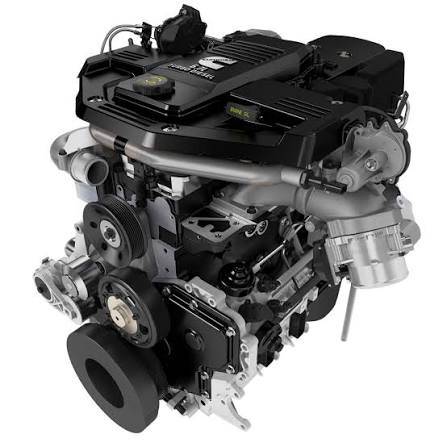
What Are the Basic Specifications of the 6.7 Cummins Engine?
The 6.7 Cummins is a turbocharged 6.7-liter inline-six diesel engine designed for Ram Heavy Duty trucks, combining a long-stroke inline-six architecture with high-pressure common-rail fuel injection to deliver strong low-end torque, towing capability, and long service life. Although the engine has remained in production since the 2007.5 model year, its horsepower, torque, emissions equipment, transmission pairings, and several internal components have evolved across multiple generations. Understanding the core specifications provides the foundation for comparing model years later in this guide.
The engine displaces 6.7 liters (408 cubic inches) and uses an inline-six cylinder configuration with a cast-iron cylinder block and cast-iron cylinder head. An inline-six layout naturally balances primary and secondary engine forces, resulting in smoother operation than many V-type diesel engines while producing excellent low-RPM torque. This configuration has been a defining characteristic of Cummins pickup engines for decades because it prioritizes durability, serviceability, and sustained heavy-load performance.
Every 6.7 Cummins uses a 24-valve valvetrain, high-pressure common-rail direct fuel injection, and a Holset variable geometry turbocharger (VGT). Unlike a fixed-geometry turbocharger, a VGT continuously adjusts the turbine vanes to improve boost pressure across a wider engine speed range. The design allows the engine to produce strong torque at low RPM while also supporting an integrated exhaust brake, a feature that significantly improves downhill control when towing heavy trailers.
While the engine architecture remains consistent, several specifications depend on the model year. Factory horsepower has increased from 350 horsepower in the earliest 2007.5 engines to 430 horsepower in current pickup applications. Peak torque has also grown from 650 lb-ft to 1,075 lb-ft, while transmission choices have progressed from manual and six-speed automatic options to the latest TorqueFlite HD eight-speed automatic. Fuel-system components, emissions controls, and engine calibrations have also changed over time, meaning specifications should always be verified by model year rather than assuming all 6.7 Cummins engines are identical.
What Is the Displacement, Bore, and Stroke of the 6.7 Cummins?
The 6.7 Cummins has a displacement of 6.7 liters (408 cubic inches), a bore of 4.21 inches (107 mm), and a stroke of 4.88 inches (124 mm). Its long-stroke design is one of the primary reasons the engine produces exceptional torque at relatively low engine speeds.
A longer piston stroke increases crankshaft leverage during combustion, allowing the engine to generate more twisting force without requiring high RPM. This characteristic makes the 6.7 Cummins well suited for towing, hauling, and commercial applications where pulling power is more important than maximum engine speed. Compared with shorter-stroke diesel engines, the 6.7 Cummins delivers stronger low-end response while maintaining stable operation under sustained heavy loads.
The inline-six layout further enhances these characteristics by evenly distributing firing forces across six cylinders arranged in a straight line. This reduces vibration, simplifies engine balancing, and provides more uniform power delivery than many V-engine designs. The combination of a long-stroke rotating assembly and an inline-six configuration has become one of the defining engineering features of Cummins pickup diesel engines.
What Is the Firing Order of the 6.7 Cummins?
The firing order of the 6.7 Cummins is 1-5-3-6-2-4.
This firing sequence determines the order in which each cylinder completes its combustion cycle and is critical for maintaining smooth engine operation. Engineers selected this firing order to distribute combustion forces evenly across the crankshaft, helping reduce vibration and mechanical stress during continuous heavy-duty operation.
The firing order is also important during engine service procedures. Technicians reference it when performing valve adjustments, diagnosing injector problems, identifying cylinder-specific misfires, and verifying crankshaft position during engine repairs. Following the correct firing sequence ensures accurate valve lash adjustment and helps prevent incorrect cylinder identification during maintenance.
Although the firing order has remained consistent throughout the production life of the 6.7 Cummins, individual maintenance procedures can vary between model years because of changes to emissions systems, fuel injection components, and electronic engine controls.
What Is the Compression Ratio of the 6.7 Cummins?
The compression ratio of the 6.7 Cummins depends on the engine generation and application, making the model year an essential specification to verify before comparing engines or ordering components.
Compression ratio influences combustion pressure, engine efficiency, emissions performance, and cylinder temperature. Cummins has revised this specification during the evolution of the 6.7-liter platform to support higher fuel injection pressures, stricter emissions regulations, improved turbocharger performance, and increasing torque output. As a result, the compression ratio should not be treated as a single specification that applies to every 6.7 Cummins engine.
For owners and technicians, the compression ratio becomes particularly important when rebuilding an engine, selecting replacement pistons, evaluating aftermarket tuning, or comparing different generations. Because this specification changes alongside other internal components, it should always be confirmed using the factory specifications for the exact model year rather than relying on a general value quoted online.
What Are the 6.7 Cummins Horsepower and Torque Ratings by Model Year?
The horsepower and torque ratings of the 6.7 Cummins vary by model year, transmission, and engine calibration. Cummins has continuously increased the engine’s output since its introduction in the 2007.5 Ram Heavy Duty lineup, improving towing performance, payload capability, and overall drivability while meeting increasingly strict emissions standards. Because Ram offered multiple transmission options and both Standard Output (SO) and High Output (HO) calibrations, the same model year may have more than one factory power rating.
The table below summarizes the factory specifications for every major 6.7 Cummins generation used in Ram pickup trucks.
| Model Year | Output Version | Horsepower | Torque | Available Transmission(s) |
|---|---|---|---|---|
| 2007.5–2009 | Standard Output | 350 hp | 650 lb-ft | 68RFE Automatic, G56 Manual |
| 2010–2012 | Standard Output | 350 hp | 650–800 lb-ft* | 68RFE Automatic, G56 Manual |
| 2013–2014 | Standard Output | 370 hp | 800 lb-ft | 68RFE Automatic |
| 2013–2014 | High Output | 385 hp | 850 lb-ft | Aisin AS69RC |
| 2015 | Standard Output | 370 hp | 800 lb-ft | 68RFE Automatic |
| 2015 | High Output | 385 hp | 865 lb-ft | Aisin AS69RC |
| 2016–2018 | Standard Output | 370 hp | 800 lb-ft | 68RFE Automatic |
| 2016–2018 | High Output | 385 hp | 900–930 lb-ft | Aisin AS69RC |
| 2019–2020 | Standard Output | 370 hp | 850 lb-ft | 68RFE Automatic |
| 2019–2020 | High Output | 400 hp | 1,000 lb-ft | Aisin AS69RC |
| 2021–2024 | Standard Output | 370 hp | 850 lb-ft | 68RFE Automatic |
| 2021–2024 | High Output | 420 hp | 1,075 lb-ft | Aisin AS69RC |
| 2025–2026 Pickup | High Output | 430 hp | 1,075 lb-ft | TorqueFlite HD 8-Speed |
| 2025–2026 Chassis Cab | Standard Calibration | 360 hp | 800 lb-ft | TorqueFlite HD 8-Speed |
*Manual-transmission models and certain applications used different torque calibrations during this period.
The most significant performance increases occurred during four major updates. The first came in 2013 when Ram introduced the High Output version paired with the Aisin automatic transmission. The second milestone arrived in 2019 when torque reached 1,000 lb-ft, making the Ram 3500 the first heavy-duty pickup to achieve a four-digit factory torque rating. A third increase followed in 2021 when High Output models gained 420 horsepower and 1,075 lb-ft of torque. The latest redesign for the 2025 model year increased horsepower to 430 hp while retaining 1,075 lb-ft, paired with the new TorqueFlite HD eight-speed automatic transmission.
Horsepower improvements have generally been gradual, increasing by approximately 80 horsepower over the engine’s production history. Torque development has been much more aggressive because diesel pickup buyers prioritize towing capability, low-speed pulling power, and acceleration while hauling heavy loads. For this reason, Cummins engineers focused on increasing peak torque through improvements in turbocharger efficiency, fuel injection pressure, combustion control, and transmission capability rather than dramatically increasing engine speed.
Why Does the Same Model Year Have Multiple Power Ratings?
A single model year can have multiple factory horsepower and torque ratings because Ram offered different engine calibrations for different vehicle applications and transmissions. Comparing only the model year without considering these variables often leads to incorrect specifications.
The first factor is the transmission. Manual gearboxes such as the G56 generally received lower torque ratings because their clutch assemblies had lower factory torque capacity than automatic transmissions. Automatic transmissions allowed Cummins to deliver more torque without exceeding the mechanical limits of the drivetrain.
The second factor is the engine calibration. Beginning with the 2013 model year, Ram introduced both Standard Output and High Output versions of the 6.7 Cummins. Standard Output engines targeted everyday towing and commercial use, while High Output engines were calibrated to maximize towing performance in Ram 3500 models equipped with the Aisin transmission.
The third factor is the vehicle application. Pickup trucks and Chassis Cab trucks often use different engine calibrations even when they share the same displacement. Chassis Cab models prioritize durability during continuous commercial operation, while pickup models are tuned for higher peak output and maximum recreational towing capability.
Finally, mid-cycle updates occasionally changed specifications within the same generation. Improvements to emissions systems, turbocharger calibration, fuel injection strategies, and transmission software sometimes increased factory output without introducing an entirely new engine generation. For that reason, owners should always verify specifications using the exact model year, transmission, and vehicle configuration instead of relying solely on the engine’s displacement.
When Did the 6.7 Cummins First Reach 1,000 lb-ft of Torque?
The 6.7 Cummins first produced 1,000 lb-ft of factory torque in the 2019 Ram 3500 equipped with the High Output engine and Aisin AS69RC six-speed automatic transmission.
This achievement represented a major milestone in the heavy-duty pickup segment. Rather than simply increasing fuel delivery, Cummins redesigned several engine components to withstand higher cylinder pressures while maintaining long-term durability. Updates included improvements to the engine block, connecting rods, pistons, fuel system calibration, and turbocharger performance. Together, these changes allowed the engine to achieve four-digit torque while meeting modern emissions requirements.
The increase to 1,000 lb-ft also improved towing performance by delivering stronger pulling power at lower engine speeds. Drivers experienced better acceleration when launching heavy trailers, reduced gear hunting on steep grades, and improved engine braking performance when descending hills. These practical benefits made the 2019 High Output engine one of the most significant upgrades in the history of the 6.7 Cummins platform.
Which 6.7 Cummins Model Year Has the Most Horsepower?
The highest factory horsepower rating currently available for the 6.7 Cummins is 430 horsepower, introduced for the 2025 Ram Heavy Duty pickup lineup.
Although previous High Output engines already delivered an impressive 1,075 lb-ft of torque, the 2025 redesign focused on improving horsepower while maintaining the same peak torque figure. Cummins accomplished this through revisions to engine calibration, airflow management, combustion efficiency, and the introduction of the new TorqueFlite HD eight-speed automatic transmission. The additional horsepower improves acceleration, highway merging, and performance at higher engine speeds without sacrificing the low-end torque that defines the Cummins platform.
It is important to distinguish pickup specifications from Chassis Cab specifications. While pickup models received the full 430-horsepower High Output calibration, Chassis Cab trucks continue using a lower-output calibration designed to prioritize reliability, PTO compatibility, and continuous commercial-duty operation. Comparing these two applications without identifying the vehicle type can result in incorrect specification data.
What Are the 2007.5–2012 6.7 Cummins Specifications?
The 2007.5–2012 6.7 Cummins represents the first generation of the 6.7-liter platform, replacing the legendary 5.9 Cummins with increased displacement, a variable geometry turbocharger, and a more advanced emissions system. While the engine maintained the durability that made Cummins diesel engines popular among heavy-duty truck owners, it introduced several engineering changes to satisfy stricter emissions regulations without sacrificing towing performance.
The first production version debuted in the 2007.5 Ram Heavy Duty lineup with 350 horsepower and 650 lb-ft of torque. It retained the proven inline-six architecture but increased displacement from 5.9 liters (359 cubic inches) to 6.7 liters (408 cubic inches) by extending the stroke while keeping the bore nearly unchanged. The longer stroke improved low-end torque, making the engine more capable of pulling heavy trailers and carrying larger payloads.
Unlike the outgoing 5.9 Cummins, every 6.7 Cummins included a Holset Variable Geometry Turbocharger (VGT). Instead of relying on a fixed turbine housing, the VGT continuously adjusts vane position to optimize exhaust flow across different engine speeds. This design improves boost response at low RPM, increases engine efficiency under load, and enables the factory exhaust brake. The integrated exhaust brake quickly became one of the engine’s most valuable features because it reduces brake wear and improves vehicle control when descending steep grades with heavy trailers.
Another significant change was the introduction of expanded emissions equipment. Earlier 5.9 Cummins engines used relatively simple emissions systems, but the 6.7-liter platform added components designed to reduce particulate matter and nitrogen oxide emissions. These systems made the engine compliant with increasingly strict federal regulations while allowing Cummins to continue increasing torque output in later model years.
During this generation, Ram offered both the G56 six-speed manual transmission and the 68RFE six-speed automatic transmission. Manual-transmission trucks generally received lower torque calibrations because the clutch assembly limited the amount of factory torque that could be safely transmitted. Automatic-equipped trucks gradually received higher torque ratings as transmission durability improved through software updates and hardware revisions.
2007.5–2012 6.7 Cummins Specifications by Model Year
| Model Year | Horsepower | Torque | Available Transmissions | Major Changes |
|---|---|---|---|---|
| 2007.5 | 350 hp | 650 lb-ft | G56 Manual, 68RFE Automatic | First 6.7L Cummins, VGT, factory exhaust brake |
| 2008 | 350 hp | 650 lb-ft | G56 Manual, 68RFE Automatic | Minor calibration updates |
| 2009 | 350 hp | 650 lb-ft | G56 Manual, 68RFE Automatic | Improved emissions calibration |
| 2010 | 350 hp | Up to 800 lb-ft* | G56 Manual, 68RFE Automatic | Higher automatic-transmission torque |
| 2011 | 350 hp | Up to 800 lb-ft* | G56 Manual, 68RFE Automatic | Calibration refinements |
| 2012 | 350 hp | Up to 800 lb-ft* | G56 Manual, 68RFE Automatic | Final first-generation updates before 2013 redesign |
*Torque ratings varied depending on transmission and vehicle configuration.
Although peak horsepower remained unchanged throughout most of this generation, Cummins steadily improved torque delivery through revised engine calibration, transmission tuning, and fuel-system optimization. These improvements enhanced towing performance without requiring major mechanical redesigns, demonstrating Cummins’ strategy of maximizing usable low-speed torque rather than pursuing higher engine speed.
What Changed When the 6.7 Cummins Replaced the 5.9 Cummins?
The transition from the 5.9 Cummins to the 6.7 Cummins introduced larger displacement, improved low-end torque, advanced turbocharger technology, and significantly more sophisticated emissions controls.
The increase in displacement from 359 cubic inches to 408 cubic inches allowed the engine to generate greater torque across the operating range. Rather than increasing engine speed, Cummins extended the piston stroke, improving crankshaft leverage during combustion and producing stronger pulling power for towing applications.
Turbocharger technology also advanced considerably. Earlier 5.9 Cummins engines primarily relied on fixed-geometry turbochargers, while the 6.7-liter engine adopted a variable geometry design capable of adjusting turbine vane position according to engine load. This produced quicker turbo response, better drivability at low RPM, and more effective exhaust braking during downhill towing.
The emissions system became substantially more complex. New components such as the diesel particulate filter (DPF) reduced exhaust emissions but also increased maintenance requirements compared with the simpler 5.9-liter platform. Owners gained cleaner exhaust performance and improved regulatory compliance, although later generations would continue refining these systems to improve reliability and efficiency.
Despite these changes, Cummins preserved the characteristics that made its inline-six diesel engines successful. The cast-iron block, robust rotating assembly, high-pressure common-rail fuel injection, and strong low-end torque remained central to the engine’s design philosophy, allowing the 6.7 Cummins to build upon the reputation established by its predecessor rather than replacing it entirely.
Which Transmissions Were Available From 2007.5 to 2012?
Ram paired the first-generation 6.7 Cummins with two factory transmissions: the Mercedes-derived G56 six-speed manual and the Chrysler-built 68RFE six-speed automatic. Each transmission targeted a different type of truck owner and directly influenced the engine’s factory output ratings.
The G56 manual transmission appealed to drivers who preferred complete control over gear selection, particularly in agricultural, commercial, and off-road applications. Although manual-equipped trucks produced lower factory torque than comparable automatic models, they remained popular because of their mechanical simplicity and direct driving experience.
The 68RFE automatic transmission was designed to improve towing comfort and everyday drivability. Automatic gear changes reduced driver fatigue during stop-and-go traffic and while towing heavy trailers over long distances. As Ram continued strengthening the transmission’s calibration and control strategy, Cummins gradually increased the engine’s available torque for automatic-equipped trucks.
Transmission selection affected more than driving characteristics. It also determined factory torque calibration, towing performance, aftermarket tuning potential, service procedures, and replacement parts compatibility. For this reason, identifying the original transmission is one of the first steps when verifying specifications or purchasing components for any 2007.5–2012 6.7 Cummins-powered Ram truck.
What Are the 2013–2018 6.7 Cummins Specifications?
The 2013–2018 6.7 Cummins introduced the largest performance upgrade since the engine debuted in 2007.5, adding a High Output variant, increasing torque multiple times, and expanding transmission choices for heavy-duty towing applications. This generation marked the point where Ram began separating engine calibrations based on vehicle capability rather than offering a single output across the lineup. Buyers could now choose between Standard Output and High Output engines, each designed for different towing requirements and paired with specific transmissions.
For the 2013 model year, the Standard Output engine produced 370 horsepower and 800 lb-ft of torque, while the newly introduced High Output version increased output to 385 horsepower and 850 lb-ft of torque. The additional power was made possible through revised fuel injection calibration, increased boost pressure, stronger engine components, and the introduction of the Aisin AS69RC six-speed automatic transmission, which could safely handle higher torque than the 68RFE.
During the following model years, Cummins continued increasing torque without making major changes to engine displacement or architecture. By 2015, High Output models reached 865 lb-ft, followed by 900 lb-ft in 2016 and eventually 930 lb-ft by 2018. Standard Output engines remained at 370 horsepower and 800 lb-ft, providing an excellent balance between performance, durability, and operating cost for most Ram 2500 owners.
Another major engineering milestone was the widespread adoption of the Selective Catalytic Reduction (SCR) emissions system using Diesel Exhaust Fluid (DEF). Unlike earlier emissions strategies that relied more heavily on exhaust gas recirculation, SCR reduced nitrogen oxide emissions by injecting DEF into the exhaust stream. This allowed engineers to optimize combustion more efficiently while simultaneously increasing engine output and fuel economy.
2013–2018 6.7 Cummins Specifications by Model Year
| Model Year | Output Version | Horsepower | Torque | Transmission |
|---|---|---|---|---|
| 2013 | Standard Output | 370 hp | 800 lb-ft | 68RFE |
| 2013 | High Output | 385 hp | 850 lb-ft | Aisin AS69RC |
| 2014 | Standard Output | 370 hp | 800 lb-ft | 68RFE |
| 2014 | High Output | 385 hp | 850 lb-ft | Aisin AS69RC |
| 2015 | Standard Output | 370 hp | 800 lb-ft | 68RFE |
| 2015 | High Output | 385 hp | 865 lb-ft | Aisin AS69RC |
| 2016 | Standard Output | 370 hp | 800 lb-ft | 68RFE |
| 2016 | High Output | 385 hp | 900 lb-ft | Aisin AS69RC |
| 2017 | Standard Output | 370 hp | 800 lb-ft | 68RFE |
| 2017 | High Output | 385 hp | 900 lb-ft | Aisin AS69RC |
| 2018 | Standard Output | 370 hp | 800 lb-ft | 68RFE |
| 2018 | High Output | 385 hp | 930 lb-ft | Aisin AS69RC |
Compared with the first-generation engine, this period focused less on increasing horsepower and more on delivering higher torque for heavy towing. Cummins engineers improved combustion efficiency, fuel delivery, and turbocharger calibration to generate significantly greater pulling power while maintaining long-term durability. These refinements made the 2013–2018 generation one of the most desirable options for buyers seeking a balance between modern performance and proven reliability.
What Were the Standard Output and High Output Ratings From 2013 to 2018?
Standard Output and High Output engines shared the same 6.7-liter displacement but differed in engine calibration, transmission pairing, and maximum torque output. The High Output version was engineered specifically for customers who regularly towed large fifth-wheel trailers, commercial equipment, or heavy recreational vehicles.
| Specification | Standard Output | High Output |
|---|---|---|
| Horsepower | 370 hp | 385 hp |
| Maximum Torque | 800 lb-ft | 850–930 lb-ft |
| Primary Transmission | 68RFE Automatic | Aisin AS69RC Automatic |
| Typical Application | Ram 2500, selected Ram 3500 | Ram 3500 Heavy Duty |
| Primary Focus | Daily driving and towing | Maximum towing capability |
Although horsepower differed by only 15 horsepower, the High Output engine gained as much as 130 lb-ft of additional torque by the end of this generation. Diesel trucks spend much of their operating time below 3,000 RPM, making torque a more meaningful performance indicator than peak horsepower. The additional torque improved launch performance with heavy trailers, reduced transmission downshifts on steep grades, and provided stronger acceleration while hauling large payloads.
The Aisin transmission also played a critical role in the High Output package. Its higher torque capacity allowed Cummins engineers to increase engine output without exceeding transmission durability limits. This pairing became one of the defining characteristics of Ram 3500 models equipped for maximum factory towing.
When Did the 6.7 Cummins Reach 900 lb-ft of Torque?
The 6.7 Cummins first reached 900 lb-ft of factory torque during the 2016 model year in High Output configuration equipped with the Aisin AS69RC automatic transmission.
Crossing the 900 lb-ft threshold demonstrated the engine’s continuous development without requiring a completely new platform. Cummins achieved the increase through improvements to combustion management, fuel injection calibration, turbocharger efficiency, and engine control software rather than simply raising engine speed.
For truck owners, the higher torque translated into measurable towing improvements. Heavy trailers required less throttle input when accelerating from a stop, highway passing became easier while towing, and the engine maintained speed more effectively on long uphill grades. These practical advantages were far more valuable than modest increases in peak horsepower because they directly affected everyday heavy-duty operation.
The progression from 850 lb-ft in 2013 to 930 lb-ft by 2018 also established the foundation for the four-digit torque ratings introduced with the next generation. Rather than introducing a dramatic redesign every few years, Cummins refined the existing platform through incremental engineering improvements that preserved reliability while steadily increasing capability.
How Did DEF Change the 2013 6.7 Cummins?
The introduction of Diesel Exhaust Fluid (DEF) and Selective Catalytic Reduction (SCR) fundamentally changed the emissions strategy of the 6.7 Cummins beginning with the 2013 model year.
Instead of relying primarily on exhaust gas recirculation to control nitrogen oxide emissions, the SCR system injects a precisely measured amount of DEF into the exhaust stream. Inside the catalytic converter, the DEF solution reacts with nitrogen oxides and converts them into harmless nitrogen and water vapor before they exit the tailpipe.
This approach gave engineers greater flexibility when calibrating the engine. Because SCR handled much of the emissions reduction downstream, Cummins could optimize combustion for improved power, torque, fuel efficiency, and throttle response without compromising regulatory compliance. The result was a cleaner engine that simultaneously produced higher performance than previous generations.
For owners, the new system introduced additional maintenance responsibilities. DEF fluid must be replenished periodically, and SCR-related components require proper maintenance to ensure reliable operation. However, the trade-off was worthwhile because the updated emissions strategy supported the significant torque increases that defined the 2013–2018 generation while improving overall engine efficiency.
What Are the 2019–2024 6.7 Cummins Specifications?
The 2019–2024 6.7 Cummins introduced the most significant mechanical redesign since the engine’s launch, delivering higher torque, improved durability, and a new generation of High Output engines capable of producing more than 1,000 lb-ft of factory torque. While the engine retained its 6.7-liter displacement and inline-six architecture, Cummins upgraded major internal components, revised the fuel system, strengthened the cylinder block, and further optimized combustion to support unprecedented towing capability.
The most important milestone arrived in 2019, when the High Output engine reached 400 horsepower and 1,000 lb-ft of torque. This was the first production heavy-duty pickup diesel engine to achieve a four-digit factory torque rating. Standard Output models continued producing 370 horsepower and 850 lb-ft, offering a balanced combination of performance, reliability, and lower operating costs for most Ram 2500 owners.
For the 2021 model year, Cummins increased High Output performance again, raising output to 420 horsepower and 1,075 lb-ft of torque. Instead of pursuing a dramatic increase in displacement or engine speed, engineers improved airflow, combustion efficiency, fuel delivery, and engine calibration. These refinements allowed the engine to generate more usable power while maintaining the durability expected from a heavy-duty diesel platform.
Another important engineering improvement was the introduction of a Compacted Graphite Iron (CGI) cylinder block for High Output applications. Compared with conventional gray cast iron, CGI provides greater tensile strength and rigidity while reducing overall engine weight. The stronger block enables the engine to withstand higher cylinder pressures generated by increased boost and fuel injection pressures without compromising long-term durability.
2019–2024 6.7 Cummins Specifications by Model Year
| Model Year | Output Version | Horsepower | Torque | Transmission |
|---|---|---|---|---|
| 2019 | Standard Output | 370 hp | 850 lb-ft | 68RFE |
| 2019 | High Output | 400 hp | 1,000 lb-ft | Aisin AS69RC |
| 2020 | Standard Output | 370 hp | 850 lb-ft | 68RFE |
| 2020 | High Output | 400 hp | 1,000 lb-ft | Aisin AS69RC |
| 2021 | Standard Output | 370 hp | 850 lb-ft | 68RFE |
| 2021 | High Output | 420 hp | 1,075 lb-ft | Aisin AS69RC |
| 2022 | Standard Output | 370 hp | 850 lb-ft | 68RFE |
| 2022 | High Output | 420 hp | 1,075 lb-ft | Aisin AS69RC |
| 2023 | Standard Output | 370 hp | 850 lb-ft | 68RFE |
| 2023 | High Output | 420 hp | 1,075 lb-ft | Aisin AS69RC |
| 2024 | Standard Output | 370 hp | 850 lb-ft | 68RFE |
| 2024 | High Output | 420 hp | 1,075 lb-ft | Aisin AS69RC |
Compared with previous generations, the 2019–2024 engine focused on maximizing towing capability rather than increasing peak engine speed. Nearly every major improvement—from stronger engine components to revised turbocharger calibration—supported higher sustained torque under heavy loads. This generation quickly became the benchmark for heavy-duty diesel pickups because it combined exceptional pulling power with proven long-distance durability.
What Is the Difference Between the 2019 Standard Output and High Output Engines?
The Standard Output and High Output versions differ in engine calibration, internal components, transmission pairing, and maximum towing capability. Although both engines share the same displacement and overall architecture, the High Output package was engineered specifically for maximum commercial and recreational towing performance.
| Specification | Standard Output | High Output |
|---|---|---|
| Horsepower | 370 hp | 400 hp (2019–2020), 420 hp (2021–2024) |
| Maximum Torque | 850 lb-ft | 1,000–1,075 lb-ft |
| Transmission | 68RFE Automatic | Aisin AS69RC Automatic |
| Cylinder Block | Cast Iron | Compacted Graphite Iron (CGI) |
| Primary Application | Ram 2500, selected Ram 3500 | Ram 3500 Maximum Towing Package |
The High Output engine uses a more aggressive calibration that allows higher boost pressure and increased fuel delivery under heavy load. Stronger engine components and the higher-capacity Aisin transmission enable Cummins to safely deliver more torque without exceeding drivetrain limitations. As a result, High Output models are better suited for owners who regularly tow large fifth-wheel campers, horse trailers, construction equipment, or other heavy loads.
Standard Output models remain an excellent choice for everyday use because they provide strong towing performance with fewer mechanical stresses on the drivetrain. Many owners who primarily commute or tow moderate loads prefer the Standard Output engine because it delivers excellent reliability while avoiding the higher purchase price associated with the High Output package.
What Changed in the 2021 6.7 Cummins High Output Engine?
The 2021 High Output engine increased factory performance to 420 horsepower and 1,075 lb-ft of torque, making it one of the most powerful diesel pickup engines available at the time.
Cummins achieved the additional power through refinements to combustion efficiency, turbocharger performance, fuel injection calibration, and engine management software rather than increasing displacement. These improvements produced stronger acceleration while maintaining the broad low-RPM torque curve that heavy-duty truck owners depend on when towing.
The increase in horsepower improved highway performance, particularly when merging or overtaking slower traffic while pulling heavy trailers. Meanwhile, the additional torque reduced engine effort during steep climbs and allowed the transmission to hold higher gears for longer periods, improving both drivability and towing confidence.
Although the headline numbers attracted significant attention, the overall driving experience improved just as much. Power delivery became smoother, throttle response sharpened, and the engine maintained stronger acceleration across a wider RPM range without sacrificing the durability that has long defined the Cummins platform.
What Are the 2024 6.7 Cummins Specs?
The 2024 6.7 Cummins was offered in two primary configurations: a Standard Output engine producing 370 horsepower and 850 lb-ft of torque, and a High Output engine delivering 420 horsepower and 1,075 lb-ft of torque.
The Standard Output engine remained paired with the 68RFE six-speed automatic transmission, making it the primary powertrain for most Ram 2500 models and selected Ram 3500 configurations. This combination provided excellent towing capability while maintaining predictable maintenance costs and everyday drivability.
The High Output version continued using the Aisin AS69RC six-speed automatic transmission, which was engineered specifically for higher torque applications. Combined with the stronger engine block and upgraded calibration, this configuration offered the highest factory towing capability available before the introduction of the redesigned 2025 powertrain.
By the final year of this generation, the 6.7 Cummins had evolved into a highly refined diesel engine capable of balancing outstanding towing performance with dependable long-term reliability. The continuous engineering improvements made between 2019 and 2024 also established the technological foundation for the next-generation engine introduced in 2025, which would increase horsepower again while replacing the long-running six-speed automatic transmissions with an all-new eight-speed design.
What Are the 2025–2026 6.7 Cummins Specifications?
The 2025–2026 6.7 Cummins introduces a new generation of Ram Heavy Duty diesel powertrains, increasing horsepower to 430 while replacing the long-running six-speed automatic transmissions with the TorqueFlite HD eight-speed automatic. Although peak torque remains at 1,075 lb-ft for pickup models, the redesigned powertrain delivers broader performance improvements through revised engine calibration, updated airflow management, a new transmission, and enhanced drivability.
Unlike previous generations that offered both Standard Output and High Output engines in pickup models, the 2025 redesign simplifies the lineup by using a single high-performance calibration for Ram Heavy Duty pickups. This reduces confusion when comparing specifications and allows every diesel-powered Ram 2500 and Ram 3500 pickup to benefit from the latest engine improvements.
Commercial-focused Chassis Cab models continue using a different calibration. Instead of maximizing horsepower, these trucks prioritize continuous heavy-duty operation, PTO compatibility, and long-term durability. As a result, their factory output remains lower than pickup models despite sharing the same basic engine architecture.
2025–2026 6.7 Cummins Specifications by Model Year
| Model Year | Vehicle Application | Horsepower | Torque | Transmission |
|---|---|---|---|---|
| 2025 Ram 2500 Pickup | Pickup | 430 hp | 1,075 lb-ft | TorqueFlite HD 8-Speed |
| 2025 Ram 3500 Pickup | Pickup | 430 hp | 1,075 lb-ft | TorqueFlite HD 8-Speed |
| 2025 Chassis Cab | Commercial | 360 hp | 800 lb-ft | TorqueFlite HD 8-Speed |
| 2026 Ram 2500 Pickup | Pickup | 430 hp | 1,075 lb-ft | TorqueFlite HD 8-Speed |
| 2026 Ram 3500 Pickup | Pickup | 430 hp | 1,075 lb-ft | TorqueFlite HD 8-Speed |
| 2026 Chassis Cab | Commercial | 360 hp | 800 lb-ft | TorqueFlite HD 8-Speed |
Although the peak torque figure remains unchanged from the previous High Output engine, the increase from 420 horsepower to 430 horsepower improves acceleration at highway speeds and allows the engine to maintain stronger performance throughout the upper portion of the operating range. Combined with the additional transmission ratios provided by the new eight-speed automatic, the engine spends more time within its optimal torque band during towing and daily driving.
What Changed in the 2025 6.7 Cummins Engine?
The 2025 engine redesign focuses on improving overall performance rather than dramatically increasing peak torque. Cummins revised several aspects of the engine to improve responsiveness, efficiency, and towing capability while maintaining the durability expected from a heavy-duty diesel platform.
The most noticeable upgrade is the increase to 430 horsepower, representing the highest factory horsepower rating ever offered in a Ram pickup equipped with the 6.7 Cummins. Engineers achieved this improvement through revised combustion calibration, optimized air management, updated turbocharger controls, and improved integration with the new eight-speed automatic transmission.
The engine also benefits from refinements to intake and exhaust airflow. More efficient airflow improves combustion stability across a broader RPM range, helping the engine produce smoother acceleration while reducing the need for frequent downshifts under load. These changes contribute to better drivability during highway cruising and while towing heavy trailers through mountainous terrain.
Cummins also optimized electronic engine management to improve throttle response and transmission coordination. Rather than treating the engine and transmission as separate systems, the updated calibration allows both components to communicate more effectively, resulting in quicker gear changes, smoother power delivery, and improved towing confidence.
What Transmission Is Paired With the 2025 and 2026 6.7 Cummins?
Every 2025 and 2026 Ram Heavy Duty equipped with the 6.7 Cummins uses the new TorqueFlite HD eight-speed automatic transmission. This replaces both the 68RFE and Aisin AS69RC six-speed automatics that served previous generations.
The additional gear ratios allow the transmission to keep the engine operating closer to its peak torque range under a wider variety of driving conditions. During acceleration, smaller gear spacing reduces RPM drop between shifts, producing smoother and more responsive power delivery. While towing, the transmission can select more appropriate gears for steep grades, reducing unnecessary gear hunting and helping maintain consistent engine speed.
The new transmission also contributes to improved fuel efficiency by lowering engine RPM during highway cruising. Under heavy loads, additional lower gears provide greater mechanical advantage when launching from a stop, while taller overdrive gears reduce engine speed during long-distance travel. Together, these improvements enhance both everyday drivability and heavy-duty towing performance.
Are the 2025 and 2026 6.7 Cummins Specs the Same?
The published factory specifications for the 2025 and 2026 6.7 Cummins remain essentially unchanged across both pickup and Chassis Cab applications. Pickup models continue producing 430 horsepower and 1,075 lb-ft of torque, while Chassis Cab trucks retain their 360-horsepower, 800 lb-ft commercial-duty calibration.
Although the headline performance figures remain the same, owners should continue verifying specifications using the vehicle identification number (VIN) and official build information before ordering replacement parts or comparing trucks. Mid-year production changes, regional equipment packages, and software revisions can occasionally affect supporting components even when advertised horsepower and torque remain unchanged.
For buyers comparing recent Ram Heavy Duty trucks, the transition from the 2024 to the 2025 model year represents one of the most significant upgrades in the history of the 6.7 Cummins. The combination of increased horsepower, an all-new eight-speed automatic transmission, and a simplified pickup engine lineup provides noticeable improvements in towing performance, acceleration, and everyday drivability without changing the engine’s proven 6.7-liter inline-six foundation.
What Is the Difference Between Standard Output and High Output 6.7 Cummins Engines?
The primary difference between Standard Output (SO) and High Output (HO) 6.7 Cummins engines is their factory calibration, maximum torque, transmission pairing, and intended towing capability. Although both versions share the same 6.7-liter inline-six architecture, Cummins engineered the High Output package to deliver substantially more pulling power for heavy-duty applications.
The distinction first became significant with the 2013 model year, when Ram introduced two separate factory calibrations. Standard Output engines targeted everyday truck owners who regularly hauled cargo or towed moderate loads, while High Output models were designed for customers demanding maximum fifth-wheel and gooseneck towing capacity.
| Specification | Standard Output | High Output |
|---|---|---|
| Typical Horsepower | 370 hp | 385–430 hp* |
| Typical Torque | 800–850 lb-ft | 850–1,075 lb-ft |
| Primary Transmission | 68RFE Automatic | Aisin AS69RC (2013–2024), TorqueFlite HD 8-Speed (2025+) |
| Primary Vehicle | Ram 2500, selected Ram 3500 | Ram 3500 Maximum Towing, 2025+ Ram HD Pickups |
| Primary Purpose | Daily driving and conventional towing | Heavy commercial towing and maximum payload capability |
*Horsepower varies by model year.
The largest difference between the two engines is torque delivery. While horsepower increased gradually throughout the engine’s history, High Output models consistently received significantly higher torque ratings. This additional torque improves trailer launch, grade climbing, and low-speed acceleration under heavy loads. Owners towing large fifth-wheel campers, livestock trailers, or construction equipment typically benefit more from the High Output calibration than drivers who primarily use their trucks for commuting or light-duty hauling.
Transmission selection also plays an important role. From 2013 through 2024, High Output engines were paired exclusively with the Aisin AS69RC automatic transmission because it offered greater torque capacity than the 68RFE. Beginning with the 2025 model year, Ram simplified the pickup lineup by pairing every diesel pickup with the TorqueFlite HD eight-speed automatic, eliminating the previous distinction between SO and HO pickup configurations.
Does the High Output 6.7 Cummins Have Different Internal Parts?
Yes, several High Output engines use upgraded internal components to support higher cylinder pressure and increased torque, although the exact hardware varies by generation.
The most notable mechanical upgrade appeared with the 2019 redesign, when High Output models adopted a Compacted Graphite Iron (CGI) cylinder block. CGI provides greater structural rigidity than conventional gray cast iron while reducing overall engine weight. The stronger block better withstands the higher combustion pressures associated with 1,000 lb-ft and later 1,075 lb-ft torque ratings.
Depending on the model year, High Output engines may also receive revisions to pistons, connecting rods, turbocharger calibration, fuel injection programming, and engine management software. These upgrades allow Cummins to safely increase torque without compromising long-term durability.
Not every internal component differs between Standard Output and High Output engines. Both versions continue sharing the same fundamental inline-six architecture, cylinder head design, displacement, and many service components. The most meaningful differences typically involve calibration, airflow management, and components directly responsible for handling increased combustion loads.
Is the High Output 6.7 Cummins Available in the Ram 2500?
The availability of the High Output engine depends on the model year.
From 2013 through 2024, High Output engines were primarily reserved for Ram 3500 models equipped with the Aisin automatic transmission. Most Ram 2500 trucks received the Standard Output calibration paired with the 68RFE automatic transmission.
Beginning with the 2025 model year, Ram adopted a single pickup-engine calibration producing 430 horsepower and 1,075 lb-ft of torque. As a result, diesel-powered Ram 2500 and Ram 3500 pickup models now share the same factory engine output, while Chassis Cab trucks continue using a lower commercial-duty calibration.
When shopping for a used Ram truck, buyers should verify the exact engine configuration using the VIN, factory build sheet, or original equipment information rather than relying solely on exterior badging. Trucks from the same production year can differ significantly in engine calibration, transmission, and towing capability.
Which Transmissions Were Used With the 6.7 Cummins by Model Year?
The 6.7 Cummins has been paired with four factory transmissions since its introduction: the G56 six-speed manual, the 68RFE six-speed automatic, the Aisin AS69RC six-speed automatic, and the TorqueFlite HD eight-speed automatic. Each transmission reflects a different stage in the engine’s evolution and directly influences factory torque ratings, towing capability, and overall driving characteristics.
| Transmission | Type | Model Years | Typical Applications | Maximum Factory Engine Output |
|---|---|---|---|---|
| G56 | 6-Speed Manual | 2007.5–2018 | Ram 2500, Ram 3500 | Up to 660 lb-ft |
| 68RFE | 6-Speed Automatic | 2007.5–2024 | Standard Output Pickups | Up to 850 lb-ft |
| Aisin AS69RC | 6-Speed Automatic | 2013–2024 | High Output Ram 3500 | Up to 1,075 lb-ft |
| TorqueFlite HD | 8-Speed Automatic | 2025–Present | Ram HD Pickups & Chassis Cab | Up to 1,075 lb-ft |
As engine output increased over time, Ram introduced stronger transmissions capable of handling additional torque. Each transmission upgrade enabled Cummins engineers to raise factory output while maintaining drivetrain durability and warranty coverage.
Why Did G56 Manual Trucks Have Lower Torque Ratings?
G56-equipped trucks received lower factory torque ratings because the clutch assembly and manual drivetrain imposed lower torque limits than automatic transmissions.
A manual transmission transfers engine torque directly through a clutch disc operated by the driver. Excessive factory torque can shorten clutch life, increase drivetrain shock, and reduce long-term reliability during repeated heavy towing. To protect these components, Cummins calibrated manual-transmission trucks with lower peak torque than comparable automatic models.
Despite their lower factory ratings, G56 trucks remain popular among diesel enthusiasts because of their mechanical simplicity, lower electronic complexity, and direct driver engagement. Many owners also appreciate the ease of servicing a manual transmission compared with a modern electronically controlled automatic.
What Is the Difference Between the 68RFE and Aisin Transmissions?
The 68RFE was designed for Standard Output applications, while the Aisin AS69RC was engineered specifically for higher-torque High Output engines and maximum towing performance.
The 68RFE provides smooth everyday driving characteristics and is well suited for owners who alternate between commuting and recreational towing. Its shift strategy emphasizes comfort and fuel efficiency while supporting the torque levels delivered by Standard Output engines.
The Aisin AS69RC uses heavier-duty internal components and transmission calibration designed to withstand substantially higher torque. This makes it the preferred choice for Ram 3500 owners who regularly tow large fifth-wheel trailers, commercial equipment, or other extreme loads. The transmission’s higher torque capacity was a key factor enabling Cummins to increase factory output from 850 lb-ft to 1,075 lb-ft over successive generations.
Although both transmissions offer six forward gears, they target different customer needs. Choosing between them depends less on everyday driving preferences and more on the truck’s intended towing workload and factory engine calibration.
When Did Ram Replace the Six-Speed Automatics With an Eight-Speed?
Ram replaced the long-running 68RFE and Aisin six-speed automatic transmissions with the TorqueFlite HD eight-speed automatic beginning with the 2025 model year.
The new transmission improves performance by providing closer gear spacing across the operating range. Smaller gaps between gears help keep the engine within its optimal torque band during acceleration, hill climbing, and trailer towing. Additional overdrive ratios also reduce engine speed during highway cruising, contributing to quieter operation and improved fuel efficiency.
The eight-speed transmission represents one of the most important upgrades introduced alongside the 2025 6.7 Cummins. Rather than increasing torque beyond 1,075 lb-ft, Ram focused on improving how that torque is delivered to the wheels. The result is smoother acceleration, more responsive shifting, improved towing control, and better overall drivability across a wider range of operating conditions.
What Are the Fluid Capacities and Maintenance Specifications of the 6.7 Cummins?
Routine maintenance is one of the most important factors affecting the longevity of a 6.7 Cummins engine. While the engine is well known for its durability, using the correct fluids, replacing filters at the recommended intervals, and following the maintenance schedule help maximize reliability and towing performance. Some service specifications vary by model year, so owners should always confirm capacities using the factory owner’s manual for their specific truck.
6.7 Cummins Maintenance Specifications
| Maintenance Item | Typical Specification* |
|---|---|
| Engine Oil | SAE 10W-30 or 5W-40 (depending on climate and model year) |
| Engine Oil Capacity | Approximately 12 quarts (11.4 L) with filter |
| Coolant Capacity | Varies by model year and chassis configuration |
| Fuel Filters | Dual fuel filters on most later models |
| DEF Fluid | Required on SCR-equipped engines (2013+) |
| Engine Air Filter | Replace according to inspection or severe-duty schedule |
*Always verify capacities using the owner’s manual for the exact model year and vehicle configuration.
Owners who frequently tow heavy trailers, operate in dusty environments, or spend extended periods idling should expect to perform maintenance more frequently than drivers operating under normal highway conditions. Severe-duty service schedules typically require earlier oil changes, more frequent fuel-filter replacement, and closer inspection of the air intake and cooling systems.
How Much Oil Does a 6.7 Cummins Hold?
Most Ram pickup models equipped with the 6.7 Cummins require approximately 12 quarts (11.4 liters) of engine oil when replacing both the oil and filter. This relatively large oil capacity helps improve lubrication during heavy towing while providing additional thermal stability under sustained engine loads.
Oil capacity can vary slightly depending on the engine generation and vehicle application. Pickup trucks and Chassis Cab models may use different oil pans or cooling systems, making it important to verify the specification before servicing the engine. Overfilling or underfilling the crankcase can negatively affect lubrication performance, oil pressure, and emissions-system operation.
What Oil Type Does a 6.7 Cummins Require?
The recommended oil viscosity depends on ambient temperature, engine generation, and the specifications listed by Ram and Cummins for the applicable model year.
Most modern 6.7 Cummins engines use SAE 10W-30 for general operation, while SAE 5W-40 full synthetic diesel oil is commonly recommended for extremely cold climates or severe-duty applications. The oil should also meet the diesel engine performance specification required for the vehicle’s model year.
Using the correct viscosity improves cold-start lubrication, maintains stable oil pressure under heavy load, and protects turbocharger bearings operating at extremely high rotational speeds. Choosing oil based solely on viscosity without considering the required performance specification may reduce long-term engine durability.
How Often Should a 6.7 Cummins Be Serviced?
Maintenance intervals depend on vehicle usage rather than mileage alone. Trucks used primarily for highway driving can generally follow the standard maintenance schedule, while vehicles that tow heavy trailers, operate off-road, idle extensively, or work in dusty environments should follow the severe-duty schedule specified by the manufacturer.
Regular service should include engine oil replacement, fuel-filter replacement, air-filter inspection, cooling-system inspection, transmission service when applicable, and periodic DEF system inspection on SCR-equipped models. Performing preventive maintenance on schedule reduces wear, improves fuel efficiency, and helps prevent expensive repairs caused by contaminated fuel, restricted airflow, or degraded engine oil.
Which 6.7 Cummins Model Year Is Best for Towing?
The best 6.7 Cummins model year for towing depends on the trailer weight, transmission, and intended use rather than engine output alone. While later engines produce substantially more torque than earlier generations, maximum towing capability is determined by the complete truck configuration, including axle ratio, suspension, frame design, transmission, cooling system, and certified tow ratings.
For buyers prioritizing maximum factory towing performance, 2025–2026 Ram Heavy Duty pickups represent the most capable generation. Their 430-horsepower, 1,075 lb-ft engine is paired with the new TorqueFlite HD eight-speed automatic, providing improved gear spacing, smoother power delivery, and excellent towing performance across a broad range of driving conditions.
Owners shopping for used trucks often consider the 2021–2024 High Output models among the strongest choices. These trucks combine 420 horsepower, 1,075 lb-ft of torque, and the proven Aisin AS69RC transmission, making them excellent options for frequent fifth-wheel or gooseneck towing.
The 2019–2020 High Output generation also remains highly desirable because it introduced the first 1,000 lb-ft Cummins engine while maintaining a comparatively simple drivetrain compared with newer generations. Many owners consider these trucks an excellent balance between modern capability and long-term reliability.
Earlier generations continue to perform well for moderate towing applications. The 2013–2018 High Output engines provide up to 930 lb-ft of torque, which remains more than sufficient for many recreational trailers and commercial workloads. Likewise, the 2007.5–2012 generation still delivers dependable towing performance for buyers who prioritize lower purchase prices and proven mechanical durability.
What Determines a Ram Truck’s Maximum Tow Rating?
Engine output is only one factor that determines maximum towing capacity. Two Ram trucks equipped with the same 6.7 Cummins engine can have very different tow ratings because several additional components influence certified towing capability.
The most important factors include:
- Transmission type
- Rear axle ratio
- Cab configuration
- Bed length
- Two-wheel drive or four-wheel drive
- Suspension package
- Gross Combined Weight Rating (GCWR)
- Hitch type, including conventional, fifth-wheel, or gooseneck setups
For this reason, buyers should never estimate towing capacity using horsepower or torque alone. The manufacturer’s published towing guide for the exact vehicle configuration always provides the correct rating.
Which 6.7 Cummins Specs Matter When Buying a Used Ram?
The most important specifications to verify when purchasing a used Ram equipped with the 6.7 Cummins are the model year, engine calibration, transmission, emissions system, maintenance history, and vehicle application. These factors influence performance, parts compatibility, towing capability, and long-term ownership costs far more than engine displacement alone.
1. Verify the Exact Model Year
Cummins introduced major specification changes in 2013, 2019, 2021, and 2025. Knowing the exact production year immediately identifies the engine generation, available horsepower, transmission options, and emissions equipment.
2. Identify Standard Output or High Output
For 2013–2024 trucks, determining whether the engine is Standard Output or High Output is essential. Two trucks from the same model year may differ by more than 200 lb-ft of factory torque, significantly affecting towing capability and resale value.
3. Confirm the Transmission
Transmission identification is equally important. A truck equipped with the G56 manual, 68RFE automatic, Aisin AS69RC, or TorqueFlite HD eight-speed will have different maintenance requirements, towing characteristics, and factory engine calibrations.
4. Check the Emissions System
Diesel particulate filters, DEF systems, exhaust gas recirculation components, and SCR equipment have evolved substantially throughout the engine’s production history. Confirming that these systems remain complete and properly maintained helps prevent unexpected repair expenses after purchase.
5. Review Maintenance Records
A documented maintenance history is often more valuable than low mileage. Regular oil changes, scheduled fuel-filter replacement, transmission service, coolant maintenance, and proper DEF system care indicate that the truck has likely received appropriate long-term maintenance.
6. Match the Truck to Your Intended Use
Choosing the newest or highest-output engine is not always the best decision. Buyers who tow heavy trailers every week benefit most from High Output models paired with heavy-duty automatic transmissions. Owners who primarily commute or tow moderate loads may find that a Standard Output truck provides lower operating costs while still delivering excellent performance.
How Can You Identify a Standard Output or High Output Engine?
The most reliable way to identify a Standard Output or High Output 6.7 Cummins is by checking the vehicle’s VIN, factory build sheet, transmission, and original equipment documentation.
Exterior badges alone should not be used as the primary source of identification because trim packages and aftermarket modifications may not accurately reflect the original engine configuration. Factory documentation remains the most dependable method for confirming horsepower, torque, transmission pairing, and towing capability.
Why Should You Verify the Transmission Before Ordering Parts?
Many replacement parts depend on the original transmission installed at the factory. Engine calibration, torque converter design, transmission cooling components, electronic controls, flexplates, and service procedures may differ between the G56, 68RFE, Aisin AS69RC, and TorqueFlite HD transmissions.
Ordering parts based only on engine displacement can lead to incorrect components, additional repair costs, and unnecessary downtime. Verifying the transmission before purchasing replacement parts helps ensure compatibility with the truck’s original drivetrain.
Can Engine Specs Be Different Within the Same Model Year?
Yes. The same model year can include multiple factory engine specifications depending on transmission, vehicle application, and engine calibration.
For example, many 2013 Ram Heavy Duty trucks were available with either a Standard Output engine producing 370 horsepower and 800 lb-ft of torque or a High Output engine producing 385 horsepower and 850 lb-ft of torque. Similar differences exist throughout later generations, particularly between pickup trucks and Chassis Cab models.
Whenever comparing specifications, owners should verify the complete vehicle configuration rather than assuming every truck built during the same model year shares identical factory ratings.
What Are the Main Differences Between the 6.7 Cummins Generations?
The 6.7 Cummins has evolved through four major generations, with each introducing meaningful improvements in power, emissions technology, drivetrain integration, and towing capability. Although the engine has maintained its signature 6.7-liter inline-six architecture since 2007.5, Cummins has continuously refined nearly every aspect of the platform to improve performance while meeting stricter emissions regulations.
The following table summarizes the most significant changes across each generation.
| Generation | Model Years | Peak Horsepower | Peak Torque | Primary Transmission(s) | Major Improvements |
|---|---|---|---|---|---|
| First Generation | 2007.5–2012 | 350 hp | Up to 800 lb-ft | G56, 68RFE | New 6.7L engine, VGT turbocharger, factory exhaust brake, larger displacement |
| Second Generation | 2013–2018 | 385 hp | Up to 930 lb-ft | 68RFE, Aisin AS69RC | High Output engine, DEF/SCR emissions system, higher torque |
| Third Generation | 2019–2024 | 420 hp | 1,075 lb-ft | 68RFE, Aisin AS69RC | CGI block, four-digit torque, improved durability, higher towing capability |
| Fourth Generation | 2025–2026 | 430 hp | 1,075 lb-ft | TorqueFlite HD 8-Speed | Eight-speed automatic, higher horsepower, simplified pickup calibration |
Each generation reflects a different engineering priority. The first generation focused on complying with new emissions regulations while preserving the durability that established the Cummins reputation. The second generation emphasized higher towing capability through the introduction of the High Output engine and the Aisin automatic transmission. The third generation strengthened the engine internally to support four-digit torque ratings, while the fourth generation shifted attention toward improved drivability, transmission performance, and overall powertrain integration.
For most buyers evaluating used Ram Heavy Duty trucks, understanding these four generations is often more valuable than memorizing individual horsepower figures. Knowing the generation immediately identifies the available transmission options, emissions equipment, towing capability, and the major engineering updates that distinguish one truck from another.
Which 6.7 Cummins Generation Is Right for You?
The best 6.7 Cummins generation depends on how the truck will be used rather than simply choosing the highest horsepower or torque rating. Every generation offers distinct advantages, and selecting the right one requires balancing towing requirements, maintenance complexity, purchase budget, and long-term ownership costs.
Buyers looking for the lowest purchase price and proven mechanical simplicity often choose the 2007.5–2012 generation. These trucks introduced the 6.7-liter platform and remain capable tow vehicles while generally costing less than newer models.
The 2013–2018 generation offers one of the strongest value propositions. It introduced the High Output engine, significantly increased torque, and paired maximum-performance models with the Aisin transmission. Many owners consider these trucks an excellent compromise between modern capability and reasonable ownership costs.
Drivers who regularly tow large fifth-wheel trailers or commercial equipment frequently prefer the 2019–2024 generation. The stronger engine block, higher torque ratings, and improved towing performance make these trucks particularly attractive for demanding workloads.
For buyers seeking the latest technology, the 2025–2026 generation delivers the most refined driving experience. The combination of 430 horsepower, the TorqueFlite HD eight-speed automatic transmission, and improved powertrain calibration produces smoother acceleration, better shift quality, and excellent towing confidence without sacrificing the durability expected from the Cummins platform.
Ultimately, no single generation is objectively better for every owner. A truck that spends most of its life commuting and occasionally towing a travel trailer has very different requirements from one that pulls heavy equipment every day. Matching the engine generation to the truck’s intended workload will almost always produce a better ownership experience than selecting a model based solely on its peak horsepower or torque figures.