The 3.6L Pentastar responds to performance upgrades ranging from airflow and tuning modifications to forced induction, but these upgrades do not produce the same type or amount of improvement. Cold air intakes, performance exhaust systems, headers, larger throttle bodies, and intake manifolds primarily target airflow and engine response, while ECU tuning changes how the engine uses available airflow, fuel, and ignition timing. Superchargers and turbochargers provide substantially greater power potential by forcing more air into the engine.
The best 3.6 Pentastar performance upgrades therefore depend on the goal of the build. A naturally aspirated street build may prioritize throttle response, usable torque, and moderate horsepower gains without substantially changing the engine configuration. A higher-output build requires a different approach because forced induction increases cylinder pressure, fuel demand, heat generation, and drivetrain load.
This guide examines 8 major 3.6 Pentastar performance upgrades, explains what each modification changes, and separates potential horsepower gains from improvements that primarily affect response or airflow. It also covers naturally aspirated and boosted power potential, supporting fuel and cooling modifications, reliability considerations, and the most practical upgrade order for different performance goals.
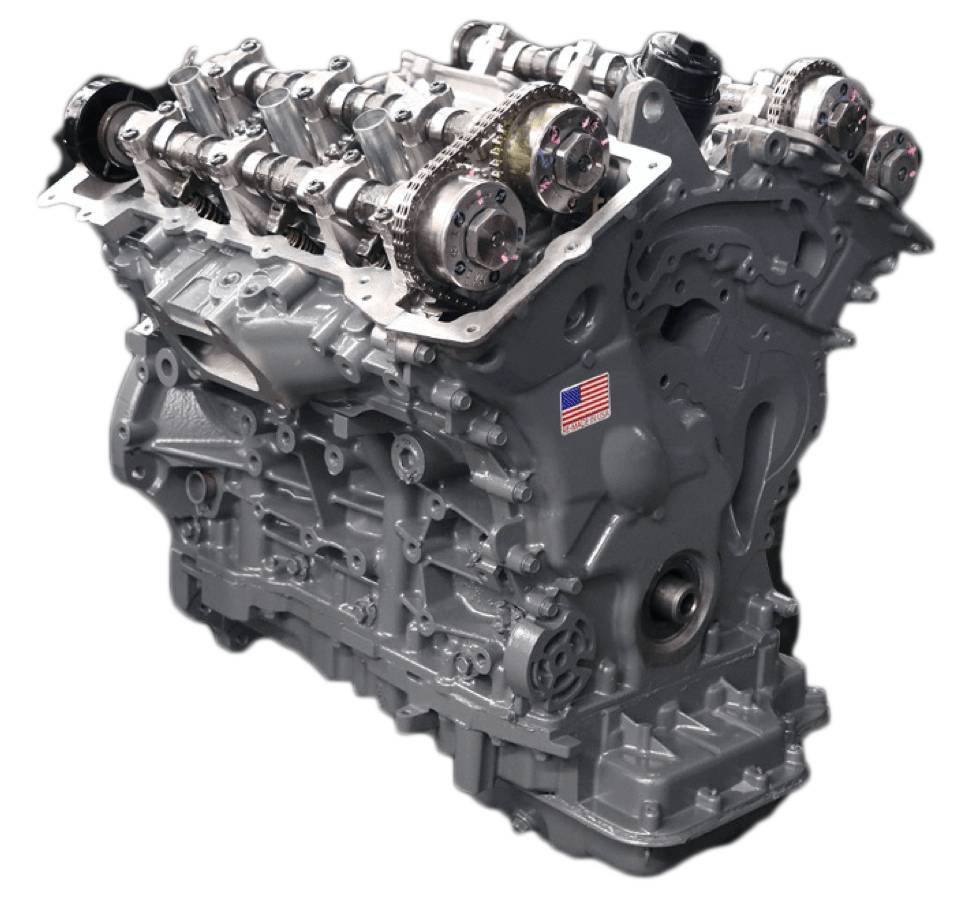
How Much Horsepower Can a Stock 3.6 Pentastar Produce?
A stock 3.6L Pentastar produces roughly 283–305 horsepower depending on the engine version, model year, and vehicle application. The engine has been installed in multiple Jeep, Dodge, Chrysler, and Ram vehicles, so there is no single factory horsepower figure that applies to every 3.6 Pentastar. Earlier applications commonly sit near the lower end of the range, while later versions with revised intake and valvetrain systems can reach approximately 305 horsepower.
Factory torque also varies by application, generally remaining around the mid-250 to high-260 lb-ft range. Vehicle-specific intake systems, exhaust layouts, ECU calibrations, and later engine revisions account for part of these differences. For this reason, a 3.6 Pentastar in a Jeep Wrangler should not automatically be treated as having the same performance baseline as one installed in a Dodge Charger or another Pentastar-powered vehicle.
Crank horsepower and wheel horsepower must also be separated when evaluating 3.6 Pentastar performance upgrades. Factory ratings measure output at or represent output from the engine, while chassis dyno measurements show power reaching the wheels after drivetrain losses. A vehicle rated at approximately 300 horsepower at the engine will therefore produce a lower wheel-horsepower figure on a chassis dyno.
The correct baseline is the output of the specific vehicle before modification. Using a pre-modification dyno run and comparing it with a post-modification run under similar testing conditions provides a more useful measurement than comparing an aftermarket manufacturer’s claimed gain with the vehicle’s factory crank-horsepower rating.
What Are the Best 3.6 Pentastar Performance Upgrades?
There are 8 main 3.6 Pentastar performance upgrades: a cold air intake, performance exhaust, headers, larger throttle body, performance intake manifold, ECU tune, supercharger, and turbocharger. These modifications target different restrictions in the engine, so their effects on horsepower, torque, throttle response, and overall drivability are not equal.
Cold air intakes, exhaust systems, throttle bodies, and intake manifolds primarily modify airflow through the naturally aspirated engine. Headers improve the path for exhaust gases leaving the cylinders. ECU tuning changes engine calibration so the powertrain can make better use of available airflow and fuel. Superchargers and turbochargers take a more aggressive approach by increasing the mass of air entering the cylinders through boost.
The 8 upgrades can be grouped by their primary purpose:
| Upgrade | Primary Effect | Power Potential | Best Fit |
|---|---|---|---|
| Cold air intake | Intake airflow and response | Low | Mild NA/boosted build |
| Performance exhaust | Exhaust flow and sound | Low to moderate | NA/boosted build |
| Headers | Exhaust flow and scavenging | Moderate | NA performance build |
| Larger throttle body | Airflow and response | Low | Supporting NA mod |
| Intake manifold | Air distribution and RPM performance | Moderate | NA performance build |
| ECU tune | Engine calibration | Moderate | NA/boosted build |
| Supercharger | Forced induction | High | High-output build |
| Turbocharger | Forced induction | High | High-output build |
A modification with low standalone horsepower potential is not automatically ineffective. For example, increasing throttle-body diameter may provide limited peak-power improvement on an otherwise stock engine because the engine does not require substantially more airflow. The same component can become more relevant when other modifications increase airflow demand.
Does a Cold Air Intake Add Horsepower to a 3.6 Pentastar?
A cold air intake can improve airflow to the 3.6 Pentastar, but its standalone horsepower gain is limited when the factory intake is not the primary airflow restriction. Its most noticeable effects can instead include changes in intake sound and throttle response, particularly when it forms part of a larger combination of airflow modifications.
An intake system affects performance through air temperature, pressure loss, filter restriction, and the path the incoming air follows before reaching the throttle body. Reducing restriction allows the engine to draw air with less resistance. Lower intake-air temperatures can also increase air density, allowing a greater mass of oxygen to enter for a given volume of air.
The term “cold air intake” does not guarantee that an aftermarket system supplies colder air. An exposed filter positioned in a hot engine bay can ingest heated air, while a well-designed enclosed airbox can isolate the inlet from engine heat. Intake location, heat shielding, duct design, filter area, and vehicle speed therefore influence the actual intake-air temperature.
A cold air intake makes more sense as part of an airflow package than as a guaranteed large-horsepower modification. Pairing the intake with exhaust changes and an appropriate tune allows the engine calibration to work with the altered airflow characteristics rather than treating the intake as an isolated power upgrade.
Does a Performance Exhaust Add Power to a 3.6 Pentastar?
A performance exhaust can reduce exhaust restriction on a 3.6 Pentastar, but a cat-back system generally provides a smaller performance change than modifications that address restrictions closer to the engine. For many street vehicles, the most obvious difference after a cat-back installation is exhaust sound rather than a dramatic increase in horsepower.
Exhaust gases must travel from the cylinder heads through the exhaust system before leaving the vehicle. Restriction increases the pressure the engine works against during the exhaust stroke. Changing pipe geometry, bends, mufflers, and other components can reduce this restriction when the factory system limits exhaust flow.
Larger exhaust tubing is not automatically better. Pipe diameter affects gas velocity as well as total flow capacity, and an oversized system designed without regard to engine output can provide little benefit to a naturally aspirated 3.6L engine. Exhaust design should therefore match expected airflow and power level rather than use maximum pipe diameter as the primary specification.
The value of an exhaust upgrade increases when it supports other modifications. Headers, intake changes, tuning, or forced induction can increase airflow through the engine, which raises the amount of exhaust gas the system must handle. In these combinations, reducing downstream restriction can become more relevant than it is on an otherwise stock Pentastar.
Are Headers Worth It on a 3.6 Pentastar?
Headers are most worthwhile on a 3.6 Pentastar when the goal is to improve naturally aspirated exhaust flow and they are combined with complementary airflow modifications and tuning. They replace or modify restrictive portions near the exhaust ports, where exhaust-flow characteristics have a greater relationship with cylinder evacuation than changes made only at the rear of the exhaust system.
Header design influences how exhaust pulses move away from each cylinder. Primary-tube diameter, primary length, collector design, and the timing of exhaust pulses affect scavenging and the engine’s behavior across the RPM range. A properly matched header can therefore influence usable torque and horsepower rather than simply making the exhaust louder.
Headers also involve greater installation complexity than a typical intake or cat-back exhaust. Packaging is particularly important because the 3.6 Pentastar is used in several vehicle platforms with different engine-bay layouts and exhaust configurations. A header designed for one Pentastar application should not be assumed to fit another solely because both vehicles use a 3.6L Pentastar.
Emissions equipment must also be considered before changing the exhaust system. Header and catalyst configurations can affect emissions compliance and diagnostic monitoring. The correct setup needs to match the specific vehicle, local requirements, and intended use.
Does a Larger Throttle Body Improve 3.6 Pentastar Performance?
A larger throttle body can increase airflow capacity and alter throttle response, but it usually acts as a supporting modification rather than a major standalone horsepower upgrade on a stock 3.6 Pentastar. Increasing throttle-body diameter matters most when the existing throttle body becomes a restriction at the airflow level required by the engine.
The throttle body regulates the amount of air entering the intake manifold. Increasing its effective cross-sectional area can reduce restriction at high airflow rates, but the engine must actually demand that additional airflow before the larger opening creates a meaningful power advantage. Installing a larger throttle body does not force additional air into a naturally aspirated engine in the way a turbocharger or supercharger does.
Throttle response and peak horsepower should therefore be treated as separate outcomes. A change in pedal response can make a vehicle feel more immediate without producing an equivalent increase in measured engine output. Electronic throttle calibration can further influence this perception because pedal position does not necessarily correspond directly to throttle-blade angle.
A larger throttle body becomes more logical after other modifications increase the engine’s airflow demand. Intake manifold work, exhaust modifications, tuning, or a more extensive naturally aspirated build can shift the airflow bottleneck and make additional throttle-body capacity more useful.
Can an Intake Manifold Increase 3.6 Pentastar Horsepower?
An upgraded or modified intake manifold can increase 3.6 Pentastar performance when it improves airflow in the RPM range where the engine needs additional air. The effect depends on manifold design, engine version, supporting modifications, and tuning, so changing the manifold does not produce the same horsepower gain on every Pentastar application.
The intake manifold distributes air from the throttle body to the six cylinders. Runner length, runner diameter, plenum volume, and internal surface geometry influence air velocity and cylinder filling. Longer runners generally favor airflow characteristics useful at lower engine speeds, while shorter or less restrictive runners can support greater airflow at higher RPM. The useful design is therefore the one matched to the intended operating range rather than simply the manifold with the largest internal volume.
A ported intake manifold can reduce restrictive areas without replacing the entire manifold. Material is removed or reshaped around selected passages to create a smoother airflow path and improve the transition between components. The actual benefit depends on whether the factory manifold is restricting the engine in its current configuration. Porting a manifold on an otherwise stock engine can produce a different result from using the same modification with headers, a larger throttle body, and ECU calibration.
Intake manifold modifications make the most sense in a naturally aspirated build when other airflow restrictions have already been addressed. Combining manifold work with compatible intake, throttle-body, exhaust, and tuning changes allows the components to operate as a system. This approach is more effective than assuming that individual advertised horsepower gains can simply be added together.
How Much Power Can a Tune Add to a 3.6 Pentastar?
A performance tune can increase 3.6 Pentastar output and improve throttle response by changing parameters such as ignition timing, fueling, throttle behavior, and other available powertrain calibrations. The exact horsepower increase depends on fuel octane, engine version, existing modifications, factory calibration, and whether the tune is a generic calibration or one developed for the specific vehicle.
Ignition timing is one of the mechanisms through which tuning influences performance. The combustion event must occur at the appropriate point relative to piston position for the engine to convert cylinder pressure into useful torque. Calibration changes can optimize this timing for the available fuel and engine configuration, while excessive ignition advance can increase the risk of knock rather than create safe additional power.
Fuel calibration is equally important because the correct air-fuel relationship changes with engine load and airflow. An engine equipped with intake, exhaust, manifold, or forced-induction modifications can move a different mass of air than the original calibration was designed around. The ECU must supply and control fuel appropriately for that operating condition rather than relying on the physical modification alone to produce safe performance.
Throttle calibration can also change how quickly the engine responds to accelerator input. Because the 3.6 Pentastar uses electronic throttle control in relevant applications, pedal position and throttle opening are managed electronically rather than through a direct mechanical cable. A calibration that changes this relationship can make the vehicle feel more responsive even when the change in peak horsepower is smaller than the perceived improvement.
A custom or dyno-based tune becomes more important as the engine moves further away from its factory configuration. A nearly stock naturally aspirated engine presents fewer calibration variables than a 3.6 Pentastar with headers, intake modifications, altered fueling, or forced induction. For a modified engine, tuning should be treated as part of the performance system rather than as an isolated final accessory.
How Much Power Can a Supercharger Add to a 3.6 Pentastar?
A supercharger offers substantially more power potential than naturally aspirated bolt-on upgrades because it forces additional air into the 3.6 Pentastar under pressure. The resulting output depends on boost pressure, supercharger efficiency, charge-air temperature, fuel delivery, calibration, engine condition, and the mechanical limits of the complete powertrain.
A naturally aspirated Pentastar fills its cylinders using atmospheric pressure and the pressure differential created during the intake stroke. A supercharger changes this process by compressing the incoming air before it enters the cylinders. More air mass allows more fuel to be burned during each combustion cycle, increasing the cylinder pressure that produces torque and horsepower.
Boost also increases heat. Compressing air raises its temperature, while higher engine output increases thermal load in the combustion chambers, cooling system, oil, and surrounding components. An intercooling system can reduce charge-air temperature before the compressed air reaches the engine. Lower intake temperatures increase air density and help control the conditions that contribute to detonation.
Fuel delivery must increase with airflow. Fuel injectors and the fuel supply system must provide sufficient fuel at the engine’s highest expected load. A setup that supplies additional air without adequate fuel capacity can create an unsafe operating condition, which is why injector capacity, fuel pressure, pump capability, and ECU calibration must be evaluated as part of a supercharger installation.
Supercharging also increases load beyond the engine itself. Additional torque passes through the transmission, driveshafts, differentials, axles, and other drivetrain components. The acceptable power target therefore depends on the specific vehicle and transmission rather than on the 3.6 Pentastar engine alone. A daily-driven Wrangler, Charger, Challenger, or other Pentastar-powered platform can require a different supporting strategy even when the engine displacement is identical.
For this reason, a supercharger should be considered a system-level upgrade. The supercharger provides the additional airflow, but fuel delivery, charge-air temperature control, ECU calibration, engine condition, and drivetrain capacity determine whether that airflow can be converted into repeatable power.
Can You Turbocharge a 3.6 Pentastar?
A 3.6 Pentastar can be turbocharged, and turbocharging provides much greater power potential than conventional naturally aspirated bolt-on modifications. A complete turbo setup requires more than the turbocharger itself because boost changes airflow, exhaust flow, fuel demand, combustion pressure, heat generation, and drivetrain load at the same time.
A turbocharger uses exhaust-gas energy to drive a turbine connected to a compressor. The compressor pressurizes the intake charge, increasing the mass of air entering the cylinders. Unlike a mechanically driven supercharger, which takes drive power from the engine, the turbocharger extracts energy from the exhaust stream. This difference influences packaging, boost response, exhaust design, and power delivery.
Turbo sizing determines how the system behaves across the RPM range. A smaller turbocharger can reach useful boost earlier but has a lower airflow ceiling, while a larger unit can support greater airflow at the cost of requiring more exhaust energy to reach its effective operating range. Selecting a turbo only by its maximum horsepower rating ignores spool behavior and the intended use of the vehicle.
The exhaust system becomes part of the turbocharging mechanism because exhaust gas must be routed through the turbine. Manifold design, turbine housing, wastegate control, downpipe dimensions, and downstream exhaust restriction affect how quickly the turbo responds and how efficiently exhaust gases leave the engine. The intake side also requires appropriate charge piping and, in most performance applications, an intercooler to control compressed-air temperature.
Fuel delivery and ECU calibration are mandatory considerations for a turbocharged Pentastar. The fuel system must support the additional air mass, while calibration must control fueling, ignition timing, boost-related operating conditions, and other available engine-management parameters. Increasing boost without matching fuel supply and calibration raises combustion stress rather than creating a reliable performance package.
A turbocharged build should therefore start with a defined power target. That target determines the required turbo airflow capacity, fuel system, cooling strategy, calibration, and drivetrain assessment. This is fundamentally different from installing a mild bolt-on modification because forced induction changes the operating load of the entire powertrain.
How Much Horsepower Can a Naturally Aspirated 3.6 Pentastar Make?
A naturally aspirated 3.6 Pentastar can gain performance through intake, exhaust, headers, intake-manifold modifications, and ECU tuning, but its power potential remains substantially lower than a forced-induction build. The exact output depends on the original Pentastar version, vehicle application, fuel, individual components, and calibration. A single maximum horsepower figure does not accurately represent every naturally aspirated 3.6 Pentastar configuration.
Naturally aspirated modifications work by reducing restrictions and improving the engine’s ability to fill and empty its cylinders. An intake can reduce restriction before the throttle body, while throttle-body and manifold modifications can improve airflow into the cylinders. Headers and exhaust modifications address the opposite side of the process by helping exhaust gases leave the cylinders. ECU tuning then calibrates ignition, fueling, and available throttle parameters around the modified configuration.
The gains from these components are not additive in a simple mathematical sense. For example, an intake advertised with one horsepower figure and an exhaust advertised with another cannot be assumed to produce the sum of both figures when installed together. Both modifications can affect the same airflow system, and the engine’s next restriction may shift to the manifold, cylinder head, exhaust path, or calibration after the first restriction is reduced.
This creates diminishing returns as a naturally aspirated build becomes more extensive. Initial modifications can address accessible restrictions, but extracting additional power eventually requires increasingly involved changes for progressively smaller gains compared with adding boost. A naturally aspirated build therefore makes the most sense for an owner who prioritizes response, sound, moderate power improvement, and retention of the engine’s naturally aspirated operating characteristics.
The practical comparison is not simply stock versus modified horsepower. Cost per unit of additional power, installation complexity, drivability, emissions requirements, maintenance, and reliability should also determine whether continued naturally aspirated modification makes sense. Once the desired output exceeds what airflow optimization can reasonably provide, a supercharger or turbocharger becomes the more direct route to a substantial increase in power.
How Much Horsepower Can a Boosted 3.6 Pentastar Make?
A boosted 3.6 Pentastar has considerably greater horsepower potential than a naturally aspirated engine because a supercharger or turbocharger increases the mass of air available for combustion. There is no universal safe horsepower limit for every 3.6 Pentastar because engine version, boost pressure, fuel, calibration, temperature control, internal engine condition, transmission, and intended duty cycle all affect the usable power level.
Boost pressure alone does not determine horsepower. Two engines operating at the same nominal boost pressure can produce different outputs because compressor efficiency, intake temperature, exhaust restriction, ignition timing, fuel characteristics, and volumetric efficiency differ. A useful forced-induction build therefore targets a complete airflow and combustion condition rather than treating a specific boost number as the sole performance objective.
Fuel becomes a critical constraint as airflow rises. More oxygen requires sufficient fuel to maintain the commanded mixture under load. Injector flow capacity, fuel-pump delivery, fuel pressure, fuel quality, and ECU control must support the intended output. The engine cannot safely use the airflow potential of a larger supercharger or turbocharger when the fuel system reaches its delivery limit first.
Temperature is another limiting factor. Compressing intake air generates heat, and producing more power increases thermal load throughout the engine. An intercooler, effective engine cooling system, suitable lubrication, and appropriate calibration help manage this additional heat. Repeated acceleration, towing, track use, and sustained high-load operation can expose thermal limitations that may not appear during a single short dyno pull.
The drivetrain also determines usable power. A boosted engine can produce a large increase in torque, and that torque must pass through the transmission and the rest of the driveline. Transmission design, vehicle weight, gearing, traction, tire size, and vehicle use all change the stress placed on these components. The appropriate boosted power target must therefore be established for the specific vehicle rather than for the Pentastar engine in isolation.
What Supporting Mods Does a Modified 3.6 Pentastar Need?
A modified 3.6 Pentastar may require fuel-system, cooling, calibration, and drivetrain upgrades as power and engine load increase. Mild naturally aspirated modifications place fewer additional demands on these systems, while forced induction can increase airflow, fuel consumption, cylinder pressure, heat, and torque enough to make supporting components part of the build rather than optional additions.
The required supporting modifications should be selected according to the intended power target. Replacing components without identifying an actual capacity requirement can add cost without solving a performance constraint. Conversely, increasing engine output until a stock fuel, cooling, or drivetrain component reaches its limit can compromise consistency and reliability.
When Does a 3.6 Pentastar Need Fuel System Upgrades?
A 3.6 Pentastar needs fuel-system upgrades when the existing injectors, pump, or related fuel-delivery components cannot supply the fuel required at the engine’s intended airflow and load. This threshold depends on the specific configuration, so fuel-system requirements should be calculated from the target output and verified through calibration data rather than selected from horsepower claims alone.
Fuel injectors have a finite flow capacity. As engine airflow and output rise, the injectors must remain open longer to deliver additional fuel. Once injector operation approaches its practical capacity, installing higher-flow injectors provides the additional delivery margin required for higher engine load. The calibration must then account for the characteristics of the new injectors.
The fuel pump faces a related limitation. It must maintain the required fuel supply under maximum demand rather than only during idle or light-load driving. A system that appears adequate during normal cruising can become insufficient during sustained boost because fuel consumption rises sharply with engine load.
Fuel-system changes are particularly important for forced induction because the additional air supplied by a supercharger or turbocharger requires a corresponding increase in fuel. Injector sizing, pump capacity, fuel pressure, fuel quality, and ECU calibration should therefore be treated as one system when establishing a boosted power target.
When Does a 3.6 Pentastar Need Cooling Upgrades?
A 3.6 Pentastar needs additional cooling capacity when increased engine output produces more heat than the existing cooling and charge-air systems can consistently control. Forced induction, repeated high-load acceleration, track driving, towing, and operation in high ambient temperatures can increase thermal demand beyond what appears during ordinary street driving.
Engine coolant removes part of the heat generated by combustion and transfers it through the cooling system. Higher sustained power increases the amount of heat that must be rejected. Coolant temperature behavior under load therefore provides more useful information than assuming every modified Pentastar automatically requires a larger radiator.
Intake-air temperature becomes particularly important with forced induction. A turbocharger or supercharger compresses air, which raises its temperature. An intercooler removes part of this heat before the air reaches the cylinders. Controlling charge temperature increases air density and gives the engine-management system a more stable operating environment during repeated boosted operation.
Oil temperature also matters because engine oil lubricates components operating under greater mechanical and thermal stress as output increases. A complete cooling strategy therefore considers coolant, intake charge, and lubrication temperatures instead of treating the radiator as the only component responsible for thermal management.
Can the Stock Transmission Handle a Modified 3.6 Pentastar?
A stock transmission can support mild 3.6 Pentastar performance modifications when the resulting torque remains within an appropriate operating range, but forced induction can increase drivetrain load enough to require a separate transmission assessment. There is no single transmission limit for every Pentastar vehicle because the engine has been paired with different transmissions and driveline configurations.
Torque is particularly important when assessing drivetrain stress. Horsepower describes the rate of doing work, while torque represents the rotational force transmitted through the drivetrain. A boosted engine can create a substantial increase in torque over a relatively narrow RPM range, placing greater load on clutches, gears, shafts, differentials, axles, and related components.
Transmission temperature and calibration also affect durability. Additional torque can increase clutch loading and heat, while shift strategy determines how that torque is managed during acceleration. On platforms where transmission calibration can be modified, appropriate torque management and shift behavior can form part of the complete performance calibration.
The correct approach is to identify the exact transmission and drivetrain before establishing a high-output target. A 3.6 Pentastar engine designation alone does not define the capacity of the complete powertrain. Engine output, transmission capability, cooling, vehicle weight, tire traction, and intended use should be evaluated together before moving from mild bolt-ons to a high-torque forced-induction setup.
Do Performance Upgrades Reduce 3.6 Pentastar Reliability?
Performance upgrades can reduce 3.6 Pentastar reliability when they increase cylinder pressure, combustion temperature, engine speed, or drivetrain load beyond the operating conditions supported by the engine and its related systems. Mild airflow modifications create a different level of mechanical stress from forced induction, so reliability risk should be evaluated according to the modification and resulting engine load rather than treating every performance upgrade equally.
Cold air intakes, cat-back exhaust systems, and similar bolt-on modifications generally change airflow without producing the large increase in cylinder pressure associated with boost. Their reliability impact therefore depends more heavily on component design, installation quality, filtration, sensor compatibility, and calibration. An intake that allows unfiltered air into the engine or an exhaust modification that creates sensor or emissions-system problems can cause issues even when the modification produces little additional horsepower.
ECU tuning introduces another variable because calibration directly affects how the engine operates. Ignition timing, fueling, throttle control, and other available parameters influence combustion under load. An aggressive calibration that creates excessive ignition advance or inadequate fueling can increase knock and thermal stress, while a calibration matched to the engine configuration and fuel provides a more controlled operating environment.
Superchargers and turbochargers create a larger reliability consideration because boost increases the mass of air and fuel burned during each combustion event. This raises cylinder pressure and increases the load placed on pistons, connecting rods, bearings, head sealing, cooling components, and lubrication systems. More output also generates more heat, making temperature management increasingly important during repeated or sustained high-load operation.
Detonation is one of the conditions a boosted build must control. Abnormal combustion creates pressure behavior that can damage engine components rather than producing controlled torque. Fuel octane, charge-air temperature, ignition timing, air-fuel ratio, boost level, and engine condition all influence the margin against knock. A performance build should therefore be calibrated around the fuel that will actually be used rather than tuned for fuel quality the vehicle cannot consistently receive.
Reliability also depends on the condition of the engine before modification. Adding boost does not repair existing oil-pressure problems, cooling deficiencies, ignition faults, compression loss, or other mechanical issues. Establishing a healthy baseline before increasing output prevents an existing fault from being incorrectly attributed to the new performance component.
The most reliable approach is to set a realistic power target first and then match airflow, fuel delivery, cooling, calibration, and drivetrain capacity to that target. This keeps the build focused on repeatable usable power rather than the highest number achievable during a single operating condition.
What Is the Best Order to Upgrade a 3.6 Pentastar?
The best 3.6 Pentastar upgrade order is to establish a healthy stock baseline first, select a power target second, and then add airflow, calibration, supporting systems, and forced induction according to that target. This sequence prevents owners from purchasing multiple parts that address the same restriction or installing a high-output modification before the fuel, cooling, and drivetrain systems are ready for the additional load.
The first stage is baseline maintenance and diagnosis. Compression, ignition operation, fluid condition, cooling performance, fault codes, and other relevant engine conditions should be addressed before performance work begins. A dyno baseline can also establish wheel horsepower and torque before modification, creating a reference for measuring later changes under comparable conditions.
For a mild street build, the next stage focuses on response and airflow. An appropriate intake or exhaust modification can be selected according to the vehicle’s existing restrictions and the owner’s goals. A throttle-body change should be added when additional airflow capacity is justified rather than automatically included because a larger diameter is available.
A more extensive naturally aspirated build moves deeper into the airflow path. Headers and intake-manifold modifications can complement intake and exhaust changes, while ECU calibration allows the engine-management strategy to account for the resulting configuration. This is also the point where dyno testing becomes useful for identifying whether the combined modifications have produced measurable gains across the RPM range rather than only changing sound or pedal response.
Forced induction represents a separate stage rather than the automatic next bolt-on. A supercharger or turbocharger substantially changes airflow and engine load, so the intended boost and power target should be established before purchasing supporting components. Fuel-system capacity, charge cooling, engine cooling, calibration, and drivetrain capability then need to be evaluated around that target.
A practical upgrade sequence can therefore be organized into 3 stages:
Stage 1 — Mild street performance: Establish the mechanical baseline, identify airflow restrictions, add selected intake or exhaust modifications, and calibrate the vehicle when the configuration justifies tuning.
Stage 2 — Naturally aspirated performance: Add compatible headers, intake-manifold or throttle-body modifications where they address an actual restriction, then optimize the combined configuration through appropriate ECU calibration.
Stage 3 — High-output performance: Define the horsepower and torque target, select a supercharger or turbocharger, verify fuel and cooling capacity, calibrate the engine for boost, and confirm that the transmission and drivetrain can support the resulting torque.
This order also avoids spending heavily on naturally aspirated components that may later be replaced when the owner changes to a forced-induction configuration. Deciding early whether the final goal is a responsive naturally aspirated street vehicle or a substantially more powerful boosted vehicle makes the upgrade path more efficient.
Which 3.6 Pentastar Performance Upgrade Gives the Most Power?
A supercharger or turbocharger provides the greatest power potential among the 8 major 3.6 Pentastar performance upgrades because forced induction increases the mass of air entering the cylinders rather than only reducing restrictions in the existing naturally aspirated airflow path. Intake, exhaust, headers, throttle-body, manifold, and tuning modifications remain useful, but they serve different performance goals.
For a driver primarily seeking sharper response, a mild combination of intake-related changes and suitable calibration can make more sense than building for maximum horsepower. Throttle response affects how quickly the engine reacts to accelerator input, so an improvement in response can be useful during normal street driving even when the change in peak dyno output is limited.
For a naturally aspirated horsepower build, headers, intake-manifold optimization, complementary intake and exhaust modifications, and tuning form a more complete package. These modifications address multiple parts of the airflow path rather than expecting one bolt-on component to transform engine output. The resulting combination should be measured as a system because individual advertised gains cannot simply be added together.
For a major horsepower increase, forced induction is the more direct route. A supercharger delivers boost through a compressor mechanically driven by the engine, while a turbocharger uses exhaust energy to drive its compressor. Both approaches can move substantially more air than naturally aspirated airflow modifications, but both also increase fuel, cooling, calibration, and drivetrain requirements.
The best upgrade therefore depends on the intended result:
| Performance Goal | Appropriate Upgrade Path |
|---|---|
| Sharper throttle response | Intake/throttle optimization and calibration |
| Mild street performance | Intake, exhaust, and appropriate tuning |
| Naturally aspirated power | Headers, manifold, airflow mods, and tuning |
| Major horsepower increase | Supercharger or turbocharger |
| Reliable boosted performance | Forced induction with fuel, cooling, and calibration support |
Choose the power target before choosing the parts. A daily-driven 3.6 Pentastar that needs better response requires a different modification strategy from an engine being prepared for substantial boost. Matching each component to the final power target produces a more coherent build, reduces unnecessary modifications, and makes horsepower, reliability, and drivetrain requirements easier to manage.