Kubota tractors are manufactured in Japan and selected international locations, including the United States. Kubota Corporation originated in Japan, but its global manufacturing network allows the company to produce equipment closer to major markets. The country where a specific tractor is manufactured depends on its model, production facility, and intended market.
Kubota operates manufacturing facilities in the United States, including locations in Georgia. These facilities support the production of tractors and other equipment for North American customers. However, not every Kubota tractor sold in the United States is manufactured domestically. Some models are produced in Japan or assembled using components sourced from different countries.
Understanding where Kubota tractors are manufactured requires distinguishing three factors: the brand’s country of origin, the location where a tractor is manufactured or assembled, and the market where the finished product is sold. These details matter to buyers who want to verify a tractor’s origin, compare specific models, or understand the company’s manufacturing operations.
This guide examines Kubota’s manufacturing locations, explains which factors determine a tractor’s country of origin, and outlines how owners and prospective buyers can verify the manufacturing details of an individual Kubota tractor.
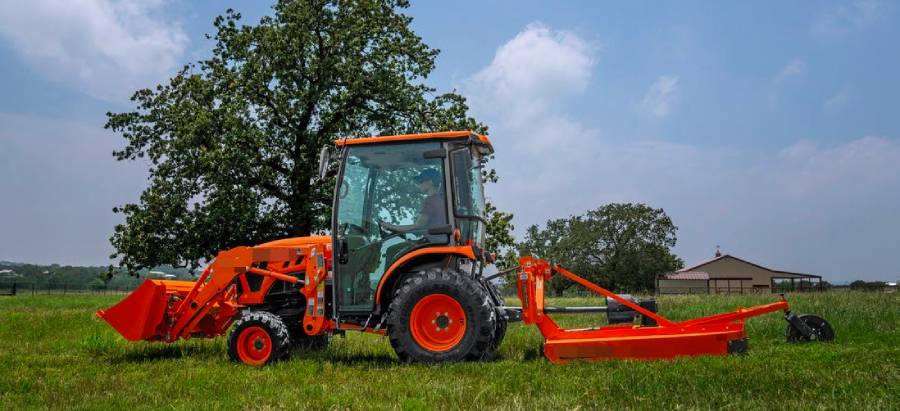
Where Are Kubota Tractors Manufactured?
Kubota tractors are manufactured in Japan and the United States, with the exact country of production depending on the model and manufacturing facility. Kubota Corporation originated in Japan and has expanded its manufacturing operations internationally to serve agricultural, commercial, and residential equipment markets. Therefore, identifying Kubota as a Japanese brand does not mean that every tractor bearing its name is manufactured in Japan.
Japan remains an important part of Kubota’s manufacturing network. The company develops and produces agricultural machinery for domestic and international markets, including tractors designed for different farm sizes and applications. However, buyers should distinguish the location of the company’s headquarters from the factory where an individual tractor was produced. A Japanese corporate address establishes the company’s origin, not necessarily the manufacturing origin of every product.
The United States is another important manufacturing location for Kubota tractors. Kubota has manufacturing operations in Georgia that support its North American business. These facilities produce or assemble selected equipment, depending on the facility and product category. Their existence explains why some Kubota tractors sold in the United States have a domestic manufacturing or assembly connection, while other models originate from overseas production facilities.
The manufacturing origin of a specific Kubota tractor must be verified at the model level. Product category, model number, production year, and destination market can help narrow down the relevant manufacturing information. For example, a compact tractor sold through an American dealer should not automatically be classified as American-made simply because the dealer and customer are located in the United States. The model’s official documentation and identification information provide a more reliable basis for determining its origin.
Kubota’s international manufacturing structure also requires distinguishing complete tractor production from component manufacturing and final assembly. A tractor may incorporate components manufactured in different countries, even when its principal manufacturing or assembly operations take place at one specific location. Consequently, the country associated with a factory does not establish that every component in the finished tractor originated there.
To determine where a particular Kubota tractor was manufactured, buyers should consult Kubota’s official product information, manufacturing disclosures, identification plate, and supporting documentation. These sources help establish whether a model was manufactured or assembled in Japan, the United States, or another confirmed production location. This model-specific approach is more accurate than assuming that all Kubota tractors share the same country of origin.
Where Are Kubota Tractors Manufactured in the United States?
Kubota manufactures tractors and other equipment in Georgia, United States, through its American manufacturing operations. The company has established facilities in the state to support production for the North American market. These operations are an important part of Kubota’s international manufacturing network, although the specific products made at each facility depend on the facility’s production responsibilities.
Jefferson, Georgia, is one of the locations associated with Kubota’s manufacturing operations in the United States. Kubota Manufacturing of America has operated manufacturing facilities in Georgia to produce equipment for agricultural, commercial, and related applications. When describing a facility’s role, it is important to distinguish tractor manufacturing from the production of other machinery or components. The presence of a Kubota manufacturing facility in a particular city does not establish that every Kubota tractor model is produced there.
Gainesville, Georgia, is another important location in Kubota’s American manufacturing history. Kubota has operated production facilities in the area for compact tractors and other equipment. The exact products manufactured at a facility can change as the company adjusts its production structure, so current model-specific claims should be checked against official Kubota information rather than inferred from the facility’s location alone.
Kubota also announced the consolidation of Kubota Manufacturing of America Corporation and Kubota Industrial Equipment Corporation, effective January 1, 2024. This organizational change is relevant when researching the company’s American manufacturing operations because corporate names and organizational structures may differ between older documents and current company information. Historical facility descriptions should therefore be interpreted in the context of the company’s updated structure.
Buyers should also distinguish manufacturing locations from corporate offices and distribution centers. For example, Kubota’s U.S. corporate presence in Grapevine, Texas, does not mean that tractors are manufactured there. A sales office, dealer, warehouse, or distribution center can serve customers without producing finished tractors.
For an accurate assessment of where a Kubota tractor was made, the best approach is to identify the exact model and verify its manufacturing information through Kubota’s official documentation or an authorized dealer. This method avoids treating all equipment sold in the United States as American-made and helps distinguish domestic production from imported products.
Does Kubota Manufacture Tractors in Other Countries?
Yes. Kubota operates an international manufacturing network beyond Japan and the United States. The company has expanded its production and business operations into several overseas markets to serve regional demand for agricultural machinery, construction equipment, engines, and other industrial products. However, the existence of a Kubota facility in a particular country does not automatically mean that the facility manufactures complete tractors.
Japan remains the company’s country of origin, while the United States is an important manufacturing base for selected equipment serving North America. Kubota also maintains operations in other markets, including India and China. These operations form part of the company’s broader international business, but the products manufactured at each location differ. Buyers researching tractor origins should verify whether an overseas facility produces complete tractors, assembles specific models, or manufactures components and other types of machinery.
The distinction between manufacturing and regional distribution is particularly important when examining Kubota’s global presence. A country may have authorized dealers, sales offices, parts warehouses, or service centers without having a factory that produces finished tractors. Similarly, a manufacturing facility may specialize in engines, agricultural implements, or construction machinery rather than complete tractor units. Official company information must establish the function of each facility before it is presented as a tractor manufacturing location.
Kubota’s international production structure also means that components and finished equipment may move across national borders during manufacturing. A tractor assembled in one country may incorporate parts produced elsewhere, while another model may be manufactured at a different facility for a specific regional market. This arrangement allows a global equipment company to coordinate production, supply chains, and distribution across multiple markets.
For buyers, the practical question is not simply whether Kubota operates in a particular country, but whether the exact tractor model was manufactured or assembled there. Kubota’s official product documentation, manufacturing disclosures, and dealer support provide the most reliable starting points for answering that question. Unless a source explicitly identifies a factory’s tractor production activities, its presence should not be treated as proof that complete Kubota tractors are manufactured in that country.
Read more: How to Regenerate a Kubota Tractor: Step-by-Step Guide
How Can You Find Where Your Kubota Tractor Was Manufactured?
You can determine where your Kubota tractor was manufactured by checking its model number, identification plate, serial number, and official product documentation. These details help identify the exact machine and allow Kubota or an authorized dealer to verify its production origin. Because manufacturing arrangements can vary by model and production year, checking the individual tractor is more reliable than assuming its origin from the brand name or the country where it was purchased.
Start by identifying the tractor’s complete model designation. The model number helps distinguish the tractor’s product series, size, and configuration, making it easier to locate the correct specifications and documentation. Record the production year if it is available, because manufacturing information for an older tractor may differ from that of a newer version carrying a similar model name.
Next, locate the tractor’s identification plate or product identification label. Its position can vary by model, so consult the operator’s manual if you cannot find it. Record the information exactly as displayed, including the model designation and serial number. Do not assume that the serial number alone reveals the manufacturing country, because serial-number formats and identification systems vary across product lines.
Then, review the original sales documents, operator’s manual, warranty records, and any available manufacturer documentation. These records may provide information about the machine’s specifications, intended market, and production details. However, a dealer’s address or the country where the tractor was purchased does not necessarily establish where it was manufactured.
If the available documentation does not confirm the country of origin, contact Kubota or an authorized dealer. Provide the complete model and serial number and ask for confirmation of the manufacturing facility or country of production. This is especially useful when buying a used tractor, importing equipment, or checking the origin of a machine whose documentation is incomplete.
Finally, distinguish the manufacturing origin of the finished tractor from the origin of its individual components. A tractor may be assembled in one country using components produced in several others. If you need to establish the origin for customs, import documentation, resale, or another formal purpose, request the appropriate official documentation rather than relying on assumptions based on the brand’s nationality.
Following these steps provides a practical way to verify a Kubota tractor’s manufacturing origin while avoiding unsupported conclusions based on model names, dealer locations, or serial numbers alone.
What Are the Most Common Questions About Kubota Tractor Manufacturing?
Is Kubota a Japanese Tractor Brand?
Yes, Kubota is a Japanese tractor brand. Kubota Corporation was founded in Osaka, Japan, in 1890 and began manufacturing agricultural tractors in 1960. The company has since expanded internationally, establishing manufacturing and business operations in multiple markets. Its Japanese origins explain the brand’s identity, but they do not mean every Kubota tractor sold worldwide is manufactured in Japan.
Are All Kubota Tractors Made in Japan?
No, not all Kubota tractors are manufactured in Japan. Kubota has manufacturing operations in the United States, including facilities in Georgia, that support production of selected equipment. The manufacturing origin of an individual tractor depends on its model, production year, and manufacturing arrangements. Buyers should consult official documentation or an authorized dealer to verify where a particular machine was made.
Are Kubota Tractors Sold in America Made in America?
No, a Kubota tractor sold in the United States is not necessarily manufactured there. The American market includes equipment supplied through Kubota’s international production network. Some tractors are manufactured or assembled in the United States, while other models originate from overseas facilities. The dealer’s location and the country of purchase do not establish the tractor’s manufacturing origin.
Can You Identify a Kubota Tractor’s Country of Origin by Its Serial Number?
A serial number can help Kubota identify a specific tractor, but buyers should not assume that the number alone reveals its country of manufacture. Serial-number formats and identification systems can vary across models and production periods. To verify the origin, record the complete model and serial number, review the available product documentation, and contact Kubota or an authorized dealer if the manufacturing country is not explicitly identified.
The most reliable way to understand Kubota tractor manufacturing is to distinguish the company’s Japanese origins from the international locations where individual models are manufactured or assembled. Checking model-specific records provides a more accurate answer than relying on the brand name, sales location, or an unverified interpretation of the serial number.