The best Mopar ATF+4 transmission fluid equivalent is another fluid that meets the ATF+4 specification for the intended application. The Mopar brand name does not determine equivalency. The required fluid specification does.
Mopar ATF+4 is an automatic transmission fluid used in Chrysler, Dodge, Jeep, and Ram applications. A generic automatic transmission fluid does not qualify as an equivalent simply because it works in automatic transmissions. The correct specification matters because transmission fluids have specific friction and performance characteristics.
This guide explains what makes a fluid equivalent to Mopar ATF+4. It also explains how to evaluate replacement options before you buy or change the fluid. You will learn how ATF+4 compares with Dexron, Mercon, and ATF+3. You will also learn when you can mix different ATF+4 fluids and how to check your vehicle’s required specification.
The goal is simple: help you identify the correct Mopar ATF+4 transmission fluid equivalent without relying on brand names alone.
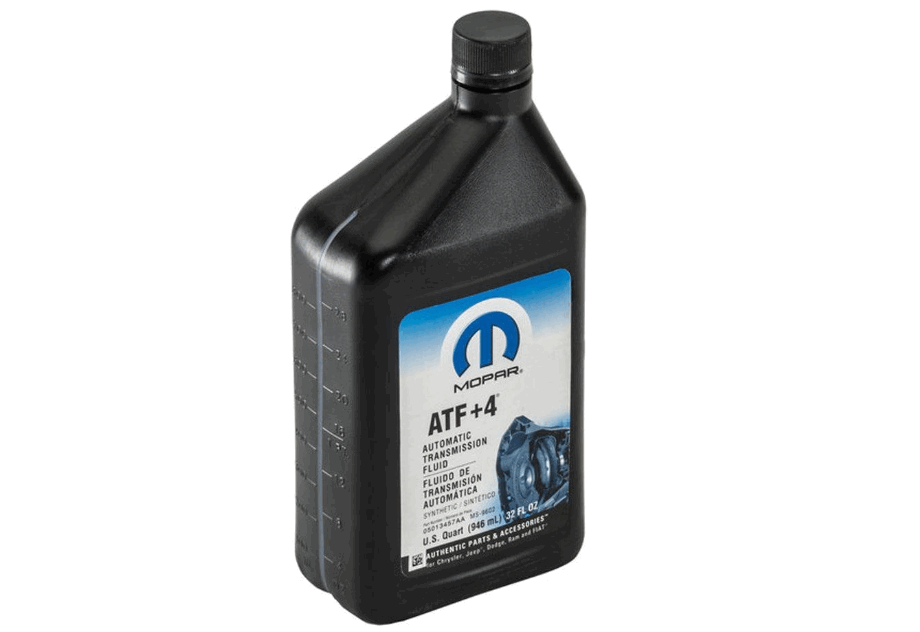
What Is the Best Mopar ATF+4 Transmission Fluid Equivalent?
A suitable Mopar ATF+4 transmission fluid equivalent must meet the ATF+4 specification required by the vehicle or transmission. The brand does not make another fluid equivalent by itself. The specification and documented application determine whether you can use the fluid as a replacement.
Mopar service information lists ATF+4 for several Chrysler, Dodge, Jeep, and Ram applications. For example, Chrysler service documentation specifies Mopar ATF+4 for transmissions such as the 40TE, 41TE, 62TE, 545RFE, and NAG1. However, the same documentation also shows that some newer transmissions require different fluids. A 2012 Chrysler service document, for example, states that a unique fluid for the 8HP45 transmission does not work with ATF+4.
This distinction matters when you search for an equivalent. A product that simply says “automatic transmission fluid” does not automatically qualify. You should look for clear documentation that identifies the product as ATF+4 compatible or meets the required specification. You should also confirm the specification in the vehicle’s owner’s manual or manufacturer service information before using the fluid.
The safest approach is to treat ATF+4 specification compliance as the primary requirement. Then check the vehicle application, transmission type, and product documentation. This process separates a genuine ATF+4 replacement from a generic ATF that only appears similar.
What Makes a Transmission Fluid Equivalent to Mopar ATF+4?
An equivalent fluid needs to provide the performance characteristics that the transmission requires from ATF+4. These characteristics affect lubrication, hydraulic operation, clutch engagement, and shifting behavior. Therefore, you should evaluate the fluid specification before considering price, brand, or availability.
Mopar service documents demonstrate why application matters. Some vehicles specify Mopar ATF+4, while other transmissions require different Mopar fluids. For example, Chrysler documentation for several 8HP transmissions calls for Mopar ZF 8&9 Speed ATF rather than ATF+4.
When you compare replacement fluids, check the product documentation for an explicit ATF+4 claim and verify that the claim applies to your transmission. Do not rely on phrases such as “multi vehicle” or “suitable for automatic transmissions” alone. A proper equivalent must match the required specification and application.
Is Another ATF+4 Fluid the Same as Mopar ATF+4?
Another ATF+4 fluid can serve the same replacement role as Mopar ATF+4 when the product meets the required ATF+4 specification and the manufacturer supports the application. However, an equivalent fluid is not necessarily the same product as Mopar ATF+4.
Mopar identifies its own product by brand, formulation, and specification. Another manufacturer may produce a different formulation while still designing the fluid to meet the ATF+4 requirements. Therefore, you should separate brand identity from fluid specification when comparing products.
The distinction becomes important when you shop for transmission fluid. A bottle from another brand may not carry the Mopar name, but it can still qualify as an ATF+4 alternative when its documentation clearly supports ATF+4 use. In contrast, a fluid that only claims compatibility with automatic transmissions does not provide enough information to establish equivalency.
Your vehicle’s transmission requirement should always come first. Chrysler service information shows that different transmissions can require different fluids. For example, Chrysler documentation specifies ATF+4 for several transmissions but lists separate fluid requirements for certain 8HP transmissions.
For that reason, do not choose an alternative based only on the words “automatic transmission fluid.” Check the required specification, verify the product documentation, and confirm that the application matches your vehicle.
Can You Use Dexron or Mercon Instead of Mopar ATF+4?
No. You should not treat Dexron or Mercon as a Mopar ATF+4 equivalent unless the vehicle or transmission manufacturer specifically approves that fluid for the application. The fact that Dexron, Mercon, and ATF+4 all serve automatic transmissions does not make their specifications interchangeable.
Mopar vehicle documentation supports this distinction. For example, Ram documentation for a six speed 68RFE transmission recommends Mopar ATF+4 or an equivalent licensed ATF+4 product. The same document specifies a different Mopar fluid for the AS69RC transmission. This shows why the transmission requirement matters more than the general category of the fluid.
Dexron and Mercon represent different fluid specifications. Their names identify their own performance requirements and applications. Therefore, you should not replace ATF+4 with Dexron or Mercon simply because the product label says it works with automatic transmissions.
The same rule applies when a product claims broad compatibility with several ATF specifications. Check the manufacturer’s documentation and your vehicle’s fluid requirement first. If the documentation does not clearly support ATF+4 compatibility for your application, choose a product that does.
Is Dexron III or Dexron VI Equivalent to ATF+4?
Dexron III and Dexron VI should not automatically qualify as Mopar ATF+4 equivalents. A transmission that requires ATF+4 needs a fluid that meets its specified requirements. A different Dexron specification does not satisfy that requirement simply because the fluid has similar transmission applications.
The safest comparison starts with the specification listed for your transmission. If the owner’s manual calls for ATF+4, look for an ATF+4 product with documented compatibility. Do not substitute Dexron III or Dexron VI based only on viscosity, availability, or a retailer’s generic compatibility list.
This approach also prevents confusion with newer transmissions. A 2021 Dodge Charger owner’s guide, for example, specifies Mopar ZF 8&9 Speed ATF or an equivalent for its automatic transmission rather than ATF+4. The correct fluid therefore depends on the specific transmission, not simply the vehicle brand.
Can You Use ATF+3 Instead of Mopar ATF+4?
ATF+3 should not be treated as a universal replacement for Mopar ATF+4. The correct choice depends on the transmission and the manufacturer’s fluid specification. Chrysler documentation shows that some older applications moved from ATF+3 to ATF+4 through a specific service update. That change does not mean you can use ATF+3 in every transmission that requires ATF+4.
Chrysler issued an ATF+3 to ATF+4 update procedure for certain 2000 model GS and NS vehicles. The procedure specifically stated that ATF+4 could replace ATF+3 in those vehicles. Chrysler also required additional service steps during major transaxle service, including an updated dipstick and other vehicle updates. This example shows that compatibility depends on the specific application and service instructions.
Current Mopar documentation also shows why you should follow the specified fluid rather than assume backward compatibility. For example, Ram documentation for a 6.4L vehicle with a 66RFE transmission says to use ATF+4. It also states that using a different fluid may affect transmission function or performance.
Therefore, choose ATF+4 when your vehicle requires ATF+4. Do not select ATF+3 simply because an older vehicle used it. Check the owner’s manual, service information, and transmission application before making the substitution.
Can You Mix Mopar ATF+4 With Another ATF+4 Fluid?
Yes, you can use another licensed ATF+4 product in an application that specifies ATF+4. Mopar owner information explicitly allows equivalent licensed ATF+4 products for several transmissions. For example, Ram documentation for the 68RFE recommends Mopar ATF+4 or an equivalent licensed ATF+4 product.
The important distinction is the fluid specification. If two products meet the required ATF+4 specification, changing from one brand to another does not automatically create a compatibility problem. The brand can differ while the required fluid specification remains the same. Mopar documentation also lists ATF+4 as an acceptable fluid for several applications beyond the automatic transmission itself, although the exact application still matters.
You should not apply the same rule to fluids with different specifications. Mixing ATF+4 with Dexron, Mercon, or another transmission fluid does not make the combined fluid equivalent to ATF+4. The transmission manufacturer determines the required specification, and you should follow that requirement rather than assume that two automatic transmission fluids can work together.
When Should You Avoid Mixing Transmission Fluids?
Avoid mixing fluids when you cannot verify their specifications or when the transmission requires a different fluid. Mopar documentation shows that some transmissions use fluids that are not compatible with ATF+4. For example, Chrysler identifies certain 8HP applications that require Mopar ZF 8&9 Speed ATF and states that this fluid does not work with ATF+4.
You should also avoid adding aftermarket transmission additives unless the manufacturer specifically recommends them. Mopar states that automatic transmission fluid already contains engineered additives and warns that supplemental additives can impair fluid performance.
For a simple top off, use the exact specification listed for your transmission. For a complete fluid change, follow the manufacturer’s service procedure and use the specified fluid throughout the service. This approach keeps the fluid formulation consistent and reduces the risk of using an incompatible product.
Which Vehicles Use Mopar ATF+4 Transmission Fluid?
Mopar ATF+4 appears in fluid specifications for Chrysler, Dodge, Jeep, and Ram vehicles. However, you should not assume that every vehicle from these brands requires ATF+4. The correct fluid depends on the transmission, engine configuration, model year, and manufacturer service requirements.
Chrysler service information lists ATF+4 for several automatic transmissions. Examples include the 40TE, 41TE, 62TE, 545RFE, and NAG1. The same documentation lists different fluids for certain other transmissions. For example, Chrysler specifies a separate ZF fluid for several 8HP applications rather than ATF+4.
Ram vehicles provide another clear example. Ram documentation identifies Mopar ATF+4 or an equivalent licensed ATF+4 product for specific transmissions such as the 68RFE. The documentation also identifies different fluid requirements for other transmissions. This means you should identify the transmission before choosing an equivalent fluid rather than selecting ATF+4 based only on the vehicle brand.
The same principle applies to Chrysler, Dodge, and Jeep applications. A model can use ATF+4 in one transmission and require another specification in a different transmission or model year. Therefore, the vehicle badge alone does not establish fluid compatibility.
To confirm the correct fluid, check the owner’s manual or manufacturer service information. Identify the transmission first, then verify its required fluid specification. Once the documentation calls for ATF+4, you can evaluate another ATF+4 product as a potential equivalent.
What Happens If You Use the Wrong Transmission Fluid?
Using the wrong transmission fluid can affect shifting, clutch operation, lubrication, and overall transmission performance. Automatic transmissions rely on specific fluid properties to control hydraulic pressure and friction between internal components. A fluid with different performance characteristics may not provide the behavior that the transmission design requires.
The risk depends on the specific transmission and the fluid you use. A fluid that works correctly in one transmission may not work correctly in another. This is why Mopar documentation identifies specific fluid requirements for individual transmissions rather than recommending one automatic transmission fluid for every application. For example, Chrysler identifies ATF+4 for several transmissions but specifies different fluids for certain 8HP transmissions.
Using an incompatible fluid can also change how the transmission engages its internal clutches. Automatic transmissions use controlled friction to apply and release clutch packs during gear changes. The fluid helps provide the required friction characteristics while also supporting lubrication and hydraulic operation. When the fluid does not match the intended specification, the transmission may experience abnormal shift behavior or reduced performance.
You should also avoid assuming that a newer or more widely available fluid automatically provides better protection. A different specification can use a different formulation for a different transmission design. Mopar documentation specifically warns that using a fluid other than the specified fluid can affect transmission function or performance in certain applications.
The safest approach is straightforward. Identify the transmission, check the required fluid specification, and use a product that meets that requirement. If your transmission calls for ATF+4, choose Mopar ATF+4 or a properly documented ATF+4 equivalent rather than substituting another specification without manufacturer approval.
What Should You Use Instead of Mopar ATF+4?
The best Mopar ATF+4 transmission fluid equivalent is a fluid that meets the required ATF+4 specification and fits your specific transmission application. You do not need the Mopar brand name when another product provides documented ATF+4 compatibility for the same application.
Start with your vehicle’s transmission requirement. Check the owner’s manual or manufacturer service information to identify the correct fluid specification. If the documentation calls for ATF+4, choose Mopar ATF+4 or another product that clearly supports the ATF+4 specification. Do not treat Dexron, Mercon, ATF+3, or another automatic transmission fluid as an equivalent without specific compatibility information.
The same rule applies when you compare different ATF+4 brands. A different brand does not automatically create a compatibility problem when the product meets the required specification. However, the product documentation still matters because some transmissions require different fluids.
Choosing the correct fluid therefore requires three checks: the transmission specification, the product specification, and the application compatibility. These checks help you avoid an incorrect substitution and keep the transmission operating with the fluid characteristics its manufacturer requires.