A Kubota Super UDT2 equivalent is a tractor transmission and hydraulic fluid designed to provide compatible performance for Kubota applications that require Super UDT2. Suitable alternatives must support the transmission, hydraulic system, hydrostatic transmission where applicable, wet brakes, PTO components, and other systems that share the same fluid. A product labeled Universal Tractor Fluid or Tractor Hydraulic Fluid is not automatically a direct replacement because fluid formulation and performance characteristics differ between products.
Choosing an alternative requires checking more than viscosity. The fluid must provide appropriate low temperature flow, friction characteristics, hydraulic performance, wear protection, and oxidation stability for the intended Kubota equipment. Transmission type and operating temperature also affect the selection. These factors become particularly important in HST equipped tractors because the fluid performs both hydraulic and lubrication functions.
This guide explains which fluids can qualify as Kubota Super UDT2 alternatives, which specifications matter when comparing products, and how Kubota UDT differs from Super UDT2. It also covers Universal Tractor Fluid compatibility, HST applications, fluid mixing, and the consequences of using an unsuitable replacement. The goal is to help Kubota owners select a compatible fluid based on documented requirements rather than relying only on product labels or price.
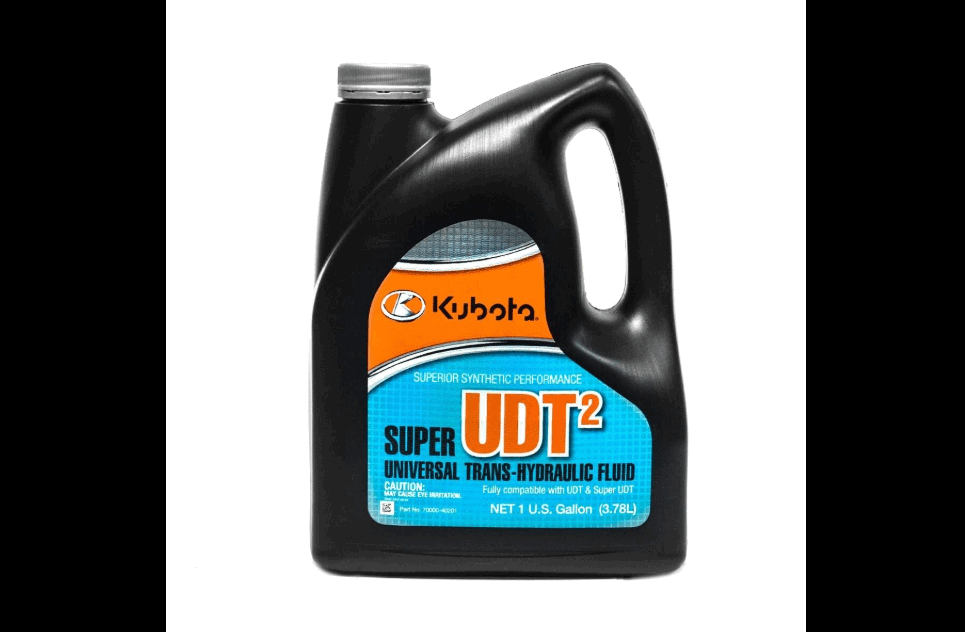
What Is Equivalent to Kubota Super UDT2?
A Kubota Super UDT2 equivalent is a tractor transmission and hydraulic fluid that provides compatible performance for the required Kubota application. The replacement must work correctly with the tractor’s transmission and hydraulic system. It may also need to support the HST, wet brakes, PTO, and hydraulic pump.
Owners usually encounter three fluid categories when looking for a replacement. The first category includes Kubota fluids that meet the requirements of the machine. The second includes aftermarket fluids that list relevant Kubota applications in their product documentation. The third includes generic Universal Tractor Fluids and Tractor Hydraulic Fluids.
The word “universal” does not prove that a fluid can replace Super UDT2. Manufacturers formulate tractor fluids with different viscosity, friction, and temperature characteristics. These differences can affect transmission operation and hydraulic performance. They can also change how wet brakes and HST components operate.
A suitable alternative should provide the viscosity behavior and low temperature fluidity that the tractor requires. It should also provide suitable friction performance, wear protection, hydraulic performance, and oxidation resistance. These properties influence fluid performance during cold starts, heavy operation, and temperature changes.
Always check the tractor model before choosing an alternative. Start with the fluid requirements in the owner’s manual. Then compare those requirements with the alternative fluid manufacturer’s current documentation. Do not assume that one replacement will suit every Kubota tractor.
What Are the Best Kubota Super UDT2 Equivalent Fluids?
The best Kubota Super UDT2 equivalent is a fluid that supports the requirements of the specific Kubota application. Manufacturer documentation should provide evidence for that compatibility. Price, brand popularity, and a Universal Tractor Fluid label do not provide enough evidence on their own.
Start by looking at tractor transmission and hydraulic fluids from established lubricant manufacturers. Check each product’s current technical data sheet or application information. Look for references to the relevant Kubota fluid requirement or application. Clear manufacturer guidance provides stronger evidence than retailer descriptions and informal cross reference lists.
Next, compare the fluid’s main performance characteristics. Check its viscosity behavior, low temperature performance, friction characteristics, hydraulic protection, and wear control. Also confirm whether the manufacturer supports use with wet brakes and hydrostatic transmissions when the tractor has these systems.
Transmission design affects the final choice. An HST uses hydraulic fluid to transfer power while the fluid also lubricates internal components. Fluid characteristics therefore influence both hydraulic and transmission operation. Wet brakes also depend on suitable friction behavior for smooth operation.
Two tractor hydraulic fluids can have different formulations and performance characteristics. For this reason, they are not automatically interchangeable. The product should match the needs of the tractor rather than only the general fluid category.
Do not treat an aftermarket product as a confirmed Super UDT2 equivalent when its manufacturer provides no clear compatibility information. In that situation, check the tractor manual and contact the fluid manufacturer before using the product.
What Specifications Should a Kubota Super UDT2 Equivalent Meet?
A Kubota Super UDT2 equivalent should provide suitable viscosity, low temperature fluidity, friction performance, hydraulic protection, wear protection, and oxidation stability. These six characteristics affect how the fluid performs across the tractor’s shared systems. Matching only one characteristic does not confirm compatibility.
Viscosity affects how easily the fluid moves through the hydraulic and transmission systems. Fluid that becomes too thick in cold conditions can circulate more slowly during startup. Low temperature fluidity therefore matters for tractors that operate in cold climates. It helps the fluid move through the system as operating temperatures change.
Friction characteristics also matter because many Kubota tractors use fluid in several components. Wet brakes and transmission components depend on controlled friction for proper operation. A fluid with unsuitable friction characteristics can change how these components behave.
Hydraulic performance is another key requirement. The fluid must support hydraulic power transfer while protecting pumps and other moving parts. Anti wear properties help limit surface damage where lubricated components operate under load. Oxidation stability helps the fluid resist degradation during extended exposure to heat and oxygen.
Do not compare alternatives by viscosity alone. Review the complete product documentation and the requirements for the specific tractor. A stronger comparison considers all six characteristics together and confirms that the manufacturer supports the intended application.
What Is the Difference Between Kubota UDT and Super UDT2?
Kubota UDT and Super UDT2 serve similar transmission and hydraulic functions, but they should not be treated as identical fluids. The correct choice depends on the fluid requirements that Kubota specifies for the tractor. Owners should therefore check the model requirements before replacing one fluid with the other.
Both fluids belong within the transmission and hydraulic fluid context for Kubota equipment. They can support systems that rely on a shared lubricant. These systems can include the transmission, hydraulic components, wet brakes, and other related parts. However, the product name alone does not establish identical performance across every operating condition.
Temperature performance is especially relevant when comparing the two fluids. Fluid behavior changes as temperature falls or rises. This change affects circulation and hydraulic response during operation. For tractors that work in cold conditions, low temperature performance becomes an important selection factor.
The transmission design also affects fluid selection. An HST places specific demands on the fluid because hydraulic operation forms part of the drive system. Owners should follow the fluid recommendation for that transmission instead of assuming that every Kubota transmission fluid is interchangeable.
Can Kubota UDT Replace Super UDT2?
Kubota UDT should replace Super UDT2 only when the requirements for the specific tractor support that substitution. Do not make the decision from the Kubota brand name alone.
Check the owner’s manual first. Identify the required fluid and any alternative that Kubota lists for the model. Then consider the transmission type, operating temperature, and other shared fluid components.
This verification becomes more important when the tractor operates in cold conditions or uses an HST. Use the specified fluid when the manual does not support UDT as an alternative. This approach removes unnecessary uncertainty about transmission and hydraulic performance.
Can You Use Universal Tractor Fluid Instead of Kubota Super UDT2?
You can use a Universal Tractor Fluid instead of Kubota Super UDT2 only when the fluid supports the requirements of your specific Kubota model. The word “universal” does not mean that every UTF works in every tractor. Manufacturers use different formulations to meet different equipment requirements.
Check five factors before choosing a Universal Tractor Fluid. First, identify the fluid requirement for your Kubota model. Second, review the alternative fluid manufacturer’s compatibility information. Third, confirm that the fluid suits your transmission type. Fourth, check its suitability for wet brakes when your tractor uses them. Fifth, consider the operating temperature range.
These checks matter because one fluid can serve several systems inside a tractor. The transmission and hydraulic system may share the same fluid. Wet brakes and other components may also operate within that system. As a result, the replacement must perform more than a basic lubrication function.
Avoid choosing a UTF only because its viscosity appears similar to Super UDT2. Viscosity represents only one part of fluid performance. Friction characteristics, temperature behavior, hydraulic performance, and wear protection also affect suitability.
Use the tractor manual and current product documentation to make the final decision. A clear compatibility statement provides stronger support than a generic product label. When the manufacturer does not support the required Kubota application, do not assume that the UTF is a direct Super UDT2 equivalent.
Can You Use a Kubota Super UDT2 Equivalent in an HST Transmission?
You can use a Kubota Super UDT2 equivalent in an HST transmission when the alternative fluid supports the requirements of that specific hydrostatic transmission. A general tractor hydraulic fluid label does not confirm HST suitability.
A hydrostatic transmission uses hydraulic pressure to transfer power. The fluid therefore performs an important role in the drive system. It also lubricates internal parts and helps protect moving surfaces. These functions place specific demands on fluid performance.
Viscosity and temperature behavior deserve particular attention in an HST application. The fluid must circulate through the system as operating conditions change. Low temperatures increase the importance of suitable fluidity during startup. Higher operating temperatures also place demands on fluid stability.
Wear protection matters because pumps and other internal components operate under load. The fluid must maintain a protective film between moving surfaces. Suitable hydraulic properties also help the system transfer power during normal operation.
Check the owner’s manual before replacing Super UDT2 in an HST equipped Kubota tractor. Then compare the requirement with the alternative manufacturer’s current documentation. Choose the alternative only when the available information supports the intended HST application. Use the specified Kubota fluid when compatibility remains unclear.
Can You Mix Kubota Super UDT2 With Other Hydraulic Fluids?
You should mix Kubota Super UDT2 with another hydraulic fluid only when both products support the same application and their manufacturers allow the practice. Two fluids can physically mix without providing the same performance. For this reason, miscibility does not prove compatibility.
Mixing changes the final fluid composition inside the tractor. The resulting mixture may have different viscosity, friction characteristics, or temperature behavior. These changes matter when one fluid serves the transmission, hydraulic system, wet brakes, and HST. A small top off and a complete fluid change also create different conditions.
Check the existing fluid before adding another product. Confirm the fluid requirement in the owner’s manual first. Then review the replacement manufacturer’s compatibility information. Use the same approved or supported fluid when possible. This approach keeps the fluid characteristics more consistent throughout the system.
Avoid mixing fluids when you cannot identify the existing product. Unknown fluid makes compatibility harder to verify. Contamination also creates another reason to replace the fluid instead of adding more.
Should You Drain Super UDT2 Before Switching to an Equivalent?
A complete drain is the safer approach when changing to a different fluid and compatibility between the two products remains uncertain. Draining removes most of the old fluid and reduces the amount that mixes with the replacement.
Check the filter during the service as well. Follow the tractor manufacturer’s procedure for fluid and filter replacement. This process gives the new fluid a more consistent operating environment.
Some old fluid may remain inside hydraulic lines and components after draining. For that reason, confirm compatibility before switching products. Do not rely on draining alone to make an unsuitable fluid acceptable.
What Happens If You Use the Wrong Fluid Instead of Kubota Super UDT2?
Using an unsuitable fluid can affect transmission operation, hydraulic response, wet brake behavior, cold temperature performance, and component protection. The exact result depends on the tractor design and how the replacement fluid differs from the required product.
Incorrect viscosity can change how the fluid circulates through the system. This difference becomes more noticeable during cold starts. A fluid that flows poorly at low temperatures can affect hydraulic response until the system warms. Temperature behavior therefore matters in tractors that operate through large seasonal changes.
Incorrect friction characteristics can affect components that depend on controlled friction. Wet brakes provide an important example. Transmission components may also rely on specific fluid behavior. This is why matching viscosity alone does not establish replacement suitability.
Poor hydraulic and anti wear performance can also reduce protection under load. Pumps, gears, bearings, and other moving components need a stable lubricant between contacting surfaces. The fluid must continue to provide protection as pressure and temperature change.
Watch for changes after a fluid replacement. Unusual operating noise, different brake behavior, slower hydraulic response, or changes in transmission operation require attention. These symptoms do not prove that the fluid caused the problem. However, they provide a reason to check the fluid specification, level, filter, and service procedure.
The safest way to prevent these problems is to verify compatibility before filling the system. Compare the tractor requirements with current manufacturer documentation. Do not use a product as a Super UDT2 equivalent when its intended application remains unclear.
How Do You Choose the Right Kubota Super UDT2 Equivalent?
Choose the right Kubota Super UDT2 equivalent by matching the replacement fluid to your tractor’s documented fluid requirements. Check the tractor model first, then review the owner’s manual. After that, compare those requirements with the fluid manufacturer’s current product information.
Start with the exact Kubota model because different tractors can use different transmissions and hydraulic systems. Identify the recommended fluid in the owner’s manual. Also check whether Kubota lists acceptable alternatives for that application. This information creates the baseline for evaluating an aftermarket product.
Next, review the alternative fluid manufacturer’s documentation. Look for a clear reference to the relevant Kubota application or fluid requirement. Do not rely only on the words Universal Tractor Fluid or Tractor Hydraulic Fluid. These labels describe a broad fluid category, not guaranteed compatibility with every Kubota model.
Consider the transmission and shared components next. An HST uses fluid as part of its hydraulic power transfer system. Wet brakes also depend on suitable friction characteristics. The replacement must therefore support every component that shares the fluid.
Operating conditions provide another selection factor. Cold weather places greater importance on low temperature fluidity. Heavy operation can increase demands on hydraulic performance, wear protection, and fluid stability. The correct fluid needs to perform across the conditions in which the tractor operates.
Use a simple decision order: identify the tractor model, check its manual, confirm the required fluid, review the alternative manufacturer’s documentation, and consider operating conditions. Choose the alternative only when these factors support the application. When compatibility remains unclear, use the fluid specified for the tractor rather than making an unsupported substitution.
Which Kubota Super UDT2 Equivalent Should You Choose?
Choose a Kubota Super UDT2 equivalent that matches the documented fluid requirements of your specific Kubota tractor. A suitable replacement should support the transmission, hydraulic system, and every component that shares the fluid. These components may include the HST, wet brakes, PTO, and hydraulic pump.
Start with compatibility rather than price or brand. Check the owner’s manual and identify the required fluid for your tractor. Then compare that requirement with the alternative manufacturer’s current product documentation. Review viscosity behavior, low temperature performance, friction characteristics, hydraulic protection, and wear protection.
Operating conditions should also influence your decision. Cold weather increases the importance of low temperature fluidity. HST equipped tractors require fluid that supports the hydrostatic transmission. Wet brakes need suitable friction characteristics for proper operation.
Do not assume that every Universal Tractor Fluid can replace Super UDT2. Use an alternative only when its documentation supports the intended application. Choose the fluid specified for your tractor when compatibility remains unclear. This approach protects the transmission and hydraulic system while reducing the risks associated with an unsupported fluid substitution.