When a Hyundai Tucson Air Conditioning Not Working issue happens, it can quickly turn every drive into an uncomfortable experience, especially in hot weather. Many drivers first notice the problem when the cabin air stops feeling cold or when the airflow becomes weak, and at that point, the comfort level inside the vehicle drops significantly. In some cases, the air conditioning may blow warm air continuously, while in other situations it may stop working completely without warning.
The air conditioning system in the Hyundai Tucson is part of a complex HVAC structure that depends on multiple components working together, including the compressor, refrigerant system, sensors, and airflow controls. Because of this complexity, even a small failure in one part can lead to a full system malfunction. This is why the issue “Hyundai Tucson Air Conditioning Not Working” is one of the most common concerns among owners.
Understanding the symptoms, causes, and repair options is essential before attempting any fix. This guide will help you break down every possible reason behind the AC failure and show you how to diagnose the problem step by step, from simple checks to more advanced mechanical issues.
Overview of the Hyundai Tucson Air Conditioning System
When the Hyundai Tucson Air Conditioning Not Working problem starts, the first signs usually appear while driving. The most common symptom is weak or warm airflow from the vents. The system may still run, but it fails to cool the cabin.
Some drivers notice that the air conditioner blows cold air at first, then quickly turns warm. This often indicates unstable system performance. In other cases, the airflow becomes very weak even when the fan runs at full speed.
Unusual noises can also appear. A failing compressor may create clicking or grinding sounds. These noises often come from the engine bay when the AC engages. Another warning sign is bad odor from the vents. This can point to mold buildup or a dirty cabin air filter.
Sometimes the system turns on and off without warning. This behavior usually suggests an electrical or sensor issue. In more severe cases, the AC system does not respond at all when you press the control button.
Each symptom connects to a different possible failure point. Weak airflow often relates to the blower motor or cabin filter. Warm air often links to refrigerant loss or compressor failure. Intermittent cooling often points to sensor or electrical faults.
Understanding these symptoms helps you narrow down the root cause. It also prevents unnecessary repairs and reduces diagnostic time.
Common Causes of Hyundai Tucson Air Conditioning Not Working
A Hyundai Tucson Air Conditioning Not Working issue often comes from several common system failures. Each cause affects a different part of the HVAC system, so correct diagnosis is important before any repair begins.
Electrical problems are one of the first causes to check. A blown fuse can stop the air conditioning system completely. A faulty relay can prevent the compressor from starting. Sensor errors can also send wrong signals to the control unit and disrupt normal operation. These electrical issues often appear suddenly and do not always show visible damage.
Low refrigerant is another major cause. The AC system needs proper refrigerant pressure to produce cold air. Small leaks can develop over time in hoses, valves, or seals. When refrigerant levels drop too low, the system still runs but only produces warm air instead of cooling the cabin.
Compressor failure also leads to complete cooling loss. The compressor controls refrigerant circulation inside the system. When it fails, the cooling cycle stops. This may happen due to wear, clutch problems, or internal damage.
Airflow restrictions can also reduce cooling performance. A dirty cabin air filter blocks airflow into the cabin. A weak blower motor reduces air pressure through the vents. These issues make the system feel weak even when it still works.
Blend door actuator failure is another common issue. This component controls the mix between hot and cold air. When it fails, the system may send only hot air into the cabin even if the AC is running normally.
Understanding these causes helps narrow down the exact problem and prepares for accurate diagnosis in the next step.
Diagnostic Procedure for Hyundai Tucson Air Conditioning Not Working
When a Hyundai Tucson Air Conditioning Not Working issue appears, a structured diagnostic process helps identify the real cause without guessing. A clear step by step approach also reduces repair costs and avoids unnecessary part replacement.
The first step is to check the basic airflow. Turn on the air conditioning and set the fan speed to maximum. If no air comes out or airflow feels very weak, the problem often comes from the blower motor or cabin air filter. A clogged filter can block air circulation and reduce cooling performance immediately.
The second step is to inspect the cabin air filter. Remove it and check for dust, dirt, or blockage. A heavily clogged filter restricts airflow and makes the system feel like it is not cooling properly. Replacing the filter is a simple and low cost fix in many cases.
The third step is to check the AC fuse and relay. A blown fuse can stop the entire system. A faulty relay can prevent the compressor from activating. These electrical components are easy to inspect and often solve sudden AC failure.
The fourth step is to listen for compressor activity. Start the engine and turn on the AC. If you do not hear a click from the compressor, it may not be engaging. This can indicate low refrigerant, clutch failure, or electrical issues.
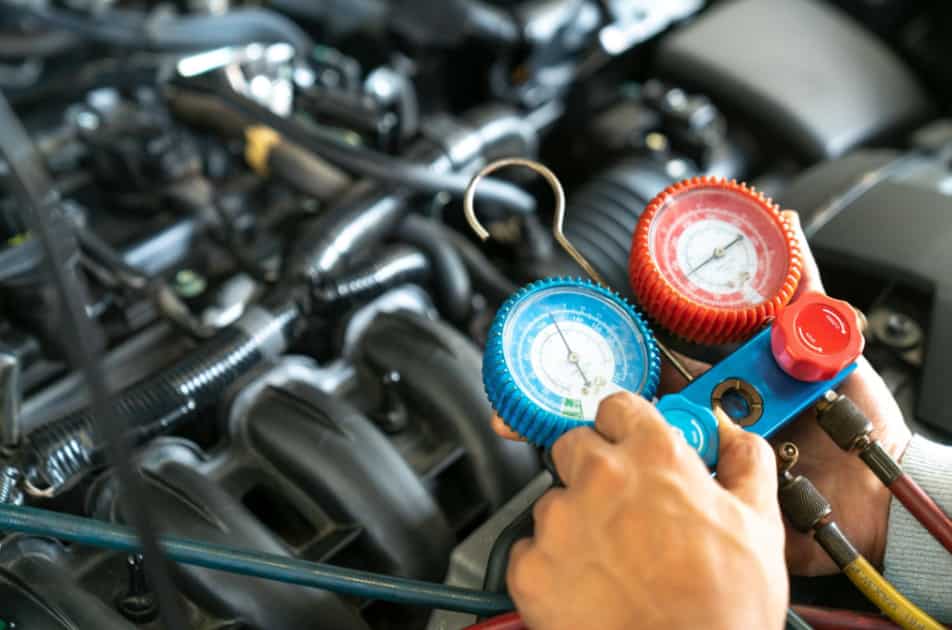
The fifth step is to check refrigerant pressure using a gauge. Low pressure usually means a refrigerant leak in the system. Without proper pressure, the AC cannot produce cold air even if all components are working.
The final step is to scan the vehicle using an OBD2 diagnostic tool. Error codes from the HVAC system can reveal sensor or control module problems that are not visible during manual inspection.
This structured process helps narrow down the exact cause of the Hyundai Tucson Air Conditioning Not Working issue and leads to faster and more accurate repairs.
Repair Solutions for Hyundai Tucson Air Conditioning Not Working
When a Hyundai Tucson Air Conditioning Not Working issue is diagnosed correctly, the next step is applying the right repair solution. Each solution depends on the root cause found during the diagnostic process, so accuracy plays an important role in avoiding unnecessary costs.
If the problem comes from a clogged cabin air filter, replacing the filter usually restores normal airflow immediately. This is one of the simplest and most cost effective repairs. A clean filter improves air circulation and helps the system cool more efficiently.
When refrigerant levels are low, the system needs a proper recharge. However, it is important to fix any leak first. If technicians only refill the gas without repairing the leak, the problem will return quickly. Leak detection and sealing should always come before refilling refrigerant.
If the compressor fails, replacement becomes necessary in most cases. A damaged compressor cannot restore cooling performance. In some situations, only the clutch or relay needs replacement, but a full inspection is required before deciding.
Electrical issues such as blown fuses or faulty relays are easier to fix. Replacing these components often restores system function immediately. If sensors or control modules fail, recalibration or replacement may be required depending on diagnostic results.
Airflow issues from a weak blower motor or blend door actuator failure also require part replacement. These components directly affect how air moves inside the cabin. Once repaired, airflow usually returns to normal.
After repairs, the system should always be tested under different temperature settings. This ensures the Hyundai Tucson Air Conditioning Not Working issue is fully resolved and does not reappear.
Cost to Fix Hyundai Tucson Air Conditioning Not Working
The cost to fix a Hyundai Tucson Air Conditioning Not Working issue depends on the exact cause of the problem, the model year, and the repair method used. Some issues require only simple maintenance, while others involve major component replacement.
If the issue comes from a dirty cabin air filter, the repair cost is usually low. Replacing the filter is inexpensive and often completed quickly. This is one of the most affordable fixes for AC airflow problems.
Refrigerant recharge costs are moderate. However, if there is a leak in the system, the total cost increases because technicians must locate and repair the leak before refilling the gas. Leak detection requires additional labor and diagnostic tools.
Compressor replacement is one of the most expensive repairs. The compressor is a core component of the HVAC system, and labor costs are also higher due to installation complexity. In many cases, additional parts such as seals or valves may also need replacement during the repair.
Electrical repairs such as fuse or relay replacement are generally low cost. These components are inexpensive, and installation is simple. However, if the issue involves sensors or control modules, the cost increases due to diagnostic time and part pricing.
Blower motor or blend door actuator replacement falls in the mid range cost category. These parts affect airflow control and usually require moderate labor to access and replace.
Overall, the total repair cost varies widely depending on severity. Early diagnosis of a Hyundai Tucson Air Conditioning Not Working issue helps reduce expenses and prevents damage to other HVAC components.
Maintenance Tips to Prevent Hyundai Tucson Air Conditioning Not Working
Preventing a Hyundai Tucson Air Conditioning Not Working issue is easier and cheaper than repairing a failed system. Regular maintenance helps keep the HVAC system stable and improves long term performance.
One of the most important steps is replacing the cabin air filter on a regular schedule. A clean filter ensures proper airflow into the cabin and prevents dust buildup inside the system. When the filter becomes clogged, the AC system works harder and cooling performance drops.
Another key practice is checking refrigerant levels periodically. Low refrigerant often develops from small leaks that grow over time. Early detection of leaks helps prevent compressor damage and keeps the system operating efficiently.
It is also important to run the air conditioning regularly, even during colder months. This keeps internal components lubricated and prevents seals from drying out. When the system is unused for long periods, performance issues are more likely to appear.
Drivers should also pay attention to unusual sounds or weak airflow. Early symptoms often indicate developing problems. Identifying these signs early allows for quick repair before the issue becomes serious.
Keeping the condenser clean also improves performance. Dirt and debris can block airflow and reduce cooling efficiency. A clean condenser helps the system release heat properly and maintain stable cooling.
Regular inspections by a technician can also help detect hidden issues in sensors, relays, or the compressor. Preventive maintenance reduces the risk of sudden failure and extends the lifespan of the HVAC system.
Proper maintenance ensures the Hyundai Tucson Air Conditioning Not Working problem is less likely to occur and keeps the cabin comfortable in all driving conditions.
Conclusion
A Hyundai Tucson Air Conditioning Not Working issue can significantly reduce driving comfort and indicate deeper problems within the HVAC system. In most cases, the problem does not come from a single component but from a combination of electrical faults, refrigerant issues, airflow restrictions, or mechanical failures. Understanding how these systems work together helps you identify the root cause more effectively.
Throughout this guide, you have seen how symptoms such as weak airflow, warm air, or intermittent cooling connect directly to specific system failures. You also learned how to diagnose the issue step by step, starting from simple checks like cabin air filters and fuses, and moving toward more advanced inspections such as refrigerant pressure and compressor activity.
Repair solutions vary depending on the cause, ranging from simple filter replacement to more complex compressor or actuator repairs. Early detection always helps reduce repair costs and prevents further damage to the HVAC system. Regular maintenance also plays an important role in avoiding repeated failures.
If your Hyundai Tucson Air Conditioning Not Working problem continues after basic troubleshooting, a professional inspection is the safest option. This ensures accurate diagnosis and long term system reliability.
By understanding the full diagnostic process, you can take control of the situation and make informed decisions instead of relying on guesswork. This approach not only saves time and money but also keeps your vehicle comfortable in all driving conditions.