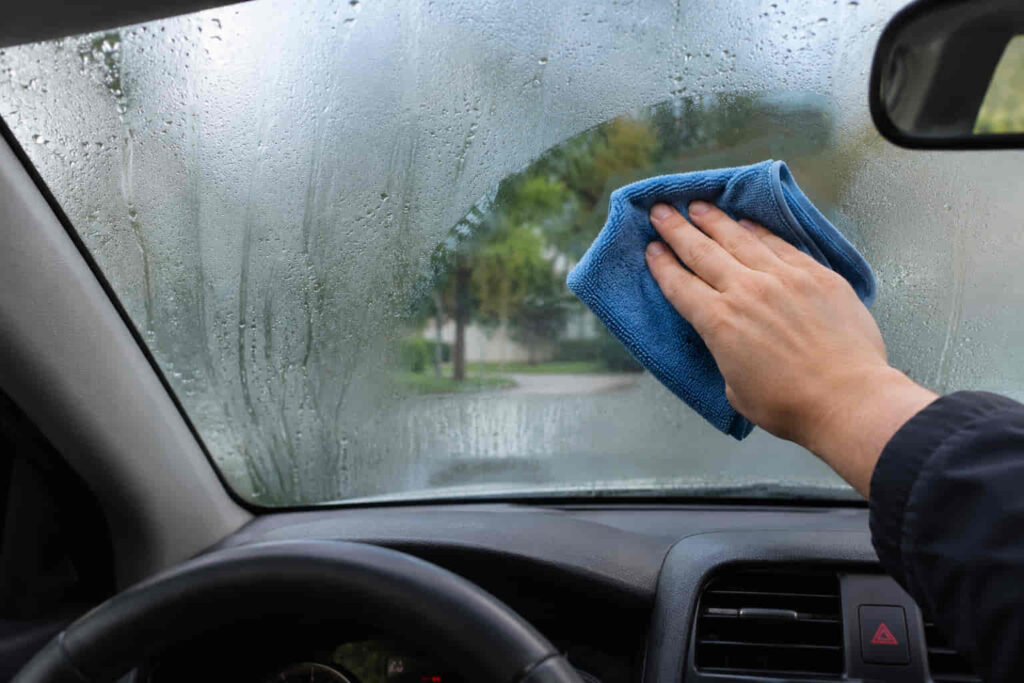
To get rid of condensation inside car windows, turn on the front windshield defroster, activate the air conditioning (AC), switch to fresh air mode, and direct warm airflow toward the glass. The AC system removes moisture from cabin air, while heating raises the glass temperature and helps prevent further condensation. Increase the fan speed to clear the windshield and front side windows, and use the heated rear-window defogger to remove moisture from the rear glass.
Condensation forms inside car windows when humid cabin air contacts glass that is colder than the air’s dew point. Moisture from passengers’ breathing, wet clothing, damp floor mats, and leaking door seals increases interior humidity. When the vehicle cools overnight, trapped water vapor condenses into droplets on the windows, reducing visibility and leaving interior glass surfaces wet. Persistent condensation can indicate excessive cabin moisture, inadequate ventilation, or water entering through damaged seals.
Removing condensation requires both clearing the existing moisture and controlling the conditions that cause it. This guide explains how to remove condensation from front, side, and rear car windows, adjust AC and heater settings, eliminate excess cabin moisture, identify hidden water leaks, and prevent condensation from returning during cold or humid weather.
How Do You Get Rid of Condensation Inside Car Windows Quickly?
To get rid of condensation inside car windows quickly, activate the front windshield defroster, turn on the air conditioning (AC), select outside-air mode, and increase the fan speed while directing warm air toward the glass. These settings remove moisture from the cabin air and help raise the window temperature above the dew point, allowing condensation to evaporate. Use the rear-window defogger separately to clear moisture from the back glass.
Start by selecting the front defrost setting, which directs airflow toward the windshield and front side windows. In vehicles with automatic climate control, activating maximum defrost may automatically increase fan speed, engage AC dehumidification, and disable air recirculation. Vehicles with manual controls require drivers to adjust these functions individually. Strong airflow accelerates condensation removal by continuously replacing moisture-rich air near the glass with conditioned air.
Air conditioning improves defogging efficiency by reducing the amount of water vapor circulating through the passenger compartment. As humid air passes over the AC evaporator, moisture condenses on the cold coil and drains away. The heater can then warm the dehumidified air before it reaches the windows. This combination helps existing condensation evaporate while reducing the likelihood of new droplets forming on the glass.
Fresh-air mode also supports faster condensation removal by replacing humid cabin air with incoming air. Prolonged recirculation can retain moisture released by passengers, wet clothing, and damp floor mats. Increasing the fan speed delivers more conditioned air across the windows, while selecting a warmer temperature helps prevent the glass from remaining below the cabin air’s dew point.
For rear-window condensation, activate the electrically heated rear defogger rather than relying exclusively on the front windshield vents. Heating elements embedded in the rear glass raise its surface temperature and help evaporate accumulated moisture. Once the windows are clear, reduce the fan speed gradually while maintaining adequate ventilation. If condensation continues to obstruct visibility, remain safely parked until the glass is clear enough for driving.
Read more: how to get rid of condensation outside car windows
What Causes Condensation Inside Car Windows?
Condensation inside car windows occurs when moisture-rich cabin air comes into contact with glass whose surface temperature is below the air’s dew point. As warm, humid air cools against the glass, its capacity to retain water vapor decreases until moisture condenses into tiny liquid droplets. These droplets accumulate on the interior surface, creating a cloudy film that reduces visibility. The amount of condensation depends on three primary factors: cabin humidity, glass temperature, and the difference between them.
Excess moisture inside the passenger compartment is a major contributor to window condensation. Passengers release water vapor through breathing, while wet clothing, damp shoes, and saturated floor mats introduce additional moisture into the enclosed space. As this water evaporates, cabin humidity increases, making condensation more likely when the windows cool. For example, a vehicle carrying several passengers on a cold morning can develop interior window fog even without rain because breathing continuously adds moisture to the air.
Temperature changes also explain why condensation frequently appears after a vehicle has been parked overnight. As outdoor temperatures decrease, the windows lose heat and can become colder than the dew point of the trapped cabin air. Water vapor then condenses on the interior glass, producing the droplets commonly found on car windows in the morning. Vehicles with damp carpeting or upholstery experience more persistent condensation because these materials continue releasing stored moisture as cabin conditions change.
Poor ventilation and hidden water leaks can intensify the problem by allowing humidity to remain elevated. Prolonged use of recirculation mode limits the exchange of cabin air with outside air, while damaged door seals, blocked drainage channels, and leaking window seals introduce moisture that may accumulate beneath interior surfaces. When condensation returns repeatedly despite normal ventilation, identifying and removing these moisture sources becomes necessary for a lasting solution.
How Do You Remove Condensation From Car Windows Using AC and Heat?
To remove condensation from car windows using AC and heat, operate the air conditioning’s dehumidification function while directing warm, conditioned airflow toward the interior glass. Air conditioning reduces the water vapor content of the supplied air, while heating increases the glass temperature and supports the evaporation of existing moisture. Combining these functions addresses both the humidity responsible for condensation and the cold glass surface on which droplets form.
The air conditioning system removes moisture as cabin or outside air passes over the evaporator coil. When the evaporator surface is sufficiently cold, water vapor condenses into liquid and drains through the vehicle’s condensate drainage system. The resulting air contains less moisture and can pass through the heater core before reaching the cabin vents. This process allows the HVAC system to deliver warm, dehumidified air instead of relying on heating alone. Toyota’s climate control guidance confirms that activating the cooling and dehumidification function helps clear fogged windows.
Heating contributes to condensation removal by raising the temperature of the window glass and increasing evaporation from its interior surface. As the glass warms above the surrounding air’s dew point, additional moisture becomes less likely to condense. However, heating does not physically extract water vapor from the vehicle. Moisture must leave through ventilation or be removed by an operating dehumidification system. This distinction explains why a heater alone may struggle to clear windows when the cabin contains saturated carpets or substantial moisture buildup.
Outside-air ventilation supports the process by exchanging moisture-laden cabin air with air from outside the vehicle. The incoming air can then be heated and, when the AC system is operating, dehumidified before reaching the windows. Although outdoor air is not always drier than cabin air, especially during humid weather, appropriate ventilation helps prevent moisture released by occupants from continuously accumulating. Ford’s climate control systems illustrate this principle by restricting recirculation during maximum windshield defrost operation.
The effectiveness of combined AC and heating depends on vehicle design and outdoor temperature. Some vehicles automatically engage AC when defrost mode is selected, while others require manual activation. At low ambient temperatures, the AC compressor may not operate because of system protection controls, leaving heating and ventilation as the primary defogging methods. Drivers should follow the manufacturer’s climate control instructions and maintain sufficient airflow until the interior windows remain clear.
How Do You Remove Condensation From Side and Rear Car Windows?
To remove condensation from side and rear car windows, direct warm, conditioned airflow toward the side glass and activate the heated rear-window defogger to clear moisture from the rear windshield. These methods use two different mechanisms: ventilation helps evaporate condensation from the side windows, while electrical heating elements raise the rear glass temperature to prevent moisture from accumulating. The correct settings depend on the vehicle’s ventilation design and whether its windows have built-in heating systems.
Front side windows are typically cleared using dedicated demisting vents located near the outer edges of the dashboard. These vents direct conditioned air toward the glass, helping remove moisture that obstructs the driver’s view of side mirrors and adjacent traffic. In vehicles without dedicated side-window vents, adjusting the outer dashboard vents toward the windows can improve airflow. Ford’s climate control guidance recommends using the defrost setting to clear side-window fog in cold weather and adjusting the temperature according to driving conditions.
Rear car windows generally use an electrically heated defogger rather than relying on airflow from the front climate control system. The defogger consists of thin conductive heating elements attached to or embedded in the rear glass. When activated, electrical resistance generates heat that raises the glass temperature and helps evaporate condensation. Many vehicles automatically switch off the rear defogger after a limited operating period to reduce unnecessary electrical consumption. Some models also activate heated exterior mirrors through the same control.
Rear-window heating elements require careful handling because damaged conductive lines can reduce defogging performance. Avoid using razor blades, abrasive cleaning materials, or sharp objects against the interior rear glass. If condensation remains concentrated in sections of the rear window while other areas clear, damaged heating elements or electrical connections may require inspection. Maintaining clear front, side, and rear windows ensures that drivers can monitor surrounding traffic without relying on a single viewing direction.
How Do You Get Rid of Condensation Inside Car Windows Without AC?
To get rid of condensation inside car windows without AC, use the vehicle’s heater, direct airflow toward the windshield, increase the fan speed, and select outside-air ventilation. These settings help warm the glass and carry moisture-laden cabin air out of the vehicle. Although a heater cannot actively extract water vapor through an AC evaporator, it can clear condensation when combined with sufficient air circulation and moisture removal.
Heating reduces interior window condensation by increasing the temperature of the glass above the dew point of the surrounding cabin air. When warm air flows across a cold window, it transfers heat to the glass and supports the evaporation of accumulated droplets. Increasing the blower speed improves this process by delivering more air to the affected surfaces. For example, a vehicle with a failed AC compressor but a functional heater and blower can still clear its windshield using warm, windshield-directed airflow.
Outside-air ventilation is essential when the AC system cannot provide active dehumidification. Fresh-air mode replaces humid cabin air with incoming air, allowing water vapor released by passengers and damp interior materials to leave through the vehicle’s ventilation outlets. Ford advises against prolonged recirculation because trapped moisture can contribute to window fogging. Opening a side window slightly can provide additional ventilation when weather conditions permit, although this method becomes less effective when outdoor air is extremely humid.
Persistent condensation without AC also requires attention to moisture stored inside the vehicle. Wet floor mats, damp carpeting, and soaked upholstery continuously release water vapor into the passenger compartment, making ventilation less effective until these materials are dried. Remove excess moisture when practical and ensure that the blower and defroster outlets operate correctly. If the heater or ventilation system cannot maintain adequate visibility, stop in a safe location rather than continuing to drive with obstructed windows. Never run a combustion-engine vehicle inside an enclosed garage to warm or defog the cabin.
How Do You Remove Excess Moisture From Inside a Car?
To remove excess moisture from inside a car, dry wet carpets and upholstery, remove damp belongings, improve cabin ventilation, and use automotive moisture absorbers to control residual humidity. These methods reduce the water vapor available to condense on cold window surfaces. Effective moisture removal requires addressing both humidity in the air and water trapped in interior materials, particularly floor mats, seat fabrics, and carpet padding.
Wet carpeting is a major source of persistent cabin humidity because its fibers and underlying padding retain water long after the surface appears dry. Remove damp floor mats and allow them to dry completely outside the vehicle. Use a wet vacuum or water-extraction equipment to remove substantial moisture from carpets and upholstery, then circulate air through the cabin to accelerate drying. AAA recommends allowing damp interior materials to dry thoroughly before reinstalling floor mats or coverings to reduce the risk of mold and mildew.
Automotive dehumidifiers and silica gel moisture absorbers provide additional humidity control, particularly when a vehicle remains parked overnight. These products capture water vapor from the surrounding air, reducing the moisture available for condensation on cold windows. Place purpose-made moisture absorbers in secure locations according to their instructions, and replace or regenerate them when saturated. However, passive absorbers have limited capacity and cannot adequately dry heavily soaked carpeting or compensate for an ongoing water leak.
Cabin ventilation helps remove moisture released as interior materials dry. Open the doors or windows when the vehicle is parked in a secure, dry location, and use a fan to circulate air through damp areas. Persistent moisture beneath the carpets, a musty odor, or repeated window condensation may indicate water entering through damaged seals or blocked drainage channels. Identifying and repairing these problems is essential because ventilation and moisture absorbers provide only temporary relief when water continues accumulating inside the vehicle.
How Do You Stop Condensation Inside Car Windows Overnight?
To stop condensation inside car windows overnight, reduce cabin humidity before parking, remove wet belongings, maintain proper ventilation, and prevent moisture from entering the vehicle. Overnight condensation occurs when the window temperature falls below the dew point of the air trapped inside the cabin. Reducing the amount of water vapor before the vehicle cools helps prevent moisture from accumulating on the interior glass by morning.
Temperature changes during overnight parking play a major role in window condensation. After the engine is switched off, the vehicle gradually loses heat to the surrounding environment. The glass often cools faster than the air inside the passenger compartment, creating conditions for water vapor to condense on its surface. For example, a car parked outdoors after a warm, humid evening may develop visible droplets on its interior windows when temperatures drop during the night. This can happen even without rainfall if the cabin contains sufficient moisture.
Controlling humidity before parking helps reduce overnight condensation. Remove wet umbrellas, clothing, and other damp belongings, and allow the cabin to ventilate when outdoor conditions are suitable. Before switching off the engine, using outside-air ventilation can help exchange moisture-laden cabin air, although its effectiveness depends on outdoor humidity. Keep windows closed during rainfall and avoid leaving them partially open in locations where water intrusion or vehicle security could become a concern.
Repeated overnight condensation may indicate moisture trapped beneath carpets, deteriorated door seals, or blocked drainage channels. Passive automotive moisture absorbers can help manage residual humidity in a parked vehicle, but they cannot eliminate substantial water accumulation. If the windows are consistently wet every morning, inspect the interior for hidden moisture and repair the underlying cause rather than relying exclusively on ventilation or anti-fog products.
How Do You Find Water Leaks Causing Condensation Inside a Car?
To find water leaks causing condensation inside a car, inspect the door seals, windshield seals, sunroof drains, floor carpeting, and air conditioning drainage system for signs of water intrusion. Persistent condensation accompanied by damp carpets, musty odors, or water stains indicates that moisture may be entering the passenger compartment. Identifying the leak requires examining where water accumulates and determining whether it appears after rainfall, car washing, or air conditioning operation.
Start by inspecting the door and window seals for cracks, gaps, or deteriorated rubber. Damaged weather stripping allows rainwater to enter around the openings and collect beneath the interior trim or floor mats. Windshield seals can develop similar problems, particularly after improper glass installation or deterioration. Water stains near the dashboard, door panels, or footwells help identify the affected area. After drying the interior, a controlled water test around suspected exterior seals can help reveal the entry point.
Blocked drainage channels are another source of hidden water intrusion. Sunroof drains, door drainage holes, and the scuttle panel beneath the windshield are designed to direct rainwater away from the passenger compartment. Leaves, dirt, and debris can obstruct these passages, causing water to overflow into interior panels or carpeting. For example, a clogged sunroof drain may allow rainwater to travel down a roof pillar and accumulate beneath the front floor covering.
The air conditioning drainage system can also cause interior moisture buildup. During normal operation, condensed water exits through a drain beneath the vehicle. A blocked evaporator drain may redirect this water into the passenger footwell. A leaking heater core produces different symptoms, including a sweet coolant odor, greasy windshield film, or damp carpeting. These warning signs require professional inspection because coolant leakage can affect the engine’s cooling system.
Repair the identified leak and dry all affected interior materials to prevent condensation from returning. Water trapped beneath carpet padding can continue releasing moisture even after the visible surface becomes dry. Eliminating the water source is essential for restoring normal cabin humidity and maintaining clear windows.
Why Do Car Windows Keep Fogging Up Even With the Heater On?
Car windows keep fogging up even with the heater on because of excessive cabin humidity, restricted airflow, incorrect ventilation settings, or malfunctioning HVAC components. Although heating raises the air temperature and helps evaporate condensation, it does not remove water vapor from the passenger compartment. Without adequate ventilation or air conditioning dehumidification, moisture remains trapped inside the vehicle and condenses again when it contacts cooler window surfaces.
Prolonged use of recirculation mode contributes to persistent window fogging by limiting the exchange of interior and outside air. Passengers continuously release moisture through breathing, while damp clothing and carpets increase cabin humidity. When the system repeatedly circulates this moisture-laden air, condensation can return despite warm airflow. Toyota’s climate control guidance confirms that extended recirculation makes window fogging more likely. Switching to outside-air mode helps reduce moisture accumulation when combined with appropriate heating and ventilation.
Restricted airflow also prevents the heater from clearing condensation effectively. A clogged cabin air filter increases resistance within the ventilation system, reducing the amount of air reaching the windshield and side-window vents. Faulty blower motors or airflow control doors can produce similar symptoms. For example, weak airflow from the windshield vents despite a high fan setting may indicate a blocked filter or ventilation malfunction rather than insufficient heating.
HVAC faults can further reduce defogging performance. A malfunctioning AC compressor may prevent active dehumidification, while a defective airflow control mechanism can direct heated air away from the windows. Persistent condensation accompanied by weak airflow, unusual odors, or inconsistent heating warrants inspection of the cabin air filter and HVAC system. Restoring proper ventilation and eliminating excess cabin moisture addresses the underlying problem more effectively than increasing the heater temperature alone.
How Can You Prevent Condensation Inside Car Windows Long Term?
To prevent condensation inside car windows long term, control cabin humidity, maintain the ventilation system, clean interior glass surfaces, and repair sources of water intrusion. These measures reduce moisture accumulation and help maintain the temperature and airflow conditions needed to keep windows clear. Effective prevention requires eliminating persistent moisture sources rather than repeatedly removing condensation after it forms.
Regular cabin maintenance reduces the water vapor available for condensation. Remove wet floor mats, dry damp upholstery, and inspect carpeting for hidden moisture after heavy rainfall. Check door seals, windshield seals, and drainage channels for deterioration or blockages that allow water to enter the passenger compartment. Repairing these defects prevents absorbed water from continuously evaporating into cabin air and condensing on cooler windows.
Maintaining the HVAC system supports consistent humidity control and window defogging. Replace the cabin air filter according to the manufacturer’s maintenance schedule, keep ventilation intakes unobstructed, and verify that the air conditioning and defroster operate correctly. Avoid prolonged recirculation when interior humidity is elevated because limited air exchange allows moisture released by passengers to accumulate. Proper airflow and dehumidification help maintain clear windows during changing weather conditions.
Clean the inside of car windows regularly using an automotive glass cleaner and a microfiber cloth. Removing oily residue, dust, and other contaminants improves visibility and reduces the streaking associated with moisture on dirty glass. Automotive anti-fog treatments can provide supplementary protection when applied according to product instructions. Combining clean glass, effective ventilation, and a dry interior provides a sustainable approach to preventing recurring window condensation.