A Ford Tractor Serial Number Decoder helps tractor owners identify the model and production year of their Ford tractor by interpreting the unique identification numbers assigned during manufacturing. For vintage Ford tractors, serial numbers are one of the most reliable ways to determine the correct tractor information because many models share similar designs, colors, and mechanical features.
Finding the correct Ford tractor model and year is important for maintenance, restoration, and replacement parts selection. A Ford 8N tractor produced in one production period may require different components compared with another tractor that looks similar but belongs to a different manufacturing year. Serial number information provides a starting point for accurate identification.
This guide explains how Ford tractor serial numbers work, where to find the serial number on different Ford tractor models, and how to use serial number information to identify production details. It also covers the difference between serial numbers and model numbers, alternative identification methods, and why accurate tractor identification matters for owners and collectors.
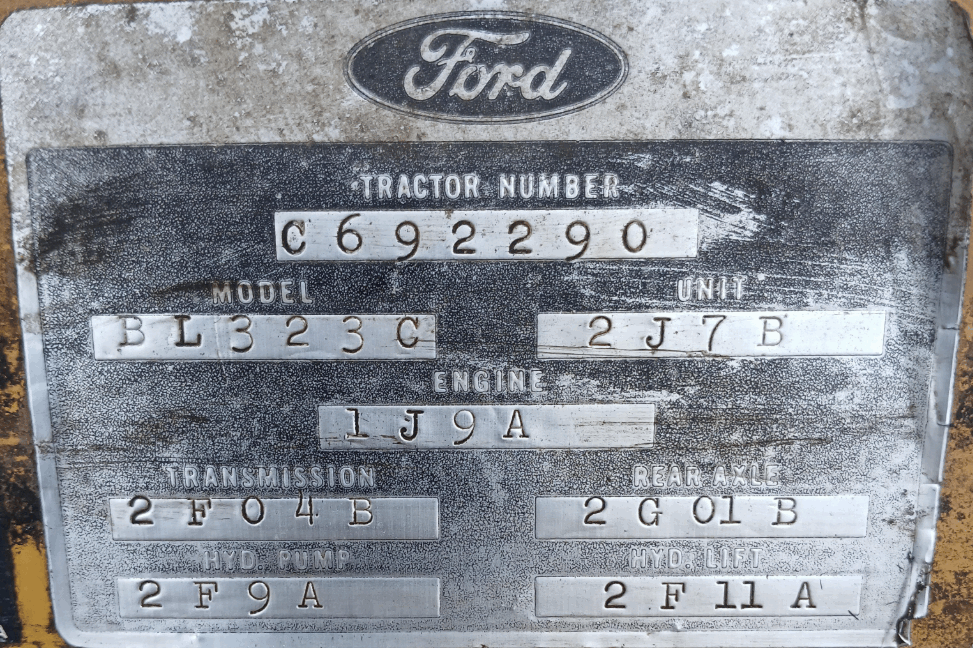
What Is a Ford Tractor Serial Number Decoder?
A Ford Tractor Serial Number Decoder is a system that helps identify a Ford tractor by interpreting the serial number assigned during production. The serial number connects a physical tractor to its manufacturing history and provides important information for identifying the tractor model, production period, and possible year of manufacture. For vintage Ford tractors, this information is especially valuable because many tractors from different years have similar appearances but contain different specifications.
Ford assigned serial numbers to tractors as part of its manufacturing identification process. These numbers allow owners, collectors, and restoration specialists to separate one production group from another. A serial number does not usually provide every detail about a tractor by itself, but it creates a reference point that can be combined with model numbers, casting information, engine details, and physical characteristics.
A Ford tractor serial number decoder works by comparing the tractor’s identification number with known production records and serial number ranges. For example, Ford 8N tractors have specific serial number ranges that correspond with different production periods. The same identification method applies to other popular models, including Ford 9N, Ford 2N, Ford Jubilee, and Ford Thousand Series tractors.
Understanding the purpose of a serial number decoder helps tractor owners avoid incorrect identification. A tractor’s paint color, badge, or external appearance may change during repairs or restoration, but the stamped serial number remains a more reliable source of historical information.
Accurate decoding is important when buying used tractors, restoring vintage equipment, or ordering replacement parts. A correct identification process ensures that owners work with the right model information instead of relying only on visual assumptions.
Where Can You Find the Serial Number on a Ford Tractor?
The serial number on a Ford tractor identifies the machine and helps owners decode its production information. Owners usually find this number stamped on a metal surface near the engine or transmission area. The exact location depends on the tractor series and production year.
Finding the serial number is the first step in using a Ford Tractor Serial Number Decoder. Different Ford tractor generations use different identification locations. Owners should first identify the tractor series before searching for the stamped number.
Ford N Series tractors, including the Ford 9N, Ford 2N, and Ford 8N, usually place the serial number on the left side of the engine block. Some models also include identification marks near the transmission housing. The Ford 8N remains one of the most popular vintage tractors because Ford produced it in large numbers from 1947 to 1952.
Ford Hundred Series tractors use different identification areas. Models such as the Ford NAA Jubilee, Ford 600, and Ford 800 often include serial information near the transmission or engine casting. Dirt, rust, and old paint can hide these markings. Owners should clean the area carefully before recording the number.
Ford Thousand Series tractors also require careful identification. Models such as the Ford 2000, Ford 3000, Ford 4000, and Ford 5000 may include additional codes that help confirm the exact tractor configuration.
Owners should write down every character from the serial number. A single incorrect number can lead to the wrong model or production year. Combining the serial number with model information creates a more accurate identification process.
How Do You Decode a Ford Tractor Serial Number to Identify the Model and Year?
The Ford Tractor Serial Number Decoder process starts by matching the serial number with known Ford production information. The serial number helps narrow down the tractor’s production period and supports accurate model identification. Owners should use the serial number together with other tractor details to confirm the final result.
The first step is to locate the complete serial number on the tractor. Every character matters because one incorrect digit can change the identification result. After recording the number, owners compare it with Ford tractor serial number charts, production records, or trusted identification resources.
The next step is to determine the tractor series. Ford produced several tractor families, including the N Series, Hundred Series, and Thousand Series. Each group uses different serial number ranges. For example, a Ford 8N serial number follows a different production pattern from a Ford 3000 serial number.
The production year comes from the serial number range associated with a specific Ford tractor model. Older Ford tractors often require this comparison because they do not display modern vehicle identification labels. A serial number range helps owners estimate when Ford manufactured the tractor.
Model identification requires additional verification. The serial number may show the production sequence, but the model number provides more information about the tractor configuration. Owners should also check engine details, transmission type, and casting marks when accuracy is important.
A complete decoding process combines multiple identification signals. Serial numbers provide the foundation, while model information and physical features improve confidence. This approach helps collectors, restorers, and buyers identify Ford tractors correctly before making maintenance or purchasing decisions.
What Is the Difference Between a Ford Tractor Serial Number and Model Number?
The Ford tractor serial number and model number provide different types of identification information. The serial number identifies the production sequence of a tractor, while the model number identifies the tractor type and configuration. Both numbers work together to create a complete identification profile.
A Ford tractor serial number mainly shows where a tractor fits within a production timeline. It helps owners determine the approximate manufacturing period and separate similar tractors from different production years. For example, two Ford 8N tractors may look almost identical, but their serial numbers can show that they came from different production periods.
The model number provides more specific information about the tractor design. It identifies the tractor series, engine configuration, transmission type, and intended specifications. A Ford 3000 tractor and a Ford 4000 tractor may share some visual similarities, but their model numbers show important differences between the two machines.
Understanding both identification numbers is important when searching for replacement parts. Parts suppliers often need the model number and serial number to provide compatible components. Using only the tractor appearance can result in incorrect parts because Ford changed designs during different production periods.
Serial numbers and model numbers also help during tractor restoration. Collectors use these details to restore tractors according to their original specifications. The correct identification information helps determine factory features, production details, and compatible equipment.
A Ford Tractor Serial Number Decoder works best when owners combine serial number information with the model number. This approach creates a more complete understanding of the tractor and reduces identification errors.
How Can You Identify a Ford Tractor Without a Serial Number?
The serial number is the most reliable way to identify a Ford tractor, but owners can use other physical features when the number is missing or unreadable. These identification methods help narrow down the tractor model and production period. However, they usually require more comparison because Ford produced many tractors with similar designs.
The first step is to examine the tractor’s external features. The hood design, grille shape, badge placement, and body style can provide clues about the tractor series. For example, Ford N Series tractors have a different appearance from later Hundred Series and Thousand Series models.
The engine design also provides useful identification information. Engine size, casting marks, and component placement can help separate different Ford tractor models. Some tractors share similar engines, so engine details should work together with other identification signs rather than act as the only source.
The transmission system provides another identification clue. Ford used different transmission designs across its tractor generations. The number of gears, transmission housing shape, and control layout can help owners compare an unknown tractor with known Ford models.
Casting numbers and production markings can also support identification. These markings appear on different tractor components and may reveal information about manufacturing periods. Restorers often use these details when they rebuild older Ford tractors.
Visual identification has limitations. Previous owners may replace parts, repaint the tractor, or modify original components. These changes can make appearance based identification less accurate.
When the serial number is unavailable, owners should combine several identification signals. Engine information, transmission details, casting marks, and physical features together create a stronger identification process. A Ford Tractor Serial Number Decoder remains the preferred method, but supporting evidence can help confirm the tractor model.
What Are the Ford Tractor Serial Number Ranges by Model?
The Ford tractor serial number ranges help owners identify the production period of different tractor models. Each Ford tractor series uses specific serial number sequences that match its manufacturing timeline. These ranges allow owners and collectors to estimate when Ford produced a tractor and confirm whether the identification matches the physical features of the machine.
Ford N Series tractors have some of the most recognized serial number ranges among vintage tractor collectors. The Ford 9N began production in 1939, followed by the Ford 2N in 1942 and the Ford 8N in 1947. Each model uses different serial number sequences that separate one production period from another. These ranges are especially useful because many N Series tractors share similar designs.
The Ford Jubilee and Hundred Series introduced new identification patterns after the N Series generation. Models such as the Ford NAA Jubilee, Ford 600, and Ford 800 used different serial number systems. Owners can compare the stamped serial number with production charts to identify the correct manufacturing period.
The Thousand Series expanded Ford’s agricultural tractor lineup with models such as the Ford 2000, Ford 3000, Ford 4000, and Ford 5000. These tractors use later identification systems that often include additional model and production codes. These details help owners distinguish between similar tractor models.
Serial number ranges are valuable tools for restoration projects and tractor purchases. A buyer can compare the serial number with the expected production range before purchasing a used tractor. A restorer can also verify whether the tractor components match the original production period.
Using serial number ranges alone may not provide every detail about a Ford tractor. Owners should combine serial number information with model numbers, engine details, and physical characteristics. This approach creates a more accurate identification process for vintage and modern Ford tractors.
Why Is Ford Tractor Identification Important for Owners and Collectors?
The accurate identification of a Ford tractor helps owners make better decisions about maintenance, restoration, and purchasing. A tractor model and production year determine many important details, including compatible parts, original specifications, and historical value. Without correct identification, owners may spend time and money on incorrect repairs or unsuitable components.
One important reason for proper identification is finding the correct replacement parts. Ford produced many tractor models with similar appearances but different mechanical designs. A part that fits a Ford 8N may not work correctly on a Ford NAA Jubilee or Ford 3000. Using the correct serial number and model information helps owners select components that match their tractor.
Identification also plays an important role in restoration projects. Vintage tractor collectors often restore Ford tractors to match their original factory specifications. Knowing the correct model and production period helps determine the original engine type, transmission design, paint scheme, and equipment options. This information improves restoration accuracy and preserves the historical value of the tractor.
Accurate identification also helps owners estimate tractor value. A properly identified Ford tractor with documented production information is easier to evaluate than an unknown model. Collectors and buyers often consider model history, production year, originality, and mechanical condition when determining value.
For people buying used Ford tractors, identification provides protection against inaccurate listings. Some tractors receive modifications or replacement parts during their lifetime. Checking the serial number, model number, and physical features helps buyers understand what they are actually purchasing.
A Ford Tractor Serial Number Decoder is therefore more than a simple lookup tool. It supports ownership decisions by connecting the physical tractor with its production history and technical information.
What Should You Check Before Buying a Used Ford Tractor?
The serial number verification is an important step when buying a used Ford tractor because it helps confirm the tractor’s identity and production history. Many older tractors have experienced repairs, replacements, or modifications during decades of use. Checking identification information helps buyers understand the actual tractor model before making a purchase decision.
The first step is to verify the serial number and compare it with Ford tractor production information. The serial number should match the claimed model and approximate production year. If the number does not match the seller’s description, buyers should investigate further before completing the purchase.
Buyers should also compare the tractor’s physical features with the identification information. The engine design, transmission system, hydraulic components, and body style should match the expected characteristics of that model. For example, a tractor advertised as a Ford 8N should have features that align with the 8N production period.
The condition of replacement parts is another important factor. Many vintage Ford tractors remain functional because owners replace worn components over time. However, non original parts can affect restoration value and future maintenance decisions. Buyers should identify which parts are original and which parts have been replaced.
Documentation can provide additional support during the buying process. Maintenance records, restoration notes, and previous ownership information help confirm the tractor’s history. A well documented tractor usually provides more confidence for collectors and restoration enthusiasts.
A Ford Tractor Serial Number Decoder gives buyers a reliable starting point for evaluation. By combining serial number information with physical inspection and documentation, buyers can make more informed decisions and avoid purchasing a tractor with inaccurate identification details.
Ford Tractor Serial Number Decoder: Identify Model and Year
The Ford Tractor Serial Number Decoder provides a reliable way to identify a Ford tractor model and production year. Serial numbers connect individual tractors with their manufacturing history and help owners understand important details about their machines. This information supports better decisions for maintenance, restoration, parts selection, and purchasing.
A complete identification process uses more than the serial number alone. Owners should combine serial number information with model numbers, engine details, transmission features, casting marks, and physical characteristics. This approach creates a more accurate understanding of the tractor and reduces mistakes caused by visual similarities between different Ford models.
For vintage tractors such as the Ford 8N, Ford 9N, Ford 2N, and Ford Hundred Series models, accurate identification has significant value. It helps collectors preserve original specifications and allows owners to choose compatible replacement parts. It also provides buyers with greater confidence when evaluating used tractors.
Understanding how Ford tractor serial numbers work turns an unknown machine into a documented piece of agricultural history. Whether the goal is restoration, maintenance, or ownership verification, a Ford Tractor Serial Number Decoder remains an essential resource for identifying and preserving Ford tractors.