The Ford 4.6 firing order is 1-3-7-2-6-5-4-8. This sequence controls when each cylinder receives ignition during the combustion cycle. A correct firing order helps the Ford 4.6L Modular Engine run smoothly and produce consistent power.
Ford built the 4.6L V8 in several versions. These include the SOHC 2 valve, SOHC 3 valve, and DOHC 4 valve engines. Each version uses different ignition components and applications. Identifying the correct engine type helps prevent repair mistakes.
A wrong firing order causes serious ignition problems. The engine may misfire, idle roughly, lose power, or trigger a Check Engine Light. This happens because the spark reaches the wrong cylinder at the wrong moment. The air fuel mixture cannot burn efficiently.
The Ford 4.6 firing order connects with cylinder numbering, spark plugs, ignition coils, and the Powertrain Control Module (PCM). Understanding these components makes diagnosis easier. This guide explains the firing order, cylinder layout, ignition sequence, and common troubleshooting methods for Ford 4.6L engines.
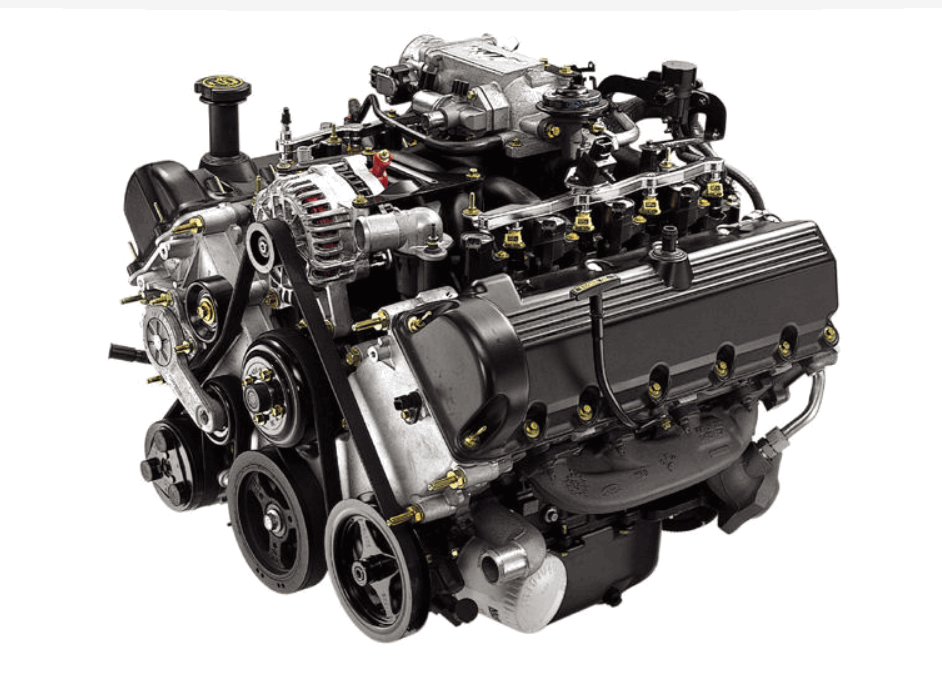
What Is the Firing Order of a Ford 4.6 Engine?
The Ford 4.6 firing order is 1-3-7-2-6-5-4-8. This sequence defines the order that the spark plugs ignite the air fuel mixture inside the cylinders. The firing order allows the Ford 4.6L V8 engine to maintain balanced combustion and smooth crankshaft operation.
The firing order does not describe cylinder location. It describes the timing sequence of combustion events. Cylinder numbering identifies where each cylinder sits inside the engine block, while firing order identifies when each cylinder produces power. These two systems work together during ignition diagnosis and repair.
The Ford 4.6L Modular Engine uses a cross plane V8 design. This design requires a specific ignition sequence to reduce vibration and improve engine balance. The Powertrain Control Module (PCM) uses crankshaft position data and camshaft position data to control ignition timing. The PCM then activates the ignition coils according to the programmed firing order.
The firing sequence begins with cylinder number one, followed by cylinders three, seven, two, six, five, four, and eight. Each cylinder completes the four stroke combustion process before the next cylinder follows the sequence. This controlled pattern allows the engine to deliver stable power across different operating conditions.
Understanding the Ford 4.6 firing order helps technicians perform accurate ignition repairs. When installing ignition coils or diagnosing engine problems, the correct sequence prevents connection errors. A proper firing order check is one of the first steps when a Ford 4.6L engine shows misfire symptoms or poor performance.
How Are the Cylinders Numbered on a Ford 4.6 Engine?
The Ford 4.6 engine uses a specific cylinder numbering system that helps identify each combustion chamber during maintenance and diagnosis. The cylinder numbering does not follow the firing order. Instead, Ford assigns numbers based on the physical position of each cylinder inside the V8 engine block.
The Ford 4.6L Modular Engine uses two cylinder banks. The passenger side contains cylinders 1, 2, 3, and 4. The driver side contains cylinders 5, 6, 7, and 8. Each bank numbers the cylinders from the front of the engine toward the rear. This layout allows technicians to locate individual cylinders when checking spark plugs, ignition coils, or misfire codes.
Cylinder number one sits at the front of the passenger side bank. This cylinder provides the starting point for ignition sequence identification. When a technician follows the Ford 4.6 firing order, cylinder one ignites first, but the next ignition event moves to cylinder three instead of cylinder two. This difference explains why cylinder numbering and firing order must be treated as separate systems.
Correct cylinder identification is important during ignition repairs. For example, an engine with a P0307 trouble code indicates a misfire on cylinder seven. A technician must know the cylinder location before inspecting the ignition coil, spark plug, or fuel system. Incorrect cylinder identification can lead to unnecessary part replacement and inaccurate diagnosis.
Understanding the Ford 4.6 cylinder numbering system creates a foundation for accurate troubleshooting. When combined with the correct firing order, it allows technicians to trace ignition problems, verify component connections, and maintain proper engine operation.
Does the Ford 4.6 Firing Order Change Between 2V, 3V, and 4V Engines?
The Ford 4.6 firing order remains 1-3-7-2-6-5-4-8 across most Ford 4.6L Modular V8 engines. However, the engine configuration changes the ignition system design, cylinder head structure, and vehicle applications. Understanding these differences helps avoid incorrect repairs when working on Ford 4.6L engines.
The Ford 4.6L SOHC 2 valve engine uses a single overhead camshaft design with two valves per cylinder. Ford installed this version in vehicles such as the Mustang GT, Crown Victoria, Grand Marquis, and Lincoln Town Car. These engines commonly use coil on plug ignition systems in later models, where each cylinder has an individual ignition coil mounted directly above the spark plug.
The Ford 4.6L SOHC 3 valve engine introduced improved airflow through a three valve cylinder head design. Ford used this engine in later Mustang GT models and several truck applications. Although the engine received changes to the cylinder head and variable camshaft timing system, the firing order remained the same. The ignition system still depends on accurate cylinder identification and PCM control.
The Ford 4.6L DOHC 4 valve engine appeared in performance applications such as the Mustang Cobra and Mach 1. This version uses dual overhead camshafts and improved airflow for higher performance. The engine design differs significantly from SOHC versions, but technicians still follow the same firing sequence when diagnosing ignition operation.
Checking the exact engine configuration remains important because ignition components and repair procedures vary between versions. The firing order provides the ignition sequence, while the engine design determines how the system delivers that spark.
How Does the Ford 4.6 Ignition Sequence Work?
The Ford 4.6 ignition sequence controls how the engine creates power through a precise combustion process. The firing order determines when each cylinder receives a spark, while the ignition system controls the timing and strength of that spark. Both systems work together to maintain efficient combustion and stable engine performance.
The process begins when the crankshaft position sensor and camshaft position sensor send engine position data to the Powertrain Control Module (PCM). These sensors allow the PCM to identify piston position and engine speed. The PCM then calculates the correct ignition timing based on engine load, temperature, throttle position, and operating conditions.
After receiving sensor information, the PCM activates the ignition coils according to the Ford 4.6 firing order. The ignition coil increases electrical voltage and sends power to the spark plug. The spark plug then ignites the compressed air fuel mixture inside the cylinder. This combustion creates pressure that pushes the piston downward and produces engine power.
The firing order and ignition timing perform different functions. The firing order determines the sequence of cylinder activation, while ignition timing determines the exact moment the spark occurs. A correct firing order with incorrect timing can still create poor engine performance. The PCM manages both systems to maintain efficient combustion.
Modern Ford 4.6L engines commonly use a coil on plug ignition system. This design places one ignition coil directly above each spark plug. The system improves ignition control and reduces energy loss compared with traditional spark plug wire systems.
Understanding the ignition sequence helps technicians diagnose common Ford 4.6 problems. When the engine experiences a misfire, checking the firing order, ignition coils, spark plugs, and sensor signals provides a structured approach to finding the cause.
What Problems Occur When the Ford 4.6 Firing Order Is Incorrect?
An incorrect Ford 4.6 firing order creates ignition problems because the spark reaches the wrong cylinder during the combustion cycle. Each cylinder must ignite at the correct moment to maintain engine balance and power output. When the ignition sequence becomes incorrect, the engine cannot burn the air fuel mixture efficiently.
The most common symptom is an engine misfire. A misfire happens when one or more cylinders fail to produce normal combustion. The Ford 4.6L engine may shake during idle, hesitate during acceleration, or lose power under load. The Powertrain Control Module (PCM) detects abnormal crankshaft speed changes and may activate the Check Engine Light.
Another common problem is rough idle. The engine depends on balanced combustion events across all eight cylinders. When the firing order is incorrect, some cylinders produce power at the wrong time while others fail to contribute properly. This imbalance creates unstable engine operation and noticeable vibration.
Incorrect firing order can also reduce fuel efficiency. The engine may inject fuel into cylinders that cannot complete proper combustion. This leaves unburned fuel inside the exhaust system and forces the engine to work harder to maintain performance. Over time, excessive unburned fuel can increase stress on components such as the catalytic converter.
The Ford 4.6 firing order also connects with common OBD II misfire codes. Codes such as P0300 indicate random or multiple cylinder misfires, while codes from P0301 to P0308 identify specific cylinder misfires. For example, a P0307 code points to a misfire on cylinder seven, which requires checking the ignition coil, spark plug, wiring, and fuel delivery for that cylinder.
Checking the firing order should be one of the first diagnostic steps after ignition components have been replaced. Confirming the cylinder sequence prevents unnecessary repairs and helps technicians identify the actual cause of engine performance problems.
How Do You Check the Ford 4.6 Firing Order During Repairs?
Checking the Ford 4.6 firing order during repairs requires identifying the engine configuration, locating each cylinder correctly, and confirming the ignition connection sequence. A proper inspection prevents installation mistakes and helps diagnose ignition problems faster. Technicians should always verify the firing order before replacing additional components.
The first step is identifying the exact Ford 4.6L engine version. The Modular V8 family includes SOHC 2 valve, SOHC 3 valve, and DOHC 4 valve engines. Vehicle model year and application determine the ignition system design. Confirming the engine type prevents the use of incorrect repair information.
The next step is locating the cylinder numbers. The Ford 4.6 engine uses a V8 cylinder layout with cylinders numbered from the front of each cylinder bank toward the rear. Cylinder one starts the firing sequence, but the ignition order does not follow the physical cylinder arrangement. Technicians must compare cylinder location with the correct firing sequence.
After identifying the cylinders, inspect the ignition components. Check that each ignition coil or spark plug wire connects to the correct cylinder according to the firing order. A common mistake occurs when technicians install components based only on cylinder position instead of the actual ignition sequence.
A diagnostic scan can provide additional information when the engine shows misfire symptoms. OBD II codes such as P0301 through P0308 identify specific cylinder misfires. For example, a P0304 code directs attention to cylinder four, but the technician still needs to inspect the coil, spark plug, fuel system, and wiring before replacing parts.
A complete firing order inspection combines visual checking, diagnostic scanning, and component testing. This method helps confirm whether the problem comes from incorrect connections or another ignition system failure.
Which Vehicles Use the Ford 4.6 Modular Engine?
The Ford 4.6 Modular Engine appeared in many Ford, Lincoln, and Mercury vehicles from the 1990s through the 2010s. Ford used this V8 engine family because it provided reliable performance, smooth operation, and flexible applications across passenger cars, performance vehicles, and trucks. The same 4.6L displacement appeared in different platforms, but each vehicle used specific engine configurations and ignition components.
The Ford Mustang is one of the most recognized applications of the 4.6L engine. Ford installed the 4.6L SOHC 2 valve engine in the Mustang GT during the SN95 and New Edge generations. Later Mustang GT models received the 4.6L SOHC 3 valve engine, which improved airflow and performance through a redesigned cylinder head and variable camshaft timing system. The Mustang Cobra and Mach 1 used DOHC 4 valve versions designed for higher performance output.
Ford also used the 4.6L Modular Engine in full size vehicles such as the Crown Victoria, Mercury Grand Marquis, and Lincoln Town Car. These vehicles focused on durability, smooth power delivery, and long service life. Fleet vehicles, including police and taxi models based on the Crown Victoria platform, commonly used the 4.6L V8 because of its reliability under demanding conditions.
The Ford F Series trucks also received 4.6L V8 applications during specific production years. These engines provided an alternative to larger displacement options while maintaining the benefits of Ford’s Modular Engine design.
Identifying the vehicle application is important when researching the Ford 4.6 firing order. Although the firing sequence remains consistent across many versions, ignition components, engine controls, and repair procedures can change depending on the model year and engine configuration.
Conclusion
The Ford 4.6 firing order is a key specification that controls how the engine cylinders produce power through the combustion cycle. The correct sequence, 1-3-7-2-6-5-4-8, allows the Ford 4.6L Modular Engine to maintain smooth operation, balanced combustion, and consistent performance.
Understanding the difference between cylinder numbering and firing order is essential during ignition repairs. Cylinder numbers identify the physical location of each cylinder, while the firing order defines the timing sequence of combustion events. Using both systems together helps technicians install ignition components correctly and diagnose engine problems accurately.
The Ford 4.6L engine appeared in many applications, including the Mustang GT, Crown Victoria, Lincoln Town Car, and other Ford vehicles. Although the engine family includes different versions such as 2 valve, 3 valve, and 4 valve configurations, checking the exact engine type remains important before performing repairs.
When a Ford 4.6 engine develops misfires, rough idle, or performance problems, the firing order should be one of the first areas to inspect. Confirming cylinder location, ignition connections, spark plugs, and coil operation can prevent unnecessary repairs and restore proper engine performance.