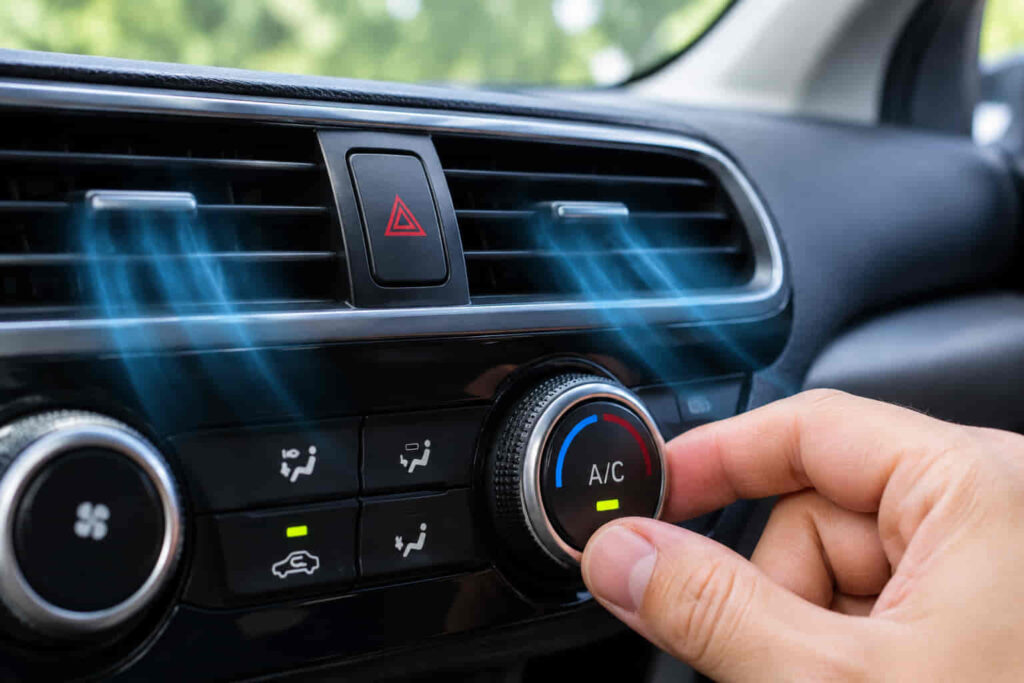
To make AC cooler in a car, release trapped hot air, activate MAX A/C, select the lowest temperature setting, and switch to recirculation mode after ventilating the cabin. Increase the fan speed initially, keep dashboard vents unobstructed, and inspect the cabin air filter if airflow is weak. These adjustments help the air conditioning system cool the passenger compartment faster by reducing incoming heat and improving the distribution of conditioned air. However, climate control adjustments cannot restore cooling capacity lost through mechanical problems or refrigerant leaks.
Car air conditioning removes heat from cabin air through a refrigeration system that includes a compressor, condenser, evaporator, and refrigerant. Cooling performance depends on efficient heat transfer, adequate airflow, and the amount of heat entering the vehicle. For example, a car parked in direct sunlight can remain uncomfortable even with the AC running because the dashboard, seats, and interior surfaces continue releasing stored heat into the cabin.
Improving car AC cooling requires understanding both climate control settings and the components responsible for producing cold air. This guide explains seven practical methods to improve cooling, the best AC settings for hot weather, common causes of weak airflow and insufficient cooling, and maintenance practices that help the system operate efficiently.
How Can You Make Your Car AC Colder?
To make your car AC colder, release trapped cabin heat, activate MAX A/C, use recirculation mode, select the lowest temperature setting, adjust the fan speed, optimize vent airflow, and maintain a clean cabin air filter. These seven methods improve cooling efficiency by reducing heat entering the passenger compartment and helping the air conditioning system distribute cooled air effectively. However, they cannot compensate for a malfunctioning compressor, refrigerant leak, or other mechanical problems that reduce the system’s cooling capacity.
Start by releasing accumulated heat before running the AC at maximum cooling. A vehicle parked under direct sunlight absorbs solar energy through its windows, heating the dashboard, seats, and interior surfaces. Opening the windows briefly allows trapped hot air to escape, reducing the initial cooling load. Mazda recommends ventilating vehicles parked in direct sunlight before operating the air conditioning system. Close the windows once the hottest air has escaped to prevent additional outdoor heat from entering the cabin.
Activate MAX A/C or select the lowest temperature setting to request maximum cooling from the climate control system. In many vehicles, MAX A/C automatically engages the compressor, enables recirculation, directs airflow through the dashboard vents, and increases fan speed. Recirculation improves cooling efficiency by repeatedly processing air that has already been cooled instead of continuously drawing in hotter outside air. This reduces the heat the evaporator must absorb, allowing the cabin to reach a comfortable temperature more efficiently.
Adjust the blower speed according to the cabin temperature. High fan speed initially circulates more cooled air throughout the passenger compartment and helps remove heat from interior surfaces. Once the cabin becomes comfortable, reduce the fan speed to maintain consistent cooling with less airflow noise. Fan speed affects the volume of air moving through the evaporator and vents, but increasing it does not necessarily make the air leaving the vents colder.
Keep dashboard vents open and direct cooled airflow toward occupied seating areas. Blocked vents, poorly positioned outlets, or objects obstructing the HVAC air intake reduce effective air distribution. Maintaining unobstructed airflow allows cooled air to circulate throughout the cabin instead of concentrating in a limited area. Closing unused vents does not automatically increase the refrigeration system’s cooling capacity.
Inspect the cabin air filter if airflow remains weak despite a high blower setting. Dust, pollen, and debris can restrict airflow through the HVAC system, reducing the volume of cooled air entering the passenger compartment. Replacing a clogged filter restores airflow when filter restriction is the underlying problem, although it does not directly repair insufficient refrigerant cooling. If the AC continues blowing warm air after these adjustments, the refrigeration system requires further inspection.
What Are the Best Car AC Settings for Maximum Cooling?
The best car AC settings for maximum cooling are MAX A/C mode, the lowest temperature setting, recirculated air, high initial fan speed, and airflow directed through the dashboard vents. These settings reduce the amount of hot outside air entering the vehicle while maximizing the circulation of cooled air throughout the passenger compartment. Vehicles equipped with automatic climate control can use MAX A/C for rapid cooling before switching to AUTO mode to maintain a comfortable cabin temperature.
MAX A/C combines several climate control functions to improve cooling efficiency. In supported Ford vehicles, activating this mode sets the temperature to LO, switches on the air conditioning compressor, enables recirculation, and increases the blower to its highest speed. The system directs cooled air through the instrument panel vents, allowing it to reach occupants more directly. Manual climate control systems require drivers to select these settings individually. Choosing the lowest temperature setting requests maximum cooling, although it cannot make the air colder than the refrigeration system is capable of producing.
Fan speed determines how much conditioned air circulates through the cabin rather than directly controlling refrigerant temperature. Higher airflow initially helps remove heat from seats, interior panels, and the passenger compartment. However, maximum fan speed does not always produce the lowest vent temperature because the volume of air passing across the evaporator affects heat exchange. Once the cabin cools, reducing fan speed can improve comfort while maintaining sufficient circulation.
Automatic climate control systems adjust blower speed, air distribution, compressor operation, and air intake according to the selected temperature and cabin conditions. For example, a driver may use MAX A/C immediately after entering a sun-heated vehicle, then switch to AUTO at a comfortable temperature once the interior cools. This approach provides rapid initial cooling without requiring the system to operate continuously at maximum settings.
How Can You Cool Down a Hot Car Faster Before Using AC?
To cool down a hot car faster before using AC, release accumulated cabin heat by opening the windows briefly, reduce direct sunlight exposure, and allow hot interior air to escape before activating maximum cooling. A vehicle parked in direct sunlight absorbs solar energy through its windows, causing the dashboard, seats, and interior trim to store heat. Reducing this accumulated heat lowers the initial cooling load and helps the air conditioning system reach a comfortable cabin temperature sooner.
Solar radiation increases cabin temperature by passing through vehicle glass and heating interior surfaces. These surfaces transfer heat to the surrounding air through convection and emit thermal radiation, keeping the passenger compartment warm even after the air conditioning begins operating. Opening the doors or windows while the vehicle is safely parked allows some of the hottest air to escape. Mazda’s climate control guidance recommends opening the windows after parking in direct sunlight to release warm air before operating the air conditioning system.
After ventilating the cabin, close the windows and activate the AC to prevent additional outdoor heat from entering continuously. Recirculation becomes particularly useful once the trapped hot air has been expelled because the HVAC system can repeatedly cool interior air instead of processing hotter outside air. Keep the dashboard vents unobstructed to distribute cooled airflow effectively throughout the passenger compartment. Avoid leaving windows open during sustained AC operation in extremely hot conditions, as this increases the amount of heat the system must remove.
Reducing solar heat gain before parking also improves cooling performance during the next journey. Parking in shade, using a reflective windshield sunshade, and limiting direct sunlight exposure help prevent interior surfaces from reaching excessively high temperatures. For example, a vehicle parked beneath a covered structure generally requires less initial cabin cooling than the same vehicle exposed to direct afternoon sunlight. These measures do not increase the refrigeration system’s cooling capacity, but they reduce the thermal load the AC must overcome.
Read more: how to get rid of condensation inside car windows
Does Recirculation Mode Make Car AC Colder?
Recirculation mode helps a car AC cool the cabin faster by repeatedly cooling air already inside the vehicle instead of continuously drawing in hotter outside air. This reduces the heat load on the air conditioning system and improves cooling efficiency during hot weather. However, recirculation does not directly increase the refrigeration system’s maximum cooling capacity. Its primary benefit comes from lowering the temperature of the air entering the evaporator.
When recirculation is activated, an airflow control door inside the HVAC system limits outside-air intake and redirects cabin air through the cooling system. As the passenger compartment becomes cooler, the evaporator receives air at a lower temperature than the surrounding outdoor environment. This reduces the amount of heat that must be removed during each cooling cycle. Ford recommends combining air conditioning with recirculated air to improve cooling performance and reduce the time needed to cool the interior.
Recirculation is particularly effective after accumulated heat has been released from a vehicle parked in direct sunlight. For example, when the outdoor temperature is 35°C (95°F) and the cabin has cooled to 25°C (77°F), recirculation allows the AC to process cooler interior air rather than continuously introducing 35°C outside air. The resulting reduction in cooling demand helps the system maintain a comfortable cabin temperature more efficiently, although actual performance depends on humidity and vehicle design.
Recirculation should not remain active under every driving condition. Extended use can allow moisture from passengers to accumulate, increasing the risk of windshield condensation during cold or humid weather. Many vehicles automatically disable recirculation when maximum defrost is selected. Switch to fresh-air ventilation or use the defroster when window fogging develops, following the vehicle manufacturer’s climate control instructions.
How Does a Car AC System Produce Cold Air?
A car AC system produces cold air by circulating refrigerant through a closed refrigeration circuit that absorbs heat from the passenger compartment and releases it outside the vehicle. The cooling process involves four primary components: the compressor, condenser, expansion device, and evaporator. These components work together to transfer heat rather than generate cold air directly. Effective cooling depends on correct refrigerant circulation, sufficient airflow, and efficient heat exchange.
The AC compressor circulates refrigerant and increases the pressure and temperature of refrigerant vapor returning from the evaporator. The hot, high-pressure vapor then enters the condenser, typically positioned near the vehicle’s radiator. As outside air passes across the condenser fins, heat transfers from the refrigerant to the surrounding environment. The refrigerant cools and condenses into a high-pressure liquid. Adequate condenser airflow is essential because restricted heat rejection reduces the system’s ability to maintain efficient cooling.
The liquid refrigerant passes through an expansion valve or another metering device that lowers its pressure before it enters the evaporator. At the reduced pressure, the refrigerant evaporates while absorbing heat from the air moving across the evaporator coil. The blower motor pushes cabin air through this heat exchanger, reducing its temperature before distributing it through the dashboard vents. Moisture in the air can also condense on the cold evaporator surface and drain outside the vehicle.
After absorbing heat, the refrigerant returns to the compressor, allowing the refrigeration cycle to continue. A properly functioning system maintains heat transfer between the cabin and outdoor environment as operating conditions change. For example, a condenser cooling fan malfunction can reduce heat rejection when the vehicle is stationary, while insufficient refrigerant caused by a leak can limit heat absorption at the evaporator. Understanding this cycle explains why climate control adjustments improve cooling efficiency but cannot correct defective refrigeration components.
Can a Dirty Cabin Air Filter Make Car AC Less Effective?
A dirty cabin air filter can make car AC less effective by restricting airflow through the HVAC system and reducing the amount of cooled air reaching the passenger compartment. As dust, pollen, and airborne debris accumulate in the filter, air encounters greater resistance before passing through the evaporator and ventilation ducts. This restriction decreases the volume of conditioned air delivered through the dashboard vents, making the cabin take longer to cool even when the refrigeration system operates normally.
The cabin air filter is typically located behind the glove compartment, beneath the dashboard, or near the vehicle’s fresh-air intake. Its primary function is to capture airborne contaminants before they enter the passenger compartment. However, excessive debris blocks the filter material and limits airflow through the ventilation system. AAA identifies reduced airflow, persistent odors, and difficulty clearing fogged windows as common signs of a restricted cabin air filter. These symptoms become more noticeable when the blower is operating at a high speed but the airflow from the vents remains weak.
Replacing a clogged cabin air filter restores airflow when filter restriction is the underlying problem. Greater airflow allows more cooled air to circulate throughout the cabin, improving overall cooling performance and passenger comfort. However, a new filter does not directly lower refrigerant temperature or repair a malfunctioning AC compressor. For example, a vehicle producing cold air with weak airflow may benefit from filter replacement, while a vehicle blowing strong but warm air requires further investigation of its refrigeration system.
Inspect the cabin air filter according to the manufacturer’s maintenance schedule and replace it when excessively dirty or restricted. Vehicles driven frequently on dusty roads may require more frequent inspections because airborne contaminants accumulate faster. Use a replacement filter that meets the vehicle manufacturer’s specifications to maintain proper airflow and filtration performance. If airflow remains weak after replacing the filter, the blower motor, evaporator, or air distribution system may require professional inspection.
Can Cleaning the AC Condenser Improve Cooling Performance?
Cleaning the AC condenser can improve car cooling performance when dirt, leaves, insects, or road debris restrict airflow across its cooling fins. The condenser releases heat absorbed from the passenger compartment into the outside air, allowing high-pressure refrigerant vapor to condense into liquid. When debris obstructs the condenser surface, heat transfer becomes less effective, reducing the refrigeration system’s ability to maintain cold air at the dashboard vents.
The AC condenser is typically positioned near the front of the vehicle, ahead of or alongside the engine radiator. Its thin metal fins increase the surface area available for heat exchange as outside air passes through them. During normal driving, vehicle movement provides airflow, while electric cooling fans help maintain heat rejection when the vehicle is stationary. Dirt accumulation, damaged fins, and blocked passages reduce the amount of air flowing through the condenser. DENSO identifies contaminated condenser surfaces and insufficient airflow as causes of increased operating pressure and reduced AC cooling capacity.
Removing external debris restores heat transfer when airflow blockage is responsible for the cooling problem. For example, a vehicle with leaves and road debris covering part of the condenser may experience weaker AC performance during hot weather because the refrigerant cannot release heat efficiently. Clearing these obstructions helps the condenser operate closer to its intended efficiency. However, cleaning cannot repair refrigerant leaks, internal condenser blockages, corrosion damage, or malfunctioning cooling fans.
Condenser inspection and cleaning require care because the cooling fins are thin and easily damaged. High-pressure water jets can bend the fins and restrict airflow further, while inappropriate chemical cleaners may damage condenser materials. DENSO recommends low-pressure cleaning methods and suitable cleaning products for condenser maintenance. Avoid reaching into the cooling fan area or disturbing refrigerant lines, and arrange professional service when access is restricted or substantial contamination is present. If cooling remains weak after the condenser is cleaned, the system may require refrigerant pressure testing, cooling fan inspection, or further diagnostic work.
Can Low Refrigerant Make Car AC Blow Warm Air?
Low refrigerant can make car AC blow warm air by reducing the system’s ability to absorb heat from the passenger compartment. Refrigerant circulates between the evaporator and condenser, transferring heat from inside the vehicle to the surrounding environment. When the refrigerant charge falls below the manufacturer’s specified amount, the system may struggle to maintain effective cooling, resulting in warmer vent temperatures, inconsistent cooling performance, or a complete loss of cold air.
Refrigerant loss typically indicates a leak in the sealed air conditioning circuit. Common leak locations include refrigerant hoses, compressor shaft seals, condenser connections, and other component joints. As refrigerant escapes, operating pressures and heat transfer conditions change, reducing cooling efficiency. A vehicle that previously delivered consistently cold air but gradually loses cooling performance may have a refrigerant leak. However, similar symptoms can result from compressor faults, electrical problems, or restricted condenser airflow, so warm air alone does not confirm a low refrigerant charge.
Adding refrigerant without identifying the underlying problem does not provide a permanent repair. The U.S. Environmental Protection Agency explains that topping off or recharging an AC system cannot eliminate an existing leak. Incorrect refrigerant quantities also affect system performance because both undercharging and overcharging can impair cooling. A qualified technician can inspect the system for leaks, recover refrigerant using approved equipment, and recharge it to the vehicle manufacturer’s specified quantity.
Professional diagnosis is particularly important when AC cooling becomes progressively weaker or stops working entirely. Refrigerant systems operate under pressure and require appropriate tools, refrigerant identification, and handling procedures. Avoid opening refrigerant lines or adding unverified refrigerant products. Repairing leaks and restoring the correct refrigerant charge helps recover cooling performance while preventing repeated refrigerant loss.
Why Does Car AC Blow Warmer Air When Idling?
Car AC may blow warmer air when idling because the condenser receives less airflow than it does while the vehicle is moving, reducing the system’s ability to release heat. During normal driving, air passing through the front grille helps cool the condenser. When the vehicle stops, electric cooling fans or other fan systems must provide sufficient airflow to maintain heat rejection. If this airflow becomes inadequate, refrigerant temperatures and pressures can rise, reducing cooling performance at the dashboard vents.
A malfunctioning condenser cooling fan is a significant cause of weak AC performance at idle. The fan helps move outside air across the condenser when road-speed airflow is unavailable. A failed fan motor, damaged fan blades, faulty electrical controls, or obstructed condenser fins can restrict heat transfer. For example, an AC system that delivers cold air at highway speeds but becomes noticeably warmer during traffic stops may have insufficient condenser airflow. DENSO identifies poor radiator fan airflow and contaminated condenser fins as potential causes of abnormal refrigerant discharge pressure.
Compressor operation can also affect cooling performance at low engine speeds. In vehicles with belt-driven compressors, compressor output may change with engine speed, depending on the compressor design and control system. Variable-displacement and electrically driven compressors regulate cooling differently, so reduced cooling at idle does not automatically indicate a defective compressor. High outdoor temperatures, refrigerant charge problems, and excessive cabin heat can further increase the cooling demand while the vehicle remains stationary.
Identifying the cause requires comparing AC performance while driving and idling under similar climate control settings. A technician can inspect condenser fan operation, examine airflow restrictions, measure refrigerant operating pressures, and evaluate compressor control. Weak cooling accompanied by an engine temperature warning requires immediate attention because cooling fan problems can affect both air conditioning and engine temperature regulation. Restoring adequate condenser airflow and correcting the underlying fault helps maintain consistent AC cooling during traffic stops and low-speed driving.
How Can You Keep Your Car AC Cooling Effectively Over Time?
To keep your car AC cooling effectively over time, maintain a clean cabin air filter, keep ventilation openings unobstructed, monitor condenser performance, and inspect the refrigeration system when cooling efficiency declines. Consistent maintenance helps preserve airflow, refrigerant circulation, and heat transfer efficiency. These factors determine how effectively the air conditioning system removes heat from the passenger compartment and maintains comfortable temperatures during hot weather.
Regular cabin air filter maintenance helps prevent airflow restrictions that reduce cooling performance. Dust, pollen, and debris accumulate in the filter as air passes through the HVAC system, gradually increasing resistance and reducing the volume of cooled air reaching the dashboard vents. Replace the filter according to the vehicle manufacturer’s maintenance schedule and inspect it more frequently in dusty driving conditions. Mazda specifically recommends filter replacement when airflow decreases significantly, as a clogged filter can restrict ventilation even when the blower is operating normally.
Condenser maintenance is equally important because the refrigeration system depends on effective heat rejection. Inspect the front cooling area for accumulated leaves, insects, and road debris that obstruct airflow through the condenser fins. Cooling fans must also operate correctly to maintain heat transfer when the vehicle is stationary. A damaged condenser, restricted airflow, or malfunctioning fan can increase refrigerant operating temperatures and reduce cooling capacity. Professional inspection is appropriate when the AC cools effectively during highway driving but becomes noticeably warmer at idle.
Monitoring changes in AC performance helps identify mechanical problems before cooling deteriorates further. Reduced cooling, unusual compressor noises, intermittent operation, or consistently warm vent air may indicate refrigerant leaks, electrical faults, or defective components. AAA recommends professional diagnosis when cooling capacity decreases rather than assuming the system only needs additional refrigerant. Maintaining the manufacturer’s specified refrigerant charge, correcting leaks, and following vehicle-specific service recommendations help preserve reliable AC performance throughout the vehicle’s service life.