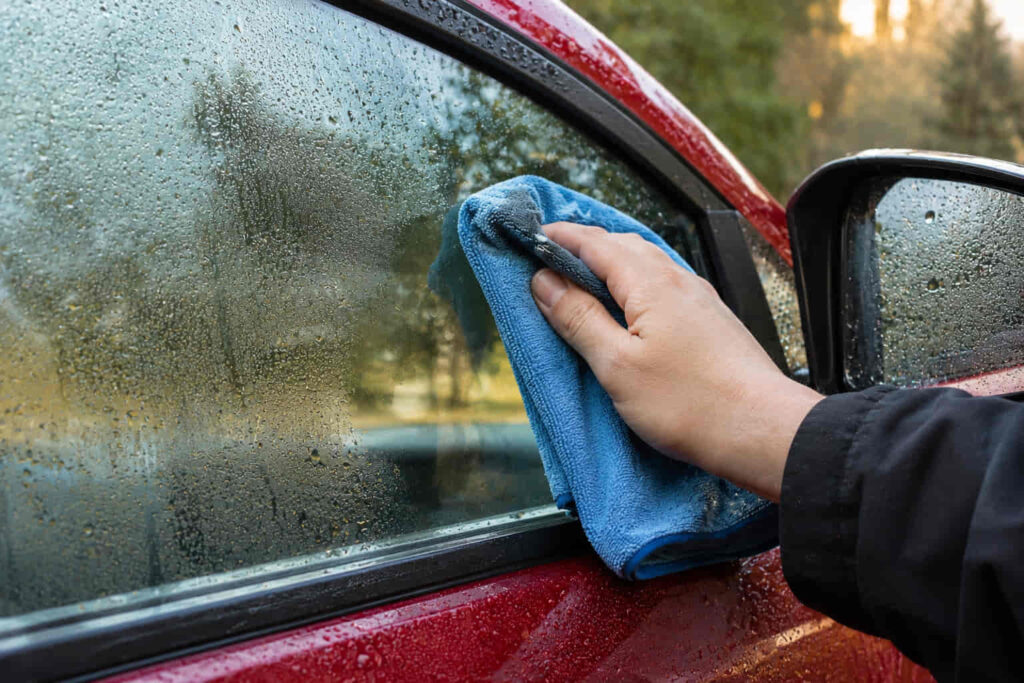
To get rid of condensation outside car windows, use your windshield wipers to clear the front glass, wipe affected side windows with a clean microfiber cloth when parked, and adjust your air conditioning to prevent the glass from becoming excessively cold. These methods remove existing moisture and reduce the temperature difference responsible for exterior window fogging. If condensation significantly reduces visibility while driving, pull over safely before attempting to clean the glass manually.
Exterior condensation forms when warm, humid air comes into contact with car glass that is at or below the surrounding air’s dew point. For example, during hot and humid weather, cold air from the vehicle’s air conditioning system can lower the windshield temperature enough for moisture in the outside air to condense into tiny water droplets. Unlike interior window fogging, this moisture collects on the outer surface of the glass and requires a different approach.
Although wiping the glass provides immediate visibility, condensation can return if the windshield remains colder than the outside air’s dew point. Raising the AC temperature slightly and redirecting cold airflow away from the windshield can help prevent repeated fogging. Understanding how humidity, glass temperature, and air circulation interact allows drivers to clear exterior condensation effectively and maintain better visibility in changing weather conditions.
How Do You Get Rid of Condensation Outside Car Windows Quickly?
The fastest way to get rid of condensation outside car windows is to use the windshield wipers, remove moisture from the side windows with a clean microfiber cloth, and adjust the air conditioning to reduce excessive glass cooling. Windshield wipers provide immediate relief by sweeping water droplets off the exterior glass, while a warmer AC setting helps prevent condensation from forming again. These methods are particularly effective in hot, humid weather when the windshield becomes colder than the surrounding air.
Use the windshield wipers to clear exterior condensation immediately. When moisture accumulates on the outside of the windshield, activating the wipers removes the water droplets responsible for the cloudy appearance. This restores visibility without requiring the driver to stop and manually clean the front glass. However, the effect may be temporary because the wipers remove accumulated moisture rather than change the conditions causing condensation. If the windshield remains below the outside air’s dew point, new droplets can form shortly after each wipe. For example, a car running its AC at a very cold setting during humid weather may require repeated wiping until the glass temperature increases.
Raise the air conditioning temperature slightly to reduce repeated exterior fogging. Cold air circulating inside the vehicle can lower the temperature of the windshield and side windows, allowing moisture from the warmer outside air to condense on their surfaces. Increasing the cabin temperature setting reduces the cooling effect on the glass and helps bring its surface temperature closer to the surrounding conditions. Redirecting cold air vents away from the windshield can further reduce unwanted cooling. These adjustments address the temperature difference responsible for condensation rather than simply removing the visible moisture.
Clean exterior side windows with a microfiber cloth when the vehicle is safely parked. Unlike the windshield, most side windows do not have dedicated wipers, making manual cleaning the simplest immediate solution. A clean, dry microfiber cloth absorbs surface moisture without leaving the streaks commonly associated with dirty towels or clothing. Wiping the glass also restores visibility through the side windows, which is essential for checking traffic, intersections, and nearby obstacles. Side mirrors should also be checked because moisture on their surfaces can obstruct the driver’s rearward view.
If condensation continues to obscure the windows while driving, reduce speed as appropriate and move to a safe parking location before attempting further adjustments or manual cleaning. Do not continue driving when the windshield or side windows prevent a clear view of the road. Once the glass is clear, maintaining a moderate cabin temperature and avoiding unnecessarily cold airflow toward the windows helps keep exterior condensation under control.
How Can You Tell if Car Window Condensation Is Outside or Inside?
You can tell whether car window condensation is outside or inside by checking which glass surface holds the moisture. Exterior condensation forms on the outer surface of the window, while interior condensation develops on the surface facing the passenger cabin. The distinction matters because the two conditions involve different temperature and humidity relationships and may require different air conditioning settings to resolve.
The simplest way to identify exterior windshield condensation is to activate the windshield wipers. If the wiper blades immediately clear the foggy area, the moisture is on the outside surface. If the cloudy appearance remains unchanged, condensation may be on the inside, although dirt or an oily film on the glass can produce a similar effect. When the vehicle is safely parked, gently wiping a small section of the appropriate glass surface with a clean microfiber cloth can confirm where the moisture is collecting.
Outside condensation develops when the exterior glass surface is at or below the dew point of the surrounding air. For example, on a humid summer day, air conditioning can cool the windshield enough for water vapor in the outside air to form visible droplets. Interior condensation occurs when humid cabin air contacts glass cold enough to cause condensation. This is common during colder weather when passengers’ breathing, wet clothing, or damp floor mats add moisture to the vehicle’s interior.
Identifying the location prevents incorrect climate-control adjustments. Interior fogging generally responds to warm, dehumidified airflow directed toward the windshield, while exterior condensation caused by excessive AC cooling requires reducing the cooling effect on the glass. Applying the wrong approach can allow condensation to persist or return, even after the windows have been wiped clean.
Read more: massachusetts inspection sticker
Why Does Condensation Form on the Outside of Car Windows?
Condensation forms on the outside of car windows when the exterior glass temperature falls to or below the dew point of the surrounding air. The three main factors responsible for exterior window condensation are humidity, glass surface temperature, and the cooling effect of the vehicle’s air conditioning system. When warm, moisture-rich air touches sufficiently cold glass, water vapor condenses into tiny liquid droplets that scatter light and create a foggy appearance. This explains why exterior condensation is particularly noticeable when driving an air-conditioned vehicle in hot, humid weather.
Humidity determines how much water vapor is present in the surrounding air, while the dew point indicates the temperature at which that air becomes saturated. The higher the dew point, the less cooling a surface needs before condensation begins. For example, when outdoor air contains substantial moisture, a windshield cooled by the AC system may fall below the outdoor dew point even though the outside temperature remains comfortably warm. Water droplets then accumulate on the exterior glass without any rain or water entering the vehicle. This process is similar to the moisture that forms on the outside of a cold drinking glass.
Car air conditioning contributes to exterior condensation by lowering the temperature of the windshield and other glass surfaces. When cold air flows across the interior side of the windshield, heat transfers from the glass into the cooler cabin air. As the windshield loses heat, its exterior surface may become cold enough for moisture in the surrounding atmosphere to condense. The effect can become more pronounced when the AC operates at a low temperature setting and airflow is directed toward the windshield for an extended period. Consequently, drivers may notice exterior fogging even while the passenger cabin feels dry and comfortable.
Exterior condensation can also develop without air conditioning, particularly when a parked vehicle loses heat overnight. During clear, calm conditions, exposed glass surfaces release heat through thermal radiation and may become colder than the surrounding air. Once their surface temperature reaches the dew point, atmospheric moisture collects as morning dew. Although overnight cooling and air conditioning are different sources of heat loss, both produce condensation through the same physical mechanism. The moisture disappears when the glass warms above the dew point or surrounding conditions become less favorable for condensation.
How Should You Adjust Car AC to Remove Outside Window Condensation?
To remove outside window condensation, increase the AC temperature setting, reduce excessively cold airflow toward the windshield, and allow the exterior glass to warm above the surrounding air’s dew point. These adjustments target the temperature conditions that cause moisture to collect on the glass. Unlike windshield wipers, which remove existing droplets, appropriate AC settings help prevent new condensation from forming. The most effective adjustment depends on the vehicle’s climate control system, outdoor humidity, and the location of the fogged glass.
Raising the AC temperature is the primary adjustment when exterior condensation results from excessive windshield cooling. A very low temperature setting encourages the climate control system to deliver colder air, increasing heat transfer away from the glass. Selecting a moderately warmer setting reduces this cooling effect and allows the windshield temperature to rise gradually. For example, if exterior fogging begins after the AC has been operating at its coldest setting, increasing the selected temperature can reduce condensation without completely disabling cabin cooling. The goal is not to make the interior hot but to prevent the windshield from remaining colder than the outdoor dew point.
Redirecting cold airflow away from the windshield helps limit the cooling responsible for exterior fogging. When the climate control system sends chilled air through dashboard defroster outlets, that air can cool the interior surface of the windshield and indirectly reduce its exterior temperature. Switching the airflow toward the dashboard or footwell vents can decrease direct cooling of the glass. However, the appropriate setting depends on whether condensation is outside or inside the vehicle. Front defogger modes commonly activate air conditioning to remove moisture from the cabin, making them useful for interior condensation but not necessarily the best initial response to exterior fogging. When the vehicle provides adjustable warm defogger airflow, warmer air directed at the windshield can help raise its surface temperature.
Opening the side windows slightly can also help reduce exterior condensation when conditions permit. Allowing warmer outside air to enter the cabin reduces the temperature difference between the interior and exterior environments, particularly when the AC has made the passenger compartment substantially colder than the surrounding air. This approach is more practical during dry weather than during heavy rain, when opening the windows may introduce unwanted moisture. It is not a guaranteed solution because humidity and glass temperature still determine whether condensation forms.
The correct AC adjustment should clear the exterior glass without creating condensation on the inside. Excessively warming the cabin or changing ventilation settings without considering indoor humidity can introduce a different fogging problem under certain conditions. Drivers should monitor the windshield after each adjustment and use the wipers to remove remaining exterior droplets. If condensation continues to reduce visibility, the vehicle should be stopped safely before further troubleshooting. Maintaining a comfortable cabin temperature while preventing unnecessary glass cooling provides a practical balance between passenger comfort and clear visibility.
How Can You Prevent Condensation on the Outside of Car Windows?
To prevent condensation on the outside of car windows, maintain an appropriate glass temperature, keep exterior glass surfaces clean, and use suitable water-repellent treatments to improve moisture removal. The most effective long-term prevention method is to keep the windshield and other windows warmer than the dew point of the surrounding air. While cleaning products and protective coatings improve water removal and visibility, controlling glass temperature addresses the physical conditions responsible for exterior condensation.
Maintaining a balanced cabin temperature prevents the windshield from becoming excessively cold during hot, humid weather. When the air conditioning system continuously delivers very cold air, the windshield can lose enough heat to trigger condensation on its exterior surface. Selecting a moderate AC temperature and directing airflow away from the glass reduces this cooling effect. For example, drivers traveling through humid environments can avoid unnecessary windshield cooling by using dashboard vents rather than directing chilled air continuously through the windshield defroster outlets. This approach helps maintain passenger comfort while reducing the likelihood of exterior fogging.
Regular exterior glass cleaning improves visibility but does not directly prevent water vapor from condensing. Road grime, oily residue, dust, and mineral deposits can leave a film that interferes with clear vision, especially when moisture accumulates on the glass. Cleaning the windshield with an automotive glass cleaner and a clean microfiber cloth removes these contaminants, allowing the wiper blades to sweep water away more effectively. Keeping the wiper blades free of dirt and replacing worn blades also helps prevent streaking. For example, a windshield covered with oily road residue may appear cloudy after the wipers operate, even when most of the condensation has been removed.
Water-repellent glass treatments provide additional moisture management by changing how liquid water interacts with the windshield surface. These hydrophobic coatings encourage water to form droplets that can roll away under suitable airflow or be removed by windshield wipers. However, water-repellent coatings do not eliminate the temperature and humidity conditions that produce condensation. They primarily support water removal rather than prevent water vapor from changing into liquid. Exterior water repellents should also be distinguished from dedicated anti-fog products, which work through different surface properties. Drivers should choose treatments approved for automotive exterior glass and follow the manufacturer’s application instructions to avoid uneven coatings or wiper performance problems.
Preventing exterior condensation therefore requires separating the cause of moisture formation from the methods used to remove accumulated water. Climate control adjustments reduce the likelihood of condensation by limiting excessive glass cooling, while clean windows, effective wiper blades, and appropriate surface treatments help maintain visibility when moisture forms. Combining these measures provides a more reliable approach than relying exclusively on repeated wiping or glass coatings.
Why Does Condensation Keep Returning to the Outside of Car Windows?
Condensation keeps returning to the outside of car windows because the exterior glass remains at or below the dew point of the surrounding air. Removing the visible droplets does not change the temperature and humidity conditions responsible for their formation. As long as moist outdoor air continues to contact sufficiently cold glass, new water droplets can develop after the previous layer has been wiped away. This explains why windshield wipers sometimes clear exterior fog for only a short period during humid weather.
Continuous air conditioning is a common reason for recurring exterior windshield condensation. When the climate control system maintains a very low cabin temperature or directs cold airflow toward the windshield, the glass may remain colder than the outside air’s dew point. Even after the wipers remove accumulated moisture, the surface conditions remain suitable for new condensation. For example, a vehicle traveling through warm, humid air with its AC operating at maximum cooling may experience repeated exterior fogging until the driver reduces the cooling effect on the windshield.
Persistent cloudiness should also be distinguished from condensation that repeatedly forms. Dirty glass, deteriorated wiper blades, and improperly applied water-repellent coatings can leave streaks or films that resemble fog. Unlike condensation, these residues may remain visible even after the glass temperature increases. Drivers can identify the difference by cleaning a small section of the exterior glass when safely parked and observing whether fresh droplets develop. If cloudiness persists without visible moisture, cleaning the glass or inspecting the wiper blades may be more appropriate than changing the AC settings.
When exterior condensation continues despite reasonable climate control adjustments, drivers should check whether the HVAC system responds correctly to temperature and airflow settings. A vent-direction control that continues directing cold air toward the windshield, for instance, can contribute to repeated glass cooling. Persistent airflow or temperature-control problems warrant professional inspection. However, condensation during exceptionally humid conditions does not automatically indicate a mechanical defect. The primary objective is to keep the glass above the outdoor dew point while maintaining sufficient visibility for safe driving.
Why Do Car Windows Get Condensation Outside in the Morning or After Rain?
Car windows develop exterior condensation in the morning or after rain when the glass surface becomes colder than the dew point of the surrounding air. Morning condensation typically results from overnight surface cooling, while condensation during rainy weather is associated with high atmospheric moisture and temperature differences between the glass and outdoor air. Although these conditions occur at different times, both cause water vapor to turn into liquid droplets on the exterior glass.
Morning dew commonly forms on vehicles parked outdoors during clear, calm nights. After sunset, the windshield, roof, and side windows release heat through thermal radiation, allowing their surface temperatures to fall below the surrounding air temperature. When the glass reaches the dew point, moisture in the nearby air condenses onto its surface. This explains why a parked car may have a wet windshield early in the morning even when no rain has fallen overnight. According to research published in the journal Atmosphere, vehicle surfaces are particularly suitable for dew formation because their geometry and thermal properties promote radiative cooling under favorable weather conditions.
Exterior condensation during warm, rainy weather develops when moisture-rich air contacts glass that is sufficiently cold. Rainy conditions are frequently associated with high relative humidity, meaning the air is closer to saturation. If the vehicle’s air conditioning cools the windshield below the outdoor dew point, water droplets can accumulate on the exterior surface. For example, a driver using strong AC during a humid summer rainstorm may notice that the windshield remains cloudy even after the rain temporarily stops. The moisture may be condensation rather than residual rainwater, particularly when it repeatedly returns after the windshield wipers operate.
The appropriate removal method depends on whether the moisture results from overnight cooling or active air conditioning. Morning dew on a parked vehicle can be cleared using windshield wipers and a clean microfiber cloth, while exterior fogging during humid driving conditions may require both wiper operation and climate control adjustments. In either situation, the windshield, side windows, and mirrors must provide adequate visibility before driving. Understanding the relationship between weather conditions and glass temperature helps drivers distinguish temporary moisture accumulation from recurring exterior condensation.
What Should You Avoid When Clearing Condensation Outside Car Windows?
When clearing condensation outside car windows, avoid using incorrect climate control settings, abrasive cleaning materials, extreme temperature changes, or driving with obstructed visibility. These mistakes can prolong exterior fogging, damage the glass, or increase the risk of a collision. Safe condensation removal requires identifying the affected glass surface and choosing a method appropriate for the surrounding temperature and humidity.
One common mistake is applying interior defogging techniques to exterior condensation without checking where the moisture has formed. Directing very cold air toward the windshield may help manage interior fogging in certain conditions but can worsen exterior condensation by cooling the glass further. Instead, drivers should identify the moisture location and adjust the HVAC system accordingly. Exterior condensation caused by excessive glass cooling is better addressed by reducing cold airflow toward the windshield and allowing the glass to warm.
Avoid cleaning exterior windows with dirty cloths, abrasive materials, or excessive pressure. Dust, sand, and road debris trapped between a cleaning material and the glass can produce scratches, while contaminated wiper blades may leave streaks that further obstruct visibility. Use a clean microfiber cloth and an automotive glass cleaner when manual cleaning is necessary. Sudden exposure to very hot water should also be avoided on cold glass, particularly when the windshield already contains chips or cracks, because rapid temperature changes can increase the risk of glass damage.
Never continue driving when condensation prevents a clear view of the road, pedestrians, traffic signals, or nearby vehicles. If windshield wipers and safe climate control adjustments do not restore adequate visibility, pull over at a suitable location before attempting further cleaning. Maintaining clear exterior glass is essential because removing condensation is not only a matter of driving comfort but also a necessary part of safe vehicle operation.