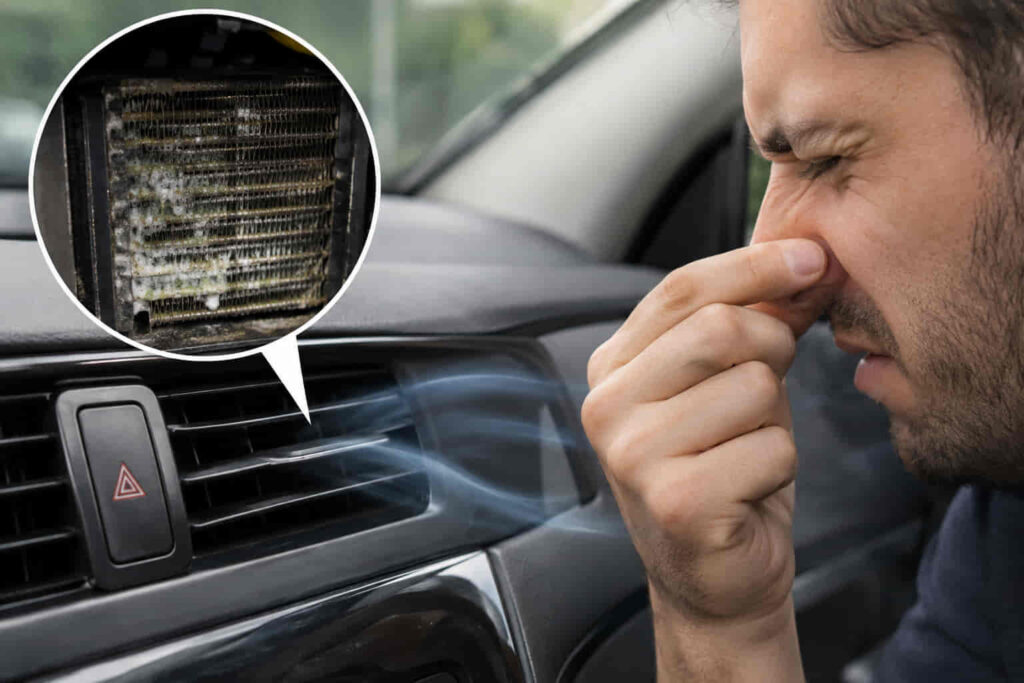
A car AC smells like vinegar primarily because moisture trapped inside the air conditioning system creates conditions for bacteria, mold, and other odor-producing microorganisms to accumulate. The AC evaporator, cabin air filter, and ventilation ducts are common sources of sour odors, particularly when condensation remains inside the HVAC system after the engine is turned off. However, a vinegar-like smell alone does not confirm microbial contamination, and other odor sources may require investigation.
The smell often becomes noticeable when the air conditioner first starts because airflow carries accumulated odors from damp HVAC components into the passenger cabin. A clogged evaporator drain, contaminated cabin air filter, or debris trapped inside the ventilation housing can contribute to persistent odors. For example, a vehicle parked overnight in humid weather may release a sharp, sour smell when the AC starts, even if the system continues cooling normally.
Eliminating the vinegar smell requires identifying its source rather than masking it with air fresheners. Replacing a contaminated cabin air filter, cleaning the evaporator, and restoring proper condensate drainage can resolve odor problems when those components are responsible. This guide explains why car AC systems develop vinegar-like smells, how to identify the underlying cause, which cleaning methods are appropriate, and how to prevent the odor from returning.
Why Does My Car AC Smell Like Vinegar?
Your car AC smells like vinegar when odor-producing substances accumulate inside the air conditioning and ventilation system and enter the passenger cabin through the air vents. One common explanation is microbial growth on damp surfaces around the AC evaporator. This component removes heat from incoming air while causing water vapor to condense on its cold surfaces. When moisture remains in the evaporator housing, it creates an environment where microorganisms can grow and contribute to unpleasant odors.
The evaporator is particularly susceptible to moisture accumulation because it operates in a confined area behind the dashboard. During normal cooling, condensation forms on the evaporator fins and should drain through a dedicated tube beneath the vehicle. If drainage is restricted or moisture remains on internal surfaces after the AC stops running, the damp environment can persist. Bacteria and fungi associated with these conditions may produce volatile compounds that create sour, musty, or vinegar-like smells. However, the specific odor does not reliably identify which microorganisms, if any, are present.
A vinegar smell can also develop when organic debris collects inside the HVAC system. Dust, pollen, leaves, and other airborne particles may enter through the outside air intake and accumulate on the cabin air filter or inside the evaporator housing. When this material becomes damp, it can retain odors and provide additional material for microbial growth. For example, a vehicle frequently parked beneath trees may collect leaf debris near its ventilation intake, increasing the likelihood of contamination if the material reaches damp HVAC components.
The timing of the odor provides an important diagnostic clue. A sour smell that appears immediately after the AC starts and gradually fades may indicate odors retained inside the evaporator housing between driving sessions. A smell that continues throughout the drive suggests an ongoing source that needs further inspection. Neither pattern confirms a specific defect, but both help determine whether the evaporator, cabin air filter, condensate drainage system, or another part of the vehicle should be examined.
Read more: kia piston ring recall
What Causes a Vinegar Smell From Car AC Vents?
A vinegar smell coming from car AC vents can originate from five main sources: microbial contamination on the evaporator, a damp cabin air filter, restricted condensate drainage, organic debris inside the HVAC housing, or odors entering through the outside air intake. These sources affect different parts of the ventilation system, but each can introduce sour-smelling compounds into the airflow. Identifying the responsible component is essential because cleaning the wrong part may temporarily reduce the odor without eliminating its cause.
Microbial contamination on the AC evaporator is a common explanation for persistent sour odors. The evaporator’s cold metal surfaces collect condensation whenever humid air passes over them during cooling. Dust and airborne particles can accumulate on these damp surfaces, creating conditions that support microbial growth. Certain microorganisms produce volatile organic compounds as they metabolize organic material, and these compounds may contribute to unpleasant smells. When the blower motor pushes air across the contaminated evaporator, the odor travels through the ventilation ducts and enters the passenger compartment.
A contaminated cabin air filter can produce a similar smell, particularly when the filter becomes damp or collects substantial amounts of organic debris. The filter captures dust, pollen, and other airborne particles before they enter the passenger cabin. If moisture reaches the filter and remains trapped in its fibers, accumulated material may develop a sour or musty odor. For example, a vehicle with water intrusion near the cabin air intake may have a damp filter even when the evaporator itself is relatively clean. Replacing the filter can eliminate the smell when the filter is the primary source, but it will not resolve contamination deeper inside the HVAC housing.
Restricted condensate drainage is another potential cause because it allows water to remain inside the evaporator housing longer than intended. During normal AC operation, condensed water flows toward a drain outlet and exits beneath the vehicle. A blockage caused by debris or accumulated dirt can interfere with this process, leaving standing water or excessively damp surfaces inside the housing. Persistent moisture encourages odor-producing contamination and may eventually contribute to water entering the passenger footwell. However, the absence of a visible puddle beneath a parked vehicle does not establish that the drain is blocked, since condensation depends on operating conditions and humidity.
Organic debris inside the HVAC housing can also create unpleasant odors independently of the cabin air filter. Leaves, insects, and dirt may enter through ventilation openings and become trapped near the blower motor or air distribution passages. When this material absorbs moisture, decomposition and microbial activity can release sour-smelling compounds. A vehicle parked outdoors beneath trees, for instance, may accumulate debris around the cowl intake, especially if the intake screens or surrounding drainage channels are obstructed.
Finally, the ventilation system may carry odors originating outside the AC components. Contaminated cowl areas, nearby exhaust sources, spilled substances, or moisture-damaged interior materials can produce smells that become noticeable when the blower operates. Comparing the odor in fresh-air and recirculation modes can help identify whether outside air contributes to the problem, although it is not a definitive diagnostic test. A vinegar-like smell should therefore be traced to its actual source before replacing parts or applying an evaporator cleaner.
Why Does My Car AC Smell Like Vinegar When I First Turn It On?
Your car AC may smell like vinegar when you first turn it on because odor-producing compounds have accumulated inside the ventilation system while the vehicle was parked. When the blower motor starts, the initial rush of air carries these trapped odors through the dashboard vents. The smell may be strongest during the first 30–60 seconds of operation and gradually weaken as fresh airflow dilutes the accumulated compounds. However, the exact duration varies depending on the odor source, ventilation settings, and environmental conditions.
Residual moisture on the AC evaporator helps explain why this problem frequently occurs after the vehicle has been parked overnight. During the previous drive, humid air passed over the cold evaporator, causing water vapor to condense on its surfaces. Although most condensation should leave through the drain, some moisture can remain on the evaporator fins and surrounding housing. If microbial contamination is present, the damp environment can support continued odor production between driving sessions. The next time the blower operates, these compounds are released into the passenger cabin.
The smell may also become more noticeable after the vehicle has been parked in hot or humid weather. Higher temperatures can increase the release of volatile compounds from contaminated surfaces, while elevated humidity slows the drying of internal HVAC components. For example, a car driven with the AC running during a humid afternoon may develop a noticeable sour odor when restarted the following morning. The odor can fade once airflow increases and the evaporator begins cooling again, even though the underlying contamination remains.
A vinegar smell that occurs only during startup does not necessarily indicate a refrigerant leak or a malfunctioning compressor. Refrigerant leaks cannot be reliably identified by a vinegar-like odor, and diagnosing them requires appropriate inspection and leak-detection methods. If the AC continues cooling normally but produces a sour smell during startup, the evaporator housing, cabin air filter, and ventilation passages are more relevant initial inspection points. If the odor becomes stronger, persists throughout the drive, or appears alongside reduced cooling performance, a technician should examine the system for additional faults.
The timing of the smell is therefore a useful diagnostic indicator rather than a definitive explanation. A brief startup odor suggests that substances have accumulated in the ventilation system between operating cycles, while a continuous odor suggests an active or persistent source. Identifying this pattern helps determine which HVAC components should be inspected before cleaning or replacing parts.
How Can You Find the Source of a Vinegar Smell in Your Car AC?
To find the source of a vinegar smell in your car AC, compare when the odor appears, inspect the cabin air filter, check for moisture around the HVAC system, and determine whether the smell changes with different ventilation settings. These observations help narrow down the affected component before cleaning or replacing parts. A vinegar-like odor alone cannot identify the exact source because evaporator contamination, damp filters, trapped debris, and external odors can produce similar symptoms.
Start by observing how the smell changes when the blower operates with the AC compressor enabled and disabled. Park the vehicle in a well-ventilated outdoor area, start the engine, and run the ventilation fan without activating AC cooling. Note whether the sour odor appears immediately. Next, activate the air conditioner and compare the smell after several minutes. An odor present whenever the blower runs suggests contamination somewhere along the airflow path, while a smell that becomes more noticeable during cooling may indicate moisture-related conditions around the evaporator. However, because air passes through much of the same HVAC housing in both modes, this comparison cannot independently confirm an evaporator problem.
The cabin air filter is one of the most accessible components to inspect. Depending on the vehicle, it may be located behind the glove compartment, beneath the dashboard, or near the windshield cowl. Remove the filter according to the manufacturer’s instructions and examine it for excessive dirt, dampness, visible debris, or an unusual odor. A wet filter may indicate water entering through the fresh-air intake or another drainage problem. For example, if the filter is damp after rainfall and the vinegar smell becomes stronger when the blower starts, water intrusion near the intake deserves further investigation. A filter that looks clean does not rule out contamination deeper inside the system.
Condensate drainage provides another diagnostic clue. After the AC has operated long enough to produce condensation in humid conditions, water will generally drain beneath the vehicle. If the passenger-side carpet is damp, water collects inside the HVAC housing, or the system produces unusual gurgling sounds, a restricted evaporator drain may be responsible. However, the absence of dripping water is not sufficient evidence of a blockage, especially in dry weather or during short operating periods. The drain’s location also varies by vehicle, so owners should consult the service information before attempting an inspection.
Comparing fresh-air and recirculation modes can help distinguish odors entering from outside the vehicle. If the smell becomes stronger in fresh-air mode but decreases in recirculation mode, inspect the windshield cowl, outside air intake, and surrounding areas for accumulated leaves, standing water, or other odor sources. If the smell remains similar in both modes, contamination within the cabin air filter housing, evaporator assembly, or ventilation ducts becomes a more relevant possibility. This comparison is not conclusive because recirculation systems do not always completely isolate outside air.
If these checks fail to identify the cause, a qualified automotive technician can inspect less accessible HVAC components. Professional diagnosis may involve examining the evaporator housing, checking condensate drainage, identifying water intrusion, and determining whether internal cleaning is necessary. Dashboard disassembly, refrigerant-system repairs, and work involving electrical components should not be attempted without appropriate training and equipment. The objective is to locate the actual odor source so the repair addresses the underlying condition rather than temporarily covering the smell.
How Do You Get Rid of a Vinegar Smell From Car AC?
To get rid of a vinegar smell from car AC, identify and clean the contaminated component rather than masking the odor with air fresheners. The most effective solution depends on whether the smell comes from a dirty cabin air filter, microbial buildup on the evaporator, restricted condensate drainage, or debris inside the HVAC housing. Replacing a contaminated filter, cleaning the evaporator with an automotive-approved product, and restoring proper drainage can eliminate the odor when these components are responsible.
The first step is to inspect and replace the cabin air filter if it contains excessive dust, moisture, or organic debris. The cabin air filter captures airborne particles before they enter the passenger compartment, but accumulated contaminants can retain moisture and produce unpleasant smells. A replacement filter should match the vehicle manufacturer’s specifications and airflow requirements. For example, installing a new filter in a vehicle with a damp, musty old filter may improve cabin air quality, but the odor will return if the evaporator or HVAC housing remains contaminated.
Cleaning the AC evaporator is another important solution when the odor originates from microbial buildup on its surfaces. Automotive evaporator cleaners are formulated to remove dirt and odor-producing deposits from accessible evaporator surfaces and HVAC passages. Some products are applied through designated access points, while others require professional application through the evaporator drain or service openings. The correct method depends on the vehicle’s HVAC design and the cleaner manufacturer’s instructions. Household vinegar, bleach, and general-purpose disinfectants should not be sprayed into AC vents because they may damage interior materials, electrical components, or HVAC surfaces.
Checking and restoring condensate drainage is essential when trapped water contributes to the odor. The evaporator drain allows condensation to leave the HVAC housing during normal AC operation. If debris obstructs the drain, water can accumulate and maintain the damp conditions associated with recurring odors. A technician can inspect the drain outlet and remove an obstruction using an appropriate service procedure. For example, clearing a blocked drain may resolve both a sour smell and moisture collecting around the passenger-side footwell when the blockage is the underlying cause.
The HVAC housing and outside air intake should also be inspected when cleaning the filter and evaporator does not eliminate the smell. Leaves, insects, dust, and other organic debris can accumulate around ventilation openings and retain moisture. Removing accessible debris and cleaning the affected surfaces can prevent these materials from continuing to release unpleasant odors into the cabin. If water enters through damaged seals, a blocked cowl drain, or another leak, that source must also be repaired to prevent contamination from returning.
After cleaning, allow the HVAC system to dry according to the service product instructions and vehicle manufacturer’s recommendations. Some vehicles have a manufacturer-provided evaporator drying function or automatic after-blow feature that circulates air after the AC compressor stops. Where appropriate, using the ventilation system to dry internal components can reduce residual moisture. However, drying alone will not remove established contamination or correct a blocked drain.
Professional cleaning is advisable when the odor persists despite basic maintenance, when water repeatedly enters the cabin, or when accessing the evaporator requires dashboard disassembly. A qualified technician can inspect the HVAC housing, verify drainage, and select a cleaning method compatible with the vehicle. Removing the vinegar smell requires correcting the moisture or contamination source, not simply introducing fragrance into the ventilation system.
Is a Vinegar Smell From Car AC Dangerous?
A vinegar smell from car AC is not automatically dangerous, but it may indicate poor air quality or moisture-related contamination inside the vehicle’s heating, ventilation, and air conditioning (HVAC) system. The odor itself does not establish the presence of harmful mold, bacteria, or toxic substances. However, persistent contamination inside the evaporator, cabin air filter, or ventilation ducts can release unpleasant airborne compounds that may cause discomfort, particularly for people with asthma, allergies, or respiratory sensitivities.
Microbial growth inside a damp HVAC system is one potential concern because some bacteria and fungi release compounds into the circulating air. Exposure to contaminated indoor air may cause irritation in sensitive individuals, including coughing, sneezing, throat discomfort, or worsening of existing respiratory symptoms. The severity depends on the type and amount of contamination, exposure duration, and individual sensitivity. A vinegar-like odor alone cannot determine whether harmful microorganisms are present, so identifying the actual source is more important than judging the risk based on smell.
People with asthma or mold allergies should pay particular attention to persistent odors from vehicle ventilation systems. When contaminated air repeatedly circulates through a relatively enclosed passenger compartment, sensitive occupants may experience symptoms that become noticeable during or after driving. For example, someone who develops coughing, nasal irritation, or wheezing whenever the car AC operates should investigate the HVAC system rather than continuing to rely on air fresheners. If symptoms persist or worsen, medical evaluation is appropriate.
The smell may also indicate a moisture problem that can affect more than air quality. A blocked evaporator drain or water intrusion can allow moisture to accumulate beneath carpets, inside HVAC housings, or around interior insulation. Persistent dampness can contribute to additional microbial growth and deterioration of interior materials. If the passenger footwell becomes wet, windows repeatedly fog up, or a musty odor develops alongside the vinegar smell, the vehicle should be inspected for water leaks and drainage problems.
Certain odors require more urgent attention because they may indicate a problem unrelated to ordinary AC contamination. A strong burning-plastic smell, fuel odor, exhaust smell, or unusual chemical odor should not be treated as a routine cabin filter problem. Stop driving when there is a suspected fuel or exhaust leak, smoke, or a strong burning odor, and arrange a professional inspection. Carbon monoxide is particularly dangerous because it is colorless and odorless, meaning its presence cannot be ruled out by the absence of an unusual smell.
A vinegar smell from car AC is generally a warning sign that the ventilation system needs investigation rather than proof of an immediate health emergency. Replacing a contaminated filter, cleaning the evaporator, and correcting moisture or drainage problems can improve cabin air quality when those components are responsible. However, persistent odors accompanied by respiratory symptoms, water intrusion, or unusual chemical smells require further investigation instead of temporary odor masking.
How Much Does It Cost to Fix a Car AC That Smells Like Vinegar?
Fixing a car AC that smells like vinegar typically costs between $35 and $250 for common maintenance and odor-removal services, depending on whether the problem comes from a contaminated cabin air filter, evaporator buildup, or restricted condensate drainage. More extensive repairs can cost significantly more when the HVAC system requires component removal or evaporator replacement. The final price depends on the vehicle model, labor rates, accessibility of HVAC components, and severity of contamination.
Replacing a dirty cabin air filter is usually one of the least expensive solutions. A typical replacement at an independent repair shop costs approximately $35–$100, including parts and labor. The price may increase when the filter is difficult to access behind dashboard panels or beneath the windshield cowl. For example, a vehicle with a cabin filter located directly behind the glove compartment generally requires less labor than a model requiring removal of additional interior components. drivway+1
Evaporator cleaning and AC odor-removal treatment generally cost more because the service requires specialized automotive cleaning products and access to internal HVAC components. Depending on the service provider and cleaning method, a professional treatment may cost approximately $80–$250. This service typically targets accumulated dirt and odor-producing contamination on accessible evaporator surfaces. A more extensive cleaning may cost $280–$480 when additional access or partial dashboard disassembly is necessary. Way+2
Cleaning a blocked evaporator drain can cost approximately $50–$150, depending on how difficult it is to access the drain outlet and remove the obstruction. This repair is particularly relevant when standing water, damp carpets, or recurring moisture-related odors accompany the vinegar smell. However, a drain-cleaning service will not eliminate established contamination on the evaporator if the contaminated surfaces also require treatment. Way
Replacing the AC evaporator is considerably more expensive and should only be considered when professional diagnosis confirms that replacement is necessary. RepairPal’s September 2026 estimate places the average evaporator replacement cost between $1,351 and $1,891, including parts and labor, before taxes and additional fees. Labor accounts for a substantial portion of this expense because accessing the evaporator may require extensive dashboard removal. A vinegar smell alone is not sufficient justification for replacing the evaporator. RepairPal.com
The most cost-effective approach is to identify the source before authorizing expensive repairs. Replacing a contaminated filter or cleaning the evaporator may resolve the problem without replacing major AC components. Drivers should request an inspection that identifies the actual odor source and separates necessary cleaning from unrelated refrigerant or compressor services. A vinegar smell does not automatically mean the AC system needs expensive repairs; correcting the specific moisture or contamination problem is usually the first priority.
Why Does the Vinegar Smell Keep Coming Back After Cleaning the Car AC?
The vinegar smell keeps coming back after cleaning the car AC because the underlying source of moisture, microbial contamination, or trapped organic debris has not been completely eliminated. Cleaning the cabin air filter or spraying an odor-removal product into the vents may temporarily improve cabin air quality, but these treatments cannot resolve contamination inside inaccessible HVAC components. If the evaporator remains damp, the condensate drain stays blocked, or contaminated debris remains inside the ventilation housing, unpleasant odors can develop again during subsequent AC operation.
Incomplete evaporator cleaning is one of the main reasons an AC odor returns. The evaporator contains multiple metal fins and narrow passages where moisture, dust, and organic particles can accumulate. Spraying an air freshener or applying a surface-level cleaning product may not reach contaminated areas deep inside the evaporator housing. When the AC operates again, condensation forms on the cold surfaces and can maintain conditions that support odor-producing microbial growth. For example, a vehicle may smell fresh immediately after an evaporator treatment but develop the same sour odor several days later because the cleaning process did not reach the affected surfaces.
A blocked or partially obstructed evaporator drain can also cause recurring vinegar-like odors. The drain is responsible for removing condensation generated during normal AC operation. If dirt, biological residue, or other debris restricts water flow, moisture can remain inside the HVAC housing even after the evaporator has been cleaned. This creates conditions that allow contamination to return. A technician should inspect the drain and verify that condensation exits normally rather than repeatedly applying cleaning products without correcting the drainage problem.
Replacing the cabin air filter without addressing water intrusion can produce another temporary improvement. A new filter may remove accumulated dirt and odor-producing particles, but water entering through damaged seals, obstructed cowl drains, or ventilation intake openings can contaminate the replacement filter. For example, a vehicle with a leaking windshield seal may develop a sour smell again after every heavy rain because moisture continues entering the cabin ventilation area. Repairing the water entry point is necessary to prevent repeated contamination.
Odor-removal sprays can also fail when they only mask the smell instead of removing its source. Fragranced products introduce additional scents into the cabin but do not necessarily remove organic deposits, standing water, or microbial contamination. Some products are designed specifically for automotive evaporators, while others are intended only for interior surfaces. Using an unsuitable product may leave residue or damage HVAC materials. The correct treatment must match the affected component and follow the product manufacturer’s application instructions.
Preventing recurring odors requires correcting the complete moisture and contamination problem. This may involve cleaning the evaporator, replacing a contaminated cabin air filter, clearing the condensate drain, removing trapped debris, and repairing water leaks. A qualified technician can inspect the HVAC housing when the odor repeatedly returns despite basic maintenance.
A recurring vinegar smell indicates that the original odor source may still be present or that moisture continues creating conditions for contamination. Identifying and correcting that underlying problem is more effective than repeatedly replacing filters or using air fresheners.
How Can You Prevent Your Car AC From Smelling Like Vinegar?
You can prevent your car AC from smelling like vinegar by reducing moisture accumulation, maintaining a clean cabin air filter, keeping the evaporator drain clear, and removing debris from the HVAC air intake. These maintenance practices help prevent the damp conditions that allow odor-producing microorganisms to develop inside the ventilation system. Regular HVAC maintenance is particularly important in humid climates, where condensation can remain on internal AC components for extended periods.
One effective preventive measure is to dry the evaporator after using the air conditioner. During normal AC operation, moisture collects on the evaporator as warm air passes over its cold surfaces. Before reaching your destination, switching off the AC compressor while allowing the blower fan to continue running for a few minutes can help circulate air through the evaporator housing. This encourages residual moisture to evaporate and reduces the time damp surfaces remain inside the system. However, the procedure depends on the vehicle’s HVAC design, and manufacturer recommendations should take priority. Some modern vehicles also include automatic evaporator drying functions.
Replacing the cabin air filter according to the vehicle manufacturer’s maintenance schedule helps maintain clean airflow and reduces the accumulation of dust, pollen, and organic debris. A clogged or contaminated filter can restrict airflow and retain moisture, particularly when the vehicle operates in dusty or humid environments. For example, vehicles frequently driven on unpaved roads or parked beneath trees may require more frequent filter inspections than vehicles primarily driven in clean urban environments. A replacement filter should always match the manufacturer’s specifications to maintain proper ventilation performance.
Keeping the evaporator drain unobstructed is another important preventive measure. The drain removes condensation from the HVAC housing and allows water to exit beneath the vehicle. Leaves, dirt, and other debris around the windshield cowl can contribute to drainage problems when they enter or obstruct ventilation pathways. Regularly inspecting the exterior air intake area and removing accessible debris helps reduce the risk of water accumulation. If condensation repeatedly collects inside the passenger footwell or drainage appears abnormal, a qualified technician should inspect the evaporator drain.
Maintaining clean ventilation intakes also reduces the amount of organic material entering the HVAC system. Leaves, insects, pollen, and dust can accumulate around the windshield cowl and fresh-air intake openings. When these materials become damp, they can contribute to unpleasant odors and microbial contamination. Keeping these areas clear, especially after heavy rainfall or seasonal leaf accumulation, helps protect the ventilation system from unnecessary debris.
Vehicle owners should also address water leaks as soon as they appear. Damaged windshield seals, blocked exterior drainage channels, and leaking body seals can introduce moisture into areas surrounding the cabin air filter and HVAC housing. Persistent water intrusion increases the likelihood of damp insulation, contaminated filters, and recurring odors. For example, if the passenger-side carpet remains wet after rainfall, the source of the water should be identified and repaired instead of relying on interior air fresheners or repeated AC cleaning.
Finally, periodic HVAC inspections can identify early signs of contamination before the vinegar smell becomes persistent. A technician can evaluate evaporator cleanliness, condensate drainage, cabin air filter condition, and ventilation intake areas. Preventive cleaning should be performed when inspection findings justify it rather than applying disinfectants unnecessarily. Using automotive-approved products and following manufacturer maintenance recommendations helps protect sensitive HVAC components.
Preventing a vinegar smell from car AC requires controlling moisture and maintaining clean airflow throughout the HVAC system. Drying the evaporator when appropriate, replacing contaminated filters, keeping drainage pathways clear, and repairing water leaks address the conditions responsible for recurring odors. These practices help maintain better cabin air quality and reduce the need for repeated odor-removal treatments.