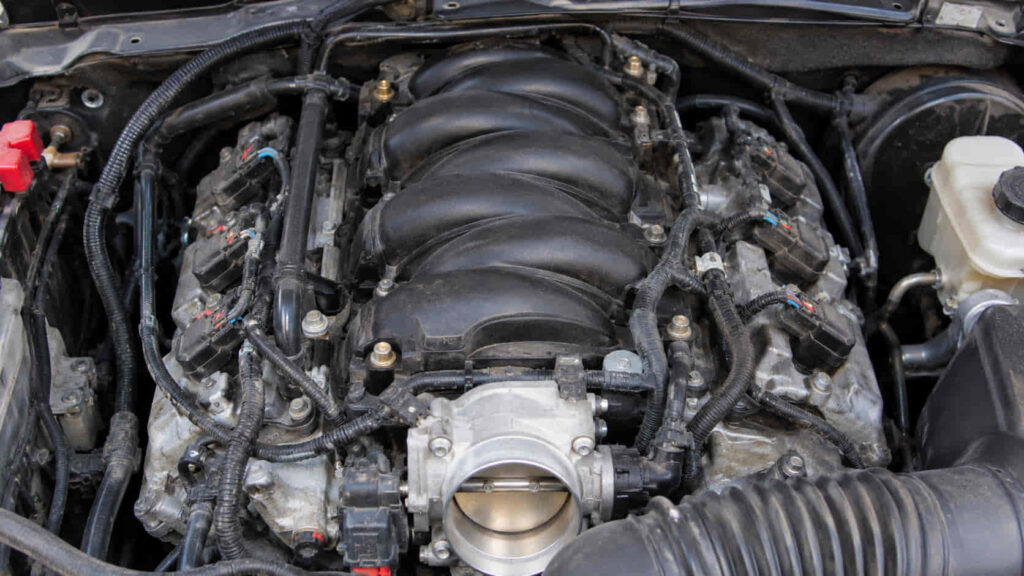
The Ford 3.7 firing order is 1-4-2-5-3-6 for the Ford 3.7L V6 Cyclone engine, also known as the Duratec 37. This sequence identifies the order in which the engine’s six cylinders complete their power strokes during operation. The same firing order applies to the 3.7L V6 used in vehicles such as the Ford Mustang and Ford F-150, although engine orientation and cylinder accessibility differ between vehicle models.
Understanding the Ford 3.7L V6 firing order requires distinguishing the ignition sequence from cylinder numbering. The firing order describes the sequence of combustion events, while cylinder numbering identifies the physical location of each cylinder within the engine. These two specifications serve different purposes during maintenance and diagnosis. For example, a P0303 diagnostic trouble code identifies a misfire in cylinder 3, not the third cylinder in the firing sequence. Confusing these systems can lead to inspecting or replacing the wrong ignition coil or spark plug.
This guide explains the Ford 3.7 firing order, cylinder numbering, and how to interpret the engine’s cylinder layout diagram. It also covers differences in engine installation across Ford vehicles, how to locate cylinder 1, and how firing order information supports misfire diagnosis. By understanding the relationship between cylinder position, ignition sequence, and coil-on-plug operation, vehicle owners and technicians can identify the correct engine components and avoid common diagnostic mistakes.
What Is the Firing Order of a Ford 3.7L V6 Engine?
The Ford 3.7L V6 firing order is 1-4-2-5-3-6. This sequence applies to the naturally aspirated Ford 3.7L Cyclone V6 engine, also known as the Duratec 37, used in vehicles such as the Ford Mustang and Ford F-150. The firing order specifies the sequence in which the engine’s six cylinders produce power during a complete four-stroke operating cycle. Each cylinder contributes to crankshaft rotation at a predetermined interval, allowing the engine to deliver power smoothly while controlling vibration and mechanical loading.
The Ford 3.7L V6 is a four-stroke engine, meaning each cylinder completes intake, compression, power, and exhaust strokes over two crankshaft revolutions. Because the engine has six cylinders, its firing events occur at evenly spaced intervals of 120 degrees of crankshaft rotation during normal operation. Cylinder 1 fires first in the designated sequence, followed by cylinders 4, 2, 5, 3, and 6 before the sequence repeats. This arrangement coordinates combustion events across the engine’s two cylinder banks and helps maintain consistent torque delivery throughout the operating cycle.
The firing order is determined by the engine’s mechanical design and electronic ignition control system. The crankshaft and camshafts establish piston movement and valve timing, while the powertrain control module (PCM) uses engine position information to control ignition timing and fuel delivery. The Ford 3.7L V6 uses a coil-on-plug ignition system, with an individual ignition coil associated with each cylinder. Unlike older distributor-based ignition systems, the firing sequence is not established by manually arranging spark plug wires around a distributor cap. Instead, the PCM commands the ignition coils according to the engine’s operating requirements.
Understanding the firing order is particularly useful when diagnosing cylinder-specific misfires, identifying ignition components, and interpreting engine service information. For example, if a diagnostic scan identifies a misfire in cylinder 4, the technician must locate the physical position of cylinder 4 rather than count four positions into the firing sequence. The fourth cylinder to fire is cylinder 5, which demonstrates why firing order and cylinder numbering must be treated as separate specifications. Using the correct sequence alongside the cylinder layout helps prevent component identification errors during engine maintenance.
What Is the Cylinder Numbering on a Ford 3.7L V6?
The Ford 3.7L V6 uses cylinders 1, 2, and 3 on Bank 1 and cylinders 4, 5, and 6 on Bank 2. Cylinder numbering identifies the physical location of each combustion chamber, while the firing order determines when those cylinders produce power. The distinction is essential because the Ford 3.7L firing sequence of 1-4-2-5-3-6 does not follow the numerical arrangement of the cylinders within the engine.
On the Ford 3.7L Cyclone V6, Bank 1 contains cylinder 1 at the front of the engine, followed by cylinders 2 and 3 toward the rear. Bank 2 contains cylinder 4 at the front, followed by cylinders 5 and 6. The front of the engine refers to the timing-chain and accessory-drive end, not necessarily the front bumper of the vehicle. This reference point matters because the same engine family can be installed longitudinally or transversely, changing how the cylinder banks appear when viewed from the engine compartment.
In a longitudinally mounted Ford 3.7L V6, such as the configuration used in the Ford Mustang and F-150, the engine’s front generally faces the vehicle’s radiator. Bank 1 is on the passenger side of these left-hand-drive applications, while Bank 2 is on the driver side. When viewed from the front of the vehicle toward the windshield, cylinders 1, 2, and 3 are positioned along the bank on the viewer’s left, and cylinders 4, 5, and 6 are positioned along the bank on the viewer’s right. Within each bank, cylinder numbers increase from the front of the engine toward the transmission.
The cylinder layout requires additional attention on transversely mounted applications because the engine is installed sideways within the engine compartment. In these configurations, the front of the engine refers to the accessory-drive end rather than the front of the vehicle. As a result, descriptions such as driver side, passenger side, front bank, and rear bank can become confusing when transferred between different Ford models. The correct method is to identify the engine’s timing-drive end and confirm the cylinder banks using the service information for the specific vehicle.
Cylinder numbering is especially important when interpreting diagnostic trouble codes. A P0301 code identifies a misfire in cylinder 1, while P0304 identifies a misfire in cylinder 4. These numbers correspond to physical cylinders, not their positions within the firing sequence. For example, cylinder 4 is the second cylinder in the Ford 3.7 firing order, but its ignition coil is located at the front of Bank 2. Understanding this relationship allows a technician to inspect the correct spark plug, ignition coil, or fuel injector without confusing the firing sequence with the cylinder layout.
Correct cylinder identification requires using both the engine’s numbering convention and its installed orientation. The firing order remains 1-4-2-5-3-6, but the physical location of each cylinder must be interpreted from the appropriate engine layout. Before replacing ignition components or diagnosing a cylinder-specific fault, the technician should verify the vehicle’s engine configuration and cylinder numbering against the applicable Ford service information.
Read more: paint protection film removal cost
How Do You Read the Ford 3.7 Firing Order Diagram?
The Ford 3.7 firing order diagram shows two different engine specifications: the physical cylinder arrangement and the firing sequence of 1-4-2-5-3-6. The cylinder layout identifies where each cylinder is located, while the firing sequence describes the order in which those cylinders produce power. Reading both correctly is essential when locating spark plugs, identifying ignition coils, or diagnosing cylinder-specific misfires on the Ford 3.7L Cyclone V6 engine.
On a longitudinally mounted Ford 3.7L V6, such as the engine used in the Ford Mustang and F-150, cylinders 1, 2, and 3 occupy Bank 1 on the passenger side, while cylinders 4, 5, and 6 occupy Bank 2 on the driver side in typical U.S. left-hand-drive configurations. Cylinder numbers increase from the front of the engine toward the transmission. The diagram below represents this arrangement when viewed from above, with the engine’s accessory-drive end at the top.
Ford 3.7L V6 Cylinder LayoutLongitudinal engine installation — top view
FRONT OF ENGINEAccessory drive / radiator end
Bank 1Passenger side
Cylinder 1
Cylinder 2
Cylinder 3
Bank 2Driver side
Cylinder 4
Cylinder 5
Cylinder 6
REAR OF ENGINETransmission / firewall end
Firing sequence
1
4
2
5
3
6
The firing sequence repeats after cylinder 6. Diagram is specific to the longitudinal layout shown.
The firing sequence begins with cylinder 1, moves to cylinder 4 on the opposite bank, and continues through cylinders 2, 5, 3, and 6 before repeating. This alternating pattern distributes combustion events across the engine’s two cylinder banks. Because the Ford 3.7L V6 is a four-stroke six-cylinder engine, successive firing events occur at intervals of 120 degrees of crankshaft rotation. The sequence therefore describes combustion timing rather than the physical order of cylinders along either bank.
For example, cylinder 3 is the fifth cylinder in the firing sequence, even though it is the third cylinder on Bank 1. Similarly, cylinder 4 fires second despite being the first cylinder on Bank 2. These differences matter during troubleshooting because an OBD-II diagnostic trouble code identifies a cylinder by its physical number. A P0304 code points to cylinder 4, not the fourth position in the firing sequence. Using the cylinder layout alongside the firing order prevents confusion when identifying the ignition coil or spark plug associated with a misfire.
The diagram must also be interpreted according to the engine’s installation orientation. The layout shown above applies to longitudinal Ford 3.7L V6 installations. In a transversely mounted application, the engine is rotated within the vehicle, so the relationship between cylinder banks and the vehicle’s front, rear, driver side, and passenger side changes. The firing order remains 1-4-2-5-3-6, but technicians should use the cylinder layout specified for the exact vehicle model before identifying components.
Where Is Cylinder 1 Located on the Ford 3.7L V6?
Cylinder 1 is located at the front of Bank 1 on the Ford 3.7L V6 engine, nearest the timing-chain and accessory-drive end. Bank 1 contains cylinders 1, 2, and 3, while Bank 2 contains cylinders 4, 5, and 6. Cylinder 1 is the reference cylinder for the engine’s numbering convention and the first cylinder in its firing order of 1-4-2-5-3-6. Identifying this position correctly is essential when diagnosing a P0301 misfire or inspecting the corresponding spark plug and ignition coil.
On longitudinal Ford 3.7L V6 installations, including the Mustang and F-150, cylinder 1 is positioned on the passenger-side cylinder bank toward the front of the engine compartment in typical U.S. configurations. Cylinders 2 and 3 are located behind it along the same bank, progressing toward the transmission. Cylinder 4 occupies the corresponding front position on the opposite bank. For example, when inspecting a 3.7L V6 Mustang from the front of the vehicle, cylinder 1 is the forward cylinder on Bank 1, rather than the cylinder closest to the driver.
The term front of the engine must not be confused with front of the vehicle. In a longitudinal installation, these directions generally align because the accessory-drive end faces the radiator. In a transverse installation, however, the engine is mounted sideways, placing the accessory-drive end toward one side of the engine compartment. This difference changes how cylinder 1 appears when viewed from above. A technician working on a transversely mounted 3.7L V6 should identify the timing-drive end and verify Bank 1 using the service information for that particular vehicle.
Cylinder 1 is especially relevant during ignition system diagnosis because Ford’s coil-on-plug arrangement assigns an individual ignition coil to each cylinder. When the powertrain control module detects a cylinder-specific misfire, the diagnostic trouble code identifies the affected cylinder rather than its position in the firing sequence. For example, P0301 indicates a misfire associated with cylinder 1, directing the technician to inspect the ignition coil, spark plug, fuel delivery, and mechanical condition of that cylinder as appropriate. The code does not establish which component has failed, but correct cylinder identification ensures that diagnostic testing begins at the intended location.
The most reliable way to locate cylinder 1 is to identify Bank 1 and the engine’s accessory-drive end, then confirm the position against the vehicle-specific cylinder layout. This approach avoids mistakes caused by viewing direction or differences between longitudinal and transverse engine installations. Once cylinder 1 is correctly identified, the remaining cylinders can be located according to their bank numbering, allowing ignition and misfire diagnosis to proceed without confusing cylinder positions with firing order.
Is the Ford 3.7 Firing Order the Same in the Mustang and F-150?
The Ford 3.7 firing order is 1-4-2-5-3-6 in both the Ford Mustang 3.7L V6 and Ford F-150 3.7L V6. Both vehicles use versions of Ford’s naturally aspirated 3.7L Cyclone engine, also known as the Duratec 37. Although the engine’s power output, calibration, and supporting components differ between applications, the fundamental cylinder firing sequence remains unchanged. This means technicians can use the same firing order when identifying combustion events or interpreting cylinder-specific misfire information on either vehicle.
The 2011–2017 Ford Mustang V6 uses a longitudinally mounted 3.7L engine, with its crankshaft aligned along the vehicle’s length. In typical U.S. left-hand-drive configurations, Bank 1 contains cylinders 1, 2, and 3 on the passenger side, while Bank 2 contains cylinders 4, 5, and 6 on the driver side. Cylinder numbers increase from the accessory-drive end toward the transmission. The firing sequence begins with cylinder 1, continues through cylinders 4, 2, 5, and 3, and ends with cylinder 6 before repeating. This relationship between cylinder position and firing sequence is important when locating ignition components during maintenance.
The 2011–2014 Ford F-150 equipped with the 3.7L V6 follows the same cylinder numbering and firing order conventions. Like the Mustang, the F-150 uses a longitudinal engine installation, which places the accessory-drive end toward the front of the vehicle. Cylinder 1 is therefore located at the front of Bank 1, with cylinders 2 and 3 positioned behind it. Bank 2 contains cylinders 4, 5, and 6 in the corresponding front-to-rear arrangement. Although the truck’s engine compartment and surrounding components differ from those of the Mustang, these differences do not change the combustion sequence.
The shared firing order is useful when diagnosing misfires because diagnostic trouble codes identify cylinders by their physical numbers. For example, a P0302 code indicates a misfire in cylinder 2 on either vehicle, regardless of differences in engine calibration or component accessibility. Cylinder 2 is the third cylinder in the firing sequence, but it remains the middle cylinder on Bank 1. A technician must therefore use the cylinder numbering diagram to locate the correct ignition coil or spark plug rather than counting positions in the firing order.
The Mustang and F-150 share the same Ford 3.7L V6 firing order and basic cylinder numbering arrangement, but their service procedures are not necessarily interchangeable. Differences in engine compartment layout, intake components, wiring, and vehicle-specific calibration can affect diagnostic and repair procedures. The firing order provides a consistent reference for both engines, while the applicable Ford service information should be used to confirm component access, electrical testing, and replacement requirements.
Does the Ford Edge 3.7L V6 Use the Same Firing Order?
The Ford 3.7L V6 firing order remains 1-4-2-5-3-6 in transverse applications of the Cyclone engine, but the Ford Edge requires an important model-specific distinction. The standard Ford Edge was primarily offered with other engines, including the 3.5L V6, while the closely related Lincoln MKX used a 3.7L V6 in certain model years. The Ford Edge and Lincoln MKX share platform relationships, but their engine specifications should not be treated as identical simply because the vehicles have similar designs.
The 3.7L Cyclone V6 used in transverse applications retains the same basic firing sequence as longitudinal versions installed in vehicles such as the Mustang and F-150. Cylinder 1 fires first, followed by cylinders 4, 2, 5, 3, and 6. However, the physical orientation of the engine changes because the crankshaft is positioned across the vehicle rather than along its length. This affects how the cylinder banks appear within the engine compartment and where technicians access individual ignition coils and spark plugs.
In a transverse installation, cylinder numbering must be interpreted relative to the engine’s timing-drive end and cylinder banks rather than the front bumper. Bank 1 contains cylinders 1, 2, and 3, while Bank 2 contains cylinders 4, 5, and 6, but their positions relative to the firewall and radiator differ from those in a longitudinal installation. For example, a cylinder located toward the front of the engine in a Mustang may appear toward one side of the engine compartment in a transverse application. Applying the Mustang’s visual layout directly to a transverse engine can therefore lead to incorrect component identification.
The distinction matters during misfire diagnosis because OBD-II trouble codes refer to cylinder numbers, not the vehicle’s physical orientation. A P0304 code identifies cylinder 4 regardless of whether the engine is mounted longitudinally or transversely. The technician must locate cylinder 4 using the correct vehicle-specific diagram before inspecting its ignition coil, spark plug, fuel injector, or mechanical condition. A shared firing order does not eliminate the need to verify the engine configuration.
Before applying a Ford 3.7 firing order diagram to a Ford Edge, confirm the vehicle’s actual engine displacement and model year. If the vehicle has a 3.5L V6 rather than a 3.7L V6, its specifications must be checked separately instead of assuming that a 3.7L diagram applies. For a confirmed 3.7L Cyclone application, the firing order is 1-4-2-5-3-6, but cylinder access and engine orientation should be verified using the service information for that specific vehicle.
How Does the Ford 3.7 Firing Order Help Diagnose a Misfire?
The Ford 3.7 firing order of 1-4-2-5-3-6 helps diagnose engine misfires by establishing the combustion sequence, while cylinder numbering identifies the physical location of the affected cylinder. When the powertrain control module (PCM) detects abnormal crankshaft acceleration associated with a combustion event, it can identify a misfiring cylinder and store a corresponding diagnostic trouble code. Understanding the relationship between firing order, cylinder numbering, and engine operation allows technicians to locate the correct cylinder and investigate the underlying cause without confusing ignition sequence with physical cylinder position.
The Ford 3.7L Cyclone V6 uses a coil-on-plug ignition system controlled by the PCM. Each cylinder has an individual ignition coil that generates the high voltage required to ignite the air-fuel mixture through its spark plug. During normal operation, the PCM coordinates ignition timing with crankshaft position, camshaft position, engine load, and other operating conditions. The six cylinders complete their power strokes in the sequence 1-4-2-5-3-6, with successive firing events separated by 120 degrees of crankshaft rotation. When combustion in one cylinder becomes weak or fails, the resulting change in crankshaft speed can contribute to misfire detection.
Cylinder-specific diagnostic trouble codes provide a starting point for identifying the affected combustion chamber. A P0301 code indicates a misfire in cylinder 1, P0302 identifies cylinder 2, and the sequence continues through P0306 for cylinder 6. These codes refer to the engine’s physical cylinder numbering rather than the order in which cylinders fire. For example, P0303 identifies cylinder 3 on Bank 1, even though cylinder 3 is the fifth cylinder in the Ford 3.7 firing sequence. A technician who counts firing-order positions instead of locating cylinder 3 on the engine could inspect the wrong ignition coil or spark plug.
A cylinder-specific misfire code does not establish that the ignition coil has failed. Misfires can result from inadequate spark energy, worn or damaged spark plugs, fuel delivery problems, air leaks, compression loss, or mechanical faults affecting valve operation. For example, a Ford 3.7L V6 displaying P0304 may have a defective ignition coil on cylinder 4, but the same code can occur if that cylinder has a fuel injector problem or insufficient compression. The firing order identifies the combustion sequence, while diagnostic testing determines which system is responsible for the misfire.
Ignition system testing generally begins by confirming the stored trouble codes, reviewing relevant operating data, and identifying the affected cylinder. A technician may inspect the spark plug, ignition coil connector, wiring condition, and other components associated with that cylinder. When appropriate and permitted by the service procedure, comparing ignition components between cylinders can help determine whether a fault follows a particular component. For example, if a suspected ignition coil is moved from cylinder 2 to another cylinder and the misfire code subsequently follows that coil, the result provides evidence of an ignition coil fault. This approach requires correct cylinder identification and appropriate handling of the ignition system.
The firing order also helps technicians interpret misfire patterns involving more than one cylinder. Because the Ford 3.7L V6 distributes combustion events between its two banks, the sequence provides context for understanding when individual cylinders contribute power. However, multiple-cylinder misfires do not automatically indicate a firing-order problem. Faults affecting fuel pressure, intake air measurement, electrical supply, or engine timing can disturb combustion across several cylinders. For example, a P0300 random or multiple-cylinder misfire code may require broader diagnosis than a single-cylinder ignition inspection. The firing order is a reference for engine operation, not a substitute for systematic testing.
Misfire severity must also be considered because continued operation with significant combustion failures can damage the catalytic converters. Unburned fuel entering the exhaust system can increase exhaust temperatures and cause deterioration of emission-control components. A flashing malfunction indicator light can indicate a misfire severe enough to risk catalytic converter damage. In that situation, the driver should reduce engine load, stop in a safe location, and arrange appropriate diagnosis rather than continue normal driving.
The Ford 3.7 firing order is most useful during misfire diagnosis when combined with the correct cylinder layout, OBD-II trouble codes, and component testing. It establishes when each cylinder should contribute power, but it does not identify the cause of a combustion failure by itself. Accurate diagnosis requires locating the cylinder indicated by the PCM, evaluating its ignition and fuel systems, and checking mechanical conditions when necessary. This distinction helps prevent unnecessary parts replacement and supports a more reliable repair process.
How Do You Identify the Correct Ignition Coil on a Ford 3.7L V6?
To identify the correct ignition coil on a Ford 3.7L V6, locate the cylinder associated with the diagnostic trouble code and use the engine’s cylinder numbering diagram rather than its firing sequence. The Ford 3.7L Cyclone engine uses a coil-on-plug ignition system, meaning each cylinder has its own ignition coil positioned at the corresponding spark plug. Although the firing order is 1-4-2-5-3-6, ignition coil locations follow the physical arrangement of cylinders 1 through 6.
On longitudinal Ford 3.7L V6 applications such as the Mustang and F-150, Bank 1 contains cylinders 1, 2, and 3 on the passenger side in typical U.S. configurations. Bank 2 contains cylinders 4, 5, and 6 on the driver side. Cylinder numbers increase from the accessory-drive end toward the transmission. This arrangement provides a direct reference for identifying the ignition coil associated with a particular cylinder. For example, the ignition coil for cylinder 2 is positioned at the middle cylinder on Bank 1, while the coil for cylinder 5 is located at the middle cylinder on Bank 2.
The correct ignition coil cannot be identified by counting positions in the firing order. Cylinder 4 is the second cylinder to fire, but its ignition coil is associated with the front cylinder on Bank 2. Similarly, cylinder 3 is fifth in the firing sequence but occupies the rear position on Bank 1 in a longitudinal installation. Confusing these relationships can result in removing or replacing a functioning ignition coil while leaving the actual problem unresolved. Cylinder numbering must therefore remain the primary reference when locating ignition components.
Engine orientation affects how ignition coils appear within the engine compartment. In a longitudinal installation, the cylinder banks run from the front of the vehicle toward the firewall. In a transverse installation, the engine is mounted sideways, changing the direction from which technicians access the cylinders. The Ford 3.7L firing order remains unchanged, but descriptions based solely on driver-side or passenger-side locations may not apply across different vehicle configurations. For this reason, the vehicle’s model year, engine installation, and manufacturer cylinder layout should be confirmed before identifying an ignition coil.
A diagnostic trouble code can narrow the inspection to a specific cylinder, but it does not prove that the associated ignition coil is defective. For example, a P0305 code indicates a misfire in cylinder 5, directing attention to the middle cylinder on Bank 2 in a longitudinal Ford 3.7L V6. The technician should evaluate the coil, spark plug, electrical connector, and relevant operating conditions before deciding which component requires replacement. A worn spark plug, damaged wiring connection, or fuel delivery problem can produce symptoms similar to those of a failing ignition coil.
Ignition coil inspection should be performed with the engine switched off and according to the applicable Ford service procedure. Coil-on-plug systems generate high voltage during operation, creating an electrical hazard if ignition components are handled while energized. The surrounding engine components may also remain hot after the vehicle has been driven. Before removing a coil, the technician should confirm the correct cylinder, follow the specified electrical safety precautions, and inspect the connector and mounting arrangement for damage. Component removal and installation requirements can differ between vehicle applications.
When an ignition coil is suspected of causing a misfire, a controlled diagnostic comparison can help establish whether the fault is associated with that component. If the service procedure permits it, a technician may exchange a suspected coil with a known-functioning coil from another cylinder and then check whether the misfire code changes location. For example, if a misfire originally identified as P0302 moves to cylinder 4 after exchanging the corresponding coils, the result supports further investigation of the transferred coil. This test is meaningful only when the technician correctly identifies both cylinders and accounts for other possible causes.
The correct Ford 3.7L V6 ignition coil is determined by cylinder location, not firing-order position. The firing sequence of 1-4-2-5-3-6 explains the order of combustion events, while the cylinder numbering diagram identifies the physical coil associated with each cylinder. Using these specifications together with vehicle-specific service information and diagnostic testing helps technicians inspect the intended component, distinguish ignition faults from other misfire causes, and avoid unnecessary replacement.
Can an Incorrect Firing Order Cause Engine Misfires?
An incorrect firing order can cause engine misfires, rough idling, reduced power, and unstable combustion because the cylinders must produce power in the sequence specified by the engine’s mechanical design. The Ford 3.7L V6 firing order is 1-4-2-5-3-6, with each combustion event occurring at a predetermined point in the four-stroke operating cycle. However, the Ford 3.7L Cyclone engine uses an electronically controlled coil-on-plug ignition system, so its firing sequence cannot be accidentally rearranged by connecting spark plug wires in the wrong order, as can happen with older distributor-based engines.
The firing order is established through the relationship between crankshaft position, camshaft timing, and the engine’s ignition control strategy. During normal operation, the powertrain control module (PCM) uses crankshaft and camshaft position signals to determine when each cylinder requires an ignition event. The six cylinders produce power in the sequence 1-4-2-5-3-6, with successive firing events separated by 120 degrees of crankshaft rotation. This arrangement supports consistent torque delivery and helps control engine vibration. If ignition occurs at an inappropriate point in a cylinder’s operating cycle, combustion may become inefficient or fail to produce the expected power.
On older engines equipped with a distributor and conventional spark plug wires, connecting wires to the wrong distributor terminals can change which cylinder receives an ignition event. This can cause severe misfires, backfiring, difficult starting, or an engine that fails to run. The Ford 3.7L V6 operates differently because each cylinder has an individual ignition coil controlled electronically. Its firing order is programmed into the engine control strategy and coordinated with mechanical engine timing. Replacing a spark plug or ignition coil does not normally change the firing sequence.
Although the firing order itself is fixed, ignition-related problems can still produce symptoms resembling those of an incorrect firing sequence. Damaged ignition coil wiring, poor electrical connections, faulty crankshaft or camshaft position signals, and mechanical timing faults can interfere with normal combustion. For example, a damaged ignition coil connector may prevent the PCM’s ignition command from producing a spark in the intended cylinder. Similarly, incorrect mechanical timing can disrupt the relationship between piston position and valve operation, resulting in misfires or poor engine performance even though the specified firing order remains unchanged.
Cylinder-specific misfire codes help distinguish the affected cylinder from its position in the firing sequence. A P0302 code identifies a misfire in cylinder 2, which is the third cylinder to fire in the Ford 3.7L V6 sequence. The code does not mean the PCM has changed the firing order or that the third ignition event is necessarily occurring at the wrong time. Instead, it indicates that the engine management system has detected combustion irregularity associated with cylinder 2. Diagnosis should focus on the affected cylinder’s ignition, fuel delivery, and mechanical condition before considering less common timing or control-system faults.
The correct Ford 3.7L V6 firing order remains 1-4-2-5-3-6 regardless of whether the engine develops a misfire. An incorrect ignition sequence can disrupt combustion in engines where ignition connections are manually configurable, but misfires on the Ford 3.7L Cyclone V6 are more appropriately investigated through cylinder-specific diagnostic codes, ignition system testing, fuel system evaluation, and mechanical inspection. Understanding this distinction prevents technicians from treating a fixed engine specification as an adjustable setting and helps direct troubleshooting toward the actual source of the problem.