The 5.9L Cummins turbo diesel engine produces 160–325 horsepower and 400–610 lb-ft of torque in factory Dodge Ram applications from 1989 to 2007. Exact output depends on the model year, engine generation, fuel injection system, and transmission configuration. The highest factory rating reached 325 horsepower and 610 lb-ft of torque in later common-rail models.
The 5.9 Cummins went through three major configurations during its 18-year production run in Dodge Ram trucks. The 1989–1998 12-valve engines used mechanical fuel injection and produced 160–215 horsepower. The 1998.5–2002 24-valve engines introduced electronically controlled injection, with ratings reaching 245 horsepower and 505 lb-ft of torque. From 2003 through 2007, common-rail fuel injection increased power output, with later versions reaching the engine’s highest factory ratings.
Horsepower determines how quickly an engine can perform work, while torque measures its rotational force. For Dodge Ram 2500 and 3500 owners, these specifications help explain differences in acceleration, pulling power, and towing performance across model years. This guide provides 5.9 Cummins horsepower and torque specifications by year, compares 12-valve and 24-valve engines, explains Standard Output and High Output configurations, and examines the factors that influence diesel engine performance.
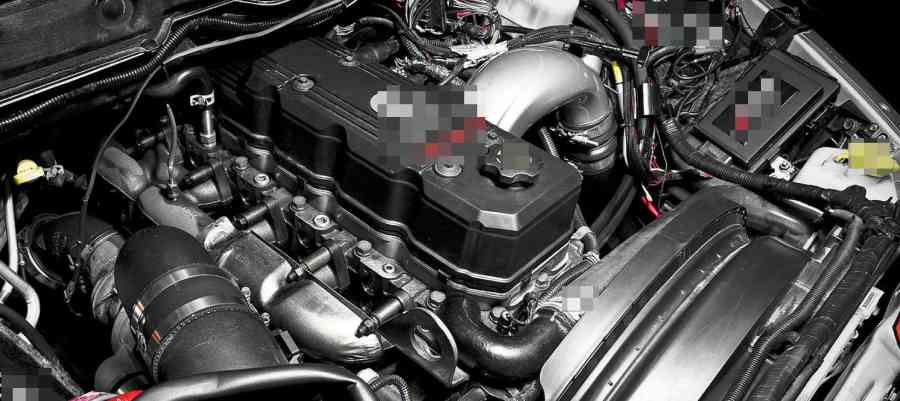
How Much Horsepower and Torque Does a 5.9 Cummins Have?
The 5.9 Cummins produces 160–325 horsepower and 400–610 lb-ft of torque in stock Dodge Ram 2500 and 3500 applications from 1989 to 2007. Early 12-valve engines started at 160 hp and 400 lb-ft, while later 24-valve common-rail engines reached 325 hp and 610 lb-ft. These figures represent factory-rated engine output rather than horsepower measured at the wheels.
The 5.9L Cummins is a 359-cubic-inch, inline-six turbocharged diesel engine. Its horsepower and torque ratings increased as Cummins introduced new fuel injection systems, revised engine components, and updated electronic controls. The original 1989 engine used a Bosch VE mechanical injection pump, while 1994 models adopted the Bosch P7100 pump. The 1998.5 introduction of the 24-valve cylinder head brought electronically controlled VP44 injection, followed by high-pressure common-rail injection in 2003.
Transmission configuration also influenced factory ratings. For example, the 2002 High Output 5.9 Cummins paired with a six-speed manual transmission produced 245 hp and 505 lb-ft of torque, compared with 235 hp and 460 lb-ft for the standard-output version. These differences reflect factory engine calibrations and drivetrain configurations rather than changes in displacement.
Peak torque occurs at lower engine speeds than peak horsepower, making the 5.9 Cummins suitable for moving heavy loads without requiring high RPM. However, horsepower and torque ratings alone do not determine a truck’s towing capacity, which also depends on its transmission, axle ratio, chassis, and manufacturer-rated weight limits.
What Are the 5.9 Cummins Horsepower and Torque Specs by Year?
Factory 5.9 Cummins horsepower increased from 160 hp in 1989 to 325 hp in its final production years, while peak torque rose from 400 to 610 lb-ft. The exact specifications vary by model year, transmission, and Standard Output (SO) or High Output (HO) configuration.
The following table summarizes factory-rated horsepower and torque for Dodge Ram pickup applications from 1989 through the 2007 model year.
| Model Year | Engine Configuration | Horsepower (hp) | Torque (lb-ft) |
|---|---|---|---|
| 1989–1993 | 12-valve, Bosch VE | 160 | 400 |
| 1994–1995 | 12-valve, P7100 | 160–175 | 400–420 |
| 1996–1998 | 12-valve, P7100 | 180–215 | 420–440 |
| 1998.5–2000 | 24-valve, VP44 | 215–235 | 420–460 |
| 2001 | 24-valve, VP44 | 235–245 | 460–505 |
| 2002 | 24-valve, VP44 | 235–245 | 460–505 |
| 2003 | 24-valve, common rail | 235–305 | 460–555 |
| 2004 | 24-valve, common rail | 235–325 | 460–600 |
| 2005 | 24-valve, common rail | 325 | 610 |
| 2006 | 24-valve, common rail | 325 | 610 |
| 2007 (early) | 24-valve, common rail | 325 | 610 |
Note: The table summarizes commonly published factory ratings. Ranges combine different transmission and output configurations rather than indicating that every truck in a model year produced the same power. The 2004 model year includes a midyear engine update, and early 2007 models retained the 5.9L engine before the transition to the 6.7L Cummins. Individual specifications should be checked against the applicable factory documentation.
The largest increases in 5.9 Cummins horsepower and torque followed changes in fuel injection technology. The Bosch P7100 system improved fuel delivery in later 12-valve engines, while the VP44 electronically controlled injection pump supported higher-output 24-valve configurations. Common-rail injection introduced more precise control of injection timing and fuel delivery, allowing later engines to achieve substantially higher factory ratings.
The 2004.5 engine update marked another important increase in output. The revised High Output common-rail engine reached 325 hp and 600 lb-ft, compared with the earlier 305 hp and 555 lb-ft High Output configuration. By 2005, maximum factory torque increased to 610 lb-ft while horsepower remained at 325 hp.
These specifications describe engine output at the crankshaft. Wheel horsepower measured on a chassis dynamometer is lower because the transmission, driveshaft, differential, and other drivetrain components absorb part of the engine’s power before it reaches the tires.
How Much Horsepower and Torque Does a 12-Valve 5.9 Cummins Produce?
The 12-valve 5.9 Cummins produces 160–215 horsepower and 400–440 lb-ft of torque in factory Dodge Ram applications from 1989 to early 1998. Output depends on the model year, fuel injection pump, and transmission. The highest-rated 12-valve configuration produces 215 hp at 2,600 RPM and 440 lb-ft at 1,600 RPM.
The 1989–1993 12-valve Cummins uses a Bosch VE rotary injection pump and produces 160 hp at 2,500 RPM and 400 lb-ft at 1,700 RPM. This first-generation engine combines a mechanically controlled fuel system with a turbocharged, inline-six design. Its relatively low peak-torque RPM provides pulling power without requiring the engine to operate at high speeds.
In 1994, Cummins replaced the Bosch VE pump with the Bosch P7100 inline injection pump. Factory output increased to 175 hp and 420 lb-ft in manual-transmission applications, while automatic-equipped trucks retained lower ratings. The P7100 delivers fuel through six individual pumping elements, allowing more precise mechanical fuel metering and greater fuel-delivery capacity than the earlier rotary system.
The 1996–1998 12-valve engines received additional factory calibration changes. Manual-transmission versions reached 215 hp and 440 lb-ft, while automatic-transmission configurations were rated at 180 hp and 420 lb-ft. The higher-output manual version developed approximately 19% more horsepower than the 180 hp automatic version, although both shared the same 5.9-liter displacement and basic engine architecture.
The 12-valve Cummins is also known for its mechanically controlled injection system. Unlike later electronically controlled versions, its fuel delivery does not depend on an electronic engine control module. This design allows fuel quantity and injection timing to be adjusted mechanically, making the P7100-equipped engine a common platform for diesel performance modifications. However, increasing fuel delivery beyond factory settings also raises demands on the turbocharger, cooling system, and drivetrain.
How Much Horsepower and Torque Does a 24-Valve 5.9 Cummins Produce?
The 24-valve 5.9 Cummins produces approximately 215–325 horsepower and 420–610 lb-ft of torque across its factory Dodge Ram applications from 1998.5 to early 2007. The 24-valve cylinder head improves airflow through four valves per cylinder, while electronically controlled fuel injection allows more precise management of fuel delivery than earlier mechanical systems.
Two major fuel injection configurations define 24-valve engine output: the Bosch VP44 system used from 1998.5 through 2002 and the Bosch high-pressure common-rail system introduced in 2003. Although both use a 24-valve cylinder head, their injection systems, engine controls, and factory performance ratings differ substantially.
What Are the 1998.5–2002 5.9 Cummins HP and Torque Ratings?
The 1998.5–2002 VP44-equipped 5.9 Cummins produces approximately 215–245 horsepower and 420–505 lb-ft of torque, depending on model year and transmission configuration. The highest factory output during this period came from the 2001–2002 High Output version, rated at 245 hp and 505 lb-ft.
The Bosch VP44 injection pump uses electronic controls to regulate fuel quantity and injection timing. Compared with the mechanical P7100 system, this arrangement allows the engine control module to adjust fuel delivery based on operating conditions, including engine speed, throttle demand, and sensor inputs. The 24-valve cylinder head also supports improved airflow, contributing to the engine’s higher output potential.
Early 1998.5–2000 engines were available with factory ratings that varied by transmission, including 215 hp and 420 lb-ft for certain automatic configurations and 235 hp and 460 lb-ft for manual configurations. In 2001, Cummins introduced a High Output version paired with the NV5600 six-speed manual transmission. This engine produced 245 hp and 505 lb-ft, providing 45 lb-ft more torque than the 235 hp, 460 lb-ft Standard Output configuration.
The High Output VP44 engine used different factory calibration and injection-related components to achieve its increased output. Its higher torque rating improved available pulling force at low engine speeds, although the truck’s rated towing capacity still depended on its complete drivetrain and chassis configuration.
What Are the 2003–2007 5.9 Cummins HP and Torque Ratings?
The 2003–early 2007 common-rail 5.9 Cummins produces approximately 235–325 horsepower and 460–610 lb-ft of torque in factory Dodge Ram applications. The highest-output versions, produced during the final years of the 5.9L engine, deliver 325 hp and 610 lb-ft.
The 2003 introduction of Bosch high-pressure common-rail injection replaced the VP44 distributor-style pump with a fuel system that maintains pressurized diesel in a shared rail. Electronically controlled injectors deliver fuel independently of the pump’s mechanical distribution cycle, allowing more flexible injection timing and multiple injection events. This system supports improved combustion control, reduced engine noise, and higher factory power ratings.
For 2003, the Standard Output engine was rated at 235 hp and 460 lb-ft, while the High Output version reached 305 hp and 555 lb-ft. The 2004 model year included a midyear update that increased High Output performance to 325 hp and 600 lb-ft. This represented an increase of 20 hp and 45 lb-ft over the earlier 305 hp configuration.
From 2005 through early 2007, the 5.9 Cummins reached its maximum factory rating of 325 hp and 610 lb-ft. These engines used common-rail injection, electronic engine management, and updated combustion calibration to produce more torque than earlier versions without increasing displacement.
The 5.9L engine remained available in early 2007 Dodge Ram heavy-duty trucks before being replaced by the 6.7L Cummins during the 2007 model year. The final 5.9L common-rail configuration produced approximately twice the horsepower and 52.5% more torque than the original 1989 engine, demonstrating the effect of fuel injection development and engine calibration over its production history.
What Is the Difference Between Standard Output and High Output 5.9 Cummins Engines?
The main difference between Standard Output (SO) and High Output (HO) 5.9 Cummins engines is their factory horsepower and torque ratings, which result from differences in fuel injection components, engine calibration, and drivetrain configurations. The High Output designation was introduced for the 2001 model year and continued through the common-rail generation, although its specifications changed over time.
The 2001–2002 High Output 5.9 Cummins produced 245 hp and 505 lb-ft of torque, compared with 235 hp and 460 lb-ft for the Standard Output version. This represented an increase of 10 hp and 45 lb-ft. The High Output engine was paired with the NV5600 six-speed manual transmission, which supported its higher factory torque rating.
The difference became more substantial with the introduction of common-rail injection in 2003. The Standard Output version produced 235 hp and 460 lb-ft, while the High Output engine delivered 305 hp and 555 lb-ft. The 70 hp and 95 lb-ft advantage reflected differences in engine calibration and supporting components, including fuel injection and turbocharger configurations.
| Model Year | Engine Version | Horsepower | Torque |
|---|---|---|---|
| 2001–2002 | Standard Output | 235 hp | 460 lb-ft |
| 2001–2002 | High Output | 245 hp | 505 lb-ft |
| 2003 | Standard Output | 235 hp | 460 lb-ft |
| 2003 | High Output | 305 hp | 555 lb-ft |
| 2004 (early) | High Output | 305 hp | 555 lb-ft |
| 2004.5 | High Output | 325 hp | 600 lb-ft |
| 2005–2007 (early) | High-output common-rail configuration | 325 hp | 610 lb-ft |
Note: These are representative factory ratings for the listed configurations. Transmission availability and engine specifications should be matched to the exact model year.
High Output engines provide greater factory-rated pulling power, particularly when operating under heavy loads. However, the HO designation does not represent one fixed engine specification across every production year. A 2002 High Output engine produces 245 hp, while a 2005 common-rail engine produces 325 hp, reflecting substantial changes in fuel injection technology and engine management.
For buyers comparing used Dodge Ram 2500 and 3500 trucks, the model year, engine identification, and transmission are more reliable indicators of factory performance than the High Output designation alone.
Which 5.9 Cummins Year Has the Most Horsepower and Torque?
The 2005, 2006, and early 2007 5.9 Cummins engines have the highest factory horsepower and torque ratings, producing 325 hp at 2,900 RPM and 610 lb-ft at 1,600 RPM. These late-production common-rail engines share the maximum factory output offered in Dodge Ram pickup applications equipped with the 5.9L Cummins.
The highest horsepower rating first appeared with the 2004.5 engine update, which increased output to 325 hp and 600 lb-ft. The 2005 model year retained the 325 hp rating while increasing maximum torque by 10 lb-ft to 610 lb-ft. This output continued through the final 5.9L-equipped trucks produced during the early 2007 model year.
Compared with the original 1989 engine, the final 5.9 Cummins configuration produced 165 additional horsepower and 210 additional lb-ft of torque. Horsepower increased by approximately 103%, while torque increased by 52.5%. These gains were achieved without changing the engine’s 5.9-liter displacement.
Peak horsepower and peak torque occur at different engine speeds because they measure different aspects of engine output. Torque represents rotational force at the crankshaft, while horsepower measures the rate at which that force performs work. The late 5.9 Cummins reaches peak torque at 1,600 RPM, allowing strong pulling performance at relatively low engine speeds, while maximum horsepower occurs at 2,900 RPM.
The 2005–early 2007 engines therefore represent the highest factory-rated 5.9 Cummins configurations for both horsepower and torque. However, choosing the best model year for towing or long-term ownership also requires evaluating transmission condition, maintenance history, vehicle weight ratings, and the intended workload.
How Does 5.9 Cummins Torque Affect Towing Performance?
The 5.9 Cummins produces 400–610 lb-ft of factory-rated torque, providing the low-RPM pulling force needed for towing heavy trailers. Higher torque output allows the engine to maintain pulling power under load, particularly when accelerating from low speeds or climbing hills. However, actual towing capacity depends on the truck’s complete drivetrain, axle ratio, suspension, and manufacturer-rated weight limits.
The 5.9L Cummins develops peak torque at relatively low engine speeds. For example, the 2005–early 2007 common-rail engine produces 610 lb-ft at 1,600 RPM, while the original 1989 engine delivers 400 lb-ft at 1,700 RPM. This low-speed torque characteristic reduces the need to operate at high RPM when pulling a trailer and helps the engine maintain performance under sustained loads.
Transmission gearing determines how effectively engine torque reaches the wheels. Lower transmission gears multiply crankshaft torque, providing greater wheel torque for moving heavy loads from a standstill. Axle ratios also affect this relationship. For example, a 4.10:1 axle ratio provides approximately 15% more torque multiplication than a 3.55:1 ratio in the same transmission gear, although it also increases engine RPM at a given road speed.
Higher engine torque does not automatically translate into a higher towing rating. A Dodge Ram 2500 and Ram 3500 equipped with the same 5.9 Cummins engine can have different towing limits because of differences in chassis configuration, gross combined weight rating (GCWR), payload capacity, and drivetrain specifications. Trailer weight, tongue or pin weight, and vehicle loading must remain within the manufacturer’s published limits.
Horsepower also matters during towing, particularly when maintaining highway speeds or climbing long grades. Torque provides rotational force, while horsepower determines how quickly the engine can perform work. A higher-horsepower 5.9 Cummins can sustain greater power output at a given engine speed, but safe towing performance still depends on cooling capacity, transmission condition, braking capability, and vehicle ratings.
How Much Horsepower Can a 5.9 Cummins Make With Upgrades?
A modified 5.9 Cummins can exceed 400–500 horsepower with suitable fuel-system upgrades, turbocharger improvements, and engine tuning, although actual output depends on the engine generation, modification combination, and measurement method. More extensive builds can exceed 700 horsepower, but these power levels require substantial supporting modifications and should not be treated as reliable targets for every stock engine.
Electronic tuning is a common performance modification for 1998.5–2007 engines. The VP44-equipped 24-valve engines and later common-rail versions use electronic controls that influence fuel delivery and injection timing. Appropriate calibration changes can increase power output, but excessive fueling can raise exhaust gas temperatures, increase smoke, and place additional stress on engine components. Earlier mechanically injected 12-valve engines require adjustments to the injection pump and related fuel-delivery components rather than electronic engine tuning.
Fuel injectors and turbochargers determine how much additional fuel and air the engine can use effectively. Larger injectors increase available fuel delivery, while a properly matched turbocharger supplies the airflow needed to burn that fuel. Increasing fuel quantity without sufficient airflow can raise exhaust gas temperatures and reduce combustion efficiency. Turbocharger selection must also account for spool response, operating RPM, and the truck’s intended use.
| Modification | Primary Function | Performance Consideration |
|---|---|---|
| ECU tuning | Adjusts electronic fuel delivery and timing | Requires suitable calibration and monitoring |
| Injection pump adjustments | Changes fuel delivery on mechanical engines | Excessive fueling increases thermal stress |
| Upgraded fuel injectors | Increases available fuel flow | Must match airflow and power requirements |
| Larger turbocharger | Increases airflow and boost capability | May reduce low-RPM response |
| Intercooler improvements | Reduces intake-air temperature | Supports thermal management under load |
| Transmission upgrades | Improves drivetrain torque capacity | Important for higher-output applications |
Note: Modifications do not provide fixed horsepower gains. Results depend on the starting engine configuration, component compatibility, tuning quality, and whether output is measured at the crankshaft or wheels.
Transmission durability becomes increasingly important as torque output rises. The factory clutch, torque converter, and automatic transmission components were designed around specific engine ratings. Increasing engine torque beyond those ratings can accelerate clutch slip, transmission wear, and drivetrain failures. High-power builds may require stronger clutch assemblies, upgraded torque converters, reinforced transmission components, and additional cooling capacity.
For a truck used primarily for towing, a balanced modification package is more useful than pursuing maximum horsepower alone. Maintaining low-RPM response, controlling exhaust gas temperature, and preserving drivetrain reliability are essential for sustained operation under load. Performance upgrades must also comply with applicable emissions regulations, particularly when the truck is operated on public roads.
Read more: 12 Valve Cummins HP and Torque by Year (1989–1998)
How Does the 5.9 Cummins Compare to the 6.7 Cummins in Horsepower and Torque?
The early 6.7 Cummins produces 350 horsepower and 610–650 lb-ft of torque, compared with 325 horsepower and 610 lb-ft from the final 5.9 Cummins. The 6.7L engine replaced the 5.9L in Dodge Ram heavy-duty pickups during the 2007 model year, introducing greater displacement, updated fuel injection controls, and revised emissions equipment.
The 5.9 Cummins has a displacement of 5.9 liters (359 cubic inches), while the 6.7 Cummins displaces 6.7 liters (408 cubic inches). The additional displacement comes primarily from a longer piston stroke, increasing the volume of air the engine can process during each operating cycle. This supports greater torque production when combined with appropriate fuel delivery, turbocharger operation, and engine calibration.
| Specification | 5.9 Cummins (2006) | 6.7 Cummins (2007.5) |
|---|---|---|
| Displacement | 5.9L (359 cu in) | 6.7L (408 cu in) |
| Engine configuration | Inline-six, turbo diesel | Inline-six, turbo diesel |
| Horsepower | 325 hp | 350 hp |
| Torque | 610 lb-ft | 610–650 lb-ft |
| Fuel injection | High-pressure common rail | High-pressure common rail |
| Valvetrain | 24 valves | 24 valves |
| Turbocharger | Fixed-geometry design | Variable-geometry design |
Note: The early 6.7L Cummins torque rating varies by transmission configuration. These figures compare factory Dodge Ram pickup applications rather than modified engines or later 6.7L generations.
The 2007.5 6.7 Cummins delivers 25 more horsepower than the 2006 5.9 Cummins, representing an increase of approximately 7.7%. Its maximum factory torque rating of 650 lb-ft is 40 lb-ft higher, or approximately 6.6% greater. However, certain early 6.7L configurations retained a 610 lb-ft torque rating, making transmission selection important when comparing specifications.
The 6.7 Cummins also introduced a variable-geometry turbocharger that adjusts exhaust flow through the turbine to improve boost response across different engine speeds. This system supports low-speed performance and works with the engine’s exhaust braking function. The 5.9 Cummins uses a simpler fixed-geometry turbocharger arrangement in its final factory configuration.
Emissions equipment represents another major difference. The 2007.5 6.7 Cummins introduced exhaust gas recirculation and a diesel particulate filter to meet updated emissions requirements. The final 5.9 Cummins did not use the same factory emissions configuration, resulting in differences in maintenance requirements and exhaust system complexity.
For buyers comparing these engines, the 5.9 Cummins offers a simpler factory emissions system, while the early 6.7 Cummins provides additional horsepower, higher maximum torque in certain configurations, and improved turbocharger control. Actual towing capability and operating reliability depend on the complete truck configuration, maintenance history, and mechanical condition rather than engine output alone.
What Factors Affect 5.9 Cummins Horsepower and Torque?
Five primary factors affect 5.9 Cummins horsepower and torque: fuel delivery, turbocharger airflow, engine calibration, operating conditions, and mechanical condition. These factors determine how effectively the engine converts diesel fuel into rotational force and whether its measured output matches factory specifications.
Fuel delivery directly influences the amount of energy available during combustion. The 1989–1993 engines use a Bosch VE injection pump, the 1994–1998 12-valve engines use a Bosch P7100 pump, and the 1998.5–2002 engines use an electronically controlled VP44 pump. Common-rail engines introduced in 2003 use electronically controlled injectors supplied by a high-pressure fuel rail. Each system provides different levels of control over injection pressure, timing, and fuel quantity, contributing to differences in factory output.
Turbocharger airflow determines how much oxygen reaches the cylinders during combustion. A turbocharger compresses intake air, increasing its density and allowing the engine to burn more fuel efficiently. Insufficient boost pressure, intake restrictions, or leaks in the charge-air system can reduce available oxygen and limit power production. For example, a leaking intercooler boot can reduce boost pressure under acceleration, resulting in lower engine output and increased exhaust smoke.
Engine calibration controls the relationship between fuel quantity, injection timing, boost pressure, and engine speed. On electronically controlled 5.9 Cummins engines, the engine control module uses sensor information to regulate fuel delivery. Factory calibrations differ by model year and transmission, explaining why engines with the same displacement and basic mechanical design can have different horsepower and torque ratings. Mechanical 12-valve engines rely on injection pump settings and mechanical governing systems instead of electronic fuel management.
Operating conditions also affect measured performance. High altitude reduces ambient air density, limiting the oxygen available for combustion, although turbocharging compensates for part of this reduction. High intake-air temperatures can reduce charge density and increase thermal stress. Fuel quality, engine temperature, and sustained load further influence combustion efficiency and the engine’s ability to maintain its rated output.
Mechanical condition determines whether an engine can deliver its intended performance. Worn injectors, restricted fuel filters, low fuel supply pressure, boost leaks, and reduced cylinder compression can decrease horsepower and torque. For example, inadequate fuel supply pressure on a VP44-equipped engine can restrict fuel delivery and contribute to injection pump damage. Maintaining the fuel system, intake components, cooling system, and turbocharger helps preserve factory performance.
Horsepower measurements must also distinguish between crankshaft output and wheel output. Manufacturers publish engine ratings measured at the crankshaft under standardized test conditions, while chassis dynamometers measure power delivered through the drivetrain. Transmission, differential, and tire-related losses reduce measured wheel horsepower. Therefore, a stock 325 hp 5.9 Cummins will generally produce a lower horsepower reading at the wheels, even when the engine is operating correctly.