The 5.9L 12-valve Cummins diesel engine produces 160–215 horsepower and 400–440 lb-ft of torque, depending on the model year and transmission configuration. Used in Dodge Ram trucks from 1989 through part of 1998, this turbocharged inline-six engine delivers strong low-RPM torque through its mechanical fuel injection system. Factory horsepower and torque ratings increased throughout its production run as Cummins introduced intercooling, revised engine calibrations, and upgraded fuel injection components.
The 1989–1993 engines used a Bosch VE rotary injection pump, while the 1994–1998 models featured the Bosch P7100 inline injection pump. These fuel systems influenced engine performance, fuel delivery, and modification potential. Factory power ratings also differed between manual and automatic transmission configurations, making the model year and drivetrain important when comparing specifications.
Understanding 12 valve Cummins HP and torque specifications helps truck owners evaluate engine performance, towing capability, and potential upgrades. This guide provides factory horsepower and torque ratings by year, explains the mechanical differences behind those ratings, and compares stock performance with modified configurations. It also examines how injection pumps, transmissions, and performance upgrades affect the engine’s power output.
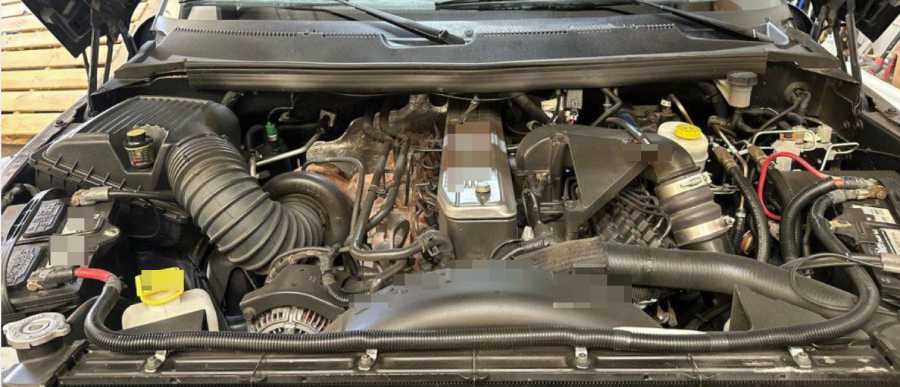
How Much Horsepower and Torque Does a Stock 12 Valve Cummins Produce?
A stock 5.9L 12-valve Cummins produces 160–215 horsepower and 400–440 lb-ft of torque, depending on the model year and transmission configuration. Early 1989–1993 engines were rated at 160 horsepower, while later 1996–1998 models equipped with manual transmissions reached 215 horsepower and 440 lb-ft of torque. These figures represent factory-rated engine output measured at the crankshaft, not power delivered to the wheels.
The 12-valve Cummins is a 5.9-liter turbocharged inline-six diesel engine designed to deliver substantial torque at relatively low engine speeds. Its long-stroke design, 102 mm bore, and 120 mm stroke contribute to strong pulling performance. Unlike gasoline engines that typically produce peak horsepower at higher RPM, the 12-valve Cummins develops its peak torque at approximately 1,600–1,700 RPM, depending on the engine configuration. This characteristic makes it suitable for hauling heavy loads and maintaining pulling power without requiring high engine speeds.
The relationship between horsepower and torque explains why the engine performs effectively despite its relatively modest factory horsepower ratings. Torque measures rotational force, while horsepower represents the rate at which an engine performs work. For example, an engine producing 440 lb-ft of torque at 1,600 RPM generates approximately 134 horsepower at that operating point. Horsepower increases as engine speed rises, provided the available torque does not decrease proportionally.
The following table summarizes the primary specifications of the stock 12-valve Cummins engine.
| Specification | Factory specification |
|---|---|
| Engine | Cummins 5.9L 6BT |
| Configuration | Inline-six, 12 valves |
| Displacement | 5.9 liters (359 cu in) |
| Bore × stroke | 102 × 120 mm |
| Horsepower | 160–215 hp |
| Torque | 400–440 lb-ft |
| Peak torque RPM | Approximately 1,600–1,700 RPM |
| Fuel injection | Bosch VE or Bosch P7100 |
| Aspiration | Turbocharged |
| Production in Dodge trucks | 1989–1998 |
Factory horsepower should also be distinguished from wheel horsepower. Manufacturers publish engine output measured at the crankshaft, while chassis dynamometers measure power delivered through the transmission, driveshaft, and differential to the wheels. Mechanical losses throughout the drivetrain cause wheel horsepower to be lower than crankshaft horsepower. Consequently, a stock 215-horsepower Cummins will generally register less than 215 horsepower on a chassis dynamometer, even when the engine operates within factory specifications.
The engine’s combination of low-RPM torque, mechanical fuel injection, and heavy-duty construction established the 12-valve Cummins as a popular diesel platform for towing and performance modifications. However, its actual factory output depends on the specific production year, fuel system calibration, and transmission application rather than engine displacement alone.
What Are the 12 Valve Cummins HP and Torque Specs by Year?
The 5.9L 12-valve Cummins produced 160–215 horsepower and 400–440 lb-ft of torque between 1989 and 1998, with factory ratings determined by model year, transmission type, and engine calibration. The most significant changes occurred with the introduction of intercooling in 1991 and the transition from the Bosch VE rotary injection pump to the Bosch P7100 inline injection pump in 1994. Later models received revised fuel delivery settings that increased horsepower while maintaining the engine’s low-RPM torque characteristics.
The table below compares the factory horsepower and torque ratings for the primary 12-valve Cummins configurations used in Dodge pickup trucks.
| Model years | Transmission | Horsepower | Torque |
|---|---|---|---|
| 1989–1991 | Manual / Automatic | 160 hp | 400 lb-ft |
| 1991.5–1993 | Manual / Automatic | 160 hp | 400 lb-ft |
| 1994–1995 | Automatic | 160 hp | 400 lb-ft |
| 1994–1995 | Manual | 175 hp | 420 lb-ft |
| 1996–1998 | Automatic | 180 hp | 420 lb-ft |
| 1996–1998 | Manual | 215 hp | 440 lb-ft |
These figures represent commonly published factory ratings for standard Dodge pickup applications. The 1998 figures apply specifically to trucks equipped with the 12-valve engine, as Dodge introduced the 24-valve Cummins during the 1998 model year.
What Were the 1989–1993 12 Valve Cummins HP and Torque Ratings?
The 1989–1993 12-valve Cummins engines produced 160 horsepower at 2,500 RPM and 400 lb-ft of torque at approximately 1,600–1,700 RPM. These first-generation engines used the Bosch VE rotary injection pump, which mechanically controlled fuel delivery to all six cylinders. Their factory power ratings remained consistent despite changes to the engine’s air intake and cooling systems.
The earliest 1989–1991 engines were not equipped with a factory intercooler. Dodge introduced intercooling during the 1991 model year, creating the commonly recognized 1991.5–1993 configuration. The intercooler reduced compressed intake-air temperatures, increasing air density and improving thermal management under load. However, this upgrade did not increase the published factory horsepower or torque ratings.
These early engines established the 5.9L Cummins as a diesel option for heavy-duty Dodge pickups. Their 400 lb-ft torque rating provided substantial pulling force at low engine speeds, while the mechanically governed fuel system allowed the engine to operate without the electronic fuel injection controls used in later diesel engines.
What Were the 1994–1995 12 Valve Cummins HP and Torque Ratings?
The 1994–1995 12-valve Cummins produced 160 horsepower and 400 lb-ft of torque with an automatic transmission, or 175 horsepower and 420 lb-ft with a manual transmission. These ratings accompanied the introduction of the second-generation Dodge Ram and the Bosch P7100 inline mechanical injection pump.
The P7100 replaced the earlier Bosch VE pump and used individual pumping elements to deliver high-pressure fuel to each cylinder. Its mechanical design provided precise fuel metering and greater adjustment potential, making it a defining component of second-generation 12-valve Cummins engines. Factory calibration differences between manual and automatic applications contributed to their distinct horsepower and torque ratings.
Manual-transmission models produced 15 additional horsepower and 20 additional lb-ft of torque compared with automatic versions. This difference reflected factory engine configurations rather than simply the mechanical efficiency of the transmissions. The higher-output manual configuration also provided a foundation for subsequent increases in factory power ratings.
What Were the 1996–1998 12 Valve Cummins HP and Torque Ratings?
The 1996–1998 12-valve Cummins produced 180 horsepower and 420 lb-ft of torque with an automatic transmission, while manual-transmission models produced 215 horsepower and 440 lb-ft. These were the highest factory horsepower and torque ratings offered for the 12-valve Cummins in standard Dodge pickup applications.
Compared with the 1994–1995 engines, automatic models gained 20 horsepower and 20 lb-ft of torque. Manual models gained 40 horsepower and 20 lb-ft. These increases resulted primarily from revised engine calibrations and fuel delivery settings rather than changes to the engine’s fundamental 5.9-liter displacement or 12-valve cylinder head configuration.
The 215-horsepower manual version represented a 34.4% horsepower increase over the original 160-horsepower engine introduced in 1989. Its 440 lb-ft torque rating also represented a 10% increase over the original 400 lb-ft specification. These improvements expanded the engine’s performance capabilities while preserving its mechanical injection system and low-speed torque delivery.
In 1998, Dodge transitioned to the electronically controlled 5.9L 24-valve Cummins ISB engine during the model year. Consequently, not every 1998 Dodge Ram diesel contains a 12-valve engine. Identifying the engine configuration is essential when comparing factory horsepower and torque specifications or selecting replacement components.
Technical accuracy note: The table reflects the standard U.S. configurations. California-emissions manual-transmission models from 1996–1998 were also available with 180 hp and 420 lb-ft, rather than the 215 hp and 440 lb-ft federal rating. The exact rating should therefore be checked against the vehicle’s emissions configuration.
Why Did 12 Valve Cummins Horsepower and Torque Change Between 1989 and 1998?
The 12-valve Cummins horsepower and torque ratings increased between 1989 and 1998 primarily because of improvements in fuel injection technology, engine calibration, and air intake management. Factory horsepower rose from 160 hp in 1989 to 215 hp in the highest-output 1996–1998 configurations, while peak torque increased from 400 to 440 lb-ft. These gains occurred without changing the engine’s 5.9-liter displacement, inline-six configuration, or 12-valve cylinder head design.
The transition from the Bosch VE rotary injection pump to the Bosch P7100 inline injection pump in 1994 was a major mechanical change. The VE pump used a distributor-style mechanism to supply fuel to all six cylinders, while the P7100 employed six individual pumping elements. The P7100’s design provided greater fuel delivery adjustment potential and supported different factory calibrations. However, the injection pump alone did not determine horsepower. Injection timing, injected fuel quantity, engine speed limits, and available combustion air also influenced the final output.
Fuel delivery calibration played a particularly important role in the 1996–1998 power increases. Cummins revised the fueling characteristics of later P7100-equipped engines, allowing higher-output configurations to generate additional power at elevated engine speeds. For example, manual-transmission ratings increased from 175 hp and 420 lb-ft in 1994–1995 to 215 hp and 440 lb-ft in 1996–1998. The 40-horsepower increase was proportionally greater than the 20 lb-ft torque increase because horsepower depends on both torque and engine speed.
Turbocharging and intercooling also influenced engine performance. The turbocharger compressed intake air to increase the oxygen available for diesel combustion, while the intercooler reduced the temperature of that compressed air before it entered the cylinders. Dodge introduced factory intercooling during the 1991 model year, improving intake-air temperature control without increasing the published 160-horsepower rating. Cooler, denser intake air supported more consistent combustion conditions under sustained loads and provided additional thermal capacity for later engine calibrations.
Transmission-specific engine calibrations further explain the differences in published power ratings. In 1994–1995, manual-transmission engines produced 175 hp and 420 lb-ft, compared with 160 hp and 400 lb-ft for automatic models. By 1996, the commonly specified federal manual configuration reached 215 hp and 440 lb-ft, while automatic models produced 180 hp and 420 lb-ft. These differences reflected manufacturer-selected fueling and operating characteristics for each powertrain application, not merely power losses through the transmission.
Overall, the increase in 12-valve Cummins horsepower and torque resulted from coordinated changes to fuel delivery, engine calibration, and powertrain configuration. The engine retained its original mechanical architecture throughout production, demonstrating how adjustments to combustion and fuel management increased factory output without requiring a larger displacement or additional cylinder head valves.
How Do Manual and Automatic 12 Valve Cummins Power Ratings Compare?
Manual-transmission 12-valve Cummins engines generally produced 15–35 more horsepower and 20 lb-ft more torque than automatic-transmission versions in standard federal-emissions Dodge Ram configurations from 1994 to 1998. These differences resulted from factory engine calibration and fuel delivery settings rather than the transmission’s mechanical efficiency alone. The largest horsepower difference occurred in 1996–1998, when manual models produced 215 hp compared with 180 hp for automatic models.
The following table compares factory horsepower and torque ratings for manual and automatic 12-valve Cummins configurations.
| Model years | Transmission | Horsepower | Torque |
|---|---|---|---|
| 1989–1993 | Manual | 160 hp | 400 lb-ft |
| 1989–1993 | Automatic* | 160 hp | 400 lb-ft |
| 1994–1995 | Manual | 175 hp | 420 lb-ft |
| 1994–1995 | Automatic | 160 hp | 400 lb-ft |
| 1996–1998 | Manual | 215 hp | 440 lb-ft |
| 1996–1998 | Automatic | 180 hp | 420 lb-ft |
Automatic transmissions became available in Dodge Cummins pickups during the first-generation production period. The 1996–1998 manual ratings shown represent standard federal-emissions configurations; certain California-emissions models had lower ratings.
The manual-transmission advantage was particularly noticeable in later P7100-equipped engines. The NV4500 five-speed manual transmission was paired with higher-output engine calibrations, allowing the 1996–1998 federal-specification configuration to produce 215 hp and 440 lb-ft. Automatic models used different factory fueling calibrations and were rated at 180 hp and 420 lb-ft. The 35-horsepower difference represented approximately 19.4% more rated horsepower for the manual configuration.
Transmission design also affects how engine torque reaches the wheels. Manual transmissions use a mechanical clutch to connect the engine to the gearbox, while conventional automatic transmissions use a torque converter. A torque converter can multiply torque during certain operating conditions, particularly when accelerating from a stop, but it also introduces hydraulic losses when operating without lockup. Consequently, transmission efficiency influences wheel horsepower even when two engines produce identical crankshaft output.
Factory horsepower ratings must therefore be distinguished from chassis dynamometer measurements. A manual-transmission truck may deliver a different percentage of its rated engine power to the wheels than an automatic truck because of differences in drivetrain friction, torque converter operation, and testing conditions. However, the factory horsepower differences between 12-valve Cummins transmission configurations primarily reflect engine calibration rather than measured drivetrain losses.
For towing and performance applications, transmission selection influences more than peak horsepower. Gear ratios, torque converter characteristics, clutch capacity, and transmission durability affect how effectively the engine delivers power under load. A higher factory horsepower rating does not automatically mean a truck has a higher towing capacity, because vehicle weight ratings, axle ratios, braking systems, and drivetrain specifications also determine permissible trailer weight.
How Did the Bosch VE and P7100 Injection Pumps Affect 12 Valve Cummins Performance?
The Bosch VE and P7100 injection pumps affected 12-valve Cummins performance by controlling fuel delivery quantity, injection timing, and engine speed characteristics. The Bosch VE rotary pump was used in 1989–1993 Dodge Cummins engines rated at 160 horsepower and 400 lb-ft of torque. The Bosch P7100 inline pump replaced it in 1994 and supported factory ratings reaching 215 horsepower and 440 lb-ft by 1996. Both pumps operate mechanically, but their internal designs and fuel delivery capabilities differ significantly.
The Bosch VE pump uses a rotary distributor mechanism to deliver pressurized diesel fuel to the engine’s six cylinders. A single pumping assembly distributes fuel sequentially through individual injection lines, while mechanical controls regulate fuel quantity according to engine speed and load. This compact design provided reliable fuel delivery for early 12-valve Cummins applications. However, its fuel delivery capacity and adjustment range generally offer less flexibility for high-horsepower modifications than the later P7100 system.
The Bosch P7100 uses six individual pumping elements arranged in an inline configuration, with one element supplying fuel to each cylinder. A camshaft inside the pump operates the pumping plungers, while a mechanical control rack adjusts injected fuel quantity. This arrangement supports substantial fuel delivery adjustments and makes the P7100 particularly suitable for performance tuning. Increasing fuel delivery can raise engine torque and horsepower when sufficient intake air is available to support efficient combustion.
The following table summarizes the primary differences between the two injection systems.
| Specification | Bosch VE | Bosch P7100 |
|---|---|---|
| Pump design | Rotary distributor | Inline mechanical |
| Dodge Cummins applications | 1989–1993 | 1994–1998 |
| Pumping elements | Single distributor pumping assembly | Six individual pumping elements |
| Fuel delivery control | Mechanical | Mechanical |
| Factory horsepower range | 160 hp | 160–215 hp |
| Factory torque range | 400 lb-ft | 400–440 lb-ft |
| Performance adjustment potential | More limited | Greater |
| High-horsepower tuning | Requires more extensive modifications | More adaptable to increased fuel delivery |
The P7100’s greater adjustment potential explains its popularity among diesel performance enthusiasts. Fuel plate modifications, governor spring upgrades, and injection timing adjustments can change fuel delivery characteristics without replacing the entire injection system. However, increasing fuel quantity beyond the available air supply can produce excessive exhaust smoke and elevated exhaust gas temperatures. Turbocharger airflow, engine cooling, and drivetrain capacity must therefore be considered alongside fuel system modifications.
Injection pump design alone does not explain every difference in factory horsepower. For example, both the 1994–1995 and 1996–1998 engines used the P7100, yet their highest standard factory ratings increased from 175 to 215 horsepower. This demonstrates that pump calibration, fuel delivery settings, and engine operating characteristics influence performance even when the underlying injection pump design remains unchanged.
For stock applications, both injection systems provide the mechanically controlled fuel delivery associated with the 12-valve Cummins engine. The VE pump is closely associated with first-generation Dodge Cummins trucks, while the P7100 offers greater flexibility for owners pursuing substantial horsepower and torque increases. The appropriate system depends on the engine generation, intended power output, and supporting mechanical components.
How Much Horsepower Can a Modified 12 Valve Cummins Produce?
A modified 5.9L 12-valve Cummins can produce 300–500 horsepower with appropriate fuel system, turbocharger, and supporting upgrades, while extensively built engines can exceed 800–1,000 horsepower. Actual output depends on the injection pump configuration, turbocharger capacity, fuel delivery, engine condition, and drivetrain modifications. These figures represent illustrative performance build ranges rather than guaranteed results, and horsepower measurements must distinguish between crankshaft output and wheel horsepower.
The Bosch P7100-equipped 1994–1998 engines are particularly popular for performance modifications because their mechanical injection pumps allow substantial fuel delivery adjustments. A moderate build targeting approximately 300–400 horsepower may involve fuel plate adjustments, governor spring upgrades, improved airflow, and exhaust gas temperature monitoring. The exact modifications depend on the starting engine configuration, and additional fuel must be matched with sufficient intake air to maintain acceptable combustion temperatures and smoke levels.
Higher-output builds targeting 400–600 horsepower require more extensive supporting modifications. Larger fuel injectors, upgraded turbochargers, and carefully calibrated injection timing help deliver the fuel and airflow needed for increased combustion pressure. At these power levels, the stock clutch or automatic transmission may become a limiting component. Upgraded transmission components, improved engine cooling, and careful monitoring of boost pressure and exhaust gas temperature become increasingly important for maintaining reliability.
The following table illustrates common horsepower targets and their associated modification requirements.
| Performance level | Approximate horsepower target | Typical modifications |
|---|---|---|
| Stock engine | 160–215 hp | Factory configuration |
| Mild performance build | 250–350 hp | Fuel adjustments, governor springs, monitoring |
| Moderate performance build | 350–500 hp | Fuel system upgrades, turbocharger improvements |
| High-performance build | 500–800 hp | Larger injectors, upgraded turbocharger, reinforced drivetrain |
| Competition-oriented build | 800–1,000+ hp | Extensive engine, fuel system, and drivetrain modifications |
These ranges are general build targets, not independently verified dyno results. They also do not represent a universal safe horsepower limit for every 12-valve Cummins engine. A properly maintained engine with carefully selected upgrades may tolerate increased output differently from a high-mileage engine with worn components or inadequate cooling.
Engine durability becomes increasingly important as horsepower rises. Greater fuel delivery and boost pressure increase cylinder pressure, thermal loading, and mechanical stress on internal components. Cylinder head sealing, connecting rods, pistons, bearings, and cooling capacity must be evaluated according to the intended operating conditions. Sustained towing places different demands on an engine than short-duration acceleration or competition use because high loads are maintained for longer periods.
Wheel horsepower also differs from crankshaft horsepower because power is lost through the transmission, driveshaft, differential, and other drivetrain components. For example, a truck producing 400 wheel horsepower may have substantially higher crankshaft output, depending on drivetrain efficiency and dynamometer conditions. Performance comparisons should therefore use the same measurement standard rather than treating crankshaft and wheel horsepower figures as interchangeable.
For owners seeking a balance between increased power and everyday usability, a moderate horsepower target with adequate cooling, fuel system calibration, and drivetrain support is generally more practical than maximizing peak dyno output. The appropriate power level ultimately depends on whether the truck is used for daily driving, towing, recreational performance, or competition.
Which Upgrades Increase 12 Valve Cummins Horsepower and Torque?
The most effective upgrades for increasing 12-valve Cummins horsepower and torque include fuel plate adjustments, governor spring kits, larger fuel injectors, turbocharger upgrades, and injection timing optimization. These modifications increase fuel delivery, extend the engine’s usable RPM range, or improve combustion airflow. The Bosch P7100-equipped 1994–1998 engines offer particularly flexible tuning options, while earlier Bosch VE-equipped engines require different fuel system adjustments.
Fuel plate modifications increase horsepower by changing the fuel delivery characteristics of the Bosch P7100 injection pump. The fuel plate influences how much fuel the pump supplies under different operating conditions, and adjusting its position or profile can increase available fuel quantity. Additional fuel produces greater combustion energy when sufficient oxygen is present, resulting in higher torque and horsepower. However, excessive fueling without corresponding airflow improvements increases exhaust smoke and exhaust gas temperatures, particularly during heavy acceleration or towing.
Governor spring upgrades increase the usable engine speed range by changing how the injection pump’s mechanical governor regulates fuel delivery at higher RPM. Factory governor settings limit fueling as engine speed approaches the governed range, reducing the engine’s ability to maintain horsepower at elevated RPM. Common performance modifications include 3,000 RPM and 4,000 RPM governor spring kits for P7100-equipped engines. These kits do not automatically increase peak torque, but they can help sustain fuel delivery at higher engine speeds. Higher-RPM operation also increases valvetrain demands, making appropriate valve springs and engine condition important considerations.
Larger fuel injectors increase the amount of diesel fuel delivered into the combustion chambers. Injector nozzle size, spray pattern, and injection characteristics influence fuel atomization and combustion efficiency. Properly matched injectors can support higher horsepower when combined with sufficient turbocharger airflow and appropriate injection pump calibration. Oversized injectors, however, can cause excessive smoke, poor low-speed drivability, and elevated combustion temperatures. Injector selection should therefore match the intended horsepower target rather than simply maximizing fuel flow.
Turbocharger upgrades increase horsepower and torque by supplying more compressed air to support additional fuel combustion. The factory turbocharger provides sufficient airflow for standard engine output, but higher fueling levels can exceed its efficient operating range. An appropriately sized upgraded turbocharger increases available airflow and can reduce excessive exhaust gas temperatures under high loads. Turbocharger sizing also affects response characteristics: a larger unit may support greater peak horsepower while producing slower boost response at low engine speeds. This tradeoff is particularly important for trucks used for towing.
Injection timing adjustments influence engine performance by changing when diesel fuel enters the combustion chamber relative to piston position. Advancing injection timing can improve combustion efficiency and power delivery under certain operating conditions, particularly when combined with increased fueling. However, excessive timing advance can increase peak cylinder pressure, combustion noise, and mechanical stress. The appropriate setting depends on the injection pump, injector configuration, engine speed range, and intended use.
The following table summarizes how each upgrade affects engine performance.
| Upgrade | Primary function | Main consideration |
|---|---|---|
| Fuel plate adjustment | Increases available fuel delivery | Exhaust smoke and temperature |
| Governor spring kit | Extends usable fueling RPM | Valvetrain and engine speed limits |
| Larger fuel injectors | Supports greater fuel delivery | Airflow and combustion quality |
| Turbocharger upgrade | Increases intake airflow | Boost response and sizing |
| Injection timing adjustment | Changes combustion timing | Cylinder pressure and engine stress |
Supporting modifications become increasingly important as engine output rises. A stronger clutch or upgraded automatic transmission helps transfer additional torque without excessive slipping, while exhaust gas temperature and boost pressure gauges provide information about engine operating conditions. Improved cooling and appropriate maintenance also help manage the thermal loads associated with increased fueling and sustained high-power operation.
For a street-driven 12-valve Cummins, the most effective upgrade strategy is to match fuel delivery with available airflow and drivetrain capacity. A fuel system modification alone does not guarantee a reliable horsepower increase, and a larger turbocharger does not automatically improve performance without adequate fueling. Coordinating these components produces a more usable power curve while reducing the risk of excessive temperatures, drivetrain failure, and premature engine wear.
Read more: AFM vs DFM: Differences, Reliability & Fuel Economy
How Does 12 Valve Cummins Torque Affect Towing Performance?
The 12-valve Cummins delivers 400–440 lb-ft of factory-rated torque at approximately 1,600–1,700 RPM, providing strong low-speed pulling power for towing and hauling. This torque output allows the 5.9L diesel engine to generate substantial rotational force without operating at high engine speeds. Its low-RPM torque characteristics make it particularly suitable for heavy-duty Dodge Ram trucks used to pull trailers, transport equipment, and carry substantial payloads.
Engine torque affects towing performance by determining the rotational force available to move a loaded vehicle. The 12-valve Cummins uses a long-stroke design, turbocharging, and diesel combustion to produce substantial torque at relatively low RPM. For example, the 1996–1998 manual-transmission configuration produces 440 lb-ft of peak torque, compared with 400 lb-ft in the original 1989 engine. This represents a 10% increase in factory-rated peak torque, although actual towing performance also depends on gearing, vehicle weight, and operating conditions.
Transmission gear ratios and differential gearing multiply engine torque before it reaches the wheels. A lower transmission gear provides greater torque multiplication, helping a loaded truck accelerate from a stop or climb steep grades. For example, an engine producing 400 lb-ft of torque through a 3.0:1 transmission gear and a 4.10:1 axle ratio generates approximately 4,920 lb-ft of combined axle torque before drivetrain losses. This calculation illustrates why gearing significantly affects pulling force even when engine horsepower and torque ratings remain unchanged.
The relationship between horsepower and torque also influences towing performance at different road speeds. Torque contributes to the pulling force available through the drivetrain, while horsepower determines how quickly the engine can perform work. At highway speeds or on sustained uphill grades, sufficient horsepower becomes increasingly important for maintaining vehicle speed. A 215-horsepower 12-valve Cummins can therefore offer better high-load acceleration and grade-climbing performance than a 160-horsepower version under otherwise comparable conditions.
Factory towing capacity, however, is not determined by engine torque alone. Dodge Ram 2500 and 3500 trucks equipped with the 12-valve Cummins have different towing ratings depending on model year, transmission, axle ratio, cab configuration, drivetrain, and vehicle equipment. Gross Combined Weight Rating (GCWR), Gross Vehicle Weight Rating (GVWR), axle weight ratings, and hitch limitations establish the permissible operating limits. Increasing engine horsepower or torque does not automatically increase these manufacturer-rated capacities.
For regular towing, maintaining appropriate engine operating temperatures is essential. Sustained loads increase fuel consumption, exhaust gas temperature, and cooling system demand, particularly when climbing grades or towing in hot weather. A properly matched transmission, suitable axle gearing, functioning cooling system, and appropriate trailer brakes contribute to reliable towing performance. The 12-valve Cummins’ low-RPM torque provides a strong foundation for hauling, but safe towing ultimately depends on the complete vehicle configuration rather than engine output alone.
How Do 12 Valve and 24 Valve Cummins Horsepower and Torque Compare?
The 5.9L 24-valve Cummins generally produces more factory horsepower and torque than the 12-valve Cummins, particularly in later model years. The 12-valve engine produced 160–215 horsepower and 400–440 lb-ft of torque in Dodge pickup applications from 1989 to early 1998. The 24-valve Cummins, introduced during the 1998 model year, initially produced 215–235 horsepower and 420–460 lb-ft of torque, depending on transmission configuration. Later versions reached 325 horsepower and 600 lb-ft of torque by 2004.5–2007.
The following table compares the factory specifications of the two 5.9L Cummins engine generations.
| Specification | 12-Valve Cummins | 24-Valve Cummins |
|---|---|---|
| Dodge pickup model years | 1989–1998 | 1998–2007 |
| Displacement | 5.9L | 5.9L |
| Cylinder configuration | Inline-six | Inline-six |
| Valves per cylinder | 2 | 4 |
| Total valves | 12 | 24 |
| Factory horsepower | 160–215 hp | 215–325 hp |
| Factory torque | 400–440 lb-ft | 420–600 lb-ft |
| Fuel injection | Bosch VE / P7100 | Bosch VP44 / Common Rail |
| Fuel control | Mechanical | Electronic |
| Maximum factory-rated engine speed | Varies by calibration | Varies by calibration |
The most significant mechanical difference is the cylinder head design. The 12-valve Cummins uses two valves per cylinder, consisting of one intake valve and one exhaust valve. The 24-valve engine uses four valves per cylinder, providing two intake valves and two exhaust valves. This arrangement improves airflow through the cylinder head and supports more efficient cylinder filling at higher engine speeds. Combined with revised fuel injection technology, the 24-valve design contributed to higher factory power ratings.
Fuel injection technology also distinguishes the two generations. The 12-valve Cummins uses mechanically controlled Bosch VE or P7100 injection pumps, allowing fuel delivery adjustments without electronic engine management. Early 24-valve engines introduced the electronically controlled Bosch VP44 injection pump, while 2003–2007 versions adopted high-pressure common-rail injection. Common-rail technology provides more precise control over injection timing, fuel quantity, and multiple injection events, improving combustion management and supporting higher horsepower and torque output.
The 24-valve Cummins also offers greater factory torque in its later configurations. For example, the highest-rated 12-valve Dodge pickup engine produced 440 lb-ft, while the 2004.5–2007 high-output 5.9L common-rail Cummins produced 600 lb-ft. This represents approximately 36.4% more peak torque. The increase improves available engine pulling force, although actual towing capacity remains dependent on the truck’s transmission, axle ratio, chassis, and manufacturer weight ratings.
Despite the 24-valve engine’s higher factory output, the 12-valve Cummins remains a popular platform for mechanical performance modifications. Its Bosch P7100 injection pump allows fuel delivery and governor adjustments without electronic tuning software. In contrast, electronically controlled 24-valve engines use engine management systems that coordinate fuel injection parameters. The preferred platform therefore depends on whether the owner prioritizes mechanical simplicity, electronic fuel control, factory performance, or modification requirements.
For buyers comparing used Dodge Ram diesel trucks, the 12-valve Cummins offers a mechanically controlled fuel system and substantial low-RPM torque, while later 24-valve engines provide higher factory horsepower, increased torque, and more advanced injection technology. Both engines share the 5.9L inline-six architecture, but their cylinder head designs, fuel systems, and factory calibrations create distinct performance characteristics.