A child should remain in a rear-facing car seat until they reach the maximum height or weight limit specified by the car seat manufacturer. There is no single age when every child should switch to a forward-facing car seat. Although some convertible car seats allow forward-facing use at younger ages, the American Academy of Pediatrics (AAP) and the National Highway Traffic Safety Administration (NHTSA) recommend keeping children rear-facing for as long as their car seats permit.
Rear-facing car seats provide better protection for young children’s heads, necks, and spines during frontal collisions. The seat supports the child’s body and distributes crash forces across a larger area, reducing the strain on vulnerable body structures. Switching to a forward-facing position before a child outgrows their rear-facing seat removes this additional protection.
Parents must consider four factors before making the transition: the child’s age, height, weight, and the car seat manufacturer’s requirements. State child passenger safety laws also establish legal requirements that may differ from recommended safety practices. This guide explains when children can safely face forward, how to identify the correct transition point, and what parents need to know about car seat installation and safety.
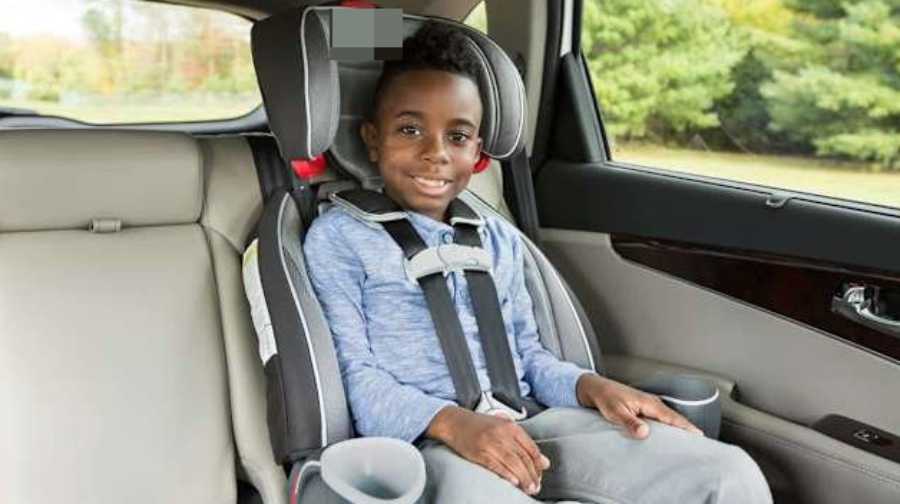
At What Age Can a Child Use a Forward-Facing Car Seat?
Children can use a forward-facing car seat once they meet the seat manufacturer’s minimum age, height, and weight requirements and applicable state laws. However, the safest time to switch is after a child reaches the maximum rear-facing height or weight limit of their convertible or all-in-one car seat. The American Academy of Pediatrics (AAP) recommends keeping children rear-facing for as long as their car seats allow, rather than transitioning at a specific birthday.
The National Highway Traffic Safety Administration (NHTSA) provides age-based guidance that recommends rear-facing car seats for infants and toddlers until they outgrow the manufacturer’s limits. Children develop at different rates, so two children of the same age may require different seating arrangements. For example, a 3-year-old who remains within a convertible seat’s rear-facing limits should continue riding rear-facing, even if another child of the same age has already outgrown those limits.
Can a 1-Year-Old Ride in a Forward-Facing Car Seat?
A 1-year-old should remain in a rear-facing car seat. The AAP recommends rear-facing travel until children reach the maximum height or weight permitted by their seats, and many state laws require rear-facing travel beyond the first birthday.
A 1-year-old’s head is proportionally large compared with the rest of the body, while the neck and spine are still developing. During a frontal collision, a forward-facing harness restrains the torso, but the head moves forward, placing substantial forces on the neck. A rear-facing seat supports the head, neck, and back together, reducing this movement. Parents should therefore continue using an appropriate rear-facing seat rather than switching based solely on the child’s first birthday.
Can a 2-Year-Old Ride in a Forward-Facing Car Seat?
A 2-year-old can ride in a forward-facing car seat only when the seat’s requirements and applicable state laws permit it, but remaining rear-facing is safer until the rear-facing limits are reached. Turning 2 does not automatically mean a child has outgrown their rear-facing seat.
Many convertible car seats accommodate rear-facing children well beyond age 2. For example, a convertible seat with a 40-pound rear-facing weight limit may continue accommodating a 2-year-old who weighs 28 pounds, provided the child also meets the seat’s height and head-clearance requirements. Parents should check the manufacturer’s instructions before changing the seat’s orientation. A child’s bent legs or feet touching the vehicle seat are not, by themselves, reasons to switch forward-facing.
What Are the Height and Weight Requirements for Forward-Facing Car Seats?
Forward-facing car seat height and weight requirements depend on the specific car seat model. Manufacturers establish minimum requirements for forward-facing use and maximum limits for each seating position. Children must meet all applicable forward-facing minimums before using that mode, but they should remain rear-facing until they outgrow the rear-facing limits.
These requirements serve different purposes. Minimum forward-facing limits establish when a child is eligible to use that configuration, while maximum rear-facing limits determine when the existing rear-facing configuration has been outgrown. Parents must check both sets of specifications rather than assuming that meeting a forward-facing minimum means the child should immediately switch.
What Is the Minimum Weight for a Forward-Facing Car Seat?
The minimum forward-facing weight varies by car seat model, with some convertible seats specifying 22 pounds and others requiring 25 pounds or more. These figures are examples of manufacturer requirements, not universal safety thresholds.
A child weighing 25 pounds may meet the forward-facing minimum of a particular convertible seat while remaining well below its 40- or 50-pound rear-facing maximum. In that situation, continued rear-facing use provides the recommended protection, provided the child also fits within the seat’s other rear-facing limits. Parents should verify the exact specifications on the car seat label and in the instruction manual.
What Is the Minimum Height for a Forward-Facing Car Seat?
There is no universal minimum height for forward-facing car seats because height requirements differ between manufacturers and models. Some seats specify a minimum standing height, while others also include requirements related to harness positioning and the child’s physical fit.
Height matters because the harness and protective structure must fit the child’s body correctly. For example, a child may remain below the rear-facing weight limit but exceed the manufacturer’s rear-facing height limit or required head clearance. In that case, the child has outgrown that rear-facing configuration, regardless of weight. Parents should consult the instruction manual to determine whether an appropriate higher-capacity rear-facing seat or a forward-facing transition is the correct next step.
When Should You Switch From Rear-Facing to Forward-Facing?
You should switch from rear-facing to forward-facing when your child reaches the maximum rear-facing height or weight limit of an appropriate convertible or all-in-one car seat. The child must also meet the manufacturer’s forward-facing requirements and applicable state laws. The American Academy of Pediatrics (AAP) and the National Highway Traffic Safety Administration (NHTSA) recommend keeping children rear-facing for as long as their car seats permit, regardless of whether they have reached age 2.
A child has outgrown a rear-facing car seat when their height, weight, or head position exceeds the manufacturer’s specified limits. For example, a convertible car seat may allow rear-facing use up to 40 pounds and forward-facing use starting at 22 pounds. A child weighing 30 pounds who remains within the rear-facing height and head-clearance limits should continue riding rear-facing. Meeting the forward-facing minimum does not mean the child has outgrown the safer rear-facing position.
Parents should distinguish between outgrowing an infant-only car seat and outgrowing rear-facing travel altogether. Infant-only seats generally have lower height and weight limits than convertible or all-in-one models. When a child outgrows an infant seat, the next step is typically a convertible or all-in-one car seat installed rear-facing. This allows the child to maintain rear-facing protection until reaching the higher limits of the new seat.
Legroom is another factor parents frequently misunderstand. Bent knees, crossed legs, or feet touching the vehicle seat do not indicate that a child needs to face forward. Children naturally adjust their leg positions while riding rear-facing, and limited legroom alone is not a recognized reason to change orientation. Parents should instead follow the manufacturer’s height, weight, and head-clearance requirements.
Before making the transition, parents should confirm that the car seat supports forward-facing installation, verify the child’s measurements, and review both the car seat manual and vehicle owner’s manual. Convertible and all-in-one seats generally support multiple seating configurations, but installation procedures, recline settings, harness positions, and tether requirements change between rear-facing and forward-facing modes.
Why Is Rear-Facing Safer Than Forward-Facing for Young Children?
Rear-facing car seats are safer for young children because they support the head, neck, and spine together during a frontal collision, reducing the forces placed on these vulnerable body structures. The AAP recommends extended rear-facing travel because a young child’s skeletal structure is still developing, making proper crash-force management particularly important.
During a frontal collision, a vehicle decelerates rapidly while occupants continue moving forward because of inertia. In a rear-facing car seat, the child’s body moves into the seat’s backrest, which supports the head, neck, and torso across a broad surface. This distributes collision forces over a larger area rather than concentrating them on individual body structures. The seat shell also helps limit the forward movement of the child’s head relative to the torso.
A forward-facing car seat manages collision forces differently. The five-point harness restrains the child’s shoulders, hips, and torso, while the head moves forward until the neck limits its motion. This movement places greater demands on the cervical spine, particularly in younger children whose heads are relatively large and whose neck structures are still developing. Although properly installed forward-facing seats provide essential protection for children who have outgrown rear-facing travel, they do not provide the same head and neck support during frontal impacts.
The difference is especially important because frontal collisions are a major type of vehicle crash. For example, when a vehicle strikes an obstacle head-on, a rear-facing child is pressed into the car seat’s supporting shell as the vehicle slows. A forward-facing child’s torso is restrained by the harness while the head continues moving forward. The direction of the child relative to the crash forces therefore changes how those forces are transferred through the body.
Rear-facing protection also depends on correct installation and appropriate seat fit. A rear-facing seat must be installed at the manufacturer’s specified recline angle, secured using an approved installation method, and fitted with harness straps positioned according to the instructions. Incorrect installation can reduce the seat’s ability to manage crash forces, regardless of its orientation.
The safest approach is to keep children rear-facing until they reach the maximum rear-facing height or weight limit of their car seats, rather than switching at a predetermined age. Once a child outgrows an appropriate rear-facing seat, a correctly installed forward-facing car seat with a five-point harness and top tether provides the next stage of protection.
What Are the Forward-Facing Car Seat Laws in the United States?
Forward-facing car seat laws vary by state, and there is no single nationwide minimum age for switching children from rear-facing to forward-facing seats. Each state establishes its own child passenger safety requirements, including age restrictions, height and weight criteria, and rules for using child restraint systems. Parents must follow the laws of the state where they are driving while also considering the car seat manufacturer’s instructions.
Several states require children to remain rear-facing until at least age 2, although specific exceptions and additional requirements differ. For example, California generally requires children under 2 to ride rear-facing unless they weigh 40 pounds or more or measure 40 inches or taller. New York requires children under 2 to use rear-facing car seats, while Illinois requires rear-facing restraints for children under 2 unless they exceed specified height or weight thresholds. These examples illustrate why parents must check their state’s current regulations rather than assume the same rules apply nationwide.
Legal requirements and safety recommendations serve different purposes. State laws establish minimum standards for transporting children, while the American Academy of Pediatrics (AAP) and the National Highway Traffic Safety Administration (NHTSA) recommend keeping children rear-facing until they reach their car seat’s maximum rear-facing height or weight limit. A child who legally qualifies for forward-facing travel may still fit safely in a rear-facing convertible seat.
Parents can review state-specific requirements through the Governors Highway Safety Association (GHSA) or their state’s transportation and highway safety agencies. Checking current regulations is particularly important when traveling between states, as legal requirements may differ across state borders.
How Do You Install a Forward-Facing Car Seat Safely?
Install a forward-facing car seat in an approved rear seating position using either the vehicle seat belt or the permitted lower anchors, secure the top tether according to the manufacturer’s instructions, and adjust the five-point harness to fit the child correctly. Proper installation limits excessive seat movement and helps the restraint system manage collision forces.
Before installation, parents should consult both the car seat instruction manual and the vehicle owner’s manual. These documents identify approved seating positions, anchorage locations, installation methods, and weight restrictions. The car seat should be secured tightly enough that it moves less than 1 inch from side to side or front to back when tested at the belt path. Harness straps should generally be positioned at or above the child’s shoulders for forward-facing use, with the chest clip at armpit level.
Should You Use LATCH or a Seat Belt to Install a Forward-Facing Car Seat?
Both LATCH and vehicle seat belts can provide secure forward-facing car seat installation when used correctly and permitted by the manufacturers. LATCH stands for Lower Anchors and Tethers for Children and uses dedicated vehicle anchorage points to secure compatible child restraints without routing the vehicle seat belt through the seat’s installation path.
Lower anchors have weight limits that depend on the vehicle and child restraint system. Under applicable federal requirements, the combined weight of the child and car seat determines lower-anchor eligibility, and manufacturers specify the relevant limits. Once the child exceeds the permitted lower-anchor weight limit, parents must switch to an approved seat belt installation method. The top tether should still be used as directed by the car seat and vehicle manufacturers.
Vehicle seat belt installation is an appropriate alternative when lower anchors are unavailable, inaccessible, or no longer permitted for the child’s weight. Parents must ensure the belt is correctly routed and locked according to the instructions. Using both the lower anchors and seat belt simultaneously is not recommended unless both manufacturers explicitly permit that configuration.
Why Is the Top Tether Important for a Forward-Facing Car Seat?
The top tether reduces forward movement of a child’s head and the upper portion of a forward-facing car seat during a collision. It connects the upper section of the child restraint to a designated tether anchor in the vehicle, helping control the seat’s rotation during a frontal impact.
Without a properly attached top tether, the upper portion of a forward-facing car seat can rotate farther forward during sudden deceleration. This increases the distance the child’s head travels and may increase the risk of contact with the vehicle interior. A correctly attached tether limits this movement and works alongside the five-point harness and primary installation system to manage crash forces.
Tether anchor locations vary between vehicles, including passenger cars, SUVs, and pickup trucks. Depending on the vehicle, anchors may be positioned behind the rear seat, on the rear shelf, or on the seatback. Parents should identify the designated tether anchor in the vehicle owner’s manual rather than attach the tether to an ordinary cargo hook or an unapproved attachment point.
The five-point harness must also be adjusted correctly after installation. The straps should lie flat against the child’s shoulders and hips without twisting, and the harness should pass the pinch test at the shoulder. Bulky jackets or thick clothing should not be placed underneath the harness because compressible material can create excess slack during a collision.
For additional installation guidance, parents can consult the NHTSA Car Seats and Booster Seats guide or arrange an inspection with a certified Child Passenger Safety Technician (CPST).
Read more: How Old to Test Drive a Car? Age Requirements
What Are the Most Common Mistakes When Switching to a Forward-Facing Car Seat?
The five most common mistakes when switching to a forward-facing car seat are transitioning too early, ignoring manufacturer limits, failing to secure the top tether, adjusting the harness incorrectly, and using an improper installation method. These errors can reduce the protection provided by a child restraint system during a collision.
Switching too early is a major safety concern because young children benefit from the additional head, neck, and spinal support provided by rear-facing seats. Some parents turn their children forward-facing immediately after their second birthday, even when the child remains within the rear-facing height and weight limits. The American Academy of Pediatrics recommends maintaining rear-facing travel until the child reaches the maximum limits of an appropriate rear-facing seat.
Ignoring manufacturer specifications can also lead to incorrect car seat use. Every convertible and all-in-one car seat has specific height, weight, and harness requirements for each seating position. For example, a child weighing 30 pounds may meet a seat’s minimum forward-facing weight requirement but remain eligible for rear-facing use up to 40 pounds. Parents should review the car seat label and instruction manual before changing its orientation.
Incorrect installation creates additional risks. Failing to attach the top tether when required allows greater forward rotation of the seat during a frontal collision, increasing head movement. Loose harness straps, incorrectly positioned chest clips, and twisted webbing can also compromise restraint performance. Parents should check that the harness fits snugly, the chest clip sits at armpit level, and the installed seat moves less than 1 inch at the belt path.
Another mistake is combining lower anchors and a vehicle seat belt without manufacturer approval. These installation methods are generally alternatives rather than systems intended for simultaneous use. Parents should select an approved installation method, follow the applicable weight limits, and verify that the car seat is secured correctly before every journey.
When Can a Child Move From a Forward-Facing Car Seat to a Booster Seat?
A child should move from a forward-facing car seat to a booster seat after reaching the maximum height or weight limit of their forward-facing harness, provided they meet the booster seat manufacturer’s requirements and can sit correctly throughout the trip. The National Highway Traffic Safety Administration recommends keeping children in forward-facing car seats with harnesses and tethers until they outgrow the manufacturer’s specified limits.
Forward-facing harnessed seats and booster seats protect children through different restraint systems. A forward-facing car seat uses an integrated five-point harness to secure the shoulders and hips, while a booster seat positions the vehicle’s lap-and-shoulder belt across the child’s body. This distinction matters because a vehicle seat belt must fit correctly to restrain a child during sudden braking or a collision.
Booster seat readiness depends on more than age. The child must meet the manufacturer’s minimum height, weight, and age requirements and remain properly seated without leaning forward, moving the shoulder belt behind the back, or placing the lap belt across the abdomen. For example, a child who meets a booster’s minimum weight requirement but frequently moves out of the correct seating position should continue using an appropriate harnessed seat that accommodates their size.
A properly fitted booster seat positions the lap belt low across the upper thighs and the shoulder belt across the middle of the chest and shoulder. Children should continue using a booster until the vehicle seat belt fits correctly without one. According to the NHTSA, this typically occurs between ages 8 and 12, although the appropriate transition depends on the child’s height and the vehicle’s seat belt geometry.
Parents should also remember that children younger than 13 should ride in the rear seat, which provides a safer seating location than the front passenger seat. Following the correct progression from rear-facing to forward-facing, then to a booster seat and finally to a properly fitting vehicle seat belt, helps maintain age- and size-appropriate protection throughout childhood.