Fix-a-Flat is a temporary tire repair solution designed to seal small tread punctures and help drivers reach a tire repair shop. Fix-a-Flat does not have a guaranteed lifespan once applied, and the manufacturer recommends professional tire repair within 3 days or 100 miles, whichever comes first. This limit is not a guarantee that the tire will remain safe or maintain its pressure throughout that period.
How long Fix-a-Flat lasts depends on the puncture size, damage location, tire pressure, and condition of the tire. Small punctures in the tread area are more suitable for temporary sealing, while sidewall damage, large holes, and structural tire damage require other solutions. Even when a treated tire continues holding air for several days, the sealant does not restore the tire’s original structural integrity.
Driving after using Fix-a-Flat also requires attention to tire pressure and vehicle handling. Drivers should follow the product instructions, monitor for continued air loss, and arrange professional inspection as soon as possible. Understanding the difference between temporary sealing and permanent tire repair helps prevent unnecessary tire damage and unsafe driving conditions.
This guide explains how long Fix-a-Flat lasts, how far you can drive after using it, what affects its effectiveness, and when a tire needs professional repair or replacement.
How Long Does Fix-a-Flat Last in a Tire?
Fix-a-Flat is intended to provide temporary puncture sealing for up to 3 days or 100 miles before professional tire repair, whichever comes first. This recommendation defines a service window rather than a guaranteed lifespan for the sealant. The product helps stop air from escaping through small tread punctures, allowing drivers to reach a repair facility without immediately changing the tire. However, its effectiveness depends on whether the damaged tire can maintain adequate air pressure after application.
Fix-a-Flat works by distributing liquid sealant inside the tire as the wheel rotates. When air escapes through a puncture, the sealant moves toward the opening and forms a temporary barrier that reduces leakage. This barrier does not repair damaged tire cords, restore structural strength, or eliminate the original puncture. Continued tire flexing, changes in internal pressure, and the condition of the puncture can affect how well the seal remains in place.
The 3-day or 100-mile recommendation should not be treated as permission to continue normal driving until either limit is reached. A tire that loses pressure after treatment requires immediate attention, even when only a few miles have been driven. Drivers should arrange professional inspection as soon as possible because the tire may contain internal damage that cannot be identified from its exterior.
Can Fix-a-Flat Last for Several Days?
Fix-a-Flat can continue holding air in a tire for several days, but that does not make the repair permanent or guarantee safe driving. The duration depends on the puncture’s characteristics, the tire’s condition, and whether the sealant maintains an effective barrier against air loss.
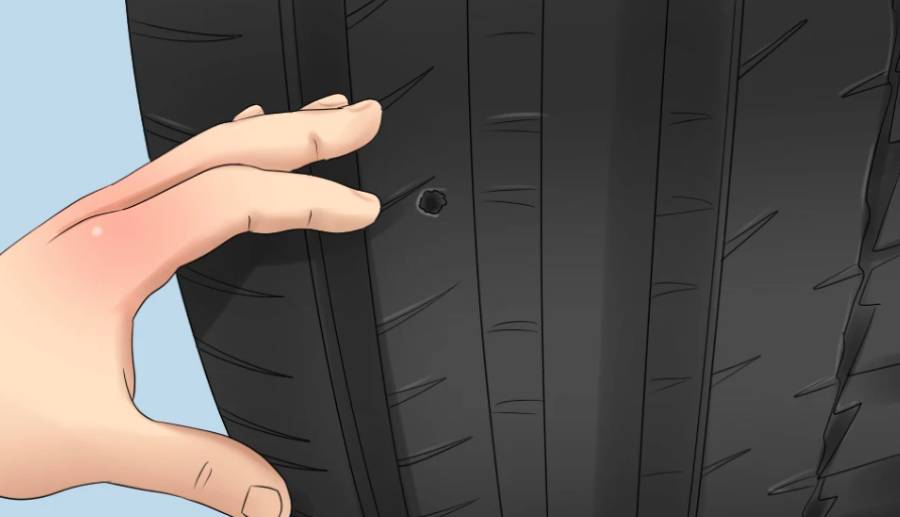
For example, a small nail puncture in the central tread area may retain air after the sealant has circulated through the tire. A larger or irregular puncture may continue leaking because the sealant cannot maintain a stable barrier. Both tires may initially appear inflated, but their ability to retain pressure can differ significantly.
A tire that remains inflated for three days still needs professional inspection. Sealant performance alone cannot establish whether the puncture is repairable or whether the tire has suffered internal damage from being driven underinflated. The safest approach is to treat continued air retention as temporary assistance rather than evidence that the tire has been fully repaired.
How Many Miles Can You Drive With Fix-a-Flat?
Fix-a-Flat recommends having the tire professionally repaired within 100 miles or 3 days after application, whichever comes first. The 100-mile figure is a maximum service recommendation, not a minimum distance the tire is guaranteed to travel. Actual driving suitability depends on the tire maintaining proper pressure and showing no signs of serious damage.
After applying Fix-a-Flat, drivers should follow the product’s instructions for distributing the sealant and checking tire inflation. Driving allows the sealant to spread along the tire’s interior and reach the puncture. However, the tire must have sufficient air pressure to support the vehicle safely. A tire that remains visibly flat, loses pressure rapidly, or shows sidewall damage should not be driven.
For example, a driver who uses Fix-a-Flat after discovering a nail puncture 10 miles from a tire shop should travel directly toward professional service once the tire is properly inflated and safe to move. Continuing to use the vehicle for routine commuting simply because the 100-mile limit has not been reached increases exposure to an unresolved tire problem.
Can You Drive on the Highway With Fix-a-Flat?
Highway driving after using Fix-a-Flat should be avoided when a safer route to a nearby tire repair facility is available. The sealant provides temporary air-leak protection, but it does not restore the damaged tire’s original strength or guarantee reliable performance at sustained highway speeds.
Highway driving places continuous demands on tire pressure, temperature, and structural integrity. As a tire rotates, its sidewalls flex under the vehicle’s weight, generating heat. Insufficient inflation increases this flexing and can accelerate internal damage. Fix-a-Flat cannot reverse damage caused by operating a tire at dangerously low pressure.
For example, a driver traveling at highway speed with a slowly leaking tire may experience further pressure loss before reaching a repair facility. The resulting underinflation can affect steering response, vehicle stability, and tire durability. Drivers should check the tire’s pressure, follow the applicable product instructions, and avoid continuing if the tire cannot maintain safe inflation.
Fix-a-Flat should therefore be used to reach the nearest practical tire service location, not to justify extended highway travel. When the tire cannot hold pressure or shows signs of structural damage, roadside assistance or towing is the safer alternative.
Is Fix-a-Flat a Permanent Tire Repair?
Fix-a-Flat is not a permanent tire repair because it seals air leaks without restoring the damaged tire’s structural integrity. The product is designed for emergency use, allowing drivers to temporarily inflate a punctured tire and travel to a professional repair facility. According to Fix-a-Flat’s manufacturer guidance, the treated tire should receive professional attention within 3 days or 100 miles, whichever comes first.
A permanent tire repair requires more than stopping air from escaping. A tire technician must remove the tire from the wheel, inspect its internal structure, assess the puncture, and determine whether the damage falls within accepted repair limits. For a repairable puncture, the industry-recommended method typically combines a rubber stem that fills the injury channel with an internal patch that seals the tire’s inner liner. Fix-a-Flat does not perform either of these structural repair functions.
For example, a nail that creates a small puncture in the central tread area may produce an air leak that Fix-a-Flat temporarily seals. However, the puncture channel remains in the tire, and the technician must inspect it before deciding whether a permanent repair is appropriate. A tire with exposed cords, significant internal damage, or a puncture extending into the shoulder or sidewall may require replacement instead.
A tire that holds air after Fix-a-Flat application is not necessarily safe for long-term use. Maintaining pressure indicates that the sealant has reduced air leakage, but it does not confirm the condition of the tire’s internal components. Professional inspection remains necessary even when the tire appears fully inflated and the vehicle handles normally.
What Factors Affect How Long Fix-a-Flat Lasts?
Four primary factors affect how long Fix-a-Flat remains effective: puncture size, puncture location, tire pressure, and the tire’s overall condition. These factors determine whether the sealant can form a temporary barrier and whether that barrier remains effective while the vehicle moves. Fix-a-Flat is designed for specific emergency puncture situations rather than every type of tire damage.
Puncture size and location determine whether the sealant can reach and cover the opening. Tire pressure influences how the damaged tire supports the vehicle and whether air continues escaping. The tire’s existing condition also matters because worn, deteriorated, or internally damaged tires may be unsafe even when the puncture temporarily stops leaking.
Does Puncture Size Affect Fix-a-Flat Effectiveness?
Puncture size directly affects Fix-a-Flat effectiveness because smaller openings are easier for the sealant to cover and temporarily seal. The product is intended for small punctures in the tire’s tread area, such as holes caused by nails or screws. Larger openings create greater sealing challenges because more air can escape and the sealant may not form a reliable barrier.
For example, a small nail hole may allow sealant to accumulate around the puncture and reduce air loss as the tire rotates. A wide cut or irregular opening presents a different problem because the damaged area may exceed the sealant’s intended capability. Even when the product initially reduces leakage, the barrier may not withstand continued tire movement.
The size of a puncture also affects whether professional repair is possible. Under common U.S. passenger tire repair guidelines, punctures larger than 1/4 inch (6 mm) are generally outside the accepted repair limit. However, a puncture smaller than this threshold is not automatically repairable. Its location, the tire’s internal condition, and any previous repairs must also be evaluated.
Does Puncture Location Affect How Long Fix-a-Flat Works?
Fix-a-Flat is intended for punctures in the tire’s tread area, not damage to the sidewall or shoulder. Puncture location affects the sealant’s ability to form a temporary seal and determines whether the tire may qualify for professional repair.
The central tread area is the portion of the tire designed to maintain contact with the road. Small punctures within the repairable tread region are more suitable for temporary sealant application. The shoulder and sidewall experience different bending and structural loads, making damage in these areas unsuitable for conventional puncture repair.
For example, a screw embedded in the middle of the tread may create a small air leak that Fix-a-Flat can temporarily seal. A cut in the sidewall is a more serious problem because the sidewall flexes continuously as the tire supports the vehicle. Sealant cannot restore damaged reinforcing materials or make a structurally compromised sidewall safe.
Tire pressure and overall tire condition further influence the outcome. A properly inflated tire maintains its intended shape and load-bearing characteristics, while an underinflated tire experiences increased flexing and heat buildup. If the tire has been driven while severely underinflated, internal damage may already exist even when Fix-a-Flat successfully stops the leak.
Drivers should therefore monitor tire pressure after application and arrange professional inspection promptly. Fix-a-Flat’s temporary seal is not a substitute for confirming that the tire remains structurally safe.
What Should You Do After Using Fix-a-Flat?
After using Fix-a-Flat, check the tire pressure, follow the manufacturer’s driving instructions, and arrange professional tire inspection as soon as possible. The sealant provides temporary assistance for certain small tread punctures, but the tire still requires evaluation to determine whether it can be permanently repaired. Fix-a-Flat recommends professional service within 3 days or 100 miles, whichever comes first.
Start by following the instructions printed on the specific Fix-a-Flat can. The product introduces sealant and inflation gas into the tire, but the resulting pressure may not meet the vehicle manufacturer’s recommended level. Check the tire with an accurate pressure gauge and add air when necessary, provided the tire is otherwise safe to inflate. The correct cold tire pressure is listed on the vehicle’s tire information placard, typically located on the driver’s door jamb, rather than the maximum pressure printed on the tire sidewall.
Next, drive only as directed by the product instructions to distribute the sealant inside the tire. Monitor the vehicle for abnormal vibration, handling changes, or continued pressure loss. A tire that cannot maintain adequate inflation should not be driven because excessive sidewall flexing generates heat and increases the risk of internal damage. If the tire continues leaking, stop in a safe location and arrange roadside assistance.
Finally, contact a tire repair facility and inform the technician that Fix-a-Flat has been used. This information allows the technician to prepare for sealant residue during tire removal and inspection. Professional service should take place promptly, even when the tire appears to maintain normal pressure.
Can a Tire Be Repaired After Using Fix-a-Flat?
A tire can be permanently repaired after using Fix-a-Flat if the puncture meets accepted repair criteria and the tire has no disqualifying structural damage. Applying emergency sealant does not automatically make a tire unsuitable for repair. The final decision depends on puncture location, injury size, internal condition, and previous tire damage.
A qualified technician must remove the tire from its wheel to inspect the inner liner, sidewalls, and puncture channel. Sealant residue must be managed so the damaged area can be properly evaluated and prepared for repair. For a qualifying passenger tire puncture, an accepted repair generally involves filling the injury channel and sealing the inner liner with a suitable repair unit.
For example, a tire with a small nail puncture in the repairable tread area may qualify for a combination patch-and-plug repair after the technician removes the sealant and confirms that the internal structure is intact. In contrast, a tire with sidewall damage, exposed reinforcing cords, or evidence of severe underinflation may require replacement regardless of whether Fix-a-Flat stopped the original leak.
Professional inspection is especially important when the tire was driven while nearly flat. Underinflation increases sidewall deformation and heat generation, potentially damaging internal components that are not visible from outside. A successful temporary seal cannot reverse this damage or establish that the tire is safe for continued service.
How Does Fix-a-Flat Work Inside a Tire?
Fix-a-Flat works by injecting liquid sealant and inflation gas into a punctured tire, allowing the sealant to circulate and temporarily block small air leaks. The product combines emergency inflation with puncture sealing so drivers can move a suitable damaged tire toward a repair facility.
When the aerosol is connected to the tire valve and activated, its contents enter the tire through the valve stem. The inflation gas helps increase internal pressure, while the liquid sealant remains inside the tire. As the wheel rotates, the sealant spreads across the inner surface and moves toward the puncture. Escaping air carries sealant toward the opening, where the material accumulates and helps restrict further leakage.
For example, when a small nail creates a hole in the tread, air escapes through the puncture channel. Fix-a-Flat sealant can reach that opening during tire rotation and form a temporary barrier that reduces the rate of air loss. The effectiveness of this process depends on the size and location of the damage and whether the tire can retain sufficient pressure.
The sealing process does not restore broken reinforcing cords, repair damaged rubber layers, or permanently close the puncture channel. Fix-a-Flat also cannot correct every cause of tire pressure loss, including severe sidewall damage or a damaged wheel. Its primary function is to provide temporary mobility until a qualified technician can inspect and repair or replace the tire.
Can Fix-a-Flat Damage Tires or TPMS Sensors?
Fix-a-Flat is formulated to be compatible with tires and tire pressure monitoring systems (TPMS), but sealant residue can complicate inspection, cleaning, and subsequent tire repairs. The manufacturer states that its current tire sealant formula is TPMS-safe when used according to product instructions. However, compatibility does not eliminate the need for professional inspection after emergency application.
Fix-a-Flat introduces liquid sealant into the tire cavity, where it spreads across the inner liner as the wheel rotates. Some of this material may remain on the tire’s internal surfaces, wheel, valve assembly, or nearby components. During professional repair, technicians must account for the residue before inspecting the puncture and preparing the tire for a permanent repair. Failure to clean and prepare the repair area properly can interfere with the adhesion of repair materials.
The tire’s physical condition presents a separate concern. Fix-a-Flat does not directly restore or reinforce damaged tire components, including the inner liner, reinforcing belts, and sidewall cords. A tire that has been driven while severely underinflated may contain structural damage even when the sealant successfully stops air leakage. This damage results from excessive flexing and heat buildup rather than the sealant itself.
For example, a driver may use Fix-a-Flat to seal a small tread puncture and subsequently discover that the tire continues losing pressure. Driving on the underinflated tire can damage its internal structure, potentially making replacement necessary. The technician must distinguish this damage from sealant residue when evaluating whether the tire remains repairable.
Does Fix-a-Flat Affect Tire Pressure Sensors?
Fix-a-Flat’s current formula is marketed as TPMS-safe, but sealant contact and residue may still require attention during tire servicing. TPMS sensors monitor tire pressure and transmit information to the vehicle’s warning system. Many passenger vehicles use direct TPMS sensors mounted inside the wheel, where they can be exposed to materials introduced through the tire valve.
Sealant residue may collect around internal wheel components, including the valve assembly and sensor housing. Although the product is designed for TPMS compatibility, technicians should inspect these components during service and follow the sensor manufacturer’s maintenance recommendations. A TPMS warning that remains active after tire inflation may indicate low pressure, a system fault, or another condition requiring diagnosis.
For example, a vehicle may continue displaying a low-pressure warning after Fix-a-Flat has been applied. The driver should verify the actual tire pressure with a gauge rather than assuming that the sealant has damaged the sensor. If the warning persists despite correct inflation and the appropriate system reset procedure, professional TPMS inspection is necessary.
Drivers should tell the tire technician that Fix-a-Flat was used before the tire is removed. This helps the technician manage sealant residue, inspect the sensor assembly, and determine whether cleaning or component replacement is necessary.
Read more: Does Fix-a-Flat Work? Effectiveness & Safety Explained
Does Fix-a-Flat Last Longer Than a Tire Plug or Patch?
A properly installed permanent tire repair is designed to last substantially longer than Fix-a-Flat because it repairs the puncture channel and seals the tire’s inner liner rather than temporarily restricting air leakage. Fix-a-Flat is intended for emergency mobility, while an approved professional repair can allow a qualifying tire to remain in service for its remaining usable life.
The difference comes from how each method addresses tire damage. Fix-a-Flat uses liquid sealant to create a temporary barrier at the puncture. A standalone tire plug fills the puncture channel from the outside but does not independently provide the complete internal inspection and inner-liner sealing required by common U.S. tire repair standards. A properly installed combination repair uses a rubber stem to fill the injury channel and an internal patch to seal the inner liner.
The following table compares the three approaches.
| Repair method | Expected durability | Primary purpose |
|---|---|---|
| Fix-a-Flat | Temporary; professional service within 3 days or 100 miles | Emergency puncture sealing and inflation |
| Standalone tire plug | Not considered a complete permanent repair under common U.S. industry standards | External puncture sealing |
| Professional combination patch-plug | Can remain effective for the tire’s remaining usable service life when properly installed | Permanent repair of a qualifying puncture |
A professional combination repair requires the technician to remove the tire from the wheel, inspect the internal structure, and confirm that the puncture meets repair criteria. For passenger tires, common industry guidelines limit repairs to qualifying tread-area punctures no larger than 1/4 inch (6 mm). Sidewall damage, shoulder punctures, and tires with significant internal deterioration generally require replacement.
For example, a driver who discovers a small nail puncture may use Fix-a-Flat to reach a nearby tire shop. If inspection confirms that the puncture is within the repairable tread area and the tire has no disqualifying damage, the technician can perform an approved internal repair. Unlike the temporary sealant, this repair is intended to remain effective during normal tire service.
Fix-a-Flat should not be used as a long-term alternative to a professional tire repair. Its value lies in helping drivers manage certain roadside emergencies, while a properly performed permanent repair addresses the puncture more completely and supports continued tire use when the tire meets safety requirements.
Does Fix-a-Flat Expire?
Fix-a-Flat has a limited shelf life, and the manufacturer generally recommends replacing an unused can after approximately 2 years. This period refers to the product’s storage life before application, not how long the sealant remains effective inside a punctured tire. Drivers should check the expiration information on their specific container before relying on it for emergency tire repair.
Fix-a-Flat contains sealing materials and pressurized gas that must remain in suitable condition to function correctly. Over time, changes in the product’s formulation, pressure, or container integrity may affect its ability to inflate a tire and seal a puncture. Storage conditions also influence product reliability. The manufacturer recommends keeping the can within its specified temperature range and avoiding excessive heat, freezing conditions, and direct sunlight.
For example, a can stored in a vehicle for several years may no longer perform as intended, even when its exterior appears undamaged. Drivers should inspect the container for corrosion, leakage, or visible damage and replace products that have exceeded their stated shelf life. Keeping an in-date can in an accessible location helps ensure the product is available when a suitable roadside tire emergency occurs.
An expired can should not be relied upon as an emergency repair solution. Replace it according to the manufacturer’s instructions and applicable local disposal requirements rather than attempting to puncture, heat, or dismantle the pressurized container.