DSG and CVT transmissions offer different advantages in performance, fuel economy, driving comfort, and maintenance costs. DSG is generally better for drivers who prioritize fast gear changes and responsive acceleration, while CVT is often a suitable choice for drivers who prefer smooth acceleration and efficient everyday driving. However, the better option depends on the specific transmission design, vehicle model, and driving conditions.
A Direct-Shift Gearbox (DSG) is a type of dual-clutch transmission that uses mechanical gears and two clutches to change gear ratios. This design allows the transmission to prepare the next gear in advance, enabling quick gear changes with minimal interruption in power delivery. A Continuously Variable Transmission (CVT), by contrast, adjusts its gear ratio continuously within its operating range rather than shifting between conventional fixed gears. Many CVTs prioritize smooth power delivery and help the engine operate within an efficient range.
When comparing DSG vs CVT, drivers should consider more than acceleration or fuel consumption alone. Reliability, repair costs, maintenance requirements, low-speed behavior, and long-term ownership expenses also influence the decision. This guide compares both transmission types to help you understand how they work, evaluate their strengths and limitations, and choose the option that best fits your vehicle preferences and driving needs.
What Is the Difference Between DSG and CVT Transmissions?
The main difference between DSG and CVT transmissions is how they change gear ratios and transfer engine power to the wheels. DSG uses two clutches and fixed mechanical gear ratios, while CVT adjusts its transmission ratio continuously within its designed operating range. This difference affects acceleration, driving comfort, engine response, and maintenance requirements.
A Direct-Shift Gearbox (DSG) belongs to the dual-clutch transmission (DCT) family. It uses conventional gear sets and two clutches to control different groups of gears. One clutch typically handles odd-numbered gears, while the other handles even-numbered gears and, depending on the design, reverse. By preparing the next gear before the current gear disengages, the transmission can change gears quickly while minimizing interruptions in power delivery. DSG is commonly associated with Volkswagen Group vehicles, although the specific design and behavior vary by model.
A Continuously Variable Transmission (CVT) operates differently. In a conventional belt-driven CVT, two variable-diameter pulleys work together through a steel belt or chain to change the transmission ratio. The transmission can adjust this ratio without shifting through a fixed sequence of conventional gears. As a result, the engine can maintain a suitable operating speed while the vehicle accelerates. Some CVTs also simulate stepped gear changes to provide a more familiar driving experience.
These mechanical differences create distinct driving characteristics. DSG often delivers a more direct, gear-based response, particularly during acceleration and rapid gear changes. CVT generally provides smoother acceleration because it does not need to shift between conventional fixed ratios. However, neither design guarantees better performance or fuel economy in every vehicle. Engine characteristics, transmission calibration, vehicle weight, and the specific transmission model all influence real-world results.
| Feature | DSG | CVT |
|---|---|---|
| Transmission design | Dual-clutch transmission | Continuously variable transmission |
| Gear ratios | Fixed mechanical ratios | Continuously variable ratios |
| Power transfer | Two clutches and gear sets | Typically pulleys and a belt or chain in conventional designs |
| Gear changes | Rapid shifts between gear ratios | Continuous ratio adjustments |
| Driving feel | Often more direct and gear-focused | Often smoother during acceleration |
| Main considerations | Clutch behavior, control systems, and maintenance | Ratio control, transmission design, and maintenance |
When comparing DSG vs CVT, the most useful approach is to evaluate the complete vehicle rather than the transmission name alone. A well-engineered CVT can provide excellent everyday performance, while a properly maintained DSG can deliver responsive acceleration and efficient power transfer. The right choice depends on how the vehicle is designed and how the driver intends to use it.
How Does a DSG Transmission Work?
A DSG transmission uses two clutches and two gear paths to prepare and execute gear changes with minimal interruption in power delivery. Instead of disengaging one gear and then beginning to engage the next from scratch, the transmission can have the next gear selected in advance. This arrangement helps explain why DSG systems are known for rapid shifts and are frequently used in vehicles designed to deliver responsive acceleration.
During normal acceleration, one clutch transmits engine power through the gear currently being used. Meanwhile, the transmission can prepare the next likely gear on the other gear path. When a shift is required, the control system coordinates the release of one clutch and the engagement of the other. The process transfers power from one gear path to the next without requiring the driver to operate a clutch pedal. The result is a quick gear change, although the smoothness of that change depends on the transmission calibration, driving conditions, and mechanical design.
The two clutches typically control odd-numbered and even-numbered forward gears, respectively. For example, when a vehicle accelerates in third gear, the transmission may prepare fourth gear on the alternate gear path. When the control system determines that the shift should occur, it transfers power to the next gear. This preselection process reduces the time required to execute many gear changes and helps maintain acceleration.
However, fast gear changes do not mean that every DSG performs identically in all situations. Some designs use dry clutches, while others use wet clutches operating in oil. Dry-clutch systems generally avoid the same type of clutch-fluid cooling arrangement used by wet-clutch systems, whereas wet-clutch designs use oil to help manage heat and friction. Their suitability depends on factors such as torque requirements, packaging, vehicle application, and maintenance specifications.
DSG transmissions also have limitations. At very low speeds, during parking maneuvers, or in stop-and-go traffic, clutch engagement must be carefully controlled to move the vehicle smoothly. Depending on the design and operating conditions, drivers may notice hesitation, judder, or less natural creeping behavior than they would experience with some conventional automatic transmissions or CVTs. These symptoms are not inevitable, but persistent problems should be investigated rather than dismissed as normal DSG behavior.
Overall, DSG is particularly attractive to drivers who value quick gear changes, direct acceleration response, and a gear-based driving experience. Its long-term performance depends on the particular transmission design, correct maintenance, driving conditions, and the condition of its clutch and control systems. Buyers should therefore check the specifications and service history of the exact vehicle rather than assume that every DSG has the same strengths and weaknesses.
How Does a CVT Transmission Work?
A Continuously Variable Transmission (CVT) changes the ratio between the engine and the driven wheels continuously rather than shifting through conventional fixed gears. Its main advantage is the ability to adjust the transmission ratio smoothly, helping the engine operate within a suitable range for acceleration or fuel efficiency. This design makes CVTs particularly common in passenger cars designed for comfortable, efficient everyday driving.
A conventional belt-driven CVT typically uses two variable-diameter pulleys connected by a strong steel belt or chain. Each pulley consists of movable surfaces that change the effective diameter at which the belt or chain operates. When the pulley diameters change relative to each other, the transmission ratio changes. The transmission control system coordinates these adjustments according to vehicle speed, throttle input, engine load, and other operating conditions. Unlike a DSG, a conventional CVT does not need to select the next fixed gear to increase or decrease the transmission ratio.
This mechanism allows the engine speed to respond differently from the vehicle’s acceleration. For example, when a driver presses the accelerator firmly, a CVT may raise engine RPM and maintain it near a suitable power-producing range while the vehicle continues to gain speed. This behavior can improve power delivery under certain conditions, but it may also create a sustained engine sound that some drivers find less engaging than the distinct gear changes of a DSG. Some CVTs simulate conventional gear steps to provide a more familiar driving sensation.
CVTs offer several practical advantages. Their continuous ratio adjustment can support smooth acceleration and help the engine operate efficiently across different driving conditions. In urban traffic, this can make speed changes feel seamless. However, CVT performance depends on its design, control software, torque capacity, and the engine with which it is paired. Not every CVT delivers the same acceleration, fuel economy, or driving response.
Maintenance is another important consideration. Conventional CVTs require the correct transmission fluid and adherence to the manufacturer’s service recommendations. The belt or chain, pulleys, bearings, hydraulic components, and electronic controls all contribute to reliable operation. Using unsuitable fluid or ignoring symptoms such as unusual noises, shuddering, or delayed engagement can lead to operational problems. Repair costs vary considerably by transmission model and the extent of the damage.
It is also important to distinguish a conventional CVT from an e-CVT used in many hybrid vehicles. An e-CVT in a hybrid powertrain often uses a power-split mechanism involving electric motor-generators and planetary gearing rather than the belt-and-pulley arrangement of a conventional CVT. Although both systems can provide continuously varying effective ratios, their mechanical designs and maintenance considerations are different.
Overall, CVT is well suited to drivers who value smooth acceleration and consistent everyday performance. Its advantages are strongest when the transmission is matched to the engine and vehicle application. Drivers should evaluate the specific CVT design rather than assume that every vehicle marketed with a CVT offers identical performance or reliability.
Is DSG or CVT Better for Acceleration and Performance?
DSG is often the stronger choice for drivers who prioritize rapid gear changes and a direct, gear-based driving experience, while CVT can provide smooth, continuous acceleration by adjusting the transmission ratio without conventional stepped shifts. However, the faster or more powerful vehicle cannot be identified by transmission type alone. Engine output, transmission calibration, vehicle weight, traction, and gearing all influence acceleration and overall performance.
DSG achieves rapid acceleration by coordinating two clutches and preparing the next gear before the shift takes place. This design can reduce interruptions in power delivery when the transmission changes gears. In vehicles engineered for performance, quick shifts can help maintain acceleration and provide a more immediate connection between engine speed and road speed. The effect is particularly noticeable during repeated acceleration or when the driver uses a sport mode that holds lower gears for longer.
CVT approaches acceleration differently. Instead of moving through a sequence of fixed gear ratios, it continuously adjusts its ratio to help the engine deliver power effectively. When the driver accelerates, the transmission can keep the engine operating near a suitable power-producing RPM while vehicle speed increases. This approach can provide smooth and consistent acceleration, especially in passenger cars designed around efficiency and comfort. Nevertheless, some drivers prefer DSG because its distinct shifts create a more conventional performance-oriented sensation.
The difference between perceived performance and measured performance is important. A DSG-equipped car may feel more engaging because of its gear changes, but that does not automatically mean it accelerates faster than every CVT-equipped vehicle. A powerful engine paired with a well-calibrated CVT can outperform a heavier or less powerful DSG vehicle in a straight-line acceleration test. To make a meaningful comparison, use vehicles with similar engine output, curb weight, drivetrain configuration, tire specifications, and test conditions.
Driving conditions also affect performance. During highway overtaking, DSG can deliver a quick downshift to access a lower gear and increase engine response. A CVT can instead adjust its ratio continuously to provide the engine with the power it needs. During low-speed driving, a CVT may feel smoother, whereas DSG behavior depends partly on clutch engagement and control calibration. Neither characteristic establishes universal superiority because the actual result depends on the vehicle.
Drivers should therefore compare both transmission technologies using three criteria: measured acceleration, responsiveness under the conditions they encounter most often, and the driving sensation they prefer. If rapid gear changes and a more direct mechanical feel are priorities, DSG is worth considering. If smooth, uninterrupted acceleration is more important, CVT may be the better fit. For a purchase decision, the performance figures and driving characteristics of the exact models are more informative than the transmission label alone.
Is DSG or CVT More Fuel-Efficient?
Neither DSG nor CVT is always more fuel-efficient because fuel consumption depends on transmission design, engine efficiency, vehicle weight, driving conditions, and control-system calibration. CVT can improve fuel efficiency by continuously adjusting the transmission ratio, while DSG can achieve efficient power delivery through suitable gear ratios and rapid gear changes. The better option depends on how effectively the complete powertrain converts fuel into movement.
A conventional CVT can adjust its ratio to help the engine remain within an efficient operating range as vehicle speed and engine load change. Unlike a transmission that shifts through fixed gears, a CVT can make smaller, continuous ratio adjustments to match the engine’s operating requirements. This capability can be particularly useful during steady driving and moderate acceleration. However, the actual benefit depends on the engine’s efficiency characteristics, the CVT’s mechanical losses, and the vehicle manufacturer’s calibration.
DSG can also provide competitive fuel economy. Its fixed gear ratios allow the engine to operate at different speeds depending on the selected gear, and its dual-clutch mechanism can minimize interruptions in power delivery during shifts. When the transmission selects appropriate gears and the engine operates efficiently, a DSG-equipped vehicle can achieve fuel consumption comparable to or better than a CVT-equipped vehicle in particular applications. The outcome varies with the gear ratios, final-drive ratio, engine technology, and driving style.
Driving conditions significantly influence the comparison. In urban traffic, frequent acceleration, braking, and low-speed movement can increase fuel consumption regardless of transmission type. A CVT may provide smooth ratio adjustments during these conditions, while DSG behavior depends on its clutch design and low-speed control strategy. On highways, both systems can be efficient when their ratios allow the engine to operate at an appropriate RPM during steady cruising. Frequent overtaking, steep gradients, and high speeds can change the result.
To compare fuel economy accurately, drivers should examine official fuel-consumption figures for vehicles with similar engine output, weight, drivetrain configuration, and model year. For example, comparing two compact cars with similar specifications under the same standardized testing cycle provides more useful information than comparing a small CVT-equipped sedan with a heavier, more powerful DSG-equipped performance car. Real-world fuel consumption should also be considered because traffic, weather, tire pressure, and driving habits affect results.
For buyers who prioritize efficiency, CVT is a strong option when the specific vehicle is engineered for economical daily driving. DSG is equally worth considering when its overall powertrain delivers competitive fuel consumption and the driver also values responsive gear changes. The most reliable decision comes from comparing verified consumption figures for the exact vehicles rather than assuming that one transmission technology always uses less fuel.
Is DSG or CVT More Reliable?
The reliability of a DSG or CVT transmission depends on its engineering, operating conditions, maintenance history, and the quality of its components. Neither transmission type is universally more reliable across all vehicles and model years. A well-maintained transmission operating within its design limits can provide dependable service, while neglected maintenance, excessive heat, or existing mechanical defects can increase the risk of failure.
DSG reliability depends partly on the condition of its clutches, gear sets, control electronics, and associated hydraulic components where applicable. The transmission repeatedly coordinates clutch engagement and gear selection, so wear patterns depend on how the vehicle is driven. Frequent low-speed maneuvering, prolonged creeping in heavy traffic, repeated hill starts, and high-load operation can increase thermal or mechanical demands on certain DSG designs. Dry-clutch and wet-clutch systems also differ in their construction and thermal management, so their reliability characteristics should not be treated as identical.
CVT reliability depends on the condition of its transmission mechanism, bearings, control systems, and lubrication. In conventional belt-driven designs, the pulleys and belt or chain must operate under controlled pressure and within the transmission’s intended torque limits. Incorrect fluid, neglected service requirements, excessive heat, or operation outside the design limits can contribute to problems. However, these risks vary by transmission model, and they do not mean that every CVT is prone to premature failure.
The symptoms of transmission problems can overlap. Drivers may notice slipping, delayed engagement, abnormal vibration, unusual mechanical noises, warning lights, or changes in acceleration response. These symptoms do not identify the failed component by themselves. For example, a vibration could result from a transmission problem, an engine issue, or another drivetrain component. A qualified technician should inspect the vehicle and use appropriate diagnostic procedures before recommending repairs.
Maintenance is one of the most important factors affecting transmission service life. Owners should follow the service schedule specified for their exact transmission, use the correct fluid where applicable, and address warning signs promptly. A used vehicle with documented maintenance and a satisfactory inspection may be a better ownership choice than a vehicle with an unfamiliar transmission design but an incomplete service history.
When evaluating reliability, buyers should research the exact transmission code, model year, and vehicle application. Manufacturer service information, documented recalls, technical service bulletins, and credible long-term reliability data can help identify known issues. Repair frequency and cost are also useful considerations because a transmission that rarely fails but is exceptionally expensive to repair can present a different ownership risk from one with less costly service requirements.
For buyers prioritizing long-term dependability, the best approach is to evaluate the individual transmission and vehicle rather than choosing solely between DSG and CVT. A verified service history, correct maintenance, suitable operating conditions, and a thorough pre-purchase inspection provide a stronger basis for a decision than general claims that one technology always lasts longer.
Is DSG or CVT Cheaper to Maintain and Repair?
The maintenance and repair costs of DSG and CVT transmissions depend on the transmission model, vehicle manufacturer, parts availability, labor rates, and required service intervals. Neither DSG nor CVT is consistently cheaper to maintain across all vehicles. Buyers should compare scheduled maintenance costs and potential repair expenses for the specific transmission fitted to the vehicle they intend to purchase.
DSG maintenance requirements vary according to whether the transmission uses dry or wet clutches and how its components are designed. Some DSG models require periodic transmission-fluid and filter servicing, while others have different maintenance schedules. Owners must follow the manufacturer’s instructions for the exact transmission code because service intervals and fluid specifications are not universal across the DSG family. Using the wrong fluid or neglecting required servicing can compromise transmission operation and increase repair risks.
CVT maintenance also depends on the design. Conventional belt-driven CVTs use transmission fluid formulated for their specific operating requirements, and some models have defined fluid inspection or replacement intervals. The fluid helps support hydraulic control, lubrication, and the operation of internal components. Using an unsuitable fluid can affect transmission performance and durability. Hybrid vehicles equipped with e-CVT systems may have different mechanical arrangements and maintenance requirements, so their servicing should not automatically be compared with that of a conventional belt-driven CVT.
Repair expenses depend largely on which components fail and whether they can be repaired individually. DSG repairs may involve clutch assemblies, mechatronic control units, sensors, or other mechanical components. CVT repairs may involve pulleys, belts or chains, bearings, hydraulic components, or electronic controls. The cost of each repair varies by model, and some failures require extensive disassembly or replacement of a larger transmission assembly. Consequently, the initial purchase price of a vehicle does not necessarily indicate its long-term transmission costs.
Labor rates and parts availability also influence ownership expenses. A transmission with widely available replacement parts and experienced local technicians may be less expensive to repair than a less common unit, even when their mechanical designs appear similar. Owners should obtain itemized estimates that distinguish routine servicing, diagnostic fees, component replacement, and complete transmission replacement. Comparing estimates for the same repair is more useful than relying on broad claims that DSG or CVT is always cheaper.
Before buying a used vehicle, review its maintenance records and check whether the transmission has experienced previous repairs. A pre-purchase inspection should assess engagement, acceleration, unusual noises, vibration, warning lights, and any stored diagnostic trouble codes. These checks cannot guarantee that future repairs will not occur, but they can reveal existing concerns that may affect the purchase decision.
For cost-conscious buyers, the best choice is the transmission with a suitable maintenance schedule, a credible reliability record for its specific application, and manageable local repair costs. Requesting maintenance schedules and repair estimates for the exact model provides a more dependable financial comparison than selecting a transmission based on its general reputation.
Is DSG or CVT Better for City and Highway Driving?
DSG and CVT transmissions offer different driving characteristics in urban traffic and on highways. CVT generally provides smooth, continuous acceleration, while DSG offers distinct gear changes and can deliver rapid responses during acceleration. The more suitable option depends on the transmission design, traffic conditions, vehicle calibration, and the driver’s preferences.
In stop-and-go city traffic, vehicles repeatedly accelerate from low speeds, slow down, and move through short distances. A CVT can adjust its ratio continuously as speed changes, which often produces smooth acceleration without conventional gear shifts. This behavior can make daily commuting comfortable, particularly in vehicles designed around relaxed driving and fuel efficiency. However, low-speed smoothness and throttle response still vary by model, and a poorly maintained CVT may develop problems that affect its normal operation.
DSG performance in urban traffic depends partly on clutch design and control calibration. During low-speed movement, the transmission must coordinate clutch engagement to move the vehicle smoothly. Some DSG systems perform well in city conditions, while others may feel less natural during parking, creeping, or repeated low-speed maneuvers. Frequent stop-and-go driving can also increase clutch demands in certain designs. Drivers should evaluate how the specific vehicle behaves in congested traffic rather than assuming every DSG will respond identically.
Highway driving introduces different priorities, including steady cruising, overtaking, engine response, and cabin comfort. DSG can provide rapid downshifts when the driver needs additional acceleration to pass another vehicle. Its fixed gear ratios allow the transmission to select a lower gear suited to the required engine output. This can produce a direct and familiar response, especially in vehicles calibrated for performance. However, the effectiveness of highway acceleration depends on engine power, gearing, vehicle weight, and the transmission’s control strategy.
CVT can also perform effectively on highways. Its continuous ratio adjustment allows the transmission to adapt to changes in load and speed without requiring conventional stepped shifts. During overtaking, the CVT can change its ratio to help the engine deliver additional power. Some drivers appreciate this smooth response, although others may dislike the sustained engine RPM and sound that can accompany strong acceleration. Actual cabin noise depends on engine design, sound insulation, and transmission calibration.
Fuel economy on both city streets and highways depends on the complete powertrain rather than transmission type alone. In urban driving, traffic congestion, idling, acceleration patterns, and vehicle weight influence consumption. On highways, cruising speed, aerodynamic drag, engine efficiency, and the transmission’s available ratios become important. A comparison between two vehicles should therefore use equivalent driving conditions and reliable fuel-consumption data.
Drivers who spend most of their time commuting in dense traffic should prioritize smooth low-speed behavior, predictable acceleration, and comfortable operation. Those who frequently travel on highways or enjoy responsive overtaking may prefer a DSG-equipped vehicle with suitable performance characteristics. A CVT can also be a strong highway choice when its engine and transmission are well matched. The most practical decision is to test-drive the exact models under representative conditions, including slow traffic, parking maneuvers, steady cruising, and moderate acceleration.
Read more: Allison Transmission Fluid Capacity Chart by Model
Which Cars Use DSG and CVT Transmissions?
DSG and CVT transmissions are used in different vehicle segments, depending on the manufacturer’s engineering strategy, engine configuration, performance goals, and target market. DSG is commonly associated with Volkswagen Group vehicles, while CVT is widely used in passenger cars designed for smooth everyday driving and fuel efficiency. However, manufacturers offer different transmission technologies across their model ranges, so buyers should verify the transmission fitted to a specific vehicle rather than rely on the brand name alone.
Volkswagen Group uses DSG-branded dual-clutch transmissions in various models across brands such as Volkswagen, Škoda, SEAT, and Audi. Audi commonly uses the name S tronic for certain dual-clutch transmissions. These systems are found in selected hatchbacks, sedans, SUVs, and performance-oriented vehicles. The precise transmission depends on the model, engine, drivetrain, production year, and market. Not every Volkswagen Group vehicle has a DSG or S tronic transmission, and some models use other automatic transmission designs.
CVT transmissions are used by manufacturers including Toyota and Honda in selected passenger cars and other vehicle segments. Their continuously variable ratios can support smooth acceleration and efficient engine operation, making them suitable for many compact cars, sedans, and crossovers. However, the exact design varies by application. Some vehicles use conventional belt-driven CVTs, while hybrid models may use e-CVT systems with different mechanical arrangements.
The distinction matters because the transmission name alone does not establish a vehicle’s performance or reliability. Two vehicles from the same manufacturer may use different transmission designs because they have different engines, torque requirements, or intended driving characteristics. Likewise, a model sold in one country may have a different transmission from a similarly named model sold in another market.
When researching a vehicle, buyers should confirm the transmission through the manufacturer’s official specifications for the relevant model year and engine variant. The vehicle identification number (VIN), transmission code, owner’s manual, or authorized dealer can help establish which unit is installed. This is particularly important when purchasing a used car, where advertisements may describe the transmission inaccurately or omit important variant details.
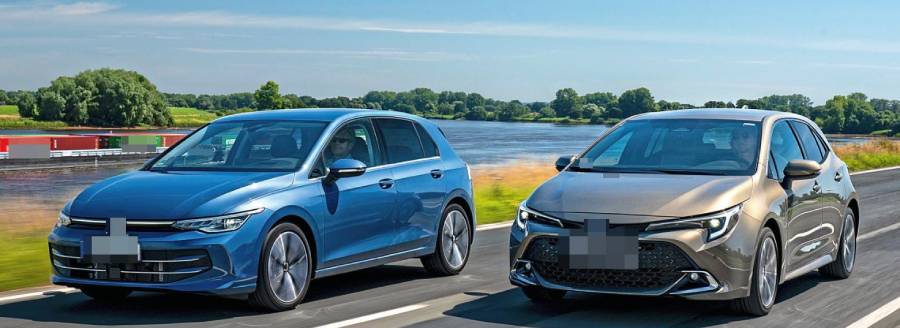
For example, someone comparing a Volkswagen Golf with a Toyota Corolla should first identify the model years, engines, and transmission specifications of the exact vehicles. Only then can the buyer make a meaningful comparison of acceleration, fuel consumption, maintenance requirements, and repair costs. Comparing a DSG-equipped performance model with a CVT-equipped economy model without accounting for their different powertrains can produce misleading conclusions.
The most reliable way to choose between DSG and CVT is therefore to compare specific vehicles rather than manufacturers as a whole. Official technical specifications, documented maintenance requirements, and a test drive provide a stronger basis for evaluating the transmission than general brand associations.
Should You Choose DSG or CVT When Buying a Car?
Choosing between DSG and CVT depends on driving priorities, vehicle design, maintenance budget, and long-term ownership expectations. DSG is worth considering if you prioritize rapid gear changes and responsive acceleration, while CVT is often a good option if you value smooth power delivery and comfortable everyday driving. Neither technology is universally superior, so the best choice is the one that meets your needs in the specific vehicle you intend to buy.
DSG may suit drivers who enjoy a more direct, gear-based driving experience. Its dual-clutch design can provide quick shifts and responsive acceleration in vehicles engineered around these characteristics. This can be attractive for highway overtaking, spirited driving, and applications where maintaining acceleration through gear changes is important. Before choosing a DSG-equipped vehicle, however, check the transmission’s maintenance schedule, clutch design, service history, and known issues for the particular model and year.
CVT may suit drivers who prioritize smooth acceleration, predictable everyday operation, and the characteristics of vehicles designed for efficient commuting. Its continuously variable ratio allows the engine and transmission to adjust their operating relationship without conventional stepped gear changes. This can make urban driving comfortable, although the engine sound during strong acceleration may differ from that of a conventional geared transmission. Buyers should also distinguish between conventional CVTs and hybrid e-CVT systems because their mechanical designs and service requirements can differ substantially.
The cost of ownership should be another major consideration. Compare scheduled maintenance, fluid requirements, common repair procedures, parts availability, and local labor rates for the exact transmission. A vehicle with a suitable service history and affordable specialist support may be a more practical choice than another vehicle whose transmission is more expensive to maintain in your area. For a used car, obtain a professional inspection and review maintenance records before making a purchase decision.
Driving conditions also influence the choice. If you regularly encounter heavy traffic, evaluate how smoothly the vehicle starts, creeps forward, and responds during parking maneuvers. If you frequently travel on highways, assess overtaking response, cruising comfort, engine noise, and fuel consumption at your typical speeds. A test drive should reproduce your normal driving conditions as closely as possible.
Finally, compare reliable specifications and real-world evidence instead of relying on general claims. Official fuel-consumption figures, documented reliability information, manufacturer maintenance schedules, and repair estimates can help establish the likely ownership experience. When evaluating used vehicles, also consider mileage, previous driving conditions, service records, and any transmission-related warning signs.
Choose DSG if rapid gear changes and a direct driving feel are your priorities; consider CVT if smooth acceleration and everyday comfort matter more. In either case, the exact transmission design, vehicle condition, maintenance history, and total ownership cost should determine the final decision.