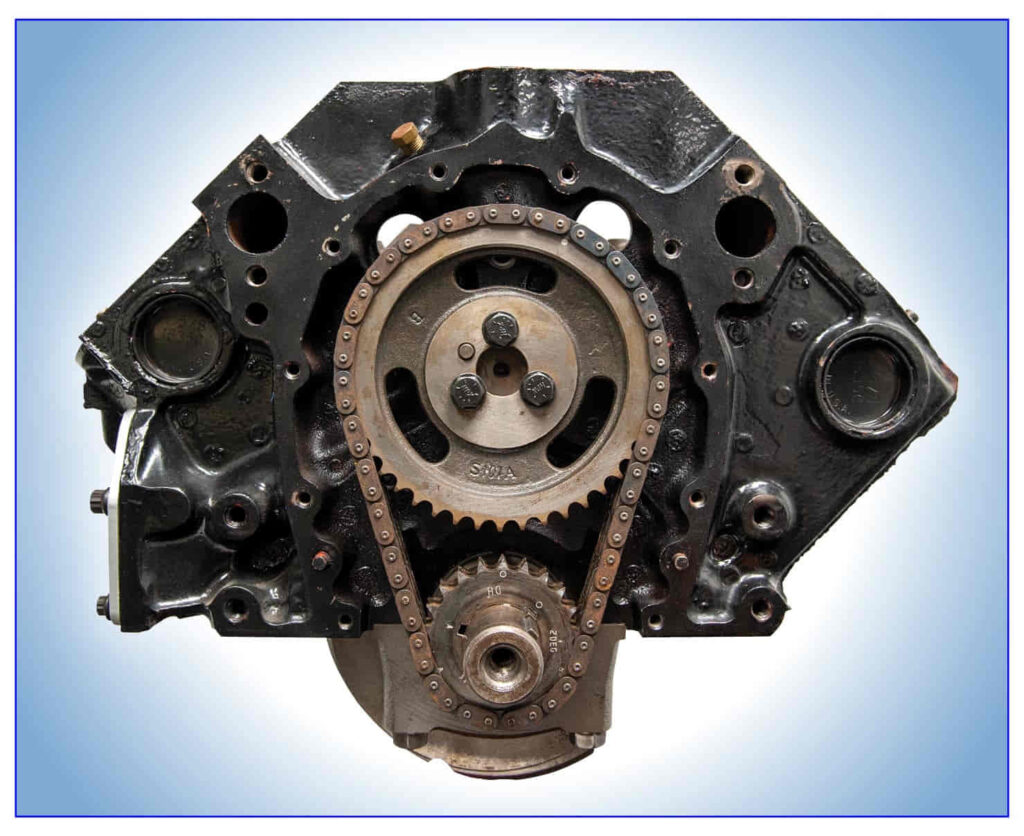
The Chevy small block firing order is 1-8-4-3-6-5-7-2 for many traditional Chevrolet Small-Block V8 engines, including common versions of the 305 and 350 cubic-inch engines. This sequence determines the order in which the cylinders deliver their power strokes. Understanding the correct firing order is essential when installing spark plug wires, checking distributor connections, diagnosing engine misfires, or maintaining a Chevrolet small-block engine. However, the exact specification should always be verified against the engine’s configuration and service documentation, especially when the engine has been modified.
The firing order works together with cylinder numbering, distributor rotation, and ignition timing to ensure that each cylinder fires at the correct point in the engine cycle. Although these terms are related, they describe different aspects of engine operation. The firing order identifies the sequence of cylinder firing, cylinder numbering identifies each cylinder’s physical location, and ignition timing determines when the spark occurs relative to crankshaft position.
This guide explains the Chevy small block firing order, how to identify the cylinders, and how to route spark plug wires correctly. It also examines differences among traditional small-block engine variants, explains how an incorrect firing sequence affects performance, and shows how to verify the appropriate specification before servicing the ignition system. These details help prevent wiring errors and support more accurate engine troubleshooting.
What Is the Chevy Small Block Firing Order?
The firing order for many traditional Chevrolet Small-Block V8 engines is 1-8-4-3-6-5-7-2. This sequence identifies the order in which the eight cylinders produce their power strokes during engine operation. It applies to common traditional small-block configurations, including many Chevrolet 305 and 350 engines. The firing order is determined by the engine’s design and crankshaft configuration, so it should not be confused with the physical arrangement of the cylinders or the position of the spark plug wires on the distributor cap. For a specific engine, the manufacturer’s service information remains the best reference for confirming the correct sequence.
A V8 engine has eight cylinders arranged in two banks, with four cylinders on each side of the engine. During operation, each cylinder completes the processes required to draw in the air-fuel mixture, compress it, produce combustion, and expel exhaust gases. The firing order coordinates the power strokes across these cylinders. In a traditional Chevy small block, cylinder No. 1 fires first in the sequence, followed by cylinders 8, 4, 3, 6, 5, 7, and 2 before the cycle returns to cylinder No. 1. This sequence helps distribute combustion events according to the engine’s mechanical design.
The firing order is important when connecting spark plug wires to a distributor. Each wire must connect the correct distributor terminal to its corresponding cylinder, and the terminals must follow the specified firing sequence in the distributor’s direction of rotation. If the wires are connected in the wrong order, the spark may reach a cylinder that is not ready for combustion. Depending on the error, the engine may run roughly, misfire, lose power, or fail to start. These symptoms can also result from other ignition or engine problems, so the firing order should be checked alongside other relevant diagnostic information.
Although 1-8-4-3-6-5-7-2 is the standard reference for many traditional Chevrolet Small-Block V8 engines, identifying the engine correctly is still essential. Engine swaps, aftermarket ignition components, modified distributor installations, and less common engine variants can complicate identification. Confirming the engine family and checking the appropriate service manual helps ensure that the firing order, cylinder numbering, and distributor connections match the actual configuration. Once the correct sequence is established, the next step is to identify where each cylinder is located on the engine.
Read more: How Does a 2 Stroke Engine Work
How Are the Cylinders Numbered on a Chevy Small Block?
The cylinders on a traditional Chevrolet Small-Block V8 are numbered 1 through 8, with cylinders 1, 3, 5, and 7 on the driver’s side of a conventional left-hand-drive vehicle and cylinders 2, 4, 6, and 8 on the passenger side. Cylinder No. 1 is at the front of the driver’s-side cylinder bank, closest to the water pump and front of the engine. The numbering then continues toward the rear of the engine, with cylinder No. 7 at the back of that bank. On the passenger side, cylinder No. 2 is at the front, followed by cylinders 4, 6, and 8 toward the rear. This arrangement is essential when following the Chevy small block firing order because each distributor wire must connect to the correct physical cylinder.
The cylinder numbering pattern remains consistent across many traditional Chevrolet Small-Block V8 engines, including common 305 and 350 cubic-inch versions. However, the terms driver’s side and passenger side describe the vehicle installation rather than a universal viewing direction. When looking at a removed engine from the front, the left and right sides can appear reversed compared with the driver’s perspective. Using the vehicle’s orientation and identifying the front of the engine helps prevent confusion when locating cylinders or routing spark plug wires.
Cylinder numbering and firing order serve different purposes. Cylinder numbering identifies the location of each cylinder, while the firing order specifies the sequence in which those cylinders produce their power strokes. For example, the firing order 1-8-4-3-6-5-7-2 begins with cylinder No. 1 and then moves to cylinder No. 8, which is located at the rear of the passenger-side bank. The sequence then continues through cylinders 4, 3, 6, 5, 7, and 2. Following the firing order without first identifying the physical cylinder locations can result in incorrectly connected spark plug wires.
Before connecting the distributor wires, confirm cylinder No. 1 and trace the remaining cylinders using the correct bank arrangement. If the engine has been swapped into another vehicle, modified, or assembled from different components, consult the appropriate service documentation to confirm the engine configuration. Correct cylinder identification provides the foundation for distributor wiring, ignition checks, and troubleshooting problems such as misfires or rough running.
How Do You Wire a Chevy Small Block Distributor?
To wire a traditional Chevy Small Block distributor correctly, connect each distributor terminal to its corresponding spark plug using the firing order 1-8-4-3-6-5-7-2 and the distributor’s direction of rotation. The first step is to identify cylinder No. 1 and locate the distributor cap terminal connected to that cylinder when the engine is correctly positioned for the No. 1 firing event. Starting from that terminal, follow the firing order around the distributor cap, connecting each terminal to the matching cylinder. This process ensures that the ignition system delivers the spark to each cylinder in the correct sequence.
The distributor cap terminal for cylinder No. 1 does not necessarily occupy the same physical position on every Chevy small block. Its location depends on how the distributor was installed, the engine’s timing position, and the arrangement of the distributor housing and cap. Therefore, assuming that the No. 1 terminal is always at a particular clock position can lead to wiring errors. The reliable approach is to verify the No. 1 firing position using the correct service procedure for the engine, then identify the distributor’s actual direction of rotation before routing the remaining wires.
Once the No. 1 terminal has been identified, connect the remaining wires in the sequence 8, 4, 3, 6, 5, 7, and 2, following the distributor’s rotation. Each wire must run from its assigned cap terminal to the spark plug serving the corresponding cylinder. Keep the wires organized so that they do not become crossed or confused during installation. Also, route them away from hot exhaust components and moving parts, and use suitable wire separators where appropriate. Poor routing can damage insulation, create unwanted electrical interference, or make later troubleshooting more difficult.
After connecting the wires, inspect every connection at both the distributor cap and the spark plugs. Confirm that each wire reaches the intended cylinder and that the distributor cap is securely installed. If the engine does not start, runs roughly, or misfires after the wiring work, recheck the cylinder numbering, No. 1 terminal identification, firing sequence, and distributor rotation. Incorrect ignition timing, worn spark plugs, damaged wires, or other engine faults can produce similar symptoms, so firing order should not be treated as the only possible cause. For modified engines or unfamiliar distributor installations, consult the engine-specific service manual before making adjustments.
Do Chevy 305, 327, and 350 Small Blocks Use the Same Firing Order?
Many traditional Chevrolet 305, 327, and 350 cubic-inch Small-Block V8 engines use the same firing order: 1-8-4-3-6-5-7-2. These engines belong to the traditional Chevrolet small-block family, which shares a common design approach and cylinder-numbering arrangement across many versions. The shared firing order allows the same basic sequence to be used when identifying cylinder firing events and organizing spark plug wires on compatible engine configurations. However, engine displacement alone does not establish every ignition specification, so the exact engine version and installed components should be confirmed before servicing the ignition system.
The Chevrolet 305 Small Block is a 5.0-liter-class V8, while the 327 and 350 are larger-displacement versions of the traditional small-block design. Despite differences in displacement, bore, stroke, and performance characteristics, many conventional versions retain the same cylinder numbering and firing sequence. This means a technician familiar with the traditional small-block layout can use the same basic firing-order reference across many 305, 327, and 350 engines. The physical location of each cylinder remains important, however, because a correct sequence does not help if the wires are connected to the wrong cylinders.
The firing order should also be distinguished from distributor configuration and ignition timing. Two engines can use the same firing order but have different distributor installations, ignition components, timing requirements, or emissions equipment. For example, the No. 1 terminal may occupy a different position on the distributor cap if the distributor has been installed differently. The correct terminal location must therefore be established from the engine’s actual configuration rather than copied from another vehicle. Similarly, ignition timing must be set according to the specifications for the specific engine and ignition system.
Modified engines require additional attention. An engine assembled from aftermarket components, fitted with a different cylinder head or ignition system, or converted from its original configuration may not follow every assumption that applies to a factory-built engine. The safest method is to identify the engine, check the appropriate service documentation, and verify the distributor arrangement before connecting spark plug wires. Although 1-8-4-3-6-5-7-2 is a widely used reference for traditional Chevrolet Small-Block V8 engines, the correct specification for the particular engine should take precedence over a general rule.
Do Chevy 305, 327, and 350 Small Blocks Use the Same Firing Order?
Many traditional Chevrolet 305, 327, and 350 cubic-inch Small-Block V8 engines use the same firing order: 1-8-4-3-6-5-7-2. These engines belong to the traditional Chevrolet small-block family, which shares a common design approach and cylinder-numbering arrangement across many versions. The shared firing order allows the same basic sequence to be used when identifying cylinder firing events and organizing spark plug wires on compatible engine configurations. However, engine displacement alone does not establish every ignition specification, so the exact engine version and installed components should be confirmed before servicing the ignition system.
The Chevrolet 305 Small Block is a 5.0-liter-class V8, while the 327 and 350 are larger-displacement versions of the traditional small-block design. Despite differences in displacement, bore, stroke, and performance characteristics, many conventional versions retain the same cylinder numbering and firing sequence. This means a technician familiar with the traditional small-block layout can use the same basic firing-order reference across many 305, 327, and 350 engines. The physical location of each cylinder remains important, however, because a correct sequence does not help if the wires are connected to the wrong cylinders.
The firing order should also be distinguished from distributor configuration and ignition timing. Two engines can use the same firing order but have different distributor installations, ignition components, timing requirements, or emissions equipment. For example, the No. 1 terminal may occupy a different position on the distributor cap if the distributor has been installed differently. The correct terminal location must therefore be established from the engine’s actual configuration rather than copied from another vehicle. Similarly, ignition timing must be set according to the specifications for the specific engine and ignition system.
Modified engines require additional attention. An engine assembled from aftermarket components, fitted with a different cylinder head or ignition system, or converted from its original configuration may not follow every assumption that applies to a factory-built engine. The safest method is to identify the engine, check the appropriate service documentation, and verify the distributor arrangement before connecting spark plug wires. Although 1-8-4-3-6-5-7-2 is a widely used reference for traditional Chevrolet Small-Block V8 engines, the correct specification for the particular engine should take precedence over a general rule.
What Is the Difference Between Firing Order and Ignition Timing?
Firing order and ignition timing describe two different aspects of the ignition process in a Chevy Small Block engine. Firing order determines the sequence in which the cylinders produce their power strokes, while ignition timing determines when the spark plug fires in relation to the crankshaft’s position. Many traditional Chevrolet Small-Block V8 engines use the firing order 1-8-4-3-6-5-7-2, but the correct ignition timing depends on the specific engine and ignition system. Understanding this distinction helps prevent diagnostic mistakes when an engine runs poorly after distributor installation or spark plug wire replacement.
The firing order follows the engine’s mechanical design and coordinates combustion events among the eight cylinders. Each cylinder must receive its spark at the appropriate point in the cycle, and the distributor or electronic ignition system must deliver that spark to the correct cylinder. If the spark plug wires are connected in the wrong sequence, the ignition system may fire cylinders in an incorrect order. The engine may then misfire, run roughly, lose power, or fail to start. These symptoms can occur even if the distributor’s timing adjustment is otherwise correct.
Ignition timing focuses on the precise moment the spark occurs within an individual cylinder’s operating cycle. In a conventional gasoline engine, the spark typically occurs before the piston reaches top dead center on the compression stroke. This advance gives the air-fuel mixture time to burn and develop cylinder pressure at an appropriate point in the power stroke. Timing is commonly expressed in crankshaft degrees before top dead center, or BTDC. The correct value depends on factors such as engine design, operating speed, load, and the type of ignition system. Factory timing specifications should therefore be followed rather than applying a universal setting to every Chevy small block.
An engine can have the correct firing order but incorrect ignition timing, just as it can have an appropriate timing adjustment but incorrectly connected spark plug wires. These faults require different checks. Verifying the firing order involves confirming cylinder numbering, identifying the No. 1 distributor terminal, and tracing the wires in the correct sequence. Checking ignition timing requires the appropriate procedure and equipment for the specific ignition system, such as a timing light on compatible conventional systems. Separating these two diagnostic tasks makes troubleshooting more accurate and helps prevent unnecessary adjustments to a properly installed ignition system.
What Happens If the Chevy Small Block Firing Order Is Incorrect?
An incorrect Chevy Small Block firing order can cause engine misfires, rough running, reduced power, difficult starting, or a complete failure to start. These problems occur when spark plug wires connect the distributor terminals to the wrong cylinders, causing the ignition system to deliver sparks at inappropriate points in the engine’s operating cycle. Many traditional Chevrolet Small-Block V8 engines use the firing order 1-8-4-3-6-5-7-2, so a wiring arrangement that does not match the specified sequence can disrupt normal combustion. The severity of the symptoms depends on how the wires are misplaced and whether other ignition or mechanical faults are present.
A common cause of an incorrect firing order is installing spark plug wires without first confirming cylinder numbering and the No. 1 distributor terminal. The wires may appear securely connected, yet the engine can still run poorly if their sequence around the distributor cap is wrong. Confusing the driver’s side with the passenger side can also lead to incorrect cylinder connections. On a traditional Chevrolet Small Block, cylinders 1, 3, 5, and 7 are on the driver’s side, while cylinders 2, 4, 6, and 8 are on the passenger side. Confirming these locations before connecting the wires helps prevent mistakes during ignition system maintenance.
Incorrect wiring can also produce symptoms that resemble other engine problems. An engine that shakes at idle, hesitates during acceleration, or struggles to start may have crossed spark plug wires, but similar behavior can result from worn spark plugs, damaged ignition wires, a faulty distributor, incorrect ignition timing, fuel delivery problems, or loss of compression. Replacing components without checking the firing order first can waste time and money. A more reliable approach is to inspect the ignition wiring against the correct firing sequence and then investigate other possible causes if the connections are correct.
To verify the firing order, identify the engine configuration, locate cylinder No. 1, establish the correct No. 1 distributor terminal, and trace each wire in the specified sequence and direction of distributor rotation. Check that every wire connects firmly to the correct spark plug and distributor terminal. If the engine has been modified or its distributor has been removed and reinstalled, consult the applicable service manual before making adjustments. Avoid prolonged operation when a severe misfire is present, because unburned fuel can enter the exhaust and damage components such as the catalytic converter on equipped vehicles. Accurate identification and systematic inspection are more effective than guessing at wire positions or changing ignition timing without evidence.
How Can You Verify the Correct Firing Order for Your Chevy Small Block?
You can verify the correct firing order for a Chevy Small Block by identifying the engine configuration, confirming the cylinder numbering, checking the distributor arrangement, and comparing the spark plug wire connections with the appropriate service specifications. The firing order for many traditional Chevrolet Small-Block V8 engines is 1-8-4-3-6-5-7-2, but this general reference should not replace engine-specific documentation. Verification is especially important when working on a restored vehicle, an engine swap, or an engine fitted with aftermarket ignition components because the distributor position and wiring layout may differ from those on another vehicle.
Start by identifying the engine and confirming its cylinder numbering. On a traditional Chevrolet Small Block, cylinder No. 1 is at the front of the driver’s-side bank, with cylinders 3, 5, and 7 continuing toward the rear. The passenger-side bank contains cylinders 2, 4, 6, and 8, also numbered from front to rear. Once the cylinder locations are established, check the service manual or another reliable technical reference for the engine’s specified firing order. The engine’s displacement or appearance alone may not provide enough information to confirm every ignition specification, particularly if the engine has been modified.
Next, identify the No. 1 terminal on the distributor cap and establish the distributor’s direction of rotation for the specific installation. Do not assume that the No. 1 terminal occupies the same clock position on every Chevy small block. The distributor may have been installed in a different orientation, so the terminal position must be verified rather than copied from another engine. Starting at the confirmed No. 1 terminal, trace the spark plug wires in the specified firing sequence and ensure that each wire reaches the correct cylinder. Inspect the connections for loose terminals, damaged insulation, and routing near hot exhaust components or moving parts.
If the firing order and wire connections are correct but the engine still runs poorly, check other possible ignition and engine faults. Incorrect ignition timing, worn spark plugs, damaged wires, distributor problems, fuel delivery issues, and mechanical faults can produce similar symptoms. Ignition timing should be checked using the procedure and specifications appropriate for the installed ignition system. If the engine has an aftermarket crankshaft, a modified distributor arrangement, or other significant internal changes, consult a qualified technician or the component manufacturer’s documentation before assuming that factory specifications apply.
Verifying the Chevy Small Block firing order is therefore a process of matching the correct technical specification to the actual engine configuration. Accurate cylinder identification, confirmed distributor rotation, and properly routed spark plug wires help prevent avoidable ignition errors. By checking these details before starting the engine, you can make maintenance more reliable and narrow down potential causes of misfires without making unnecessary adjustments.