Hyundai Palisade P2181 code is a Diagnostic Trouble Code (DTC) related to cooling system performance. The code appears when the Engine Control Module (ECM) detects that the engine cooling system is not operating within the expected temperature range. This issue usually involves components that control engine temperature, including the thermostat, coolant temperature sensor, coolant level, radiator, and cooling fan.
A P2181 code does not always indicate immediate engine failure, but it requires proper diagnosis because incorrect engine temperature management can affect fuel efficiency, engine performance, and long-term reliability. A malfunctioning cooling system can cause the engine to run too hot or too cold, creating additional stress on internal components.
This guide explains what Hyundai Palisade P2181 code means, the most common symptoms, the causes behind the problem, the diagnostic process, and the repair solutions. Understanding how the cooling system works helps vehicle owners identify the issue earlier, avoid unnecessary part replacements, and make better repair decisions.
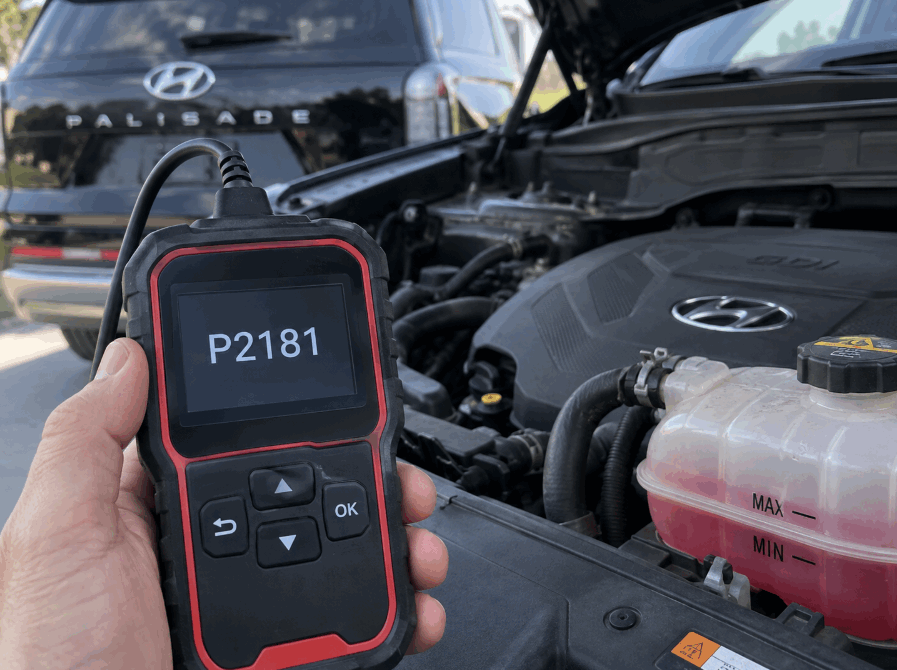
What Does the Hyundai Palisade P2181 Code Mean?
Hyundai Palisade P2181 code means the Engine Control Module (ECM) has detected abnormal cooling system performance. The P2181 Diagnostic Trouble Code is triggered when the ECM identifies that the engine temperature does not match the expected operating conditions based on coolant temperature data, engine load, vehicle speed, and operating time.
The cooling system maintains the engine within its optimal temperature range by controlling coolant circulation and heat removal. The thermostat regulates coolant flow between the engine and radiator, while the coolant temperature sensor measures temperature changes and sends information to the ECM. When one of these components does not operate correctly, the ECM may record P2181 because the engine is warming up too slowly, running too cool, or experiencing unstable temperature control.
The P2181 code is commonly associated with cooling system components rather than a direct engine failure. For example, a thermostat that remains open can allow coolant to circulate continuously, preventing the engine from reaching its designed operating temperature. A faulty coolant temperature sensor can also send inaccurate readings, causing the ECM to interpret normal conditions as a cooling system problem.
On a Hyundai Palisade, this code requires a complete cooling system inspection because several components can create similar symptoms. Checking only the trouble code does not identify the failed part. Technicians usually combine OBD-II scan data, coolant temperature readings, visual inspection, and component testing to determine the actual cause.
Understanding the meaning of P2181 helps vehicle owners avoid replacing unnecessary parts. The code identifies a cooling system performance issue, but the exact repair depends on which component prevents the Hyundai Palisade engine from maintaining the correct temperature.
What Are the Symptoms of P2181 Code on Hyundai Palisade?
There are 6 common symptoms of Hyundai Palisade P2181 code. They include Check Engine Light activation, abnormal engine temperature, reduced fuel efficiency, poor engine performance, cooling fan problems, and unstable temperature control. These symptoms appear when the cooling system cannot maintain the correct engine temperature.
The first symptom is the Check Engine Light turning on. The Engine Control Module (ECM) activates this warning when it detects abnormal cooling system performance. The warning light does not identify the failed component. It only shows that the ECM has stored a Diagnostic Trouble Code.
Another symptom is abnormal engine temperature. A Hyundai Palisade with P2181 may run too cold or too hot. A stuck-open thermostat can prevent the engine from reaching its normal temperature. A restricted cooling system can increase the risk of overheating.
Reduced fuel efficiency can also occur with this code. The engine requires accurate temperature data to manage fuel delivery. When the coolant temperature information is incorrect, the ECM may adjust engine operation incorrectly. This can increase fuel consumption.
Some drivers may notice reduced engine performance. The engine may respond slower during acceleration. Incorrect temperature control can prevent the engine from operating at its designed efficiency.
Cooling fan problems are another possible symptom. The fan may run more often than normal. It may also fail to activate when cooling is required. These problems can indicate incorrect temperature signals or poor heat removal.
Early symptom identification helps prevent further damage. A Hyundai Palisade P2181 code does not always mean a major engine problem. However, the cooling system should be inspected before the issue affects engine reliability.
How Do You Diagnose Hyundai Palisade P2181 Code?
Diagnosing Hyundai Palisade P2181 code requires checking the complete cooling system, not only reading the trouble code. The P2181 code identifies a cooling system performance problem, but it does not show which component has failed. A proper diagnosis combines scan data, physical inspection, and component testing.
The first step is scanning the Engine Control Module (ECM) with an OBD-II scanner. The scanner confirms the stored P2181 code and provides additional information from freeze frame data. Freeze frame data shows engine conditions when the fault occurred, including engine temperature, vehicle speed, and operating time.
The next step is checking coolant level and possible leaks. The technician inspects the coolant reservoir, radiator area, hoses, and water pump for signs of coolant loss. A low coolant level can create inaccurate temperature control and may cause the ECM to detect abnormal cooling performance.
Coolant temperature sensor testing is another important diagnostic step. The sensor should provide accurate temperature readings to the ECM. Technicians compare sensor data from the OBD-II scanner with the actual engine temperature. A large difference between these values can indicate a faulty sensor.
The thermostat should also be inspected because it directly controls coolant circulation. A technician may check whether the thermostat opens at the correct temperature. A thermostat that opens too early or fails to open can cause the engine temperature to move outside the expected range.
The cooling fan and radiator operation must be tested as well. The cooling fan should activate when additional airflow is required. The radiator should transfer heat efficiently through proper coolant circulation and airflow. Problems in these areas can cause unstable engine temperatures.
A complete diagnosis prevents unnecessary repairs. For example, replacing a thermostat will not solve the problem if the actual cause is a faulty coolant temperature sensor or a coolant leak. Identifying the failed component first leads to a more accurate and cost-effective repair.
Can You Drive a Hyundai Palisade With P2181 Code?
You can drive a Hyundai Palisade with P2181 code for a short distance in some cases, but the vehicle should be inspected as soon as possible. The safety of continued driving depends on the actual cause of the cooling system problem and whether the engine temperature remains within a safe range.
A P2181 code caused by a minor issue, such as an inaccurate temperature reading from a sensor, may not immediately affect engine operation. However, ignoring the code for a long period can allow a small cooling system problem to become more serious. Proper diagnosis is necessary to determine the level of risk.
Driving should be avoided if the Hyundai Palisade shows signs of overheating. Warning signs include a rising temperature gauge, steam from the engine compartment, coolant leaking under the vehicle, unusual engine smells, or reduced engine performance. These symptoms indicate that the cooling system may not be removing heat effectively.
An overheating engine can cause severe mechanical damage. Excessive heat can affect engine components, damage gaskets, and reduce engine reliability. The cooling system exists to maintain stable operating temperatures, so any failure that affects temperature control requires attention.
Drivers should also consider the operating conditions. Short trips with normal temperature readings create less risk than long-distance driving, heavy traffic, towing, or driving in hot weather. These conditions increase engine workload and require better cooling performance.
The best approach is to diagnose the P2181 code before continuing regular driving. Identifying the cause early can prevent expensive repairs and protect the Hyundai Palisade engine from avoidable damage.
How Do You Fix P2181 Code on Hyundai Palisade?
Fixing Hyundai Palisade P2181 code requires repairing the component that causes abnormal cooling system performance. The correct repair depends on the diagnostic results because P2181 can come from different cooling system failures, including thermostat problems, coolant issues, sensor faults, or circulation problems.
Replacing a faulty thermostat is one of the most common repairs for P2181. The thermostat controls when coolant flows through the radiator. If it stays open, the engine may run below its designed temperature. If it stays closed, coolant circulation becomes restricted and can increase overheating risk.
Repairing coolant leaks is another important solution. Technicians should inspect the radiator, hoses, coolant reservoir, and water pump area for leaks. Restoring the correct coolant level allows the cooling system to transfer heat properly and maintain stable engine temperature.
Replacing a damaged coolant temperature sensor may also resolve the code. The sensor provides temperature information to the Engine Control Module (ECM). When the sensor produces incorrect readings, the ECM may activate P2181 even if other cooling components are working correctly.
Cooling fan repairs may be required when airflow problems affect temperature control. A technician may need to replace a faulty fan motor, repair electrical connections, or replace related control components. Proper fan operation helps remove heat from the radiator during low-speed driving conditions.
In some cases, radiator or water pump repairs are necessary. A blocked radiator can reduce heat transfer, while a failing water pump can limit coolant circulation. These failures prevent the engine from maintaining the correct operating temperature.
A complete repair should always follow proper diagnosis. Replacing multiple parts without confirming the failed component can increase costs and may not fix the Hyundai Palisade P2181 problem. Accurate testing ensures that the repair addresses the actual cause.
How Much Does It Cost to Fix Hyundai Palisade P2181 Code?
The cost to fix Hyundai Palisade P2181 code depends on the failed cooling system component, diagnostic time, labor rates, and replacement parts required. A simple sensor replacement usually costs less than repairs involving major cooling system components such as the radiator or water pump.
The first cost is usually the diagnostic inspection. A professional technician may use an OBD-II scanner, temperature testing equipment, and cooling system checks to identify the cause of the code. Diagnostic costs vary depending on the repair shop and the complexity of testing required.
A thermostat replacement is one of the more common repairs for P2181. The total cost depends on the thermostat price, labor time, and coolant replacement requirements. This repair is usually less expensive than replacing larger cooling system components.
Coolant leaks can create different repair costs depending on the location of the leak. A damaged hose or reservoir may require a simple replacement. A radiator leak or water pump problem usually requires more labor because these components are more difficult to access.
A coolant temperature sensor replacement is another possible repair. The cost depends on sensor availability and installation difficulty. Since the sensor directly affects ECM temperature readings, replacing a faulty sensor can restore correct cooling system monitoring.
Several factors influence the final repair cost, including vehicle condition, location, parts quality, and whether additional cooling system damage exists. A proper diagnosis before repair helps avoid unnecessary expenses by identifying the exact failed component.
Preventive maintenance can reduce the chance of expensive cooling system repairs. Regular coolant inspections, scheduled maintenance, and early attention to temperature warnings help protect the Hyundai Palisade engine from larger problems.
How Can You Prevent P2181 Code on Hyundai Palisade?
You can prevent Hyundai Palisade P2181 code by maintaining the cooling system, monitoring coolant conditions, and inspecting temperature-related components regularly. Preventive maintenance helps the engine maintain stable operating temperatures and reduces the risk of cooling system failures.
Regular coolant inspection is one of the most important prevention steps. The coolant level should remain within the recommended range, and the system should be checked for leaks or contamination. Low coolant levels can reduce heat transfer efficiency and increase the chance of abnormal engine temperature conditions.
Following the recommended maintenance schedule helps protect cooling system components. Hyundai Palisade owners should replace coolant according to manufacturer guidelines and inspect components such as hoses, the radiator, thermostat, and coolant reservoir during routine service.
Monitoring engine temperature warnings can also prevent larger problems. Drivers should pay attention to unusual temperature gauge movement, warning lights, coolant odors, or visible leaks. Early detection allows repairs before a minor cooling issue affects other engine components.
Regular inspection of cooling system components improves long-term reliability. A thermostat that operates incorrectly, a weak water pump, or a failing coolant temperature sensor can gradually affect engine temperature control. Identifying these issues early reduces the chance of a P2181 code appearing.
Maintaining the Hyundai Palisade cooling system is the most effective way to avoid repeated temperature-related problems. Proper coolant care and timely repairs help the engine operate within its designed temperature range and improve overall vehicle reliability.
Hyundai Palisade P2181 Code Summary
Hyundai Palisade P2181 code indicates a cooling system performance problem that requires accurate diagnosis before repair. The code does not identify a single failed component, but it shows that the engine temperature control system is not operating as expected.
The most common causes include thermostat failure, coolant problems, faulty coolant temperature sensors, cooling fan issues, radiator problems, and water pump failures. Each cause affects how the engine manages heat and maintains the correct operating temperature.
Proper diagnosis is the key to fixing P2181 correctly. Checking OBD-II data, inspecting coolant conditions, testing temperature sensors, and evaluating cooling system components help identify the actual source of the problem. Replacing parts without confirmation can increase repair costs and may not solve the issue.
Regular cooling system maintenance helps prevent future P2181 problems. Maintaining proper coolant levels, following service schedules, and responding quickly to temperature warnings protect the Hyundai Palisade engine and improve long-term reliability.