Hyundai Palisade remote start not working usually happens because of problems with the key fob, vehicle battery, safety settings, Hyundai Bluelink, or electronic components. The remote start system checks several conditions before it starts the engine. If one condition fails, the system prevents the vehicle from starting remotely.
Many Hyundai Palisade owners check the key fob first. However, the problem does not always come from the remote control. A weak vehicle battery, an open door, an unclosed hood, a warning light, or a communication error can also stop the feature from working.
This guide explains why Hyundai Palisade remote start fails and how to troubleshoot the problem. It covers the most common causes, including key fob battery issues, vehicle battery problems, security restrictions, and Hyundai Bluelink connection failures. Each solution focuses on practical steps that owners can follow before visiting a repair facility.
Understanding the cause helps you avoid unnecessary repairs. Simple problems, such as replacing a key fob battery or checking vehicle conditions, can restore remote start operation quickly. More complex issues may require professional diagnosis from a Hyundai technician.
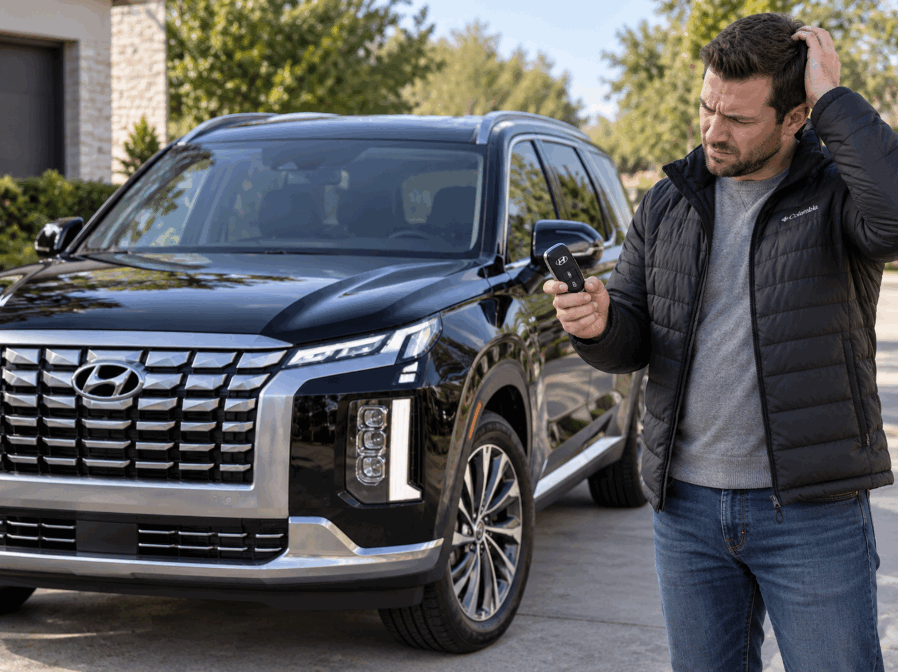
Why Is My Hyundai Palisade Remote Start Not Working?
Hyundai Palisade remote start does not work when the vehicle fails one of the system requirements or when a component cannot communicate correctly. The remote start system checks the vehicle status before it allows the engine to start. This process protects the engine, transmission, and security system.
The most common causes include a weak key fob battery, a low vehicle battery, incorrect vehicle conditions, Hyundai Bluelink connection problems, and security system restrictions. Each issue affects a different part of the remote start process.
The key fob sends the starting command to the vehicle. The vehicle then checks safety conditions before activating the engine. If the system detects a problem, it blocks remote start even when the owner presses the correct button sequence.
Hyundai Palisade owners should check simple causes first. A dead key fob battery or an unlocked door requires a quick fix. Electrical problems or system errors require deeper diagnosis.
What Conditions Prevent Hyundai Palisade Remote Start From Activating?
The Hyundai Palisade remote start system requires specific vehicle conditions before it starts the engine. The system will not activate when these conditions fail because Hyundai designed remote start to operate only in safe situations.
The vehicle must remain locked, the doors must close completely, and the hood must stay closed. The transmission must also remain in Park. If the system detects an open door, an open hood, or an incorrect gear position, it cancels the remote start request.
The brake pedal position also affects remote start operation. The vehicle does not allow remote starting when the driver presses the brake pedal because the system recognizes this action as a manual starting attempt.
Warning indicators can also stop remote start. A check engine light, low fuel condition, or certain electronic system warnings may prevent the vehicle from accepting the remote start command. The system uses these restrictions to protect the vehicle from operating with unresolved problems.
For example, a Hyundai Palisade parked with the hood slightly open may look normal to the owner. However, the hood latch sensor sends an open status to the vehicle computer, and the system blocks remote start.
What Are the Most Common Causes of Hyundai Palisade Remote Start Failure?
The Hyundai Palisade remote start system usually fails because of 7 common causes: key fob battery problems, vehicle battery issues, incorrect settings, Bluelink communication errors, security restrictions, sensor failures, and software problems.
A weak key fob battery is one of the easiest issues to identify. The remote may have a shorter operating range or respond inconsistently before it stops working completely. Replacing the battery often restores normal communication between the key fob and vehicle.
A weak vehicle battery creates another common problem. Remote start requires enough electrical power to operate multiple systems at the same time. When battery voltage drops, the vehicle may disable remote start to protect essential functions.
Hyundai Bluelink users may experience remote start failure when the app cannot communicate with the vehicle. Mobile network problems, outdated applications, or account connection issues can interrupt the remote command.
The security system and vehicle sensors also affect remote start operation. A faulty hood sensor, door sensor, or immobilizer issue can make the vehicle reject the starting request. These problems often require additional inspection because the vehicle computer controls the decision.
How Do You Fix Hyundai Palisade Remote Start Not Working?
Hyundai Palisade remote start problems often require a step by step inspection process. Start with simple components before checking advanced electrical or software issues. Most owners can identify common problems by checking the key fob, vehicle battery, and remote start conditions.
The troubleshooting process should follow the communication path between the user command and the engine activation system. The key fob or Hyundai Bluelink sends the command first. The vehicle receives the signal, checks safety conditions, and then activates the engine. A failure at any stage can stop remote start operation.
Checking the easiest causes first saves time and prevents unnecessary repairs. A key fob battery replacement takes only a few minutes, while diagnosing a sensor or control module problem requires professional equipment.
How Do You Check the Hyundai Palisade Key Fob Battery?
A weak Hyundai Palisade key fob battery can prevent the remote start system from receiving a clear signal. The key fob uses a small battery to transmit commands to the vehicle. When the battery loses power, the remote range decreases and the vehicle may ignore the start request.
Common signs of a weak key fob battery include delayed responses, reduced operating distance, and inconsistent button performance. Some owners notice that the lock and unlock buttons work only when they stand close to the vehicle.
Replacing the key fob battery is usually the first repair step. Most Hyundai Smart Keys use a replaceable coin cell battery. Owners should install the correct battery type and ensure the battery contacts remain clean.
For example, a Hyundai Palisade that starts normally with the push button but does not respond to remote commands may have a key fob communication problem rather than an engine problem.
How Do You Check the Hyundai Palisade Vehicle Battery?
The vehicle battery plays an important role in remote start operation because the system needs stable electrical power to control multiple components. A weak battery may allow normal driving but still prevent remote start from working.
The engine starter, electronic control modules, security system, and communication systems all depend on battery voltage. When the battery voltage drops below the required level, the vehicle may disable remote start to protect the remaining electrical power.
Drivers should check for common battery warning signs, including slow engine cranking, dim interior lights, repeated battery discharge, or difficulty starting the vehicle. A battery test can confirm whether the electrical system provides enough power.
For example, a Hyundai Palisade that starts after several attempts but fails to respond to remote start commands may have a battery voltage issue. Testing the battery before replacing other components helps identify the actual cause.
How Do You Check Hyundai Palisade Remote Start Safety Conditions?
The Hyundai Palisade remote start system will not activate unless the vehicle meets all required safety conditions. These conditions prevent the engine from starting when the vehicle detects a potential risk.
Owners should confirm that the doors are fully closed, the hood is closed, the transmission remains in Park, and the vehicle has no active warning conditions. A small issue, such as a faulty hood latch sensor, can prevent the system from accepting the remote start command.
The vehicle computer monitors these conditions through different sensors. If one sensor sends incorrect information, the system assumes that the vehicle is not ready for remote starting.
Checking these conditions provides a simple diagnosis before searching for electrical faults. Many remote start failures happen because the vehicle detects a condition that the driver cannot immediately see.
Why Does Hyundai Palisade Remote Start Work Sometimes but Not Always?
Hyundai Palisade remote start that works inconsistently usually indicates an unstable connection between the remote command and the vehicle system. The feature may work in one situation and fail in another because different components affect communication quality and system readiness.
The most common causes include a weak key fob signal, unstable battery voltage, sensor problems, and communication interruptions between electronic modules. These issues often appear randomly because the system only fails when specific conditions occur.
A remote start system depends on several components working together. The key fob must send a clear signal, the vehicle must receive the command, and the control modules must confirm that all safety requirements are satisfied. A problem with any part of this process can create intermittent failures.
What Causes Intermittent Hyundai Palisade Remote Start Problems?
A weak key fob signal is one of the main causes of inconsistent remote start performance. The key fob may send commands successfully at a short distance but fail when the vehicle sits farther away or when signal interference affects communication.
Battery condition also affects reliability. A vehicle battery with unstable voltage may allow normal driving but fail during remote start attempts. Remote start requires communication between multiple electronic systems before it activates the engine.
Sensor problems can also create intermittent failures. The hood latch sensor, door sensors, and security system sensors provide information to the vehicle computer. If a sensor sends an incorrect signal, the system may block remote start even when the vehicle appears ready.
For example, a Hyundai Palisade may start remotely in the morning but fail later in the day after the vehicle detects a temporary sensor issue or a drop in battery voltage.
Why Is Hyundai Bluelink Remote Start Not Working on Palisade?
Hyundai Bluelink remote start problems occur when the mobile application cannot communicate properly with the vehicle. Bluelink uses connected vehicle technology to send remote commands through a network connection. Any interruption in this communication process can prevent the engine from starting remotely.
Common Bluelink issues include outdated app versions, weak cellular connection, account problems, and temporary service interruptions. Unlike key fob remote start, Bluelink depends on both the vehicle connection and the user’s mobile service.
Owners should check whether other Bluelink features work correctly before diagnosing a remote start failure. If vehicle status updates, door control, or other connected features also fail, the problem may involve the entire communication system rather than the remote start feature alone.
Updating the Hyundai Bluelink application and confirming account access can solve many connection problems. If the issue continues, the vehicle may require a system check to confirm that the communication module works correctly.
Can a Hyundai Palisade Remote Start Problem Be Caused by the Security System?
The Hyundai Palisade security system can prevent remote start when it detects a condition that affects vehicle safety. The remote start feature works together with the immobilizer system, alarm system, and vehicle sensors. When the security system identifies a problem, it blocks engine activation until the vehicle returns to a normal condition.
The immobilizer system protects the vehicle from unauthorized starting attempts. It communicates with the smart key system to confirm that the correct key or authorized remote command exists. If the vehicle cannot verify this information, the system prevents remote start.
The alarm system can also affect remote start operation. An active alarm event, incorrect door status, or communication error between security components can stop the vehicle from accepting the remote command.
What Security Components Can Stop Hyundai Palisade Remote Start?
Several security related components can affect Hyundai Palisade remote start operation. The hood latch sensor, door sensors, immobilizer system, and alarm system provide information that the vehicle computer uses before starting the engine remotely.
The hood latch sensor plays an important role because Hyundai remote start requires the hood to remain closed. A damaged or misaligned sensor can send an incorrect open signal even when the hood appears closed. The vehicle then prevents remote start as a safety measure.
Door sensors create similar restrictions. The system checks whether all doors remain properly closed and locked before activating the engine. A faulty door sensor can make the vehicle believe that a door remains open.
The immobilizer system creates another possible issue. If the vehicle cannot confirm the key authorization signal, it blocks remote starting to prevent unauthorized operation. This problem may require diagnostic equipment because the issue involves communication between electronic modules.
For example, a Hyundai Palisade owner may replace the key fob battery and still experience remote start failure because the actual problem comes from a sensor that sends incorrect information to the security system.
When Should You Take a Hyundai Palisade for Remote Start Repair?
A Hyundai Palisade requires professional diagnosis when basic troubleshooting does not restore remote start operation. Simple issues such as replacing a key fob battery or closing an unlocked door do not require specialized service. However, repeated failures often indicate a deeper electrical or software problem.
Owners should visit a Hyundai service center when the remote start system stops working completely, the vehicle shows warning lights, or the battery repeatedly loses power. These symptoms may point to problems with control modules, sensors, or vehicle communication systems.
Professional technicians use diagnostic tools to check error codes, sensor signals, and electronic communication between vehicle systems. This process helps identify the exact component that prevents remote start activation.
For example, a Palisade with a functioning key fob, healthy battery, and correct vehicle conditions may still fail remote start because the vehicle computer stores a hidden fault code. A diagnostic scan can reveal this issue faster than replacing parts without confirmation.
How Can You Prevent Hyundai Palisade Remote Start Problems?
Hyundai Palisade owners can prevent remote start problems by maintaining the key fob, vehicle battery, and electronic systems. The remote start feature depends on several components working together. Regular maintenance helps the vehicle receive remote commands and activate the engine correctly.
A healthy key fob battery improves communication between the remote and the vehicle. Owners should replace the battery when they notice reduced operating distance, delayed responses, or inconsistent button performance. A weak key fob battery can interrupt remote start operation before it stops working completely.
The vehicle battery also affects remote start reliability. The system requires stable electrical power to communicate with control modules, security systems, and the engine starting system. Owners should check the battery condition when they notice slow engine starts, dim lights, or repeated battery discharge.
Regular vehicle maintenance also protects remote start performance. Hyundai Palisade owners should follow the recommended service schedule and address dashboard warning lights early. Warning indicators can reveal problems with sensors, electrical components, or vehicle communication systems.
Software updates can also improve system reliability. Hyundai may release updates that improve communication between vehicle modules and connected services. Keeping the vehicle software current helps maintain stable remote start operation.
By maintaining the key fob, vehicle battery, sensors, and software, Hyundai Palisade owners can reduce remote start failures and avoid unnecessary repairs.