There is no universal 10W-30 hydraulic oil equivalent because SAE 10W-30 and ISO hydraulic oil grades use different viscosity classification systems. ISO VG 32, ISO VG 46, and ISO VG 68 are common grades considered when comparing hydraulic fluids, but none should automatically replace 10W-30. The correct substitute must meet the viscosity, fluid type, performance specification, and operating temperature required by the equipment manufacturer.
SAE 10W-30 is a multigrade viscosity classification that describes how an oil behaves at lower and higher temperatures. In contrast, ISO VG grades classify industrial and hydraulic oils primarily by their kinematic viscosity at 40°C. Therefore, comparing 10W-30 with ISO VG 32, 46, or 68 requires more than matching numbers on an oil container. The actual viscosity characteristics and intended application must also match the hydraulic system.
Choosing the correct substitute is especially important for vehicles, tractors, construction equipment, and other machines that use hydraulic systems. Oil that is too thick can restrict flow during cold operation, while oil that is too thin can reduce lubrication and increase internal leakage. This guide explains how 10W-30 compares with common hydraulic oil grades, which substitutes may be suitable, and what specifications to check before replacing the original fluid.
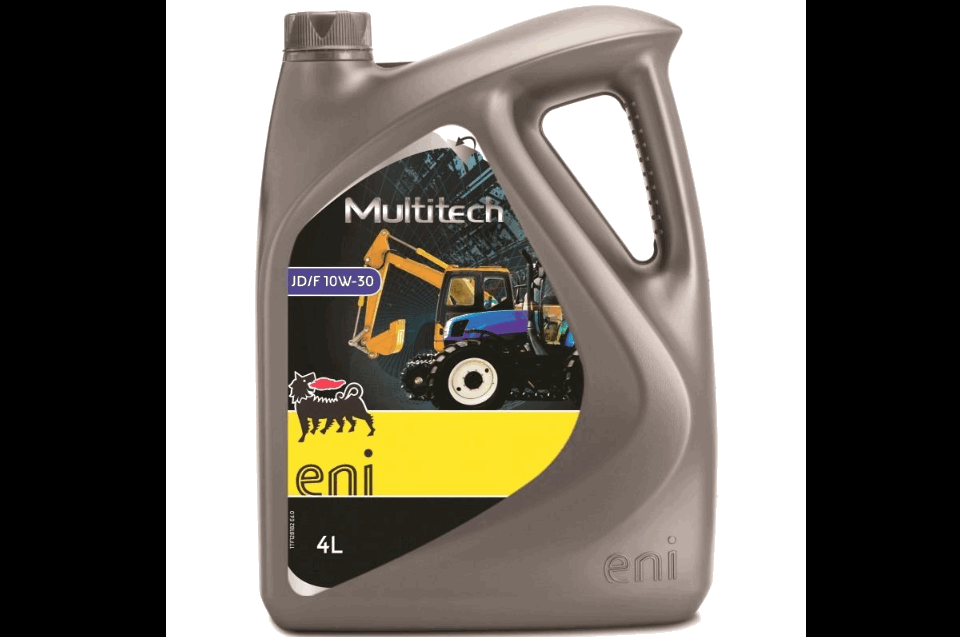
What Is Equivalent to 10W-30 Hydraulic Oil?
No single hydraulic oil grade serves as a universal equivalent to 10W-30. A suitable substitute must match four main requirements: viscosity characteristics, fluid type, performance specifications, and OEM requirements. Choosing a replacement based only on the number printed on the oil container can lead to poor hydraulic performance or incorrect fluid selection.
SAE 10W-30 and common hydraulic oils also follow different classification systems. The SAE system classifies 10W-30 as a multigrade oil, while the ISO VG system classifies many dedicated hydraulic oils. Common hydraulic grades include ISO VG 32, ISO VG 46, and ISO VG 68. Their grade numbers do not provide a direct conversion to SAE 10W-30.
Viscosity represents only one part of fluid equivalence. Two oils may show similar viscosity under specific conditions but contain different additive packages. Hydraulic systems also need suitable wear protection, oxidation resistance, foam control, and flow characteristics. These properties directly influence pump operation, lubrication, hydraulic response, and component life.
For this reason, the equipment specification should determine the correct substitute. Consider ISO VG 32, ISO VG 46, or ISO VG 68 only after checking the required viscosity and fluid specification. Always use the vehicle or equipment service manual as the primary reference when selecting a replacement.
| Fluid Grade | Classification | Common Application | Replacement Suitability |
|---|---|---|---|
| SAE 10W-30 | SAE | Engines and approved multipurpose applications | Use when the manufacturer specifies it |
| ISO VG 32 | ISO VG | Lower viscosity hydraulic applications | Check system requirements |
| ISO VG 46 | ISO VG | General hydraulic applications | Check system requirements |
| ISO VG 68 | ISO VG | Higher viscosity hydraulic applications | Check system requirements |
| AW hydraulic oil | Product type and ISO VG | Anti wear hydraulic systems | Match the required viscosity and specification |
How Does SAE 10W-30 Compare With ISO VG 32, 46, and 68?
You cannot directly convert SAE 10W-30 to ISO VG 32, ISO VG 46, or ISO VG 68 because the two systems classify viscosity differently. Automotive lubricants commonly use SAE viscosity grades, while industrial and hydraulic fluids commonly use ISO VG grades. This difference makes a direct comparison between their grade numbers inaccurate.
The 10W rating describes the oil’s low temperature viscosity performance under SAE test conditions. The number 30 defines viscosity requirements at higher operating temperatures. Together, these two ratings describe how a multigrade oil performs across different temperature conditions.
In contrast, the ISO VG system groups oils according to kinematic viscosity at 40°C. ISO VG 32 has a nominal viscosity of 32 mm²/s at 40°C, ISO VG 46 has 46 mm²/s, and ISO VG 68 has 68 mm²/s. Each ISO VG grade allows a defined viscosity range around its nominal value. As the grade number increases, the oil becomes more viscous at the classification temperature.
A reliable comparison therefore requires actual viscosity data rather than similar looking grade numbers. SAE 10W-30 and an ISO hydraulic oil may reach comparable viscosity under certain conditions, but temperature changes can alter that relationship. Fluid formulations and approved applications can differ as well. Check the hydraulic system’s required viscosity, operating temperature, and OEM fluid specification before choosing an ISO VG grade as a substitute.
Is ISO 46 Equivalent to 10W-30 Hydraulic Oil?
ISO VG 46 is not a universal equivalent to 10W-30 hydraulic oil. The two grades belong to different viscosity classification systems and describe oil behavior in different ways. ISO VG 46 identifies a kinematic viscosity range at 40°C. SAE 10W-30 describes multigrade performance under SAE viscosity requirements. As a result, similar viscosity under one condition does not make these oils interchangeable.
ISO VG 46 has a nominal kinematic viscosity of 46 mm²/s at 40°C. This value makes it a common medium viscosity grade for hydraulic systems. A 10W-30 oil can overlap with this viscosity region under certain conditions. However, its exact viscosity depends on the formulation and product specifications. Temperature also changes the viscosity of both fluids, so a comparison at one temperature cannot establish full equivalence.
Fluid formulation creates another important difference. Dedicated ISO VG 46 hydraulic oils may contain additives for wear protection, oxidation control, rust prevention, and foam control. A 10W-30 product may use a different additive package because its manufacturer designed it for another application. These differences can affect hydraulic pump protection and system performance.
Use ISO VG 46 as a replacement only when its viscosity and performance specifications meet the equipment requirements. Check the service manual and the technical data for both fluids before making the change. This approach provides a more reliable answer than treating ISO VG 46 as a direct conversion from 10W-30.
What Can You Substitute for 10W-30 Hydraulic Oil?
Four main fluid categories can serve as potential substitutes for 10W-30 hydraulic oil: an approved SAE 10W-30 fluid, a multigrade hydraulic oil, an ISO VG hydraulic oil, or an OEM approved alternative fluid. The correct choice depends on the hydraulic system rather than the grade name alone.
An approved SAE 10W-30 product provides the closest starting point when the manufacturer specifically requires this viscosity grade. Even then, check the required fluid specification because two 10W-30 products can use different formulations. Some mobile equipment also accepts multigrade hydraulic fluids that provide suitable flow across a broad operating temperature range.
ISO VG hydraulic oils offer another option when the manufacturer allows them. ISO VG 32 provides lower viscosity than ISO VG 46 at 40°C, while ISO VG 68 provides higher viscosity. A lower viscosity oil generally flows more easily in cold conditions. A higher viscosity oil maintains a thicker lubricating film but creates greater flow resistance, especially when temperatures fall.
OEM approved alternatives provide the strongest basis for substitution because the equipment manufacturer has already defined the required performance characteristics. Check the service manual for approved fluid types, viscosity ranges, and specifications before selecting a replacement.
Follow the same selection order for every substitute: check the OEM specification first, identify the required fluid type, verify viscosity, compare performance requirements, and account for operating temperature. This process reduces the risk of choosing an oil that looks similar on the label but performs differently inside the hydraulic system.
Can You Use 10W-30 Engine Oil as Hydraulic Oil?
You can use 10W-30 engine oil as hydraulic oil only when the equipment manufacturer allows it and the oil meets the required specifications. Matching the 10W-30 viscosity grade alone does not make an engine oil equivalent to a hydraulic oil. The two fluids may use different formulations because they perform different jobs.
Engine oils protect internal combustion engines against wear, deposits, oxidation, and contaminants. Their additive packages commonly include detergents and dispersants that help control deposits and hold contaminants in suspension. Dedicated hydraulic oils focus on the needs of pumps, valves, cylinders, and other hydraulic components. Their formulations may emphasize wear protection, oxidation stability, corrosion control, foam resistance, and air release.
Some tractors, construction machines, and mobile equipment allow specific engine oils in their hydraulic systems. In these applications, the manufacturer has designed the system around defined viscosity and performance requirements. Other systems require dedicated hydraulic oil and do not approve 10W-30 engine oil as an alternative.
Check the service manual before adding engine oil to a hydraulic reservoir. Compare the required viscosity, performance specification, and recommended temperature range with the information on the product data sheet. Do not assume that two oils will perform the same simply because both containers show 10W-30.
The manufacturer’s fluid specification provides the final standard for compatibility. Use 10W-30 engine oil only when the equipment documentation approves that fluid type and the selected product meets every listed requirement.
How Do You Choose the Correct 10W-30 Hydraulic Oil Substitute?
Choose a 10W-30 hydraulic oil substitute by checking five factors: OEM requirements, fluid type, viscosity, performance specifications, and operating temperature. This process provides a more reliable match than using a generic viscosity conversion chart.
Start with the owner’s manual or service manual. Find the hydraulic fluid section and identify the manufacturer’s required oil type. The manual may specify SAE 10W-30, an ISO VG grade, a dedicated hydraulic fluid, or another approved specification. Follow that requirement before comparing alternative products.
Next, check viscosity data for the replacement oil. Kinematic viscosity shows how readily the fluid flows at a defined temperature. The viscosity index also helps describe how strongly viscosity changes as temperature rises or falls. Both properties matter because hydraulic equipment may operate in cold ambient conditions and at much higher temperatures after reaching normal operation.
Compare the performance requirements after checking viscosity. Look for properties such as wear protection, oxidation resistance, corrosion protection, foam control, and other specifications required by the manufacturer. Similar viscosity does not compensate for an unsuitable formulation.
Finally, account for the equipment’s operating environment. Cold conditions require adequate flow during startup, while higher operating temperatures require enough viscosity to maintain lubrication. Select the substitute only after it satisfies all five factors. Use this order when making the final decision: OEM requirement, fluid type, viscosity, performance specification, and operating temperature.
What Happens If You Use the Wrong Hydraulic Oil Viscosity?
Using the wrong hydraulic oil viscosity can reduce hydraulic performance, increase energy loss, weaken lubrication, and accelerate component wear. The specific effects depend on whether the replacement oil is too thick or too thin for the system and its operating temperature.
Oil that is too thick creates greater resistance as it moves through pumps, valves, hoses, and narrow fluid passages. This resistance becomes more significant during a cold start because lower temperatures increase oil viscosity. The hydraulic pump must work harder to move the fluid, which can reduce system response and increase energy consumption. Poor flow can also delay lubrication when components first start moving.
Oil that is too thin creates a different set of problems. Lower viscosity reduces the strength of the lubricating film between moving surfaces. Thin oil can also increase internal leakage inside pumps, valves, and cylinders. As leakage rises, the hydraulic system may lose efficiency and struggle to maintain the expected pressure or response.
Temperature determines how serious these effects become. Hydraulic oil becomes thinner as its temperature rises and thicker as its temperature falls. A substitute that works at one temperature may therefore move outside the equipment’s preferred viscosity range under different operating conditions.
For this reason, a 10W-30 hydraulic oil equivalent must provide suitable viscosity across the expected temperature range. Check the manufacturer’s viscosity requirements before moving to ISO VG 32, ISO VG 46, ISO VG 68, or another substitute. Correct viscosity helps the pump move fluid efficiently while maintaining adequate lubrication between hydraulic components.
Can You Mix 10W-30 With Hydraulic Oil?
Do not mix 10W-30 with another hydraulic oil unless the manufacturer or fluid supplier confirms that the two products are compatible. Two oils can physically mix inside a reservoir without providing the same viscosity, additive performance, or protection that the hydraulic system requires.
Mixing fluids can alter the final viscosity. For example, adding a lower viscosity hydraulic oil to a higher viscosity fluid can reduce the viscosity of the mixture. The resulting blend may no longer fall within the range required by the pump and other hydraulic components. The exact result depends on the products, their proportions, and operating temperature.
Additive compatibility also matters. Hydraulic oils and 10W-30 oils can use different combinations of anti wear agents, detergents, dispersants, corrosion inhibitors, oxidation inhibitors, and foam control additives. Combining two formulations without compatibility data can change how these additives perform. Similar looking oils therefore do not guarantee a suitable mixture.
Residual fluid creates another consideration during an oil change. Old oil can remain inside the reservoir, hoses, cylinders, valves, and pump after a basic drain. This remaining fluid can mix with the replacement as soon as the system starts operating.
Follow the manufacturer’s service procedure when changing between different fluid types or specifications. The procedure may require a more complete drain or system flush in certain applications. Confirm compatibility before mixing fluids intentionally or adding a different oil for a top up.
What Is the Best 10W-30 Hydraulic Oil Equivalent for Your Equipment?
The best 10W-30 hydraulic oil equivalent is the fluid that meets your equipment manufacturer’s viscosity, fluid type, performance, and operating temperature requirements. No single ISO VG grade works as a universal replacement for every hydraulic system that uses 10W-30.
ISO VG 32, ISO VG 46, and ISO VG 68 provide useful comparison points when you evaluate hydraulic oil viscosity. However, their classification differs from SAE 10W-30. A similar viscosity number does not prove that two fluids provide the same protection or hydraulic performance.
Your service manual should guide the final selection. Check the required fluid type first, then verify the viscosity range and performance specification. Consider the equipment’s operating temperature because hydraulic oil changes viscosity as temperature changes. Confirm additive and compatibility requirements before mixing or replacing fluids.
A suitable replacement therefore follows a clear order: check the OEM requirement, identify the fluid type, verify viscosity, confirm performance specifications, and match the operating temperature. This approach helps you select a 10W-30 hydraulic oil substitute based on actual system requirements instead of relying on a simple grade comparison.