Graphene and ceramic coatings both protect automotive paint, but neither coating is automatically the better choice for every car. Ceramic coatings use established protective formulations commonly based on silicon dioxide, while graphene coatings incorporate graphene or graphene derived materials to modify specific surface properties. The actual difference depends on the complete coating formulation rather than the product name alone.
Both coatings create a protective layer over the vehicle’s clear coat and help reduce the effects of environmental contamination, UV exposure, oxidation, and chemical residue. They also produce hydrophobic surfaces that make water easier to remove and routine washing more manageable. Graphene coatings are often promoted for stronger water behavior, reduced water spotting, and improved heat dissipation. However, these benefits depend on the concentration, formulation, application quality, and real world performance of the specific product.
Choosing between graphene and ceramic coating therefore requires comparing measurable characteristics instead of assuming that newer technology provides better protection. This comparison examines eight key factors: composition, paint protection, durability, hydrophobicity, water spotting, appearance, maintenance, and cost. These factors show where graphene coating may provide an advantage, where ceramic coating remains competitive, and which option provides the better balance of protection and value for your car.
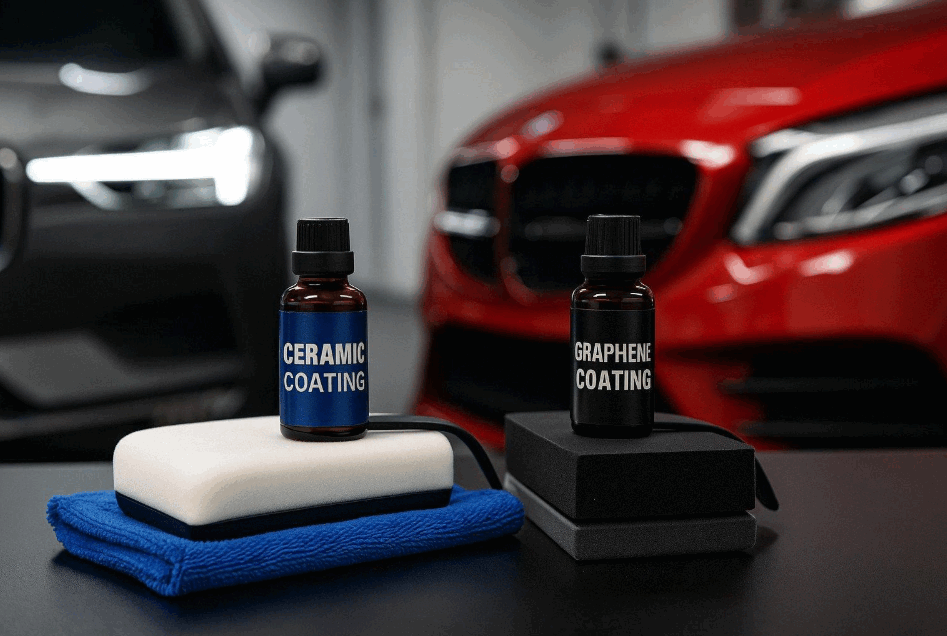
What Is the Difference Between Graphene and Ceramic Coating?
The main difference between graphene and ceramic coating comes from their formulation and the materials that influence surface performance. Ceramic coatings commonly use silicon dioxide, or SiO₂, as a key component. Graphene coatings add graphene or graphene derived materials to the coating formula. These materials can influence water behavior, slickness, and thermal properties. However, each manufacturer uses a different formula and concentration.
Ceramic coating forms a protective layer over the vehicle’s clear coat after application and curing. This layer creates a hydrophobic surface and reduces direct contact between contaminants and the paint. It also helps the surface resist UV exposure, oxidation, bird droppings, bug residue, and road grime. Product quality plays a major role in this protection. Surface preparation, curing conditions, and regular maintenance also affect long term performance.
Graphene coating uses a similar application and curing process. Many graphene products combine graphene related materials with established coating chemistry. Manufacturers use these additives to change specific surface characteristics rather than create an entirely separate protection system. As a result, graphene and ceramic coatings share several characteristics despite their different product labels.
The finished formula ultimately matters more than the name on the bottle. A high quality ceramic coating can outperform a poorly formulated graphene product. A well engineered graphene formula may provide stronger performance in specific areas. Car owners should therefore compare verified durability, protection, and surface behavior before choosing either coating.
Graphene vs Ceramic Coating: Which Provides Better Paint Protection?
Graphene and ceramic coatings can provide similar paint protection, while the specific formula often determines which one performs better. Both coatings create a barrier over the clear coat. This barrier limits direct contact between automotive paint and harmful environmental contaminants. Product quality and correct application can influence the final level of protection more than the coating category.
Both options help protect paint from UV exposure and oxidation. Constant sunlight can gradually affect the clear coat and reduce the quality of the finish. A quality coating adds another surface layer that limits environmental exposure. Graphene additives may change certain properties of a coating, but their presence alone does not guarantee stronger UV protection.
Chemical resistance also matters for daily driving. Bird droppings, bug residue, road grime, tree sap, and cleaning chemicals can affect an unprotected surface. Graphene and ceramic coatings make these contaminants easier to remove when owners clean them promptly. However, neither coating makes automotive paint immune to chemical damage.
Neither option provides reliable protection against deep scratches, stone chips, or strong physical impacts. Coatings primarily improve surface resistance and make routine cleaning easier. Paint Protection Film provides a thicker physical barrier when a driver needs greater protection from road debris and stone chips.
For most car owners, coating quality matters more than choosing graphene solely for its material properties. Compare verified chemical resistance, durability, application quality, and maintenance requirements before deciding which coating offers better paint protection.
Graphene vs Ceramic Coating: Which Lasts Longer?
Neither graphene nor ceramic coating always lasts longer because the formula, application, environment, and maintenance determine real world durability. Manufacturers offer both coating types with different expected lifespans. For this reason, drivers should compare specific products instead of assuming graphene will last longer because it uses newer technology.
Five main factors affect coating lifespan. The first is the coating formula. Different concentrations and ingredients produce different levels of chemical resistance and surface durability. The second is paint preparation. Proper cleaning and decontamination give the coating a suitable surface for application. Paint correction may also improve the surface when defects require removal.
Application quality is the third factor. Incorrect product use or poor curing conditions can reduce performance. Environmental exposure is the fourth factor. Frequent sunlight, road salt, harsh chemicals, mineral rich water, and outdoor parking can place more stress on a coating. The fifth factor is maintenance. Regular washing removes contaminants that would otherwise remain on the protected surface.
Drivers should also separate advertised lifespan from real world durability. A manufacturer may rate a coating for several years under suitable conditions. Daily driving conditions may produce a different result. Climate, mileage, washing methods, and storage can all affect how long useful coating properties remain.
The best durability therefore comes from choosing a quality formula and maintaining it correctly. Compare product specific lifespan claims, application requirements, and maintenance needs when evaluating graphene vs ceramic coating.
Which Is More Hydrophobic, Graphene or Ceramic Coating?
Both graphene and ceramic coatings can create strong hydrophobic surfaces, but the specific formula determines which coating repels water better. A quality coating reduces the surface energy of automotive paint. Water then forms beads or moves off the surface more easily. This behavior can make regular washing and drying easier.
Hydrophobic performance affects more than visible water beading. A slick surface can reduce the ability of dirt and road grime to remain on the paint. Water can also carry loose contaminants away as it leaves the surface. However, strong beading does not prove that a coating offers better durability or overall paint protection. Drivers should treat hydrophobicity as one performance attribute rather than a complete measure of coating quality.
Graphene coatings often promote improved water behavior as a major benefit. The graphene related additives may influence surface properties in certain formulations. However, the graphene label alone does not prove that a product will outperform a quality ceramic coating. The complete formula and its condition determine actual hydrophobic performance.
Neither coating completely prevents water spots. Water droplets can leave minerals behind when they evaporate on the paint. Heat, mineral content, drying time, and surface contamination all influence this process. A coating can make water easier to remove, but owners still need proper washing and drying practices.
Drivers should compare tested water behavior and maintenance requirements between individual products. Product specific performance provides a more useful comparison than choosing graphene or ceramic coating based on marketing claims alone.
Does Graphene Coating Handle Heat Better Than Ceramic Coating?
Graphene has strong thermal properties, but a graphene coating does not automatically handle heat better than a ceramic coating. The performance of an automotive coating depends on its complete formula. The amount and form of graphene in the product also matter. Therefore, drivers should not use the properties of pure graphene to predict coating performance.
Graphene conducts heat efficiently as a material. This property has encouraged manufacturers to promote graphene coatings for heat dissipation. In theory, a coating that manages surface heat effectively could reduce heat concentration on painted panels. However, an automotive coating contains more than graphene. Resins, solvents, ceramic components, additives, and graphene related materials can all influence its final behavior.
Ceramic coatings also provide a protective surface that tolerates the temperatures a vehicle experiences during normal use. A car parked in direct sunlight can develop high surface temperatures. Both coating types must maintain their protective properties under these conditions. Product formulation and application quality remain important factors in their performance.
Heat management claims also require product specific evidence. A manufacturer may advertise thermal benefits based on graphene’s material properties. That claim does not prove that every graphene coating transfers enough heat to create a meaningful advantage on automotive paint.
Drivers should compare verified performance data for individual products instead of choosing a coating based on thermal claims alone. Graphene offers interesting thermal characteristics, but the finished coating determines whether those characteristics provide a practical benefit for a car.
Which Looks Better, Graphene or Ceramic Coating?
Both graphene and ceramic coatings can improve gloss, paint depth, and surface slickness, but neither option always produces a better finish. The final appearance depends on the coating formula and the condition of the paint underneath it. Proper surface preparation can influence the visual result as much as the coating itself.
Ceramic coatings can create a smooth and glossy finish over the clear coat. This effect can make reflections appear sharper and give the paint a deeper appearance. Graphene coatings can produce similar results. Some formulas also emphasize surface slickness as a key feature. However, gloss levels vary between individual products within both categories.
Paint condition plays a major role in the final result. A coating does not remove swirl marks, scratches, oxidation, or other existing defects. These imperfections remain visible after application. Detailers can use paint correction before coating to reduce suitable surface defects and improve the finish.
The preparation process also affects coating performance. Washing removes loose dirt, while decontamination removes bonded contaminants from the surface. Paint correction addresses suitable defects when necessary. Proper surface preparation then creates cleaner conditions for coating application.
Car owners should therefore judge appearance by more than the graphene or ceramic label. A well prepared vehicle with a quality ceramic coating can look better than a poorly prepared vehicle with graphene coating. Product quality, paint condition, and preparation ultimately determine the finished appearance.
Which Is Easier to Maintain, Graphene or Ceramic Coating?
Graphene and ceramic coatings require similar maintenance, and neither option makes a car maintenance free. Both coatings create a smoother surface that can make routine cleaning easier. However, dirt, road grime, minerals, bird droppings, and other contaminants still collect on coated paint. Regular care helps preserve the coating and its surface properties.
Four main maintenance tasks affect both coating types. First, wash the vehicle regularly with products that suit coated surfaces. Routine washing removes contaminants before they remain on the paint for long periods. Second, remove bird droppings, bug residue, tree sap, and mineral deposits promptly. These substances can affect the coating when they stay on the surface.
Third, use compatible car care products. Harsh cleaners and unsuitable chemicals can reduce hydrophobic performance or shorten the useful life of some coatings. Fourth, use a maintenance product when the coating manufacturer recommends one. Some systems use toppers or boosters to support slickness and water behavior over time.
Graphene coatings may offer different water behavior in certain formulas, but this does not remove the need for regular cleaning. Ceramic coatings also retain their properties longer when owners follow proper washing and maintenance practices. Environmental exposure can change the required cleaning frequency for either option.
Maintenance should therefore support the buying decision rather than serve as an afterthought. Choose a coating with care requirements that match how often you wash and maintain your car. Consistent maintenance helps both graphene and ceramic coatings retain their protection, appearance, and hydrophobic properties.
Graphene vs Ceramic Coating: Which Costs More?
Graphene coating often carries a higher product price, but the total cost depends more on preparation, labor, and coating quality than the label itself. Both categories include products at different price levels. A premium ceramic coating can cost more than an entry level graphene product. Drivers should therefore compare the complete cost of ownership rather than the purchase price alone.
Five main expenses determine the total cost. The first is the coating product itself. Formula quality, product quantity, and expected lifespan can affect its price. The second is surface preparation. A vehicle may need washing, chemical decontamination, or mechanical decontamination before application. The third expense is paint correction. Removing suitable swirl marks and paint defects adds labor when the vehicle requires this step.
Professional labor creates the fourth expense. Detailers must prepare the surface, apply the coating correctly, and allow suitable curing time. This makes professional installation more expensive than buying a DIY coating kit. However, comparing these two prices does not provide a fair product comparison because they include different levels of work.
Maintenance creates the fifth expense. Owners may need suitable shampoos, cleaning products, or coating maintenance products during the coating’s useful life. These costs can increase the long term investment.
Value therefore matters more than the initial price. Compare protection, expected lifespan, preparation needs, maintenance costs, and application quality before choosing a coating. A more expensive graphene or ceramic coating provides better value only when its performance justifies the additional cost.
What Are the Pros and Cons of Graphene vs Ceramic Coating?
Graphene coating offers promising surface properties, while ceramic coating offers established performance and a wider range of proven products. Neither option wins in every category. The better choice depends on product quality, expected durability, maintenance needs, and budget.
Graphene coatings can provide strong hydrophobic behavior, surface slickness, and a glossy finish. Some formulas also aim to improve water spot resistance and heat management. These characteristics make graphene attractive to drivers who want newer coating technology. However, manufacturers use different graphene materials and concentrations. The graphene label therefore does not guarantee the same performance across every product.
Ceramic coatings provide strong hydrophobic properties, chemical resistance, gloss, and long term paint protection when owners maintain them correctly. The market also offers a broad selection of ceramic products with different durability levels and application requirements. This variety makes it easier to choose a coating for a specific budget or ownership plan. However, ceramic coating still requires regular washing and proper care. It also cannot prevent stone chips or deep scratches.
Both options share another limitation. Their performance depends heavily on surface preparation and application quality. An expensive coating cannot correct poor paint preparation or improper installation.
For most drivers, the main tradeoff involves proven performance versus product specific advantages. Ceramic coating remains a strong choice when buyers value an established product category and broad selection. Graphene coating deserves consideration when a specific formula demonstrates useful benefits that match the driver’s priorities.
Graphene vs Ceramic Coating: Which Is Better for Your Car?
Ceramic coating is the more established choice for most car owners, while graphene coating makes sense when a specific product offers verified benefits that match your needs. Both options can protect automotive paint and simplify routine cleaning. Product quality, preparation, application, and maintenance matter more than choosing a coating based on its name alone.
When Should You Choose Graphene Coating?
Choose graphene coating when you find a reputable product with performance that supports your priorities. These priorities may include strong hydrophobic behavior, surface slickness, water spot resistance, or other product specific characteristics. Compare actual product specifications and performance claims before paying more for graphene technology.
Graphene also suits drivers who want to explore newer coating formulations. However, the presence of graphene does not guarantee better durability or protection. Focus on the complete formula and the results it delivers on automotive paint.
When Should You Choose Ceramic Coating?
Choose ceramic coating when you want an established coating category with broad product availability. Ceramic products offer different durability levels, application methods, and price points. This variety makes it easier to match a coating with your budget and maintenance routine.
Ceramic coating is also a practical choice when you prioritize predictable protection over newer material claims. A quality ceramic product can deliver strong chemical resistance, hydrophobic behavior, gloss, and long term protection.
For the average car owner, a proven ceramic coating provides a dependable starting point. Choose graphene instead when a specific graphene formula demonstrates advantages that justify its price and suit your priorities.
Is Graphene or Ceramic Coating the Better Choice?
Ceramic coating is the more established choice for most car owners, while graphene coating is worth considering when a specific formula offers clear benefits for your needs. Both options can protect the clear coat, improve water behavior, enhance gloss, and make routine cleaning easier. Neither option provides the best performance in every situation.
Five factors should guide the final choice: protection, durability, hydrophobic performance, maintenance, and total cost. Product formulation also matters throughout this comparison. A high quality ceramic coating can outperform a lower quality graphene coating. A well formulated graphene product can also provide useful advantages in specific areas. The coating label alone cannot determine the winner.
Preparation and application remain equally important. Clean paint gives the coating a suitable surface, while paint correction can improve the finish when defects require treatment. Regular washing and proper maintenance then help preserve coating performance over time.
Choose a coating based on verified product performance and your ownership needs. Drivers who want an established option with broad product availability can start with ceramic coating. Drivers considering graphene should look for measurable benefits that justify the product and its price. For stronger protection against stone chips and road debris, consider Paint Protection Film because coatings do not provide the same physical barrier.