A Nissan Matic S equivalent is an automatic transmission fluid that matches the requirements of a transmission that calls for Nissan Matic S. An aftermarket ATF can serve as a replacement when its manufacturer clearly states compatibility with Nissan Matic S. Similar viscosity alone does not prove compatibility.
Genuine Nissan Matic S remains the reference fluid for vehicles that require it. Some aftermarket ATF products also claim compatibility with Nissan Matic S. Drivers should check these claims before choosing a replacement. Nissan uses several ATF specifications, including Matic S, Matic J, Matic D, and Matic K. These specifications do not automatically mean the fluids work interchangeably.
The right replacement depends on the specific vehicle and transmission. The owner’s manual provides an important starting point. The ATF manufacturer’s product data also helps confirm compatibility. This approach avoids relying on general claims such as “universal ATF” or “multi vehicle ATF.”
This guide explains what Nissan Matic S is and which ATF options may replace it. It also explains how to verify compatibility and why the correct specification matters. By the end, you will know what to check before choosing a Nissan Matic S replacement.
What Is Nissan Matic S Transmission Fluid?
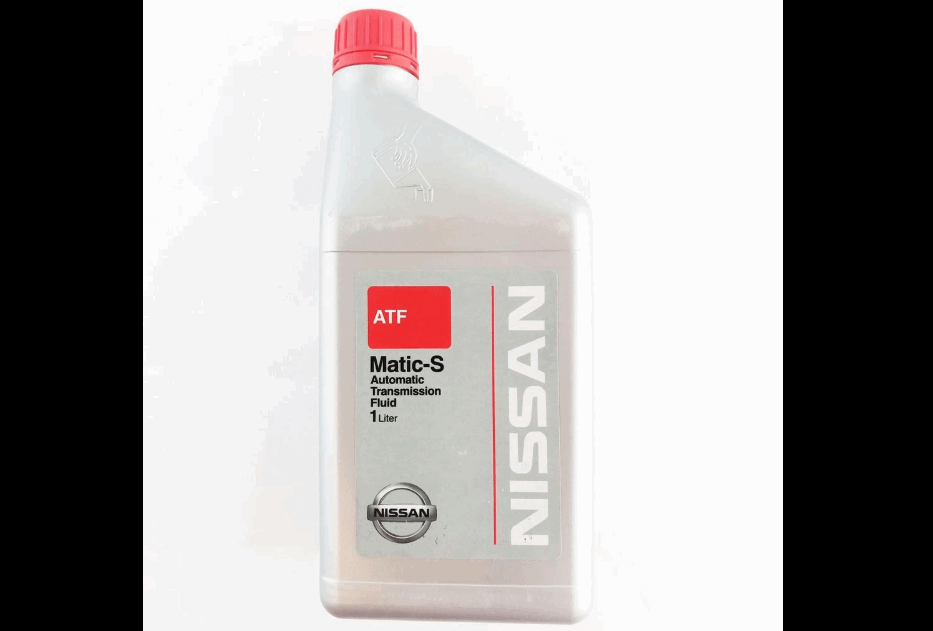
Nissan Matic S is an automatic transmission fluid used for specific Nissan transmission applications. Nissan specifies different fluids for different transmissions, so the correct ATF depends on the vehicle and transmission requirements. Drivers should therefore identify the required fluid before choosing a replacement.
Nissan Matic S belongs to a broader group of Nissan transmission fluid specifications. Other Nissan fluids include Matic J, Matic D, and Matic K. These names identify different fluid requirements. A driver should not assume that one Nissan Matic fluid can replace another simply because both fluids serve automatic transmissions.
The transmission depends on ATF for more than lubrication. The fluid also supports hydraulic operation and helps the transmission control shifting. Its friction characteristics affect how internal components operate during gear changes. For this reason, the required ATF specification matters when selecting a replacement.
The best starting point is the vehicle’s owner’s manual or the manufacturer’s service information. These sources identify the fluid requirement for the specific application. An aftermarket product can then provide another option when its manufacturer clearly lists compatibility with Nissan Matic S. This approach gives the reader a stronger basis for choosing an alternative than relying on viscosity, brand reputation, or a general multi vehicle label.
What Is a Nissan Matic S Equivalent ATF?
A Nissan Matic S equivalent ATF is a transmission fluid that provides the compatibility required by an application that specifies Nissan Matic S. The key factor is compatibility with the transmission. A fluid does not become an equivalent simply because it works in automatic transmissions or has a similar viscosity.
Genuine Nissan Matic S provides the original reference for applications that require this fluid. An aftermarket ATF can offer an alternative when its manufacturer identifies the product as compatible with Nissan Matic S. This distinction helps separate a documented replacement from a fluid that only appears similar.
Three factors matter when you evaluate an alternative ATF. First, check the transmission fluid requirement for the vehicle. Second, check the aftermarket manufacturer’s compatibility information. Third, confirm that the product applies to the specific transmission in the vehicle. These checks provide stronger evidence than a general statement that a fluid works with Nissan vehicles.
A multi vehicle ATF also does not automatically qualify as a Nissan Matic S equivalent. The product must have a compatibility claim that covers the required application. The same principle applies to other Nissan ATF specifications. Matic J, Matic D, and Matic K have their own applications, so drivers should not assume that these fluids provide the same performance as Matic S.
The safest approach is simple. Identify the required Nissan ATF first, then compare that requirement with the manufacturer’s documented compatibility information. This process helps drivers choose an aftermarket replacement without confusing general ATF suitability with Nissan Matic S compatibility.
Which ATF Can Replace Nissan Matic S?
Several aftermarket ATF products claim compatibility with Nissan Matic S. These products give drivers alternatives to genuine Nissan fluid, but the compatibility statement remains the key factor when comparing them. A product should only qualify as a Nissan Matic S equivalent when its manufacturer identifies the relevant Nissan application.
Idemitsu ATF Type S is one aftermarket fluid associated with Nissan and Infiniti applications. Idemitsu describes its ATF Type S as suitable for applications that call for Nissan Matic S, Matic J, and Matic D. This makes it a relevant product when a vehicle requires one of these Nissan fluid specifications.
Chevron Havoline Multi Vehicle ATF also lists Nissan Matic S among its application references. This type of compatibility information provides a stronger basis for considering an aftermarket ATF than a generic claim that the product works with Nissan vehicles.
Other aftermarket ATF products may also claim Nissan Matic S compatibility. However, the article should not treat every multi vehicle ATF as an equivalent. Product formulations, application lists, and manufacturer recommendations can differ. Drivers should check the current product data before selecting a fluid.
The important distinction is between documented compatibility and assumed compatibility. Genuine Nissan Matic S remains the original reference for applications that require it. An aftermarket product can provide a replacement option when its manufacturer clearly supports the required application. Checking the vehicle requirements and the product documentation together gives the most reliable basis for choosing an alternative.
How Do You Check Whether an ATF Is Compatible With Nissan Matic S?
To check Nissan Matic S compatibility, start with the vehicle’s required transmission fluid specification. The owner’s manual or Nissan service information should identify the correct ATF for the specific vehicle and transmission. This step establishes the fluid requirement before you compare aftermarket products.
Next, check the manufacturer’s official product information for the ATF you want to use. Look for a direct Nissan Matic S compatibility statement in the product data or application guide. A clear compatibility claim provides stronger evidence than a general description such as “multi vehicle ATF.” The same principle applies when comparing different aftermarket brands.
Then, verify the transmission application. Two Nissan vehicles can use different transmissions and require different fluids. The model name alone does not always provide enough information to select an ATF. You should confirm the model year, vehicle application, and transmission requirement before choosing a replacement.
Do not use viscosity as the only compatibility test. ATF performance depends on characteristics that affect hydraulic operation, friction, shifting, and transmission behavior. A fluid with similar viscosity can still have different performance characteristics.
Finally, compare the vehicle requirement with the manufacturer’s documented compatibility information. If the two sources do not clearly match, do not assume that the fluid qualifies as a Nissan Matic S equivalent. Use the specified Nissan fluid or obtain confirmation from a qualified source before replacing it. This process keeps the decision based on documented compatibility rather than guesswork.
Is Nissan Matic J the Same as Nissan Matic S?
Nissan Matic J is not automatically the same as Nissan Matic S. Nissan uses different ATF specifications for different transmission applications, so the fluid requirement for a specific vehicle should determine which product you use. A similar product name does not prove that two fluids are interchangeable.
Matic S, Matic J, Matic D, and Matic K belong to Nissan’s range of automatic transmission fluid specifications. Each specification relates to particular transmission applications. For this reason, drivers should identify the required fluid before comparing Matic J with Matic S.
The main issue is transmission compatibility. Automatic transmissions rely on specific fluid characteristics to support hydraulic operation, lubrication, and shifting. Changing the fluid specification can affect how the transmission operates. A driver should therefore avoid choosing Matic J simply because it is another Nissan ATF.
Aftermarket products can add another layer of confusion. Some products list compatibility with more than one Nissan ATF specification. For example, an aftermarket fluid may list Matic S and Matic J in its application data. In that situation, the manufacturer’s compatibility statement provides the relevant evidence for that particular product. It does not mean that genuine Matic J and genuine Matic S are identical fluids.
The correct approach is to start with the vehicle’s required ATF specification. Then compare that requirement with the manufacturer’s current product information. If the vehicle calls for Matic S, choose Matic S or an aftermarket ATF that explicitly supports the application. Do not substitute Matic J based only on the fact that both fluids come from Nissan.
Is Dexron VI Equivalent to Nissan Matic S?
Dexron VI should not automatically be treated as a Nissan Matic S equivalent. The key question is whether the specific ATF manufacturer explicitly lists Nissan Matic S compatibility for the product. A shared use in automatic transmissions does not prove that two fluid specifications are interchangeable.
Dexron VI identifies a different ATF specification. Nissan Matic S identifies a Nissan transmission fluid requirement for specific applications. These specifications describe fluid requirements within different product and application systems. Drivers should therefore avoid replacing Matic S with Dexron VI based only on the fluid name, viscosity, or general automatic transmission use.
An aftermarket ATF may list several compatibility claims in its product data. If a specific product lists both Dexron VI and Nissan Matic S, that manufacturer’s documentation provides a basis for considering the product for an application that requires Matic S. The compatibility comes from the product’s documented application, not from Dexron VI alone.
The same rule applies to other aftermarket transmission fluids. A product can support multiple specifications, but each claim should match the transmission application. Drivers should check the vehicle’s required ATF first and then compare that requirement with the current product documentation.
For a Nissan transmission that specifies Matic S, the safest selection process starts with Matic S compatibility. Use genuine Nissan Matic S when required, or choose an aftermarket product that clearly identifies compatibility with the specific Nissan Matic S application. Do not assume that Dexron VI alone provides the required equivalence.
Can You Use Multi Vehicle ATF Instead of Nissan Matic S?
You can use a multi vehicle ATF instead of Nissan Matic S when the product manufacturer explicitly lists compatibility with Nissan Matic S and the specific transmission application. The term “multi vehicle” describes the range of applications a product may support. It does not automatically confirm compatibility with every Nissan transmission.
A compatibility list provides the most useful evidence when evaluating a multi vehicle ATF. Check the manufacturer’s product data and look for a direct reference to Nissan Matic S. For example, Chevron Havoline Multi Vehicle ATF lists Nissan Matic S among its application references. This type of documentation gives the product a stronger basis for use in an application that requires Matic S.
You should also verify the vehicle and transmission requirement before selecting the fluid. Nissan uses different ATF specifications across its transmission applications. A multi vehicle product that supports one Nissan specification does not automatically support every Nissan transmission.
Avoid choosing a multi vehicle ATF based only on phrases such as “universal,” “all vehicle,” or “full synthetic.” These marketing terms do not replace the manufacturer’s compatibility information. The product data should identify the relevant Nissan application.
The decision process is straightforward. First, identify the ATF required by the vehicle. Next, check the manufacturer’s current compatibility information. Finally, confirm that the product supports Nissan Matic S for the intended application. If the documentation does not clearly support the requirement, choose the specified Nissan fluid or obtain confirmation before using an alternative.
What Happens If You Use the Wrong ATF Instead of Nissan Matic S?
Using an ATF that does not meet the transmission’s requirements can affect transmission operation. Automatic transmissions depend on specific fluid characteristics for hydraulic control, lubrication, and shifting. The wrong fluid can therefore create a mismatch between the transmission’s design requirements and the fluid’s performance characteristics.
Shift quality is one area that depends on the transmission fluid. The ATF works with internal transmission components during gear changes. Its friction characteristics and hydraulic behavior influence how those components operate. When a fluid does not meet the required specification, the transmission may not operate as intended.
The risk does not come from the product being aftermarket. An aftermarket ATF can provide a suitable replacement when its manufacturer documents compatibility with the required Nissan Matic S application. The problem occurs when a driver assumes that any automatic transmission fluid can replace Matic S without checking the application.
Nissan uses several ATF specifications, including Matic S, Matic J, Matic D, and Matic K. These specifications should not be treated as interchangeable simply because they serve automatic transmissions. The correct fluid depends on the specific vehicle and transmission requirement.
If you discover that you used an ATF without confirmed Nissan Matic S compatibility, verify the vehicle’s required specification before continuing to use the fluid. Check the owner’s manual and the product manufacturer’s current compatibility information. If the documentation does not confirm compatibility, seek professional advice before making another fluid change. This approach helps prevent an assumption about ATF equivalence from becoming a transmission maintenance problem.
What Should You Check Before Choosing a Nissan Matic S Equivalent?
Before choosing a Nissan Matic S equivalent, identify the exact ATF specification required by your vehicle and transmission. Start with the owner’s manual or Nissan service information. This step confirms whether the transmission requires Matic S and prevents you from choosing an alternative based on a general ATF description.
Next, check the aftermarket product’s official compatibility information. Look for a clear statement that connects the product with Nissan Matic S or the specific transmission application. A multi vehicle label does not provide enough information by itself. The same applies to other ATF specifications such as Matic J, Matic D, or Dexron VI.
The strongest choice comes from documented compatibility. Genuine Nissan Matic S remains the reference fluid for applications that require it. An aftermarket ATF can provide a suitable alternative when its manufacturer supports the required application. This distinction separates a documented Nissan Matic S equivalent from a fluid that only appears similar.
The key principle is simple: choose the ATF based on the transmission requirement, then verify the manufacturer’s compatibility claim. Do not rely on viscosity, brand, or the term “universal ATF” as the only evidence. This process helps you select a Nissan Matic S replacement with greater confidence and reduces the risk of using an unsuitable transmission fluid.