STA-BIL works better for fuel storage, while Sea Foam works better for engine and fuel system cleaning. Both products treat fuel, but they serve different primary purposes. STA-BIL helps preserve fuel during storage and protects the fuel system during long periods of inactivity. Sea Foam focuses more on cleaning deposits from fuel systems and engine components.
Your maintenance goal should determine which product you choose. STA-BIL makes more sense when a car, motorcycle, boat, or small engine will sit unused for months. Sea Foam fits engines that need help with deposits in fuel injectors, carburetors, or other fuel system components. Fuel type and storage time can also affect your choice.
This STA-BIL vs Sea Foam comparison explains how each product handles fuel storage, engine cleaning, ethanol gasoline, and common automotive applications. It also covers cars, motorcycles, lawn mowers, and other small engines. You will learn when Sea Foam can replace STA-BIL and whether using both products makes sense. By comparing each product with a specific maintenance goal, you can choose the right treatment for your engine.
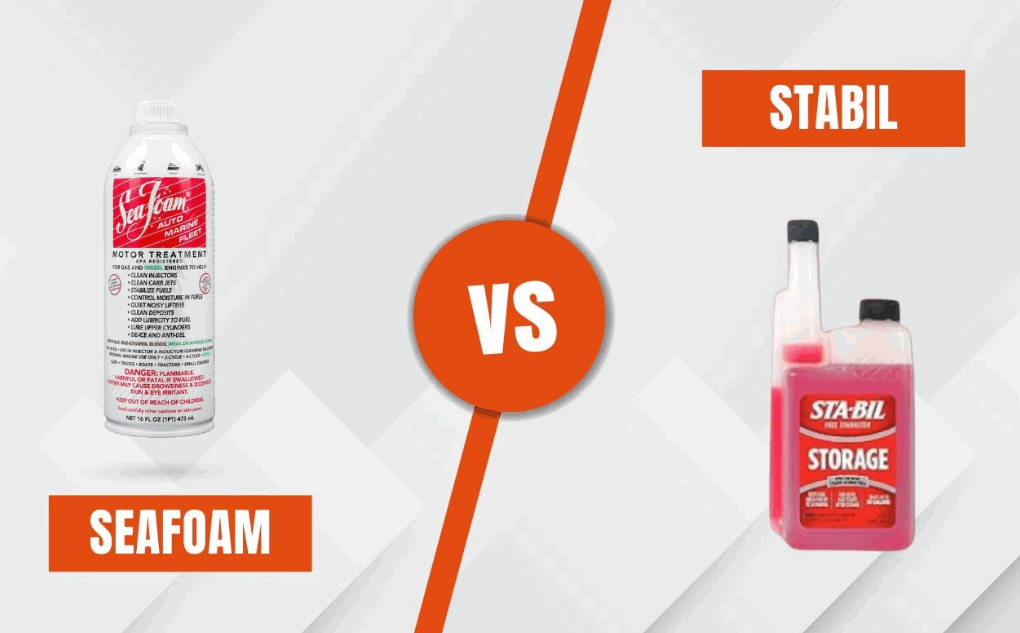
What Is the Difference Between STA-BIL and Sea Foam?
The main difference between STA-BIL and Sea Foam is their primary purpose. STA-BIL focuses on fuel stabilization, while Sea Foam focuses more on cleaning and maintaining the fuel system. Both products treat fuel, but they solve different maintenance problems.
STA-BIL makes the most sense when fuel will remain in a tank for an extended period. It helps maintain fuel quality during storage and reduces problems linked to old gasoline. This purpose makes it useful for seasonal vehicles and equipment. Common examples include classic cars, motorcycles, boats, lawn mowers, and generators.
Sea Foam serves a broader maintenance role. Drivers commonly add it to fuel to clean deposits from fuel injectors and carburetor passageways. It also works as a fuel treatment and provides fuel stabilization. However, its cleaning function creates the clearest difference between Sea Foam and a storage focused STA-BIL product.
The table below summarizes the main differences.
| Feature | STA-BIL | Sea Foam |
|---|---|---|
| Primary purpose | Fuel stabilization | Fuel system cleaning and treatment |
| Fuel storage | Primary use | Supported use |
| Fuel system cleaning | Depends on product | Primary use |
| Carburetor cleaning | Depends on product | Yes |
| Fuel injector cleaning | Depends on product | Yes |
| Seasonal equipment | Yes | Yes |
| Routine engine maintenance | Product dependent | Yes |
Neither product wins every STA-BIL vs Sea Foam comparison. Choose STA-BIL when fuel storage is your main concern. Choose Sea Foam when cleaning the fuel system is your main goal. The exact STA-BIL formulation also matters because the brand sells products for different automotive maintenance purposes.
Is STA-BIL or Sea Foam Better for Fuel Storage?
STA-BIL is the better choice for fuel storage because fuel stabilization is its primary purpose. Sea Foam can also stabilize stored fuel, but its broader role includes cleaning and lubricating fuel system components. Choose between them based on whether storage protection or system cleaning matters more.
Gasoline starts to degrade when it sits unused for long periods. Exposure to oxygen can change its chemical composition and reduce fuel quality. Over time, degraded fuel can contribute to gum and varnish inside the fuel system. These deposits can restrict small carburetor passages and make an engine harder to start after storage.
STA-BIL addresses this problem by helping gasoline maintain its quality during storage. This function makes it useful for vehicles and equipment that remain unused for months. Examples include classic cars, motorcycles stored during winter, boats, lawn mowers, and portable generators. Treating fresh fuel before storage also helps protect the fuel system before degradation becomes a larger problem.
Sea Foam also offers fuel stabilization, so it remains an option for stored gasoline. However, Sea Foam provides greater value when the owner also wants fuel system cleaning and lubrication. That distinction matters when comparing two products with overlapping functions.
Choose STA-BIL when your main goal is preserving fuel during extended storage. Choose Sea Foam when you want stabilization combined with broader fuel system maintenance. Always follow the treatment ratio for the exact product because storage periods and dosage instructions can differ between formulations.
Is STA-BIL or Sea Foam Better for Cleaning an Engine?
Sea Foam is the better choice for engine and fuel system cleaning because cleaning forms a central part of its intended use. STA-BIL focuses more on fuel stabilization, although some STA-BIL products also include cleaning functions. The right comparison therefore depends on the exact formulation and maintenance goal.
Fuel can leave deposits in areas that control its delivery to the engine. Fuel injectors and small carburetor passages are two common examples. Gum, varnish, and other deposits can interfere with fuel flow when buildup becomes significant. A cleaning treatment aims to loosen or control these deposits as fuel moves through the system.
Sea Foam works as a fuel treatment that targets this type of maintenance. Adding it to fuel allows the treatment to move through fuel system components during engine operation. This makes Sea Foam more relevant when the main goal involves cleaning injectors, carburetor passageways, or other fuel related deposits. Its use therefore extends beyond preserving gasoline during storage.
STA-BIL requires a more product specific comparison. The brand offers several formulations, and their functions differ. A product designed mainly for fuel storage should not automatically receive the same cleaning claims as a dedicated fuel system cleaner.
Choose Sea Foam when cleaning is the primary maintenance goal. Choose STA-BIL when fuel stabilization and storage protection matter more. If you need both functions, compare the exact product labels and treatment instructions before choosing. This approach matches the additive to the problem instead of assuming every fuel treatment performs the same job.
Can You Use Sea Foam Instead of STA-BIL?
You can use Sea Foam instead of STA-BIL for some fuel treatment purposes, but the two products are not direct substitutes in every situation. Both products can treat stored fuel. However, STA-BIL focuses more on fuel stabilization, while Sea Foam combines fuel treatment with cleaning functions.
Your maintenance goal should determine whether substitution makes sense. Choose a storage focused STA-BIL product when you plan to park a car or motorcycle for several months. The same approach works for boats, generators, and seasonal lawn equipment. In these cases, preserving fuel quality during inactivity remains the main objective.
Sea Foam makes more sense when cleaning becomes part of the maintenance goal. For example, an actively used engine may need help controlling deposits in fuel injectors or carburetor passageways. Sea Foam provides this cleaning function while also treating the fuel. This combination makes it useful when storage protection alone does not address the owner’s main concern.
The condition of the fuel also matters. A fuel treatment cannot restore gasoline after severe degradation or contamination. Adding more treatment does not turn unusable fuel back into fresh gasoline. Starting with fresh fuel gives either product a better foundation for storage or maintenance.
Use Sea Foam instead of STA-BIL when its cleaning and fuel treatment functions match your goal. Use STA-BIL when fuel storage is the priority. Rather than treating the products as interchangeable additives, match their functions to the specific problem you need to solve.
Should You Use STA-BIL or Sea Foam for Cars and Motorcycles?
Use STA-BIL for cars and motorcycles that spend long periods in storage. Choose Sea Foam when fuel system cleaning is the main maintenance goal. Vehicle type matters less than how often you operate the engine and why you need a fuel treatment.
A daily driven car rarely has the same storage needs as a collector car. Regular driving moves fresh fuel through the system and prevents gasoline from sitting for several months. Sea Foam makes more sense when the owner wants a treatment focused on fuel system cleanliness. A collector car that remains parked for a season creates a different situation. STA-BIL better matches that storage focused purpose.
Motorcycles follow the same principle. A motorcycle stored through winter can leave gasoline sitting in its tank and fuel system for months. Fuel stabilization becomes more important under these conditions. This issue also deserves attention with carbureted motorcycles because small carburetor passages can develop problems when old fuel leaves deposits behind.
Frequently ridden motorcycles shift the maintenance goal away from long term storage. Sea Foam becomes more relevant when the rider wants to treat deposits while fuel moves through the system. Fuel injected motorcycles can also use fuel treatments, but owners should follow the instructions for the specific product and engine.
Choose according to vehicle use rather than vehicle type alone. STA-BIL fits seasonal and infrequently driven cars or motorcycles when storage comes first. Sea Foam fits active vehicles better when cleaning becomes the primary goal.
Is STA-BIL or Sea Foam Better for Small Engines?
STA-BIL is better for small engines during seasonal storage, while Sea Foam is better when fuel system cleaning is the main goal. Small engines often face both problems because many operate only during certain seasons. Lawn mowers, generators, snow blowers, and pressure washers are common examples.
Storage creates a specific concern for these engines. Gasoline can remain inside the tank, fuel lines, and carburetor while the equipment sits unused. Over time, old fuel can contribute to gum and varnish deposits. Small carburetor passages can become harder to keep clear when these deposits build up. Fuel stabilization therefore becomes important before extended storage.
STA-BIL fits this situation when the owner starts with fresh gasoline and wants to preserve it during inactivity. Sea Foam serves a different priority. Its cleaning function makes it more relevant when an operating small engine needs fuel system maintenance. This distinction helps owners choose a treatment based on the engine’s condition and usage pattern.
The same engine may need different treatments at different times. A generator used regularly may create a different maintenance need from one stored between emergency seasons. The maintenance objective should guide the product choice.
Which Is Better for a Lawn Mower, STA-BIL or Sea Foam?
STA-BIL is the better choice when storing a lawn mower, while Sea Foam makes more sense for fuel system cleaning. A mower can sit unused for months between growing seasons, which makes fuel stability important.
Use fresh, treated gasoline before seasonal storage and follow the dosage on the specific product label. For an actively used mower with a cleaning related maintenance goal, Sea Foam provides the more relevant function. Neither treatment can replace proper maintenance or repair a mechanical fault.
Can STA-BIL and Sea Foam Be Used With Ethanol Gasoline?
Both STA-BIL and Sea Foam offer products that work with ethanol blended gasoline, but you should match the exact product to the fuel and engine. This matters because ethanol fuel creates specific concerns during storage. The length of storage also affects which treatment function deserves priority.
Ethanol attracts water, which makes moisture an important concern in fuel storage. Gasoline can also oxidize as it ages. These changes can contribute to corrosion, gum, varnish, and deposits inside the fuel system. Small engines deserve particular attention because they often use carburetors with narrow passages. Many also remain unused between seasons.
STA-BIL makes more sense when the main goal involves protecting ethanol blended gasoline during storage. This use applies to seasonal cars, motorcycles, boats, lawn mowers, and generators. Sea Foam becomes more relevant when the owner wants to combine fuel treatment with fuel system cleaning. It can support maintenance in engines that regularly run ethanol gasoline.
Neither product eliminates the need for proper fuel management. Start with fresh gasoline before long term storage and use the correct treatment ratio. You should also check the fuel requirements for the engine before adding an aftermarket treatment.
Choose STA-BIL when storage protection is the priority for ethanol gasoline. Choose Sea Foam when cleaning is the stronger maintenance objective. Always check the label for the exact formulation because compatibility and treatment instructions can vary across products.
Can You Use STA-BIL and Sea Foam Together?
You should not combine STA-BIL and Sea Foam unless the instructions for the specific products support that use. Both fuel treatments have overlapping functions. Using them together does not automatically improve fuel stability or fuel system cleanliness.
Start by identifying the maintenance goal. A vehicle entering seasonal storage mainly needs fuel stabilization. In that situation, a storage focused STA-BIL product already addresses the primary problem. Adding Sea Foam simply because it offers additional treatment functions may provide no necessary advantage.
The same principle applies when cleaning is the main objective. Sea Foam already combines fuel treatment with cleaning functions. Adding another additive without a specific reason increases the total concentration of chemicals in the fuel. More additive does not always mean better treatment.
Dosage also matters when considering two products. Manufacturers calculate treatment ratios according to fuel volume and intended use. Combining additives can make it harder to follow those ratios correctly. A five gallon small engine tank also requires a different treatment amount from a fifteen gallon car tank.
Choose one treatment that matches your primary maintenance goal instead of routinely mixing STA-BIL and Sea Foam. Check both product labels before combining fuel additives. Follow the recommended concentration for the amount of fuel in the tank. If neither manufacturer supports the combination, use the product that directly addresses the problem you need to solve.
How Much STA-BIL or Sea Foam Should You Add to Fuel?
The amount of STA BIL or Sea Foam you should add depends on the exact product, fuel volume, and treatment purpose. Do not use one dosage ratio for every product from either brand. Storage treatment and routine fuel system maintenance can require different concentrations.
Start by checking how much fuel you need to treat. A car with 15 gallons of gasoline needs more additive than a lawn mower with 2 gallons. Next, check the treatment ratio on the product label. Calculate the required amount from the actual fuel volume rather than the maximum capacity of the tank.
Treatment purpose also affects dosage. Fuel stored for several months may require a storage specific concentration. Routine fuel system treatment may use a different ratio. The formulation matters as well because each brand sells products for specific maintenance tasks. Follow the directions for the exact bottle instead of applying instructions from another product in the same brand.
Adding extra treatment does not guarantee better results. Excess additive can move the mixture outside the concentration that the manufacturer recommends. Accurate measurement gives the treatment the conditions its formulation expects.
Use the dosage listed for your exact STA BIL or Sea Foam product and calculate it from the amount of fuel you need to treat. Check the label again when you change products or treatment purposes. This approach gives a car, motorcycle, or small engine the correct concentration without relying on a universal dosage.
Is STA-BIL or Sea Foam Better Overall?
Neither STA-BIL nor Sea Foam is better for every engine because each product serves a different primary maintenance goal. STA-BIL is the stronger choice for fuel storage. Sea Foam is the stronger choice when fuel system cleaning is the priority.
Choose STA-BIL when gasoline will remain unused for an extended period. This situation commonly applies to seasonal cars, collector vehicles, motorcycles, boats, lawn mowers, and generators. Fuel stabilization matters most in these cases because the engine may sit for months between uses.
Choose Sea Foam when you want to clean deposits while treating the fuel. This makes it more suitable for an active engine that needs fuel system maintenance. Fuel injectors and carburetor passageways are two relevant areas. Sea Foam also offers fuel stabilization, but cleaning creates a clearer reason to choose it over a storage focused treatment.
The table below provides a simple decision guide.
| Use Case | Better Choice | Primary Reason |
|---|---|---|
| Long term fuel storage | STA-BIL | Fuel stabilization |
| Seasonal vehicle storage | STA-BIL | Storage protection |
| Fuel system cleaning | Sea Foam | Cleaning function |
| Carburetor cleaning | Sea Foam | Deposit control |
| Daily driven vehicle | Sea Foam | Routine fuel system treatment |
| Motorcycle storage | STA-BIL | Fuel stabilization |
| Lawn mower storage | STA-BIL | Seasonal storage |
| Small engine cleaning | Sea Foam | Fuel system cleaning |
Choose STA-BIL for storage and Sea Foam for cleaning. This rule covers the main difference in most STA-BIL vs Sea Foam decisions. However, always check the exact formulation before use. Both brands sell multiple products, so the label should confirm fuel compatibility, dosage, and intended application.
Conclusion
STA-BIL is the better choice for fuel storage, while Sea Foam is the better choice for fuel system and engine cleaning. This distinction provides the simplest way to choose between the two products. However, the exact formulation and maintenance goal should always guide the final decision.
Choose STA-BIL when a car, motorcycle, boat, lawn mower, or generator will remain unused for an extended period. Fuel stabilization becomes more important when gasoline sits in the tank for months. Starting with fresh fuel and using the correct treatment ratio also helps support effective storage.
Choose Sea Foam when cleaning is the main objective. It fits engines that need treatment for deposits in fuel injectors, carburetor passageways, and other fuel system areas. This makes it more relevant for routine fuel system maintenance in actively used engines.
Before using either product, check three factors: storage duration, maintenance purpose, and engine type. Then confirm fuel compatibility and dosage on the exact product label. The STA-BIL vs Sea Foam decision ultimately comes down to the problem you need to solve. Use STA-BIL primarily for storage and Sea Foam primarily for cleaning.