Yes, the Dodge Hornet is reasonably reliable for a new compact SUV, but it has not yet established the long-term reliability record of competitors such as the Toyota RAV4, Honda CR-V, or Mazda CX-5. Since the Dodge Hornet debuted for the 2023 model year, reliability data is still developing. Early owner reports and recall history provide useful insights, but they cannot fully predict how the vehicle will perform after 100,000 miles or more.
The Dodge Hornet stands out with its turbocharged performance, available plug-in hybrid (R/T) powertrain, and sporty driving dynamics. It also shares its platform and many engineering components with the Alfa Romeo Tonale, giving it a more performance-oriented character than many mainstream compact SUVs. However, buyers often question whether this added performance comes at the expense of long-term dependability, maintenance costs, and repair frequency.
Reliability is more than whether a vehicle starts every morning. It includes mechanical durability, electronic stability, maintenance requirements, repair costs, recall history, warranty coverage, and the overall ownership experience over several years. Evaluating all of these factors provides a more accurate picture than relying on a single reliability score.
This guide examines the Dodge Hornet from every important reliability perspective. You’ll learn how it compares with leading compact SUVs, what reliability ratings and owner feedback reveal, the most commonly reported problems, expected maintenance costs, engine and transmission durability, recall history, and whether the Dodge Hornet is a smart purchase for long-term ownership.
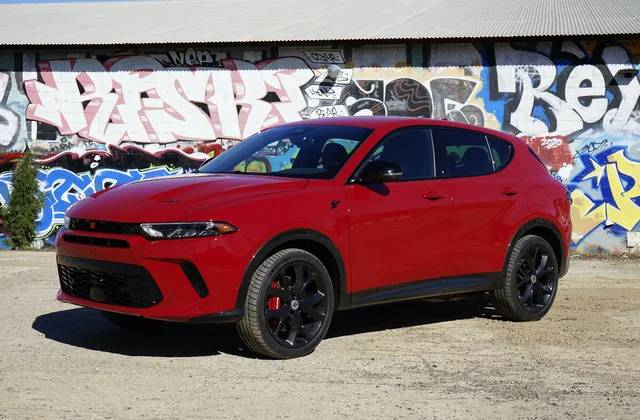
Are Dodge Hornets Reliable?
Yes, the Dodge Hornet is reasonably reliable for a newly introduced compact SUV, but it has not yet proven the long-term dependability of segment leaders like the Toyota RAV4 or Honda CR-V. The model entered the market for the 2023 model year, meaning there is still limited data on ownership beyond 100,000 miles. Early evidence suggests that the Hornet offers solid performance and modern engineering, although buyers should expect occasional software updates, recalls, and electronic issues that are common among newly launched vehicles.
Reliability should be evaluated through several factors rather than a single score. Mechanical durability, engine and transmission performance, electronic stability, maintenance costs, recall frequency, warranty coverage, and owner satisfaction all contribute to the overall ownership experience. A vehicle may perform exceptionally well mechanically while still receiving lower reliability scores if software or electrical systems generate frequent dealership visits.
The Dodge Hornet benefits from being built on the same platform as the Alfa Romeo Tonale. This shared architecture gives the SUV responsive handling, advanced safety technology, and refined driving dynamics that distinguish it from many mainstream compact crossovers. However, the shared platform also means some early software-related concerns reported for the Tonale have appeared in the Hornet, particularly on models equipped with the plug-in hybrid powertrain.
For most buyers, the Dodge Hornet can be considered a dependable choice when purchased with realistic expectations. Drivers seeking sporty performance, advanced technology, and distinctive styling may find its reliability acceptable, while buyers who prioritize decades of proven dependability may still prefer competitors with much longer reliability histories.
How Reliable Is the Dodge Hornet Compared With Other Compact SUVs?
How does the Dodge Hornet compare with the Toyota RAV4?
The Toyota RAV4 remains the benchmark for long-term reliability in the compact SUV segment. Toyota has refined the platform over multiple generations, resulting in fewer unexpected repairs, excellent resale value, and consistently high owner satisfaction. Compared with the RAV4, the Dodge Hornet delivers stronger acceleration and a more engaging driving experience, but it cannot yet match Toyota’s decades-long reputation for durability.
The RAV4 also benefits from a mature dealer network, abundant replacement parts, and lower long-term repair uncertainty. Buyers who intend to keep a vehicle for 10 years or more are generally more likely to view the RAV4 as the lower-risk investment.
How does the Dodge Hornet compare with the Honda CR-V?
The Honda CR-V has earned a reputation for dependable powertrains, predictable maintenance costs, and strong long-term ownership value. Most CR-V owners experience relatively few major mechanical failures when routine maintenance is performed according to schedule.
The Dodge Hornet offers significantly sportier handling and more powerful engine options than the CR-V, particularly with the available plug-in hybrid system. However, Honda’s longer production history and extensive reliability record give the CR-V an advantage for buyers whose primary concern is minimizing repair risk over many years of ownership.
How does the Dodge Hornet compare with the Mazda CX-5?
The Mazda CX-5 combines premium interior quality with consistently strong reliability ratings. Its naturally aspirated and turbocharged engines have accumulated years of real-world durability data, providing buyers with greater confidence in long-term ownership.
The Dodge Hornet appeals to drivers looking for quicker acceleration, sharper steering, and more aggressive styling. While both vehicles deliver enjoyable driving dynamics, the Mazda CX-5 currently holds the advantage in established reliability because its mechanical systems have been proven through several production cycles.
Which buyers benefit most from the Dodge Hornet despite stronger rivals?
The Dodge Hornet is best suited for buyers who prioritize driving enjoyment over having the longest reliability history. Drivers who value quick acceleration, athletic handling, modern technology, and distinctive styling may find the Hornet more rewarding than many traditional compact SUVs.
It is also an attractive option for buyers interested in a performance-oriented plug-in hybrid without moving into a luxury price range. Those willing to accept the typical software updates and early-production refinements associated with a newer model are more likely to appreciate what the Hornet offers.
By contrast, buyers seeking maximum long-term predictability, minimal repair risk, and the highest resale value may find greater peace of mind with established competitors such as the Toyota RAV4, Honda CR-V, or Mazda CX-5, all of which have significantly longer reliability track records.
What Reliability Ratings Has the Dodge Hornet Received?
What do professional reliability ratings indicate?
The Dodge Hornet has received mixed reliability evaluations from automotive experts because it is still a relatively new model. Unlike long-established compact SUVs that have accumulated years of repair data, the Hornet has only a limited ownership history. As a result, many reliability organizations rely on predicted reliability models, manufacturer service information, recall activity, and early owner feedback rather than extensive long-term repair statistics.
Most professional reviewers agree that the Hornet’s mechanical foundation appears solid, particularly its turbocharged engine and chassis. However, they also note that first-generation vehicles often experience software refinements, electronic glitches, and production updates during their initial years on the market. These issues do not necessarily indicate serious mechanical weakness, but they can increase dealership visits during the early ownership period.
Another factor influencing professional ratings is the vehicle’s shared platform with the Alfa Romeo Tonale. While the platform delivers responsive handling and premium driving characteristics, automotive analysts recognize that sophisticated electronic systems and plug-in hybrid technology introduce additional complexity compared with conventional gasoline-powered competitors.
What do owner reviews reveal about reliability?
Early owner experiences suggest that most Dodge Hornet drivers are satisfied with the vehicle’s performance, acceleration, ride quality, and interior technology. Many owners report that the SUV feels more refined and engaging to drive than several mainstream compact crossovers.
The most common complaints focus on software-related inconveniences rather than catastrophic mechanical failures. Owners have reported occasional infotainment freezes, warning lights that require software updates, smartphone connectivity issues, and intermittent driver-assistance system notifications. In many cases, dealerships resolve these concerns through firmware updates instead of replacing major mechanical components.
Owners of the GT gasoline model generally report fewer drivetrain concerns than some early R/T plug-in hybrid owners. The additional complexity of the hybrid system introduces more electronic modules, battery management software, and charging components that may occasionally require calibration or updates.
Why are long-term reliability scores still evolving?
Long-term reliability cannot be measured accurately until a vehicle has accumulated several years of real-world ownership data. Industry reliability studies typically evaluate vehicles after thousands of owners have driven well beyond 60,000 to 100,000 miles, allowing researchers to identify recurring failures, repair frequency, and component durability.
Because the Dodge Hornet entered production recently, there is not yet enough historical data to determine how its engine, transmission, suspension, hybrid battery, and electronic systems will perform over a decade of ownership. Future reliability ratings may improve as software matures and manufacturing refinements reduce early production issues, or they may decline if recurring mechanical problems emerge over time.
For this reason, prospective buyers should consider current reliability information as an evolving assessment rather than a final verdict. Monitoring owner reports, manufacturer technical service bulletins, and future reliability surveys will provide a clearer picture as the vehicle ages.
What Are the Most Common Dodge Hornet Problems?
Which electrical and software issues occur most often?
Electrical and software-related issues represent the most frequently reported concerns among early Dodge Hornet owners. These problems generally involve the vehicle’s sophisticated electronic systems rather than major mechanical failures.
Common reports include infotainment screens becoming temporarily unresponsive, wireless Apple CarPlay or Android Auto connectivity interruptions, delayed touchscreen responses, digital instrument cluster warnings, and occasional malfunction notifications from advanced driver-assistance systems. Most of these issues are corrected through software updates released by the manufacturer instead of expensive hardware replacements.
As modern vehicles continue to integrate more electronic control modules and connected technologies, software refinement has become a normal part of ownership during the first production years. The Dodge Hornet follows this industry trend rather than representing an unusual case.
What problems affect the plug-in hybrid system?
The Dodge Hornet R/T introduces additional components that are not present on the gasoline-powered GT model, including a high-voltage battery, electric motor, onboard charging equipment, regenerative braking system, and hybrid control software. While these technologies improve fuel efficiency and performance, they also increase system complexity.
Some early owners have reported charging interruptions, hybrid system warning messages, inconsistent transitions between electric and gasoline power, and software updates related to battery management. Many of these concerns have been addressed through dealership service campaigns and software revisions rather than replacement of major hybrid components.
Prospective buyers interested in the R/T should verify that all available software updates, technical service bulletins, and recall repairs have been completed before purchasing either a new or used vehicle.
Are there transmission or drivability complaints?
The nine-speed automatic transmission generally delivers responsive performance, but some owners have reported hesitation during low-speed acceleration, occasional delayed gear engagement, and abrupt shifting under specific driving conditions. These behaviors are not uncommon among modern multi-speed automatic transmissions that prioritize fuel efficiency while managing multiple electronic driving modes.
In many cases, dealerships improve shift quality by updating transmission control software. Reports of complete transmission failure remain relatively uncommon compared with complaints involving calibration and shift refinement.
Drivers accustomed to conventional six-speed automatic transmissions may initially notice different shift characteristics because the nine-speed gearbox frequently changes gears to optimize engine efficiency.
Which warning lights and electronic faults are commonly reported?
Several owners have reported intermittent dashboard warning lights related to emissions systems, adaptive cruise control, lane-keeping assistance, parking sensors, and collision avoidance technology. These warnings often appear temporarily and disappear after the vehicle restarts or receives updated software.
Electronic warning messages do not always indicate a failing component. Modern vehicles continuously monitor dozens of sensors and control modules, meaning temporary communication interruptions can trigger alerts even when no permanent mechanical problem exists.
When warning lights persist, owners should have the vehicle inspected promptly to determine whether the issue requires a software update, sensor calibration, or replacement of an electronic component. Addressing these notifications early helps prevent minor electronic issues from developing into more complicated diagnostic repairs.
How Reliable Are the Dodge Hornet Engine and Transmission?
Is the turbocharged engine dependable?
The Dodge Hornet GT is powered by a 2.0-liter Hurricane4 turbocharged four-cylinder engine that has demonstrated strong early reliability. Unlike completely new engine designs introduced without prior development, the Hurricane4 benefits from extensive engineering and testing within Stellantis before its release in the Hornet. Early ownership reports suggest the engine delivers smooth power, responsive acceleration, and consistent daily performance with relatively few reports of serious internal mechanical failures.
As with any turbocharged engine, long-term reliability depends heavily on regular maintenance. Following the recommended oil change intervals, using the manufacturer-specified synthetic oil, replacing air filters on schedule, and allowing the turbocharger to cool after prolonged high-load driving can significantly reduce long-term wear. Turbochargers operate at extremely high temperatures and rotational speeds, making proper lubrication one of the most important factors affecting engine durability.
Most reported engine-related concerns involve electronic sensors rather than the engine’s internal components. Some owners have experienced check engine lights triggered by emissions sensors, software calibration, or fuel system monitoring. These issues typically require diagnostic updates instead of expensive engine repairs. At this stage, there is little evidence suggesting widespread failures involving the engine block, cylinder head, crankshaft, or turbocharger.
Because the Hurricane4 engine has only been available for a short period in the Dodge Hornet, its durability beyond 150,000 or 200,000 miles remains unknown. However, the absence of widespread catastrophic engine failures during the first years of production is an encouraging indicator for prospective buyers.
How durable is the nine-speed automatic transmission?
The nine-speed automatic transmission provides a balance between performance and fuel efficiency, but its behavior differs from the six-speed and eight-speed transmissions that many drivers are familiar with. The transmission frequently changes gears to keep the engine operating within its optimal efficiency range, which can occasionally create the impression of hesitation or delayed shifting during low-speed driving.
Most owner complaints relate to transmission calibration rather than mechanical failure. Some drivers report rough shifts during cold starts, hesitation when accelerating from a stop, or occasional gear hunting in city traffic. In many cases, dealerships resolve these concerns through transmission control module software updates that improve shift timing and responsiveness.
Current ownership data does not indicate that the transmission suffers from widespread internal failures such as damaged clutches, failed torque converters, or broken gearsets. Preventive maintenance, including transmission fluid inspections during scheduled servicing and avoiding aggressive driving before the drivetrain reaches operating temperature, can help maximize transmission lifespan.
Drivers who regularly tow heavy loads or frequently accelerate aggressively may place additional stress on transmission components. However, for typical commuting and highway driving, the nine-speed automatic appears capable of delivering dependable performance when maintained according to the manufacturer’s recommendations.
Does the all-wheel-drive system have recurring issues?
Every Dodge Hornet comes equipped with an all-wheel-drive system designed to improve traction in wet, snowy, and uneven road conditions. Early owner reports indicate that the AWD system performs reliably under normal driving conditions and has not shown widespread mechanical defects.
The system continuously monitors wheel speed, steering input, throttle position, and available traction to distribute power efficiently between the front and rear wheels. Because these adjustments rely on numerous electronic sensors, occasional software updates may be required to optimize system performance. Most reported AWD concerns involve warning messages or electronic calibration rather than failures of the transfer case or differential.
Routine inspections of drivetrain components, tire condition, and wheel alignment contribute significantly to AWD reliability. Using four matching tires with similar tread depth also reduces unnecessary stress on drivetrain components and helps the system operate as intended throughout the vehicle’s lifespan.
How Much Does It Cost to Maintain a Dodge Hornet?
What routine maintenance should owners expect?
The Dodge Hornet follows a maintenance schedule similar to most modern compact SUVs. Routine services include engine oil and filter changes, tire rotations, brake inspections, cabin and engine air filter replacements, coolant inspections, brake fluid replacement, and battery health checks. Performing these services at the recommended intervals helps reduce wear on major mechanical components and lowers the likelihood of expensive repairs later in the vehicle’s life.
Owners of the R/T plug-in hybrid should also expect periodic inspections of the high-voltage battery cooling system, charging equipment, and hybrid-specific electrical components. Although these inspections rarely require immediate repairs, they ensure that the hybrid system continues operating safely and efficiently.
Keeping maintenance records is equally important. A documented service history supports warranty claims, improves resale value, and demonstrates that the vehicle has received proper care throughout its ownership.
How expensive are repairs outside warranty?
Repair costs outside the factory warranty vary depending on the affected component. Routine maintenance expenses remain competitive within the compact SUV segment, but repairs involving advanced electronics, driver-assistance technology, turbocharging systems, or hybrid components can be more expensive than repairs on simpler naturally aspirated vehicles.
Software updates are often completed during scheduled dealership visits and may involve little or no additional cost while the vehicle remains under warranty. Once warranty coverage expires, replacing electronic modules, infotainment hardware, radar sensors, cameras, or hybrid control units can become one of the more significant ownership expenses.
Because the Dodge Hornet is still a relatively new model, independent repair shops may have less experience servicing certain systems compared with more established competitors. As additional vehicles enter the used market, repair expertise and aftermarket parts availability are expected to improve, potentially reducing long-term ownership costs.
Which components are most costly to replace?
The most expensive repairs typically involve advanced electronic and hybrid-related components rather than conventional maintenance items. For the R/T model, the high-voltage battery, onboard charging system, power electronics, and electric drive components represent the highest potential replacement costs, although these components are designed to last for many years under normal operating conditions.
On both GT and R/T models, turbocharger assemblies, advanced driver-assistance sensors, infotainment displays, digital instrument clusters, adaptive lighting systems, and electronic control modules are generally more expensive than traditional mechanical parts. Fortunately, failures involving these components remain relatively uncommon during the early years of ownership.
Owners can reduce long-term repair costs by completing manufacturer-recommended maintenance on time, installing software updates when available, addressing warning lights promptly, and resolving minor issues before they develop into more extensive mechanical or electrical repairs.
Has the Dodge Hornet Had Any Recalls?
Which recalls have affected the Dodge Hornet?
Like many newly introduced vehicles, the Dodge Hornet has been subject to several recalls during its first production years. Most recalls have focused on software calibration, electronic systems, and manufacturing quality improvements rather than widespread mechanical failures involving the engine or transmission.
Early recalls have addressed issues affecting safety systems, powertrain control software, instrument cluster functionality, and other electronic components. Manufacturers frequently issue recalls for new models after identifying opportunities to improve vehicle performance or correct defects discovered through warranty claims, dealership inspections, or regulatory investigations.
The existence of recalls does not automatically indicate that a vehicle is unreliable. Most modern vehicles receive recalls at some point during their production lifecycle, especially during the first few model years when manufacturers collect large amounts of real-world operating data.
Do recalls indicate poor long-term reliability?
Not necessarily. Recalls and long-term reliability measure different aspects of vehicle ownership. A recall is a manufacturer-initiated correction for a safety-related defect or production issue, while reliability evaluates how consistently a vehicle performs over many years with minimal unexpected repairs.
Many highly regarded vehicles from Toyota, Honda, Ford, General Motors, BMW, and Mercedes-Benz have experienced recalls despite maintaining strong long-term reliability records. What matters more is how quickly the manufacturer identifies the problem, develops an effective repair, and supports owners throughout the recall process.
For the Dodge Hornet, most recalls have been preventive measures intended to improve software functionality or address isolated manufacturing concerns. There is currently little evidence suggesting that recall activity reflects widespread mechanical durability problems.
How can owners check for open recalls?
Owners can verify whether their Dodge Hornet has outstanding recalls by entering the vehicle identification number (VIN) into the National Highway Traffic Safety Administration (NHTSA) recall database or the official Mopar owner portal. These databases provide the most current information regarding open safety recalls, completed repairs, and manufacturer service campaigns.
Checking for recalls is particularly important when purchasing a used Dodge Hornet. Confirming that all recall repairs have been completed reduces the likelihood of inheriting unresolved safety or software issues and helps ensure the vehicle meets the latest factory specifications.
How Long Can a Dodge Hornet Last?
What mileage can owners reasonably expect?
The Dodge Hornet has not been on the market long enough to establish a verified maximum lifespan, but its engineering suggests that a well-maintained vehicle should comfortably exceed 150,000 miles. Reaching 200,000 miles is also a realistic expectation if routine maintenance is performed consistently and major repairs are addressed promptly.
Vehicle longevity depends on much more than factory engineering. Driving habits, maintenance quality, climate, road conditions, and storage practices all influence how long major components remain reliable. Highway-driven vehicles that receive regular servicing generally experience less mechanical wear than vehicles used primarily for short urban trips with frequent stop-and-go traffic.
Because the Hornet remains a relatively new model, more accurate longevity estimates will become available as higher-mileage examples accumulate over the coming years. Current ownership data remains encouraging, but additional long-term evidence is still needed before definitive lifespan conclusions can be reached.
Which maintenance habits extend vehicle lifespan?
Consistent preventive maintenance is the single most important factor influencing long-term reliability. Changing engine oil according to the manufacturer’s maintenance schedule helps reduce internal engine wear and protects the turbocharger from lubrication-related damage.
Owners should also inspect tires regularly, maintain proper tire pressure, rotate tires at recommended intervals, replace worn brake components promptly, and keep all software updated during dealership visits. These practices reduce unnecessary stress on suspension, drivetrain, braking, and electronic systems.
Drivers of the plug-in hybrid R/T model should follow recommended charging practices and avoid leaving the battery at extremely high or extremely low states of charge for extended periods whenever possible. Proper battery management supports long-term hybrid system performance and helps preserve battery capacity over time.
Addressing warning lights immediately rather than postponing repairs also contributes to vehicle longevity. Small electronic or mechanical issues often become significantly more expensive if ignored for long periods.
Is the Dodge Hornet Worth Buying?
Who should buy a Dodge Hornet?
The Dodge Hornet is an excellent choice for buyers seeking a compact SUV with sporty performance, distinctive styling, and stronger acceleration than many competitors. Drivers who enjoy responsive steering, turbocharged power, and modern technology will likely appreciate the Hornet’s character more than traditional family-focused crossovers.
The vehicle also appeals to buyers interested in an affordable performance-oriented plug-in hybrid. The R/T combines electric driving capability with impressive combined horsepower, making it attractive for commuters who can regularly recharge the battery while still enjoying spirited performance.
Buyers who lease vehicles or replace them every few years may benefit the most because they can enjoy the Hornet’s strengths while remaining covered by the factory warranty during most of their ownership period.
Who should consider an alternative?
Buyers whose highest priority is long-term reliability with minimal uncertainty may prefer more established compact SUVs such as the Toyota RAV4, Honda CR-V, or Mazda CX-5. These vehicles have accumulated years of reliability data, extensive owner feedback, and proven durability across multiple generations.
Those living far from Dodge dealerships or seeking the lowest possible maintenance risk may also find greater confidence in competitors with broader service networks and longer production histories.
Similarly, buyers uncomfortable with occasional software updates or first-generation product refinements may prefer waiting until the Dodge Hornet platform matures through additional model years.
Which trim offers the best balance of reliability and value?
For buyers focused primarily on long-term dependability, the GT trim represents the strongest balance of reliability, simplicity, and ownership costs. Its conventional turbocharged gasoline powertrain contains fewer high-voltage components than the plug-in hybrid R/T, reducing overall system complexity while still delivering strong performance.
The R/T offers superior acceleration, improved fuel efficiency for short daily commutes, and greater technological sophistication. However, the additional hybrid hardware introduces more electronic systems that may require future maintenance or software updates.
For most buyers planning to own the vehicle beyond the factory warranty period, the GT provides the lower-risk ownership experience without sacrificing the engaging driving characteristics that distinguish the Dodge Hornet from many competitors.
Frequently Asked Questions About Dodge Hornet Reliability
Is the Dodge Hornet expensive to repair?
Routine maintenance costs are generally comparable to other compact SUVs. Repair expenses may increase when advanced electronic systems, turbocharged components, or plug-in hybrid equipment require replacement after the factory warranty expires.
Is the Dodge Hornet a good first SUV?
Yes. The Dodge Hornet offers modern safety technology, responsive handling, and practical everyday usability, making it a suitable first SUV for drivers who prefer a sportier driving experience. Buyers should simply recognize that it does not yet have the decades-long reliability history of some competitors.
Does the Dodge Hornet hold its value?
Because the model is still relatively new, long-term depreciation trends continue to develop. Factors such as future reliability ratings, market demand, maintenance history, and recall performance will significantly influence resale values over the coming years.
Is the Dodge Hornet reliable enough for long road trips?
Yes. A properly maintained Dodge Hornet is capable of handling long-distance travel comfortably. Before extended trips, owners should verify that routine maintenance has been completed, tire pressures are correct, fluid levels are within specification, and any outstanding recalls or warning lights have been addressed. Following these basic preparations helps maximize reliability and reduces the likelihood of unexpected interruptions during travel.