The Honda CR-V is one of Honda’s best-selling SUVs worldwide. Honda manufactures the CR-V in several countries to supply different markets more efficiently. The production location depends on where customers buy the vehicle rather than on a single global factory.
Many buyers check the manufacturing location before purchasing a Honda CR-V. They often believe the country of assembly affects quality, reliability, or resale value. In reality, Honda applies the same engineering standards and quality control processes across its global manufacturing network. Every factory follows strict production requirements before a vehicle reaches customers.
Knowing where a Honda CR-V is manufactured helps you understand more than its place of assembly. You can identify the production plant through the VIN, compare manufacturing locations by market, and learn why Honda builds the CR-V in multiple countries. This guide explains the current production locations, the factories that assemble each model, and whether the manufacturing country makes any real difference.
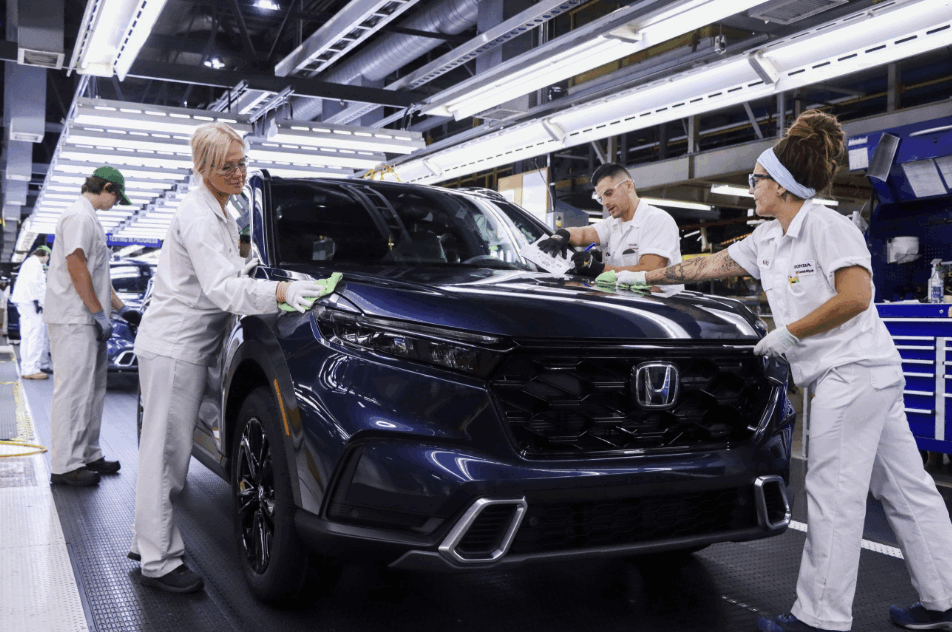
Where Is the Honda CR-V Manufactured?
Honda manufactures the CR-V in several countries to meet global demand and shorten delivery times. Instead of relying on one factory, the company operates a network of production plants across North America and Asia. This strategy allows Honda to supply regional markets more efficiently while maintaining consistent production standards.
Today, Honda builds the CR-V in the United States, Canada, Japan, China, and Thailand. Each manufacturing facility serves specific markets based on customer demand, production capacity, and trade regulations. For example, most Honda CR-V models sold in the United States come from American assembly plants, while buyers in Southeast Asia typically receive vehicles produced in Thailand.
Honda expanded its manufacturing network as the CR-V became one of the world’s best-selling compact SUVs. Producing vehicles closer to customers helps reduce transportation costs, shorten delivery times, and improve supply chain flexibility. It also allows Honda to respond more quickly when demand changes in different regions.
Although manufacturing locations vary, Honda follows the same production philosophy across every factory. Each plant uses standardized assembly processes, quality inspections, and engineering specifications to produce vehicles that meet global safety and performance requirements. As a result, a Honda CR-V assembled in Canada or the United States follows the same quality benchmarks as one produced in Japan or Thailand.
The manufacturing country often reflects Honda’s global business strategy rather than a difference in vehicle quality. Buyers should focus on the model year, trim level, maintenance history, and vehicle condition instead of assuming one production location is superior to another. Understanding this global manufacturing network provides valuable context before identifying the specific factory that built a particular Honda CR-V.
Which Honda Manufacturing Plants Build the Honda CR-V?
Honda produces the CR-V in several manufacturing plants across North America and Asia. Each facility supports nearby markets and helps the company deliver vehicles more quickly. This regional production strategy reduces shipping costs while ensuring a stable supply for dealers and customers.
The United States is home to two of the most important CR-V production facilities. Honda Manufacturing of Indiana in Greensburg builds a large share of the CR-V models sold across the American market. Honda also produces selected CR-V models at the East Liberty Auto Plant in Ohio. These factories use advanced robotics, automated inspection systems, and standardized production methods to maintain consistent quality.
Honda Canada Manufacturing in Alliston, Ontario, also plays a major role in CR-V production. The plant has assembled the model for many years and supplies vehicles to both Canadian customers and selected export markets. Its long production history makes it one of Honda’s most experienced manufacturing facilities in North America.
Honda continues to manufacture the CR-V in Asia to meet strong regional demand. Japanese production focuses on domestic customers and selected export markets, while factories in China build CR-V models for local buyers through Honda’s joint ventures. In Southeast Asia, Honda manufactures the CR-V in Thailand to support countries throughout the region. This approach allows Honda to shorten delivery times and respond more efficiently to changing market demand.
Although each plant serves different markets, Honda applies the same manufacturing principles across its global network. Every factory follows identical engineering specifications, strict quality inspections, and standardized assembly procedures. These consistent production standards help ensure that every Honda CR-V delivers the reliability, safety, and driving experience customers expect, regardless of where the vehicle is assembled.
Where Is the Honda CR-V Built for Different Markets?
The manufacturing location of a Honda CR-V depends on the market where the vehicle is sold. Honda assigns production to regional factories to improve delivery speed, reduce transportation costs, and comply with local trade regulations. This strategy allows the company to supply customers more efficiently without compromising product quality.
Most Honda CR-V models sold in the United States come from Honda Manufacturing of Indiana or the East Liberty Auto Plant in Ohio. Canadian customers typically receive vehicles assembled at Honda Canada Manufacturing in Alliston, Ontario. These facilities work together to meet demand across North America while following the same production and inspection standards.
Honda uses different production facilities for customers outside North America. Buyers in China receive locally assembled CR-V models through Honda’s manufacturing partnerships, while customers in Thailand and several Southeast Asian countries usually purchase vehicles built at Honda’s Thai production plant. Depending on the model year and local distribution strategy, some export markets also receive CR-V models from Japan.
The manufacturing location may change over time as Honda adjusts production capacity and responds to market demand. New model generations, supply chain conditions, and regional sales volumes often influence where the company builds specific trims. For this reason, two Honda CR-V models with the same design may come from different factories even if they are sold in neighboring countries.
If you want to confirm where your Honda CR-V was assembled, you should verify the information for your specific vehicle instead of relying on the destination market alone. The vehicle identification number and the factory label provide the most accurate details because they identify the exact production plant used during manufacturing.
How Can You Identify Where Your Honda CR-V Was Manufactured?
You can identify where your Honda CR-V was manufactured by checking the vehicle identification number (VIN) and the factory information label. These identifiers provide accurate production details because Honda assigns them during the manufacturing process. They remain the most reliable way to confirm the assembly plant for any model year.
Start by locating the VIN on the driver’s side dashboard or the driver’s door jamb. Every Honda CR-V has a unique 17-character VIN that contains information about its manufacturer, production plant, and model specifications. You can also find the same number on the vehicle registration and insurance documents.
The first character of the VIN indicates the country where Honda manufactured the vehicle. For example, a VIN that begins with 1, 4, or 5 usually represents production in the United States, while 2 identifies a vehicle assembled in Canada. A VIN that starts with J indicates production in Japan. These codes help owners verify the country of origin before researching the specific assembly plant.
You should also check the certification label attached to the driver’s door frame. Honda prints the manufacturing location directly on this label, making it easy to confirm where the vehicle was assembled. In many cases, the label includes the plant name or city in addition to the country of manufacture.
Verifying the production location is especially useful when buying a used Honda CR-V. Online listings sometimes contain incorrect or incomplete information about a vehicle’s origin. Checking the VIN and factory label allows you to confirm the manufacturing details before making a purchase and gives you greater confidence in the vehicle’s history.
Does the Manufacturing Country Affect Honda CR-V Quality?
The country where a Honda CR-V is manufactured does not determine its overall quality. Honda follows the same engineering standards, production procedures, and quality control systems across its global manufacturing network. Every assembly plant must meet the company’s strict requirements before a vehicle reaches the market.
Honda uses standardized manufacturing processes to produce consistent results in every factory. Engineers apply the same technical specifications, while automated equipment and trained technicians complete each stage of production. Every vehicle also passes multiple inspections to verify safety, performance, and build quality before delivery.
Many buyers believe that a Honda CR-V built in Japan is more reliable than one assembled in the United States or Canada. However, there is little evidence to support this assumption. Honda designs every CR-V to meet the same performance and durability targets, regardless of where the company assembles the vehicle. Production quality depends on Honda’s manufacturing system rather than the country itself.
Small differences may exist between vehicles built for different regions. Local regulations, customer preferences, and available features often influence equipment levels and specifications. For example, a CR-V sold in North America may include different safety features or powertrain options than a model designed for Southeast Asia. These differences reflect market requirements instead of manufacturing quality.
When evaluating a used Honda CR-V, buyers should focus on factors that have a greater impact on long-term reliability. The vehicle’s maintenance history, service records, accident history, mileage, and overall condition provide a much clearer picture than its manufacturing location. A well-maintained CR-V from any Honda factory is more likely to deliver dependable performance than a poorly maintained vehicle from a different production plant.
Why Does Honda Manufacture the CR-V in Multiple Countries?
Honda manufactures the CR-V in multiple countries to support global demand and improve supply chain efficiency. Building vehicles closer to customers helps the company shorten delivery times, reduce transportation costs, and maintain a stable supply in different regions. This strategy also allows Honda to respond more quickly when market conditions change.
Regional production helps Honda avoid unnecessary shipping delays and import costs. Instead of exporting every CR-V from a single country, the company supplies major markets through nearby manufacturing plants. This approach improves inventory management and enables dealers to receive vehicles faster throughout the year.
Trade policies also influence Honda’s manufacturing strategy. Many countries apply import duties and local content requirements to imported vehicles. Producing the Honda CR-V within a target market or a nearby region helps Honda remain competitive while offering more stable pricing to customers. It also reduces the impact of changing tariffs and international trade regulations.
Local manufacturing allows Honda to adapt each CR-V to regional requirements. Safety regulations, emissions standards, and customer preferences vary from one market to another. By producing vehicles closer to their destination, Honda can introduce market-specific features, engine options, and equipment packages without disrupting its global production system.
This global manufacturing network strengthens Honda’s ability to deliver consistent quality on a large scale. Every production plant follows the same engineering principles, quality inspections, and assembly standards while serving different markets. As a result, Honda can increase production capacity, improve operational flexibility, and continue supplying one of the world’s best-selling compact SUVs without sacrificing reliability or performance.
Frequently Asked Questions About Honda CR-V Manufacturing
Is every Honda CR-V made in Japan?
No. Honda manufactures the CR-V in several countries, including the United States, Canada, Japan, China, and Thailand. The production location depends on the destination market rather than the model itself. Most buyers receive a vehicle assembled in the factory that serves their region.
Is a U.S.-built Honda CR-V reliable?
Yes. Honda applies the same engineering standards and quality control procedures across all of its manufacturing facilities. A CR-V built in the United States must meet the same performance, safety, and durability requirements as one assembled in Japan or Canada. Regular maintenance has a much greater impact on long-term reliability than the production location.
Where is the Honda CR-V Hybrid manufactured?
Honda manufactures the CR-V Hybrid in different countries depending on the market. North American models are typically assembled in the United States or Canada, while Asian markets receive vehicles produced in regional factories such as Japan, China, or Thailand. Buyers should verify the VIN or factory label to confirm the manufacturing location of a specific vehicle.
Does the VIN show where a Honda CR-V was manufactured?
Yes. The VIN helps identify the country where Honda assembled the vehicle. The first character represents the country of manufacture, while the complete VIN contains additional information about the vehicle and its production details. The factory certification label also confirms the assembly location.
Which country builds the highest-quality Honda CR-V?
No single country consistently builds a higher-quality Honda CR-V than another. Honda uses standardized production systems, strict inspections, and shared engineering specifications across its global manufacturing network. Buyers should compare the vehicle’s condition, maintenance history, and service records instead of judging quality by the country of assembly alone.
Conclusion
Honda manufactures the CR-V in multiple countries to serve customers more efficiently while maintaining consistent product quality. Production facilities in the United States, Canada, Japan, China, and Thailand allow Honda to reduce delivery times, strengthen its supply chain, and meet regional demand without changing the vehicle’s core engineering standards.
Although many buyers pay close attention to the manufacturing country, the assembly location is only one part of the overall picture. Honda follows the same quality control processes across its global production network, so factors such as maintenance history, mileage, accident records, and vehicle condition have a much greater influence on long-term reliability.
If you want to confirm where your Honda CR-V was manufactured, check the VIN and the factory certification label before making a purchase. These details provide the most accurate information about the vehicle’s origin and help you make a more informed buying decision. Understanding Honda’s global manufacturing strategy also makes it easier to compare different CR-V models and choose the one that best fits your needs.