A Honda CRV check engine light flashing is a warning that should never be ignored. In most cases, it means the engine is experiencing an active misfire. This happens when one or more cylinders fail to burn the air and fuel mixture correctly. As a result, the engine may shake, lose power, idle roughly, or produce a strong fuel smell.
A flashing light is more serious than a solid check engine light because unburned fuel can enter the exhaust system. This can cause the catalytic converter to overheat and suffer expensive damage. In some situations, continued driving may also lead to sudden power loss, poor acceleration, or further engine problems.
The safest response is to reduce speed, avoid hard acceleration, and stop the vehicle in a secure location. If the engine is shaking badly or the warning continues to flash, the vehicle should be inspected before normal driving resumes.
This guide explains the most common causes of a Honda CRV check engine light flashing, the symptoms you may notice, the correct diagnostic process, the available repair options, and the estimated cost of each repair. It will also help you understand when the vehicle can be moved briefly and when towing is the safer choice.
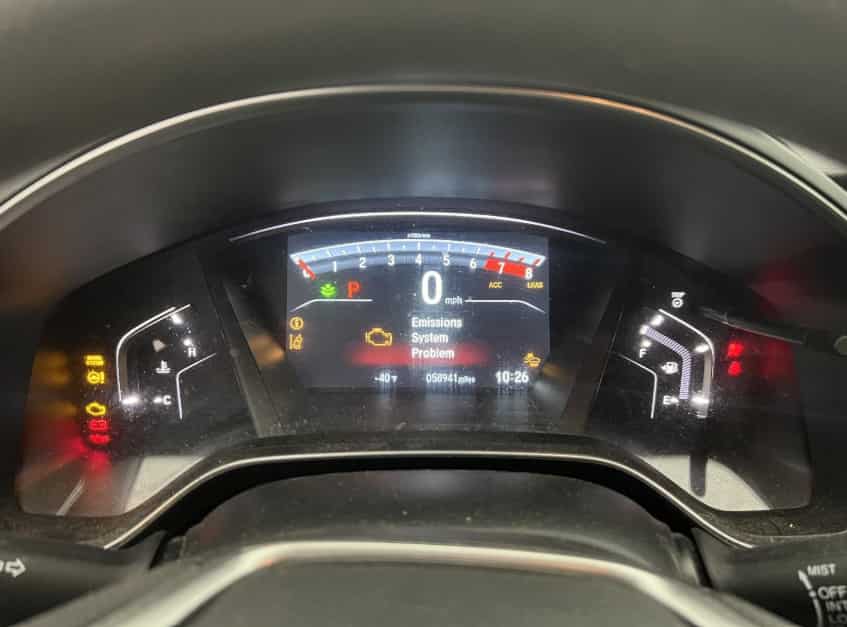
What Does a Flashing Check Engine Light Mean on a Honda CRV?
A Honda CRV check engine light flashing usually means the engine control module detects an active cylinder misfire. One or more cylinders fail to burn the air and fuel mixture correctly, so unburned fuel enters the exhaust system. That extra fuel raises the temperature inside the catalytic converter and can cause expensive damage if you continue driving.
A flashing warning demands more attention than a solid check engine light. The engine control module constantly monitors crankshaft speed, combustion quality, ignition performance, fuel delivery, and emissions data. When it detects repeated misfires within a short period, it flashes the warning light to tell the driver that the engine needs immediate attention.
Several problems can trigger this warning. Worn spark plugs may create a weak spark. A failing ignition coil may stop one cylinder from firing correctly. A clogged fuel injector may reduce fuel delivery, while a leaking injector may flood the cylinder. Vacuum leaks, low fuel pressure, incorrect valve timing, and low engine compression can also interrupt normal combustion. Although these problems differ in severity, they all reduce engine performance and increase emissions.
Most drivers notice clear symptoms before the problem becomes more serious. The engine may shake at idle, hesitate during acceleration, lose power on steep roads, or produce a noticeable fuel smell. Some vehicles also struggle to maintain speed because one or more cylinders no longer generate enough power. These warning signs often become stronger as the misfire continues.
Treat a flashing check engine light as an urgent warning instead of a routine maintenance reminder. Scan the vehicle with an OBD2 scanner as soon as possible and record every stored trouble code. Then inspect the ignition, fuel, intake, and mechanical systems in a logical order. This approach helps you identify the real cause, avoid unnecessary repairs, and protect the catalytic converter from further damage.
What Should You Do When the Honda CRV Check Engine Light Starts Flashing?
A Honda CRV check engine light flashing requires immediate action. Do not ignore the warning or continue driving as usual. Instead, reduce your speed, avoid hard acceleration, and look for a safe place to stop. Quick action can limit engine damage and help you avoid expensive repairs.
Start by easing off the accelerator and keeping the engine speed as low as possible. High engine loads make an active misfire worse because the ignition system and fuel system must work harder. Avoid sudden acceleration, rapid lane changes, and steep hills whenever possible. If your vehicle uses cruise control, switch it off and drive gently until you reach a safe location.
Once you find a safe place, park the vehicle and turn off the engine. Take a few moments to inspect the area around the vehicle. Look for smoke, leaking fluids, or a strong fuel smell. Listen for unusual knocking, ticking, or grinding noises. These warning signs may indicate a more serious problem that needs immediate attention.
Restart the engine only if you need to move the vehicle a short distance to improve safety. If the check engine light continues flashing, the engine shakes violently, or the vehicle struggles to accelerate, do not continue your trip. Driving with an active misfire allows unburned fuel to enter the exhaust system, where it can overheat and damage the catalytic converter. What begins as a simple ignition problem can quickly develop into a much more expensive repair.
The next step is to scan the vehicle with an OBD2 scanner. Record every stored trouble code before clearing anything. Those codes provide valuable clues about the affected cylinder and help narrow the list of possible causes. After that, inspect the ignition system, fuel system, intake system, and engine components in a logical order. A systematic diagnosis saves time, reduces repair costs, and prevents unnecessary parts replacement.
Can You Drive a Honda CRV With a Flashing Check Engine Light?
No, you should not continue driving a Honda CRV with a flashing check engine light unless you need to move the vehicle a short distance to reach a safe location. A flashing warning almost always indicates an active engine misfire. Every mile you drive increases the risk of damaging expensive engine and exhaust components.
During a misfire, one or more cylinders fail to burn the air and fuel mixture completely. The remaining fuel flows into the exhaust system instead of producing power. As the catalytic converter burns this excess fuel, its internal temperature rises rapidly. Excessive heat can melt the ceramic core, reduce emissions performance, and lead to a costly replacement.
A severe misfire also affects vehicle performance. You may notice rough idling, poor acceleration, engine vibration, or sudden power loss while driving. These symptoms make the vehicle less predictable, especially when merging onto a highway, climbing a hill, or passing another vehicle. Losing power at the wrong moment can create a serious safety risk for both the driver and other road users.
Some drivers restart the engine after stopping and notice that the flashing light disappears. This temporary change does not mean the problem has been fixed. The engine control module may stop flashing the warning when the misfire becomes less frequent, but the underlying fault often remains. In many cases, the system still stores pending or confirmed diagnostic trouble codes that require further inspection.
The safest approach is to stop driving, scan the vehicle with an OBD2 scanner, and identify the root cause before using the Honda CRV again. Early diagnosis often limits repair costs because technicians can correct the original problem before it damages the catalytic converter, oxygen sensors, or other expensive components. Acting quickly not only protects your vehicle but also reduces the chance of facing a much larger repair bill later.
Common Causes of a Honda CRV Check Engine Light Flashing
A Honda CRV check engine light flashing usually appears when the engine cannot complete the combustion process correctly. Every combustion cycle depends on five essential elements. The engine needs the correct amount of air, the right amount of fuel, a strong ignition spark, proper cylinder compression, and accurate valve timing. If any of these elements fail, one or more cylinders may misfire and trigger the flashing warning light.
Ignition problems remain the most common cause of an active misfire. Worn spark plugs gradually lose their ability to create a strong spark, while failing ignition coils may not generate enough voltage under heavy engine load. Even a single weak cylinder can cause rough idling, hesitation, engine vibration, and noticeable power loss. These symptoms often become worse during acceleration because higher cylinder pressure requires a stronger spark.
Fuel delivery problems can create similar symptoms. A clogged fuel injector may reduce the amount of fuel entering the cylinder, while a leaking injector may supply too much fuel. Low fuel pressure caused by a weak fuel pump or restricted fuel system can also interrupt normal combustion. When the engine receives too much or too little fuel, combustion becomes unstable and the engine control module quickly detects the misfire.
Air intake problems also deserve careful attention. Cracked vacuum hoses, leaking intake manifold gaskets, or damaged intake ducts allow unmetered air to enter the engine. This extra air changes the air and fuel ratio and creates a lean mixture that burns poorly. The engine may idle roughly, hesitate during acceleration, or lose power even though the ignition system works normally.
Mechanical faults often produce the most expensive repairs. Low cylinder compression, burned valves, worn piston rings, incorrect valve timing, or timing chain problems prevent the engine from building the pressure required for efficient combustion. Replacing spark plugs or ignition coils will not solve these issues because the problem originates inside the engine itself.
Although these failures affect different systems, they all lead to the same result. The engine loses combustion efficiency, engine performance drops, emissions increase, and the Honda CRV check engine light flashing warns the driver that immediate diagnosis is necessary. Reading the diagnostic trouble codes and following a logical inspection process remain the fastest and most reliable way to identify the true cause of the problem.
Worn Spark Plugs and Failed Ignition Coils
Worn spark plugs and failed ignition coils rank among the most common reasons for a Honda CRV check engine light flashing. These two components work together during every combustion cycle. The ignition coil generates high voltage, while the spark plug uses that voltage to ignite the compressed air and fuel mixture inside the cylinder. When either component fails, the cylinder cannot produce consistent power and the engine begins to misfire.
Spark plugs wear naturally as mileage increases. The center electrode gradually erodes, the spark gap becomes wider, and carbon deposits may build up around the firing tip. Oil contamination, incorrect spark plug gaps, and poor maintenance can make the problem even worse. As the spark weakens, combustion becomes less efficient. The engine may idle roughly, hesitate during acceleration, consume more fuel, or become difficult to start. Many drivers first notice these symptoms before the check engine light begins flashing.
Ignition coils also experience wear from heat, vibration, and constant electrical demand. A weak coil may still operate during light driving but fail when the engine works harder. Heavy acceleration, climbing steep grades, or carrying additional weight increases cylinder pressure and requires a stronger ignition spark. If the coil cannot deliver enough voltage, the affected cylinder misfires and the engine control module immediately detects the problem.
Drivers often experience noticeable changes in vehicle performance when the ignition system begins to fail. Engine vibration becomes stronger at idle, acceleration feels sluggish, and the vehicle may hesitate before gaining speed. In more severe cases, the engine may shake continuously because one cylinder contributes very little power. Continued driving under these conditions increases the amount of unburned fuel entering the exhaust system and raises the risk of catalytic converter damage.
A proper diagnosis should always include both spark plugs and ignition coils. Replacing only one component without inspecting the other may leave the original problem unresolved. Technicians often remove the spark plugs to check for worn electrodes, heavy carbon deposits, oil contamination, or abnormal wear patterns. They also inspect the ignition coils for cracked housings, damaged boots, corrosion, and signs of electrical leakage. In many cases, swapping the suspected ignition coil with another cylinder provides a quick way to confirm whether the misfire follows the coil.
Replacing worn ignition components at the recommended service interval improves engine performance, restores smooth acceleration, and reduces fuel consumption. More importantly, early maintenance helps prevent repeated misfires that can damage the catalytic converter and trigger additional engine faults. Keeping the ignition system in good condition remains one of the simplest and most effective ways to prevent a Honda CRV check engine light flashing from returning.
Fuel Injector, Fuel Pressure, and Air Intake Problems
The fuel system and air intake system play a critical role in every combustion cycle. The engine must receive the correct amount of fuel and air at the right time to produce smooth and efficient power. When either system fails to deliver the proper mixture, combustion becomes unstable, and the Honda CRV check engine light flashing may appear to warn the driver about an active misfire.
Fuel injectors deliver a precise amount of fuel into each cylinder. Over time, deposits can restrict the injector nozzle and reduce fuel flow. An injector may also leak or develop an electrical fault that prevents it from opening correctly. A restricted injector creates a lean mixture, while a leaking injector creates a rich mixture. Both conditions reduce combustion efficiency and may cause rough idling, hesitation, poor acceleration, increased fuel consumption, or engine vibration.
Fuel pressure also affects engine performance. A weak fuel pump, a clogged fuel filter, contaminated fuel, or a faulty pressure regulator can reduce the amount of fuel reaching the injectors. During light driving, the engine may continue to run with only minor symptoms. However, higher engine loads demand more fuel, and insufficient fuel pressure often causes the misfire to become much more noticeable. Drivers commonly report hesitation, loss of power, or a flashing check engine light while accelerating onto a highway or climbing a steep hill.
The air intake system is equally important because the engine control module calculates fuel delivery based on the amount of incoming air. Cracked intake hoses, damaged intake manifold gaskets, loose vacuum connections, or a faulty PCV system allow extra air to enter the engine without passing through the normal measurement process. This unmetered air creates a lean air and fuel mixture that burns less efficiently and increases the likelihood of repeated cylinder misfires.
Several symptoms can help identify problems within these systems. The engine may idle unevenly, respond slowly to throttle input, or struggle to maintain power during acceleration. Some vehicles also produce a noticeable fuel smell or consume more fuel than usual because the engine control module constantly adjusts fuel delivery in an attempt to maintain proper combustion.
Accurate diagnosis requires more than reading diagnostic trouble codes. A technician should verify fuel pressure, inspect injector operation, examine the intake system for leaks, and review live scan tool data such as fuel trims and sensor readings. Following a logical testing process helps identify the true cause of the misfire and prevents unnecessary replacement of expensive components that still operate correctly.
Compression Loss and Engine Timing Problems
Engine performance depends on more than a healthy ignition system and proper fuel delivery. Every cylinder must also build enough compression to burn the air and fuel mixture efficiently. When compression drops below the required level, combustion becomes weak or inconsistent, and the Honda CRV check engine light flashing may appear because the engine control module detects repeated misfires.
Several mechanical problems can reduce cylinder compression. Burned valves, worn piston rings, damaged cylinder walls, and a leaking head gasket are among the most common causes. Each of these faults prevents the cylinder from sealing properly during the compression stroke. As pressure escapes, the engine produces less power, runs roughly, and struggles to maintain smooth operation.
Valve timing also has a direct impact on combustion. The intake and exhaust valves must open and close at precise moments during each engine cycle. A stretched timing chain, worn timing components, low engine oil pressure, or a malfunction in the variable valve timing system can disrupt this sequence. Even a small timing error reduces combustion efficiency and may trigger cylinder misfires under certain driving conditions.
Mechanical faults often develop gradually. Drivers may first notice a rough idle, slower acceleration, reduced fuel economy, or occasional hesitation before the warning light begins flashing. As the problem becomes more severe, the engine may vibrate continuously, lose significant power, or become difficult to start. Unlike ignition related problems, these symptoms rarely improve after replacing spark plugs or ignition coils because the root cause remains inside the engine.
Accurate testing is essential when technicians suspect a mechanical problem. A compression test measures the pressure produced by each cylinder and helps identify cylinders that fail to seal properly. A cylinder leak down test provides even more detailed information by showing where compression escapes. Air escaping through the intake system may indicate a leaking intake valve, while air flowing through the exhaust system often points to a damaged exhaust valve. Air entering the crankcase may suggest worn piston rings, and bubbles in the cooling system can indicate a leaking head gasket.
Repairing mechanical faults usually requires more time and higher repair costs than replacing ignition or fuel system components. However, identifying the problem early can prevent additional engine damage and reduce the overall repair expense. A systematic diagnosis allows technicians to separate mechanical failures from ignition or fuel related issues, ensuring that every repair addresses the true source of the Honda CRV check engine light flashing.
Symptoms That Often Appear With a Flashing Check Engine Light
A Honda CRV check engine light flashing rarely appears without other warning signs. In most cases, the engine shows clear symptoms before the problem becomes severe enough to affect daily driving. Recognizing these symptoms early allows you to diagnose the vehicle sooner, reduce repair costs, and prevent additional damage to the engine or exhaust system.
Engine vibration is one of the first symptoms most drivers notice. A cylinder that fails to produce normal power creates an imbalance during engine operation. Instead of running smoothly, the engine begins to shake while idling or accelerating. The vibration may travel through the steering wheel, driver seat, or floor, making the vehicle feel rough even at low speeds.
Loss of power often follows as the misfire becomes more frequent. The engine cannot generate its normal output when one or more cylinders fail to contribute. Acceleration becomes slower, highway merging requires more distance, and climbing steep roads may feel difficult. Some drivers also notice delayed throttle response because the engine struggles to maintain consistent combustion under load.
Rough idling is another common symptom. Engine speed may fluctuate while the vehicle remains stationary, and the engine may sound uneven instead of maintaining a steady idle. In more severe cases, the engine may stall after starting or while waiting at a traffic light. These symptoms often indicate that combustion has become unstable even at low engine speeds.
Many vehicles also produce a noticeable fuel smell during an active misfire. Unburned fuel leaves the combustion chamber and enters the exhaust system before the catalytic converter can process it. A strong gasoline odor should never be ignored because it may indicate excessive fuel entering the exhaust or a leaking fuel injector. Continuing to drive under these conditions increases the risk of catalytic converter damage.
Poor fuel economy often develops as the engine control module attempts to compensate for unstable combustion. It may adjust fuel delivery repeatedly in an effort to keep the engine running smoothly. Although these adjustments help maintain operation, they usually increase fuel consumption and reduce overall efficiency.
Hard starting can also accompany a flashing check engine light. The engine may require several attempts before it starts, especially after sitting overnight. Weak ignition components, incorrect fuel pressure, leaking injectors, low cylinder compression, or inaccurate sensor readings can all contribute to difficult starting conditions.
These symptoms often appear together rather than individually. A vehicle that shakes during acceleration, loses power, idles roughly, and produces a fuel smell almost always requires immediate diagnosis. Reading the diagnostic trouble codes and performing a systematic inspection remain the most reliable ways to identify the root cause before the problem leads to more extensive and expensive repairs.
Why Is the Honda CRV Check Engine Light Flashing and the Car Shaking?
A Honda CRV check engine light flashing and engine shaking usually indicate a severe cylinder misfire. One or more cylinders stop producing normal power, causing the engine to lose balance during every rotation. As the imbalance grows, the vehicle begins to vibrate, idle roughly, and accelerate poorly. The engine control module recognizes these repeated misfires and flashes the check engine light to warn the driver that immediate attention is necessary.
The ignition system causes many of these problems. A worn spark plug may fail to ignite the air and fuel mixture, while a weak ignition coil may not supply enough voltage under heavy engine load. Either fault prevents the affected cylinder from producing full power. As a result, the engine shakes because the remaining cylinders must compensate for the missing output.
Fuel system problems can create similar symptoms. A clogged fuel injector may reduce fuel delivery, while a leaking injector may send too much fuel into the cylinder. Low fuel pressure can also interrupt normal combustion, especially during acceleration or when the engine demands more power. These conditions reduce engine efficiency and increase the frequency of cylinder misfires.
Mechanical faults should also remain on the list of possible causes. Low compression, burned valves, worn piston rings, or incorrect valve timing prevent the cylinder from generating the pressure needed for efficient combustion. Unlike ignition or fuel related problems, these faults often require more detailed testing before technicians can confirm the exact source of the misfire.
The severity of the vibration often reflects the severity of the problem. A slight vibration may indicate an intermittent misfire, while strong and continuous shaking usually points to a cylinder that contributes very little or no power. Ignoring these symptoms can allow unburned fuel to enter the exhaust system, overheat the catalytic converter, and increase repair costs significantly.
The best response is to stop driving as soon as it is safe to do so. Scan the vehicle with an OBD2 scanner, record every stored trouble code, and inspect the ignition, fuel, and mechanical systems in a logical sequence. Identifying the root cause early helps restore engine performance, protects expensive components, and prevents a simple repair from becoming a major engine repair.
Why Does the Check Engine Light Flash During Acceleration?
A Honda CRV check engine light flashing during acceleration usually indicates that the engine struggles to maintain proper combustion under heavy load. As you press the accelerator, the engine demands more fuel, more air, and a stronger ignition spark. If any part of the combustion process cannot keep up with this increased demand, one or more cylinders begin to misfire. The engine control module detects these repeated misfires and immediately flashes the warning light.
A weak ignition system is one of the most common causes. Ignition coils and spark plugs often perform well during idle or light driving because the engine operates under relatively low cylinder pressure. As engine load increases, cylinder pressure rises and the ignition system must generate a much stronger spark. A worn spark plug or failing ignition coil may no longer produce enough voltage, allowing the affected cylinder to misfire only during acceleration.
Fuel delivery problems can create the same driving experience. The fuel pump must maintain consistent pressure while the injectors supply additional fuel to match the higher airflow entering the engine. A weak fuel pump, restricted fuel filter, clogged injector, or contaminated fuel can reduce fuel delivery when demand increases. The engine may feel smooth at low speeds but hesitate, lose power, or shake once acceleration begins.
Airflow also influences combustion during heavy engine loads. A vacuum leak, damaged intake hose, or faulty sensor may send incorrect airflow information to the engine control module. When the module calculates the wrong air and fuel ratio, combustion becomes unstable and the misfire may appear only under acceleration.
Mechanical problems can also become more noticeable when the engine works harder. Low compression, worn valve train components, or incorrect valve timing may not produce obvious symptoms during light driving. However, increased cylinder pressure exposes these weaknesses and causes the engine to lose power as acceleration continues.
Diagnosing this type of intermittent misfire requires more than a quick visual inspection. Technicians often review freeze frame data, live engine data, fuel trims, ignition performance, and misfire counters to determine exactly when the fault occurs. This information helps identify whether the problem begins because of ignition failure, fuel delivery, airflow imbalance, or mechanical wear.
If the check engine light flashes every time you accelerate, avoid repeated hard acceleration until the vehicle has been diagnosed. Continuing to drive under heavy load increases the risk of catalytic converter damage and may turn a relatively simple repair into a much more expensive engine or exhaust system repair.
Why Does the Light Flash and Then Stop?
Many drivers become confused when the Honda CRV check engine light flashes for a short time and then stops. The warning may disappear after a few seconds or after restarting the engine, but this change does not mean the problem has been fixed. In most cases, the engine still has an underlying fault that requires diagnosis.
The engine control module flashes the warning light only while it detects an active misfire that exceeds a specific threshold. If the misfire becomes less frequent or stops temporarily, the module may stop flashing the light even though the original problem remains. The system often stores pending or confirmed diagnostic trouble codes, allowing technicians to review the event later.
Intermittent ignition failures are one of the most common reasons for this behavior. A weak ignition coil may work normally when the engine is cold but lose performance as temperatures increase. A worn spark plug may also misfire only under certain driving conditions, such as rapid acceleration or climbing a hill. Because these faults do not occur constantly, the warning light may appear and disappear several times before the problem becomes severe.
Fuel system problems can also produce an intermittent misfire. A partially clogged fuel injector, inconsistent fuel pressure, or contaminated fuel may interrupt combustion only when engine demand changes. Once driving conditions return to normal, the engine may run smoothly again, causing the flashing warning to stop even though the underlying issue still exists.
Environmental conditions may also influence the problem. Moisture inside an ignition coil, electrical connector, or wiring harness can temporarily affect ignition performance. As the engine warms up or moisture evaporates, the connection may improve and the misfire may disappear until similar conditions return.
Although the warning light may stop flashing, you should not assume the vehicle is safe to drive without inspection. Scan the Honda CRV with an OBD2 scanner before clearing any diagnostic trouble codes. Stored codes, freeze frame data, and live engine data provide valuable information that helps identify the root cause. Ignoring an intermittent misfire often allows the problem to worsen over time and increases the likelihood of catalytic converter damage or more expensive engine repairs.
Treat every flashing check engine light as an early warning rather than a temporary inconvenience. Diagnosing the problem while it occurs intermittently often costs less than waiting until the fault becomes constant and causes additional damage.
How to Diagnose a Honda CRV Check Engine Light Flashing
Diagnosing a Honda CRV check engine light flashing requires a systematic approach. Replacing parts without testing often increases repair costs and fails to solve the original problem. A logical inspection allows you to identify the root cause of the misfire and prevents unnecessary repairs.
Begin by connecting an OBD2 scanner and reading every stored diagnostic trouble code. Record confirmed codes, pending codes, and freeze frame data before clearing anything. This information shows the operating conditions when the engine control module detected the misfire. Pay close attention to common misfire codes such as P0300, P0301, P0302, P0303, and P0304 because they identify the affected cylinder or indicate random misfires across multiple cylinders.
After reading the codes, inspect the ignition system carefully. Remove the spark plugs and examine the electrodes for excessive wear, carbon buildup, oil contamination, or an incorrect spark gap. Next, inspect the ignition coils for cracks, damaged boots, corrosion, or signs of electrical leakage. If the misfire affects a single cylinder, swapping the ignition coil with another cylinder can help determine whether the problem follows the coil.
The next step involves checking the fuel system. Measure fuel pressure with the correct testing equipment and compare the results with the manufacturer’s specifications. Inspect each fuel injector for proper operation and verify that every injector receives the correct electrical signal. A clogged injector, weak fuel pump, or unstable fuel pressure can easily create the same symptoms as a faulty ignition system.
Continue by inspecting the air intake system. Look for cracked intake hoses, loose vacuum lines, damaged intake manifold gaskets, and problems within the PCV system. Even a small vacuum leak can change the air and fuel ratio enough to trigger repeated cylinder misfires. Review live scan tool data to evaluate fuel trims, airflow readings, coolant temperature, and other sensor values that influence combustion.
If the ignition, fuel, and intake systems operate correctly, move to mechanical testing. Perform a compression test on every cylinder and compare the results. Low compression often points to worn piston rings, burned valves, a leaking head gasket, or other internal engine problems. A cylinder leak down test provides additional information by showing exactly where compression escapes, allowing technicians to identify the damaged component with greater accuracy.
Finally, inspect engine timing and related components. Check the timing chain, variable valve timing system, camshaft timing, crankshaft signals, and engine oil condition. Problems in these areas may interrupt valve operation and create repeated misfires that resemble ignition or fuel system failures.
A successful diagnosis follows a logical process instead of relying on guesswork. Every test eliminates possible causes until the true fault becomes clear. This approach saves time, reduces repair costs, and restores reliable engine performance without replacing parts unnecessarily.
Can You Diagnose the Problem at Home?
Yes, you can perform several basic checks at home before taking your Honda CRV to a repair shop. These inspections may help you identify obvious problems and provide useful information for a technician. However, a complete diagnosis often requires specialized tools and testing procedures that most vehicle owners do not have.
Start by reading the diagnostic trouble codes with a quality OBD2 scanner. Record every stored code before clearing the system because this information provides valuable clues about the affected cylinder and the operating conditions when the misfire occurred. If your scanner supports live data, review engine speed, coolant temperature, fuel trims, and misfire counters to determine when the problem appears.
Next, perform a careful visual inspection under the hood. Look for loose electrical connectors, damaged ignition coil wiring, cracked intake hoses, disconnected vacuum lines, or signs of fluid leaks. These simple checks may reveal problems that cause poor combustion without requiring advanced equipment.
If you have the proper tools and mechanical experience, inspect the spark plugs and ignition coils. Remove the spark plugs and look for excessive wear, heavy carbon deposits, oil contamination, or damaged electrodes. Check the ignition coils for cracks, corrosion, or worn rubber boots. When the misfire affects a single cylinder, you may swap the suspected ignition coil with another cylinder and scan the vehicle again after a short drive. If the misfire code moves to the new cylinder, the ignition coil likely caused the problem.
Some inspections require professional equipment and should not be performed without the necessary training. Fuel pressure testing, injector balance testing, compression testing, cylinder leak down testing, oscilloscope analysis, and engine timing inspections all require specialized tools and technical knowledge. Incorrect testing procedures can produce misleading results or damage engine components.
Safety should remain your highest priority throughout the inspection. Allow the engine to cool before touching ignition components or removing spark plugs. Keep your hands away from moving belts and cooling fans while the engine is running. Never disconnect fuel lines or electrical connectors without following the correct procedures because modern fuel systems operate under high pressure and ignition systems generate high voltage.
A home inspection can help you identify simple faults and gather useful diagnostic information, but it cannot replace a complete mechanical diagnosis. If the Honda CRV check engine light flashing continues after the basic checks, or if the engine shakes severely, arrange a professional inspection as soon as possible. Finding the root cause early often prevents additional engine damage and keeps repair costs under control.
How to Fix a Honda CRV Check Engine Light Flashing
Fixing a Honda CRV check engine light flashing begins with an accurate diagnosis. The warning light does not identify a failed component by itself. It only tells you that the engine control module has detected an active misfire. Replacing parts without confirming the cause often wastes time and money while allowing the original problem to become worse.
If worn spark plugs cause the misfire, replace them with plugs that match Honda’s specifications. Inspect every plug for excessive wear, carbon deposits, oil contamination, or damaged electrodes before installing new ones. Many technicians recommend replacing the complete set when the plugs have reached the end of their service life because the remaining plugs often show similar wear.
Replace a faulty ignition coil only after confirming that it no longer produces a reliable spark. Inspect the electrical connector and wiring before installing a new coil because a damaged connector can create the same symptoms. After completing the repair, clear the diagnostic trouble codes and perform a road test to confirm that the misfire has disappeared.
Fuel system repairs depend on the specific fault. A clogged fuel injector may respond to professional cleaning if deposits restrict fuel flow. A leaking injector or an injector with an electrical failure usually requires replacement. If testing reveals low fuel pressure, inspect the fuel pump, pressure regulator, fuel filter, and electrical supply before replacing any components.
Air intake problems often require simple but important repairs. Replace cracked vacuum hoses, repair damaged intake ducts, and install new intake manifold gaskets if leaks are present. After completing these repairs, verify that fuel trim values return to a normal range and confirm that the engine idles smoothly without triggering additional misfire codes.
Mechanical problems require more extensive repairs because they affect the engine’s ability to build compression. Burned valves, worn piston rings, damaged head gaskets, or timing chain problems usually require disassembly and careful inspection. Although these repairs cost more than replacing ignition or fuel system components, correcting the mechanical fault restores proper combustion and prevents repeated misfires.
Always complete a final inspection after any repair. Scan the vehicle again, confirm that no new diagnostic trouble codes appear, and monitor live engine data during a road test. The engine should idle smoothly, accelerate without hesitation, and maintain stable performance under different driving conditions. A successful repair removes the original cause of the misfire instead of temporarily hiding the symptoms.
Regular maintenance remains the best way to prevent future problems. Replacing spark plugs at the recommended interval, inspecting ignition components during routine service, and addressing small performance issues early can significantly reduce the chance of seeing a Honda CRV check engine light flashing again. Early repairs also protect the catalytic converter and help avoid much more expensive engine or exhaust system damage.
Honda CRV Check Engine Light Flashing Repair Costs
The cost to repair a Honda CRV check engine light flashing depends on the root cause of the misfire. A simple ignition repair usually costs much less than fixing an internal engine problem. The final price also varies according to the model year, engine type, labor rates, replacement parts, and the amount of diagnostic work required before repairs begin.
The table below provides general repair cost estimates for the most common causes of a flashing check engine light.
| Repair Service | Estimated Cost |
|---|---|
| Diagnostic inspection | $100 to $200 |
| Spark plug replacement | $180 to $350 |
| Ignition coil replacement | $250 to $500 |
| Fuel injector cleaning | $100 to $250 |
| Fuel injector replacement | $300 to $900 |
| Vacuum leak repair | $100 to $600 |
| Fuel pump replacement | $700 to $1,500 |
| Compression test | $150 to $350 |
| Cylinder head repair | $1,500 to $4,000 |
| Catalytic converter replacement | $1,500 to $3,500 or more |
These figures represent broad estimates rather than fixed prices. Labor rates vary widely between independent repair shops and dealerships. A newer Honda CRV may also require additional diagnostic time because of its advanced engine management system. Vehicles with turbocharged engines or higher mileage often need more extensive inspections before technicians can confirm the exact cause of the misfire.
The number of failed components also affects the final repair bill. Replacing one ignition coil costs far less than replacing multiple coils, installing new spark plugs, and repairing catalytic converter damage caused by continued driving. In the same way, repairing a small vacuum leak costs much less than rebuilding part of the engine after prolonged compression loss.
Many owners focus only on the cost of replacement parts, but accurate diagnosis often provides the greatest value. Spending money on professional testing can prevent unnecessary repairs and eliminate the need to replace components that still operate correctly. A systematic diagnosis also reduces the risk of repeated visits to the repair shop because technicians address the actual source of the problem instead of treating the symptoms.
Delaying repairs usually increases the total cost. A worn spark plug or weak ignition coil may seem like a minor issue at first, but continued driving can overheat the catalytic converter, damage oxygen sensors, and place additional stress on the engine. Fixing the original fault early often saves hundreds or even thousands of dollars in future repair expenses.
If your Honda CRV check engine light flashing appears unexpectedly, consider the diagnostic inspection as an investment rather than an extra expense. Identifying the root cause quickly helps protect the engine, restores reliable performance, and keeps long term ownership costs under control.
Does the Cause Vary by Honda CRV Model Year?
Yes, the cause of a Honda CRV check engine light flashing can vary by model year because Honda has introduced different engines, ignition systems, fuel delivery systems, and emissions technologies over the years. Although the warning usually indicates an active engine misfire, the components responsible for the problem may differ depending on the vehicle’s age, mileage, and maintenance history.
Older Honda CRV models often develop problems related to normal wear. Spark plugs, ignition coils, vacuum hoses, and electrical connectors naturally deteriorate over time. Rubber components become brittle, wiring insulation may crack, and engine seals can lose their effectiveness. These age related issues increase the likelihood of misfires, rough idling, and intermittent check engine light warnings.
Higher mileage vehicles also face greater mechanical wear. Piston rings, valves, timing components, and fuel injectors gradually lose efficiency after years of operation. Carbon deposits may accumulate inside the combustion chamber or on intake valves, reducing combustion quality and increasing the risk of repeated cylinder misfires. Regular maintenance becomes even more important as vehicle mileage increases.
Newer Honda CRV models use more advanced engine management systems that monitor combustion with greater precision. Modern sensors, electronic throttle control, direct fuel injection, and variable valve timing improve performance and fuel efficiency, but they also make diagnosis more dependent on scan tool data and live sensor readings. Even a small deviation in sensor performance can trigger a misfire warning before the driver notices obvious symptoms.
Turbocharged engines may experience misfires under higher cylinder pressure because they operate under greater load during acceleration. This does not mean turbocharged models are less reliable. Instead, they require accurate ignition performance, proper fuel delivery, and timely maintenance to maintain efficient combustion. Following the recommended service schedule helps reduce the risk of ignition and fuel related problems.
Maintenance history often has a greater impact than model year alone. A well maintained Honda CRV with regular spark plug replacement, timely oil changes, and routine inspections may remain reliable for many years. On the other hand, neglected maintenance can shorten the lifespan of ignition, fuel, and engine components regardless of the vehicle’s age.
For the most accurate diagnosis, consider the model year, engine type, mileage, maintenance records, and diagnostic trouble codes together. Evaluating all of these factors provides a much clearer picture than relying on the model year alone and helps technicians identify the root cause of the flashing check engine light more efficiently.
How to Prevent Future Honda CRV Engine Misfires
Preventing an engine misfire is much easier and less expensive than repairing one after it causes serious damage. Most cases of a Honda CRV check engine light flashing begin with small issues that develop gradually over time. Regular maintenance and early inspection can keep the engine running smoothly and reduce the risk of unexpected breakdowns.
Follow Honda’s recommended maintenance schedule for spark plug replacement. Spark plugs wear slowly with normal use, and their performance declines long before they fail completely. Replacing them at the correct interval helps maintain strong ignition performance and reduces unnecessary stress on the ignition coils.
Inspect the ignition system during routine service. Look for cracked ignition coil housings, damaged coil boots, loose electrical connectors, and signs of corrosion. Replacing worn ignition components before they fail completely can prevent sudden misfires and protect the catalytic converter from overheating.
Use high quality fuel from reputable fuel stations whenever possible. Clean fuel helps injectors deliver the correct amount of fuel and reduces the buildup of deposits inside the fuel system. If the engine begins to idle roughly or hesitate during acceleration, investigate the problem promptly instead of waiting for the check engine light to appear.
Change the engine oil at the recommended intervals and use the correct oil grade for your Honda CRV. Clean engine oil supports proper lubrication, maintains oil pressure, and allows the variable valve timing system to operate correctly. Delayed oil changes can reduce engine performance and contribute to timing related problems that affect combustion.
Inspect the air intake system regularly. Replace damaged intake hoses, repair vacuum leaks, and ensure that every air duct and hose fits securely. Even a small air leak can change the air and fuel mixture enough to reduce combustion efficiency and trigger repeated misfires.
Pay attention to unusual engine behavior. Rough idling, slow acceleration, poor fuel economy, difficult starting, or engine vibration often appear before the check engine light begins flashing. Addressing these symptoms early usually costs much less than repairing the damage caused by prolonged misfires.
Schedule a diagnostic inspection whenever the check engine light appears, even if the engine seems to run normally. Reading the diagnostic trouble codes early allows technicians to identify developing problems before they affect engine performance or damage expensive components.
Consistent maintenance protects far more than the ignition system. It improves fuel efficiency, reduces emissions, extends engine life, and lowers long term ownership costs. By following a preventive maintenance routine, you greatly reduce the chance of seeing a Honda CRV check engine light flashing and help ensure reliable performance for many years.
Frequently Asked Questions
Is a flashing check engine light always caused by a misfire?
In most cases, yes. A flashing check engine light usually indicates an active engine misfire. However, you should always scan the vehicle for diagnostic trouble codes before confirming the exact cause.
Can bad spark plugs cause the check engine light to flash?
Yes. Worn or damaged spark plugs can weaken the ignition spark and cause one or more cylinders to misfire. Repeated misfires often trigger a flashing check engine light.
Can a bad ignition coil make the engine shake?
Yes. A failing ignition coil may prevent a cylinder from producing normal power. The engine then loses balance, causing noticeable vibration during idle or acceleration.
Can a loose gas cap cause a flashing check engine light?
No. A loose gas cap usually triggers an evaporative emissions fault and causes a steady check engine light instead of a flashing warning.
Can low engine oil cause a flashing check engine light?
Low engine oil does not usually cause an active misfire directly. However, low oil pressure may affect variable valve timing and increase the risk of engine performance problems.
How long can I drive with a flashing check engine light?
Drive only far enough to reach a safe location. Continuing to drive with an active misfire increases the risk of damaging the catalytic converter and other engine components.
Should I replace all ignition coils at the same time?
Not necessarily. Replace the failed ignition coil after confirming the diagnosis. If the remaining coils show signs of age or high mileage, replacing them together may help prevent future failures.
Will the check engine light turn off after the repair?
The warning may disappear after the engine control module completes several successful drive cycles. In some cases, clearing the stored diagnostic trouble codes with an OBD2 scanner may also be necessary after the repair is complete.
Conclusion
A Honda CRV check engine light flashing is one of the most important warning signs your vehicle can display. Unlike a steady warning light, a flashing light usually indicates an active engine misfire that requires immediate attention. Ignoring the problem can reduce engine performance, increase fuel consumption, and damage expensive components such as the catalytic converter.
The most common causes include worn spark plugs, failed ignition coils, clogged fuel injectors, low fuel pressure, vacuum leaks, compression loss, and engine timing problems. Although these faults affect different systems, they all interrupt normal combustion and trigger the same warning. Reading diagnostic trouble codes and following a logical inspection process remain the fastest ways to identify the true source of the problem.
Early diagnosis often makes the difference between a simple repair and a major engine overhaul. Replacing a worn ignition component or repairing a small vacuum leak costs far less than repairing a damaged catalytic converter or rebuilding part of the engine after prolonged misfires. Regular maintenance, timely inspections, and prompt repairs also improve fuel efficiency, reduce emissions, and extend the life of your Honda CRV.
If your Honda CRV check engine light flashing appears while driving, do not ignore it. Reduce your speed, stop the vehicle safely, and diagnose the problem as soon as possible. Taking action early protects your engine, lowers long term repair costs, and helps keep your Honda CRV running safely and reliably for years to come.