Replacing the AC compressor on a Dodge Ram 1500 is necessary when the compressor can no longer circulate refrigerant effectively, causing the air conditioning system to lose cooling performance or stop working entirely. Common symptoms include warm air from the vents, unusual compressor noises, a clutch that fails to engage, or visible refrigerant leaks. Identifying these issues early helps prevent damage to other HVAC components and reduces overall repair costs.
The AC compressor is the heart of the Dodge Ram 1500 air conditioning system. It compresses refrigerant and circulates it through the condenser, receiver drier, expansion valve, and evaporator to remove heat from the cabin. Because every major cooling component depends on the compressor, a single failure can contaminate the entire system with metal debris or moisture if left unaddressed.
Replacing an AC compressor involves more than installing a new unit. The repair typically includes recovering refrigerant, inspecting the system for contamination, replacing wear components such as the receiver drier, adding the correct amount of PAG oil, evacuating the system with a vacuum pump, and recharging it with the manufacturer-specified refrigerant. Following the correct procedure is essential to maximize compressor lifespan and restore reliable cooling performance.
This guide explains how to diagnose compressor failure, identify the correct replacement parts, perform the replacement safely, estimate repair costs, decide between OEM and aftermarket compressors, and avoid common installation mistakes that often lead to premature compressor failure. Whether you plan to complete the repair yourself or hire a professional technician, you’ll gain the information needed to make an informed repair decision.
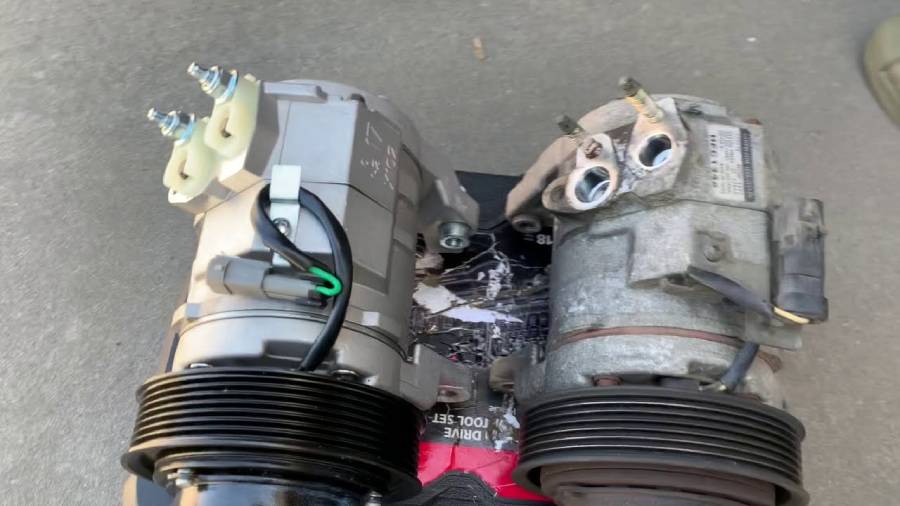
What Does the AC Compressor Do in a Dodge Ram 1500?
Why Is the AC Compressor Essential to the HVAC System?
The AC compressor is the component that powers the entire air conditioning system by compressing and circulating refrigerant through the HVAC system. Without sufficient refrigerant pressure, the system cannot transfer heat from the cabin to the outside air, preventing the air conditioner from producing cold air regardless of the condition of other components.
The compressor operates as the starting point of the refrigeration cycle. Once the driver activates the air conditioning system, the compressor clutch engages and the compressor pressurizes low-pressure refrigerant gas into high-pressure, high-temperature gas. This pressurized refrigerant then flows to the condenser, where heat is released before continuing through the remaining HVAC components.
Because the compressor continuously operates under high pressure and temperature, it is one of the most heavily stressed components in the Dodge Ram 1500 air conditioning system. Internal wear, inadequate lubrication, contaminated refrigerant, or moisture inside the system can gradually damage internal bearings, pistons, and valves. As wear progresses, compressor efficiency decreases until the system can no longer maintain adequate cooling performance.
Unlike minor HVAC components that can fail independently, compressor failure often affects the entire air conditioning system. Internal compressor damage may release metal particles into the refrigerant circuit, contaminating the condenser, expansion valve, receiver drier, and refrigerant lines. For this reason, replacing only the compressor without inspecting the rest of the system frequently results in repeated failures.
How Does the Compressor Work with the Condenser, Evaporator, and Expansion Valve?
The Dodge Ram 1500 air conditioning system functions as a closed refrigeration cycle in which every component depends on the compressor to circulate refrigerant. Each component performs a specific task that contributes to removing heat from the passenger cabin.
The process begins when the compressor draws low-pressure refrigerant vapor from the evaporator and compresses it into high-pressure gas. Increasing refrigerant pressure also raises its temperature, allowing the condenser to release heat efficiently as outside air passes across its cooling fins.
After leaving the condenser, the refrigerant changes into a high-pressure liquid before entering the receiver drier. The receiver drier filters contaminants, removes moisture, and stores excess refrigerant to ensure a stable supply throughout varying operating conditions. Moisture removal is particularly important because water inside the system can freeze, create corrosion, and reduce compressor lubrication.
The refrigerant then passes through the expansion valve or orifice tube, depending on the model year and HVAC configuration. This component rapidly reduces refrigerant pressure, causing its temperature to drop significantly before it enters the evaporator.
Inside the evaporator, the cold refrigerant absorbs heat from cabin air as the blower motor forces air across the evaporator fins. The refrigerant changes back into a low-pressure vapor before returning to the compressor, completing the refrigeration cycle. This continuous circulation enables the Dodge Ram 1500 to maintain consistent cabin cooling even during high ambient temperatures.
A failure anywhere in this refrigeration cycle reduces overall cooling performance, but compressor failure is typically the most significant because it interrupts refrigerant circulation throughout the entire system.
What Are the Symptoms of a Failing Dodge Ram 1500 AC Compressor?
Why Is the AC Blowing Warm Air?
Warm air from the dashboard vents is the most common symptom of a failing AC compressor. A worn or damaged compressor cannot generate sufficient refrigerant pressure, reducing the system’s ability to remove heat from the cabin.
Loss of cooling may develop gradually as compressor efficiency declines or occur suddenly after internal mechanical failure or compressor clutch malfunction. In many cases, drivers initially notice that the air conditioner cools properly while driving but becomes warm at idle because the weakened compressor cannot maintain adequate refrigerant pressure at lower engine speeds.
Warm air may also indicate related issues such as low refrigerant charge, refrigerant leaks, condenser blockage, or expansion valve malfunction. Measuring both high-side and low-side refrigerant pressures with a manifold gauge set is necessary before confirming compressor replacement.
Why Does the Compressor Make Grinding or Squealing Noises?
Grinding, rattling, knocking, or squealing noises often indicate internal compressor wear or bearing failure. These sounds develop when moving components inside the compressor lose lubrication or experience excessive friction.
As bearings deteriorate, metal components begin contacting each other under high rotational speeds. The resulting friction produces abnormal noises that typically become louder when the air conditioner engages. In severe cases, internal components may seize completely, preventing compressor operation and damaging the serpentine belt.
A compressor producing metallic grinding noises should be inspected immediately. Continued operation can scatter metal debris throughout the refrigerant system, increasing repair costs because additional components—including the condenser and expansion valve—may require replacement.
Why Is the Compressor Clutch Not Engaging?
A compressor clutch that does not engage prevents the compressor from operating, causing the air conditioner to stop producing cold air. The clutch connects the compressor pulley to the compressor shaft whenever cooling is requested.
Several conditions can prevent clutch engagement, including low refrigerant pressure, electrical faults, damaged clutch coils, blown fuses, faulty pressure switches, worn clutch assemblies, or internal compressor seizure. Because multiple electrical and mechanical faults produce identical symptoms, clutch operation should always be diagnosed before replacing the compressor.
A visual inspection can often identify clutch problems. If the pulley rotates continuously while the clutch plate remains stationary after the air conditioning is turned on, additional testing of the clutch circuit and refrigerant pressure is required.
How Do Refrigerant Leaks Affect Compressor Performance?
Refrigerant leaks reduce compressor efficiency by lowering system pressure and decreasing compressor lubrication. Unlike engine oil, compressor oil circulates together with the refrigerant. When refrigerant escapes through leaking hoses, seals, O-rings, or compressor shaft seals, compressor oil also leaves the system.
Insufficient lubrication increases internal friction, accelerates bearing wear, raises operating temperatures, and eventually causes compressor failure. Drivers may notice gradually decreasing cooling performance before complete compressor failure occurs.
Oil residue around refrigerant fittings, compressor housing, hose connections, or condenser joints frequently indicates refrigerant leakage. UV dye inspection or electronic leak detection equipment can accurately locate small leaks before replacement decisions are made.
What Does Metal Debris Inside the AC System Indicate?
Metal debris inside the refrigerant system is one of the strongest indicators of catastrophic compressor failure. Internal compressor components—including pistons, valves, bearings, and scroll assemblies—can generate metal particles as they wear or break apart.
Once circulating through the HVAC system, these particles contaminate the condenser, expansion valve, receiver drier, and refrigerant lines. Installing a new compressor without removing this contamination significantly increases the likelihood of immediate compressor failure because debris quickly enters the replacement unit.
When metal contamination is discovered, technicians typically perform a complete AC system flush where appropriate, replace the receiver drier, inspect or replace the expansion valve or orifice tube, and evaluate whether the condenser can be effectively cleaned or requires replacement. Completing these additional repairs helps restore system reliability and protects the new compressor from premature damage.
How Do You Diagnose a Bad AC Compressor Before Replacing It?
Replacing an AC compressor without confirming the root cause of the problem can lead to unnecessary repairs and additional expenses. A complete diagnosis should verify that the compressor itself has failed rather than another component within the air conditioning system. Inspecting the entire HVAC system helps identify refrigerant leaks, electrical faults, pressure abnormalities, and contamination before a replacement is performed.
How Do You Inspect the Compressor Visually?
A visual inspection is the first step in diagnosing a failing AC compressor. Many compressor problems produce visible signs that can be identified before specialized diagnostic equipment is used.
Begin by examining the compressor housing for oil stains, refrigerant residue, corrosion, cracked mounting ears, or damaged electrical connectors. Oil accumulation around the front shaft seal or hose fittings often indicates refrigerant leakage because compressor oil travels together with refrigerant throughout the system.
Next, inspect the compressor clutch and pulley assembly. Excessive rust, discoloration caused by overheating, worn friction surfaces, or loose pulley bearings may indicate clutch failure. Rotate the pulley by hand with the engine off. Rough movement, excessive resistance, or grinding noises usually suggest internal bearing damage.
The serpentine belt should also be inspected for glazing, cracking, uneven wear, or contamination from leaking compressor oil. A damaged belt may slip under load, reducing compressor performance and creating squealing noises that resemble compressor failure.
How Do You Measure AC System Pressure?
Measuring high-side and low-side refrigerant pressure is one of the most reliable methods for diagnosing compressor performance. Pressure readings reveal whether the compressor is creating the pressure differential required for proper refrigeration.
A manifold gauge set is connected to both service ports while the engine and air conditioning system operate under normal conditions. The low-pressure gauge measures refrigerant returning from the evaporator, while the high-pressure gauge measures refrigerant leaving the compressor.
If both pressure readings remain nearly equal after the compressor engages, the compressor may have internal valve damage or worn pistons that prevent adequate compression. Extremely low pressure often indicates insufficient refrigerant caused by a system leak, while abnormally high pressure may point to condenser airflow restrictions, overcharging, or blockages within the refrigeration circuit.
Pressure readings should always be interpreted together with ambient temperature, engine speed, and compressor cycling behavior. Diagnosing compressor failure based solely on pressure numbers without considering operating conditions may result in an incorrect repair.
How Do You Identify Compressor Clutch Failure?
The compressor clutch should engage immediately when the air conditioning system requests cooling. Failure to engage prevents the compressor from circulating refrigerant, even if the compressor itself remains mechanically functional.
With the engine running and the air conditioning switched to maximum cooling, observe the compressor clutch. The outer pulley rotates continuously with the serpentine belt, while the clutch plate should engage and rotate together with the pulley when the system activates.
If the clutch fails to engage, inspect the compressor clutch relay, fuse, pressure switch, wiring harness, and electrical connectors before condemning the compressor. Measuring voltage at the clutch connector confirms whether electrical power reaches the clutch coil. If proper voltage is present but the clutch remains disengaged, the clutch assembly or compressor may require replacement.
Repeated clutch cycling every few seconds may indicate low refrigerant charge, excessive system pressure, or a faulty pressure switch rather than compressor failure.
When Should Other HVAC Components Be Inspected?
The entire air conditioning system should be inspected whenever compressor replacement is being considered. A compressor often fails because another component created abnormal operating conditions rather than because of normal wear alone.
The condenser should be examined for impact damage, clogged cooling fins, corrosion, and internal restrictions. Reduced airflow across the condenser increases discharge pressure and places additional strain on the compressor during normal operation.
The receiver drier should be evaluated for moisture saturation and contamination. An old receiver drier loses its ability to remove moisture from refrigerant, allowing corrosion and acid formation that shorten compressor life.
Expansion valves or orifice tubes should also be inspected for debris and restrictions. Metal particles trapped inside these components frequently indicate internal compressor damage and help determine whether the refrigeration system requires flushing before installing a replacement compressor.
Inspecting refrigerant hoses, O-rings, pressure switches, electrical connectors, and evaporator performance completes a comprehensive diagnosis and reduces the likelihood of repeated air conditioning failures after the repair is completed.
What Tools and Parts Are Required for Dodge Ram 1500 AC Compressor Replacement?
Replacing an AC compressor requires more than a new compressor assembly. Using the correct replacement parts and specialized service equipment ensures proper installation, protects the new compressor, and restores long-term cooling performance. Attempting the repair without the necessary tools may damage the HVAC system or prevent accurate refrigerant servicing.
Which Replacement Parts Should Be Prepared?
Several components should be replaced together with the AC compressor to improve system reliability and prevent premature failure.
The replacement compressor is the primary component and should match the Dodge Ram 1500’s model year, engine configuration, refrigerant type, and factory specifications. Selecting an incompatible compressor may result in incorrect mounting dimensions, pulley alignment, or refrigerant capacity.
A new receiver drier or accumulator is commonly replaced during compressor service because its desiccant material absorbs moisture throughout the life of the system. Installing a new compressor with a saturated receiver drier increases the risk of internal corrosion and lubricant contamination.
New O-rings should be installed at every refrigerant connection that is disconnected during the repair. Reusing compressed or aged seals significantly increases the likelihood of refrigerant leaks after reassembly.
The correct PAG oil must also be added according to the compressor manufacturer’s specifications. Compressors are designed to operate with a specific oil viscosity and quantity. Overfilling or underfilling the compressor reduces lubrication and may shorten its service life.
If compressor failure released metal debris into the system, additional replacement parts may include the expansion valve or orifice tube, condenser, and refrigerant hoses depending on the level of contamination discovered during inspection.
Which Specialized AC Service Tools Are Required?
Air conditioning repairs require specialized tools that are not typically included in standard automotive tool kits.
A refrigerant recovery machine safely removes refrigerant before any refrigerant lines are disconnected. Releasing refrigerant directly into the atmosphere is prohibited in many regions and creates unnecessary environmental impact.
A manifold gauge set measures high-side and low-side system pressures during diagnosis, evacuation, and refrigerant charging. These pressure readings verify compressor operation and confirm proper system performance after installation.
A vacuum pump removes air and moisture from the HVAC system before refrigerant is added. Moisture left inside refrigerant lines can freeze, reduce cooling efficiency, create acid formation, and damage internal compressor components.
Additional tools commonly required include a serpentine belt removal tool, torque wrench, socket set, line disconnect tools, refrigerant scale, UV leak detection equipment, and an electronic leak detector for final system verification.
Which Safety Equipment Should Be Used?
Working on an automotive air conditioning system requires appropriate personal protective equipment because refrigerant is stored under high pressure and can cause serious injury if handled improperly.
Safety glasses protect the eyes from refrigerant discharge, flying debris, and accidental oil spray during line removal. Refrigerant expands rapidly when released and can cause severe frostbite upon skin contact.
Chemical-resistant gloves provide protection when handling refrigerant oil, contaminated components, and refrigerant fittings. Long sleeves are also recommended to reduce skin exposure during service.
The work area should remain well ventilated throughout the repair process. Although modern automotive refrigerants are generally nonflammable under normal conditions, refrigerant displacement in confined spaces may reduce oxygen concentration and create hazardous working conditions.
Following manufacturer service procedures, using approved refrigerant recovery equipment, and observing proper safety practices significantly reduce the risk of injury while ensuring the replacement is completed correctly.
How Do You Replace the AC Compressor on a Dodge Ram 1500?
Replacing the AC compressor requires careful preparation and the correct service procedure to prevent refrigerant contamination, compressor damage, and future system failures. The replacement process involves recovering refrigerant, removing the old compressor, preparing the new unit, evacuating the HVAC system, and recharging it with the correct refrigerant and lubricant. Skipping any of these steps can significantly shorten the lifespan of the new compressor.
How Do You Safely Recover Refrigerant?
Refrigerant must be completely recovered before any AC components are disconnected. Modern Dodge Ram 1500 models use refrigerants such as R-134a or R-1234yf, both of which remain under high pressure even when the engine is turned off.
A certified refrigerant recovery machine connects to the high-side and low-side service ports to remove refrigerant from the closed system. This process protects both the technician and the environment while complying with environmental regulations that prohibit venting refrigerant into the atmosphere.
After refrigerant recovery is complete, verify that the system contains no residual pressure before disconnecting any refrigerant lines. Opening a pressurized AC system may cause refrigerant and compressor oil to escape rapidly, creating a risk of frostbite and eye injury.
How Do You Remove the Serpentine Belt?
The serpentine belt must be removed to access the AC compressor pulley. Before loosening the belt, record the factory routing or photograph the belt path to simplify installation.
Use the appropriate belt tensioner tool or breaker bar to rotate the automatic tensioner and relieve belt tension. Carefully slide the belt off the compressor pulley before slowly releasing the tensioner.
Inspect the belt while it is removed. Cracks, glazing, frayed edges, or missing ribs indicate excessive wear. Replacing a worn serpentine belt during compressor service reduces the likelihood of future accessory drive problems and eliminates the need for additional labor later.
How Do You Disconnect Refrigerant Lines?
Disconnect the refrigerant lines carefully to prevent contamination from entering the HVAC system. Dirt, moisture, and metal particles introduced during service can circulate with refrigerant and damage the replacement compressor.
Remove the retaining bolts or spring-lock fittings according to the vehicle’s design. Once the lines are disconnected, immediately seal every open fitting using protective caps or clean plugs. This simple precaution prevents moisture from entering the refrigeration circuit while the compressor is being replaced.
Remove and discard the old O-rings at every connection point. Compressed or hardened seals frequently lose their ability to maintain an airtight connection and should never be reused.
How Do You Remove the Old Compressor?
The compressor can be removed after all electrical connections, refrigerant lines, and mounting bolts have been disconnected. Support the compressor during removal because the assembly is heavier than many vehicle owners expect.
Disconnect the electrical connector supplying the compressor clutch before removing the mounting bolts. Depending on the Dodge Ram 1500 model year and engine configuration, access may require removing engine covers, splash shields, or other nearby components.
After removing the compressor, inspect the drained compressor oil. Clean oil usually indicates normal wear, while gray, silver, or black oil containing metallic particles often confirms catastrophic internal compressor failure. Heavy contamination typically requires additional HVAC components to be cleaned or replaced before installing the new compressor.
How Do You Install the New Compressor?
The replacement compressor should be inspected and prepared before installation. Confirm that the mounting points, pulley diameter, clutch connector, and refrigerant ports match the original equipment.
Many replacement compressors are shipped with protective shipping oil or without the required operating oil quantity. Always follow the manufacturer’s instructions regarding oil draining, measuring, and refilling before installation.
Position the compressor onto its mounting bracket and install all mounting bolts by hand before tightening them evenly. Using the manufacturer’s specified torque values prevents housing distortion while ensuring the compressor remains securely mounted during engine operation.
Reconnect the refrigerant lines using new lubricated O-rings. Each fitting should seat squarely without excessive force to prevent future refrigerant leaks.
Reconnect the compressor clutch electrical connector and inspect nearby wiring to ensure it will not contact rotating components after the repair is completed.
How Do You Add the Correct PAG Oil?
Correct PAG oil quantity is essential for compressor lubrication and long-term reliability. Compressor oil circulates continuously with refrigerant and lubricates internal pistons, bearings, seals, and valves.
Too little oil increases friction and operating temperature, accelerating compressor wear. Excessive oil occupies space inside the refrigeration system that should contain refrigerant, reducing cooling efficiency and increasing compressor workload.
If additional components such as the condenser, receiver drier, or evaporator are replaced, the total oil quantity should be adjusted according to the manufacturer’s service specifications. Oil should never be estimated visually because even small deviations may affect compressor durability.
How Do You Evacuate the AC System?
The HVAC system must be evacuated before refrigerant is recharged. Evacuation removes air, moisture, and non-condensable gases that reduce cooling performance and damage internal components.
Connect a vacuum pump through the manifold gauge set and evacuate the system according to the service specifications for the vehicle. During evacuation, moisture trapped inside refrigerant lines boils at low pressure and is extracted from the system.
After the vacuum process is complete, isolate the gauges and observe the system for several minutes. If vacuum pressure rises, the system likely contains a leak that should be repaired before refrigerant is added. Performing this leak verification helps prevent refrigerant loss immediately after installation.
How Do You Recharge the Refrigerant?
Recharge the system with the exact refrigerant type and factory-specified refrigerant weight. Undercharging and overcharging both reduce cooling performance while increasing compressor workload.
Use an electronic refrigerant scale to measure the correct amount of refrigerant instead of estimating charge based on pressure readings alone. Charging by weight provides the most accurate method and ensures the HVAC system operates within its designed pressure range.
After charging is complete, start the engine and operate the air conditioning system at maximum cooling. Monitor high-side pressure, low-side pressure, vent outlet temperature, compressor cycling, and condenser fan operation to verify that the entire refrigeration cycle functions correctly.
How Do You Verify Proper AC Operation After Installation?
Final system verification confirms that the replacement compressor and the entire HVAC system are operating correctly. A successful repair should restore stable cooling performance without abnormal noises, refrigerant leaks, or pressure irregularities.
Measure vent outlet temperature after the system stabilizes under normal operating conditions. Cold, consistent airflow indicates that refrigerant circulation and heat exchange are functioning as intended.
Inspect every refrigerant connection using an electronic leak detector or UV dye if available. Even minor leaks can gradually reduce refrigerant charge and shorten compressor lifespan.
Listen for unusual compressor noises during idle and while increasing engine speed. The compressor should engage smoothly without rattling, grinding, or excessive vibration. Finally, perform a road test with the air conditioning operating under different engine loads to verify consistent cooling performance during real-world driving conditions.
Which Parts Should Be Replaced Together with the AC Compressor?
Replacing only the compressor is not always sufficient to restore long-term reliability. Several HVAC components experience the same operating conditions as the compressor and may contain contamination, moisture, or wear that can damage the replacement unit if left unchanged. Replacing these components during compressor service significantly reduces the risk of repeat failures.
Should the Receiver Drier Always Be Replaced?
The receiver drier should be replaced whenever the AC compressor is replaced on most Dodge Ram 1500 models. Its desiccant material absorbs moisture from the refrigerant, preventing corrosion and protecting compressor lubrication.
Over time, the desiccant becomes saturated and loses its ability to remove moisture. If the old receiver drier remains in service after compressor replacement, trapped moisture can mix with refrigerant and compressor oil to form corrosive acids that damage internal compressor components.
Replacing the receiver drier also removes accumulated debris captured by its internal filter, improving refrigerant cleanliness throughout the HVAC system.
Should the Expansion Valve or Orifice Tube Be Replaced?
The expansion valve or orifice tube should be inspected during every compressor replacement and replaced whenever contamination or restrictions are present.
These metering devices regulate refrigerant flow into the evaporator. Metal particles produced by compressor failure frequently become trapped inside their narrow passages, restricting refrigerant flow and reducing cooling efficiency.
A restricted expansion valve may cause poor cabin cooling, abnormal pressure readings, evaporator icing, or excessive compressor cycling. Because replacement costs are relatively low compared with the labor involved in reopening the HVAC system, many technicians replace these components as preventive maintenance during major compressor repairs.
When Should the Condenser Be Replaced?
The condenser should be replaced if it contains significant internal contamination or cannot be effectively flushed. Modern parallel-flow condensers used on many Dodge Ram 1500 models have extremely narrow internal passages that easily trap metal debris.
Unlike older tube-and-fin condensers, parallel-flow designs are difficult to clean completely after catastrophic compressor failure. Any remaining debris can circulate into the replacement compressor and cause immediate internal damage.
External condenser damage, bent cooling fins, corrosion, or refrigerant leaks are additional reasons to install a new condenser during compressor replacement.
Why Should the AC System Be Flushed?
Flushing the AC system removes compressor debris, degraded lubricant, and contaminants that remain inside refrigerant lines after compressor failure. A clean refrigeration circuit allows the replacement compressor to operate with uncontaminated refrigerant and proper lubrication.
Only components approved for flushing, such as refrigerant lines and certain evaporators, should undergo the flushing process. Compressors, receiver driers, expansion valves, and many parallel-flow condensers are typically replaced rather than flushed because contaminants cannot always be removed completely.
After flushing is complete, the system should be dried thoroughly using compressed nitrogen or another approved procedure before evacuation and refrigerant charging. Removing all traces of flushing solvent prevents chemical contamination that could compromise compressor lubrication and long-term system reliability.
How Much Does Dodge Ram 1500 AC Compressor Replacement Cost?
The average cost to replace an AC compressor on a Dodge Ram 1500 ranges from approximately $800 to $1,800, depending on the model year, engine configuration, labor rates, and the number of additional components replaced. Vehicles that require a complete AC system overhaul—including a new condenser, receiver drier, and expansion valve—typically fall toward the higher end of the price range.
How Much Does an OEM Compressor Cost?
An OEM AC compressor generally costs between $450 and $900 before labor. Original Equipment Manufacturer (OEM) compressors are designed specifically for the Dodge Ram 1500, ensuring compatibility with factory mounting points, pulley alignment, refrigerant capacity, and electrical connections.
OEM components typically provide consistent performance, lower installation risk, and manufacturer-backed warranties. Although they cost more than aftermarket alternatives, they often reduce the likelihood of fitment issues or premature failures, making them a preferred option for newer trucks or owners planning long-term vehicle ownership.
How Much Do Aftermarket Compressors Cost?
Aftermarket AC compressors usually cost between $250 and $700, depending on the manufacturer and product quality. Reputable aftermarket brands can provide reliable performance while reducing repair costs, but product quality varies significantly between manufacturers.
Premium aftermarket compressors are often manufactured to meet or exceed OEM specifications, while lower-cost options may use lower-grade bearings, seals, or clutch assemblies. Selecting a compressor from a well-established manufacturer with comprehensive warranty coverage helps reduce long-term repair risks.
Before purchasing an aftermarket compressor, verify compatibility with the truck’s engine, production year, refrigerant type, pulley configuration, and compressor clutch specifications.
How Much Is Professional Labor?
Professional labor for AC compressor replacement typically ranges from $300 to $800. Labor costs depend on local hourly rates, vehicle accessibility, and the amount of additional work required.
Some Dodge Ram 1500 engine configurations provide relatively straightforward compressor access, while others require removal of additional engine components before the compressor can be extracted. Labor charges also increase when the repair includes refrigerant recovery, system evacuation, refrigerant recharge, condenser replacement, or AC system flushing.
Most repair facilities also include diagnostic testing and final leak inspection as part of the labor cost, ensuring that the replacement compressor operates correctly before the vehicle is returned to the owner.
What Factors Affect the Final Repair Cost?
Several variables determine the total cost of replacing an AC compressor.
The model year is one of the largest factors because different Dodge Ram 1500 generations use different compressor designs, refrigerant types, and HVAC layouts. Trucks equipped with newer refrigerants or more complex climate control systems often require specialized equipment that increases service costs.
The condition of the existing air conditioning system also influences repair expenses. A compressor that fails without contaminating the system usually requires fewer replacement parts than a compressor that disperses metal debris throughout the refrigerant circuit.
Additional repairs such as replacing the condenser, receiver drier, expansion valve, pressure switches, serpentine belt, or refrigerant lines further increase the total repair cost. Geographic labor rates and parts availability also contribute to pricing differences between repair facilities.
Should You Replace the AC Compressor Yourself or Hire a Professional?
The best repair option depends on your mechanical experience, available equipment, and access to professional AC service tools. While experienced DIY mechanics can replace the physical compressor, refrigerant recovery and charging require specialized equipment that many vehicle owners do not possess.
When Is DIY Replacement Practical?
DIY replacement is most appropriate for owners with advanced automotive repair experience and access to proper AC service equipment. Successfully replacing an AC compressor requires knowledge of refrigerant handling procedures, torque specifications, HVAC diagnostics, vacuum evacuation, and refrigerant charging.
Experienced DIY mechanics may reduce labor costs by replacing the compressor, serpentine belt, and related components before having a repair facility recover and recharge the refrigerant. This approach combines cost savings with professional refrigerant servicing.
Even for experienced mechanics, consulting the factory service manual is recommended because mounting procedures, oil capacity, and refrigerant specifications vary between Dodge Ram 1500 model years.
When Is Professional Service the Better Choice?
Professional replacement is recommended whenever specialized AC equipment or advanced diagnostic experience is unavailable. Certified technicians have access to refrigerant recovery machines, electronic leak detectors, manifold gauges, vacuum pumps, and manufacturer service information that improve repair accuracy.
Professional repairs also reduce the likelihood of refrigerant contamination, incorrect oil quantity, refrigerant overcharging, or improper compressor installation. Many repair facilities provide labor warranties, offering additional protection if problems occur after the replacement.
Vehicles with catastrophic compressor failure, heavy system contamination, or multiple HVAC faults particularly benefit from professional diagnosis because additional damaged components can be identified before installation of the replacement compressor.
How Long Does a Dodge Ram 1500 AC Compressor Last?
A Dodge Ram 1500 AC compressor typically lasts between 8 and 15 years or approximately 100,000 to 150,000 miles under normal operating conditions. Actual service life depends on maintenance history, climate, refrigerant condition, and overall HVAC system health.
What Causes Premature Compressor Failure?
Several conditions accelerate compressor wear beyond normal service life.
Low refrigerant charge is one of the most common causes because refrigerant carries compressor oil throughout the system. Insufficient refrigerant reduces lubrication, increases internal friction, and raises operating temperatures.
Moisture contamination also shortens compressor life by creating corrosion and chemical reactions inside the refrigeration system. A saturated receiver drier, improperly evacuated system, or refrigerant leaks increase the likelihood of moisture-related damage.
Restricted condensers, clogged expansion valves, contaminated refrigerant, worn compressor clutches, and improper refrigerant charging all increase compressor workload and contribute to premature mechanical failure.
Ignoring early warning signs—including unusual noises, intermittent cooling, or refrigerant leaks—often allows minor issues to develop into complete compressor failure.
How Can You Extend Compressor Lifespan?
Routine HVAC maintenance significantly extends compressor service life.
Operate the air conditioning system periodically throughout the year, including during colder months. Regular operation circulates compressor oil, lubricates internal seals, and helps prevent seal shrinkage that may lead to refrigerant leaks.
Inspect the condenser regularly and remove dirt, insects, and debris that restrict airflow. Maintaining efficient condenser cooling reduces compressor operating pressure and mechanical stress.
Repair refrigerant leaks promptly instead of repeatedly adding refrigerant. A properly sealed system maintains correct refrigerant pressure, compressor lubrication, and cooling performance.
Following the manufacturer’s recommended refrigerant type, PAG oil specification, and service procedures also helps maximize compressor durability.
What Mistakes Should You Avoid During AC Compressor Replacement?
Why Is Incorrect Refrigerant Charging Harmful?
Incorrect refrigerant quantity is one of the most common causes of poor AC performance after compressor replacement. Undercharged systems produce insufficient cooling and inadequate compressor lubrication, while overcharged systems create excessive operating pressure that increases compressor workload.
Charging refrigerant by pressure alone rather than by the factory-specified weight often produces inaccurate results. Using an electronic refrigerant scale ensures the system contains the precise refrigerant charge required for efficient operation.
Why Should Contaminated PAG Oil Never Be Reused?
Old compressor oil should never be reused after compressor replacement. Used PAG oil may contain moisture, metal particles, carbon deposits, and degraded lubricant that rapidly damage the replacement compressor.
Fresh PAG oil matching the manufacturer’s specified viscosity provides proper lubrication for bearings, pistons, seals, and internal compressor components throughout the refrigeration cycle.
Why Is Skipping Vacuum Evacuation a Serious Mistake?
Failure to evacuate the HVAC system leaves moisture and air inside the refrigerant circuit. Moisture can freeze inside the expansion valve, reduce cooling efficiency, promote corrosion, and form acids that attack compressor components.
Air trapped inside the system also increases operating pressure, decreases heat transfer efficiency, and forces the compressor to work harder than intended. A complete vacuum evacuation removes these contaminants before refrigerant charging begins.
Why Should Compressor Mounting Bolts Be Torqued Correctly?
Compressor mounting bolts should always be tightened according to factory torque specifications. Uneven or excessive torque may distort the compressor housing, create pulley misalignment, or damage mounting brackets.
Proper bolt torque ensures the compressor remains securely positioned while minimizing vibration, belt wear, and unnecessary stress on refrigerant connections.
Frequently Asked Questions About Dodge Ram 1500 AC Compressor Replacement
Can You Drive With a Bad AC Compressor?
Yes, the truck can usually be driven if the compressor has failed but the serpentine belt remains intact and the compressor pulley rotates freely. However, continued operation may worsen internal damage, spread metal debris throughout the HVAC system, and increase repair costs. If the compressor has seized, the serpentine belt may fail, affecting other engine-driven accessories.
Can a Bad Compressor Damage Other AC Components?
Yes. Internal compressor failure can circulate metal particles through the condenser, receiver drier, expansion valve, evaporator, and refrigerant lines. This contamination frequently requires additional component replacement to prevent damage to the new compressor.
How Long Does AC Compressor Replacement Take?
Most professional repair facilities complete AC compressor replacement in 3 to 6 hours, depending on vehicle configuration and the extent of additional HVAC repairs. Repairs involving condenser replacement, system flushing, or extensive diagnostics may require additional time.
Does Replacing the Compressor Improve Fuel Economy?
Replacing a failed compressor does not directly increase fuel economy under normal driving conditions. However, a compressor operating correctly places the intended load on the engine, reduces unnecessary belt drag caused by failing bearings, and restores efficient HVAC operation.
How Often Should the AC System Be Serviced?
The air conditioning system should be inspected during routine vehicle maintenance and evaluated whenever cooling performance changes. Periodic inspections for refrigerant leaks, condenser condition, compressor operation, and belt wear help identify problems before they develop into expensive compressor failures.