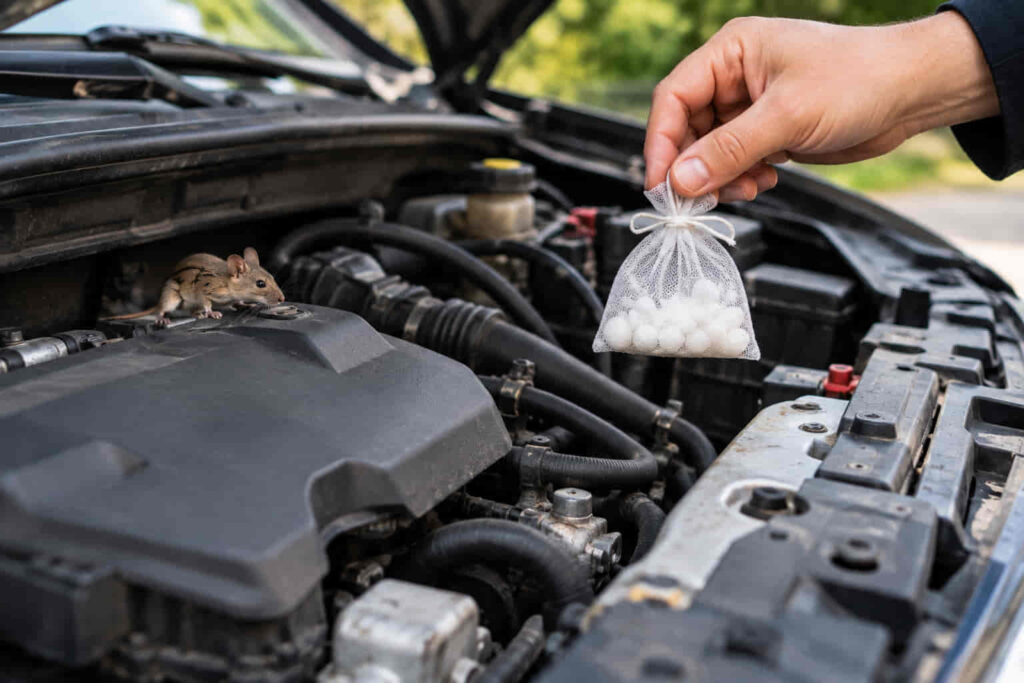
Keeping mice out of your car requires removing food sources, eliminating potential nesting areas, protecting vulnerable engine components, and reducing rodent access to your parking space. Mice enter vehicles because they provide sheltered spaces where rodents can hide, build nests, and find protection from predators and changing weather conditions. The engine compartment, HVAC system, cabin air filter housing, and areas beneath vehicle seats can become nesting locations, particularly when cars remain parked for extended periods near vegetation, garages, or areas with rodent activity.
Mice can cause significant vehicle damage by chewing electrical wiring, rubber hoses, insulation, and other accessible materials. Damaged wiring can interfere with engine sensors, lighting systems, and other electrical components, potentially resulting in warning lights, starting problems, or expensive repairs. Food crumbs, discarded wrappers, and nesting materials inside or around a vehicle can further increase the likelihood of rodent activity.
The most effective way to prevent mice from entering your car is to combine regular cleaning, proper parking practices, physical protection, and consistent vehicle inspections. This guide explains why mice enter vehicles, how to keep them away from the engine compartment, which deterrents are worth considering, and what to do if you discover signs of rodent infestation.
Why Do Mice Get Inside Cars?
Mice get inside cars because vehicles provide sheltered spaces, protection from predators, and opportunities to build nests near food sources. The engine compartment, HVAC housing, dashboard cavities, and areas beneath vehicle seats offer relatively enclosed environments where rodents can hide from outdoor conditions. Cars parked for extended periods near garages, vegetation, woodpiles, or buildings with rodent activity face a greater risk of infestation because mice can repeatedly access the same sheltered location without being disturbed.
Warmth is another factor that can make a recently operated vehicle attractive to rodents. After driving, the engine compartment retains residual heat as the engine and surrounding components gradually cool. During colder weather, mice may investigate sheltered areas around vehicles because these locations provide temporary protection from low outdoor temperatures. However, engine heat alone does not explain vehicle infestations. Rodents also seek protected nesting spaces, accessible food, and materials suitable for building nests. A vehicle parked in an area with an established mouse population may therefore attract rodents even when it is not recently driven.
Food crumbs and organic debris increase the likelihood of mice entering the passenger compartment. Small amounts of food left beneath seats, inside cup holders, or in door storage compartments can provide an accessible food source for rodents. Unsealed snacks, pet food containers, and discarded fast-food packaging are particularly problematic because their odors and remaining food particles can attract mice. Even when a vehicle contains no visible food, surrounding conditions such as accessible garbage bins, birdseed, pet food, and accumulated vegetation can support a nearby rodent population that eventually explores parked vehicles.
Nesting materials also contribute to vehicle infestations. Mice collect soft materials such as paper, fabric, insulation, and other accessible debris to construct sheltered nests. The engine compartment can contain sound insulation, wiring coverings, and other materials that rodents may chew or incorporate into nesting structures. Once mice discover a suitable location, they may repeatedly return to it, especially when the surrounding environment provides consistent shelter and limited disturbance.
Vehicle parking conditions strongly influence the likelihood of rodent access. Cars parked beside tall grass, dense shrubs, outdoor storage areas, or cluttered garages are generally more exposed to nearby rodent activity than vehicles parked in clean, regularly inspected spaces. Mice can approach vehicles through accessible openings around the underbody, wheel areas, and ventilation intake pathways. Because rodents can squeeze through surprisingly small openings, simply keeping the doors and windows closed does not guarantee that the vehicle is protected. Reducing nearby nesting opportunities and maintaining a clean parking environment are therefore important parts of preventing mice from entering cars.
How Do You Keep Mice Out of Your Car?
The most effective way to keep mice out of your car is to eliminate food attractants, remove nesting opportunities, improve parking conditions, and protect vulnerable vehicle components from rodent access. No single deterrent provides complete protection because mice can adapt to different environments and return to locations that offer reliable shelter. Combining regular vehicle cleaning, engine compartment inspections, physical protection, and appropriate rodent control creates a more effective prevention strategy.
Keeping the passenger compartment free of food is one of the simplest ways to reduce rodent attraction. Food crumbs, snack wrappers, spilled drinks, and pet food residues can provide mice with an accessible food source. Cleaning beneath seats, inside cup holders, and around floor mats removes material that might otherwise attract rodents. Drivers who regularly eat inside their vehicles should vacuum the interior and remove food packaging rather than leaving it overnight. Storing snacks in sealed containers outside the vehicle also reduces the possibility of food odors attracting mice.
Maintaining a clean engine compartment helps eliminate nesting opportunities before rodents establish a permanent hiding place. Leaves, paper, grass, and other debris can accumulate around the engine bay, particularly when vehicles are parked beneath trees or near vegetation. These materials provide potential nesting resources and can conceal early signs of rodent activity. Regularly inspecting accessible engine compartment areas and removing loose debris helps maintain a less attractive environment. Cleaning should be performed with the engine switched off and sufficiently cooled to avoid contact with hot components or moving machinery.
Choosing an appropriate parking location is another important preventive measure. Parking on a clean paved surface away from tall grass, dense shrubs, woodpiles, and outdoor garbage storage reduces the number of nearby places where mice can hide. An enclosed garage can provide additional protection when it is maintained properly and does not contain active rodent nests or accessible food. However, a cluttered garage with cardboard boxes, stored pet food, and accumulated debris may provide ideal nesting conditions. Keeping the parking area organized and inspecting it regularly helps reduce rodent activity around the vehicle.
Reducing access to potential entry points can further protect the vehicle. Mice can enter through openings around ventilation pathways, damaged seals, and other accessible gaps, depending on the vehicle’s design. Owners should inspect visible weatherstripping, damaged underbody panels, and accessible intake screens for deterioration. Any repair must preserve the original ventilation, drainage, and cooling functions of the vehicle. Blocking essential openings with improvised materials can create additional problems, including restricted airflow, trapped moisture, and interference with vehicle components.
Protecting electrical wiring is particularly important because mice can chew through insulation around automotive wires. Installing automotive-rated protective sleeves, wire loom, or suitable rodent-resistant protective tape can reduce direct access to vulnerable wiring harnesses. These materials should be compatible with engine compartment temperatures, fluids, and electrical requirements. Owners should also inspect accessible wiring for bite marks, exposed conductors, or damaged insulation. If existing wiring has been chewed, a qualified automotive technician should assess the damage before the vehicle is operated.
Rodent deterrents can provide an additional layer of protection when used alongside environmental control. Commercial rodent repellents, peppermint-based products, and ultrasonic devices are frequently marketed for vehicle protection, but their effectiveness varies. Peppermint oil may produce an odor that rodents initially avoid, yet its scent fades and does not reliably prevent mice from returning. Ultrasonic devices also have limitations because their performance depends on device placement, vehicle construction, and whether rodents can access alternative nesting locations. These products should therefore supplement cleaning, physical protection, and rodent control rather than replace them.
Regular vehicle inspections help identify early rodent activity before extensive damage occurs. Checking the engine compartment, cabin air filter housing, and areas beneath the seats can reveal droppings, shredded materials, unusual odors, or damaged insulation. These signs indicate that mice may already be using the vehicle as a nesting location. Early detection makes it easier to address the infestation before rodents damage electrical wiring, HVAC components, or other essential vehicle systems.
Consistent prevention is more reliable than depending on a single mouse repellent or occasional cleaning session. Removing food sources, maintaining a clean parking area, protecting wiring, and inspecting the vehicle regularly address the main conditions that allow rodents to establish themselves inside cars. Owners who park in areas with frequent rodent activity should combine these practices with appropriate trapping or professional pest control when necessary.
How Do You Keep Mice Out of Your Car Engine?
You can keep mice out of your car engine by removing nesting materials, inspecting potential entry points, protecting vulnerable engine components, and reducing rodent activity around the parking area. The engine compartment provides several sheltered spaces where mice can hide, particularly around the battery, engine insulation, wiring harnesses, and areas beneath plastic engine covers. Vehicles parked for extended periods near garages, shrubs, or wooded areas are particularly exposed because rodents can repeatedly access the same sheltered environment without frequent disturbance.
Keeping the engine compartment clean is an important first step in preventing mice from nesting. Leaves, grass, paper, and other loose materials can accumulate around the engine bay and provide potential nesting resources. Mice may also chew existing insulation and soft protective materials to create suitable nesting spaces. Owners should inspect accessible areas around the battery, firewall, air intake, and engine covers for shredded materials, droppings, and other signs of rodent activity. Removing accessible debris reduces nesting opportunities, although cleaning alone cannot prevent rodents from entering an otherwise attractive vehicle.
Inspecting potential entry points helps identify areas that allow rodents to access the engine compartment. Mice can exploit openings around damaged underbody covers, deteriorated seals, and vehicle ventilation pathways. The exact access points vary according to vehicle design because modern cars contain numerous openings required for cooling, drainage, ventilation, and mechanical operation. Damaged protective panels and deteriorated rubber seals should be repaired using manufacturer-approved components. Owners should never block essential ventilation openings, drainage passages, or cooling pathways to prevent mice from entering, because doing so can interfere with vehicle operation and create additional mechanical problems.
Parking conditions also influence the likelihood of mice entering the engine compartment. Parking on clean concrete or asphalt away from tall grass, woodpiles, and dense vegetation reduces the number of nearby hiding places. A garage can provide additional protection when it is free from rodent activity, food sources, and accumulated nesting materials. However, parking inside an infested garage does not eliminate the risk. Removing cardboard storage, sealing accessible food containers, and controlling rodent populations around the parking area help reduce the likelihood that mice will investigate the vehicle.
Automotive rodent deterrents can supplement these preventive measures when applied appropriately. Commercial engine compartment repellents are designed to discourage rodents from chewing or nesting around protected components. Some products use odor-based ingredients, while others incorporate specialized protective coatings or materials. However, repellents differ in effectiveness, and their performance can decline as odors dissipate or environmental conditions change. Products must be suitable for automotive engine compartments because underhood temperatures, electrical connections, rubber materials, and moving components create specific safety requirements. A rodent repellent should complement physical protection and environmental control rather than serve as the only defense against mice.
Regular engine compartment inspections help detect early infestation before rodents damage critical components. Fresh droppings, shredded insulation, nesting materials, unusual odors, and visible bite marks can indicate that mice have entered the engine bay. If a nest is discovered near electrical wiring, the battery, cooling components, or moving engine parts, owners should avoid starting the vehicle until the area has been inspected. A qualified technician can identify hidden nesting materials, assess potential wiring damage, and determine whether the vehicle is safe to operate.
How Can You Protect Car Wires From Mice?
You can protect car wires from mice by installing automotive-rated protective sleeves, using suitable rodent-resistant wiring tape, inspecting vulnerable wiring harnesses, and reducing rodent access to the engine compartment. Mice chew electrical wire insulation because their continuously growing incisors require regular gnawing to maintain their length. Automotive wiring can become a target when rodents explore sheltered engine compartments or search for nesting materials. Damaged insulation exposes electrical conductors to moisture, heat, vibration, and contact with other components, potentially causing electrical malfunctions or short circuits.
Automotive wire loom and protective sleeves provide a physical barrier between rodent teeth and vulnerable electrical insulation. These products cover wiring harnesses with additional protective material designed to withstand engine compartment conditions. Split-loom tubing, braided protective sleeves, and specialized automotive conduit can reduce direct access to wiring, particularly around exposed harness sections. The selected material must tolerate underhood temperatures, engine fluids, vibration, and contact with surrounding components. Protective sleeves should also be installed without interfering with connectors, moving parts, cooling systems, or the vehicle manufacturer’s original wiring arrangement.
Rodent-resistant electrical tape provides another layer of protection for selected wiring applications. Certain automotive tapes incorporate materials or coatings designed to discourage rodent chewing while maintaining electrical insulation. These products can be useful around vulnerable harness sections, but ordinary household electrical tape is not an equivalent substitute. Automotive wiring protection requires materials rated for the relevant temperature range and operating environment. Incorrect tape or adhesive can deteriorate under engine heat, loosen over time, or leave exposed sections vulnerable to further chewing. Owners should follow the product manufacturer’s installation instructions and vehicle service recommendations.
Inspecting wiring harnesses regularly helps identify damage before it develops into a more serious electrical problem. Visible bite marks, missing insulation, exposed copper conductors, and loose wiring coverings indicate that rodents may have chewed through protective materials. Drivers may also notice warning lights, malfunctioning sensors, intermittent electrical failures, or difficulty starting the engine when damaged wiring affects essential circuits. These symptoms are not exclusive to rodent damage, so a technician should inspect the affected electrical system and use appropriate diagnostic equipment to identify the actual fault.
Chewed automotive wiring should be repaired properly rather than covered with tape without evaluating the underlying damage. When a mouse exposes or severs electrical conductors, the damaged section may require replacement, an approved wiring repair, or replacement of an entire harness depending on its location and severity. Modern vehicles contain interconnected electronic control systems, so incorrect wire connections can create additional faults or interfere with safety-related components. A qualified automotive technician can identify the affected circuits, restore the correct electrical connections, and verify that the repaired system operates according to manufacturer specifications.
Protecting electrical wiring also requires addressing the rodent activity responsible for the damage. Installing protective sleeves will not prevent mice from entering the engine compartment if food sources, nesting materials, and nearby rodent populations remain uncontrolled. Combining wiring protection with regular engine bay inspections, clean parking conditions, and appropriate rodent management provides a more comprehensive solution. Physical wiring protection reduces the risk of direct chewing damage, while environmental prevention reduces the likelihood that rodents will return and attack other vehicle components.
Read more: car ac smells like vinegar
Do Peppermint Oil and Other Repellents Keep Mice Away From Cars?
Peppermint oil and other rodent repellents may temporarily discourage mice from approaching certain areas of a vehicle, but they are not reliable methods for preventing car infestations. Peppermint oil, essential oils, commercial repellent sprays, and ultrasonic devices are commonly marketed as solutions for keeping mice away from engine compartments and vehicle interiors. However, evidence supporting their long-term effectiveness is limited. Effective rodent prevention depends more heavily on eliminating food sources, reducing nesting opportunities, protecting vulnerable components, and controlling rodent access to the parking environment.
Peppermint oil is popular because its strong smell is unpleasant to some rodents. Vehicle owners often apply peppermint-based products to cotton balls or other materials and place them near potential nesting areas. Although certain odors can temporarily influence rodent behavior, peppermint oil evaporates relatively quickly, reducing its concentration over time. Mice may also become accustomed to unfamiliar odors, particularly when the surrounding environment provides reliable shelter and food. North Carolina State University Extension identifies peppermint oil and similar odor-based products as unreliable methods of mouse management because volatile compounds disappear quickly after application. NC State Extension Publications+1
Commercial rodent repellent sprays provide another option for protecting vulnerable vehicle components. Some products are formulated to discourage chewing on electrical wiring, rubber hoses, and plastic insulation. Unlike general fragrance products, automotive rodent repellents may contain ingredients designed specifically for application to exposed materials. However, their effectiveness depends on the formulation, application frequency, environmental conditions, and product instructions. Owners should select products explicitly labeled for automotive use and avoid spraying chemicals onto hot engine components, electrical connectors, belts, or moving parts. A repellent should be considered supplementary protection rather than a substitute for inspecting and protecting vehicle wiring.
Ultrasonic mouse repellents use high-frequency sound waves that are intended to discourage rodents from occupying a particular area. Some automotive devices connect to the vehicle’s electrical system and operate while the car is parked. Although these products are marketed as a convenient way to protect engine compartments, scientific evidence does not establish that commercial ultrasonic devices reliably eliminate or prevent established mouse infestations. The University of California Statewide Integrated Pest Management Program explains that ultrasound has limited usefulness because sound waves are directional, lose intensity with distance, and do not travel effectively behind physical obstacles. Mice can also become accustomed to repeated sounds. UC IPM+1
Physical protection and environmental control are more dependable than relying exclusively on peppermint oil or electronic repellents. Keeping the vehicle clean, reducing nearby nesting opportunities, installing appropriate wire protection, and managing rodent activity around the parking area address the conditions that allow mice to establish themselves. Repellents may be used as an additional measure when suitable for the vehicle, but they should not replace these preventive practices. Owners dealing with recurring infestations should consider properly positioned traps or professional pest control rather than repeatedly applying products that only temporarily mask or discourage rodent activity.
Where Do Mice Hide Inside Cars?
Mice commonly hide in dark, sheltered, and relatively undisturbed areas of vehicles, including the engine compartment, cabin air filter housing, HVAC ducts, dashboard cavities, and spaces beneath seats. These locations provide protection from predators and weather while offering access to materials that rodents can use for nesting. Vehicles parked for extended periods are particularly vulnerable because mice can occupy enclosed spaces without frequent disturbance. The exact nesting location depends on vehicle design, available entry points, and the surrounding rodent population.
The engine compartment is one of the most important places to inspect because it contains sheltered spaces around the battery, engine insulation, firewall, and air intake assembly. Mice may collect leaves, grass, paper, and shredded insulation to construct nests beneath engine covers or around protected wiring harnesses. According to automotive guidance from AAA, rodents may also hide near engine air filters and inside insulation surrounding electrical components. Finding nesting material in these areas indicates that the vehicle should be inspected for damaged wires, hoses, and other components before normal operation continues.
The HVAC system and cabin air filter housing provide additional hiding places because they connect the exterior air intake to the passenger compartment. Mice can enter through accessible ventilation pathways and build nests around air filtration components or inside connected ductwork. A contaminated cabin air filter may contain shredded nesting material, droppings, and other evidence of rodent activity. Drivers may also notice unpleasant odors when the blower motor starts because airflow can carry contaminants from affected HVAC components into the cabin. If rodents have entered the ventilation system, replacing the cabin filter alone may not eliminate the infestation because nesting material can remain deeper inside the ducts.
The passenger compartment contains several concealed spaces where mice can build nests without being immediately visible. Areas beneath seats, inside glove compartments, behind dashboard panels, and within headliner insulation can provide protected nesting locations. The trunk and spare tire compartment are also vulnerable because they often remain undisturbed for long periods. A rodent nest in these locations may contain shredded paper, fabric, foam, insulation, and other soft materials. Regularly inspecting storage compartments and removing unnecessary clutter makes it easier to identify early rodent activity before extensive contamination develops.
Finding mouse droppings, shredded materials, or unusual odors in multiple vehicle locations may indicate an established infestation rather than a single rodent entering accidentally. Owners should inspect the engine compartment, air filter housing, HVAC intake, passenger cabin, and trunk to identify the full extent of the problem. Rodent contamination requires careful handling because droppings, urine, and nesting materials can carry infectious agents. The Centers for Disease Control and Prevention (CDC) advises against sweeping or vacuuming rodent waste before disinfection because disturbing contaminated material can release particles into the air. Extensive contamination inside HVAC ducts or inaccessible vehicle cavities should be evaluated by qualified professionals.
What Are the Signs That Mice Are Living in Your Car?
The most common signs that mice are living in your car include mouse droppings, shredded nesting materials, chewed electrical wiring, unusual odors, and scratching sounds. These indicators suggest that rodents have entered the vehicle and may be using the engine compartment, HVAC housing, passenger cabin, or trunk as nesting locations. Recognizing these signs early helps prevent additional damage to electrical systems, ventilation components, and vehicle insulation.
Mouse droppings are among the clearest indicators of rodent activity. They are typically small, dark, and elongated, often appearing near food storage areas, under seats, inside glove compartments, or around the engine compartment. Fresh droppings may indicate recent activity, while older droppings can suggest a previous infestation. However, droppings should never be handled directly because rodent waste can contain infectious organisms. The CDC recommends treating rodent contamination as a potential health hazard and following appropriate disinfection procedures rather than sweeping or vacuuming dry waste.
Shredded paper, grass, fabric, insulation, and other soft materials can indicate that mice have constructed a nest inside the vehicle. These materials may accumulate beneath engine covers, near the battery, inside the cabin air filter housing, or beneath passenger seats. A nest can also contain food fragments, droppings, and other debris collected by rodents. Finding concentrated piles of shredded material in a sheltered vehicle compartment is a stronger indication of nesting activity than finding a single loose piece of paper or vegetation.
Visible damage to electrical wiring and rubber components is another important warning sign. Mice chew through wire insulation, plastic coverings, rubber hoses, and other accessible materials while exploring their environment and maintaining their continuously growing incisors. Damaged wiring can cause warning lights, malfunctioning sensors, intermittent electrical problems, and difficulty starting the engine. In severe cases, exposed electrical conductors can create short circuits or other electrical hazards. Any suspected wiring damage should be inspected by a qualified automotive technician before the vehicle is driven.
Unusual odors can also indicate rodent activity, particularly when nesting materials or droppings accumulate inside the HVAC system. A persistent musty or decomposing smell may originate from contaminated cabin air filters, ventilation ducts, or concealed areas beneath the dashboard. Drivers may also hear scratching, rustling, or movement sounds when the vehicle is parked overnight or when the ventilation blower starts. These noises can indicate that rodents are moving inside enclosed vehicle spaces, although other mechanical sources should also be considered.
Multiple signs appearing together indicate a stronger likelihood of an active rodent infestation. For example, droppings near the engine bay combined with shredded insulation and chewed wiring suggest that mice may have established a nest rather than simply passing through the vehicle. Owners should inspect accessible vehicle areas carefully and arrange professional assessment when evidence appears inside HVAC ducts, dashboard cavities, or other difficult-to-reach components. Early identification allows the infestation and associated damage to be addressed before repair costs increase.
What Should You Do If You Find Mice in Your Car?
If you find mice in your car, you should inspect the vehicle for nesting materials, remove rodent contamination safely, check for mechanical damage, and eliminate the conditions that attracted the rodents. Mice can contaminate the passenger compartment, damage electrical wiring, and build nests inside the engine compartment or HVAC system. Ignoring an infestation can allow rodents to reproduce and cause additional damage, particularly when the vehicle remains parked in the same location for extended periods.
The first step is to determine whether the mice are still inside the vehicle and identify the areas they have occupied. Park the vehicle in a well-ventilated location and open the hood, doors, and trunk to allow the vehicle to air out for approximately 20 minutes. Before inspecting the engine compartment, wear plastic or rubber gloves and long-sleeved clothing. The CDC recommends disconnecting the battery cables before inspecting contaminated engine compartment areas to reduce electrical hazards. If you discover nesting materials near moving engine components, electrical connections, or the air intake, avoid starting the vehicle until the affected areas have been assessed. CDC+1
Cleaning mouse droppings, urine, and nesting materials requires a wet disinfection method rather than ordinary vacuuming or sweeping. Rodent waste can contain infectious organisms, and disturbing dry contamination can release potentially harmful particles into the air. The CDC recommends spraying contaminated materials with an appropriate household disinfectant until thoroughly wet and allowing the product to remain for at least five minutes or according to its label instructions. Use paper towels to collect the contaminated materials and dispose of them in a sealed garbage bag. After removing the waste, disinfect the affected hard surfaces and wash your hands thoroughly after removing protective gloves. CDC+1
The HVAC system requires additional attention when mice have entered the ventilation intake or cabin air filter housing. Nesting materials can become trapped around the cabin filter, blower assembly, and ventilation ducts, allowing contamination to circulate through the passenger compartment. If nesting material is found inside the air intake, the CDC recommends removing the contaminated material and replacing the affected air filter. Extensive contamination inside HVAC ductwork should be handled by a professional rodent control or automotive cleaning service because improper cleaning can spread contaminated particles through the ventilation system. CDC+1
Mechanical inspection is essential after removing visible rodent contamination. Mice may have chewed wiring insulation, rubber hoses, plastic connectors, and engine compartment insulation while building their nests. Damaged electrical conductors can cause warning lights, malfunctioning sensors, intermittent starting problems, and short circuits. A qualified automotive technician should inspect affected wiring harnesses, hoses, connectors, and ventilation components before the vehicle returns to normal operation. If a critical electrical or fuel-related component has been damaged, the repair should be completed before driving the vehicle.
Preventing another infestation requires removing the rodents’ access to food, shelter, and nesting opportunities around the vehicle. Keep food packaging and crumbs out of the cabin, remove accumulated debris from the engine compartment, and maintain a clean parking area. When rodent activity continues around the garage or parking space, appropriately positioned snap traps and professional pest control can help reduce the surrounding population. Traps and bait must remain inaccessible to children and pets, and any pesticide or rodenticide must be used according to its label. The CDC identifies food removal and appropriate rodent control as important measures for preventing future vehicle infestations.
How Much Does It Cost to Repair Car Damage Caused by Mice?
Repairing car damage caused by mice can cost anywhere from approximately $100 to several thousand dollars, depending on the damaged components, the extent of the infestation, and the labor required. Minor repairs, such as replacing a contaminated cabin air filter or repairing a small section of damaged wiring, generally cost less than replacing an entire wiring harness or repairing an extensively contaminated HVAC system. The total expense also depends on the vehicle’s make, model, electrical architecture, and availability of replacement components.
Replacing a cabin air filter contaminated by mice is usually one of the less expensive repairs. The filter itself may cost approximately $15–$50, while professional replacement can bring the total service cost to around $35–$100. However, replacing the filter does not resolve contamination inside the blower housing or ventilation ducts. If mice have carried nesting materials deeper into the HVAC system, additional cleaning and inspection may be necessary. The repair cost increases when technicians must remove interior panels or access concealed ventilation components.
Wiring repairs can become significantly more expensive because modern vehicles contain complex electrical systems connecting sensors, control modules, lighting, and engine management components. A small damaged wire may require a localized repair, while extensive chewing can necessitate replacement of a larger wiring harness. Minor wiring repairs may cost approximately $100–$300, whereas major harness replacement can exceed $1,000 depending on vehicle design and labor requirements. If rodents damage connectors, electronic control modules, or multiple electrical circuits, diagnostic and replacement costs can increase further.
The cost increases when rodents damage multiple vehicle systems or contaminate areas that require extensive disassembly. For example, a nest inside the HVAC housing may require removal of contaminated materials, cleaning of ventilation components, and cabin air filter replacement. Damage involving rubber hoses, engine insulation, or other mechanical components can add parts and labor expenses. Severe infestations may therefore require several separate repairs rather than a single replacement component.
According to AAA, rodent damage repairs can range from a few hundred dollars to several thousand dollars, depending on the affected components. Consumer Reports also warns that replacing a damaged engine wiring harness can cost thousands of dollars, making early detection particularly important. AAA+1
Comprehensive auto insurance may cover vehicle damage caused by mice, but coverage depends on the individual policy and deductible. In the United States, comprehensive coverage generally includes non-collision damage caused by animals, including rodents chewing electrical wiring, hoses, and insulation. Liability-only and collision-only coverage generally do not provide the same protection. Owners should compare the repair estimate with their comprehensive deductible before filing a claim. For example, paying for a $250 wiring repair out of pocket may be more practical than submitting a claim when the deductible is $500. AAA+1
Before authorizing repairs, request an itemized estimate that separates diagnostic labor, wiring repairs, replacement components, and additional cleaning services. If a repair shop recommends replacing an entire wiring harness, ask whether the damaged section can be repaired safely according to the manufacturer’s procedures. A second professional opinion can help prevent unnecessary component replacement, particularly when the visible damage appears limited.