Replacing a Hyundai cabin air filter is a straightforward maintenance task that most vehicle owners can complete in 5–15 minutes without professional assistance. In many Hyundai models, including the Elantra, Sonata, Tucson, and Santa Fe, the cabin air filter sits behind the glove box and can be accessed without specialized tools. The exact removal procedure depends on the vehicle’s model and production year.
The cabin air filter removes dust, pollen, and other airborne particles from the air entering the passenger compartment through the heating, ventilation, and air conditioning (HVAC) system. A clogged filter restricts airflow, reduces ventilation performance, and may contribute to unpleasant odors inside the vehicle. Replacing it helps restore proper airflow and maintain effective cabin air filtration.
To replace a Hyundai cabin air filter, open the glove box, access the filter housing, remove the old filter, and install a compatible replacement in the correct orientation. Secure the housing cover and reassemble the glove box before testing the ventilation system.
This guide explains the complete Hyundai cabin air filter replacement process, including filter location, required tools, installation direction, model-specific differences, replacement intervals, and typical costs.
Where Is the Cabin Air Filter Located in a Hyundai?
The cabin air filter in most Hyundai vehicles is located behind the passenger-side glove box, inside the heating, ventilation, and air conditioning (HVAC) system housing. This location allows the filter to capture dust, pollen, and other airborne particles before air enters the passenger compartment through the dashboard vents.
Hyundai models such as the Elantra, Sonata, Tucson, Santa Fe, Kona, and Palisade commonly use a glove box access design. To locate the filter, open the glove box and look for the rectangular filter housing behind it. Depending on the model and production year, you may need to release the glove box side stops, disconnect a damper arm, or lower the glove box to expose the filter compartment.
The filter housing typically has a removable plastic cover secured by clips or retaining tabs. Behind this cover is a rectangular, pleated cabin air filter that slides into a dedicated compartment. The filter’s dimensions, housing design, and access mechanism vary between Hyundai models, making vehicle-specific compatibility important.
For example, many Hyundai Tucson and Elantra models allow access by lowering the glove box and removing the filter housing cover. However, the exact retaining mechanisms differ across generations. Check the owner’s manual for your vehicle’s model year before applying force to plastic components.
What Tools Do You Need to Replace a Hyundai Cabin Air Filter?
Most Hyundai cabin air filter replacements require only a compatible replacement filter and basic access to the glove box. Many models use tool-free retaining clips, allowing owners to remove and install the filter by hand. Other models may require a screwdriver or trim removal tool to release specific fasteners.
The following items are useful for the replacement process:
- Replacement cabin air filter: Select a filter that matches your Hyundai’s model, production year, and filter housing dimensions.
- Phillips-head screwdriver: Use it when the glove box or filter access panel has screws that must be removed.
- Plastic trim removal tool: Helps release certain plastic retaining clips without scratching surrounding interior panels.
- Flashlight: Illuminates the filter housing and retaining tabs behind the glove box.
- Microfiber cloth or small vacuum: Removes loose dust and debris around the filter compartment before installation.
A standard particulate cabin air filter is suitable for capturing dust and pollen, while an activated carbon filter adds media designed to adsorb certain odors and gaseous contaminants. Both options must match the vehicle’s filter specifications.
Before beginning, park the vehicle safely, switch off the engine and HVAC system, and empty the glove box. Confirm the replacement filter’s compatibility using the owner’s manual, Hyundai parts information, or a reliable vehicle-specific fitment catalog. This preparation helps prevent incorrect installation and damage to the glove box retaining components.
How Do You Replace a Hyundai Cabin Air Filter Step by Step?
To replace a Hyundai cabin air filter, lower the glove box, open the filter housing, remove the old filter, and install a compatible replacement in the correct airflow direction. Most Hyundai models with glove box access allow owners to complete this procedure in approximately 5–15 minutes. However, glove box retaining mechanisms and filter housing designs vary by model and production year.
The replacement process involves four main steps: accessing the filter compartment, removing the existing filter, identifying the correct airflow direction, and installing the new filter. Follow the vehicle’s owner’s manual when its instructions differ from the general procedure below.
How Do You Access the Hyundai Cabin Air Filter?
Access the Hyundai cabin air filter by opening the passenger-side glove box and lowering it to expose the HVAC filter housing. In many Hyundai vehicles, the glove box is held in place by side stops, retaining tabs, or a damper arm that controls how quickly the compartment opens.
Start by removing all items from the glove box to prevent them from falling during removal. Open the compartment fully and inspect both sides for retaining stops. On models with removable stops, release them according to the vehicle’s instructions. If the glove box has a damper arm, carefully disconnect it from its mounting point before lowering the compartment.
Once the glove box is lowered, locate the rectangular cabin air filter housing behind the dashboard. The housing typically has a narrow plastic access cover secured by clips or tabs. Release the retaining mechanism and remove the cover to expose the filter. Avoid forcing plastic components because their design and release direction differ between Hyundai generations.
How Do You Remove the Old Hyundai Cabin Air Filter?
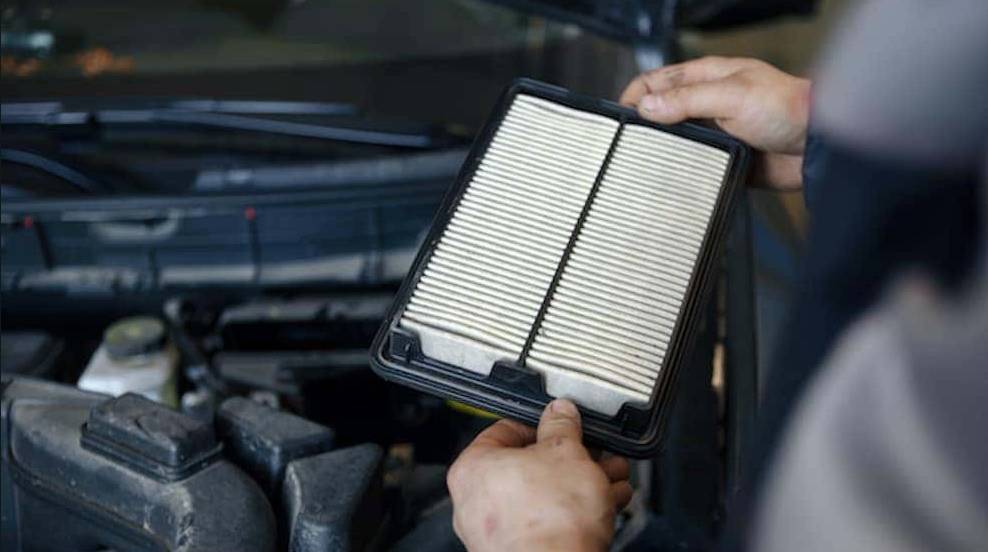
Remove the old Hyundai cabin air filter by sliding it straight out of the HVAC housing while keeping accumulated debris from falling into the ventilation system. The filter normally fits inside a rectangular compartment and can be removed by gripping its exposed edge.
Before removing the filter completely, check its orientation and note any airflow arrow or installation marking printed on the frame. Taking a photograph of the original position provides a useful reference when installing the replacement, provided the previous filter was installed correctly.
Pull the filter out slowly and inspect its pleated surface for dust, leaves, pollen, and other debris. A heavily contaminated filter may restrict airflow through the HVAC system, particularly when dirt accumulates between the pleats.
Inspect the empty housing for loose debris after removal. Use a small vacuum or dry microfiber cloth to clean accessible surfaces without pushing dirt deeper into the ventilation ducts. Avoid inserting tools near the blower motor or other internal HVAC components.
Which Direction Should a Hyundai Cabin Air Filter Face?
Install the Hyundai cabin air filter with its airflow arrow pointing in the direction of air movement through the filter housing. On many Hyundai glove box filter installations, airflow travels downward, but the correct direction must be confirmed for the specific vehicle and replacement filter.
Cabin air filters may use two different orientation markings:
- AIR FLOW: The arrow indicates the direction air should travel through the filter media.
- UP: The arrow indicates which side of the filter should face upward during installation.
These markings are not interchangeable. An airflow arrow may point downward while an UP arrow points upward in the same housing. Follow the replacement filter manufacturer’s instructions and any orientation markings on the vehicle’s filter housing.
Correct orientation matters because some cabin air filters use layered filtration media designed for a specific airflow direction. Installing a directional filter backward may reduce its intended filtration performance or prevent it from fitting properly inside the housing.
How Do You Install the New Hyundai Cabin Air Filter?
Install the new Hyundai cabin air filter by sliding it into the housing in the correct orientation, securing the access cover, and returning the glove box to its original position. The replacement filter should match the housing dimensions and fit without excessive pressure.
First, compare the new filter with the removed filter to confirm that their length, width, thickness, and frame design are compatible. Check the replacement filter’s orientation markings before inserting it into the compartment.
Slide the filter into the housing while keeping its pleats and frame properly aligned. The filter should sit evenly within the compartment without folding, crushing, or leaving visible gaps around its edges. Do not force an oversized filter into the housing because deformation can interfere with proper seating and airflow.
Reinstall the filter access cover and confirm that its retaining clips or tabs are fully engaged. Raise the glove box into position, reconnect the damper arm if applicable, and reinstall or engage the retaining stops according to the vehicle’s design.
Finally, close the glove box and verify that it opens and closes normally. The filter replacement is complete once the filter housing is secured and all removed components have been correctly reassembled.
How Do You Check Whether a Hyundai Cabin Air Filter Is Installed Correctly?
A Hyundai cabin air filter is installed correctly when it fits securely inside the HVAC housing, follows the specified airflow direction, and allows the ventilation system to operate without unusual noise or airflow restrictions. Checking these conditions after replacement helps identify installation errors before they affect cabin ventilation.
Start by confirming that the filter access cover is fully secured and that the glove box opens and closes without resistance. A loose housing cover can allow unfiltered air to bypass the filter, while an improperly reattached glove box may rattle or interfere with passenger-side storage components.
Next, start the vehicle and turn on the HVAC blower. Test the ventilation system at low, medium, and high fan speeds while directing airflow through the dashboard vents. Air should flow consistently without unusual whistling, rattling, or vibration. A new filter may improve airflow if the previous filter was heavily clogged, but the improvement depends on the condition of the original filter and the rest of the HVAC system.
Check for these four installation conditions:
- Secure filter housing: The access cover sits flush, and its retaining clips are fully engaged.
- Correct filter orientation: The filter follows the airflow or installation markings specified for the vehicle.
- Normal ventilation performance: Air flows through the selected vents without new or unusual noises.
- Proper glove box operation: The compartment opens, closes, and remains secured without interference.
If airflow remains weak after replacement, inspect the filter for incorrect fitment, deformation, or obstruction. Persistent ventilation problems may originate from other components, including the blower motor, evaporator, or HVAC air distribution system, rather than the cabin air filter itself.
Does the Cabin Air Filter Replacement Process Differ by Hyundai Model?
Yes, Hyundai cabin air filter replacement procedures differ by vehicle model, production year, and interior dashboard design. Although many Hyundai vehicles position the cabin air filter behind the passenger-side glove box, the methods used to lower the glove box, release retaining clips, and access the filter housing are not identical across all models.
The Hyundai Elantra and Sonata commonly use glove box access for cabin filter replacement. Depending on the generation, owners may need to release side stops or disconnect a glove box damper before reaching the filter housing. The location and design of these components should be confirmed using the applicable model-year instructions.
Hyundai SUVs, including the Tucson, Santa Fe, Kona, and Palisade, also commonly use cabin air filter compartments accessible through the glove box area. However, differences in glove box construction, filter housing dimensions, and retaining mechanisms mean that a replacement procedure demonstrated on one model should not automatically be applied to another.
The following table summarizes the main considerations for six Hyundai models.
| Hyundai model | Common filter access | Replacement considerations |
|---|---|---|
| Hyundai Elantra | Behind glove box | Glove box stops and filter cover design vary by generation |
| Hyundai Sonata | Behind glove box | Check damper attachment and retaining mechanisms |
| Hyundai Tucson | Behind glove box | Confirm glove box release procedure and filter dimensions |
| Hyundai Santa Fe | Behind glove box | Verify filter housing access and model-year compatibility |
| Hyundai Kona | Behind glove box | Check filter fitment and access panel design |
| Hyundai Palisade | Behind glove box | Follow the applicable glove box removal and filter installation instructions |
These are general access patterns, not verified procedures for every production year.
The correct replacement filter must match the vehicle’s exact model and model year. Two Hyundai vehicles may use similar-looking cabin air filters with different dimensions, frame designs, or filtration specifications. Installing an incompatible filter can create gaps around the housing or prevent the access cover from closing correctly.
For example, a cabin air filter advertised for a Hyundai Tucson may not fit every Tucson generation. Before purchasing a replacement, verify compatibility through the Hyundai owner’s manual, an official parts catalog, or a manufacturer fitment guide using the vehicle’s year, model, and applicable configuration.
Owners should also follow model-specific service instructions when removing glove box retaining components. Applying excessive pressure to an unfamiliar clip or damper mechanism can damage plastic mounting points and complicate an otherwise straightforward maintenance procedure.
How Often Should You Replace a Hyundai Cabin Air Filter?
Hyundai cabin air filters commonly require replacement every 12,000–15,000 miles (19,000–24,000 km) or approximately once a year, although the correct interval depends on the model, production year, and maintenance schedule. Some Hyundai vehicles specify different service intervals, so the owner’s manual should take priority over general recommendations.
Cabin air filters gradually accumulate dust, pollen, road debris, and other airborne particles as the HVAC system draws outside air into the passenger compartment. As these contaminants build up between the filter pleats, airflow resistance increases. A heavily clogged filter can reduce ventilation performance even when the blower motor operates normally.
Driving conditions directly influence how quickly a Hyundai cabin air filter becomes dirty. Vehicles regularly operated on dusty roads, in heavy urban traffic, or in areas with high pollen concentrations may require more frequent inspections and earlier replacement. For example, a Hyundai Tucson driven daily on unpaved roads can accumulate filter debris faster than a Sonata primarily driven on clean, paved highways.
Inspect the cabin air filter during routine maintenance and replace it when contamination significantly restricts airflow or when the manufacturer’s scheduled replacement interval is reached. A visual inspection can identify heavy dust accumulation, leaves, and other debris, but it cannot reliably measure the filter’s remaining filtration efficiency.
What Are the Signs That a Hyundai Cabin Air Filter Needs Replacement?
The four common signs of a dirty Hyundai cabin air filter are reduced HVAC airflow, unpleasant ventilation odors, increased window fogging, and visible debris accumulation. These symptoms indicate that the filter may be contaminated or restricting airflow, although other HVAC problems can produce similar effects.
1. Reduced airflow from the air conditioning vents. A clogged cabin air filter increases resistance to air moving through the HVAC system. As dust and debris accumulate within the filter media, less air may reach the passenger compartment at the same blower speed. For example, a Hyundai Elantra with a heavily blocked filter may produce noticeably weaker dashboard vent airflow even when the fan is set to its highest setting.
2. Unpleasant odors when the ventilation system operates. Dust, moisture, and organic debris trapped in the cabin air filter can contribute to musty smells entering the passenger compartment. Odors that become noticeable when the air conditioning or ventilation system starts may indicate filter contamination. However, persistent musty odors can also originate from microbial growth on the evaporator or moisture inside the HVAC housing, so replacing the filter does not always eliminate the problem.
3. Increased window fogging or slower windshield defogging. A severely restricted cabin air filter can reduce the volume of air reaching the windshield vents, affecting the HVAC system’s ability to clear condensation. For example, a Hyundai Santa Fe with restricted ventilation may take longer to defog its windshield during humid or cold weather. Window fogging also depends on cabin humidity, air conditioning operation, and ventilation settings, so this symptom alone does not confirm a clogged filter.
4. Visible dirt and debris on the filter surface. A cabin air filter covered with thick dust, leaves, insects, or other debris may need replacement before its scheduled service interval. Remove the filter according to the vehicle’s access instructions and inspect the pleats for significant contamination. A darkened filter is not automatically defective, but heavy debris accumulation combined with reduced airflow provides stronger evidence that replacement is necessary.
Replacing a contaminated cabin air filter restores a clean filtration element and removes accumulated debris from the filter compartment. If weak airflow, unusual odors, or defogging problems continue after installation, inspect other HVAC components rather than repeatedly replacing the filter.
How Much Does Hyundai Cabin Air Filter Replacement Cost?
Hyundai cabin air filter replacement typically costs $15–$40 for a DIY replacement and approximately $40–$100 when performed by a professional in the United States. The total expense depends on the vehicle model, filter brand, filtration media, and labor rates. These are general budgeting estimates rather than verified current quotes.
For a DIY replacement, the cabin air filter itself accounts for most of the expense. Standard particulate filters generally cost less than premium activated carbon filters. Because many Hyundai models provide access through the glove box without specialized equipment, owners can avoid labor charges by completing the replacement themselves.
Professional replacement costs include both the filter and the technician’s labor. Dealerships may charge more than independent repair shops because of differences in labor rates, parts sourcing, and service pricing. For example, replacing a cabin air filter in a Hyundai Tucson may involve a similar procedure at both locations, but the final invoice can differ based on the filter selected and the shop’s minimum labor charge.
| Replacement option | Estimated US cost |
|---|---|
| DIY with standard cabin air filter | $15–$30 |
| DIY with activated carbon filter | $20–$40 |
| Independent repair shop | $40–$80 |
| Hyundai dealership | $50–$100 |
These ranges are illustrative and should be confirmed with current parts listings and local service quotes before publication.
For Hyundai owners with an accessible glove box filter housing, DIY replacement is generally the most economical option. However, professional service remains appropriate when the filter compartment is difficult to access, retaining components are damaged, or the owner is uncertain about the correct installation procedure.
Which Cabin Air Filter Should You Buy for Your Hyundai?
The best Hyundai cabin air filter is one that matches the vehicle’s exact model, production year, and HVAC housing specifications while providing the required filtration performance. Hyundai owners can choose between original equipment manufacturer (OEM) filters and compatible aftermarket replacements, including standard particulate and activated carbon options.
OEM cabin air filters are designed to meet the specifications associated with the vehicle’s original filtration system. They provide a straightforward fitment option when selected using the correct Hyundai part number. Aftermarket filters from established manufacturers can also provide suitable filtration, but their dimensions, frame construction, and compatibility must be verified before installation.
Standard particulate cabin air filters capture airborne contaminants such as dust, pollen, and road debris. Activated carbon cabin air filters combine particle filtration with a carbon layer that adsorbs certain gaseous contaminants and odors. For example, drivers frequently exposed to traffic-related smells may prefer an activated carbon filter, provided it is compatible with their Hyundai model.
When selecting a replacement, compare the following specifications:
- Vehicle compatibility: Confirm the Hyundai model, production year, and applicable vehicle configuration.
- Filter dimensions: Match the replacement filter’s length, width, and thickness to the original component.
- Filtration media: Choose standard particulate or activated carbon filtration based on the intended use.
- Frame construction: Select a filter that fits securely without bending or leaving gaps around the housing.
- Part number: Cross-reference the replacement filter with the appropriate Hyundai OEM part number or a reliable fitment catalog.
A higher-priced filter does not automatically provide better performance. Filtration efficiency, airflow resistance, material quality, and correct fitment are more important than price alone. An incompatible premium filter may perform worse than a correctly fitted standard replacement because air can bypass poorly sealed edges.
Before purchasing a Hyundai cabin air filter, consult the owner’s manual or a vehicle-specific parts catalog. Matching the replacement to the original specifications helps maintain proper airflow through the HVAC system and prevents installation problems.
Read more: Kia Cabin Air Filter Replacement: Step-by-Step Guide
Can You Clean a Hyundai Cabin Air Filter Instead of Replacing It?
Most Hyundai cabin air filters should be replaced rather than cleaned because their disposable filtration media are not designed for repeated washing or reuse. Although removing visible dust may improve the filter’s appearance, cleaning does not reliably restore its original filtration efficiency or airflow performance.
Standard Hyundai cabin air filters use pleated filtration media to capture airborne particles such as dust, pollen, and road debris. As contaminants accumulate within the filter fibers, they become embedded in areas that surface cleaning cannot effectively reach. Vacuuming may remove loose debris, but it cannot guarantee the removal of particles trapped deeper within the material.
Washing a disposable cabin air filter with water can damage its filtration media, weaken the frame, or affect adhesives that hold the pleats together. Compressed air can also damage filter fibers or redistribute trapped particles. Activated carbon filters present an additional limitation because cleaning does not reliably restore the adsorption capacity of carbon media that have become saturated with gaseous contaminants.
For example, a Hyundai Sonata cabin air filter heavily contaminated with dust after extended driving on unpaved roads should be replaced with a compatible new filter. Removing surface debris may make the old filter look cleaner, but it does not establish that the filter can still provide its intended filtration performance.
Reusable cabin air filters are an exception when their manufacturers specifically approve cleaning and provide maintenance instructions. These products must be cleaned using the recommended methods and fully dried before reinstallation.
For standard disposable Hyundai cabin air filters, replacement is the recommended maintenance method when the filter reaches its scheduled service interval or becomes excessively contaminated.
Is a Hyundai Cabin Air Filter the Same as an Engine Air Filter?
No, a Hyundai cabin air filter and an engine air filter are separate components that protect different systems within the vehicle. The cabin air filter removes airborne contaminants from air entering the passenger compartment, while the engine air filter prevents dust and debris from entering the engine’s air intake system.
The cabin air filter is part of the heating, ventilation, and air conditioning (HVAC) system. In many Hyundai vehicles, it is positioned behind the passenger-side glove box. Its primary function is to filter outside air before that air passes through the ventilation system and enters the cabin. A clogged cabin filter can restrict airflow through the dashboard vents and reduce ventilation performance.
The engine air filter is located inside an air filter housing connected to the engine’s intake system, typically under the hood. It captures contaminants before intake air reaches sensitive engine components. A severely restricted engine air filter can affect engine performance, although modern engine management systems compensate for changes in airflow within their operating limits.
The differences between these filters include their locations, functions, and maintenance requirements.
| Feature | Cabin air filter | Engine air filter |
|---|---|---|
| Primary function | Filters passenger cabin ventilation air | Filters engine intake air |
| Typical location | Behind the glove box | Under the hood |
| System protected | HVAC and cabin ventilation | Engine air intake |
| Common contamination | Dust, pollen, road debris | Dust, dirt, airborne particles |
| Main restriction symptom | Reduced ventilation airflow | Restricted engine intake airflow |
| Replacement interval | Based on cabin filter maintenance schedule | Based on engine air filter maintenance schedule |
For example, replacing the cabin air filter in a Hyundai Tucson may improve airflow from the dashboard vents when the original filter is clogged. However, this replacement does not clean the air entering the engine or correct problems caused by a restricted engine air filter.
Both filters require periodic inspection and replacement according to the applicable Hyundai maintenance schedule. Owners should identify each component correctly before purchasing replacement parts because cabin air filters and engine air filters are not interchangeable.