MOOG control arms are a solid aftermarket replacement option for drivers looking to restore suspension performance without necessarily paying OEM prices. They are designed to help maintain proper wheel alignment, steering stability, and ride comfort by replacing worn or damaged suspension components. However, their overall quality, durability, and value depend on the specific product line, vehicle application, and installation conditions.
MOOG offers control arms for a wide range of vehicles, including passenger cars, SUVs, and light trucks. Its replacement assemblies typically incorporate essential suspension components such as bushings and ball joints, although the exact configuration varies by part number. The brand’s CK and RK product lines also differ in design and features, making product selection an important factor when evaluating long-term reliability.
Despite MOOG’s established presence in the aftermarket suspension industry, buyers should consider potential concerns such as premature bushing wear, ball joint durability, fitment accuracy, and differences in manufacturing specifications. Comparing MOOG control arms with OEM alternatives also helps determine whether their purchase price offers meaningful value over time.
This MOOG control arm review examines build quality, expected lifespan, common problems, driving performance, OEM comparisons, and replacement costs to help you decide whether MOOG control arms are the right choice for your vehicle.
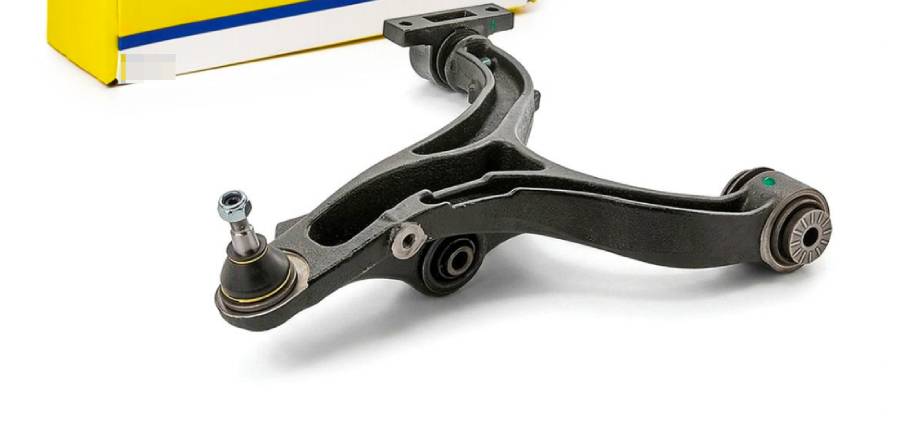
Are MOOG Control Arms Good?
MOOG control arms are a good aftermarket replacement option for restoring suspension stability, steering precision, and ride comfort in vehicles with worn or damaged control arms. The brand offers replacement assemblies designed for specific vehicle applications, with features such as integrated ball joints, preinstalled bushings, and corrosion-resistant finishes depending on the part number. However, MOOG control arm quality varies across product lines, so choosing the correct assembly is essential for achieving reliable performance.
MOOG control arms connect the vehicle’s chassis or subframe to the steering knuckle, allowing the suspension to move while maintaining proper wheel positioning. Their bushings absorb road vibrations and permit controlled movement, while ball joints allow the suspension and steering components to articulate. Replacing a worn control arm with a properly fitted MOOG assembly can reduce excessive suspension movement, improve steering consistency, and help restore the vehicle’s intended handling characteristics.
The main consideration is that MOOG control arms are not identical across all applications. Differences in construction, bushing materials, ball joint design, and manufacturing specifications affect how individual assemblies perform. A MOOG control arm designed for a daily-driven passenger car may have different requirements from one intended for a heavier SUV or pickup truck.
What Are the Advantages of MOOG Control Arms?
The main advantages of MOOG control arms are vehicle-specific fitment, replacement convenience, suspension performance restoration, and the availability of different product configurations. These benefits make them a practical option for drivers replacing worn factory suspension components.
One advantage is the availability of complete control arm assemblies. Depending on the application, a MOOG replacement control arm may include preinstalled bushings and an integrated ball joint. This configuration reduces the need to remove and press individual components into the original arm. For example, replacing a complete lower control arm assembly can eliminate separate bushing installation steps, although labor requirements depend on the vehicle’s suspension design.
MOOG also offers application-specific suspension components intended to match the mounting points and geometry of compatible vehicles. Correct geometry is essential because the control arm helps position the wheel throughout suspension travel. A properly installed replacement can restore predictable steering response and reduce unwanted movement caused by deteriorated bushings or loose ball joints.
Another advantage is the availability of different replacement options. MOOG’s CK and RK product lines provide alternatives for different vehicle applications and repair requirements. Certain MOOG designs incorporate additional features intended to address component wear or serviceability, but these features must be verified for the specific part number rather than assumed across the entire brand.
What Are the Disadvantages of MOOG Control Arms?
The main disadvantages of MOOG control arms are differences in product-line specifications, uncertain long-term durability across applications, and the possibility of premature component wear. These limitations matter most when comparing aftermarket replacements with original equipment parts.
Product consistency is an important consideration because MOOG control arms are manufactured in different configurations. Ball joint construction, bushing design, protective coatings, and serviceability features are not necessarily identical between CK and RK assemblies. Consequently, a positive experience with one MOOG control arm does not establish the reliability of every product carrying the brand name.
Bushing and ball joint wear are additional concerns. Control arm bushings experience repeated compression, twisting, and vibration as the suspension moves. Over time, these forces can cause rubber deterioration, cracking, or separation. Ball joints are also subjected to steering and suspension loads, and damage to their protective boots can allow contamination to accelerate wear. These failure mechanisms affect control arms generally and do not, by themselves, demonstrate a MOOG-specific defect.
Another limitation is the difficulty of predicting service life without application-specific evidence. Vehicle weight, road conditions, driving habits, and installation procedures all influence durability. For example, tightening certain bonded-rubber suspension bushings while the suspension hangs unloaded can introduce unwanted preload when the vehicle returns to normal ride height. This may shorten bushing life regardless of the control arm manufacturer.
Overall, MOOG control arms offer a reasonable balance of replacement convenience, application coverage, and suspension functionality. Their value depends on selecting the correct product line and part number, verifying construction details, and ensuring proper installation rather than relying on brand reputation alone.
How Long Do MOOG Control Arms Last?
MOOG control arms can last for tens of thousands of miles, but there is no verified mileage range that applies to every MOOG control arm. Their lifespan depends on the specific product, vehicle weight, road conditions, driving habits, and installation quality. While control arms are designed for long-term suspension use, their bushings and ball joints generally determine when replacement becomes necessary.
Control arm durability depends on three main components: the arm structure, bushings, and ball joints. The metal arm maintains the connection between the vehicle’s chassis and steering knuckle, while the bushings absorb vibration and accommodate suspension movement. Ball joints allow controlled articulation as the wheels move and steer. Although the arm itself may remain structurally sound, worn bushings or excessive ball joint play can make the complete assembly unsuitable for continued use.
Road conditions are a major factor affecting MOOG control arm lifespan. Repeated impacts from potholes, uneven pavement, and road debris place additional stress on suspension components. Heavy vehicles and frequent driving on damaged roads increase the loads transmitted through the control arms. For example, a pickup truck regularly traveling on rough construction roads places different demands on its suspension than a passenger car driven primarily on smooth highways.
Bushing condition also influences long-term durability. Rubber bushings experience repeated compression and twisting during acceleration, braking, cornering, and suspension travel. Over time, these movements can contribute to cracking, hardening, or separation of the rubber from its metal sleeve. Once a bushing develops excessive movement, the control arm may no longer maintain wheel positioning as precisely as intended. Drivers may notice clunking noises, inconsistent steering response, or abnormal tire wear.
Ball joint durability depends on joint construction, lubrication, sealing, and exposure to contaminants. A damaged protective boot can allow moisture and road debris to enter the joint, accelerating internal wear. As clearance increases between the ball stud and bearing surfaces, the joint may develop excessive movement. This can affect steering precision and suspension stability, making inspection and replacement necessary.
Installation quality is another critical factor. Some control arm bushings must be tightened at the vehicle’s specified normal ride height to prevent excessive torsional preload. Tightening these bushings with the suspension fully extended can leave the rubber twisted when the vehicle is lowered. This constant stress may accelerate deterioration. Correct fastener torque, proper component positioning, and wheel alignment procedures are therefore important for maintaining suspension reliability.
Compared with OEM control arms, MOOG durability cannot be judged by brand name alone. Original equipment components are designed to meet the vehicle manufacturer’s specifications, while aftermarket assemblies may use different materials, bushing designs, or ball joint configurations. A properly selected MOOG control arm may provide satisfactory long-term service, but evidence from one vehicle application cannot establish that MOOG parts consistently last longer or shorter than OEM equivalents.
The most reliable way to determine whether a MOOG control arm needs replacement is to inspect its condition rather than rely on mileage alone. Cracked or separated bushings, excessive ball joint play, damaged boots, structural deformation, and abnormal suspension movement are stronger indicators of replacement needs. Regular suspension inspections help identify these problems before they significantly affect vehicle handling or tire wear.
What Are the Common Problems With MOOG Control Arms?
The main problems to watch for with MOOG control arms are premature bushing wear, ball joint deterioration, clunking noises, and fitment or installation issues. These problems can affect steering stability, ride comfort, and wheel alignment. However, they are not exclusive to MOOG products, and their occurrence does not establish a brand-wide defect. The actual risk depends on the control arm’s construction, vehicle application, operating conditions, and installation quality.
Control arm bushing wear is one of the primary concerns when evaluating suspension reliability. Bushings connect the control arm to the vehicle’s chassis or subframe while allowing controlled movement during suspension travel. Most conventional control arm bushings use rubber bonded to metal components to absorb vibration and reduce noise. Repeated compression, twisting, and exposure to environmental conditions can gradually weaken these materials, causing cracks, separation, or excessive movement.
Worn bushings can produce noticeable changes in vehicle handling. For example, a deteriorated lower control arm bushing may allow unwanted wheel movement during braking or acceleration, contributing to steering instability and abnormal tire wear. Drivers may also hear knocking or clunking sounds when traveling over uneven pavement. These symptoms require a suspension inspection because similar noises can originate from sway bar links, strut mounts, or other chassis components.
Ball joint deterioration is another potential problem with MOOG control arm assemblies that include integrated ball joints. A ball joint connects suspension components while allowing angular movement during steering and wheel travel. Its internal bearing surfaces must withstand repeated loading, friction, and movement. When the joint develops excessive clearance, the wheel may no longer maintain its intended position as accurately, affecting steering response and suspension control.
Ball joint problems can develop when protective boots become damaged or when internal lubrication and sealing are compromised. A torn boot allows moisture, dirt, and road contaminants to reach the bearing surfaces, increasing friction and accelerating wear. Symptoms include suspension noise, looseness during steering, and abnormal wheel movement. Severe ball joint wear can create a safety hazard because joint separation may result in loss of wheel control. A qualified technician should inspect suspected ball joint looseness promptly.
Clunking noises after installing MOOG control arms do not necessarily indicate defective replacement parts. Installation errors, loose fasteners, incorrectly positioned bushings, and worn surrounding suspension components can produce similar symptoms. For example, a control arm mounting bolt that has not been tightened to the vehicle manufacturer’s specified torque may permit movement at the mounting point, producing a knocking sound during braking or suspension compression.
Incorrect bushing installation can also contribute to premature wear and unwanted noise. Certain bonded-rubber bushings require final tightening at normal ride height because their rubber elements twist as the suspension moves. Tightening these components while the wheels hang freely can create excessive preload when the vehicle returns to its operating position. This additional stress may accelerate rubber deterioration and reduce the service life of the replacement assembly.
Fitment problems are another concern when selecting aftermarket control arms. MOOG produces different control arm configurations for specific vehicle applications, and components that appear visually similar are not necessarily interchangeable. Differences in mounting dimensions, ball joint taper, bushing position, and suspension geometry can prevent proper installation or affect component operation. For example, two vehicles from the same model generation may require different control arms because of drivetrain configuration or suspension package differences.
Preventing fitment issues requires checking the exact MOOG part number against the vehicle’s year, make, model, trim, and applicable suspension specifications. Buyers should also confirm whether the replacement assembly includes the required ball joint, bushings, and installation hardware. Using an incorrect component can create installation difficulties and potentially compromise suspension geometry.
MOOG control arm problems should therefore be evaluated through physical inspection, application-specific information, and verified product evidence rather than isolated customer complaints. A report of premature bushing failure may identify a legitimate problem with an individual assembly, but it does not establish a consistent failure rate across MOOG’s entire product range. Vehicle mileage, road conditions, installation procedures, and the condition of surrounding suspension components must also be considered.
The most important warning signs are excessive suspension movement, damaged bushings, loose ball joints, persistent clunking noises, and unexpected changes in steering behavior. These symptoms justify a professional suspension inspection regardless of the control arm manufacturer. Identifying the actual source of the problem helps prevent unnecessary replacement costs and ensures that safety-critical suspension defects are addressed correctly.
How Do MOOG Control Arms Perform on the Road?
MOOG control arms can restore steering stability, handling precision, and ride comfort when replacing worn or damaged suspension components. Their performance depends on correct fitment, bushing characteristics, ball joint condition, and the overall suspension system. A properly installed MOOG control arm should help maintain the vehicle’s intended suspension geometry rather than automatically deliver better handling than its original factory configuration.
Steering stability is one of the most noticeable areas affected by control arm condition. Control arms help maintain wheel positioning as the suspension moves through its operating range. When bushings deteriorate or ball joints develop excessive clearance, unwanted movement can change wheel alignment angles under braking, acceleration, and cornering. Replacing these components with properly fitted MOOG assemblies can reduce that movement and restore more consistent steering behavior. For example, a vehicle that previously wandered during highway driving because of worn control arm bushings may track more predictably after the defective components are replaced and its alignment is corrected.
MOOG control arms can also improve handling consistency by restoring controlled suspension movement. During cornering, the control arm helps guide wheel travel while maintaining the suspension’s designed geometry. Worn components can allow unintended changes in wheel position, reducing steering accuracy and making the vehicle feel less stable during directional changes. A replacement assembly with properly functioning bushings and ball joints helps the suspension respond as designed. However, the resulting improvement depends on the condition of other components, including tie rods, struts, springs, and tires.
Ride comfort is influenced primarily by the control arm bushings and their ability to isolate road vibrations. Rubber bushings absorb part of the vibration transmitted between the wheels and vehicle body while allowing the suspension to articulate. Their stiffness and construction affect the balance between vibration isolation and suspension control. Softer bushings generally provide greater compliance, while stiffer designs restrict movement more effectively but may transmit additional vibration. The specific ride characteristics of a MOOG control arm therefore depend on its bushing design and vehicle application.
Replacing worn control arms can reduce suspension-related noise and vibration, but it cannot eliminate every source of ride harshness. Excessive bushing movement may produce knocking sounds when driving over potholes, speed bumps, or uneven pavement. Restoring the correct connection between the suspension and chassis can eliminate noises caused by the defective control arm. However, vibrations originating from unbalanced wheels, damaged tires, worn engine mounts, or faulty shock absorbers require separate repairs.
MOOG control arm performance should ultimately be evaluated against the vehicle’s original suspension specifications. Correct mounting dimensions, appropriate bushing characteristics, and properly functioning ball joints are more important than brand reputation alone. When the replacement assembly matches the vehicle’s requirements and is installed correctly, MOOG control arms can provide predictable steering, controlled suspension movement, and comfortable everyday driving without requiring modifications to the factory suspension design.
Are MOOG Control Arms Better Than OEM Control Arms?
MOOG control arms are not universally better than OEM control arms, but they can provide a cost-effective alternative for restoring factory suspension performance. OEM control arms are built to specifications established by the vehicle manufacturer, while MOOG produces aftermarket replacements designed for compatible vehicle applications. The better choice depends on construction quality, durability, fitment accuracy, price, and the specific requirements of the vehicle.
Build quality is one of the primary differences between MOOG and OEM control arms. Original equipment components are engineered to meet the vehicle manufacturer’s requirements for suspension geometry, material strength, bushing characteristics, and component performance. MOOG control arms use application-specific designs that may incorporate different ball joint configurations, bushing materials, or protective finishes. Certain MOOG products also include serviceability features that differ from the original assembly. However, these design differences do not automatically establish superior strength or reliability without testing the specific components under comparable conditions.
OEM control arms offer the advantage of factory-specified fitment and suspension characteristics. Their mounting points, dimensions, and component properties are selected to work with the vehicle’s original suspension system. MOOG replacement control arms are designed for compatible applications, but buyers must verify the correct part number and configuration. For example, a vehicle offered with multiple suspension packages may require different control arm assemblies even when the model year and body style are identical.
Durability is another important comparison factor. Both MOOG and OEM control arms experience mechanical loads from braking, acceleration, cornering, and uneven road surfaces. Their service life depends on bushing construction, ball joint sealing, material quality, and environmental exposure. Although some aftermarket designs incorporate features intended to address common wear points, there is insufficient application-wide evidence to conclude that MOOG control arms consistently outlast OEM components. A meaningful durability comparison requires information about the same vehicle application, operating conditions, and replacement history.
Ride quality and handling also depend on how closely replacement components reproduce the vehicle’s intended suspension behavior. OEM bushings are selected to balance vibration isolation, steering response, and suspension compliance. MOOG control arms can restore these characteristics when their dimensions and bushing properties are appropriate for the application. However, differences in bushing stiffness or joint construction may influence the amount of road vibration transmitted through the suspension. Neither option should be considered a performance upgrade solely because it is factory-original or aftermarket.
Price is an area where MOOG control arms may offer an advantage over OEM replacements. Aftermarket components can provide a lower-cost repair option, particularly when complete assemblies include preinstalled bushings and ball joints. However, the actual savings depend on the vehicle, part number, supplier, and labor requirements. A less expensive control arm does not necessarily provide better long-term value if it requires earlier replacement or additional installation work.
Warranty coverage is another consideration when comparing the two options. OEM replacement parts are covered according to the vehicle manufacturer’s applicable parts warranty, while MOOG warranty terms depend on the product and market. Buyers should compare coverage duration, eligibility requirements, exclusions, and whether labor costs are included. Warranty length alone does not demonstrate that one control arm is more durable than another.
The following table summarizes the main differences between MOOG and OEM control arms.
| Comparison Factor | MOOG Control Arms | OEM Control Arms |
|---|---|---|
| Build Quality | Varies by product line and application | Built to manufacturer specifications |
| Fitment | Requires correct aftermarket part number | Factory-specified replacement fitment |
| Durability | Depends on design, installation, and driving conditions | Depends on original design and operating conditions |
| Ride Quality | Intended to restore compatible suspension performance | Maintains factory-specified suspension characteristics |
| Price | May cost less than OEM | Often carries a higher replacement price |
| Warranty | Depends on MOOG product and market | Depends on vehicle manufacturer and parts policy |
| Availability | Distributed through aftermarket parts suppliers | Available through OEM parts channels |
MOOG control arms are worth considering when their specifications match the vehicle and their total replacement cost is lower than the OEM alternative. OEM control arms remain a strong choice for drivers who prioritize factory-specified components and suspension characteristics. For either option, correct fitment, installation quality, and verified product specifications are more reliable purchasing criteria than brand preference alone.
Are MOOG Control Arms Worth the Money?
MOOG control arms are worth the money for drivers seeking an aftermarket suspension replacement that balances price, fitment, and everyday driving performance. They offer an alternative to OEM components, particularly when a complete assembly includes preinstalled bushings and ball joints. However, their long-term value depends on the specific part number, purchase price, installation cost, and service life rather than the initial price alone.
The total cost of replacing a control arm includes the replacement assembly, labor, and any required wheel alignment. MOOG control arm prices vary by vehicle application, product line, and assembly configuration. Upper and lower control arms also have different pricing and installation requirements because their designs and mounting locations differ. For example, replacing a lower control arm on a vehicle with a complex front suspension may require more labor than replacing an easily accessible upper control arm.
Complete MOOG control arm assemblies can offer practical value by reducing the need to replace individual suspension components separately. When a replacement includes factory-installed bushings and a ball joint, technicians may avoid the additional work of pressing worn components out of the original arm. This can simplify the repair process and reduce certain labor operations. However, the actual savings depend on whether the original control arm is serviceable, the vehicle’s suspension design, and local labor rates.
Long-term replacement value also depends on durability. A lower purchase price provides limited financial benefit if the component requires premature replacement, especially when labor and alignment costs must be paid again. Drivers should therefore evaluate the complete repair expense alongside product specifications, warranty coverage, and available reliability evidence. For vehicles used primarily for commuting and normal road driving, a correctly specified MOOG assembly can be a reasonable replacement choice.
Who Should Buy MOOG Control Arms?
MOOG control arms are a practical choice for daily drivers, budget-conscious vehicle owners, and DIY mechanics who need compatible aftermarket suspension components. These buyers generally prioritize restoring safe, predictable suspension operation without paying more than necessary for replacement parts.
Daily drivers benefit from control arms that maintain proper wheel positioning and support consistent steering behavior during routine driving. MOOG replacement assemblies are designed for a range of passenger cars, SUVs, and light trucks, allowing owners to select parts according to their vehicle specifications. For example, a driver replacing a worn lower control arm on an older commuter vehicle may find a compatible MOOG assembly more economical than purchasing an OEM replacement through a dealership.
Budget-conscious owners should compare the complete repair cost rather than the price of the control arm alone. A MOOG assembly that includes the necessary bushings and ball joint may simplify installation, but buyers must verify which components are included. Comparing supplier prices, warranty terms, and installation requirements helps determine whether the aftermarket option provides meaningful savings.
DIY mechanics may also appreciate complete replacement assemblies because they can eliminate certain component-pressing operations. However, control arm replacement still requires appropriate tools, correct fastener torque, safe vehicle support, and compliance with vehicle-specific service procedures. Some suspension designs also require specialized equipment or professional alignment after installation.
When Should You Choose OEM Instead of MOOG?
OEM control arms are the better choice when maintaining exact factory-specified suspension components is the primary requirement or when a suitable MOOG replacement cannot be verified. Original equipment parts are selected according to the vehicle manufacturer’s engineering specifications, making them a straightforward option for owners who prioritize factory configuration.
OEM components are particularly relevant when a vehicle uses specialized suspension geometry, electronically controlled suspension features, or application-specific hardware that limits aftermarket compatibility. For example, a vehicle equipped with a performance suspension package may require control arms with different bushings, mounting dimensions, or joint configurations from those used on the standard model. In these cases, the correct OEM part may provide greater confidence in component compatibility.
Choosing OEM is also reasonable when the price difference is small. If an original replacement assembly costs only slightly more than a comparable MOOG part, buyers may prefer the factory-specified component, especially when reliable application-specific durability data is unavailable. Warranty coverage, supplier availability, and the expected ownership period should also influence the decision.
Ultimately, MOOG control arms offer good potential value when they meet the vehicle’s fitment requirements, provide suitable construction quality, and reduce the overall cost of suspension repair. OEM parts remain preferable when exact factory specifications or verified compatibility take priority. Comparing the specific replacement assemblies provides a more dependable purchasing decision than assuming either brand is universally superior.
What Is the Difference Between MOOG CK and RK Control Arms?
The main difference between MOOG CK and RK control arms is their product positioning, construction features, and application-specific design. MOOG CK control arms are associated with the brand’s premium Problem Solver product range, while RK control arms are generally positioned as standard replacement assemblies. Both product lines are intended to replace worn suspension components, but their materials, ball joint configurations, and serviceability features can differ depending on the specific part number.
MOOG CK control arms are designed to provide enhanced replacement features for applicable vehicle models. Certain CK assemblies incorporate Problem Solver engineering features intended to address wear, improve component serviceability, or provide additional durability. Depending on the application, these features may include specific ball joint designs, grease fittings, or upgraded bushing configurations. However, not every CK control arm includes the same features, making individual product specifications essential when evaluating construction quality.
MOOG RK control arms focus on providing a replacement assembly for restoring the vehicle’s intended suspension operation. These products are generally positioned as a more economical option within MOOG’s control arm range. RK assemblies may include preinstalled bushings and ball joints, allowing technicians to replace worn components without rebuilding the original arm. Their exact construction and included hardware vary by vehicle application.
The difference in ball joint design is an important consideration when comparing CK and RK control arms. Certain MOOG CK assemblies incorporate serviceable ball joints equipped with grease fittings, allowing additional lubrication during maintenance. Other assemblies use sealed joint configurations that do not require periodic greasing. A serviceable joint offers maintenance flexibility, but it does not automatically guarantee a longer lifespan. Joint sealing, bearing materials, lubrication quality, and operating conditions all influence durability.
Bushing construction can also vary between the two product lines. Control arm bushings must absorb vibration while maintaining controlled suspension movement under braking, acceleration, and cornering. Different rubber compounds, bushing geometries, and bonding methods affect their performance characteristics. Buyers should examine the specifications of the exact CK and RK assemblies available for their vehicles rather than assume that every CK product uses stronger bushings or provides superior ride quality.
Price is another factor distinguishing the two ranges. CK control arms may carry a higher purchase price because of their premium positioning and application-specific features, while RK assemblies are generally intended to provide a more economical replacement option. However, actual prices depend on the vehicle, supplier, and part number. A higher-priced assembly is not necessarily the better purchase unless its additional features provide meaningful benefits for the intended application.
The following table summarizes the general differences between MOOG CK and RK control arms.
| Feature | MOOG CK Control Arms | MOOG RK Control Arms |
|---|---|---|
| Product Positioning | Premium Problem Solver range | Standard replacement range |
| Primary Purpose | Replacement with application-specific enhanced features | Restore suspension functionality |
| Ball Joint Design | May include serviceable or enhanced configurations | Varies by application |
| Bushings | Application-specific designs and materials | Application-specific replacement designs |
| Maintenance | Certain models offer greaseable joints | Depends on the specific assembly |
| Price | Generally premium-positioned | Generally more economical |
| Best Fit | Buyers seeking verified additional product features | Buyers prioritizing replacement value |
MOOG CK control arms are worth considering when their specific design features address the vehicle’s repair requirements, while RK control arms are a practical option when a standard replacement assembly is sufficient. For example, a driver who values a serviceable ball joint may prefer a compatible CK assembly that includes a grease fitting. Another driver replacing a worn control arm on a daily commuter may find an RK assembly suitable if it meets the required fitment and construction specifications.
The most reliable way to choose between MOOG CK and RK control arms is to compare their exact part numbers, included components, technical specifications, and warranty terms. Product-line labels provide useful guidance, but verified application-specific features determine whether the additional cost of a CK assembly is justified.
Where Are MOOG Control Arms Made?
MOOG control arms are manufactured in different countries depending on the product line, part number, and production source. MOOG is an established automotive aftermarket brand with American origins, but not every MOOG control arm is manufactured in the United States. Its replacement suspension components are sourced through a global manufacturing network, making it important to verify the country of origin for each individual assembly.
MOOG is associated with DRiV, an automotive aftermarket business under Tenneco. Although the brand has a long history in the American automotive industry, brand ownership and manufacturing location are separate considerations. A control arm sold under the MOOG name may be produced outside the United States while still being designed to meet the specifications established for its intended vehicle application.
MOOG control arm manufacturing locations can vary between individual replacement parts. Country-of-origin information should therefore be checked using the exact product number rather than inferred from the CK or RK series designation. Manufacturing location alone does not establish component quality because durability also depends on material specifications, production tolerances, ball joint construction, bushing design, and quality-control procedures.
Buyers can identify where a MOOG control arm was manufactured by examining the country-of-origin label on its packaging or checking the information provided by the supplier. Product markings and manufacturer documentation may provide additional details. For example, two MOOG control arms intended for different vehicle models may carry different country-of-origin labels even though both are distributed under the same brand.
The most important purchasing consideration is whether the control arm meets the vehicle’s fitment and performance requirements, not simply where it was manufactured. Buyers should prioritize verified part compatibility, component construction, warranty coverage, and application-specific reliability information when evaluating MOOG replacement control arms.
How Can You Tell if a MOOG Control Arm Fits Your Vehicle?
You can determine whether a MOOG control arm fits your vehicle by checking its part number against the vehicle’s year, make, model, trim, drivetrain, and suspension configuration. MOOG manufactures application-specific replacement control arms, and components designed for similar vehicles are not necessarily interchangeable. Accurate fitment verification ensures that the replacement assembly matches the required mounting points, suspension geometry, and steering components.
The first step is to use the official MOOG parts catalog to identify compatible control arms. Enter the vehicle’s year, make, model, and applicable configuration details, then confirm whether the required component is an upper or lower control arm. Control arms may also differ between the driver and passenger sides. For example, a vehicle equipped with four-wheel drive may require a different front lower control arm from a two-wheel-drive version of the same model because of differences in suspension design and component clearance.
The MOOG part number is the most important identifier when confirming replacement compatibility. Each part number corresponds to a specific component configuration and supported vehicle applications. Buyers should compare the catalog listing with the original equipment reference number, mounting locations, ball joint connection, and bushing arrangement. Matching the general shape of the original control arm is insufficient because small dimensional differences can affect installation and suspension geometry.
Buyers should also verify which components are included in the replacement assembly. Certain MOOG control arms come with preinstalled bushings and ball joints, while other configurations may require additional parts or hardware. Checking these details before purchase helps prevent installation delays and unexpected repair costs.
The safest approach is to confirm fitment through the MOOG catalog and the vehicle manufacturer’s service information before installation. Correct compatibility allows the replacement control arm to maintain the intended suspension geometry and operate with surrounding steering and suspension components. After installation, technicians should follow the manufacturer’s torque specifications and applicable wheel alignment procedures to ensure proper suspension operation.
Read more: How Much Does It Cost to Install a Sunroof on a Car?
Do MOOG Control Arms Come With a Warranty?
Yes, MOOG control arms come with warranty coverage, but the specific terms depend on the product, country of purchase, and applicable warranty policy. MOOG offers warranty protection for eligible suspension components against qualifying defects in materials and workmanship. However, buyers should verify the current warranty terms for their exact control arm part number rather than assume that every MOOG product receives identical coverage.
MOOG suspension products sold in the United States may qualify for limited lifetime warranty coverage under applicable manufacturer policies. A limited lifetime warranty generally applies only while the product meets the manufacturer’s eligibility requirements and does not guarantee unlimited replacement under every circumstance. Coverage details, including ownership requirements, exclusions, and available remedies, must be confirmed through the official MOOG warranty documentation.
MOOG control arm warranties generally distinguish manufacturing defects from damage caused by normal wear, improper installation, or misuse. For example, a ball joint that fails because of a verified manufacturing defect may qualify for warranty consideration, while damage resulting from a collision, incorrect installation, or unauthorized modification may be excluded. The manufacturer or authorized warranty provider determines eligibility according to the applicable policy.
Warranty claims typically require proof of purchase and information identifying the defective component. Buyers should retain their original receipt, record the MOOG part number, and follow the seller’s or manufacturer’s claim procedures. Depending on the policy, the defective control arm may need to be inspected before a replacement or other remedy is approved.
Warranty coverage does not automatically include labor costs, wheel alignment, towing, or other expenses associated with replacing a defective control arm. These additional costs can affect the overall value of the warranty, particularly when professional installation is required. Buyers should confirm whether coverage applies only to the replacement part or includes additional repair expenses.
Before purchasing MOOG control arms, check the latest warranty information on the official MOOG website or through an authorized retailer. Comparing the applicable coverage, exclusions, and claim requirements with those of OEM alternatives helps determine the actual protection provided by the replacement component.
Should You Replace Both Control Arms at the Same Time?
You do not always need to replace both control arms at the same time, but replacing them in pairs is worth considering when both sides show significant wear or have experienced similar operating conditions. The decision depends on bushing condition, ball joint wear, vehicle mileage, suspension design, and the cost of completing separate repairs. Replacing one damaged control arm is acceptable when the opposite assembly remains in good condition and meets the vehicle manufacturer’s inspection specifications.
Control arms on the same axle experience similar road conditions, vehicle loads, and suspension movements. As a result, their bushings and ball joints may deteriorate at comparable rates, although wear is not necessarily identical on both sides. For example, a vehicle with high mileage and severely cracked lower control arm bushings on one side may also have deteriorating bushings on the opposite side. Inspecting both assemblies helps determine whether replacing them together would prevent another suspension repair in the near future.
Replacing both control arms can reduce repeated repair work when the opposite assembly is approaching the end of its service life. Suspension repairs may require removing wheels, disconnecting suspension components, and performing wheel alignment afterward. Completing both replacements during the same repair appointment may reduce duplicated labor compared with scheduling two separate repairs. However, the actual savings depend on the vehicle’s suspension layout, workshop labor rates, and whether additional components require replacement.
Replacing only one control arm is reasonable when damage is isolated to a single assembly. For example, a severe pothole impact may bend one lower control arm while leaving the opposite side structurally sound. In this situation, replacing the damaged component with a correctly specified MOOG control arm can restore the affected suspension connection without automatically requiring replacement of the undamaged assembly. The opposite side should still be inspected for hidden damage, excessive joint movement, and deteriorated bushings.
Wheel alignment is an important consideration after control arm replacement because control arms influence suspension geometry and wheel positioning. Removing and reinstalling suspension components can affect alignment settings, particularly when mounting points or adjustable suspension connections are disturbed. Incorrect alignment may contribute to uneven tire wear, steering pull, and reduced directional stability. Technicians should follow the vehicle manufacturer’s alignment requirements and verify that suspension fasteners are tightened to the specified torque.
When choosing MOOG replacement control arms, buyers should also confirm that both assemblies match the vehicle’s suspension configuration. Left and right control arms may have different part numbers, mounting positions, and ball joint orientations. Using the correct components helps maintain the intended suspension geometry and prevents installation problems.
The best approach is to inspect both control arms and replace only the components that are damaged, excessively worn, or otherwise outside manufacturer specifications. Pair replacement is justified when both assemblies require attention or when the combined repair offers a practical maintenance advantage. Replacing functional control arms solely because one side has failed is not always necessary and may increase repair costs without providing a meaningful benefit.