Isopropyl alcohol (IPA) generally does not damage fully cured automotive paint when used at an appropriate concentration for a brief cleaning session. However, concentrated IPA, prolonged exposure, and improper application can increase the risk of surface damage, particularly on freshly painted, deteriorated, or sensitive finishes. Isopropyl alcohol can also affect car wax and certain paint sealants without necessarily damaging the clear coat underneath.
Isopropyl alcohol is a solvent commonly used in automotive detailing to remove polishing oils, grease, and surface contaminants. Its effectiveness depends on the alcohol concentration, paint condition, contact time, and application method. For example, a controlled IPA wipe-down on intact factory clear coat presents different risks than applying 99% rubbing alcohol directly to a freshly repainted panel.
Understanding these differences helps car owners avoid unnecessary paint damage while preparing surfaces for detailing or paint protection. This guide explains how isopropyl alcohol interacts with automotive clear coats, compares common IPA concentrations, identifies five factors that increase damage risk, and outlines safe application methods. It also covers how to recognize potential paint damage and when to choose dedicated automotive cleaning products instead.
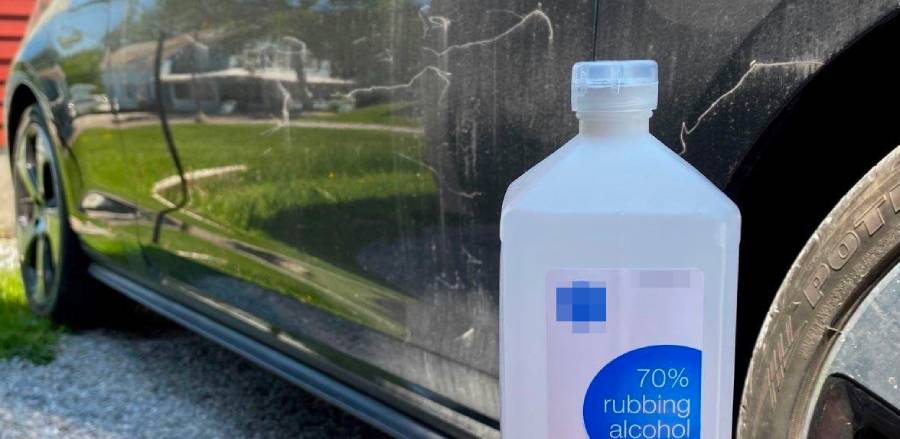
Does Isopropyl Alcohol Damage Car Paint?
Isopropyl alcohol does not normally damage fully cured, intact automotive paint when applied correctly for a short period. However, its effects depend on alcohol concentration, contact time, paint condition, and the type of protective coating on the vehicle. Using concentrated IPA or allowing it to remain on a painted surface for an extended period increases the risk of unwanted surface changes.
Most modern vehicles have a multi-layer paint system consisting of primer, base coat, and clear coat. The clear coat forms the outer protective layer, shielding the colored base coat from environmental exposure, minor abrasion, and chemical contaminants. Fully cured automotive clear coats generally tolerate brief contact with appropriately diluted IPA, but their chemical resistance varies by formulation and condition.
Isopropyl alcohol works by dissolving oils, grease, and certain organic residues that ordinary water cannot remove effectively. Automotive detailers use this property to remove polishing oils and inspect the paint surface before applying protective products. Unlike automotive shampoo, which is formulated for routine washing, IPA is primarily suited to specific surface preparation tasks.
Removing paint protection is not the same as damaging automotive paint. Isopropyl alcohol can remove or weaken certain waxes and sealants, leaving the surface less protected without necessarily affecting the underlying clear coat. For example, a panel may lose some water-beading performance after an IPA wipe-down because its protective wax has been disturbed, even though the clear coat remains intact. The effect varies with the protective product’s chemical composition and resistance.
Can Isopropyl Alcohol Damage a Car’s Clear Coat?
Isopropyl alcohol can affect automotive clear coat under unsuitable exposure conditions, but brief, controlled use on a fully cured, compatible finish generally presents a lower risk. Clear coats are designed to resist environmental contaminants and selected cleaning chemicals. However, chemical resistance differs among acrylic, polyurethane, and other automotive coating formulations, making universal compatibility claims unreliable.
The likelihood of damage increases when the clear coat is already deteriorated, cracked, oxidized, or exposed to excessive solvent contact. High IPA concentrations and repeated applications can create unnecessary chemical exposure, particularly when the paint manufacturer’s compatibility guidance is unknown. Visible changes such as hazing, dullness, or discoloration require inspection because they may also result from existing paint defects, polishing residue, or the removal of surface protection.
Clear coat damage must also be distinguished from changes in gloss caused by removing oils or wax. Polishing oils can temporarily conceal fine scratches and swirl marks. When IPA removes these oils, previously hidden imperfections become visible, making the paint appear worse even though the alcohol has not created the defects. Similarly, removing a protective wax layer can change the surface’s appearance without chemically damaging the clear coat.
Can Isopropyl Alcohol Damage Fresh or Repainted Car Paint?
Fresh or recently repainted automotive finishes require greater caution because their resistance to solvents depends on the paint system and curing process. Newly applied clear coats undergo chemical curing or solvent evaporation according to their formulation. Until the coating reaches the required level of cure, exposure to incompatible cleaning chemicals can interfere with the developing finish or cause unwanted surface changes.
Curing requirements vary between factory-applied finishes, air-dried refinishing systems, and heat-cured automotive coatings. A repainted panel may feel dry to the touch before it reaches the chemical resistance specified by its manufacturer. Therefore, surface dryness alone does not establish that IPA cleaning is appropriate.
For example, a vehicle recently repaired with a two-component clear coat should be cleaned according to the refinishing manufacturer’s technical data sheet and the paint shop’s aftercare instructions. Applying concentrated rubbing alcohol before the specified curing or chemical-resistance requirements are met introduces avoidable risk.
The safest approach is to avoid IPA on freshly painted or repaired panels until the paint manufacturer or repair facility confirms that the finish is sufficiently cured and compatible with the intended cleaning solution.
What Concentration of Isopropyl Alcohol Is Safe for Car Paint?
There is no universally safe isopropyl alcohol concentration for every automotive paint finish. The appropriate concentration depends on the clear coat’s chemical resistance, paint condition, cleaning purpose, and contact duration. Commercial rubbing alcohol commonly contains 70%, 91%, or 99% IPA, but these concentrations should not automatically be considered suitable for direct application to painted surfaces.
A 70% IPA solution contains approximately 70% isopropyl alcohol and 30% water by volume. It provides solvent cleaning action while containing more water than 91% or 99% IPA. However, 70% alcohol is not guaranteed to be safe for every clear coat, particularly on recently repaired, deteriorated, or specialty finishes. Compatibility testing and manufacturer instructions remain essential.
Higher concentrations, including 91% and 99% IPA, contain less water and expose the surface to a greater proportion of solvent. These products are useful in applications requiring concentrated isopropanol, but they should not be applied directly to automotive paint without confirming compatibility. Higher concentration does not automatically mean greater cleaning effectiveness for every contaminant, and it does not establish that damage will occur after brief contact.
For automotive detailing, a dedicated panel preparation product is often preferable because its formulation and instructions are intended for specific cleaning applications. When using IPA, the final concentration should be selected according to the intended task and the paint or product manufacturer’s recommendations rather than a universal dilution rule.
How Do You Dilute Isopropyl Alcohol for Car Paint?
Isopropyl alcohol is diluted by mixing a measured volume of IPA solution with water to achieve a lower final alcohol concentration. The required amounts depend on the starting concentration and the intended final concentration. Distilled or deionized water is preferable when preparing a solution because it reduces the introduction of minerals that can leave deposits on painted surfaces.
The approximate dilution calculation is:
C1 × V1 = C2 × V2
In this equation, C1 represents the starting IPA concentration, V1 is the volume of the original alcohol solution, C2 is the desired concentration, and V2 is the total final solution volume.
For example, mixing 100 mL of 70% IPA with 100 mL of water produces approximately 200 mL of a 35% IPA solution, assuming the volumes are additive. Similarly, preparing an approximately 20% solution from 99% IPA requires about 20.2 mL of the original alcohol solution, diluted with water to a final volume of 100 mL.
These examples demonstrate dilution mathematics, not universally approved concentrations for automotive paint. Even diluted IPA can be unsuitable for certain finishes or protective coatings. Prepare only the amount needed, use a clearly labeled compatible container, and keep the solution away from flames, sparks, and other ignition sources.
What Factors Increase the Risk of Isopropyl Alcohol Damaging Car Paint?
Five main factors influence the risk of isopropyl alcohol affecting automotive paint: alcohol concentration, contact duration, paint condition, surface temperature, and protective coating compatibility. These factors determine how the cleaning solvent interacts with the vehicle’s outer finish and whether exposure remains within the coating’s chemical resistance limits.
1. Alcohol concentration. Higher IPA concentrations expose automotive paint to a greater proportion of solvent. Although fully cured clear coats may tolerate brief contact with compatible cleaning solutions, concentrated alcohol should not be assumed safe for all paint systems. For example, 99% IPA contains substantially more isopropanol than a 20% solution, making product compatibility particularly important before application.
2. Contact duration. Prolonged solvent contact creates greater exposure than a brief, controlled wipe-down. Allowing IPA to pool around trim, panel edges, or damaged paint can expose vulnerable materials to unnecessary chemical contact. A controlled application using a lightly dampened microfiber towel limits the amount of liquid remaining on the surface.
3. Paint condition. Fully cured, intact factory clear coat generally provides better chemical resistance than compromised or incompletely cured finishes. Cracked clear coat, peeling paint, exposed base coat, and recently refinished panels require additional precautions. For example, IPA that contacts an exposed paint layer through a damaged clear coat may interact with a material that has different solvent resistance from the original outer finish.
4. Surface temperature. Hot panels accelerate IPA evaporation, potentially reducing working time and causing uneven cleaning or streaking. Direct sunlight can also make it harder to maintain controlled application conditions. Cleaning a cool panel in a shaded, ventilated area provides more consistent working conditions and reduces unnecessary exposure to solvent vapors.
5. Protective coating compatibility. Automotive waxes, paint sealants, and ceramic coatings differ in their resistance to alcohol-based cleaners. IPA can dissolve or disturb certain waxes and protective residues, while the response of synthetic sealants and ceramic coatings depends on their formulations. Reduced water beading after cleaning may indicate a change in surface protection rather than damage to the underlying clear coat.
These five factors interact rather than operating independently. For example, applying concentrated IPA repeatedly to a hot, deteriorated finish presents a different risk profile from using a manufacturer-approved cleaning solution briefly on cool, fully cured paint. Evaluating the entire cleaning situation is more reliable than judging safety by alcohol concentration alone.
How Do You Safely Use Isopropyl Alcohol on Car Paint?
To safely use isopropyl alcohol on car paint, verify the paint’s compatibility, select an appropriate cleaning solution, and apply it briefly with a clean microfiber towel. The process should minimize solvent exposure while removing oils, polishing residue, or other compatible surface contaminants. IPA is intended for specific detailing tasks rather than regular car washing.
Before applying IPA, wash the affected area with a pH-neutral automotive shampoo to remove dirt, dust, and abrasive particles. Dry the panel with a clean microfiber towel and allow the surface to cool completely. Inspect the paint for peeling clear coat, exposed base coat, or recent repairs, as these conditions require additional precautions. Work in a shaded, well-ventilated area away from ignition sources.
How Do You Apply Isopropyl Alcohol to Car Paint?
Applying isopropyl alcohol safely involves six steps designed to control solvent concentration, surface contact, and mechanical friction. Follow these steps only after confirming that the intended IPA solution is compatible with the vehicle’s paint finish.
- Check paint compatibility. Confirm that the clear coat is fully cured and suitable for alcohol-based cleaning. Consult the paint manufacturer’s instructions, particularly for repainted, matte, or specialty finishes.
- Prepare the cleaning solution. Use an IPA concentration supported by the applicable product or paint manufacturer. Avoid assuming that a particular dilution ratio is safe for every automotive finish.
- Test a small area. Apply a small amount of the solution to an inconspicuous painted section. Allow it to evaporate, then inspect the surface under adequate lighting for discoloration, hazing, or changes in gloss.
- Apply IPA to a microfiber towel. Lightly dampen a clean, soft microfiber towel instead of saturating the painted panel. This helps control the amount of solvent contacting the finish and reduces pooling around panel edges.
- Wipe the surface gently. Use light pressure and straight, overlapping motions to remove compatible contaminants. Work on a small section at a time, and avoid repeated rubbing or allowing the solution to remain pooled on the surface.
- Inspect the cleaned panel. Follow the cleaning product’s instructions for removing any remaining residue. Check the surface for streaks, haze, or changes in appearance before continuing to another section.
For example, a detailer removing polishing oils from a fully cured clear coat can use a compatible IPA-based preparation solution with a clean microfiber towel before inspecting the finish. The objective is to remove residual oils without unnecessarily exposing the paint to concentrated solvent or excessive wiping.
What Mistakes Should You Avoid When Using Isopropyl Alcohol on Car Paint?
The most important mistakes to avoid are using an unverified IPA concentration, soaking painted surfaces, applying alcohol to hot panels, and rubbing contaminated paint. Each mistake increases either chemical exposure or mechanical abrasion, which can compromise the cleaning process.
Applying 91% or 99% IPA directly to automotive paint without verifying compatibility is unnecessary for most routine cleaning tasks. Likewise, allowing alcohol to collect around damaged clear coat or panel edges creates prolonged contact with materials that may have different chemical resistance. IPA should also be avoided on freshly repainted surfaces unless the refinishing manufacturer confirms compatibility.
Using dirty microfiber towels introduces another risk. Dust, grit, and other particles trapped in the towel can scratch clear coat during wiping, even when the alcohol itself does not chemically damage the finish. Excessive pressure and repeated passes increase this mechanical risk.
Finally, never use IPA near open flames, sparks, or hot equipment. Isopropyl alcohol is flammable, and its vapors require appropriate ventilation. Wear suitable protective gloves, follow the product’s safety instructions, and store the solution in a properly labeled, compatible container.
For routine paint maintenance, automotive shampoo remains the preferred cleaning product. Reserve IPA-based solutions for specific detailing procedures where their cleaning properties are necessary and their compatibility with the finish has been established.
What Should You Do If Isopropyl Alcohol Damages Car Paint?
If isopropyl alcohol appears to damage car paint, stop using the solvent, gently clean the affected area, and inspect the finish before attempting repairs. The appropriate treatment depends on whether the visible problem is cleaning residue, removed paint protection, or actual clear coat damage. These conditions can produce similar changes in appearance but require different corrective methods.
Start by allowing the panel to cool and ensuring that any remaining alcohol has evaporated. Wash the affected area with a compatible automotive shampoo and clean water, then dry it using a soft microfiber towel. Inspect the surface under consistent lighting for streaks, cloudiness, discoloration, or changes in gloss. Avoid applying additional solvents or abrasive compounds until the cause of the problem is identified.
Three common surface conditions can be mistaken for alcohol-related paint damage: residual contamination, loss of protective products, and previously concealed paint defects. Residual contamination can leave streaks or uneven reflections. Removing wax or sealant may change water-beading behavior and surface appearance without damaging the clear coat. Similarly, removing polishing oils can reveal existing swirl marks or scratches that were previously less visible.
Actual clear coat damage requires closer evaluation. Persistent cloudiness, localized discoloration, peeling, or changes in surface texture may indicate coating deterioration, although these symptoms do not establish IPA as the cause. A professional detailer or automotive refinishing specialist can help determine whether the problem affects the outer surface or deeper paint layers.
Can You Restore Car Paint Damaged by Isopropyl Alcohol?
Car paint affected by isopropyl alcohol can sometimes be restored without repainting, but the correct repair depends on the type and severity of the surface defect. Cleaning residue and missing protective products are generally easier to address than chemically damaged or deteriorated clear coat.
For surface residue, washing with a paint-compatible automotive shampoo may restore a uniform appearance. If alcohol cleaning has removed or weakened a wax or sealant, reapplying a compatible protective product after proper surface preparation can restore protection and water-repellent properties. However, adding wax does not repair damaged clear coat.
Minor defects confined to a sufficiently thick, intact clear coat may be suitable for professional paint correction. A detailer can assess whether controlled polishing will improve the finish without removing excessive clear coat material. Polishing should not be attempted on peeling, softened, or severely deteriorated coatings because abrasion can worsen the existing damage.
More serious problems, including clear coat delamination, persistent chemical etching, or exposed base coat, may require professional refinishing. These defects cannot reliably be corrected with household cleaners, wax, or repeated IPA applications. A qualified paint technician should evaluate the affected panel before sanding, compounding, or repainting.
The safest recovery method is to identify the affected layer before choosing a treatment. A streaked surface may need only gentle cleaning, a stripped wax layer may need renewed protection, and a compromised clear coat may require professional repair. This distinction prevents unnecessary polishing and further chemical exposure.
Why Do Car Detailers Use Isopropyl Alcohol on Car Paint?
Car detailers use isopropyl alcohol to remove polishing oils, grease, and certain surface residues before inspecting paint or applying protective coatings. IPA dissolves compatible contaminants that can remain after polishing, helping detailers evaluate the actual condition of the clear coat. Its role is primarily surface preparation rather than routine vehicle cleaning.
During paint correction, polishing compounds contain lubricants and oils that reduce friction between the polishing pad and clear coat. These residues can temporarily conceal fine scratches, swirl marks, and other surface imperfections. An appropriate IPA-based wipe-down removes some of these residues, allowing the detailer to assess whether additional polishing is necessary.
Isopropyl alcohol is also used in selected paint preparation procedures before applying waxes, sealants, or ceramic coatings. However, its suitability depends on the protective product’s application requirements. Some coating manufacturers specify dedicated panel preparation cleaners designed to remove polishing residues without leaving substances that interfere with coating adhesion.
Can You Use Isopropyl Alcohol Before Applying Ceramic Coating?
Isopropyl alcohol can be used before applying certain ceramic coatings when the coating manufacturer approves the solution and application method. The purpose is to remove polishing oils and compatible surface contaminants that could interfere with coating contact and bonding to the prepared paint.
Ceramic coatings form a protective layer over automotive clear coat, and their application requirements vary by chemical formulation. Residual polishing oils, waxes, and incompatible cleaning products can affect how a coating spreads, adheres, or cures. A suitable panel preparation cleaner helps establish the surface condition required by the coating manufacturer.
For example, a detailer preparing a polished vehicle for ceramic coating may use a manufacturer-approved panel wipe to remove residual polishing oils before application. A homemade IPA mixture should not automatically replace that product because cleaning performance, residue removal, and compatibility depend on the complete formulation.
Read more: Is Goof Off Safe for Car Paint? Risks & Alternatives
What Can You Use Instead of Isopropyl Alcohol to Clean Car Paint?
The best alternatives to isopropyl alcohol are pH-neutral automotive shampoo, dedicated panel preparation cleaners, and contaminant-specific removers. Each product serves a different purpose, making the appropriate choice dependent on the material being removed and the condition of the paint.
Automotive shampoo is the preferred option for routine washing. It is formulated to remove road dust, dirt, and general surface contamination while providing lubrication that reduces friction during washing. Unlike IPA, a suitable maintenance shampoo can clean painted panels without intentionally stripping compatible protective products.
Dedicated panel preparation cleaners are designed for surface preparation before paint protection applications. These products may contain carefully formulated solvent blends and other ingredients intended to remove polishing oils or residues. Their compatibility and performance should be evaluated using the manufacturer’s instructions rather than assuming that every panel wipe is safe for every finish.
Bug and tar removers target contaminants that ordinary shampoo may not remove effectively. Bug residues contain organic materials that can adhere to painted surfaces, while road tar consists of sticky petroleum-based deposits. Automotive products formulated for these contaminants provide a more targeted cleaning method than applying IPA indiscriminately.
The following table compares four automotive cleaning options.
| Cleaning Product | Primary Purpose | Recommended Application |
|---|---|---|
| pH-neutral automotive shampoo | Removes dirt and road grime | Routine vehicle washing |
| IPA-based cleaning solution | Removes compatible oils and residues | Selected detailing preparation |
| Dedicated panel wipe | Prepares paint for protective coatings | Pre-coating surface cleaning |
| Bug and tar remover | Removes bonded insect residue and tar | Targeted contaminant removal |
For regular car maintenance, use automotive shampoo rather than isopropyl alcohol. Reserve solvent-based cleaners for specific tasks where their compatibility and cleaning effectiveness have been established. Choosing a product designed for the contaminant reduces unnecessary chemical exposure and helps preserve the vehicle’s existing paint protection.
Is Isopropyl Alcohol Safe for Different Car Paint Finishes?
Isopropyl alcohol is generally compatible with fully cured, intact glossy automotive clear coats when used appropriately, but it is not universally safe for every paint finish. Matte paint, recently repainted panels, and ceramic-coated surfaces have different chemical resistance and maintenance requirements. The appropriate cleaning method depends on the finish’s composition, condition, and manufacturer recommendations.
Glossy factory paint typically includes a protective clear coat designed to resist environmental exposure and compatible cleaning chemicals. A brief IPA wipe-down may be suitable for specific detailing tasks after confirming compatibility. Repainted surfaces require additional caution because their solvent resistance depends on the refinishing system and curing stage. Ceramic-coated vehicles also require coating-specific care, since the protective layer may respond differently to alcohol-based cleaners than the underlying clear coat.
Is Isopropyl Alcohol Safe for Matte Car Paint?
Isopropyl alcohol should not be used on matte car paint unless the finish manufacturer specifically approves the product and application method. Matte finishes achieve their low-gloss appearance through controlled surface texture, which changes how light reflects from the painted panel. Incompatible solvents, aggressive rubbing, and polishing can alter this texture or create uneven glossy patches.
Unlike conventional glossy clear coat, matte paint cannot generally be corrected through traditional abrasive polishing without changing its appearance. For example, attempting to remove an alcohol-related mark with polishing compound may produce a shiny area that contrasts with the surrounding matte finish. This makes prevention especially important.
Use a cleaning product specifically approved for matte automotive finishes, along with a clean microfiber towel and minimal pressure. For ceramic-coated matte paint, follow both the paint manufacturer’s and coating manufacturer’s maintenance instructions. Avoid experimenting with IPA concentrations or household solvents when compatibility has not been established.