A car may stop shifting gears because of low transmission fluid, a faulty shift solenoid, a worn clutch, damaged shift linkage, or internal transmission failure. The exact cause depends on whether the vehicle has an automatic or manual transmission and how the shifting problem occurs. Some issues prevent the gear selector from moving, while others stop the transmission from engaging or changing gears even when the engine runs normally.
In automatic vehicles, insufficient hydraulic pressure, malfunctioning transmission sensors, or electronic control faults can prevent proper gear changes. A car stuck in Park may have a defective brake-light switch or shift interlock mechanism rather than a damaged transmission. In manual vehicles, clutch hydraulic failure, incomplete clutch disengagement, or worn gearbox components can make selecting gears difficult or impossible.
Identifying the symptoms helps narrow down the cause before repairs begin. For example, an engine that revs without corresponding acceleration may indicate transmission slipping, while grinding during manual gear changes can indicate clutch or synchronizer problems. This guide explains 10 common reasons a car won’t shift gears, how to diagnose each problem, which repairs may restore normal operation, and when professional transmission inspection is necessary.
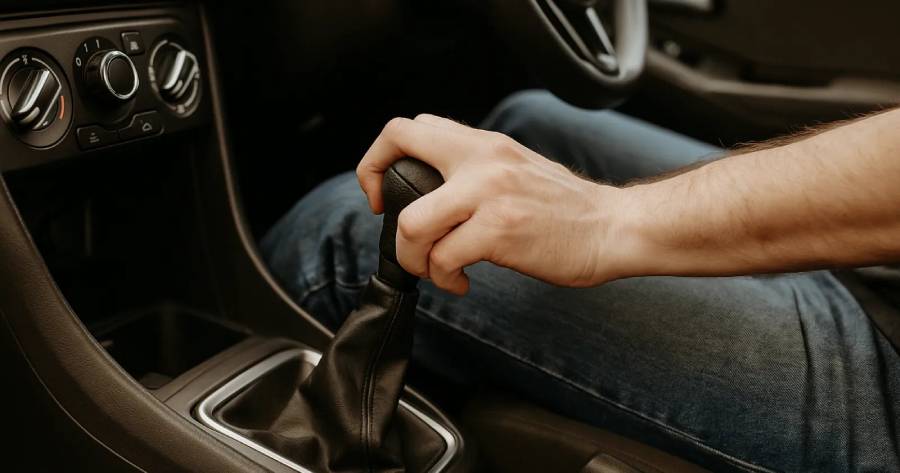
Why Is My Car Not Shifting Gears?
Your car may not shift gears because of insufficient transmission fluid pressure, worn mechanical components, faulty electronic controls, or problems with the gear-selection mechanism. Automatic transmissions rely on hydraulic pressure and electronic signals to engage gears, while manual transmissions use a clutch and mechanical gear-selection system. A failure in any of these components can interrupt normal gear changes.
The symptoms help identify which system is malfunctioning. A vehicle that remains in Park may have a faulty brake-shift interlock or damaged shift cable. An automatic car that stays in one gear may have entered transmission limp mode because of a sensor or control fault. A manual car that refuses to engage gears while the engine is running may have a clutch that does not disengage completely.
Transmission problems also differ in severity. Low transmission fluid or a damaged shift linkage may require a relatively straightforward repair, while worn internal gears or clutch packs can require extensive transmission work. Identifying whether the problem involves gear selection, gear engagement, or shifting while driving helps narrow the diagnosis.
What Are the 10 Most Common Causes of a Car Not Shifting Gears?
The 10 common causes of a car not shifting gears include low transmission fluid, contaminated transmission fluid, a faulty shift solenoid, a malfunctioning transmission control module, a worn or malfunctioning clutch, damaged shift linkage, a faulty brake-light switch, valve body failure, defective transmission sensors, and internal gearbox damage. Each affects a different part of the shifting process and produces distinct symptoms.
Can Low or Dirty Transmission Fluid Prevent Gear Shifting?
Low or contaminated transmission fluid can prevent an automatic transmission from shifting correctly by reducing hydraulic pressure or interfering with valve body operation. Automatic transmissions use pressurized fluid to engage clutch packs and control gear changes. When fluid levels fall below the manufacturer’s specifications, the transmission may struggle to maintain the pressure required for consistent engagement.
Low fluid commonly results from leaking transmission seals, damaged cooler lines, or deteriorated gaskets. Symptoms include delayed engagement when selecting Drive or Reverse, slipping during acceleration, and hesitation between gears. For example, a vehicle may take several seconds to move after the driver shifts from Park into Drive because the transmission cannot immediately establish sufficient hydraulic pressure.
Contaminated or deteriorated transmission fluid creates a different problem. Wear particles and debris can interfere with hydraulic valves and solenoid-controlled passages, causing inconsistent shifts. Fluid that smells burnt or contains substantial metal debris may indicate overheating or internal component damage rather than a routine maintenance issue.
The correct repair depends on the fluid condition and underlying cause. A technician should locate leaks, verify the fluid level using the manufacturer’s specified procedure, and inspect the transmission for damage. Replacing the fluid may improve shifting when fluid deterioration is the primary issue, but it cannot restore damaged clutch packs or worn internal components.
Can a Bad Shift Solenoid Cause Shifting Problems?
A faulty shift solenoid can prevent an automatic transmission from changing gears by disrupting the hydraulic pressure used to engage specific gear combinations. Shift solenoids are electronically controlled valves that regulate transmission fluid flow according to commands from the transmission control system.
When a solenoid fails electrically or becomes mechanically stuck, the transmission may experience delayed shifts, harsh gear changes, or an inability to select certain gears. For example, a malfunctioning solenoid may prevent an automatic transmission from shifting into a higher gear, causing engine RPM to remain elevated as vehicle speed increases.
A defective shift solenoid can also trigger transmission-related diagnostic trouble codes, including codes within the P0750–P0770 range, depending on the vehicle and failure type. However, these codes do not automatically confirm that the solenoid itself is defective. Damaged wiring, connector corrosion, and hydraulic faults can produce similar symptoms.
Diagnosis involves reading transmission fault codes, inspecting electrical connections, and performing manufacturer-specified electrical or hydraulic tests. Depending on the transmission design, repairs may involve replacing an individual solenoid, a solenoid assembly, or an integrated valve body component.
Can a Faulty Transmission Control Module Stop Gear Changes?
A malfunctioning transmission control module (TCM) can prevent proper gear changes by sending incorrect shift commands or failing to control transmission components. The TCM processes information from sensors that monitor vehicle speed, engine operating conditions, transmission speed, and gear selection. It uses these signals to determine when the transmission should change gears.
When the control module malfunctions, the transmission may shift unpredictably, remain in a single gear, or enter a protective operating mode. This protective strategy, commonly called limp mode, restricts transmission operation to reduce the risk of further damage. For example, a vehicle may remain in a predetermined gear and accelerate poorly despite continued engine operation.
Not every transmission control problem indicates a defective TCM. Low battery voltage, damaged wiring, communication faults, and inaccurate sensor signals can disrupt transmission commands even when the module is functioning correctly. Some vehicles also integrate transmission control functions into the powertrain control module rather than using a separate TCM.
A technician should inspect diagnostic trouble codes, verify module power and ground connections, and evaluate communication between vehicle control systems before recommending replacement. Software updates or wiring repairs may resolve certain control-related problems, while confirmed internal module failures require repair or replacement followed by vehicle-specific programming.
Can a Worn Clutch Prevent a Car From Shifting Gears?
A clutch that fails to disengage completely can prevent a manual transmission from engaging gears smoothly, even when the driver fully depresses the clutch pedal. The clutch separates engine power from the transmission input shaft during gear changes. If the clutch continues transmitting torque, the gearbox may resist gear engagement or produce grinding noises.
Clutch disengagement problems can result from a leaking clutch master cylinder, a faulty slave cylinder, air in the hydraulic system, or a damaged clutch pressure plate. For example, a driver may find it easy to select gears with the engine switched off but difficult to engage first gear or Reverse while the engine is running. This difference is a useful indication of incomplete clutch disengagement.
A worn clutch friction disc produces a different symptom. Instead of preventing gear selection, a slipping clutch allows engine RPM to increase without a proportional rise in vehicle speed. Clutch slipping becomes especially noticeable during acceleration or when driving uphill because the clutch cannot transfer engine torque effectively.
Repairs depend on the failed component. Hydraulic clutch faults may require leak repairs, cylinder replacement, or bleeding the system. A damaged clutch assembly may require replacement of the friction disc, pressure plate, and release bearing. Continuing to force gear changes with a dragging clutch can damage synchronizers and other gearbox components.
Can a Broken Shift Cable or Linkage Stop Gear Selection?
A damaged shift cable or linkage can prevent a car from selecting gears because it interrupts the mechanical connection between the gear selector and transmission. The shift linkage transfers the driver’s gear-selection movement to the transmission’s selector mechanism. Depending on vehicle design, this connection uses cables, rods, bushings, or electronic shift-by-wire components.
A stretched cable, broken bushing, disconnected linkage, or incorrect adjustment can prevent the transmission from reaching the requested gear position. For example, the gear lever may move into Drive while the transmission remains in Neutral. In other cases, the selector becomes unusually loose, difficult to move, or unable to reach certain positions.
Shift linkage problems can affect both automatic and manual vehicles, although their mechanisms differ. In automatic vehicles, cable faults may cause a mismatch between the gear lever position and the actual transmission range. In manual vehicles, worn linkage bushings or damaged selector cables can make individual gears difficult to locate or engage.
Diagnosis requires checking the selector mechanism, cable connections, bushings, and transmission-side linkage for damage or misalignment. Repairs may involve adjusting the linkage, replacing worn bushings, or installing a new shift cable. A vehicle with an unreliable gear selector should not be driven until the selected transmission range can be confirmed.
Can a Faulty Brake-Light Switch Keep a Car Stuck in Park?
A faulty brake-light switch can prevent an automatic car from shifting out of Park by interrupting the signal required to release the brake-shift interlock. This safety mechanism prevents the gear selector from moving out of Park unless the driver presses the brake pedal. When the switch fails, the interlock system may not recognize that the brake pedal is depressed, leaving the gear selector locked.
The brake-light switch typically activates the rear brake lights and provides a brake pedal signal to vehicle control systems. A defective switch, blown fuse, damaged wiring, or failed shift-lock solenoid can prevent the interlock from releasing. For example, a driver may press the brake pedal repeatedly while the gear lever remains stuck in Park. Brake lights that fail to illuminate provide an additional clue, although working brake lights do not rule out every interlock fault.
Diagnosing this problem starts with checking whether the brake lights operate when the pedal is pressed. A technician can then inspect the relevant fuses, switch operation, wiring connections, and shift-lock actuator. Some vehicles have an emergency shift-lock release, but its location and operating procedure vary by manufacturer. This feature should only be used according to the owner’s manual, with the vehicle secured against unintended movement.
Replacing a defective brake-light switch or repairing the interlock circuit can restore normal gear selection. However, a car with malfunctioning brake lights should not be driven until the lighting system is repaired, even if the gear selector can be released.
Can a Damaged Valve Body Prevent Transmission Shifting?
A damaged transmission valve body can prevent proper gear changes by disrupting the hydraulic pressure and fluid routing required to engage transmission clutch packs. The valve body is a hydraulic control assembly inside many automatic transmissions. It contains valves, fluid passages, and electronically controlled components that direct pressurized transmission fluid to specific internal mechanisms.
Valve body problems develop when control valves stick, internal passages become restricted, or hydraulic components wear. Contaminated transmission fluid and internal wear can contribute to these failures. For example, a sticking pressure-control valve may produce delayed engagement, unusually harsh shifts, or inconsistent gear changes because the transmission cannot regulate hydraulic pressure correctly.
A malfunctioning valve body can produce symptoms similar to those caused by defective shift solenoids or transmission control faults. Common indicators include hard shifting, hesitation when selecting Drive or Reverse, unexpected gear changes, and failure to engage certain gears. Because these symptoms overlap, identifying valve body damage requires more than observing how the vehicle shifts.
Professional diagnosis may involve transmission fault-code analysis, hydraulic pressure testing, fluid inspection, and manufacturer-specific diagnostic procedures. Minor valve body problems may be addressed through component repair or replacement, while severe wear or internal hydraulic damage may require replacing the complete assembly. A transmission fluid change alone cannot repair physically damaged valves or worn hydraulic passages.
Can Transmission Sensor or Internal Gearbox Failures Stop Gear Changes?
Faulty transmission sensors and damaged internal gearbox components can stop a car from shifting gears by disrupting electronic shift control or preventing mechanical gear engagement. Although both failures can produce similar driving symptoms, they affect different systems and require separate diagnostic procedures.
Transmission sensors provide operating information to the vehicle’s control modules. Input speed sensors measure transmission input shaft speed, output speed sensors monitor output shaft rotation, and transmission range sensors identify the selected gear position. When these signals become inaccurate or disappear, the control system may command incorrect shifts, disable certain gear changes, or activate a protective operating mode.
For example, a defective transmission output speed sensor may cause erratic shifting, incorrect speed-related information, or transmission-related warning indicators. Diagnostic trouble codes such as P0715 and P0720 can indicate faults involving transmission input or output speed sensor circuits, depending on vehicle design. However, damaged wiring, connector problems, and other electrical faults can produce similar codes. Diagnosis requires verifying sensor signals and circuit operation before replacing components.
Internal gearbox damage causes shifting problems through mechanical failure rather than incorrect electronic information. In manual transmissions, worn synchronizer rings can make gear engagement difficult because they cannot adequately match the rotational speeds of the components being engaged. This may produce grinding noises when selecting a particular gear, especially when the clutch is otherwise functioning correctly.
In automatic transmissions, worn clutch packs, damaged planetary gear components, or internal hydraulic leakage can prevent gears from engaging or holding under load. A vehicle with worn clutch packs may experience engine RPM increasing without corresponding acceleration, while severe internal damage can result in complete loss of forward or reverse movement.
Repair requirements depend on the confirmed failure. Sensor-related problems may be resolved by repairing wiring or replacing the defective sensor. Internal gearbox damage generally requires transmission disassembly, component replacement, rebuilding, or installation of a replacement transmission. Persistent grinding, significant slipping, or loss of drive warrants professional inspection rather than continued operation.
Why Is My Automatic Car Not Shifting Gears?
An automatic car may stop shifting gears because of insufficient transmission fluid pressure, faulty shift solenoids, transmission sensor failures, or problems with the electronic control system. Automatic transmissions use hydraulic pressure and electronically controlled components to select gear ratios without direct driver input. When these systems malfunction, the vehicle may become stuck in Park, remain in one gear, or fail to shift into higher gears while accelerating.
An automatic car that will not shift out of Park often has a problem with the brake-shift interlock system rather than the internal transmission. The interlock requires a valid brake pedal signal before releasing the gear selector. A defective brake-light switch, damaged wiring, or malfunctioning shift-lock actuator can prevent this release. For example, if the gear selector remains locked despite pressing the brake pedal, checking the brake lights and relevant fuses can help identify an electrical fault. A vehicle parked on a steep incline may also experience parking pawl binding, which can make the selector difficult to move.
An automatic transmission stuck in one gear may have entered limp mode, a protective operating strategy activated when the vehicle detects certain transmission or powertrain faults. Depending on the transmission design, limp mode may restrict gear selection, limit engine power, or disable normal automatic shifting. A defective speed sensor, transmission control fault, or abnormal hydraulic pressure can trigger this behavior. For example, a vehicle that suddenly stops upshifting and displays a transmission warning light may have stored diagnostic trouble codes that identify the affected control system.
Failure to shift into higher gears can also result from hydraulic or mechanical transmission problems. Insufficient fluid pressure may prevent clutch packs from engaging correctly, while worn friction components can slip under acceleration. In these cases, engine RPM may rise without a corresponding increase in vehicle speed. A faulty shift solenoid can produce similar symptoms by preventing the transmission from applying the hydraulic circuits required for an upshift.
Diagnosing an automatic transmission problem requires identifying whether the fault involves the gear selector, electronic controls, hydraulic pressure, or internal mechanical components. Checking for fluid leaks, scanning transmission-related fault codes, and inspecting the selector system provide useful starting points. Persistent slipping, harsh engagement, or loss of drive requires professional diagnosis because continued operation can increase internal transmission damage.
Why Is My Manual Car Not Shifting Gears?
A manual car may not shift gears because the clutch fails to disengage, the shift linkage is damaged, or internal gearbox components are worn. Unlike an automatic transmission, a manual gearbox requires the driver to disconnect engine torque through the clutch before selecting another gear. When the clutch or gear-selection mechanism malfunctions, the transmission may resist shifting, grind during engagement, or refuse to enter a particular gear.
A clutch that does not disengage completely is a common cause of difficult gear selection while the engine is running. The clutch release system must separate the clutch friction disc from the engine’s rotating assembly so the transmission input shaft can slow down during a gear change. A leaking clutch master cylinder, defective slave cylinder, damaged release mechanism, or warped clutch component can prevent complete disengagement. For example, a driver may shift through the gears normally with the engine switched off but struggle to select first gear or Reverse after starting the engine. This symptom suggests clutch drag, although further inspection is needed to confirm the cause.
Grinding during gear changes can indicate incomplete clutch disengagement or worn transmission synchronizers. Synchronizers help match the rotational speeds of gears and shafts before engagement. When a synchronizer becomes worn, the driver may hear grinding or experience resistance when selecting the affected gear. For example, a gearbox that consistently grinds when shifting into second gear, while other gears engage normally, may have a worn second-gear synchronizer. Grinding across several gears may instead indicate a clutch release problem.
Damaged shift cables, worn linkage bushings, and selector mechanism faults can also prevent a manual transmission from engaging gears correctly. These components transfer movement from the gear lever to the gearbox’s internal selection mechanism. A disconnected cable may leave the gear lever moving freely without changing gears, while a misadjusted linkage can make specific gear positions difficult to reach. Unlike clutch-related faults, linkage problems may remain noticeable even when the engine is switched off.
The appropriate repair depends on the failed system. Clutch hydraulic problems may require cylinder replacement, leak repair, or hydraulic bleeding, while worn clutch assemblies require mechanical replacement. Damaged linkage components may need adjustment or replacement, and internal synchronizer damage generally requires gearbox disassembly. Drivers should avoid forcing the gear lever when engagement is difficult because excessive force can damage synchronizers, selector forks, and other internal components.
How Can I Diagnose a Car That Won’t Shift Gears?
To diagnose a car that won’t shift gears, identify the shifting symptoms, inspect the transmission fluid and gear selector, scan for diagnostic trouble codes, and test the affected components. The diagnostic process should distinguish between gear-selection problems, electronic control failures, hydraulic pressure issues, and internal mechanical damage. Each produces different symptoms and requires a specific inspection method.
Start by determining when the shifting problem occurs. A car that cannot shift out of Park may have a faulty brake-shift interlock, while a vehicle that refuses to upshift during acceleration may have a transmission control or hydraulic problem. In manual vehicles, difficulty engaging gears with the engine running but not when it is switched off suggests incomplete clutch disengagement. These observations help narrow the diagnosis before individual components are tested.
Inspect the transmission fluid for leaks, contamination, and incorrect levels. Automatic transmissions depend on properly maintained fluid pressure to operate their hydraulic controls and clutch packs. Low fluid can cause delayed engagement and slipping, while burnt-smelling fluid or visible metal particles may indicate overheating or internal wear. Check the fluid using the manufacturer’s specified procedure because some transmissions require a particular operating temperature, engine-running condition, or specialized equipment. Sealed transmissions without an accessible dipstick should be inspected by a qualified technician.
Examine the gear selector and its associated mechanisms for visible problems. In automatic vehicles stuck in Park, check whether the brake lights illuminate when the brake pedal is pressed. A malfunctioning brake-light switch or shift-lock actuator may prevent the selector from releasing. In vehicles with mechanical shift cables, damaged bushings or disconnected linkage can prevent the transmission from reaching the selected gear. Manual transmission owners can observe whether the clutch pedal feels unusually soft, remains near the floor, or fails to return normally, which may indicate a hydraulic clutch problem.
Use an OBD-II diagnostic scanner capable of accessing transmission control data to identify stored fault codes. Transmission-related codes can indicate shift solenoid circuits, speed sensor signals, or control system malfunctions. For example, P0750 identifies a shift solenoid A malfunction, while P0720 relates to an output speed sensor circuit malfunction. These codes identify the system requiring investigation rather than proving that a specific component must be replaced. A basic engine-code reader may not access all transmission modules or manufacturer-specific faults.
Professional inspection is necessary when the vehicle loses drive, produces persistent grinding noises, slips severely, or cannot select gears reliably. A transmission technician can perform hydraulic pressure measurements, electrical circuit tests, clutch release inspections, and mechanical evaluations. These procedures distinguish relatively minor external faults from internal transmission damage and help prevent unnecessary component replacement.
How Do You Fix a Car That Won’t Shift Gears?
To fix a car that won’t shift gears, repair the component responsible for the failure, such as the transmission fluid system, shift solenoid, transmission sensor, clutch assembly, or gear-selection linkage. The correct repair depends on whether the problem originates in the transmission’s hydraulic, electronic, or mechanical systems. Replacing parts without confirming the cause can leave the shifting problem unresolved.
Transmission fluid problems require correcting the fluid level, repairing leaks, or performing the manufacturer-recommended fluid service. When low fluid results from a damaged seal or cooler line, the leak must be repaired before refilling the transmission with the specified fluid. Contaminated fluid may require a fluid and filter service, depending on transmission design and condition. However, fluid replacement cannot restore worn clutch packs, damaged gears, or severely deteriorated hydraulic components. A transmission containing substantial metal debris requires further inspection before routine service is recommended.
Electronic shifting problems require diagnosis of the affected control circuits and components. A faulty shift solenoid may need replacement, while a transmission speed sensor problem may require sensor replacement or wiring repair. Technicians should verify electrical continuity, connector condition, power supply, and sensor signals before installing new components. For example, repairing a corroded transmission sensor connector can restore accurate speed information without replacing the sensor or transmission control module. Some vehicles also require software updates, module programming, or transmission adaptation procedures after specific repairs.
Manual transmission shifting problems often require repairs to the clutch release system or gear-selection linkage. A leaking clutch master cylinder or slave cylinder must be repaired or replaced, followed by proper hydraulic bleeding. A worn clutch assembly may require replacement of the friction disc, pressure plate, and release bearing. If the shift cable is damaged or incorrectly adjusted, restoring the mechanical connection can resolve gear-selection difficulties without opening the gearbox.
Internal transmission repairs become necessary when damaged gears, worn synchronizers, failed clutch packs, or major hydraulic faults prevent normal operation. A technician may recommend rebuilding the existing transmission, replacing damaged internal components, or installing a remanufactured or replacement unit. The decision depends on the extent of damage, transmission availability, vehicle condition, and total repair cost. For example, replacing a failed external shift cable is substantially less invasive than rebuilding a transmission with damaged planetary gears and clutch assemblies.
After completing the repair, the technician should verify that the transmission engages the correct gears, shifts consistently, and operates without recurring diagnostic faults. Verification may include checking fluid levels, reviewing live transmission data, performing manufacturer-required adaptation procedures, and conducting a controlled road test when the vehicle is safe to operate. Successful repair restores reliable gear engagement rather than simply clearing warning lights or diagnostic codes.
Is It Safe to Drive a Car That Won’t Shift Gears?
Driving a car that won’t shift gears is unsafe when the transmission slips, fails to engage, becomes stuck in one gear, or unexpectedly loses power delivery. These problems can prevent the vehicle from accelerating, maintaining speed, or responding predictably in traffic. Continuing to drive with a malfunctioning transmission can also increase mechanical damage and repair costs.
A car stuck in Park should remain stationary until the gear-selection problem is diagnosed. Forcing the selector can damage the shift cable, interlock mechanism, or transmission linkage. If the vehicle cannot reliably engage Drive or Reverse, professional inspection or towing is safer than attempting to move it.
Transmission slipping, grinding noises, burning odors, and sudden loss of drive require immediate attention. For example, a transmission that slips during highway acceleration may prevent the vehicle from reaching the speed needed to merge safely. If these symptoms develop while driving, move to a safe location as soon as conditions permit, stop the vehicle, and arrange roadside assistance.
A vehicle operating in transmission limp mode should not automatically be considered safe to drive. Although this mode is designed to limit certain types of damage, restricted gear selection and reduced acceleration can create hazardous driving conditions. Follow the manufacturer’s instructions and avoid continued driving when normal gear engagement cannot be maintained.
How Much Does It Cost to Fix a Car That Won’t Shift Gears?
Fixing a car that won’t shift gears can cost approximately $100 for a minor adjustment to more than $6,000 for a major transmission replacement. The final price depends on the failed component, vehicle model, transmission design, labor rates, and whether internal transmission disassembly is necessary. External electrical and linkage repairs generally cost less than clutch replacement or major gearbox repairs.
The following table provides approximate U.S. repair cost ranges, including parts and labor. These are broad budgeting estimates rather than verified current quotes for a specific vehicle.
| Transmission Repair | Estimated Cost (USD) |
|---|---|
| Transmission fluid service | $150–$400 |
| Shift solenoid replacement | $200–$700 |
| Transmission speed sensor replacement | $150–$400 |
| Shift cable or linkage repair | $100–$500 |
| Brake-light switch replacement | $80–$250 |
| Transmission valve body replacement | $400–$1,500 |
| Manual clutch replacement | $800–$2,500 |
| Transmission rebuild | $2,000–$4,500 |
| Transmission replacement | $3,000–$7,000+ |
Transmission fluid service is among the less expensive repairs when fluid deterioration is the confirmed cause. However, the cost increases when the transmission requires specialized fluid, a replacement filter assembly, or additional diagnostic work. Replacing fluid without addressing leaks or internal damage may not restore normal shifting.
Electronic repairs vary according to component accessibility. A transmission speed sensor mounted externally may be relatively straightforward to replace, while a shift solenoid integrated into the valve body may require removing the transmission oil pan or replacing a larger assembly. For example, two vehicles displaying similar shift solenoid fault codes may have substantially different repair costs because their transmissions use different component designs.
Major mechanical repairs involve higher labor costs because technicians must remove or disassemble substantial transmission components. Manual clutch replacement generally requires separating the transmission from the engine, while rebuilding an automatic transmission involves inspecting and replacing damaged internal components. Before approving an expensive repair, request a written diagnosis and compare the total cost of rebuilding, installing a remanufactured transmission, and replacing the vehicle when appropriate.
Read more: Why Does My Car Smell Like Gas Inside? 9 Causes & Fixes
How Can You Prevent Transmission Shifting Problems?
You can prevent many transmission shifting problems by following the manufacturer’s maintenance schedule, using the correct transmission fluid, repairing leaks promptly, and addressing abnormal gear changes before additional damage occurs. Preventive maintenance protects the hydraulic, mechanical, and electronic components responsible for transferring engine power and controlling gear engagement.
Transmission fluid maintenance is essential for automatic transmissions because the fluid lubricates internal components, transfers hydraulic pressure, and helps regulate operating temperatures. Over time, fluid can deteriorate through heat exposure, oxidation, and contamination from normal component wear. Follow the vehicle manufacturer’s recommended inspection and replacement intervals rather than applying a universal mileage schedule. For example, some transmissions require periodic fluid changes, while others specify inspections or servicing under severe driving conditions. Using fluid that does not meet the required specification can cause shifting problems even when the fluid level is correct.
Regular inspections help identify leaks before insufficient fluid causes hydraulic pressure loss. Transmission seals, cooler lines, gaskets, and surrounding connections should be checked when fluid stains appear beneath the vehicle. Drivers should also pay attention to delayed engagement, unusual vibrations, and changes in shift quality. Addressing a small fluid leak early can prevent the low-pressure conditions that contribute to clutch slipping and accelerated internal wear.
Proper driving habits also reduce unnecessary transmission stress. In automatic vehicles, come to a complete stop before shifting between Drive and Reverse, avoid exceeding the manufacturer’s towing capacity, and prevent excessive transmission temperatures during demanding operation. Manual transmission drivers should fully depress the clutch during gear changes, avoid resting a foot on the clutch pedal, and avoid forcing the gear lever when resistance occurs. These practices help limit unnecessary wear on clutch components, synchronizers, and transmission engagement mechanisms.
What Are the Early Signs of Transmission Failure?
The early signs of transmission failure include delayed gear engagement, slipping gears, rough shifting, grinding noises, transmission fluid leaks, and dashboard warning indicators. These symptoms indicate that the transmission or its supporting systems may not be operating correctly. Recognizing them early allows the underlying problem to be diagnosed before the vehicle loses the ability to shift gears.
Delayed engagement occurs when the transmission takes longer than expected to respond after the driver selects Drive or Reverse. In automatic transmissions, this can result from insufficient hydraulic pressure, worn internal seals, or problems with clutch engagement. For example, a vehicle may remain stationary for several seconds after selecting Drive before moving forward. Repeated delays warrant inspection because continued operation under inadequate hydraulic pressure can accelerate internal component wear.
Transmission slipping occurs when engine speed increases without a corresponding increase in vehicle speed. In automatic vehicles, worn clutch packs, insufficient hydraulic pressure, or transmission control faults can cause this symptom. In manual vehicles, a worn clutch friction disc or weakened pressure plate may allow the engine to rev without transferring the expected torque to the wheels. Slipping is particularly noticeable during acceleration or when climbing hills.
Unusual noises and harsh gear changes provide additional warning signs. Grinding during manual gear selection may indicate incomplete clutch disengagement or worn synchronizers, while clunking or unusually harsh shifts in an automatic transmission may result from hydraulic control problems or drivetrain faults. Transmission fluid leaks and warning lights also require investigation. A transmission warning indicator or stored diagnostic trouble code identifies a system requiring diagnosis but does not automatically confirm internal gearbox failure.
Drivers experiencing persistent slipping, grinding, loss of drive, or worsening engagement problems should arrange a professional transmission inspection promptly. Early diagnosis can distinguish repairable external faults, such as damaged wiring or leaking hydraulic components, from internal transmission damage that requires more extensive repairs.