A 6.7 Cummins tuner with deletes refers to an engine tuning system used with a Ram 2500 or 3500 truck whose emissions-control equipment has been removed or disabled. These systems modify engine control module (ECM) calibrations to change parameters such as fuel delivery, turbocharger operation, and torque management. However, tuner compatibility depends on the truck’s model year, ECM configuration, and available tuning software.
Common tuning platforms for the 6.7L Cummins include EFI Live, EZ LYNK, MM3, and HP Tuners. Each platform offers different calibration capabilities, vehicle compatibility, and monitoring features. Not every platform supports every Cummins model year, and compatibility with a tuning device does not guarantee support for emissions-deleted configurations.
Delete tuning also raises mechanical and legal concerns. Changes to engine calibration can increase cylinder pressure, exhaust gas temperature, and transmission stress, particularly when additional horsepower and torque exceed factory operating limits. In the United States, removing or disabling required emissions-control equipment on road vehicles generally violates federal emissions regulations.
This guide explains how 6.7 Cummins delete tuners differ, which factors determine compatibility, how tuning affects engine performance and reliability, and what emissions-compliant alternatives are available.
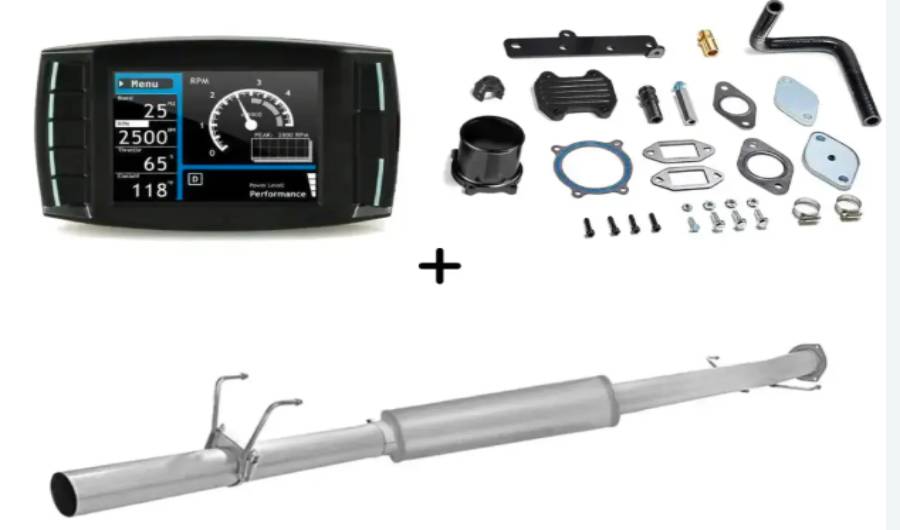
What Is a 6.7 Cummins Tuner With Deletes?
A 6.7 Cummins tuner with deletes is an engine tuning device or software platform associated with modified emissions-control configurations on Ram 2500 and Ram 3500 diesel trucks. It communicates with the engine control module (ECM) to change calibration parameters, including fuel injection timing, fuel delivery, turbocharger control, and engine torque limits. The term “delete tuner” generally refers to the calibration rather than a specific brand or type of tuning hardware.
The 6.7L Cummins engine uses emissions-control components such as exhaust gas recirculation (EGR), a diesel particulate filter (DPF), and selective catalytic reduction (SCR) on applicable model years. These systems reduce nitrogen oxides (NOx) and particulate emissions. When emissions equipment is removed or disabled, the factory ECM calibration may detect abnormal operating conditions and trigger diagnostic trouble codes or reduced engine performance. Delete-specific calibrations are designed to accommodate these modifications, although disabling required emissions controls on road vehicles generally violates US federal law.
A regular Cummins performance tuner differs from a delete tuner primarily in its calibration and emissions compatibility. Emissions-compliant tuners retain the operation of required emissions-control systems, while delete-specific calibrations are associated with bypassing or disabling those systems. Both categories may use similar hardware, but their software functionality, regulatory status, and supported applications differ.
Tuner compatibility also varies by model year, ECM hardware, and software version. For example, a tuning platform compatible with a 2012 Ram 2500 may not support a 2022 Ram 3500 because the vehicles use different engine management architectures and security requirements. Therefore, identifying the exact vehicle configuration is essential when evaluating Cummins tuning options.
Which 6.7 Cummins Model Years Support Different Tuning Platforms?
6.7 Cummins tuning compatibility depends on the truck’s model year, engine control module (ECM), software version, and tuning platform. Ram 2500 and Ram 3500 trucks manufactured from 2007.5 onward use different engine management systems, which affect calibration access and device compatibility. EFI Live, EZ LYNK, MM3, and HP Tuners support different vehicle applications, but compatibility with an ECM does not automatically include support for emissions-delete calibrations.
The 6.7L Cummins engine has undergone several emissions-system and electronic control updates since its introduction. These changes affect how tuning software communicates with the ECM, which calibration parameters are accessible, and whether additional manufacturer-supported hardware or authorization is required. Consequently, owners must verify compatibility using their exact model year, ECM identification, and the tuning provider’s current application list.
What Tuning Options Are Available for 2007.5–2018 Cummins Trucks?
2007.5–2018 Ram trucks have several established aftermarket tuning options, although platform coverage differs across model years. Earlier 6.7L Cummins applications use different ECM architectures and calibration protocols than later trucks. The introduction of additional emissions controls and updated electronic management systems also changed the requirements for tuning software.
EFI Live is associated with several earlier Cummins applications, particularly 2006–2009 and 2010–2018 model-year groups, depending on the software and calibration provider. MM3 has also been used for selected Cummins applications within this period, while EZ LYNK supports compatible vehicles through its cloud-based tuning ecosystem. However, individual device support, available calibrations, and legal applications must be confirmed with the platform provider.
The following table summarizes the major compatibility considerations.
| Model Years | Engine Management Considerations | Tuning Compatibility |
|---|---|---|
| 2007.5–2009 | Earlier 6.7L ECM architecture | Selected legacy tuning platforms |
| 2010–2012 | Updated engine management and emissions controls | Platform-specific ECM support |
| 2013–2018 | Revised electronic controls and SCR-equipped configurations | EFI Live, EZ LYNK, and other platforms on supported applications |
These ranges describe general tuning ecosystems rather than guaranteed product compatibility. The availability of an emissions-delete calibration is separate from whether a platform can communicate with a particular ECM.
What Tuning Limitations Apply to 2019 and Newer Cummins Trucks?
2019 and newer 6.7 Cummins trucks have more restrictive tuning requirements because of updated ECM architectures, security measures, and emissions-control strategies. The 2019 Ram Heavy Duty redesign introduced significant powertrain and electronic system changes, making older tuning devices and calibration files unsuitable for direct use with many newer applications.
Some tuning platforms support selected 2019-and-newer Cummins vehicles, but access depends on the ECM hardware, software version, security authorization, and supported calibration services. Later model years may introduce additional restrictions, so compatibility for a 2019 truck should not be assumed to extend to a 2024 or 2025 truck.
Newer Ram diesel trucks also use integrated emissions monitoring involving the DPF, EGR, SCR, and diesel exhaust fluid (DEF) systems. These components interact with engine management and onboard diagnostics to maintain emissions compliance. Tuning products intended for legal road use must preserve the operation of required emissions equipment.
Before selecting a tuning platform, owners should confirm the truck’s model year, ECM part number, current software version, supported calibration features, and applicable emissions certification. This verification helps prevent incompatible purchases and distinguishes legitimate performance tuning from unsupported or unlawful emissions modifications.
What Tuning Platforms Are Used With the 6.7 Cummins?
The main tuning platforms associated with the 6.7L Cummins include EFI Live, EZ LYNK, MM3, and HP Tuners. These systems provide different methods for managing engine calibrations, monitoring operating parameters, and communicating with the engine control module (ECM). Their compatibility depends on the truck’s model year, ECM architecture, software version, and available calibration support.
EFI Live and HP Tuners primarily provide professional calibration and diagnostic software, while EZ LYNK emphasizes cloud-based calibration delivery and vehicle monitoring. MM3 combines a dedicated display device with calibration management and diagnostic functions. Although these platforms are discussed in connection with modified Cummins trucks, the availability of a tuning device does not establish that emissions-delete calibrations are supported, approved, or legal for road use.
How Does EFI Live Work With the 6.7 Cummins?
EFI Live is an engine calibration and diagnostic platform that allows supported 6.7 Cummins ECM parameters to be read, modified, and programmed. It uses compatible interface hardware and software to communicate with the vehicle’s engine management system. Professional calibration providers use the platform to develop tuning files for supported applications.
EFI Live calibration capabilities vary by ECM generation and software support. Depending on the application, tunable parameters may include fuel injection timing, fuel quantity, torque management, and turbocharger control. These parameters influence engine power delivery, combustion characteristics, and operating temperatures. Changes to fuel delivery or boost control must account for the engine’s mechanical limits and emissions requirements.
For example, a calibration that increases commanded engine torque can place additional load on the transmission and drivetrain. This relationship is particularly important for Ram Heavy Duty trucks used for towing, where sustained engine load and exhaust gas temperature affect component durability. EFI Live’s data logging capabilities allow supported operating parameters to be recorded for performance evaluation and diagnostics.
How Does EZ LYNK Compare With MM3 for Cummins Tuning?
EZ LYNK focuses on cloud-connected calibration management, while MM3 uses a dedicated in-vehicle display and tuning interface. Both platforms have been used within the Cummins aftermarket, but they differ in hardware design, software delivery, monitoring functions, and supported vehicle applications.
EZ LYNK uses its AutoAgent hardware and a connected mobile application to communicate with supported vehicles. Its cloud-based ecosystem allows authorized technicians and calibration providers to deliver compatible software updates and review diagnostic information. Available functions depend on the vehicle, service provider, and software package.
MM3 uses a standalone touchscreen device that provides access to supported engine data, diagnostic functions, and calibration management. Its integrated display allows drivers to monitor selected parameters without relying on a smartphone. Available monitoring channels and calibration functions vary according to the ECM and installed software.
The following table compares the general characteristics of these tuning platforms.
| Feature | EFI Live | EZ LYNK | MM3 | HP Tuners |
|---|---|---|---|---|
| Primary interface | Computer software and interface hardware | Mobile app and AutoAgent | Dedicated touchscreen | Computer software and interface hardware |
| Calibration management | Software-based | Cloud-connected | Device-based | Software-based |
| Data monitoring | Supported | Supported | Integrated display | Supported |
| Diagnostic functions | Application-dependent | Application-dependent | Application-dependent | Application-dependent |
| Vehicle compatibility | ECM-specific | ECM-specific | ECM-specific | ECM-specific |
HP Tuners is another professional calibration platform that uses VCM Suite and compatible interface hardware for supported vehicle applications. Its Cummins coverage must be checked against the current vehicle support list because not every Ram diesel model year or ECM is supported.
The most suitable tuning platform depends on verified vehicle compatibility, available diagnostic features, calibration quality, and emissions compliance rather than the device brand alone. Owners should also consider technical support, software updates, and whether the intended calibration is approved for their vehicle’s operating environment. For road-driven trucks in the United States, retaining functional emissions-control equipment remains an essential requirement.
How Does Delete Tuning Affect 6.7 Cummins Performance?
Delete tuning changes 6.7 Cummins engine performance by modifying fuel delivery, injection timing, turbocharger control, and torque management. These calibration changes can increase horsepower and torque, alter throttle response, and affect fuel consumption. However, performance gains come primarily from engine calibration rather than the physical removal of emissions equipment. The results depend on the engine’s model year, mechanical condition, calibration quality, and operating load.
Horsepower and torque increases occur when an ECM calibration changes the amount and timing of fuel injected into the cylinders and coordinates those changes with available airflow. Additional fuel can generate greater combustion pressure and engine torque, provided sufficient oxygen is available for efficient combustion. For example, increasing fuel delivery under heavy acceleration can raise torque output, but excessive fueling relative to airflow increases exhaust temperatures and soot production. The resulting power gain must be measured through controlled dynamometer testing rather than assumed from a tuner’s advertised rating.
Throttle response and turbocharger behavior also depend on calibration settings. The ECM manages driver torque requests, fuel injection, and turbocharger operation to regulate engine output. Changes to these parameters can make acceleration feel more immediate or alter how quickly the engine develops torque. However, faster throttle response does not necessarily indicate higher peak horsepower. Aggressive torque delivery can also increase stress on the transmission, driveshaft, and other drivetrain components, particularly when towing heavy loads.
Delete tuning does not guarantee better fuel economy. Fuel consumption depends on engine load, driving speed, vehicle weight, transmission behavior, and the efficiency of the calibration. A tune that produces greater torque at a given engine speed may change fuel consumption under certain operating conditions, but higher power demand generally requires additional fuel. Removing a diesel particulate filter or disabling exhaust gas recirculation also does not establish a predictable improvement in miles per gallon. Reliable comparisons require measuring fuel consumption over equivalent driving routes, loads, and conditions.
Performance evaluations must also account for emissions and mechanical durability. Disabling DPF, EGR, or SCR functions can increase harmful exhaust emissions, while poorly matched calibration settings can raise cylinder pressure, exhaust gas temperature, and turbocharger stress. For road-driven Ram trucks, emissions-compliant tuning provides a way to evaluate supported performance improvements without removing federally required emissions-control equipment.
What Are the Risks of Using a Delete Tuner on a 6.7 Cummins?
The main risks of using a delete tuner on a 6.7 Cummins include engine damage, transmission wear, excessive exhaust gas temperatures, increased emissions, and legal penalties. These risks arise from changes to engine calibration, the removal or disabling of emissions-control equipment, and the additional mechanical loads associated with increased power output. Their severity depends on calibration quality, engine condition, driving habits, and operating demands.
Engine calibration changes can increase combustion pressure and thermal stress when fuel injection and turbocharger operation exceed the engine’s intended operating limits. Excessive exhaust gas temperature (EGT) places additional thermal load on the turbocharger, exhaust valves, and related components. Sustained high-load operation, particularly during towing or climbing steep grades, can intensify these conditions. A poorly calibrated engine may also produce excessive soot, experience unstable boost control, or develop premature component wear.
Emissions-related risks are separate from mechanical performance. The diesel particulate filter (DPF) captures particulate matter, exhaust gas recirculation (EGR) helps control nitrogen oxide formation, and selective catalytic reduction (SCR) reduces nitrogen oxides in the exhaust. Disabling these systems can substantially increase harmful emissions. In the United States, tampering with required emissions-control equipment or installing prohibited defeat devices can also result in regulatory enforcement and vehicle compliance problems.
Can Delete Tuning Damage the Engine or Transmission?
Delete tuning can damage a 6.7 Cummins engine or transmission when calibration changes produce excessive cylinder pressure, heat, or torque beyond the capacity of the vehicle’s components. Increased fuel delivery and boost pressure can raise combustion loads on pistons, connecting rods, head gaskets, and other internal engine parts. The risk increases when aggressive calibration settings are combined with sustained heavy-duty operation or inadequate maintenance.
The transmission is particularly sensitive to increased torque because it must transfer engine output to the drivetrain. Depending on the model year and configuration, Ram trucks equipped with the 6.7L Cummins have used transmissions such as the 68RFE, Aisin AS69RC, and newer TorqueFlite HD units. These transmissions have different torque capacities, clutch designs, cooling systems, and control strategies. A calibration that produces excessive torque can increase clutch slip, transmission fluid temperature, and wear, especially during repeated acceleration or heavy towing.
For example, a truck carrying a heavy trailer uphill places sustained demands on both the engine and transmission. Additional engine torque increases drivetrain loading, while prolonged operation under load generates heat that must be controlled by the vehicle’s cooling systems. If transmission temperatures rise beyond acceptable operating limits or clutch capacity is exceeded, accelerated wear and shifting problems can result.
A delete tuner does not automatically cause mechanical failure, but removing emissions equipment does not make an aggressive engine calibration mechanically safe. Engine reliability depends on maintaining appropriate combustion temperatures, torque limits, cooling performance, and service intervals. Owners seeking additional performance should prioritize vehicle-specific, emissions-compliant calibrations supported by documented testing and manufacturer guidance.
Are 6.7 Cummins Delete Tuners Legal in the United States?
6.7 Cummins delete tuners that disable required emissions-control systems are generally illegal for use on public roads in the United States. The federal Clean Air Act prohibits tampering with emissions-control equipment and selling or installing devices intended to bypass required emissions systems. These restrictions apply to diesel pickup trucks, including Ram 2500 and Ram 3500 models equipped with the 6.7L Cummins engine.
Removing or disabling a diesel particulate filter (DPF), exhaust gas recirculation (EGR) system, or selective catalytic reduction (SCR) system can violate federal emissions requirements. The restrictions also apply to software calibrations that defeat emissions-control functions, even when the original hardware remains installed. Vehicle owners and businesses involved in prohibited modifications may face enforcement actions and civil penalties.
State regulations create additional compliance requirements. States with diesel emissions inspection programs may reject vehicles with missing emissions equipment, altered onboard diagnostics, or emissions-related fault codes. Inspection procedures vary by state, vehicle classification, and model year. Consequently, a truck that operates without visible mechanical problems may still fail an applicable emissions inspection or registration requirement.
What Does the EPA Say About Diesel Delete Tuners?
The U.S. Environmental Protection Agency (EPA) identifies emissions-delete tuning software and hardware as potential defeat devices when they bypass, disable, or render required emissions controls ineffective. Under Section 203(a)(3) of the Clean Air Act, federal law restricts emissions tampering and the manufacture, sale, or installation of prohibited defeat devices.
The EPA’s enforcement framework covers both physical modifications and electronic calibration changes. For example, software that prevents a vehicle’s emissions monitoring system from detecting a disabled DPF can qualify as a defeat device. A product does not become legal simply because it is advertised for off-road use. Whether a particular application qualifies for a lawful exemption depends on its actual use and applicable federal requirements.
The distinction between emissions-compliant performance tuning and delete tuning is therefore essential. A compliant calibration must preserve the effectiveness of required emissions-control equipment and meet applicable regulatory requirements. Owners evaluating aftermarket tuners should review product-specific emissions documentation, including any applicable EPA compliance information or California Air Resources Board (CARB) Executive Order.
For 6.7 Cummins trucks operated on public roads, the legally safer approach is to retain the factory emissions systems and choose tuning products with verified compliance for the specific vehicle application. This reduces the risk of emissions violations, inspection failures, and enforcement penalties while allowing owners to evaluate legitimate performance improvements.
How Does Tuning Affect the Reliability of a 6.7 Cummins?
Tuning affects 6.7 Cummins reliability by changing combustion pressure, engine temperature, torque delivery, and the mechanical loads placed on powertrain components. A properly developed, emissions-compliant calibration that operates within the vehicle’s mechanical limits can maintain reliable performance. However, aggressive tuning increases the risk of premature wear, particularly in trucks used for heavy towing, frequent acceleration, or sustained high-load operation.
The 6.7L Cummins engine uses a high-pressure common-rail fuel injection system and a turbocharger to produce the torque required for heavy-duty applications. Engine calibration controls fuel injection timing, injection quantity, and torque requests to coordinate combustion with available airflow. Increasing fuel delivery without maintaining appropriate combustion conditions can raise cylinder pressure and exhaust gas temperature (EGT). Excessive thermal and mechanical loads accelerate wear on components such as pistons, exhaust valves, head gaskets, and turbocharger bearings.
Transmission durability is another major reliability concern because increased engine torque directly affects drivetrain loading. The 68RFE, Aisin AS69RC, and newer TorqueFlite HD transmissions used in different Ram Heavy Duty applications have distinct torque capacities and thermal management characteristics. A calibration that exceeds the transmission’s operating limits can increase clutch slip, fluid temperature, and internal component wear. For example, repeated acceleration while towing a heavy trailer places additional stress on transmission clutches and cooling systems, especially when engine torque exceeds the calibration’s intended operating range.
Monitoring engine operating conditions helps identify developing problems before they result in major mechanical damage. Important parameters include exhaust gas temperature, coolant temperature, engine oil temperature, boost pressure, and transmission fluid temperature. Abnormal readings must be evaluated against the vehicle manufacturer’s specifications because acceptable operating ranges differ by model year, engine configuration, and load. Diagnostic trouble codes, unusual shifting behavior, and unexpected temperature increases also require investigation rather than simply being cleared.
Maintenance remains essential regardless of tuning configuration. Engine oil changes, fuel filter replacement, cooling system inspections, and transmission servicing should follow the applicable Ram maintenance schedule and operating conditions. Trucks used for frequent towing or severe-duty applications may require shorter service intervals where specified by the manufacturer. Long-term 6.7 Cummins reliability depends on calibration quality, controlled operating temperatures, drivetrain compatibility, and consistent maintenance rather than increased horsepower alone.
Read more: How to Start a John Deere Tractor: Step-by-Step Guide
What Are the Alternatives to a 6.7 Cummins Delete Tuner?
The main alternatives to a 6.7 Cummins delete tuner are emissions-compliant performance tuners, vehicle maintenance, and upgrades that preserve factory emissions-control systems. These options allow Ram 2500 and Ram 3500 owners to address throttle response, towing performance, and engine efficiency without removing the diesel particulate filter (DPF), exhaust gas recirculation (EGR) system, or selective catalytic reduction (SCR) equipment.
Emissions-compliant tuning focuses on improving engine operation while maintaining the effectiveness of required emissions controls. Other improvements, including restoring proper fuel injection performance, replacing restricted air filters, and correcting turbocharger or sensor faults, help recover performance lost through mechanical deterioration. The appropriate approach depends on the truck’s model year, current condition, operating requirements, and applicable emissions regulations.
What Emissions-Compliant Tuning Options Are Available?
Emissions-compliant tuning options for the 6.7 Cummins include approved ECM calibrations and performance modules designed to retain factory emissions functionality. These products may adjust supported engine parameters or modify permitted control signals without disabling the DPF, EGR, or SCR systems. Their availability and legal status depend on the exact vehicle application and the product’s emissions certification.
Aftermarket manufacturers such as Banks Power offer diesel performance products for selected Ram Cummins applications. Depending on the product and model year, available features may include power management, throttle response adjustment, and engine monitoring. However, emissions compliance must be verified for the specific part number and vehicle configuration rather than assumed from the manufacturer’s brand or general product description.
A California Air Resources Board (CARB) Executive Order is one form of documentation that can establish an aftermarket product’s emissions compliance for listed applications. Owners should confirm that the approval covers their truck’s model year, engine, and installed product. A product approved for an earlier 6.7 Cummins application is not automatically approved for a newer ECM or emissions configuration.
Can You Improve Cummins Performance Without Deleting Emissions Equipment?
A 6.7 Cummins can maintain or improve its usable performance without deleting emissions equipment through proper maintenance, compatible upgrades, and verified emissions-compliant tuning. These measures focus on restoring factory engine efficiency, improving vehicle response, and maintaining consistent performance under load.
Fuel system maintenance is especially important because the 6.7L Cummins relies on precise high-pressure fuel injection. Restricted fuel filters, contaminated fuel, or malfunctioning injectors can reduce combustion efficiency and cause poor acceleration or unstable engine operation. Replacing serviceable components according to manufacturer specifications helps maintain proper fuel delivery and engine response.
Airflow and cooling system maintenance also support reliable performance. A restricted air filter can limit available intake airflow, while cooling system problems can contribute to excessive operating temperatures during towing. Inspecting the intake system, charge-air connections, coolant condition, and related sensors helps identify faults that reduce engine efficiency. These repairs restore intended operation rather than increasing engine output beyond factory limits.
Owners experiencing frequent DPF regeneration, emissions-related warning lights, or reduced engine power should investigate the underlying fault before considering performance modifications. Problems involving exhaust temperature sensors, differential pressure sensors, DEF delivery, or EGR operation can interfere with normal emissions-system performance. Repairing defective components and following the manufacturer’s diagnostic procedures preserves emissions compliance while addressing the actual cause of reduced performance.
For daily driving and towing, the most practical alternative to delete tuning is a combination of verified emissions-compliant products and preventive maintenance. This approach preserves required emissions controls, reduces regulatory risk, and supports consistent engine and drivetrain performance.
What Should You Check Before Choosing a 6.7 Cummins Tuner?
Before choosing a 6.7 Cummins tuner, verify five factors: vehicle compatibility, emissions compliance, calibration quality, diagnostic capabilities, and total ownership cost. These determine whether a tuning system is suitable for a specific Ram 2500 or Ram 3500 and whether it can operate reliably within the vehicle’s mechanical and regulatory requirements.
Vehicle compatibility is the first requirement because 6.7L Cummins engines use different ECM architectures across model years. A tuner designed for a 2015 Ram 2500 may not communicate with a 2021 Ram 3500, even though both trucks use a 6.7L Cummins engine. Owners should confirm the model year, ECM identification, software version, and supported vehicle applications before purchasing a tuning device. Manufacturer compatibility lists provide a starting point, but exact vehicle support should be verified with the supplier.
Emissions compliance is essential for trucks operated on public roads. A tuning product must preserve the effectiveness of required DPF, EGR, and SCR systems and meet applicable emissions regulations. Buyers should check for product-specific compliance documentation, including a CARB Executive Order where applicable. Claims such as “off-road use only” do not automatically exempt emissions-delete products from federal anti-tampering restrictions.
Calibration quality and diagnostic capabilities also influence long-term reliability. A properly developed calibration should account for fuel delivery, boost control, engine torque limits, and transmission operating characteristics. Monitoring functions such as exhaust gas temperature, coolant temperature, boost pressure, and transmission temperature help owners identify abnormal operating conditions. Technical support and software update availability are equally important when evaluating tuning platforms.
Total ownership cost extends beyond the initial device price. Additional expenses may include calibration licenses, monitoring hardware, professional installation, diagnostic services, and future software updates. Owners should also review warranty implications because aftermarket calibration changes can affect coverage for failures related to those modifications.
The best 6.7 Cummins tuner is one that matches the truck’s ECM, meets applicable emissions requirements, and supports the owner’s performance needs without exceeding safe operating limits. Verified compatibility and calibration quality should take priority over advertised horsepower gains or unsupported claims about fuel economy.